


Biochemicals and Reagents
Subcategories of "Biochemicals and Reagents"
- Biomolecules(98,575 products)
- By Biological Target(100,710 products)
- By Pharmacological Effects(6,937 products)
- Cryopreservatives(21 products)
- Desinfectants and Related Compounds(28 products)
- Hormones(421 products)
- Plant Biology(6,907 products)
- Secondary Metabolites(14,367 products)
Found 130493 products of "Biochemicals and Reagents"
ERK-IN-1
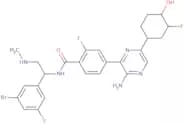
CAS:ERK-IN-1 is a selective inhibitor of the mitogen-activated protein kinase. It has been shown to inhibit proliferation of cells in culture and may be useful for treating metastatic melanoma and other cancers. ERK-IN-1 inhibits the activity of CDK4/6, which are enzymes that regulate cell division. This inhibition leads to decreased cell proliferation and tumor growth, which is responsible for its antineoplastic activity. ERK-IN-1 also inhibits signal transduction pathways in cells, which may lead to cancer prevention.Formula:C26H27BrF3N5O2Purity:Min. 95%Molecular weight:578.4 g/molNevirapine dimer
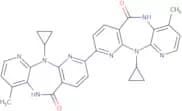
CAS:Nevirapine dimer is a peptide that is used as a research tool. It binds to the receptor and inhibits the ion channels, which are proteins in the cell membrane that control the flow of ions across the membrane. Nevirapine dimer prevents HIV from entering cells by binding to CD4 on the surface of T-cells. This binding prevents HIV from binding to CD4 on T-cells and entering into cells, preventing HIV replication.Formula:C30H26N8O2Purity:Min. 95%Molecular weight:530.6 g/molBig Endothelin-2 (Human, 22-37) Antiserum
Big ET-2 (human, 22-37) Antiserum is an antibody that reacts with the Big ET-2 (human, 22-37) peptide. It can be used as a research tool to study the function of Ion channels, Life Science, Receptor, Ligand and Protein interactions. The high purity of this antibody makes it a valuable resource for drug development.Purity:Min. 95%AS 35
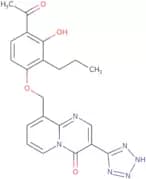
CAS:AS 35 is a new analytical method for the determination of enzyme activities in skin cancer. It is based on the use of human serum and a pharmacological treatment to stimulate the enzyme activity. AS 35 has been shown to be more sensitive than other methods, such as ELISA, and can detect disease activity at an early stage. AS 35 also has physiological effects on cells, including cell lysis, which can be used to study the effects of drugs on cells. The fluorescence probe allows for visualization of cell nuclei and crystal cellulose in vitro, which may be useful in studying autoimmune diseases.Formula:C21H20N6O4Purity:Min. 95%Molecular weight:420.4 g/molCyclooctyne-o-pfp ester
CAS:Cyclooctyne-o-pfp ester is a cyclic compound that binds to and inhibits the activity of protein ligands. It is used for pharmacological research on peptides and proteins. Cyclooctyne-o-pfp ester has been shown to be an activator for some receptors, such as the beta adrenergic receptor. This compound also binds to ion channels, such as potassium channels, and can inhibit their function by blocking potassium ions from passing through. Cyclooctyne-o-pfp ester is available in high purity and can be used in research on life sciences, antibodies, or ion channels.Formula:C16H13F5O3Purity:Min. 95%Molecular weight:348.26 g/molCP-100356 monohydrochloride
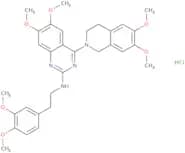
CAS:CP-100356 monohydrochloride is a tyrphostin that selectively inhibits the phosphatidylinositol 3-kinase (PI3K) enzyme. Tyrphostins are small molecules that act as potent inhibitors of the PI3K family of enzymes, which regulate cellular proliferation and survival. CP-100356 monohydrochloride has been shown to inhibit cell growth in vitro and to induce autophagy, which helps cells survive under stress conditions. CP-100356 monohydrochloride has been studied in clinical trials for pediatric patients with myeloid leukemia. Patients who were treated with CP-100356 monohydrochloride had improved prognosis compared to those who received chemotherapy alone or other tyrosine kinase inhibitors.Formula:C31H36N4O6·HClPurity:Min. 95%Color and Shape:PowderMolecular weight:597.1 g/molChimeric Chagas Multiantigen (recombinant)
Chagas disease is caused by the parasite Trypanosoma cruzi and is transmitted to humans by the bite of an infected triatomine bug. The Chagas multiantigen (CM) is a recombinant protein that contains the entire sequence of the T. cruzi trypomastigote surface glycoprotein gp41, which plays a critical role in parasite invasion of host cells. CM can be used as a research tool for studying receptor-ligand interactions, ion channels, cell biology, and pharmacology. It also has potential use as an inhibitor of the invasion of mammalian cells by T. cruzi trypomastigotes.Purity:Min. 95%NNC45-0781
CAS:NNC45-0781 is a potent and selective activator of the GABAA receptor. It is a peptide, which binds to the GABA binding site on the GABAA receptor. NNC45-0781 has been shown to inhibit the growth of cells that are resistant to anti-cancer drugs, such as temozolomide, in vitro and in vivo. NNC45-0781 binds to these cells by activating the GABAA receptor, leading to cell death by inhibiting protein synthesis.
Formula:C27H29NO3Purity:Min. 95%Molecular weight:415.5 g/molNVS-CRF-38
CAS:NVS-CRF-38 is a corticotropin-releasing factor (CRF) analog. It is a conjugated form of the CRF-III peptide, which has been modified to contain a phenylalanine residue at position 3 and an arginine residue at position 9. The test compound binds to the CRF receptor and acts as a partial agonist. NVS-CRF-38 has been shown to have pharmacokinetic properties similar to those of native CRF in rats and humans. In rats, plasma protein binding was ˜80% with no effect by deuterium isotope on drug pharmacokinetics. In humans, it was found that NVS-CRF-38 had high oral bioavailability and good absorption in the small intestine.Formula:C19H21N5O2Purity:Min. 95%Molecular weight:351.4 g/molL-798106
CAS:L-798106 is a potent and selective h1 receptor antagonist that blocks the action of histamine. It has been shown to inhibit the intracellular calcium concentration, which may be due to its inhibition of myosin phosphatase activity. L-798106 also inhibits cancer cells by interfering with cell growth and preventing the production of cancerous proteins. Interestingly, this drug also has a pressor effect on blood pressure, which may be due to its ability to increase camp levels in the mesenteric artery. L-798106 is an antagonist of epoxyeicosatrienoic acids (EETs) and 2-aminoethoxydiphenyl borate (2-APB). These compounds are potent agonists for the h1 receptor, which causes vasoconstriction and increases in blood pressure. L-798106 has been shown to inhibit protein synthesis at polymerase chain reaction (PCR) levels in prostate cancer cells. This drug also decreasesFormula:C27H22BrNO4SPurity:Min. 95%Molecular weight:536.44 g/molFRETS-25Glu (1 umol) (1umol)
Frets-25Glu is a peptide inhibitor of the alpha subunit of the voltage-gated potassium channel. It is a high purity, water-soluble, stable peptide that can be used as a research tool to study the function of ion channels and receptors. Frets-25Glu has been shown to inhibit potassium channel currents in rat dorsal root ganglion neurons and rat dorsal spinal cord neurons. It also binds to the alpha subunit of voltage-gated potassium channels in rat brain tissue.Purity:Min. 95%Ethyl 4-chloro-2-(ethylthio)pyrimidine-5-carboxylate
CAS:Ethyl 4-chloro-2-(ethylthio)pyrimidine-5-carboxylate is an inhibitor of the enzyme acetylcholinesterase. It is a ligand for nicotinic acetylcholine receptors and has been shown to activate the ion channel TRPV1, which is involved in pain sensation. The compound also inhibits serine proteases and phospholipases. This chemical has been used as a research tool in cell biology, pharmacology, and life sciences.Formula:C9H11ClN2O2SPurity:Min. 95%Molecular weight:246.71 g/molGV-196771a
CAS:GV-196771a is a metabotropic glutamate receptor (mGluR) antagonist. It blocks the action of glutamate, a neurotransmitter that activates mGluRs. GV-196771a has been shown to be effective in the treatment of chronic schizophrenia, as well as symptoms such as anxiety, depression and Parkinson's disease. The drug is also neuroprotective and can prevent damage to neurons caused by toxins or strokes. GV-196771a binds to the mGluR5 receptor and blocks activation by glutamate. This prevents the release of other neurotransmitters that are involved in pain transmission, such as dopamine, norepinephrine, serotonin and acetylcholine.Formula:C20H13Cl2N2NaO3Purity:Min. 95%Molecular weight:423.2 g/molBidisomide
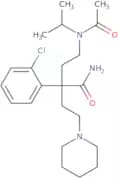
CAS:Bidisomide is a drug used to treat bowel disease, such as chronic ulcerative colitis. It is also used in the diagnosis of fatty acid disorders and structural heart disease. Bidisomide has been shown to bind to iron-containing compounds and may be an analog of the amino acid histidine. The absorption enhancer helps with the absorption of bisodomic acid by the small intestine, which helps with its treatment of bowel disease. Bidisomide has been shown to have a toxic effect on rat liver microsomes and can cause aminotransferase activity in the liver. It has also been shown to be effective for inflammatory bowel diseases such as Crohn's Disease.Formula:C22H34ClN3O2Purity:Min. 95%Molecular weight:408 g/molCGP 12177 hydrochloride
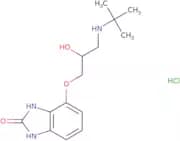
CAS:CGP 12177 hydrochloride is a catecholamine that acts as an agonist at the alpha-1 adrenergic receptor. It has been used to study the pharmacological properties of this receptor and its sensitivity to various drugs. CGP 12177 hydrochloride has shown some antagonist activity against isoprenaline and other catecholamines, but it is not selective for alpha-1 receptors. The imidazolone ring in this agent appears to be important for binding to the receptor, which may be due to its structural similarity to adrenaline. CGP 12177 hydrochloride binds to the agonist binding site on the alpha-1 adrenergic receptor, activating Gs proteins and stimulating adenylyl cyclase. This increases intracellular levels of cyclic AMP (cAMP) and activates protein kinase A (PKA), which phosphorylates proteins such as glycogen synthase kinase 3 (GSK3) and protein kinase CFormula:C14H21N3O3·HClPurity:Min. 95%Molecular weight:315.8 g/molPF 04217903 mesylate
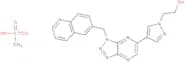
CAS:PF 04217903 mesylate is a factor receptor inhibitor that inhibits the transcription of insulin-like growth factor and epidermal growth factor. It is used in the treatment of neoplastic disease, such as breast cancer, ovarian cancer, and prostate cancer. PF 04217903 mesylate also inhibits angiogenesis by inhibiting the expression of transcription factors that are involved in this process. These effects may be due to its ability to inhibit the production of erythropoietin and other proangiogenic molecules. PF 04217903 mesylate has been shown to inhibit the proliferation of vascular endothelial cells in vitro and in vivo.
Formula:C19H16N8O·CH3SO3HPurity:Min. 95%Molecular weight:468.49 g/mol(R)-MG 132
CAS:Ischemia reperfusion injury is a major cause of irreversible brain damage. The enzyme GTPase-activating protein (GAP) has been shown to be involved in the regulation of cell death and may represent a potential therapeutic target for ischemia reperfusion injury. MG132 is an inhibitor of GAP and can protect against brain damage in wild-type mice subjected to cerebral ischemia reperfusion injury. MG132 blocks protein synthesis, leading to apoptotic cell death in cancer cells, while it induces apoptotic cell death in cancer cells. MG132 also inhibits proteasome activity and leads to acute ischemic brain damage in wild-type mice.Formula:C26H41N3O5Purity:Min. 95%Molecular weight:475.63 g/molPD166326
CAS:PD166326 is a protein data inhibitor drug that is used to inhibit the bcr-abl kinase, which is responsible for the uncontrolled proliferation of cells in cancer. PD166326 has been shown to inhibit the kinase activity of bcr-abl and increase mitochondrial membrane potential, leading to cell death by apoptosis. The compound has also been shown to inhibit the growth of skin cancer cells in mice. PD166326 binds to an active site on bcr-abl and blocks its ATP binding site, preventing phosphorylation of downstream substrates such as paxillin and caspase 3, which are involved in cell proliferation. This drug has also been shown to be effective against myelogenous leukemia cells in mice.
Formula:C21H16Cl2N4O2Purity:Min. 95%Molecular weight:427.28 g/molKauran-16,17-diol
CAS:Kauran-16,17-diol is a natural product that is found in the leaves of the plant Isodon. Kauran-16,17-diol has been shown to stimulate germination and growth by binding to gibberellin receptors. It also has potent antioxidant properties. Kauran-16,17-diol has been shown to inhibit recrystallization of ent-kaurene from epoxide and homogenates.Formula:C20H34O2Purity:Min. 95%Molecular weight:306.5 g/mol[Nphe1]Nociceptin(1-13)NH2
CAS:Nociceptin is a neuropeptide of the tachykinin family that is primarily expressed in the brain. It has been shown to have an important role in long-term treatment of depression and pain. Nociceptin is a bifunctional molecule with both antinociceptive and excitatory effects. Its analgesic properties are mediated by its ability to inhibit the release of substance P and calcitonin gene-related peptide, which are neurotransmitters involved in pain transmission. Nociceptin also has excitatory effects on tissues such as the stomach, pancreas, heart, and bladder. It may also be able to reduce inflammation by inhibiting histamine release from mast cells.Formula:C61H100N22O15Purity:Min. 95%Molecular weight:1,381.6 g/mol








![[Nphe1]Nociceptin(1-13)NH2](/_next/image/?url=https%3A%2Fstatic.cymitquimica.com%2Fproducts%2F3D%2Fthumb-webp%2FSKA23408.webp&w=3840&q=75)