Biochemicals and Reagents
Biochemicals and reagents are fundamental substances for research and development in fields such as biotechnology, molecular biology, pharmacology, and medicine. These products are essential for a variety of applications, including compound synthesis, biological sample analysis, metabolic process research, and drug production. At CymitQuimica, we offer a wide selection of high-quality, high-purity biochemicals and reagents suitable for various scientific and industrial needs. Our catalog includes enzymes, antibodies, nucleic acids, amino acids, and many other products, all designed to support researchers and professionals in their research and development projects, ensuring reliable and reproducible results.
Subcategories of "Biochemicals and Reagents"
- Biomolecules(98,572 products)
- By Biological Target(100,755 products)
- By Pharmacological Effects(6,938 products)
- Cryopreservatives(21 products)
- Desinfectants and Related Compounds(28 products)
- Hormones(467 products)
- Plant Biology(6,906 products)
- Secondary Metabolites(14,368 products)
Found 130507 products of "Biochemicals and Reagents"
Sort by
Purity (%)
0
100
|
0
|
50
|
90
|
95
|
100
Desmethylene tadalafil
CAS:Desmethylene tadalafil is a chemical compound, specifically a designer analog of tadalafil, which is known for its phosphodiesterase type 5 (PDE5) inhibition. It is a synthetic derivative, often cited in contexts involving unauthorized erectile dysfunction treatments. Its mode of action involves the inhibition of the PDE5 enzyme, leading to increased levels of cyclic guanosine monophosphate (cGMP). This results in vasodilation and increased blood flow, particularly in the corpus cavernosum.Formula:C21H19N3O4Purity:Min. 95%Molecular weight:377.4 g/mol(E/Z)-Eltrombopag 13C
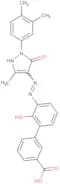
CAS:Please enquire for more information about (E/Z)-Eltrombopag 13C including the price, delivery time and more detailed product information at the technical inquiry form on this pageFormula:C25H22N4O4Purity:Min. 95%Molecular weight:446.4 g/molIDO-IN-5
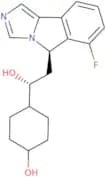
CAS:IDO-IN-5 is a peptide inhibitor with a molecular weight of 1064.55 Da and CAS number 1402837-79-9. It is used as a research tool in cell biology, pharmacology, and other life sciences. IDO-IN-5 specifically inhibits the activity of the enzyme indoleamine 2,3 dioxygenase (IDO), which is involved in the production of tryptophan from the amino acid L-tryptophan. The IDO enzyme regulates the production of other substances that are important for immune response. As an inhibitor, IDO-IN-5 blocks this pathway and prevents immune cells from being stimulated. This inhibition can be reversed by adding L-tryptophan to cells treated with IDO-IN-5.Formula:C18H21FN2O2Purity:Min. 95%Molecular weight:316.37 g/molGDC-0575
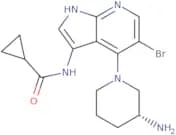
CAS:GDC-0575 is a small molecule inhibitor that specifically targets the Ataxia-Telangiectasia and Rad3-related protein (ATR) kinase. This compound, developed from a synthetic chemical source, functions by selectively inhibiting the ATR kinase, a key regulator of the DNA damage response pathway. By binding to the active site of ATR, GDC-0575 disrupts its ability to activate downstream effectors involved in DNA repair processes.Formula:C16H20BrN5OPurity:Min. 95%Molecular weight:378.27 g/molVasopressin antagonist
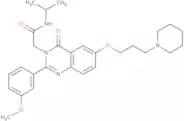
CAS:A vasopressin antagonist is a drug that blocks the action of vasopressin, a hormone that helps regulate blood pressure. A vasopressin antagonist can be used to treat congestive heart failure or low levels of sodium in the blood. Vasopressin antagonists may also be used to treat infectious diseases such as malaria. The mechanism of action for vasopressin antagonists is not fully understood, but it is thought that they bind to the vasopressin receptor and prevent the hormone from binding. The most common type of vasopressin antagonist is a tetrazolium dye, which binds to the enzyme cyclic AMP phosphodiesterase and inhibits its activity. Tetrazolium dyes are typically used in vitro antifungal activity and cytosolic Ca2+ levels. Vasopressin antagonists have been shown to have drug interactions with other medications, such as cyclosporine and digoxin, as well as congestive heart failure drugsFormula:C28H36N4O4Purity:Min. 95%Molecular weight:492.6 g/molRPA4 antibody
RPA4 antibody was raised using the middle region of RPA4 corresponding to a region with amino acids VPVSPSEVNDAGDNDESHRNFIQDEVLRLIHECPHQEGKSIHELRAQLCDPurity:Min. 95%SF4 antibody
SF4 antibody was raised in rabbit using the C terminal of SF4 as the immunogenPurity:Min. 95%rac1, Gst tagged human
CAS:Rac1 is a member of the Rho family of small GTPases that regulates many cellular processes, such as cell movement, apoptosis, and transcription. Rac1 has been shown to regulate the activity of ion channels and ligand-gated ion channels. This protein also plays a role in signal transduction by activating phospholipase C and regulating the activity of other proteins such as tyrosine kinases. Rac1 is activated by peptides containing arginine-glycine-aspartate (RGD) motifs and is inhibited by antibodies against this protein. Rac1 has been shown to activate the transcription factor CREB, which is important for synaptic plasticity. Rac1 is expressed in high levels in neurons, cardiac muscle cells, macrophages, and some epithelial cells. This protein has been used to study cell biology and pharmacology because it can be easily purified from human sources using Gst tagged recombinant human Rac1 (GST-RacPurity:Min. 95%MEMO1 antibody
MEMO1 antibody was raised using the middle region of MEMO1 corresponding to a region with amino acids AMESHKDEFTIIPVLVGALSESKEQEFGKLFSKYLADPSNLFVVSSDFCH
anti-Phospho Tau-202 Antibody - Monoclonal
pTau-202 is a phosphorylated tau protein that is associated with Alzheimer's disease and other tauopathies.Purity:Min. 95%Posenacaftor sodium
CAS:Posenacaftor is a small molecule that belongs to the class of peptide inhibitors. It inhibits Protein interactions and is an activator of the ATP-binding cassette transporter A1 (ABCA1). Posenacaftor is used as a research tool to study the role of ABCA1 in lipid metabolism, as well as to study other proteins and their ligands. This drug has been shown to inhibit the activity of ion channels, which may have implications for treatment of epilepsy. Posenacaftor also binds to receptor sites on cells and blocks them, preventing calcium from entering into cells. This process leads to decreased inflammation and muscle contraction.Formula:C27H26NNaO5Purity:Min. 95%Molecular weight:467.5 g/molYHO-13351
CAS:YHO-13351 is an investigational pharmaceutical compound classified as a small molecule inhibitor. It is synthesized through a series of complex chemical processes involving precise modifications and optimizations to achieve high specificity and potency. This compound operates by selectively inhibiting certain molecular pathways that are implicated in pathological conditions, particularly those involving aberrant cellular proliferation and survival mechanisms.Formula:C27H37N3O7S2Purity:Min. 95%Molecular weight:579.73 g/molHSP90AB1 antibody
The HSP90AB1 antibody is a monoclonal antibody used in Life Sciences research. It is specifically designed to target and bind to the HSP90AB1 protein, which plays a crucial role in various cellular processes. This antibody has been extensively studied and validated for its high specificity and sensitivity.LTA4H antibody
The LTA4H antibody is a highly effective test substance used in various applications such as electrophoresis, erythropoietin analysis, and phalloidin staining. This antibody specifically targets LTA4H, an enzyme involved in the synthesis of leukotriene B4 (LTB4), which plays a crucial role in inflammation and immune response. The LTA4H antibody is widely used in the field of Life Sciences for research purposes, including the study of actin filaments, growth factors, chemokines, and monoclonal antibodies. It is also utilized as a neutralizing agent or medicament for therapeutic applications. With its high specificity and reliability, the LTA4H antibody is an essential tool for scientists and researchers in their pursuit of understanding complex biological processes.Naminidil
CAS:Naminidil is a pro-drug, which is synthetically derived through the modification of specific active compounds. This derivation involves chemical synthesis techniques aimed at enhancing bioavailability and selective activation in biological systems. The mode of action of Naminidil involves enzymatic conversion to its active form within the target tissues, allowing for localized therapeutic effects while minimizing systemic exposure. This targeted approach is designed to optimize the pharmacokinetic properties of the drug, enhancing its efficacy and safety profile.Formula:C15H19N5Purity:Min. 95%Molecular weight:269.34 g/mol