Biochemicals and Reagents
Subcategories of "Biochemicals and Reagents"
- Biomolecules(98,563 products)
- By Biological Target(101,038 products)
- By Pharmacological Effects(6,954 products)
- Cryopreservatives(21 products)
- Desinfectants and Related Compounds(28 products)
- Hormones(531 products)
- Plant Biology(6,903 products)
- Secondary Metabolites(14,368 products)
Found 130636 products of "Biochemicals and Reagents"
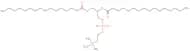
1,2-Dipalmitoyl-sn-glycero-3-phosphocholine-1,1,2,2-d4
CAS:Please enquire for more information about 1,2-Dipalmitoyl-sn-glycero-3-phosphocholine-1,1,2,2-d4 including the price, delivery time and more detailed product information at the technical inquiry form on this pageFormula:C40H80NO8PPurity:Min. 95%Molecular weight:738.1 g/molBrilacidin
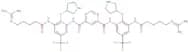
CAS:Brilacidin is a synthetic antimicrobial peptide mimetic, which is derived from the host defense proteins found in nature. It functions by mimicking the mechanism of these peptides, disrupting microbial cell membranes and inhibiting biofilm formation. The compound destabilizes the phospholipid bilayer of bacterial membranes, leading to increased permeability and subsequent cell death.Formula:C40H50F6N14O6Purity:Min. 95%Molecular weight:936.9 g/molTAM-IN-2
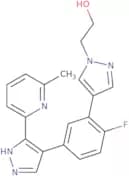
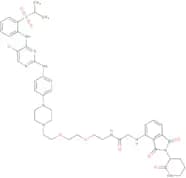
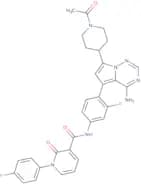
CAS:Please enquire for more information about TAM-IN-2 including the price, delivery time and more detailed product information at the technical inquiry form on this page
Formula:C31H27F2N7O3Purity:Min. 95%Molecular weight:583.6 g/molFluquazone
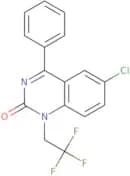
CAS:Fluquazone is a medicinal compound that has been shown to have potent anticancer properties. It works by inhibiting the activity of kinases, which are enzymes involved in regulating cell cycle progression and proliferation. Fluquazone has been demonstrated to induce apoptosis, or programmed cell death, in human cancer cells. This compound has also been found to be effective against a variety of cancer cell lines, including those derived from Chinese hamster ovary (CHO) cells. In addition to its tumor-inhibiting properties, Fluquazone has also been found to have anti-inflammatory effects. Overall, this inhibitor shows great promise as a potential therapeutic agent for the treatment of various types of cancer.Formula:C16H10ClF3N2OPurity:Min. 95%Molecular weight:338.71 g/molN-[4-Methoxy-3-(morpholine-4-sulfonyl)phenyl]-3-(1H-pyrrol-1-yl)benzamide
CAS:N-[4-Methoxy-3-(morpholine-4-sulfonyl)phenyl]-3-(1H-pyrrol-1-yl)benzamide is a potent and selective inhibitor of the α2δ subunit of voltage gated calcium channels. The compound has been shown to inhibit the neuronal release of substance P in vitro and in vivo. N-[4-Methoxy-3-(morpholine-4-sulfonyl)phenyl]-3-(1H-pyrrol-1-yl)benzamide has also been found to inhibit the release of calcitonin gene related peptide (CGRP), which is implicated in migraine headaches, and 5HT from cultured neurons and astrocytes. This research tool is suitable for use as an antibody or ligand for receptor binding studies.
Formula:C22H23N3O5SPurity:Min. 95%Molecular weight:441.5 g/molPF-04671536
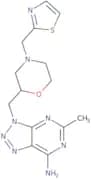
CAS:Cilostamide is a drug that is used to treat type 2 diabetes. It belongs to the class of drugs called sulfonylureas and works by stimulating insulin secretion from pancreatic β-cells. Cilostamide has been shown to inhibit fatty acid uptake in humans, which may contribute to its metabolic effects. Cilostamide has also been shown to increase the levels of cyclic AMP (cAMP) in pancreatic tissues and cells, which can lead to an increased insulin secretion. Cilostamide binds at the sensor region of the β-cell membrane, where it inhibits voltage-gated calcium channels. This prevents calcium influx into the cell and leads to reduced cAMP production, thereby inhibiting insulin release.Formula:C14H18N8OSPurity:Min. 95%Molecular weight:346.41 g/molR-268712
CAS:R-268712 is a protein inhibitor that inhibits the activity of growth factor β. It has been shown to be effective in animal models of lung fibrosis, cancer, and eye disorders. R-268712 is administered orally and has been shown to decrease the viscosity of mucus secretions in the lungs, thereby improving lung function. This drug also has pluripotent cell properties and can differentiate into cells of different lineages. R-268712 has no effect on normal cells but inhibits the proliferation of lung fibroblasts and cancer cells in culture.Formula:C20H18FN5OPurity:Min. 95%Molecular weight:363.39 g/molOrvepitant maleate
CAS:Orvepitant maleate is a pharmaceutical formulation that is an antagonist of the neurokinin-1 receptor, which is found in the central and peripheral nervous system. It has been shown to improve chronic cough by suppressing the cough reflex. Orvepitant maleate has also been shown to inhibit the proliferation of cancer cells and chronic lung diseases, such as idiopathic pulmonary fibrosis. The drug has also been shown to be effective against depression, dermatosis, and neuropathic pain.Formula:C35H39F7N4O6Purity:Min. 95%Molecular weight:744.7 g/mol5-Chloro-2,4-dimethylbenzene-1-thiol
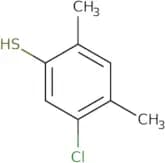
CAS:Please enquire for more information about 5-Chloro-2,4-dimethylbenzene-1-thiol including the price, delivery time and more detailed product information at the technical inquiry form on this page
Formula:C8H9ClSPurity:Min. 95%Molecular weight:172.68 g/molPiribedil dihydrochloride
CAS:Piribedil is a ligand for the D2 receptor and has been used as a research tool to study the function of ion channels. It has also been shown to be an inhibitor of ligand-gated ion channels, including nicotinic acetylcholine receptors. Piribedil has also been shown to activate the D2 receptor. Piribedil binds to the D2 receptor and interacts with G proteins, leading to inhibition of adenylate cyclase activity, thereby decreasing cAMP production. The peptide sequence in piribedil is C-G-C-G-C-E-D, where C is cysteine and E is glutamate.Formula:C16H20Cl2N4O2Purity:Min. 95%Molecular weight:371.3 g/molZ-Pro-prolinal
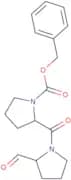
CAS:Z-Pro-prolinal is a tetrapeptide that was discovered in a screening for enzyme inhibitors. It inhibits the activity of various enzymes, including angiotensin converting enzyme (ACE), endopeptidase, and proteinases. Z-Pro-prolinal has shown to have antihypertensive effects in rats with primary pulmonary hypertension. It has also been shown to inhibit the proteolytic activities of soybean trypsin and other enzymes.
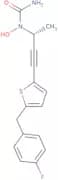
Formula:C18H22N2O4Purity:Min. 95%Molecular weight:330.4 g/molL-Threo-PDMP
CAS:L-Threo-PDMP is a peptide that has been shown to activate ion channels and inhibit the binding of ligands to receptors. It is also an inhibitor of protein interactions and plays a role in the regulation of cell biology. L-Threo-PDMP has been shown to bind to potassium channels, which may make it useful for treating heart arrhythmias or conditions such as epilepsy. This compound is a potent inhibitor of D2 receptors, which may be useful for treating schizophrenia or Parkinson's disease.Formula:C23H39ClN2O3Purity:Min. 95%Molecular weight:427.00 g/molABT 761
CAS:Inhibitor of 5-lipoxygenaseFormula:C16H15FN2O2SPurity:Min. 95%Color and Shape:SolidMolecular weight:318.37 g/molSomatostatin monoacetate
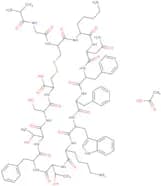
CAS:Controlled ProductSomatostatin is a peptide hormone that regulates the release of insulin, glucagon, and growth hormones. Somatostatin monomethanesulfonate (SMS) is a water-soluble drug that has been used to treat acromegaly, cancer, and diabetes mellitus. SMS is available as an oil solution that can be administered by intravenous injection or by infusion pump. The phosphate group in SMS provides protection against degradation by proteolytic enzymes. The half-life of SMS is about 5 hours and it is excreted through the kidneys. Somatostatin monoacetate (SMA) is a synthetic analogue of somatostatin with a shorter half-life than SMS. SMA has been used for diagnostic purposes in nuclear medicine imaging studies to measure cardiac output and renal function in patients with congestive heart failure. It has also been used for treatment of prostate cancer, breast cancer, and ovarian cancer. Polymer conjugates of som
Formula:C78H108N18O21S2Purity:Min. 95%Molecular weight:1,697.9 g/molLSZ 102
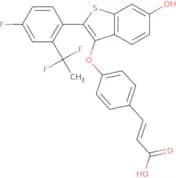
CAS:Selective estrogen receptor degraderFormula:C25H17F3O4SPurity:Min. 95%Molecular weight:470.46 g/mol3a-MPLA
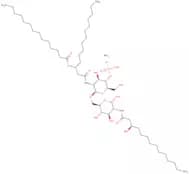
CAS:3a-MPLA is a synthetic lipid A derivative, which is derived from the lipopolysaccharide of Gram-negative bacterial outer membranes, specifically from the lipid A structure. Its mode of action involves the modulation of the immune response through interaction with Toll-like receptor 4 (TLR4) on immune cells. By activating TLR4, 3a-MPLA stimulates a controlled release of pro-inflammatory cytokines, aiding in the fine-tuning of the immune system without overactivation.Formula:C54H106N3O17PPurity:Min. 95%Molecular weight:1,100.4 g/molTL 13-27
CAS:TL 13-27 is a synthetic peptide that has been shown to activate the human vasopressin receptor. It is a potent, selective, and reversible activator of the human vasopressin receptor with high purity. TL 13-27 has been shown to be useful as a research tool in Cell Biology and Pharmacology studies. TL 13-27 binds to the vasopressin receptor and activates it by mimicking the effects of natural hormone. The peptide can also act as an inhibitor or an activator of other receptors, depending on its conformation and binding affinity with these receptors. This property makes TL 13-27 valuable as a research tool for studying protein interactions, ion channels, and other receptors.Formula:C44H53ClN10O8SPurity:Min. 95%Molecular weight:917.5 g/molCMK
CAS:CMK is a potent cell-permeable protein kinase inhibitor, derived from a synthetic chemical source, designed to effectively intervene in kinase signaling pathways. Its mode of action involves specific inhibition of protein kinases through competitive binding at the ATP-binding site, thus preventing phosphorylation events critical to numerous cellular processes.Formula:C18H19ClN4O2Purity:Min. 95%Molecular weight:358.82 g/molCopo 22
CAS:Copo 22 is a chemical substance which is a potentiator of the CFTR protein. The molecule is designed to modulate the CFTR protein by binding to its active site and enhancing the function of the CFTR protein. Copo 22 has been shown to increase chloride ion flow in cells with a mutation in the F508del-CFTR gene. This chloride ion flow increases and improves lung function, reducing inflammation and improving mucus clearance. Copo 22 also has other potential benefits, such as being non-toxic, stable, and easy to synthesize. The molecule has been shown to be expressed in cells with a F508del mutation, suggesting that it may be used for treatment of cystic fibrosis patients with this mutation.Formula:C22H22N4O2Purity:Min. 95%Molecular weight:374.4 g/molProxalutamide
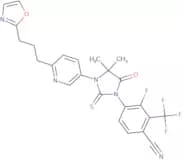
CAS:Proxalutamide is a non-steroidal antiandrogen, which is a compound derived from synthetic chemical processes with a mode of action that involves selective antagonism of androgen receptors. This action effectively inhibits the binding of androgen hormones, such as testosterone, which are critical for the growth and survival of certain types of cancer cells, particularly in prostate cancer.Formula:C24H19F4N5O2SPurity:Min. 95%Molecular weight:517.5 g/mol

![N-[4-Methoxy-3-(morpholine-4-sulfonyl)phenyl]-3-(1H-pyrrol-1-yl)benzamide](/_next/image/?url=https%3A%2Fstatic.cymitquimica.com%2Fproducts%2F3D%2Fthumb-webp%2FVLB65000.webp&w=3840&q=75)