Antibiotics
Antibiotics are compounds designed to destroy or inhibit the growth of various microorganisms, playing a crucial role in treating infections and preventing the spread of diseases. This category offers a diverse range of active ingredients specifically for research in the biochemical field. These compounds are essential tools in studying bacterial mechanisms, resistance patterns, and the development of new therapeutic agents. Researchers can explore a wide variety of antibiotics to understand their effects, optimize their use, and develop novel treatments to combat emerging microbial threats. The availability of such a broad spectrum of antibiotics supports advanced research and innovation in microbiology and pharmaceutical sciences.
Subcategories of "Antibiotics"
- Macrolide Antibiotics(26 products)
- Steroidal Antibiotics(31 products)
- Tetracycline Antibiotics(20 products)
- β-Lactam Antibiotics(11 products)
Found 4086 products of "Antibiotics"
Sort by
Purity (%)
0
100
|
0
|
50
|
90
|
95
|
100
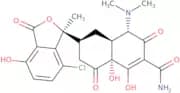
Isochlortetracycline
CAS:<p>Isochlortetracycline is a tetracycline antibiotic with a mode of action that inhibits bacterial protein synthesis by binding to the 30S ribosomal subunit. It is used for treating bacterial infections in both humans and animals.</p>Formula:C22H23ClN2O8Purity:Min. 95%Color and Shape:Off-White PowderMolecular weight:478.88 g/molOrbifloxacin
CAS:<p>Orbifloxacin is a fluoroquinolone antibiotic with action on bacterial DNA gyrase and topoisomerase IV and is used for treating bacterial infections in veterinary medicine.</p>Formula:C19H20F3N3O3Purity:Min. 95%Color and Shape:PowderMolecular weight:395.38 g/molVancomycin hydrochloride, Antibiotic for Culture Media Use Only
CAS:<p>Vancomycin hydrochloride is an antibiotic that is used against Gram-positive bacteria, including Staphylococcus aureus. It has been shown to inhibit the growth of bacteria by binding the D-alanyl-D-alanine moiety of the peptidoglycan cell wall precursor, inhibiting the peptidoglycan synthesis and disrupting its cross linking. It also inhibits particle formation when it reacts with human plasma, which can lead to hemolysis and hemagglutination. The absorption spectrum for vancomycin hydrochloride shows maxima at 230, 260, 290, and 320 nm, which are characteristic for this compound. Vancomycin has been used in several studies for treatment of methicillin-resistant Staphylococcus aureus infections.</p>Formula:C66H76Cl3N9O24Molecular weight:1,485.71 g/molRef: 3D-Q-201920
25gTo inquire50gTo inquire100gTo inquire250gTo inquire500gTo inquire-Unit-ggTo inquireBoromycin
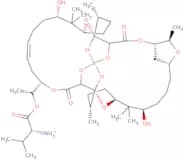
CAS:<p>Boromycin is a macrolide antibiotic, which is derived from the fermentation of certain strains of Streptomyces bacteria. It operates as an ionophore with the ability to transport ions across lipid membranes, effectively disrupting ionic gradients. This mechanism of action compromises essential cellular processes in target organisms, thereby exerting its antimicrobial effects.</p>Formula:C45H74BNO15Purity:Min. 95%Molecular weight:879.88 g/molPiromidic acid
CAS:<p>Quinolone antibiotic; antimalarial</p>Formula:C14H16N4O3Purity:Min. 95%Color and Shape:Off-White PowderMolecular weight:288.3 g/molCefpodoxime acid
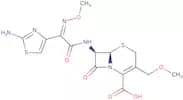
CAS:<p>Cefpodoxime acid is a third-generation cephalosporin antibiotic with action on bacterial cell wall synthesis and is used for treating respiratory tract infections, skin infections, and urinary tract infections.</p>Formula:C15H17N5O6S2Purity:Min. 95 Area-%Color and Shape:Off-White PowderMolecular weight:427.46 g/molIsepamicin sulphate
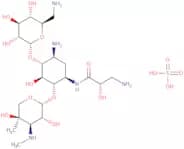
CAS:<p>Isepamicin Sulphate is an aminoglycoside antibiotic with a mode of action that inhibits bacterial protein synthesis by binding to the 30S ribosomal subunit. It is used for treating infections caused by gram-negative bacteria.</p>Formula:C22H43N5O12•H2SO4Purity:Min. 95%Color and Shape:White PowderMolecular weight:667.68 g/molDaptomycin
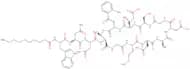
CAS:<p>Daptomycin is a cyclic lipopeptide that disrupts cell membrane potential and causes leakage from the cell. The antibacterial effects are limited to gram-positive bacteria since daptomycin cant reach the outer membrane of gram-negative species. It is often used for infections cause by vancomycin-resistant enterococci and staphylococci.</p>Formula:C72H101N17O26Purity:Min. 93 Area-%Color and Shape:Brown White PowderMolecular weight:1,620.67 g/molSitafloxacin sesquihydrate
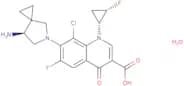
CAS:<p>Sitafloxacin sesquihydrate is a fourth-generation fluoroquinolone antibiotic with action on bacterial DNA gyrase and topoisomerase IV and is used for treating respiratory, urinary, and gastrointestinal infections.</p>Formula:C19H18ClF2N3O3•(H2O)1Purity:Min. 98 Area-%Color and Shape:PowderMolecular weight:436.84 g/molKanamycin
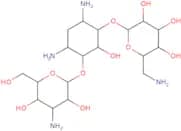
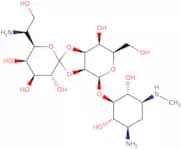
CAS:<p>Kanamycin is a broad spectrum antibiotic active against both gram-positive and gram-negative bacteria. It is used to treat severe infections including sepsis and tuberculosis. It is another selection agent commonly used to screen bacteria, such as, E. coli, but also suitable for yeast specie,s such as, P. pastoris and plastid transformation of tobacco.</p>Formula:C18H36N4O11Purity:Min. 95%Color and Shape:PowderMolecular weight:484.5 g/mol25-Desacetylrifampin
CAS:<p>25-Desacetylrifampin is the main metabolite of rifampicin, used in the treatment of tuberculosis. 25-Desacetylrifampin has partial actvity.</p>Formula:C41H56N4O11Purity:Min. 94 Area-%Color and Shape:PowderMolecular weight:780.9 g/molCephalothin sodium
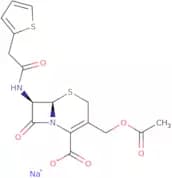
CAS:<p>Cephalothin sodium is a first-generation cephalosporin antibiotic with action on bacterial cell wall synthesis and is used for treating bacterial infections such as respiratory tract infections and skin infections.</p>Formula:C16H15N2NaO6S2Purity:Min. 97 Area-%Color and Shape:White Yellow PowderMolecular weight:418.42 g/molTetracycline hydrochloride
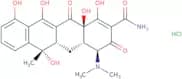
CAS:<p>Antibiotic of tetracycline class; protein synthesis inhibitor</p>Formula:C22H25ClN2O8Color and Shape:Yellow PowderMolecular weight:480.9 g/molHygromycin B - min 90%
CAS:<p>Inhibitor of protein synthesis; aminoglycoside</p>Formula:C20H37N3O13Purity:Min. 90 Area-%Color and Shape:PowderMolecular weight:527.52 g/molMeropenem trihydrate, Antibiotic for Culture Media Use Only
CAS:<p>Meropenem trihydrate has broad spectrum activity against Gram-positive and Gram-negative bacteria, as well as, some mycoplasma species. It inhibits cell wall synthesis by binding to bacterial penicillin-binding proteins (PBP), which impairs cell wall integrity, induces the formation of reactive oxygen species, and inhibits macromolecular synthesis in bacteria. It can be used to prevent bacterial growth after being exposed to meropenem through fluorescence imaging of human blood plasma. Meropenem trihydrate research studies showed a reduction of the allergen levels in patients with respiratory allergies or asthma, specifically dust mites, cockroaches, animal dander, pollen grains, etc. by inhibit allergen-induced sensitization of mast cells.</p>Formula:C17H31N3O8SPurity:Min. 98.0 Area-%Molecular weight:437.51 g/molSulfapyridine
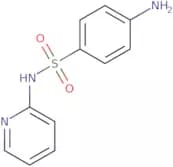
CAS:<p>A sulfanilide anti-bacterial agent used to treat various skin diseases</p>Formula:C11H11N3O2SPurity:Min. 98.0 Area-%Color and Shape:PowderMolecular weight:249.29 g/molNitrofurantoin
CAS:<p>Nitrofurantoin is an antimicrobial agent, which is a synthetic chemical compound with bactericidal activity. Its source is synthetic, originating from the nitrofuran class of compounds. Nitrofurantoin's mode of action involves the inhibition of essential bacterial enzymes. It is reduced by bacterial flavoproteins to active intermediates, which subsequently alter or disrupt ribosomal proteins, DNA, and other vital macromolecules within bacterial cells, thereby inhibiting key metabolic processes.</p>Formula:C8H6N4O5Purity:Min. 98 Area-%Color and Shape:Yellow PowderMolecular weight:238.16 g/molGatifloxacin
CAS:<p>Gatifloxacin is an antibiotic, which is a synthetic fluoroquinolone with broad-spectrum antibacterial activity. Its source lies in its chemical synthesis, designed to inhibit bacterial enzymes necessary for DNA replication. The mode of action involves the inhibition of bacterial DNA gyrase and topoisomerase IV, which are critical enzymes for bacterial DNA replication, transcription, and repair. This dual inhibitory mechanism disrupts bacterial cell division and growth, leading to the eventual eradication of susceptible bacterial strains.</p>Formula:C19H22FN3O4Purity:Min. 95%Color and Shape:White PowderMolecular weight:375.39 g/molTetracycline hydrochloride - USP
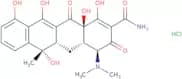
CAS:<p>Tetracycline hydrochloride - USP is a broad-spectrum antibiotic, which is a synthetic derivative of chlortetracycline produced from the bacterium *Streptomyces aureofaciens*. It functions by inhibiting protein synthesis in bacteria, specifically binding to the 30S ribosomal subunit. This action prevents the attachment of aminoacyl-tRNA to the mRNA-ribosome complex, thereby halting bacterial growth and replication.</p>Formula:C22H25ClN2O8Color and Shape:Yellow PowderMolecular weight:480.9 g/molBalofloxacin
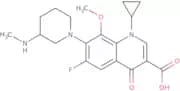
CAS:<p>Balofloxacin is a fluoroquinolone antibiotic and is used for the treatment of bacterial infections. It inhibits DNA gyrase and topoisomerase IV, preventing DNA replication and transcription.</p>Formula:C20H24FN3O4·2H2OPurity:Min. 95%Color and Shape:PowderMolecular weight:425.45 g/mol