Antibiotics
Subcategories of "Antibiotics"
- Macrolide Antibiotics(26 products)
- Steroidal Antibiotics(31 products)
- Tetracycline Antibiotics(20 products)
- β-Lactam Antibiotics(11 products)
Found 4116 products of "Antibiotics"
Sulbenicillin
CAS:Sulbenicillin is a semi-synthetic penicillin antibiotic, which is derived from 6-aminopenicillanic acid, a natural precursor in the biosynthesis of penicillins. With its beta-lactam structure, Sulbenicillin disrupts bacterial cell wall synthesis by inhibiting penicillin-binding proteins, which are essential enzymes in the cross-linking of peptidoglycan layers. This disruption compromises the structural integrity of the bacterial cell wall, resulting in cell lysis and death, particularly in Gram-negative bacteria.Formula:C16H18N2O7S2Purity:Min. 95%Molecular weight:414.46 g/molClindamycin
CAS:Inhibitor of protein synthesis; lincosamide classFormula:C18H33ClN2O5SPurity:Min. 95%Molecular weight:424.98 g/molTigecycline Impurity 8
Tigecycline Impurity 8 is a chemical impurity associated with Tigecycline, which is a glycylcycline antibiotic. This impurity is typically synthesized or isolated as a part of pharmaceutical development and quality control processes. Its source is inherently linked to the chemical synthesis of Tigecycline, where it may arise as a byproduct or degradation product.Formula:C29H37N5O8Purity:Min. 95%Molecular weight:583.65 g/mol2'-Deoxycoformycin
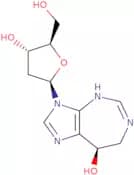
CAS:2'-Deoxycoformycin is a potent adenosine deaminase inhibitor, which is derived from the fermentation of Streptomyces antibioticus, a species of actinomycete bacteria. This compound acts by specifically inhibiting the enzyme adenosine deaminase, leading to an accumulation of toxic deoxyadenosine triphosphate in lymphocytes. This buildup hinders DNA synthesis, effectively suppressing the proliferation of lymphoid cells.Formula:C11H16N4O4Purity:Min. 95%Molecular weight:268.27 g/molAspterric acid
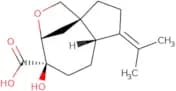
CAS:Plant growth regulatorFormula:C15H22O4Purity:Min. 95%Molecular weight:266.33 g/molErythromycin B
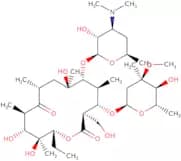
CAS:Erythromycin B is a semisynthetic macrolide antibiotic, which is derived from the actinomycete *Saccharopolyspora erythraea*. Its mode of action involves inhibiting bacterial protein synthesis by binding to the 50S ribosomal subunit. This interference with protein synthesis effectively hampers bacterial growth, making it a potent bacteriostatic agent.Formula:C37H67NO12Purity:90%NmrMolecular weight:717.93 g/molDoxycycline hydrochloride hemiethanolate hemihydrate, Antibiotic for Culture Media Use Only
CAS:Doxycycline is an antibiotic that inhibits bacterial growth by inhibiting protein synthesis, respiratory chain, DNA gyrase, DNA topoisomerase IV. Doxycycline inhibits papaverine by blocking the expression of both cytochrome P450 and epoxide hydrolase. Doxycycline is commonly found in studies for bacterial infections, drug therapy, histopathological studies, cell culture and chemometric analysis.
Formula:C22H24N2O8·HClH2OC2H6OPurity:Min. 97.0 Area-%Molecular weight:512.90 g/molErythromycin F
CAS:Erythromycin F is an antibiotic, which is a naturally derived product obtained from the bacterium *Streptomyces erythreus*. It operates by inhibiting bacterial protein synthesis through binding to the 50S ribosomal subunit. This binding effectively blocks the translocation steps in protein elongation, thus preventing the growth and multiplication of susceptible bacteria.Formula:C37H67NO14Purity:Min. 95%Molecular weight:749.93 g/molDihydrostreptomycin sesquisulfate
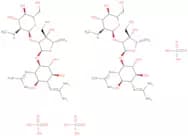
CAS:Dihydrostreptomycin sesquisulfate is an aminoglycoside antibiotic, which is derived from the bacterium Streptomyces griseus. Its mode of action involves binding to the 30S subunit of the bacterial ribosome, leading to the disruption of protein synthesis. This binding interferes with the initiation complex formation, causing misreading of mRNA and ultimately inhibiting bacterial growth.Formula:C21H41N7O12•(H2SO4)1Purity:Min. 95%Molecular weight:730.71 g/mol3'-N,N-Di(desmethyl)-3'-N-formyl azithromycin
CAS:3'-N,N-Di(desmethyl)-3'-N-formyl azithromycin is a semisynthetic macrolide antibiotic derivative, which is synthesized through chemical modification of azithromycin. Azithromycin is originally derived from erythromycin, which is produced by the bacterium Saccharopolyspora erythraea. The modifications in this derivative result in enhanced specificity and altered pharmacokinetic properties compared to the parent compound.
Formula:C37H68N2O13Purity:Min. 95%Color and Shape:White/Off-White SolidMolecular weight:748.94 g/molCeftibuten Hydrate
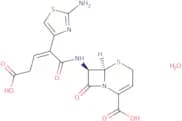
CAS:Ceftibuten Hydrate is a third-generation cephalosporin antibiotic, which is a synthetic derivative of naturally occurring cephalosporin C, derived from the fungus Acremonium. It functions by inhibiting bacterial cell wall synthesis, leading to cell lysis and death. This bactericidal action is accomplished through the binding to specific penicillin-binding proteins (PBPs) located inside the bacterial cell wall, disrupting the final transpeptidation step of peptidoglycan synthesis in bacterial cell walls.Formula:C15H14N4O6S2·xH2OPurity:Min. 95%Molecular weight:410.42 g/molFinafloxacin
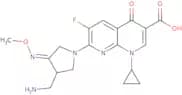
CAS:Finafloxacin is a fluoroquinolone antibacterial agent, which is a synthetic compound derived from the quinolone family. It functions through the inhibition of bacterial DNA gyrase and topoisomerase IV, crucial enzymes in the replication, transcription, and repair of bacterial DNA. This mechanism leads to the prevention of bacterial cell division and ultimately results in cell death.Formula:C20H19FN4O4Purity:Min. 95%Molecular weight:398.39 g/molThiamphenicol
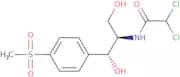
CAS:Thiamphenicol is a semisynthetic derivative of chloramphenicol with action on bacterial protein synthesis inhibition and is used for treating bacterial infections, particularly in veterinary medicine.Formula:C12H15Cl2NO5SPurity:Min. 98 Area-%Color and Shape:PowderMolecular weight:356.22 g/mol1,3''-Di-HABA kanamycin A
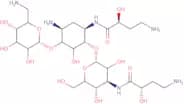
CAS:1,3''-Di-HABA kanamycin A is a chemically modified antibiotic derivative. It is derived from kanamycin A, a well-known aminoglycoside antibiotic that is originally sourced from the bacterium *Streptomyces kanamyceticus*. The modification with 1,3''-Di-HABA alters its pharmacodynamic properties, potentially influencing its specificity and interaction with biological targets.Formula:C26H50N6O15Purity:Min. 95%Molecular weight:686.71 g/molClindamycin-2,3-diphosphate
Clindamycin-2,3-diphosphate is a biochemical compound, which is derived from the antibiotic clindamycin, sourced through chemical modification to include diphosphate groups. Its mode of action involves inhibiting bacterial protein synthesis by binding to the 50S ribosomal subunit, thus interfering with peptide chain initiation and elongation. This disruption effectively halts bacterial growth, particularly in Gram-positive bacteria, and is crucial in combatting infections resistant to other antibiotics.Formula:C18H35ClN2O11P2SPurity:Min. 95%Molecular weight:584.94 g/molCefazolin, Antibiotic for Culture Media Use Only
CAS:Cefazolin is a semi-synthetic, non-beta lactam antibiotic used for the treatment of a variety of bacterial infections. It inhibits cell wall synthesis by binding to one or more of penicillin-binding proteins (PBPs), which are bacterial transpeptidases that crosslink peptidoglycan strands. Cefazolin binds to PBPs present on the surface of all Gram-negative bacteria as well as many Gram-positive bacteria. It is not effective against methicillin-resistant staphylococcus and MRSA unless combined with another antibiotic such as vancomycin or flucloxacillin. A study showed that cefazolin can decrease inflammation and tumor necrosis factor-beta levels in pregnant women with systemic inflammatory disease. It has been tested in the development of an anti-inflammatory agent for use in patients with autoimmune diseases such as rheumatoid arthritis and lupus erythe.Formula:C14H14N8O4S3Molecular weight:454.51 g/molGemifioxacin
CAS:Gemifloxacin is an antibacterial agent primarily classified as a fluoroquinolone antibiotic, which is a synthetic compound derived from chemical processes in pharmaceutical manufacturing. Its mechanism of action involves the inhibition of key bacterial enzymes, namely DNA gyrase and topoisomerase IV. These enzymes are crucial for bacterial DNA replication, transcription, repair, and recombination. By obstructing these enzymes, Gemifloxacin effectively inhibits bacterial cell division and growth, leading to the eradication of susceptible bacterial strains.Formula:C18H20FN5O4Purity:Min. 95%Molecular weight:389.38 g/molHypothemycin
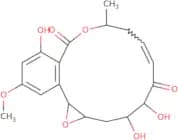
CAS:Hypothemycin is a natural product that serves as a potent inhibitor of protein kinases. It is derived from the fungus Hypomyces subiculosus and belongs to the class of resorcylic acid lactones. Its mode of action involves binding covalently to the ATP-binding site of kinases, leading to the inhibition of their activity. This covalent modification is achieved through the formation of a Michael-type addition with a reactive ene-diene functionality within its structure. By targeting these critical enzymes, hypothemycin disrupts key signaling pathways that are essential for cell growth and proliferation.Purity:Min. 95%Dicloxacillin sodium salt monohydrate
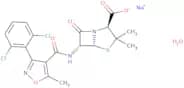
CAS:Dicloxacillin sodium salt monohydrate is a beta-lactam antibiotic with action on bacterial cell wall synthesis and is used for treating infections caused by penicillinase-producing bacteria.
Formula:C19H16Cl2N3NaO5S·H2OPurity:Min. 95%Color and Shape:White PowderMolecular weight:510.32 g/molPeplomycin sulfate
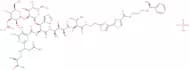
CAS:Peplomycin sulfate is an anticancer antibiotic, which is a derivative of the bleomycin family of glycopeptide antibiotics produced by the bacterium *Streptomyces verticillus*. This antibiotic operates through a mode of action that involves the induction of DNA strand breaks by forming a complex with iron and oxygen, leading to the generation of free radicals. These radicals cleave DNA strands, thereby inhibiting DNA synthesis and inducing apoptosis in cancerous cells.Formula:C61H90N18O25S3Purity:Min. 95%Molecular weight:1,571.67 g/mol