Heterocycles with Nitrogen (N)
In this category, you will find a wide variety of nitrogen-containing heterocycles. Heterocycles are carbon chains that form a cycle in which at least one position is occupied by a heteroatom, in this case, nitrogen. These compounds are integral in the synthesis of pharmaceuticals, agrochemicals, and dyes, offering unique reactivity and stability. At CymitQuimica, we provide a comprehensive selection of high-quality nitrogen-containing heterocycles to support your research and industrial applications
Subcategories of "Heterocycles with Nitrogen (N)"
- Azepane(434 products)
- Benzotriazoles(436 products)
- Diazepanes(331 products)
- Imidazoles(4,006 products)
- Imidazolines(385 products)
- Isoxazole(1,077 products)
- Piperazines(3,735 products)
- Piperidines(8,394 products)
- Pyrazines(1,297 products)
- Pyrazole(5,919 products)
- Pyrazolidine(21 products)
- Pyrazoline(142 products)
- Pyridazine(856 products)
- Pyridines(21,910 products)
- Pyrimidine(6,038 products)
- Pyrroles(2,440 products)
- Pyrrolidines(5,814 products)
- Pyrroline(48 products)
- Pyrrolo[1,2-b]pyridazine(10 products)
- Tetrazole(510 products)
- Triazines(462 products)
- Triazoles(1,679 products)
Show 14 more subcategories
Found 17855 products of "Heterocycles with Nitrogen (N)"
Sort by
Purity (%)
0
100
|
0
|
50
|
90
|
95
|
100
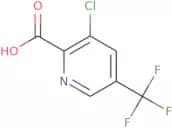
3-Chloro-5-(trifluoromethyl)pyridine-2-carboxylic acid
CAS:<p>The compound 3-Chloro-5-(trifluoromethyl)pyridine-2-carboxylic acid is a synthetic intermediate that has been used in the synthesis of amides with high analytical quality. It is also an important reagent for the synthesis of many pharmaceuticals and agrochemicals. In addition, 3-chloro-5-(trifluoromethyl)pyridine-2-carboxylic acid has been shown to have dose dependent phytotoxic effects and causes plant growth inhibition.</p>Formula:C7H3ClF3NO2Purity:Min. 95%Color and Shape:White PowderMolecular weight:225.55 g/mol2-Aminomethyl-3-chloropyrazine
CAS:<p>2-Aminomethyl-3-chloropyrazine is a potent inhibitor of the tyrosine kinase, which is an enzyme that controls the transmission of signals from outside the cell to inside. It inhibits collagen production by cells, thereby preventing cancer formation. 2-Aminomethyl-3-chloropyrazine has been shown to inhibit tumor growth in mice and rats. This drug also inhibits the activity of certain enzymes, including piperidine oxidase and xanthine oxidase, which are involved in the production of reactive oxygen species that can cause cancer. The drug's selectivity for tumor cells makes it a potential candidate for treating cancer.</p>Formula:C5H5ClN3Purity:Min. 95%Molecular weight:143.58 g/mol2-Chlorobenzimidazole
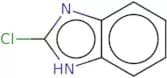
CAS:<p>2-Chlorobenzimidazole is an analog of benzimidazole that has been synthesized by Langmuir adsorption isotherm. It is a white crystalline solid that can be dissolved in water and hydrochloric acid. 2-Chlorobenzimidazole inhibits the growth of herpes simplex virus by acting as a competitive inhibitor for the viral enzyme thymidine kinase, which catalyzes the conversion of thymine to thymidine. 2-Chlorobenzimidazole also binds to monoclonal antibodies, inhibiting their binding to their corresponding antigens. This activity may be due to its ability to bind covalently with amino groups on proteins and other molecules. Magnetic resonance spectroscopy has shown that 2-chlorobenzimidazole binds tightly with protonated (positively charged) phosphorous atoms within cells.</p>Formula:C7H5ClN2Purity:Min. 95%Color and Shape:White PowderMolecular weight:152.58 g/mol2-(1H-Imidazol-2-yl)pyridine
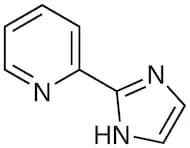
CAS:Formula:C8H7N3Purity:>98.0%(GC)(T)Color and Shape:White to Light yellow to Light orange powder to crystalMolecular weight:145.174-Amino-pyridine-2-carboxylic acid methyl ester
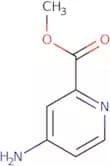
CAS:<p>4-Amino-pyridine-2-carboxylic acid methyl ester is a compound that is used as a reactant, reagent, and building block in organic synthesis. It is also useful for the preparation of complex compounds. 4-Amino-pyridine-2-carboxylic acid methyl ester is soluble in water and has a melting point of 183°C. The CAS number for this chemical is 71469-93-7.</p>Formula:C7H8N2O2Purity:Min. 95%Color and Shape:White PowderMolecular weight:152.15 g/mol2-Chloro-4-methyl-6-methylsulfanylpyrimidine
CAS:<p>2-Chloro-4-methyl-6-methylsulfanylpyrimidine is a high quality chemical that is an intermediate for organic synthesis. It is a reagent and useful intermediate in the production of complex compounds. 2-Chloro-4-methyl-6-methylsulfanylpyrimidine has been shown to be a building block for use in synthesizing fine chemicals, pharmaceuticals, and pesticides. This compound can also be used as a reaction component for the synthesis of other chemicals, making it an important research chemical. <br>2-Chloro-4-methyl-6-methylsulfanylpyrimidine is soluble in water and insoluble in ethanol or ether. It has CAS No. 89466-59-1 and a molecular weight of 238.2 g/mol.br>br><br>2CMSMP can be used to produce various compounds such as:</p>Formula:C6H7ClN2SPurity:Min. 95%Color and Shape:PowderMolecular weight:174.65 g/mol2-(1-Benzylpiperidin-4-yl)ethanamine
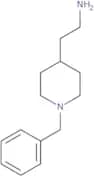
CAS:<p>2-(1-Benzylpiperidin-4-yl)ethanamine is a linker that has been shown to have neuroprotective, antioxidant, and anti-inflammatory properties. It can be used as an innovative drug for the treatment of Alzheimer's disease and other neurological disorders. 2-(1-Benzylpiperidin-4-yl)ethanamine has been shown to exhibit significant antioxidant activity in biochemical assays and molecular modeling. This compound interacts with a number of proteins involved in oxidative stress including NADPH oxidases, peroxiredoxins, catalases, glutathione reductase, cytochrome p450s, mycobacterium tuberculosis protein ESX1 secretion system protein (ESX1), and thioredoxin reductase 1.</p>Formula:C14H22N2Purity:Min. 95%Color and Shape:Colorless Clear LiquidMolecular weight:218.34 g/mol2,4,6-Triaminopyrimidine
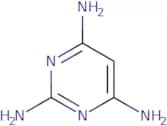
CAS:<p>2,4,6-Triaminopyrimidine is an organic compound that can be found in a variety of sources. It is used as a research chemical and has shown to have anti-inflammatory properties in the rat kidney. This compound has been shown to bind with nucleobases and form hydrogen bonds with glycosidic bonds. 2,4,6-Triaminopyrimidine has also been shown to be a ligand for affinity chromatography.</p>Formula:C4H7N5Purity:Min. 95%Color and Shape:Off-White To Yellow SolidMolecular weight:125.070156-Ethylmercaptopurine
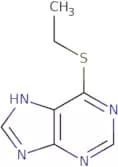
CAS:<p>6-Ethylmercaptopurine is a purine analogue that inhibits the synthesis of DNA. It is used as an inhibitor of protein synthesis and in the treatment of inflammatory bowel disease. 6-Ethylmercaptopurine has been shown to inhibit the activity of ATPase, which may be responsible for its ability to suppress the proliferation of cells. This drug can also act as an analog to adenosine, which can be used to determine ATP levels in a cell or tissue sample by measuring the amount of p-nitrophenyl phosphate produced. 6-Ethylmercaptopurine has been shown to block phosphatase activity, which may lead to inflammation in some cases.<br>6-Ethylmercaptopurine has a molecular weight of 194.2 g/mol and an optimum pH of 4.5</p>Formula:C7H8N4SPurity:Min. 95%Color and Shape:Off-White PowderMolecular weight:180.23 g/mol2-Bromo-3-pyridinol
CAS:<p>2-Bromo-3-pyridinol is a nicotinic acetylcholine receptor antagonist that has anti-influenza activity. It was synthesized as an analogue of the natural product pyridostigmine, which inhibited influenza in mice. 2-Bromo-3-pyridinol binds to the nicotinic acetylcholine receptor at the same site as nicotine and prevents it from being activated by acetylcholine. This drug also inhibits tumor growth and proliferation in vitro and in vivo, showing potent cytotoxicity against carcinoma cells by inhibiting protein synthesis and cell division. 2-Bromo-3-pyridinol has been shown to inhibit Alzheimer's disease in a mouse model of this disorder. The drug inhibits amyloid plaque formation and toxicity in cultured cells, suggesting its potential for treating this disease.</p>Formula:C5H4BrNOPurity:Min. 95%Color and Shape:White To Off-White SolidMolecular weight:174 g/mol2-Amino-3-pyridinecarbonitrile
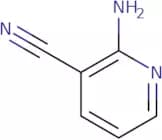
CAS:<p>2-Amino-3-pyridinecarbonitrile is an analgesic that belongs to the group of nonsteroidal anti-inflammatory drugs. It is a member of the class of chemical compounds known as aminopyridines. 2-Amino-3-pyridinecarbonitrile has been shown to have a high affinity for binding to the water vapor in cells, and has physiological effects on tissues. 2APC binds to adenosine receptors in cell membranes and blocks their activation. As a result, it inhibits the release of substances such as prostaglandins and leukotrienes that are involved in inflammation. This drug also has an inhibitory effect on the growth of cancerous cells by interfering with cell proliferation.</p>Purity:Min. 95%Color and Shape:PowderMolecular weight:119.12 g/mol4-Chloro-6-hydroxypyrimidine
CAS:<p>4-Chloro-6-hydroxypyrimidine is an organic compound that is used as a precursor to other chemical compounds. It can be prepared by the reaction of ethylene with chlorine in the presence of carbon disulphide. 4-Chloro-6-hydroxypyrimidine has been shown to react with halides, amidines, and ethylene to form tritiated pyrimidines. It also reacts with disulphides, chlorinates and uracil. 4-Chloro-6-hydroxypyrimidine is reactive and can undergo desulfurization reactions with aluminium and malonate to form chloride or sulphoxide. The halides, amidines, and ethylene are all reactive substances that can react with each other or undergo other reactions to form new substances.</p>Formula:C4H3ClN2OPurity:Min. 95%Color and Shape:White To Light (Or Pale) Yellow SolidMolecular weight:130.53 g/mol2,6-Dibromopyrazine
CAS:<p>2,6-Dibromopyrazine is a quinoxaline molecule with two nitrogen atoms. It is an electropolymerizable material that can be used to create patterned surfaces. 2,6-Dibromopyrazine has been used in the fabrication of devices such as fluorescent lamps and light emitting diodes (LEDs). The fluorescence of these devices depends on the alignment of molecules within the device. The number and position of nitrogen atoms in the molecule determine the wavelength emission. 2,6-Dibromopyrazine is a structural isomer of 1,8-dibromopyrazine.<br>2,6-Dibromopyrazine has homologues such as anilines and amines that have been used in organic synthesis for decades.</p>Formula:C4H2Br2N2Purity:Min. 95%Color and Shape:SolidMolecular weight:237.88 g/molTetrahydro-1,3-dimethyl-1H-pyrimidin-2-one
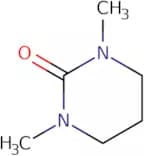
CAS:<p>Tetrahydro-1,3-dimethyl-1H-pyrimidin-2-one is an organic compound that is used in the synthesis of drugs and other organic compounds. It can be synthesized by reacting hydrogen fluoride with nitrogen atoms. Tetrahydro-1,3-dimethyl-1H-pyrimidin-2-one can form stable complexes with iodination reactions and has been used to prepare monoclonal antibodies. This molecule has also been studied using x-ray crystal structures and titration calorimetry to investigate its reaction mechanism. The light emission from this molecule is due to intermolecular hydrogen bonding between a pyrazole ring and a phenyl ring.</p>Formula:C6H12N2OPurity:Min. 98%Color and Shape:Colorless Slightly Yellow Clear LiquidMolecular weight:128.17 g/mol1-Methyl-4-phenyl-piperazine
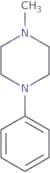
CAS:Controlled Product<p>1-Methyl-4-phenyl-piperazine (MPP) is a drug that inhibits the serine protease and blocks the activation of tyrosine kinases. It is used in diagnostic testing to identify mutations in genes encoding for serine proteases, such as trypsin, chymotrypsin, and elastase. MPP has been shown to reduce blood pressure in rats by blocking the 5-HT4 receptor. This compound also enhances mitochondrial membrane potential and emits light when it is excited by an electron beam.</p>Formula:C11H16N2Purity:Min. 95%Color and Shape:Colorless PowderMolecular weight:176.26 g/molMethyl 5-methoxy-2-methylindole-3-acetate
CAS:<p>Methyl 5-methoxy-2-methylindole-3-acetate is a versatile building block that can be used as a research chemical, reagent, or speciality chemical. It is also an intermediate in the synthesis of other compounds and has been shown to be useful in reactions involving nucleophilic substitution and electrophilic addition. This compound can be used as a scaffold for complex organic molecules. CAS No. 7588-36-5</p>Formula:C13H15NO3Purity:Min. 95%Color and Shape:Beige SolidMolecular weight:233.26 g/mol1-(4-Bromophenyl)piperazine
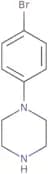
CAS:Controlled Product<p>1-(4-Bromophenyl)piperazine is a chemical that is used in the synthesis of pharmaceuticals, such as antidepressants. It has been shown to inhibit monoamine neurotransmitter reuptake, including serotonin and dopamine. It also has an inhibitory effect on 5-hydroxytryptamine (5HT) release from nerve terminals and its binding to the 5HT7 receptor. 1-(4-Bromophenyl)piperazine can be used in chromatographic methods for validation of impurities, potential impurities, and other substances.</p>Formula:C10H13BrN2Purity:Min. 95 Area-%Color and Shape:PowderMolecular weight:241.13 g/mol1-Allylpiperazine
CAS:<p>1-Allylpiperazine is a synthetic molecule that has affinity values for the binding sites of 4-hydroxy-3-nitrophenylacetic acid and zearalenone. It has been shown to have anticancer activity in vitro, as well as antiadrenergic effects by acting as a competitive antagonist at adrenergic receptors. This compound also has potential use as a template molecule for the design of novel drugs with anticancer and antiadrenergic activity. 1-Allylpiperazine is synthesized from the monomers trimethylolpropane and piperazine in two steps. It is also known to be an inhibitor of cellular protein synthesis.</p>Formula:C7H14N2Purity:Min. 95%Color and Shape:Colourless to yellow liquid.Molecular weight:126.2 g/mol4-(3-Fluorophenyl)-4-piperidinol
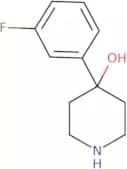
CAS:<p>4-(3-Fluorophenyl)-4-piperidinol is a useful chemical intermediate that can be used as a versatile building block in organic synthesis. It can be used as a reaction component and can serve as a speciality chemical, complex compound, or reagent. 4-(3-Fluorophenyl)-4-piperidinol has been identified by the Chemical Abstracts Service (CAS) number 80119-54-6. This product is of high quality and is not harmful to humans.</p>Formula:C11H14FNOPurity:Min. 95%Color and Shape:Orange PowderMolecular weight:195.23 g/mol2-Methylthio-4,6-dihydroxypyrimidine
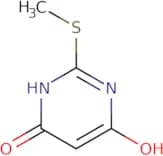
CAS:<p>2-Methylthio-4,6-dihydroxypyrimidine is an organic compound that has a hypsochromic and bathochromic effect. This ligand belongs to the group of neutral compounds and is found in its intramolecular hydrogen form. It also reacts with hydrochloric acid to form tautomers. 2-Methylthio-4,6-dihydroxypyrimidine can exist in two tautomeric forms: the chloride and oxalyl forms. The vibrational frequencies of these tautomers are different. 2-Methylthio-4,6-dihydroxypyrimidine is an intermediate in the synthesis of other chemical compounds such as chloropropionates, methanesulfonic acid, and piperazine.</p>Formula:C5H6N2O2SPurity:Min. 95%Color and Shape:PowderMolecular weight:158.18 g/mol