Heterocycles with Nitrogen (N)
In this category, you will find a wide variety of nitrogen-containing heterocycles. Heterocycles are carbon chains that form a cycle in which at least one position is occupied by a heteroatom, in this case, nitrogen. These compounds are integral in the synthesis of pharmaceuticals, agrochemicals, and dyes, offering unique reactivity and stability. At CymitQuimica, we provide a comprehensive selection of high-quality nitrogen-containing heterocycles to support your research and industrial applications
Subcategories of "Heterocycles with Nitrogen (N)"
- Azepane(434 products)
- Benzotriazoles(436 products)
- Diazepanes(331 products)
- Imidazoles(4,011 products)
- Imidazolines(385 products)
- Isoxazole(1,077 products)
- Piperazines(3,736 products)
- Piperidines(8,406 products)
- Pyrazines(1,299 products)
- Pyrazole(5,921 products)
- Pyrazolidine(21 products)
- Pyrazoline(142 products)
- Pyridazine(856 products)
- Pyridines(21,917 products)
- Pyrimidine(6,041 products)
- Pyrroles(2,443 products)
- Pyrrolidines(5,816 products)
- Pyrroline(48 products)
- Pyrrolo[1,2-b]pyridazine(10 products)
- Tetrazole(510 products)
- Triazines(462 products)
- Triazoles(1,680 products)
Show 14 more subcategories
Found 17855 products of "Heterocycles with Nitrogen (N)"
Sort by
Purity (%)
0
100
|
0
|
50
|
90
|
95
|
100
N-Nitroso ramipril
<p>Please enquire for more information about N-Nitroso ramipril including the price, delivery time and more detailed product information at the technical inquiry form on this page</p>Formula:C23H31N3O6Purity:Min. 95%Color and Shape:PowderMolecular weight:445.51 g/mol4-[2-(Fmoc-amino)ethyl]-1-piperazineacetic acid dihydrochloride
CAS:<p>Please enquire for more information about 4-[2-(Fmoc-amino)ethyl]-1-piperazineacetic acid dihydrochloride including the price, delivery time and more detailed product information at the technical inquiry form on this page</p>Formula:C23H27N3O4•2HClPurity:Min. 95%Color and Shape:PowderMolecular weight:482.4 g/mol3-Pyridineboronic acid
CAS:<p>3-Pyridineboronic acid is an antimicrobial agent that is used to treat bacterial and fungal infections. 3-Pyridineboronic acid is a prodrug that is metabolized to its active form, pyridinium boronate. This drug has been shown to be effective in the treatment of hypoxic tumors in mice, which are resistant to other anticancer drugs. 3-Pyridineboronic acid also has acidic properties and can be used as an antiseptic for the treatment of skin and eye infections. It can also be used as a hydrogen bonding partner when combined with halides, such as chloride or bromide ions. The drug binds to human serum proteins and forms an acidic complex that prevents bacterial growth by inhibiting protein synthesis. 3-Pyridineboronic acid also inhibits prostate cancer cells by competitively inhibiting the enzyme 4-pyridinylboronic acid reductase (4PBAR).</p>Formula:C5H6BNO2Purity:Min. 95%Molecular weight:122.92 g/mol2-Pyrimidinemethanol
CAS:<p>2-Pyrimidinemethanol is a pyrimidine derivative that is used as a starting material for the synthesis of other compounds. 2-Pyrimidinemethanol is introduced into the body through the skin, lungs and gastrointestinal tract. It has been shown to cause sensitization in humans and rats, with photoexcitation being an important factor in its activity. 2-Pyrimidinemethanol binds to DNA and inhibits protein synthesis by inhibiting ribonucleotide reductase (RNR). The active site of this enzyme contains iron, which is why this compound may be toxic to humans.</p>Formula:C5H6N2OPurity:Min. 95%Color and Shape:Light (Or Pale) Yellow To Brown LiquidMolecular weight:110.11 g/mol2-(Bromomethyl)pyridine hydrobromide
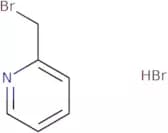
CAS:<p>This compound is an optical sensor that can be used to detect the presence of metal ions. It has a labile nature and is sensitive to light, which makes it ideal for use in fluorescence microscopy. 2-(Bromomethyl)pyridine hydrobromide has been shown to bind to nitric oxide and produce a strong fluorescent signal when exposed to copper ions. This probe can also be used as a molecular model for studying the interaction of metal ions with other molecules.</p>Formula:C6H6BrN•HBrPurity:Min. 95%Color and Shape:PowderMolecular weight:252.93 g/mol3-(Boc-amino)pyridine
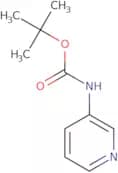
CAS:<p>3-(Boc-amino)pyridine is a glycine derivative with a trigonal, chelate ring. It can be hydrolyzed by acid to form 3-aminopyridine. 3-(Boc-amino)pyridine has been shown to react with trimethyltin chloride to form an intramolecular complex in the presence of alkyllithiums. This reaction proceeds through lithiation and methylation of the carboxyl group of 3-(Boc-amino)pyridine. The interaction between 3-(Boc-amino)pyridine and trimethyltin chloride forms an antiaromatic six membered ring that resembles a benzene molecule.</p>Formula:C10H14N2O2Purity:Min. 95%Molecular weight:194.23 g/mol4-(tert-Butyldimethylsilyloxymethyl)pyridine
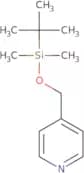
CAS:<p>4-(tert-Butyldimethylsilyloxymethyl)pyridine is a reagent that is used to prepare stoichiometric quantities of triethyloxonium ions in the presence of catalytic amounts of palladium. 4-(tert-Butyldimethylsilyloxymethyl)pyridine is also used as an anticancer agent, which may be due to its ability to inhibit cell proliferation and induce apoptosis. This compound has been shown to prevent the growth of micellar structures and reduce the rate of ester hydrolysis. It also has the ability to convert into two enantiomers, one with a hydroxyl group on the methylene carbon at position 4 and another with an alcohol group on this same carbon.</p>Formula:C12H21NOSiPurity:Min. 95%Color and Shape:Yellow LiquidMolecular weight:223.39 g/mol2-Bromo-5-methylpyrimidine
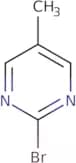
CAS:<p>Please enquire for more information about 2-Bromo-5-methylpyrimidine including the price, delivery time and more detailed product information at the technical inquiry form on this page</p>Formula:C5H5BrN2Purity:95%NmrMolecular weight:173.01 g/mol3-Iodo-1H-pyrrolo[2,3-b]pyridine
CAS:<p>3-Iodo-1H-pyrrolo[2,3-b]pyridine (3IOP) is a molecule that has been shown to be cytotoxic against human ovarian carcinoma cells. It induces significant cytotoxicity in cancer cell lines and inhibits the proliferation of lung fibroblasts. 3IOP has been shown to activate cellular signaling pathways and cause multinuclear DNA damage.</p>Formula:C7H5IN2Purity:Min. 95%Color and Shape:PowderMolecular weight:244.03 g/mol5-Hydroxypyrazine-2-carboxylic acid
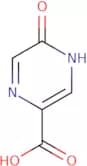
CAS:<p>5-Hydroxypyrazine-2-carboxylic acid is a drug that inhibits the activation of proteins involved in cell signaling pathways. It has been shown to have an inhibitory effect on the activation of protein kinase C, which plays a key role in the proliferation and differentiation of cells. 5-Hydroxypyrazine-2-carboxylic acid also inhibits sorafenib, a drug used for the treatment of cancer. Sorafenib is metabolized in rats by cytochrome P450 (CYP) enzymes, which are found in human liver tissue as well. The metabolism rate of sorafenib can be reduced by coadministration with caffeine or other substances that induce CYP activity. 5-Hydroxypyrazine-2-carboxylic acid is not active against pyrazinoic acid and pyrazine-2 carboxylate, which are metabolites produced by CYP enzymes.</p>Formula:C5H4N2O3Purity:Min. 98 Area-%Color and Shape:Brown PowderMolecular weight:140.1 g/mol2-[Chloro(4-chlorophenyl)methyl]-pyridine
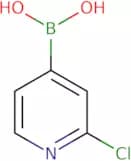
CAS:<p>Please enquire for more information about 2-[Chloro(4-chlorophenyl)methyl]-pyridine including the price, delivery time and more detailed product information at the technical inquiry form on this page</p>Formula:C12H9Cl2NPurity:Min. 95%Molecular weight:238.11 g/mol2-Chloropyridine-4-boronic acid
CAS:<p>2-Chloropyridine-4-boronic acid is a nicotinic acetylcholine receptor antagonist that has been shown to be effective against trypanosomiasis. It blocks the binding of acetylcholine to its receptor, which prevents the propagation of an action potential in the postsynaptic cell. 2-Chloropyridine-4-boronic acid inhibits the enzymes cyclooxygenase and prostaglandin synthase, which are involved in inflammation. 2-Chloropyridine-4-boronic acid is potent and selective for nicotinic acetylcholine receptors, but it also binds to other sites on the enzyme. The molecular modeling studies have shown that this compound has a pharmacophore that can be used as a guide for drug design.</p>Formula:C5H5BClNO2Purity:Min. 95%Molecular weight:157.36 g/mol4-Piperidylformylaminomethyl resin (200-400 mesh)
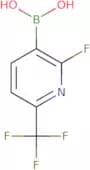
<p>Please enquire for more information about 4-Piperidylformylaminomethyl resin (200-400 mesh) including the price, delivery time and more detailed product information at the technical inquiry form on this page</p>Purity:Min. 95%Color and Shape:Solid2-Fluoro-6-(trifluoroMethyl)pyridine-3-boronic acid
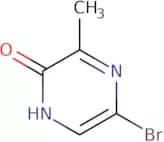
CAS:<p>Please enquire for more information about 2-Fluoro-6-(trifluoroMethyl)pyridine-3-boronic acid including the price, delivery time and more detailed product information at the technical inquiry form on this page</p>Formula:C6H4BF4NO2Purity:Min. 95%Molecular weight:208.91 g/mol5-Bromo-2-hydroxy-3-methyl pyrazine
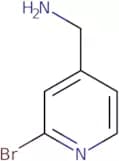
CAS:<p>Please enquire for more information about 5-Bromo-2-hydroxy-3-methyl pyrazine including the price, delivery time and more detailed product information at the technical inquiry form on this page</p>Purity:Min. 95%(2-Bromopyridin-4-yl)methanamine
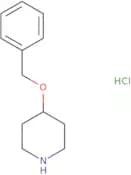
CAS:<p>Please enquire for more information about (2-Bromopyridin-4-yl)methanamine including the price, delivery time and more detailed product information at the technical inquiry form on this page</p>Purity:Min. 95%4-(Benzyloxy)piperidine HCl
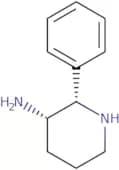
CAS:<p>4-(Benzyloxy)piperidine HCl is a versatile building block that is used in the synthesis of complex compounds such as research chemicals, reagents and speciality chemicals. 4-(Benzyloxy)piperidine HCl is also a useful intermediate in organic synthesis and can be used as a reaction component. 4-(Benzyloxy)piperidine HCl has CAS number 81151-68-0 and is a useful scaffold for chemical syntheses.</p>Formula:C12H17NOHClPurity:Min. 95%Color and Shape:White PowderMolecular weight:227.73 g/mol(2S,3S)-(-)-3-Amino-2-phenylpiperidine
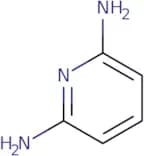
CAS:<p>The process of asymmetric epoxidation is used to convert alkenes into epoxides in a single step. This reaction is catalyzed by the use of a chiral catalyst with an enantiomeric excess (ee) greater than 50%. The reactants are added to the catalyst and hydrogen peroxide, which oxidizes the alkenes. The resulting epoxides can be isolated from the reaction mixture by distillation or extraction. Factors that affect this reaction include the type of reactant, solvent, temperature, and pressure.</p>Formula:C11H16N2Purity:Min. 95%Molecular weight:176.26 g/mol2,6-Diaminopyridine
CAS:<p>2,6-Diaminopyridine is a heterocyclic compound that is used in analytical chemistry as an indicator for the presence of protonated amines. It is prepared by coupling 2,6-diamino-pyridine with 1,3-benzodioxole-5-carboxylic acid. The nitrogen atoms are electron withdrawing groups and form hydrogen bonding interactions with the protonated amine. This type of interaction leads to a phase transition temperature of about 115°C and a high value for electrochemical impedance spectroscopy (EIS) measurements. The reaction mechanism involves the formation of a protonated amine from 2,6-diaminopyridine and 1,3-benzodioxole-5-carboxylic acid followed by proton transfer to yield the corresponding pyridinium salt.</p>Formula:C5H7N3Purity:Min. 95%Color and Shape:Beige To Brown SolidMolecular weight:109.13 g/mol3-Bromopyridin-4-ol
CAS:<p>3-Bromopyridin-4-ol is a pyrrole that can be used as a cancer therapy. It inhibits the growth of cancer cells by binding to the mkn-45 on the surface of the cell, which prevents it from binding to other proteins and initiating cell proliferation. 3-Bromopyridin-4-ol also inhibits 2-amino-4-hydroxypyridine aminations, which are reactions that produce compounds that promote cancer. This compound class has inhibitory activity against the growth of cancer cells in vitro and in vivo. 3-Bromopyridin-4-ol is an oxindole and amide with a hydroxy group on its side chain. It can be synthesized from 3-bromo-5 hydroxypyridine by reacting it with ammonia or methylamine. The synthesis of this compound can be achieved by reacting 2 chloroacetaldehyde with nitroethane in presence</p>Formula:C5H4BrNOPurity:Min. 95%Color and Shape:PowderMolecular weight:174 g/mol

![4-[2-(Fmoc-amino)ethyl]-1-piperazineacetic acid dihydrochloride](/_next/image/?url=https%3A%2Fstatic.cymitquimica.com%2Fproducts%2F3D%2Fthumb-webp%2FFF48264.webp&w=3840&q=75)


![3-Iodo-1H-pyrrolo[2,3-b]pyridine](/_next/image/?url=https%3A%2Fstatic.cymitquimica.com%2Fproducts%2F3D%2Fthumb-webp%2FFI42979.webp&w=3840&q=75)
![2-[Chloro(4-chlorophenyl)methyl]-pyridine](/_next/image/?url=https%3A%2Fstatic.cymitquimica.com%2Fproducts%2F3D%2Fthumb-webp%2FFC152996.webp&w=3840&q=75)