Heterocycles with Nitrogen (N)
Subcategories of "Heterocycles with Nitrogen (N)"
- Azepane(436 products)
- Benzotriazoles(438 products)
- Diazepanes(335 products)
- Imidazoles(4,031 products)
- Imidazolines(385 products)
- Isoxazole(1,088 products)
- Piperazines(3,758 products)
- Piperidines(8,443 products)
- Pyrazines(1,304 products)
- Pyrazole(5,960 products)
- Pyrazolidine(21 products)
- Pyrazoline(143 products)
- Pyridazine(860 products)
- Pyridines(22,005 products)
- Pyrimidine(6,084 products)
- Pyrroles(2,450 products)
- Pyrrolidines(5,840 products)
- Pyrroline(48 products)
- Pyrrolo[1,2-b]pyridazine(10 products)
- Tetrazole(531 products)
- Triazines(466 products)
- Triazoles(1,689 products)
Found 17863 products of "Heterocycles with Nitrogen (N)"
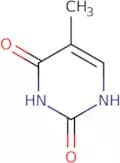
Thymine
CAS:Pyrimidine nucleobase; component of nucleic acids
Formula:C5H6N2O2Purity:Min. 99 Area-%Color and Shape:White PowderMolecular weight:126.11 g/molRef: 3D-FT06260
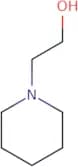
Discontinued product1-Piperidineethanol
CAS:1-Piperidineethanol is an active analogue of 1-piperidinepropanol. It has been shown to be a 5-HT4 receptor agonist that can inhibit the enzyme matrix polymerase, which is involved in the production of brain infarctions. The reaction mechanism for 1-piperidineethanol is not well understood, but it has been shown to react with hydrogen ions and amines to form a ternary complex. This complex reacts with hydrogen bond donors such as water or alcohols to form a reaction rate. The reaction rate depends on the concentration of hydrogen ions and amines in the solution.
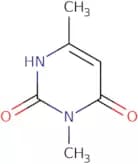
Formula:C7H15NOPurity:Min. 99%Color and Shape:Colorless Clear LiquidMolecular weight:129.2 g/mol3,6-Dimethylpyrimidine-2,4(1H,3H)-dione
CAS:3,6-Dimethylpyrimidine-2,4(1H,3H)-dione is a chemical compound that has been found to be active against influenza virus. It is an acidic compound that binds to positively charged amino acids on the viral envelope and inhibits viral fusion with host cells. The linker group in 3,6-dimethylpyrimidine-2,4(1H,3H)-dione is the same as that of dimethylsulfate, which is a chemical compound used for the synthesis of other compounds. X-ray diffraction data for this compound have been obtained at high resolution and show it to be a chloride salt. The chloride ion may be important in the antiviral activity of 3,6-dimethylpyrimidine-2,4(1H,3H)-dione because it can react with radicals formed during influenza replication. This compound also has antiradical activities against Coxsackievirus B3 (
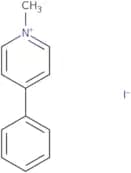
Formula:C6H8N2O2Purity:Min. 95%Molecular weight:140.14 g/molN-Methyl-4-phenylpyridinium iodide
CAS:N-Methyl-4-phenylpyridinium iodide is an experimental drug that has been shown to have a number of biological effects in vitro. These include the inhibition of dopamine uptake and mitochondrial membrane potential, leading to neuronal death. This drug also inhibits the uptake of gamma-aminobutyric acid (GABA) and the synthesis of tubule cells. N-Methyl-4-phenylpyridinium iodide has been shown to cause microglia cell activation by binding with the CB2 receptor on these cells. The compound also causes increased uptake of lithium ions into mitochondria, which leads to a reduction in mitochondrial membrane potential and subsequent neuronal death.
Formula:C12H12INPurity:Min. 95%Molecular weight:297.14 g/molRef: 3D-FM25717
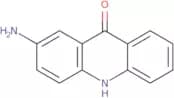
Discontinued product2-Aminoacridone
CAS:2-Aminoacridone is a fluorescent dye. The applications of 2-Aminoacridone are extensive in biochemical and analytical research. It is commonly employed in glycoprotein and glycoconjugate studies, leveraging its high sensitivity and specificity in detecting saccharide structures. Researchers utilize this dye in various assays, including high-performance liquid chromatography (HPLC) and electrophoresis, to analyze carbohydrate content and structure. Its role is critical in advancing our understanding of carbohydrate-related biological processes, such as cell signaling and disease pathogenesis, facilitating developments in both diagnostics and therapeutic strategies.
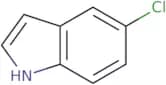
Formula:C13H10N2OPurity:Min. 95%Color and Shape:PowderMolecular weight:210.23 g/mol5-Chloroindole
CAS:5-Chloroindole is a molecule that can bind to the CB2 cannabinoid receptor. It has been shown in experiments to be an allosteric modulator of this receptor. 5-Chloroindole has been found to have an inhibitory effect on degenerative diseases, such as Huntington's disease and Alzheimer's disease, and may have therapeutic potential for these disorders. 5-Chloroindole binds to a metal surface by forming hydrogen bonds with the oxygen atom of its carboxyl group and the metal surface. The nucleophilic nature of 5-chloroindole allows it to react with chloride ions present in solution. 5-Chloroindole reacts with the carbon source in tissue culture, which leads to receptor activity and inhibition of cell proliferation.
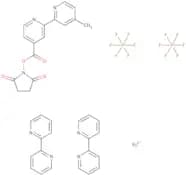
Formula:C8H6ClNColor and Shape:White PowderMolecular weight:151.59 g/molBis(2,2'-bipyridine)-4'-methyl-4-carboxybipyridine-ruthenium N-succinimidyl ester-bis(hexafluorophosphate)
CAS:Bis(2,2'-bipyridine)-4'-methyl-4-carboxybipyridine-ruthenium N-succinimidyl ester-bis(hexafluorophosphate) is a molecule that inhibits the activity of matrix metalloproteinases. It binds to the active site of the enzyme and blocks its activity. This drug has been shown to be effective in inhibiting the activity of MMPs in cells, but not in tissue culture because it does not cross cell membranes. Bis(2,2'-bipyridine)-4'-methyl-4-carboxybipyridine-ruthenium N-succinimidyl ester-bis(hexafluorophosphate) has also been shown to have a low detection limit and can detect low levels of matrix metalloproteinase activity in cells.
Formula:C36H29F12N7O4P2RuPurity:Min. 95%Color and Shape:PowderMolecular weight:1,014.66 g/molRef: 3D-FB29197
Discontinued product2,3-Dihydroxypyridine
CAS:2,3-Dihydroxypyridine is a chemical compound that is a metabolite of the amino acid histidine. It is an important hydrogen bond donor in biological systems. 2,3-Dihydroxypyridine has been shown to have anti-pandemic influenza activity against influenza A (H1N1) and B. The mechanism of this activity may be due to its ability to inhibit the synthesis and release of proinflammatory cytokines such as IL-6 and TNF-α. 2,3-Dihydroxypyridine also has potent anti-fungal activity against Candida albicans. This activity is due to its ability to bind to amine groups on proteins and disrupt hydrogen bonding interactions within the cell membrane. 2,3-Dihydroxypyridine has been shown to have transcriptional regulatory properties in vitro by binding to DNA at specific sequences near promoters or enhancers and inhibiting binding of other transcription factors
Formula:C5H5NO2Purity:Min. 95%Color and Shape:White PowderMolecular weight:111.1 g/molRef: 3D-FD34411
Discontinued product2-[N-[(3,5-Difluorophenyl)carbamoylamino]-C-methylcarbonimidoyl]pyridine-3-carboxylic acid
CAS:2-[N-[(3,5-Difluorophenyl)carbamoylamino]-C-methylcarbonimidoyl]pyridine-3-carboxylic acid (2FPC) is a potent herbicide that inhibits the fatty acid synthase enzyme and blocks cellular energy production. Fatty acid synthase is an important enzyme in the synthesis of essential fatty acids and this inhibition can lead to a number of health complications. 2FPC also inhibits epidermal growth factor receptor (EGFR) and glucocorticoid receptors, which can lead to autoimmune diseases. The compound has been shown to produce neurotoxic effects in animals and humans, including optical sensor activation and cation channel modulation. 2FPC is used as a herbicide to control weeds such as knapweed. It is also used as an anti-inflammatory agent in the treatment of rheumatoid arthritis.Formula:C15H12F2N4O3Purity:Min. 97 Area-%Color and Shape:PowderMolecular weight:334.28 g/molRef: 3D-FD101726
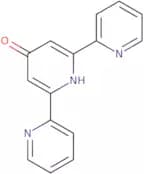
Discontinued product4'-Hydroxy-2,2':6',2''-terpyridine
CAS:4'-Hydroxy-2,2':6',2''-terpyridine is a molecule with the molecular formula C24H22N4O8. It is an organic compound that belongs to the group of heterocycles. It has been found to be a ligand for metal ions and has been shown to interact with particles at temperatures below 20°C. 4'-Hydroxy-2,2':6',2''-terpyridine crystallizes in two polymorphs: tetragonally (alpha) at room temperature and trigonally (beta) at temperatures below 20°C. The alpha form has been observed to undergo a photophysical reaction as it absorbs light and emits light in the ultraviolet region of the spectrum.
Formula:C15H11N3OPurity:Min. 95%Color and Shape:PowderMolecular weight:249.27 g/molRef: 3D-FH28808
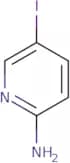
Discontinued product2-Amino-5-iodopyridine
CAS:2-Amino-5-iodopyridine (2-AI) is a water molecule that has been shown to have vibrational and optical properties. 2-AI is an orange pigment that is found in methyl ketones, such as 2,4,6-trimethylheptanone and 3,4,5-trimethylhexanone. 2-AI has also been used as a dye for wool in the past. 2-AI is not found naturally but can be synthesized from an aryl halide and ammonia or ammonium hydroxide. The synthesis of this compound involves the reaction of an aromatic amine and nitrous acid or diazonium salt. 2-AI can be used as an antimicrobial agent against bacteria by interfering with the nicotinic acetylcholine receptor on the bacterial cell membrane. FTIR spectroscopy can be used to identify its chemical structure.
Formula:C5H5IN2Purity:Min. 98 Area-%Color and Shape:White PowderMolecular weight:220.01 g/molRef: 3D-FA07093
Discontinued product[2-(Pyridin-2-ylthio)ethyl]amine dihydrochloride
CAS:2-(Pyridin-2-ylthio)ethyl]amine dihydrochloride is a chemical compound that has been used as a research reagent. It reacts with other compounds to produce new substances, and it can be used as a building block for more complex compounds. 2-(Pyridin-2-ylthio)ethyl]amine dihydrochloride is soluble in water and organic solvents such as acetone and ethanol, making it useful for reactions that require both types of solvents. This product also has CAS No. 40379-31-5, which means it is listed on the Chemical Abstracts Service registry. 2-(Pyridin-2-ylthio)ethyl]amine dihydrochloride has an interesting chemical structure that makes it a versatile building block or intermediate for many different reactions.
Formula:C7H10N2S•(HCl)2Purity:Min. 95%Color and Shape:PowderMolecular weight:227.15 g/molRef: 3D-FP121658
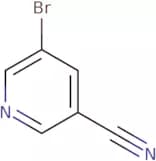
Discontinued product3-Cyano-5-bromopyridine
CAS:3-Cyano-5-bromopyridine is an enantiopure organic compound that belongs to the group of halides. It is a functional group that is a reagent in organic synthesis, and it can be used as a precursor to dyestuffs. 3-Cyano-5-bromopyridine has been shown to have antimicrobial activity against bacteria and fungi. It also has a metabotropic glutamate receptor subtype selective affinity, which may be due to its ability to bind with glutamate in complex molecules.
Formula:C6H3BrN2Purity:Min. 95%Color and Shape:White To Beige To Light (Or Pale) Yellow SolidMolecular weight:183.01 g/molRef: 3D-FC03449
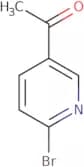
Discontinued product2-Bromo-5-acetylpyridine
CAS:2-Bromo-5-acetylpyridine is a chemical compound that belongs to the amide class. It has been shown to have an inhibitory effect on amines, which are compounds that are important in the production of urea and other substances. 2-Bromo-5-acetylpyridine can be used as an analog for imatinib, a kinase inhibitor. This compound may also be used as a chloride ion scavenger, which could be useful in the treatment of cancer. 2-Bromo-5-acetylpyridine has been shown to have anticancer activity in molecular modeling studies, but further research needs to be done to see if it is effective against cancer cells.
Formula:C7H6BrNOPurity:Min. 95%Color and Shape:PowderMolecular weight:200.03 g/molRef: 3D-FB38534
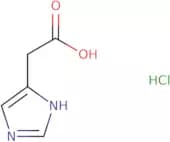
Discontinued product4-Imidazoleacetic acid HCl
CAS:4-Imidazoleacetic acid HCl is a fluorescent probe that binds to the α1 subunit of the dinucleotide phosphate (NADH) oxidoreductase. It has been shown to inhibit mitochondrial functions, which may be due to its ability to inhibit the pentose phosphate pathway and reduce reactive oxygen species levels. 4-Imidazoleacetic acid HCl has also shown inhibitory properties against congestive heart failure by acting on the mitochondria and inhibiting energy metabolism. It can also be used as a chemical biology tool for studying protein interactions with NADH dehydrogenase. The x-ray crystal structures have revealed that 4-imidazoleacetic acid HCl binds to the active site of NADH oxidoreductase with an orientation that mimics a substrate molecule. This allows it to bind tightly and disrupt enzyme activity.
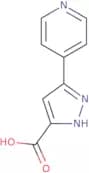
Formula:C5H6N2O2·HClPurity:Min. 95%Color and Shape:PowderMolecular weight:162.57 g/mol5-Pyridin-4-yl-1H-pyrazole-3-carboxylic acid
CAS:5-Pyridin-4-yl-1H-pyrazole-3-carboxylic acid is a white crystalline solid. It is soluble in water, methanol and ethanol. The molecular weight of 5-Pyridin-4-yl-1H-pyrazole-3 carboxylic acid is 177.17 g/mol. This compound has been found to have an elemental composition of C, H, N and O with a calculated density of 1.62 g/cm3 in the form of a single crystal x ray diffraction pattern. 5-Pyridin 4 yl 1H pyrazole 3 carboxylic acid has synergistic effects with other drugs used for chemotherapy such as cisplatin and doxorubicin against cancer cells.Formula:C9H7N3O2Purity:Min. 95%Color and Shape:PowderMolecular weight:189.17 g/molRef: 3D-FP56364
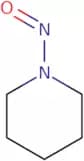
Discontinued productN-Nitrosopiperidine
CAS:N-Nitrosopiperidine is a nitrated aromatic amine that can be found in the environment. It has been shown to induce genotoxic effects and to inhibit liver microsomal enzyme activity. It is also shown to cause DNA damage in hl-60 cells and in the model system. N-Nitrosopiperidine may act by causing an increase in reactive oxygen species (ROS) production, which results in oxidative stress and cellular dysfunction. This compound has been shown to induce congestive heart failure, as well as chronic oral toxicity and maternal toxicity. N-Nitrosopiperidine has also been associated with hepatic tissues changes and fetal bovine abnormalities.
Formula:C5H10N2OPurity:Min. 95%Color and Shape:Yellow Clear LiquidMolecular weight:114.15 g/molRef: 3D-FN26386
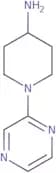
Discontinued product1-Pyrazin-2-ylpiperidin-4-amine dihydrochloride
CAS:1-Pyrazin-2-ylpiperidin-4-amine dihydrochloride is a fine chemical that is used as an intermediate for the synthesis of research chemicals, speciality chemicals and other complex compounds. This compound has been shown to be useful in the synthesis of a variety of building blocks, including pharmaceuticals and agrochemicals. It can be used in reactions with a wide range of reagents and catalysts, which makes it an excellent starting point for new product development.Formula:C9H14N4·2HClPurity:Min. 95%Color and Shape:PowderMolecular weight:251.16 g/molRef: 3D-FP123937
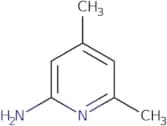
Discontinued product2-Amino-4,6-dimethylpyridine
CAS:2-Amino-4,6-dimethylpyridine is a nonsteroidal anti-inflammatory drug that inhibits the production of prostaglandins and leukotrienes. 2-Amino-4,6-dimethylpyridine binds to the cyclooxygenase enzyme and blocks its conversion of arachidonic acid to prostaglandin H2. This compound has been shown to have potent inhibitory effects against Leishmania, with high values in reactive compounds. The molecular modeling of this compound shows that it has an unpaired amino function and an amide.
Formula:C7H10N2Purity:Min. 97%Color and Shape:PowderMolecular weight:122.17 g/molRef: 3D-FA07058
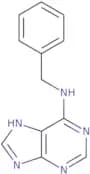
Discontinued product6-Benzyladenine
CAS:Plant growth regulator. Member of the cytokinin family. Stimulates cell division.
Formula:C12H11N5Purity:Min. 98.0 Area-%Molecular weight:225.25 g/molRef: 3D-B-1000
Discontinued product


![2-[N-[(3,5-Difluorophenyl)carbamoylamino]-C-methylcarbonimidoyl]pyridine-3-carboxylic acid](/_next/image/?url=https%3A%2Fstatic.cymitquimica.com%2Fproducts%2F3D%2Fthumb-webp%2FFD101726.webp&w=3840&q=75)
![[2-(Pyridin-2-ylthio)ethyl]amine dihydrochloride](/_next/image/?url=https%3A%2Fstatic.cymitquimica.com%2Fproducts%2F3D%2Fthumb-webp%2FFP121658.webp&w=3840&q=75)