Aliphatic compounds and derivatives
Found 8755 products of "Aliphatic compounds and derivatives"
(1R,4R,5R)-3-oxo-2-oxabicyclo[2.2.1]heptane-5-carboxylic acid;(R)-4-quinolyl-[(1S,2S,4S,5R)-5-vinylquinuclidin-2-yl]methanol
CAS:Purity:98%Molecular weight:450.53500372-(3,3-Dimethylbut-1-en-1-yl)-4,4,5,5-tetramethyl-1,3,2-dioxaborolane
CAS:Purity:96%Molecular weight:210.1199951N-(2,3,5,6,8,9,11,12,14,15-Decahydrobenzo[b][1,4,7,10,13,16]hexaoxacyclooctadecin-18-yl)acrylamide
CAS:Purity:98%Molecular weight:381.433-[3-(2-Carboxyeth-1-en-1-yl)phenyl]prop-2-enoic acid
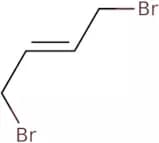
CAS:Purity:≥98%(HPLC)Color and Shape:SolidMolecular weight:218.2079926trans-1,4-Dibromo-2-butene
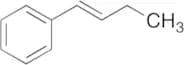
CAS:Trans-1,4-Dibromo-2-butene is a chemical compound with the molecular formula of C4H8Br2. It is an organic halide and a member of the class of compounds known as dibromides. The molecule has two bromine atoms, one on each carbon atom in the chain. Trans-1,4-Dibromo-2-butene is used as a monomer to create polymers such as cationic polymerization or benzalkonium chloride. In addition, trans-1,4-Dibromo-2-butene can be used in the synthesis of amides by reacting with ammonia. This chemical compound also has antimicrobial properties and has been shown to inhibit the activity of bacteria by disrupting protein synthesis and cell division.Formula:C4H6Br2Purity:Min. 95%Color and Shape:White PowderMolecular weight:213.9 g/mol(E)-1-Phenyl-1-butene
CAS:Controlled ProductApplications (E)-1-Phenyl-1-butene was used to study olefin oxidation by cytochrome P-450. It can be used to synthesize nonracemic allylic amines. It can also be used to prepare aryl oxiranes by direct epoxidation.
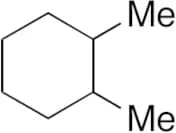
References Liebler, D., et al.: Biochem., 22, 5482 (1983); Liang, C., et al.: J. Am. Chem. Soc., 130, 343 (2008); Imuta, M., et al.: J. Org. Chem., 44, 1351 (1979)Formula:C10H12Color and Shape:NeatMolecular weight:132.21,2-Dimethylcyclohexane
CAS:Controlled ProductApplications 1,2-Dimethylcyclohexane is used in the preparation of rhodium nanoparticles as recyclable catalysts.
Not a dangerous good if item is equal to or less than 1g/ml and there is less than 100g/ml in the package
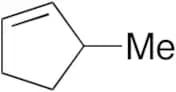
References Stratton, S.A., et. al.: Catalysis Today, 183, 96 (2012)Formula:C8H16Color and Shape:NeatMolecular weight:112.213-Methyl-1-cyclopentene
CAS:Controlled ProductFormula:C6H10Color and Shape:NeatMolecular weight:82.14alpha-Bromostyrene (~90%, ~1% Hydroquinone as stabilizer)
CAS:Controlled ProductApplications (1-Bromoethenyl)-benzene is a useful synthetic intermediate. It is a reactant used to synthesize Potassium (1-Phenylcyclopropyl)trifluoroborate (P698400). It can also be used in the synthesis of substituted cyclopentenones.
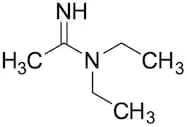
References Zhang, L., et al.: J. Am. Chem. Soc., 128, 1442 (2006)Formula:C8H7BrColor and Shape:NeatMolecular weight:183.05N,N-Diethylacetamidine
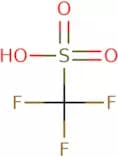
CAS:Controlled ProductFormula:C6H14N2Color and Shape:NeatMolecular weight:114.189Trifluoromethanesulfonic acid
CAS:Trifluoromethanesulfonic acid is a strong oxidizing agent that is used as a catalyst for the synthesis of organic compounds. It is an excellent solvent for many types of reactions and has been shown to be an effective catalyst for the synthesis of triflate, which can be used in cationic polymerization. Trifluoromethanesulfonic acid also has potential applications in carbohydrate chemistry and asymmetric synthesis, due to its ability to reduce carboxylic acids and nitriles. Trifluoromethanesulfonic acid can be synthesized by reacting potassium hexafluorophosphate with amines or nitrogen atoms under activated conditions.Formula:CHF3O3SPurity:Min. 95%Color and Shape:Clear LiquidMolecular weight:150.08 g/moltert-Butylisocyanate
CAS:Please enquire for more information about tert-Butylisocyanate including the price, delivery time and more detailed product information at the technical inquiry form on this pageFormula:C5H9NOPurity:Min. 98.5 Area-%Molecular weight:99.13 g/molMethanesulfonic anhydride
CAS:Methanesulfonic anhydride is a white crystalline solid that is soluble in water and ethanol. It has been shown to be a potent inhibitor of acetaminophen metabolism and the formation of reactive metabolites. Methanesulfonic anhydride inhibits the metabolic activity of cytochrome P450 enzymes, which are responsible for the oxidation of acetaminophen. This inhibition leads to lower levels of toxic metabolites and less tissue damage. Methanesulfonic anhydride also modulates other assays, such as those for nitric oxide synthase and prostaglandin E2 receptors. Methanesulfonic anhydride is used as a catalyst in chemical reactions, including those that produce hydrogen sulfide gas for use in gold mining. It has also been used to study the localization of various proteins by using probes labeled with methanesulfonic anhydride. Methanesulfonic anhydride may cause hypertension due to its ability to inhibit the degradation of norepinephrine, leading to increasedFormula:C2H6O5S2Purity:Min. 95%Color and Shape:PowderMolecular weight:174.2 g/mol1-Bromo-3-chloropropane
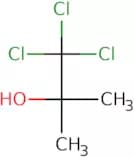
CAS:1-Bromo-3-chloropropane is a chemical that has been used in the synthesis of various organic compounds. It has been shown to exhibit neurotoxicity, as well as to be carcinogenic and mutagenic. The compound can also affect the central nervous system by decreasing locomotor activity. It has also been shown to cause respiratory problems in rats, and may be toxic if inhaled or ingested. 1-Bromo-3-chloropropane exhibits cytotoxic effects on human cells grown in vitro, which may be due to its ability to bind nucleophilic groups on proteins. This reaction is thought to yield an acylated product with a chloride ion at one terminus and a methyl anthranilate at the other terminus.Formula:C3H6BrClPurity:Min. 98 Area-%Color and Shape:Colorless Clear LiquidMolecular weight:157.44 g/molChlorobutanol
CAS:Chlorobutanol is an antimicrobial agent that is used in the preservation of pharmaceuticals, cosmetics, and other products. It has been shown to be effective against a variety of bacterial and fungal organisms. Chlorobutanol is also used as a preservative in topical ophthalmic preparations. In addition, chlorobutanol has been found to be a potent inhibitor of histone deacetylase (HDAC) activity, which may be due to its ability to bind to the active site of HDACs. This binding prevents acetylation of lysine residues on histones, thereby preventing transcriptional activation.Formula:C4H7OCl3Purity:Min. 95%Color and Shape:White To Off-White SolidMolecular weight:177.46 g/mol2-Ethenyl-5-methylfuran
CAS:2-Ethenyl-5-methylfuran is a monomer that belongs to the group of styrene. It has been shown to polymerize with cationic polymerization, and it can be used as a marker for carbohydrate. 2-Ethenyl-5-methylfuran is also able to copolymerize with many other monomers, including acrylonitrile and acrylic acid. The reactions of 2-ethenyl-5-methylfuran are similar to those of coumarin derivatives and trifluoroacetic acid. 2-Ethenyl-5-methylfuran can be used in chemical reactions, such as model systems.
Formula:C7H8OPurity:Min. 95%Color and Shape:Clear LiquidMolecular weight:108.14 g/molLinoleic acid
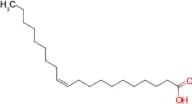
CAS:Linoleic acid is an organic compound that is a polyunsaturated omega-6 fatty acid. It is a common lipid and reaction component in the chemical industry. Linoleic acid has been shown to be useful as a building block in organic synthesis, as well as in the production of speciality chemicals, such as surfactants. Linoleic acid can be used to prepare many types of products, including pharmaceuticals, pesticides, and plastics. The CAS number for linoleic acid is 60-33-3.
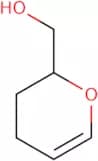
Formula:C18H32O2Molecular weight:280.45 g/mol3,4-Dihydro-2H-pyran-2-methanol
CAS:3,4-Dihydro-2H-pyran-2-methanol is a tetrahydropyran alcohol that has been shown to be able to form cationic polymers in the presence of a ring-opening metathesis polymerization catalyst. The chloride anion is also capable of initiating the polymerization reaction. This compound has potential applications as a drug delivery agent or biomaterials scaffold due to its ability to act as a linker for the synthesis of biocompatible polymers. 3,4-Dihydro-2H-pyran-2-methanol can also be used in molecular modelling studies to explore the reactivity between hydroxy groups and nucleophiles.
Formula:C6H10O2Purity:Min. 95%Color and Shape:Colorless PowderMolecular weight:114.14 g/mol2-(2-Phenoxyethoxy)ethanol
CAS:2-(2-Phenoxyethoxy)ethanol is a fine chemical and a useful building block. It is an important intermediate in the synthesis of other chemicals, such as pharmaceuticals, herbicides, and pesticides. 2-(2-Phenoxyethoxy)ethanol can be used as a research chemical or reagent. It can also be used to prepare complex compounds and versatile scaffolds. CAS No. 104-68-7Formula:C10H14O3Purity:Min. 95.0 Area-%Molecular weight:182.24 g/molTriisopropylsilyl trifluoromethanesulphonate
CAS:Triisopropylsilyl trifluoromethanesulphonate (TIPS) is a naturally occurring compound that inhibits the enzyme dipeptidyl peptidase IV (DPP-IV). It has been shown to be active against alopecia areata in a mouse model and may have therapeutic potential for other autoimmune diseases. TIPS also has an inhibitory effect on sodium-dependent glucose transport, which may be useful in the treatment of hypertension. The reactive group of TIPS is hydroxyl, which can form a covalent bond with serine proteases and inhibit their activity. This reaction mechanism provides a new way to treat disorders such as metabolic diseases and infectious diseases. TIPS also has an inhibitory effect on ns3 protease, which is involved in the replication of human immunodeficiency virus type 1 (HIV-1) and other retroviruses.
Formula:C10H21F3O3SSiPurity:Min. 95%Color and Shape:Colourless Clear LiquidMolecular weight:306.42 g/mol


![(1R,4R,5R)-3-oxo-2-oxabicyclo[2.2.1]heptane-5-carboxylic acid;(R)-4-quinolyl-[(1S,2S,4S,5R)-5-viny…](/_next/image/?url=https%3A%2Fstatic.cymitquimica.com%2Fproducts%2F10%2Fthumb-webp%2FF874065.webp&w=3840&q=75)




![N-(2,3,5,6,8,9,11,12,14,15-Decahydrobenzo[b][1,4,7,10,13,16]hexaoxacyclooctadecin-18-yl)acrylamide](/_next/image/?url=https%3A%2Fstatic.cymitquimica.com%2Fproducts%2F10%2Fthumb-webp%2FF988554.webp&w=3840&q=75)



![2-([1,1′-BIPHENYL]-2-YLOXY)ETHYL ACRYLATE](/_next/image/?url=https%3A%2Fstatic.cymitquimica.com%2Fproducts%2F10%2Fthumb-webp%2FF845144.webp&w=3840&q=75)
![3-[3-(2-Carboxyeth-1-en-1-yl)phenyl]prop-2-enoic acid](/_next/image/?url=https%3A%2Fstatic.cymitquimica.com%2Fproducts%2F10%2Fthumb-webp%2FF958507.webp&w=3840&q=75)