


Synthetic Organic Chemistry
Synthetic organic chemistry is a branch of chemistry focused on the design and construction of organic molecules through controlled chemical reactions. This field plays a crucial role in the development of pharmaceuticals, agrochemicals, polymers, and advanced materials. At CymitQuimica, we offer a comprehensive range of high-purity reagents, catalysts, and building blocks essential for synthetic organic chemistry. Our catalog includes a variety of functionalized compounds, protecting groups, chiral auxiliaries, and coupling reagents, all meticulously tested for quality and consistency. By providing top-quality materials, we support researchers and industry professionals in achieving precise and efficient synthetic transformations, facilitating the discovery and development of innovative chemical entities and complex organic structures. Our products enable advancements in medicinal chemistry, material science, and chemical biology, driving progress in both research and industrial applications.
Subcategories of "Synthetic Organic Chemistry"
- Acids and Synthetic Reagents(14,988 products)
- Building Blocks(248,191 products)
- C-C Bond Forming Reactions(885 products)
- Protecting Groups(2,696 products)
- Reagents for Functional Group Introduction/Modification(1,021 products)
Found 207 products of "Synthetic Organic Chemistry"
Sort by
Purity (%)
0
100
|
0
|
50
|
90
|
95
|
100
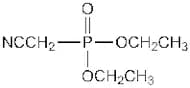
Diethyl cyanomethylphosphonate, 96%
CAS:<p>Diethyl cyanomethyl phosphonate is used as an intermediate in Horner-Emmons reaction for the synthesis of substituted nitriles and their amide and heterocyclic derivatives. It is known as a modified Wittig reagent used in the preparation of alpha, beta-unsaturated nitriles from ketones or aldehydes </p>Formula:C6H12NO3PPurity:96%Color and Shape:Clear colorless to pale yellow, LiquidMolecular weight:177.14Potassium hexacyanoruthenate(II) hydrate, Ru 23.0% min
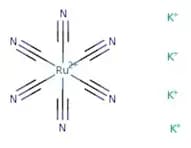
CAS:<p>Potassium hexacyanoruthenate(II) hydrate used in chemical research. This Thermo Scientific Chemicals brand product was originally part of the Alfa Aesar product portfolio. Some documentation and label information may refer to the legacy brand. The original Alfa Aesar product / item code or SKU refer</p>Formula:C6K4N6RuMolecular weight:413.57Sodium hexacyanoferrate(II) decahydrate, 99%
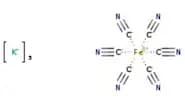
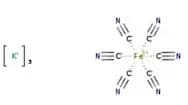
CAS:<p>Mainly used as important raw material in pharmaceuticals, pigment, tannage, metallurgy and chemical industries. Used in producing iron blue and potassium ferricyanide, surface corrosion protecting for tannage and metal, carburization treating for carbon steel, removing iron in pharmaceutical produci</p>Formula:C6H20FeN6Na4O10Purity:99%Molecular weight:484.06Potassium hexacyanoferrate(II), 0.1N Standardized Solution
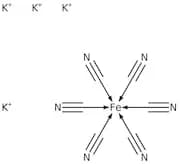
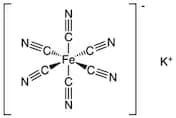
CAS:<p>This Thermo Scientific Chemicals brand product was originally part of the Alfa Aesar product portfolio. Some documentation and label information may refer to the legacy brand. The original Alfa Aesar product / item code or SKU reference has not changed as a part of the brand transition to Thermo Sci</p>Formula:C6H6FeK4N6Molecular weight:374.39Potassium hexacyanoferrate(III), 98+%
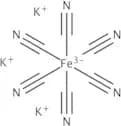
CAS:<p>Potassium hexacyanoferrate(III) is used in reading palimpsests and old manuscripts, in blueprint drawing and in photography (Cyanotype process). It finds application to harden iron and steel, in electroplating, dyeing wool and as a laboratory reagent. It is a mild oxidizing agent used in organic syn</p>Formula:C6FeK3N6Purity:98+%Color and Shape:Crystals or powder or crystalline powder, Dark orange to orange to redMolecular weight:329.25Sodium cyanoborohydride, 95%
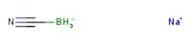
CAS:<p>Moisture Sensitive; Highly flammable</p>Formula:CH3BNNaPurity:95%Color and Shape:White to pale cream or pale yellow, PowderMolecular weight:62.842-Amino-4-(4-cyanophenyl)thiazole, 97%
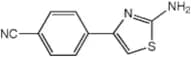
CAS:<p>This Thermo Scientific Chemicals brand product was originally part of the Alfa Aesar product portfolio. Some documentation and label information may refer to the legacy brand. The original Alfa Aesar product / item code or SKU reference has not changed as a part of the brand transition to Thermo Sci</p>Formula:C10H7N3SPurity:97%Molecular weight:201.254,5-Dicyano-2-phenylimidazole, 97%
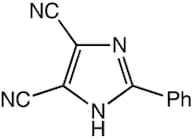
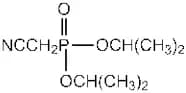
CAS:<p>This Thermo Scientific Chemicals brand product was originally part of the Alfa Aesar product portfolio. Some documentation and label information may refer to the legacy brand. The original Alfa Aesar product / item code or SKU reference has not changed as a part of the brand transition to Thermo Sci</p>Formula:C11H6N4Purity:97%Color and Shape:White to pale brown, Powder or crystalline powder or solidMolecular weight:194.19Diisopropyl cyanomethylphosphonate, 97%
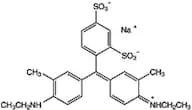
CAS:<p>This Thermo Scientific Chemicals brand product was originally part of the Alfa Aesar product portfolio. Some documentation and label information may refer to the legacy brand. The original Alfa Aesar product / item code or SKU reference has not changed as a part of the brand transition to Thermo Sci</p>Formula:C8H16NO3PPurity:97%Color and Shape:Liquid, Clear colorless to pale yellowMolecular weight:205.19Xylenecyanol FF, dye content 70%
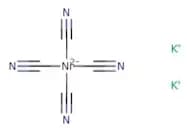
CAS:<p>Xylene Cyanol FF is a tracking dye commonly used for nucleic acids. The compound has been used in both electrophoresis polyacrylamide and agarose gels for various evaluations including DNA sequencing. The compound has also been used in a mobility shift analysis of ssDNA. In addition, two highly sens</p>Formula:C25H27N2NaO6S2Purity:70%Color and Shape:Dark green to red / brown, PowderMolecular weight:538.61Potassium tetracyanonickelate(II) hydrate
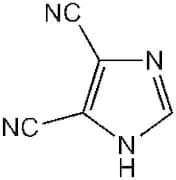
CAS:<p>This Thermo Scientific Chemicals brand product was originally part of the Alfa Aesar product portfolio. Some documentation and label information may refer to the legacy brand. The original Alfa Aesar product / item code or SKU reference has not changed as a part of the brand transition to Thermo Sci</p>Formula:C4K2N4NiColor and Shape:Powder or crystals, Yellow to orangeMolecular weight:240.964,5-Dicyanoimidazole, 98+%
CAS:<p>4,5-Dicyanoimidazole is used in activation of nucleoside phosphoramidites during solid-phase oligonucleotide synthesis, and synthesis of nucleoside phosphoramidites, synthesis of novel nucleosides. It is often used as an alternative to tetrazole. This Thermo Scientific Chemicals brand product was or</p>Formula:C5H2N4Purity:98+%Color and Shape:White to cream to dark brown to pale brown, Crystals or powder or crystalline powder or fused solidMolecular weight:118.10Potassium hexacyanoferrate(III), ACS, 99.0% min
CAS:<p>Potassium hexacyanoferrate(III) is used in reading palimpsests and old manuscripts, in blueprint drawing and in photography (Cyanotype process). It finds application to harden iron and steel, in electroplating, dyeing wool and as a laboratory reagent. It is a mild oxidizing agent used in organic syn</p>Formula:C6FeK3N6Purity:99.0%Molecular weight:329.25Xylenecyanol FF, Electrophoresis Reagent, dye content 70%
CAS:<p>Xylenecyanol FF, Electrophoresis Reagent, dye content 70%</p>Formula:C25H27N2NaO6S2Purity:70%Molecular weight:538.61Potassium dicyanoaurate(I), 99%
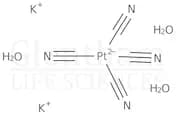
CAS:<p>Potassium dicyanoaurate(I), 99%</p>Formula:KAu(CN)2Purity:99%Color and Shape:white pwdr.Molecular weight:288.10Potassium tetracyanoplatinate(II) hydrate
CAS:<p>Potassium tetracyanoplatinate(II) hydrate</p>Formula:K2Pt(CN)4·XH2OColor and Shape:white to off-white pwdr.Molecular weight:377.36Potassium hexacyanocobaltate (III), 98%
CAS:<p>Potassium hexacyanocobaltate (III), 98%</p>Formula:K3Co(CN)6Purity:98%Color and Shape:yellow xtl.Molecular weight:332.32Potassium tetracyanonickelate(II) hydrate
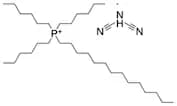
CAS:<p>Potassium tetracyanonickelate(II) hydrate</p>Formula:K2Ni(CN)4·H2OColor and Shape:yellow xtl.Molecular weight:240.99 (259.01)Trihexyl(tetradecyl)phosphonium dicyanamide, min. 93% CYPHOS® IL 105
<p>Trihexyl(tetradecyl)phosphonium dicyanamide, min. 93% CYPHOS® IL 105</p>Formula:(C6H13)3(C14H29)PNCNHCNPurity:min. 93%Color and Shape:pale yellow liq.Molecular weight:550.91Tributyl(tetradecyl)phosphonium methanesulfonate, min. 98% CYPHOS® IL 203
<p>Tributyl(tetradecyl)phosphonium methanesulfonate, min. 98% CYPHOS® IL 203</p>Formula:(C4H9)3(C14H29)PCH3SO3Purity:min. 98%Color and Shape:light yellow liq.Molecular weight:494.80Potassium tricyanomethanide, min. 98%
CAS:<p>Potassium tricyanomethanide, min. 98%</p>Formula:KC(CN)3Purity:min. 98%Color and Shape:off-white to beige pwdr.Molecular weight:129.16Trihexyl(tetradecyl)phosphonium bis(2,4,4-trimethylpentyl)phosphinate, min. 90% CYPHOS® IL 104
CAS:<p>Trihexyl(tetradecyl)phosphonium bis(2,4,4-trimethylpentyl)phosphinate, min. 93% CYPHOS® IL 104</p>Formula:(C6H13)3(C14H29)P(CH3)3CCH2CH(CH3)CH2P(O)OPurity:min. 90%Color and Shape:pale yellow liq.Molecular weight:773.27Trihexyl(tetradecyl)phosphonium bromide, min. 95% CYPHOS® IL 102
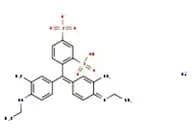
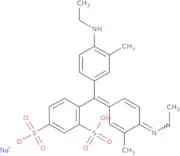
CAS:<p>Trihexyl(tetradecyl)phosphonium bromide, min. 95% CYPHOS® IL 102</p>Formula:(C6H13)3(C14H29)PBrPurity:min. 97%Color and Shape:pale yellow liq.Molecular weight:563.76sodium 4-{[4-(ethylamino)-3-methylphenyl][(1Z,4E)-4-(ethylimino)-3-methylcyclohexa-2,5-dien-1-ylidene]methyl}-2-hydroxy-5-sulfobenzenesulfonate
CAS:Formula:C25H27N2NaO7S2Purity:80%Color and Shape:SolidMolecular weight:554.6108Potassium [(cyanomethyl)thio]acetate
CAS:Formula:C4H4KNO2SPurity:95%Color and Shape:SolidMolecular weight:169.24346-Chloro-1H-indole-3-carbonitrile
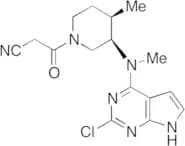
CAS:Formula:C9H5ClN2Purity:97%Color and Shape:SolidMolecular weight:176.60243-((3R,4R)-3-((2-chloro-7H-pyrrolo[2,3-d]pyrimidin-4-yl)(methyl)amino)-4-methylpiperidin-1-yl)-3-oxopropanenitrile
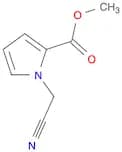
CAS:Formula:C16H19ClN6OPurity:97%Color and Shape:SolidMolecular weight:346.81471H-Pyrrole-2-carboxylic acid, 1-(cyanomethyl)-, methyl ester
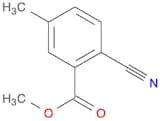
CAS:Formula:C8H8N2O2Purity:95%Color and Shape:SolidMolecular weight:164.16132-cyano-5-methyl-benzoic acid methyl ester
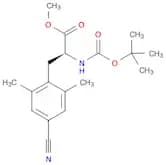
CAS:Formula:C10H9NO2Purity:96%Color and Shape:SolidMolecular weight:175.1840(S)-methyl 2-((tert-butoxycarbonyl)amino)-3-(4-cyano-2,6-dimethylphenyl)propanoate
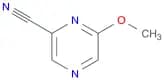
CAS:Formula:C18H24N2O4Purity:98%Molecular weight:332.39422-Methoxy-6-cyanopyrazine
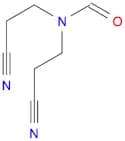
CAS:Formula:C6H5N3OPurity:97%Color and Shape:SolidMolecular weight:135.1234N,N-BIS(2-CYANOETHYL)FORMAMIDE
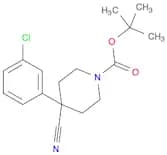
CAS:Formula:C7H9N3OPurity:90%Color and Shape:LiquidMolecular weight:151.16591-N-Boc-4-(3-chlorophenyl)-4-cyanopiperidine
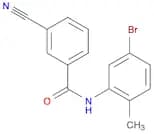
CAS:Formula:C17H21ClN2O2Purity:97%Color and Shape:SolidMolecular weight:320.8138N-(5-Bromo-2-Methylphenyl)-3-Cyanobenzamide
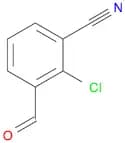
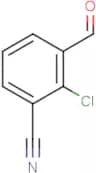
CAS:Formula:C15H11BrN2OPurity:95%Color and Shape:SolidMolecular weight:315.1646Benzonitrile, 2-chloro-3-formyl-
CAS:Formula:C8H4ClNOPurity:97%Color and Shape:SolidMolecular weight:165.57651,4-Naphthalenedicarbonitrile
CAS:Formula:C12H6N2Purity:97%Color and Shape:SolidMolecular weight:178.1894Ref: IN-DA002ZHA
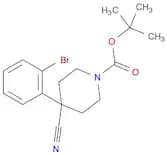
1g65.00€5g175.00€25g584.00€50gTo inquire75gTo inquire100gTo inquire100mg44.00€250mg54.00€tert-Butyl 4-(2-bromophenyl)-4-cyanopiperidine-1-carboxylate
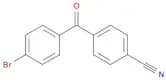
CAS:Formula:C17H21BrN2O2Purity:97%Color and Shape:SolidMolecular weight:365.26484-Bromo-4'-cyanobenzophenone
CAS:Formula:C14H8BrNOPurity:95%Color and Shape:SolidMolecular weight:286.1234TERT-BUTYL 4-(4-BROMOPHENYL)-4-CYANOPIPERIDINE-1-CARBOXYLATE
CAS:Formula:C17H21BrN2O2Purity:97%Color and Shape:SolidMolecular weight:365.2648Trans-1-boc-4-(2-cyanophenyl)pyrrolidine-3-carboxylic acid
CAS:Formula:C17H20N2O4Purity:95%Color and Shape:SolidMolecular weight:316.35171-(4-chlorophenyl)-N-{3-cyano-4-[4-(morpholin-4-yl)piperidin-1-yl]phenyl}-5-methylpyrazole-4-carboxamide
CAS:Formula:C27H29ClN6O2Purity:98%Color and Shape:SolidMolecular weight:505.01124-(Dicyanomethylene)-2-tert-butyl-6-(1,1,7,7-tetramethyljulolidin-4-yl-vinyl)-4H-pyran
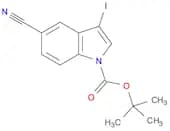
CAS:Formula:C30H35N3OPurity:98%Color and Shape:LiquidMolecular weight:453.6184tert-Butyl 5-cyano-3-iodo-1H-indole-1-carboxylate
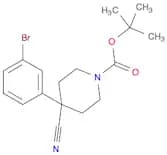
CAS:Formula:C14H13IN2O2Purity:98%Color and Shape:SolidMolecular weight:368.16971-Boc-4-cyano-4-(3-bromophenyl)-piperidine
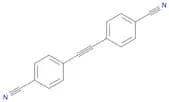
CAS:Formula:C17H21BrN2O2Purity:97%Color and Shape:SolidMolecular weight:365.2648[1,1'-Biphenyl]-4-carbonitrile, 4'-propoxy-
CAS:Formula:C16H15NOPurity:97%Color and Shape:SolidMolecular weight:237.2964ethyl (2E)-3-chloro-2-cyano-4,4,4-trifluorobut-2- enoate
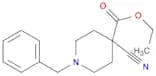
CAS:Formula:C7H5ClF3NO2Purity:95%Color and Shape:SolidMolecular weight:227.56834-Piperidinecarboxylic acid, 4-cyano-1-(phenylmethyl)-, ethyl ester
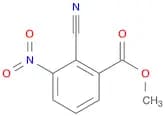
CAS:Formula:C16H20N2O2Purity:98%Color and Shape:SolidMolecular weight:272.3422Methyl 2-Cyano-3-Nitrobenzoate
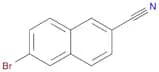
CAS:Formula:C9H6N2O4Purity:97%Color and Shape:SolidMolecular weight:206.15496-Bromonaphthalene-2-carbonitrile
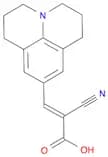
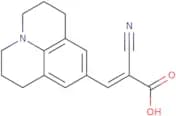
CAS:Formula:C11H6BrNPurity:97%Color and Shape:SolidMolecular weight:232.07609-(2-Carboxy-2-cyanovinyl)julolidine
CAS:Formula:C16H16N2O2Purity:98%Color and Shape:SolidMolecular weight:268.3104Acetamide, N-(4-chlorophenyl)-2-cyano-
CAS:Formula:C9H7ClN2OPurity:97%Color and Shape:SolidMolecular weight:194.6177Ionic Liquid Kit 3: CYPHOS® IL Phosphonium Salt Kit
<p>This kit contains the following products:<br> 10g of (08-15-6370-10g) Trihexyl(tetradecyl)phosphonium bis(trifluoromethanesulfonyl)amide, min. 97% CYPHOS® IL 109<br>10g of (08-15-6374-10g) Trihexyl(tetradecyl)phosphonium bis(2,4,4-trimethylpentyl)phosphinate, min. 90% CYPHOS® IL 104<br>10g of (08-15-6378-10g) Trihexyl(tetradecyl)phosphonium bromide, min. 95% CYPHOS® IL 102<br>10g of (08-15-6382-10g) Trihexyl(tetradecyl)phosphonium chloride, min. 95% CYPHOS IL 101<br>10g of (08-15-6386-10g) Trihexyl(tetradecyl)phosphonium decanoate, min. 95% CYPHOS® IL 103<br>10g of (08-15-6390-10g) Trihexyl(tetradecyl)phosphonium dicyanamide, min. 93% CYPHOS® IL 105<br>,<br> </p>Potassium hexacyanoferrate(III); ACS grade
CAS:Formula:K3Fe(CN)6Purity:(Titration) ≥ 99.0%Color and Shape:Orange to red crystalline powder or crystalsMolecular weight:329.26Potassium hexacyanoferrate(III), 99+% (ACS)
CAS:<p>Potassium hexacyanoferrate(III), 99+% (ACS)</p>Formula:K3Fe(CN)6Purity:99+%Color and Shape:red xtl.Molecular weight:329.262-Chloro-3-cyanobenzaldehyde
CAS:<p>2-Chloro-3-cyanobenzaldehyde</p>Purity:97%Molecular weight:165.58g/molGarphos™ Ligand Kit
<p>This kit contains the following products:<br> 100mg of (08-15-1661-100mg) (R)-2,2'-Bis[bis(3,5-dimethylphenyl)phosphino]-4,4',6,6'-tetramethoxy-)-1,1'-biphenyl, min. 97% (R)-Xyl-Garphos™<br>100mg of (08-15-1662-100mg) (S)-2,2'-Bis[bis(3,5-dimethylphenyl)phosphino]-4,4',6,6'-tetramethoxy)-1,1'-biphenyl, min. 97% (S)-Xyl-Garphos™<br>100mg of (08-15-1672-100mg) (R)-2,2'-Bis[bis(4-methoxy-3,5-di-t-butylphenyl)phosphino]-4,4',6,6'-tetramethoxy)-1,1'-biphenyl, min. 97% (R)-DTBM-Garphos™<br>100mg of (08-15-1673-100mg) (S)-2,2'-Bis[bis(4-methoxy-3,5-di-t-butylphenyl)phosphino]-4,4',6,6'-tetramethoxy)-1,1'-biphenyl, min. 97% (S)-DTBM-Garphos™<br>100mg of (08-15-1666-100mg) (R)-2,2'-Bis[bis(4-methoxy-3,5-dimethylphenyl)phosphino]-4,4',6,6'-tetramethoxy)-1,1'-biphenyl, min. 97% (R)-DMM-Garphos™<br>100mg of (08-15-1667-100mg) (S)-2,2'-Bis[bis(4-methoxy-3,5-dimethylphenyl)phosphino]-4,4',6,6'-tetramethoxy)-1,1'-biphenyl, min. 97% (S)-DMM-Garphos™<br>100mg of (08-15-1663-100mg) (R)-2,2'-Bis[bis(3,5-trifluoromethylphenyl)phosphino]-4,4',6,6'-tetramethoxy)-1,1'-biphenyl, min. 97% (R)-BTFM-Garphos™<br>100mg of (08-15-1664-100mg) (S)-2,2'-Bis[bis(3,5-trifluoromethylphenyl)phosphino]-4,4',6,6'-tetramethoxy)-1,1'-biphenyl, min. 97% (S)-BTFM-Garphos™<br>100mg of (08-15-1653-100mg) (R)-2,2'-Bis(diphenylphosphino)-4,4',6,6'-tetramethoxy)-1,1'-biphenyl, min. 97% (R)-Ph-Garphos™<br>100mg of (08-15-1654-100mg) (S)-2,2'-Bis(diphenylphosphino)-4,4',6,6'-tetramethoxy)-1,1'-biphenyl, min. 97% (S)-Ph-Garphos™<br>100mg of (08-15-1657-100mg) (R)-2,2'-Bis(di-p-tolylphosphino)-4,4',6,6'-tetramethoxy)-1,1'-biphenyl, min. 97% (R)-Tol-Garphos™<br>100mg of (08-15-1658-100mg) (S)-2,2'-Bis(di-p-tolylphosphino)-4,4',6,6'-tetramethoxy)-1,1'-biphenyl, min. 97% (S)-Tol-Garphos™<br>,<br> </p>Carbon tetrachloride (99.999%-C) PURATREM
CAS:<p>Carbon tetrachloride (99.999%-C) PURATREM</p>Formula:CCl4Purity:99.999%-CColor and Shape:colorless liq.Molecular weight:153.82Potassium tetracyanopalladate(II) hydrate, 99.95% (metals basis)
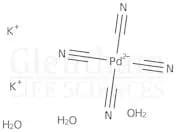
CAS:Formula:K2Pd(CN)4·xH2OMolecular weight:288.72Potassium dicyanoaurate(I); 99.95% (metals basis)
CAS:Formula:KAu(CN)2Purity:≥ 99.95% (trace metals basis)Color and Shape:White crystalline powder or crystalsMolecular weight:288.10Potassium dicyanoaurate(I)
CAS:Formula:C2AuKN2Purity:≥ 99.9%Color and Shape:White crystalline powder or crystalsMolecular weight:288.1Potassium tetracyanoaurate(III); 99.95% (metals basis)
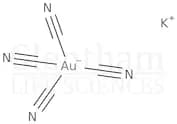
CAS:Formula:KAu(CN)4Color and Shape:White crystalline powderMolecular weight:340.14Trihexyl(tetradecyl)phosphonium chloride, min. 95% CYPHOS IL 101
CAS:<p>Trihexyl(tetradecyl)phosphonium chloride, min. 93% CYPHOS® IL 101</p>Formula:(C6H13)3(C14H29)PClPurity:min. 95%Color and Shape:colorless liq.Molecular weight:519.31N-Methyl-N-(3R,4R)-1-cyanoacetyl-4-methylpiperidin-3-yl-2-chloro-7-deazapurine-6-amine
CAS:Controlled Product<p>Applications N-Methyl-N-(3R,4R)-1-cyanoacetyl-4-methylpiperidin-3-yl-2-chloro-7-deazapurine-6-amine is a Tasocitinib (Tofacitinib [T528000]) impurity.<br></p>Formula:C16H19ClN6OColor and Shape:NeatMolecular weight:346.8152-Amino-4-cyano-5-imidazolecarboxamide
CAS:<p>Applications 2-Amino-4-cyano-5-imidazolecarboxamide (cas# 125815-68-1) is a compound useful in organic synthesis.<br></p>Formula:C5H5N5OColor and Shape:NeatMolecular weight:151.13Bis(2-cyanoethyl)-N,N-diisopropyl Phosphoramidite
CAS:Controlled Product<p>Applications A useful phosphorylating reagent.<br> Not a dangerous good if item is equal to or less than 1g/ml and there is less than 100g/ml in the package<br></p>Formula:C12H22N3O2PColor and Shape:NeatMolecular weight:271.305-Amino-3-cyano-4-iodo-1-[2,6-dichloro-4-(trifluoromethyl)phenyl]pyrazole
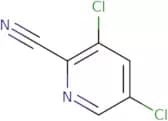
CAS:<p>Please enquire for more information about 5-Amino-3-cyano-4-iodo-1-[2,6-dichloro-4-(trifluoromethyl)phenyl]pyrazole including the price, delivery time and more detailed product information at the technical inquiry form on this page</p>Formula:C11H4Cl2F3IN4Purity:Min. 95%Molecular weight:446.98 g/mol3,5-Dichloro-2-cyanopyridine
CAS:<p>3,5-Dichloro-2-cyanopyridine is an organic compound that can be synthesized in a scalable manner. It is used to make pharmaceuticals and agrochemicals and it also has potential applications in pollution control. 3,5-Dichloro-2-cyanopyridine can be made by the reaction of cuprous cyanide with chlorocarbonyl compounds in organic solvents. This synthesis yields a product with high purity which can then be purified using chromatography. The synthesis is scalable and does not produce any side products or waste because the reactants are inexpensive, commercially available, and the product is stable under most conditions.</p>Formula:C6H2N2Cl2Purity:Min. 95%Color and Shape:White PowderMolecular weight:173 g/mol9-(2-Carboxy-2-cyanovinyl)julolidine
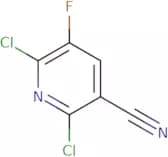
CAS:<p>9-(2-Carboxy-2-cyanovinyl)julolidine is a monoclonal antibody that recognizes the human protein CD38, which plays an important role in the activation of T cells and natural killer cells. This antibody can be used as a marker for these cells. 9-(2-Carboxy-2-cyanovinyl)julolidine has been shown to bind to human serum albumin (HSA) in a manner similar to other antibodies that are specific for HSA. It is also able to bind to mouse monoclonal antibodies, but with lower affinity than the mouse monoclonal antibody itself. 9-(2-Carboxy-2-cyanovinyl)julolidine has been used as a model system for hydrogen bonds and membrane interactions with coumarin derivatives in solid dispersions. The activation energies of emissions from these molecules have been determined using this system.</p>Formula:C16H16N2O2Purity:Min. 95%Color and Shape:PowderMolecular weight:268.31 g/mol2,6-Dichloro-3-cyano-5-fluoropyridine
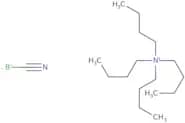
CAS:<p>2,6-Dichloro-3-cyano-5-fluoropyridine is an inorganic compound that is a salt. It has the chemical formula CHClFNO and a molecular weight of 215.4 g/mol. The compound is soluble in water and ethanol, but insoluble in ether. It has a melting point of about -60 degrees Celsius. The compound can react with amines to form 2,6-dichloro-3-(2H)-pyridinone, which can be converted into other compounds via chlorinating or hydrolyzing the imidazole ring. This compound reacts with ethyl bromoacetate to form a monosodium salt at temperatures between 0 and 60 degrees Celsius. 2,6-Dichloro-3-cyano-5-fluoropyridine also reacts with chlorine to produce dichlorofluoropyridine, which can be oxidized by nitric</p>Formula:C6HCl2FN2Purity:Min. 98 Area-%Color and Shape:PowderMolecular weight:190.99 g/molTetrabutylammoniumcyanoborohydride
CAS:<p>Tetrabutylammoniumcyanoborohydride (TBAB) is a reducing agent that is used in the synthesis of halides and oligosaccharides. It can be used to reduce carboxylic acids, such as sodium formate, to aldehydes or ketones. TBAB reacts with an alkoxy radical to produce trifluoroacetic acid, which can be converted back into TBAB by adding sodium formate. Tetrabutylammoniumcyanoborohydride has been shown to have chemoselective effects on cancer cells and control experiments have shown that it does not affect healthy cells.</p>Formula:C17H39BN2Purity:Min. 95%Color and Shape:PowderMolecular weight:282.32 g/mol4,4'-Azobis(4-cyano-1-pentanol)
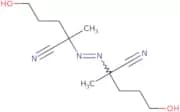
CAS:<p>4,4'-Azobis(4-cyano-1-pentanol) is a polyester stabilizer that is used in the production of polyvinyl chloride. It is an organic solvent that can be used to dissolve ammonium persulfate and hydrogen peroxide. The chemical reaction between 4,4'-azobis(4-cyano-1-pentanol) and these reagents produces chloroprene, isoprene, and hydrogen peroxide. The yields of chloroprene and isoprene depend on the concentration of ammonium persulfate and hydrogen peroxide. 4,4'-Azobis(4-cyano-1-pentanol) can also be used as an extender for polyvinyl chloride.</p>Formula:C12H20N4O2Purity:Min. 95%Molecular weight:252.31 g/molDiethylcyanomethylphosphonate
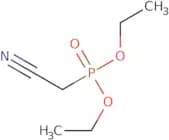
CAS:<p>Diethylcyanomethylphosphonate is a hydrochloric acid salt of diethylcyanomethylphosphonic acid. It is used in the asymmetric synthesis of many organic molecules, including pharmaceuticals, and has been shown to have antiviral properties. Diethylcyanomethylphosphonate binds to the receptor on the surface of cells and inhibits their growth. This may be due to its ability to block the binding of sodium ions to cell receptors. The drug also prevents hydroxyl group metabolism and has been shown to be active against infectious diseases such as HIV and malaria.</p>Formula:C6H12NO3PPurity:Min. 95%Color and Shape:Colorless Clear LiquidMolecular weight:177.14 g/mol2,3-Dichloro-5,6-dicyanobenzoquinone
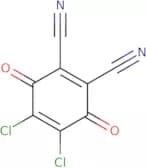
CAS:<p>2,3-Dichloro-5,6-dicyanobenzoquinone is a chemical compound with the molecular formula C12H4Cl2O2. It is used as a chemical intermediate in the production of dyes and pesticides. 2,3-Dichloro-5,6-dicyanobenzoquinone has been shown to have cytotoxic properties against lung fibroblasts in a model system that mimics the human body's reaction to this compound. The mechanism of action is thought to involve the formation of reactive oxygen species that leads to DNA damage. 2,3-Dichloro-5,6-dicyanobenzoquinone also has antiestrogenic activity and has been shown to be active against MDA-MB-231 breast cancer cells. The activation energies for these reactions are 7.8 kcal/mol for carbonyl group elimination and 8.1 kcal/mol for hyd</p>Formula:C8Cl2N2O2Color and Shape:Yellow PowderMolecular weight:227 g/mol3-Amino-2-cyanopropanoic acid
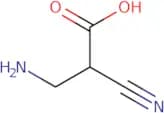
CAS:<p>Please enquire for more information about 3-Amino-2-cyanopropanoic acid including the price, delivery time and more detailed product information at the technical inquiry form on this page</p>Formula:C4H6N2O2Purity:Min. 95%Color and Shape:PowderMolecular weight:114.1 g/molXylene cyanol FF
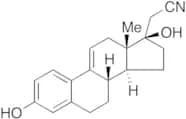
CAS:<p>Xylene cyanol FF is a monoclonal antibody that specifically binds to the human and simian virus 40 (SV40) large T-antigen, which is a protein encoded by the SV40 genome. It is used in the diagnosis of HIV infection. The interaction between Xylene cyanol FF and SV40 large T-antigen activates caspase-3, leading to apoptosis. This binding also leads to cell lysis and DNA intercalation.</p>Formula:C25H27N2NaO6S2Purity:Min. 95%Color and Shape:PowderMolecular weight:538.61 g/mol∆9,11-Dehydro-17α-cyanomethyl Estradiol
CAS:Controlled Product<p>Applications ∆9,11-Dehydro-17α-cyanomethyl estradiol is a metabolite of progestin dienogest (D441870), and is currently being investigated for progesterone-receptor binding, progestational, antiprogestational, estrogenic and antigonadotropic activities for the inhibition of fertility. It is also being considered a novel treatment for heavy menstrual bleeding.<br>References Oettel, M., et al.: Pharmazie, 41, 627 (1993); Kiley, J. & Shulman, L.: Int. J. Womens Health, 3, 281 (2011);<br></p>Formula:C20H23NO2Color and Shape:NeatMolecular weight:309.40Long-Chain n-Alkylphosphonic Acid Kit
<p>This kit contains the following products:<br> 1g of (08-15-0958-1g) n-Decylphosphonic acid, min. 97%<br>1g of (08-15-1835-1g) n-Dodecylphosphonic acid, min. 97% DDPA<br>1g of (08-15-2400-1g) n-Hexadecylphosphonic acid, min. 97% HDPA<br>1g of (08-15-2410-1g) n-Hexylphosphonic acid, min. 97% HPA<br>1g of (08-15-3510-1g) n-Octadecylphosphonic acid, min. 97% ODPA<br>1g of (08-15-3520-1g) n-Octylphosphonic acid, min. 97% OPA<br>1g of (08-15-5145-1g) n-Tetradecylphosphonic acid, min. 97% TDPA<br>,<br> </p>Deloxan® MP Metal Scavengers (Thio-Functionalized Polysiloxane)
<p>Deloxan® MP Metal Scavengers (Thio-Functionalized Polysiloxane)</p>Color and Shape:Abrasion-proof spheres; Water content: 50-70%Potassium hexacyanoruthenate(II) hydrate
CAS:<p>Potassium hexacyanoruthenate(II) hydrate</p>Formula:K4Ru(CN)6·XH2OColor and Shape:white pwdr.Molecular weight:413.597,7,8,8-Tetracyanoquinodimethane, 98% TCNQ
CAS:<p>7,7,8,8-Tetracyanoquinodimethane, 98% TCNQ</p>Formula:C12H4N4Purity:98%Color and Shape:orange xtl.Molecular weight:204.19Trihexyl(tetradecyl)phosphonium bis(trifluoromethanesulfonyl)amide, min. 97% CYPHOS® IL 109
CAS:<p>Trihexyl(tetradecyl)phosphonium bis(trifluoromethanesulfonyl)amide, min. 97% CYPHOS® IL 109</p>Formula:(C6H13)3(C14H29)P(CF3SO2)2NPurity:min. 97%Color and Shape:colorless liq.Molecular weight:764.00Barium tetracyanoplatinate(II) tetrahydrate, 99%
CAS:<p>Barium tetracyanoplatinate(II) tetrahydrate, 99%</p>Formula:BaPt(CN)4·4H2OPurity:99%Color and Shape:yellow pwdr.Molecular weight:436.50 (508.57)Potassium hexacyanoferrate(II) trihydrate, 98.5+% (ACS)
CAS:<p>Potassium hexacyanoferrate(II) trihydrate, 98.5+% (ACS)</p>Formula:K4Fe(CN)6·3H2OPurity:98.5+%Color and Shape:yellow xtl.Molecular weight:368.35 (422.41)Polyvinylpyrrolidone (average mol. Wt. 10,000) PVP10
CAS:<p>Polyvinylpyrrolidone (average mol. Wt. 10,000) PVP10</p>Formula:(C6H9NO)nColor and Shape:white pwdr.Polyvinylpyrrolidone (average mol.wt. 40,000) PVP40
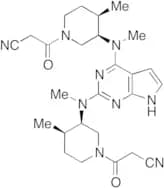
CAS:<p>Polyvinylpyrrolidone (average mol.wt. 40,000) PVP40</p>Formula:(C6H9NO)nColor and Shape:white pwdr.N,N’-Bis(3R,4R)-1-cyanoacetyl-4-methylpiperidin-3-yl-N,N’-dimethyl-7-deazapurine-2,6-diamine
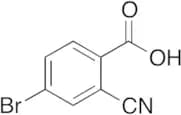
Controlled ProductFormula:C26H35N9O2Color and Shape:NeatMolecular weight:505.6154-Bromo-2-cyanobenzoic Acid
CAS:Controlled ProductFormula:C8H4BrNO2Color and Shape:NeatMolecular weight:226.027N-Methyl-N-(3R,4R)-1-cyanoacetyl-4-methylpiperidin-3-yl-7-deazapurine-2-amine
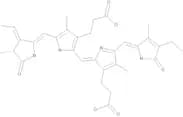
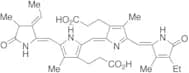
Controlled ProductFormula:C16H20N6OColor and Shape:NeatMolecular weight:312.37rac-Phycocyanobilin
CAS:Controlled Product<p>Applications Phycocyanobilin is an open-chain tetrapyrroles used as chromophores for the plant photoreceptor protein phytochrome.<br>References Li, L., et al.: J. Biol. Chem., 267, 19204 (1992), Murphy, J., et al.: Photochem. Photobiol., 65, 750 (1997), Song, P., et al.: Plant Cell Environ., 20, 707 (1997),<br></p>Formula:C33H38N4O6Color and Shape:NeatMolecular weight:586.6781,4-Dihydro-2,6-dimethyl-3-(2-cyanoethoxycarbonyl)-5-ethoxycarbonyl-4-(2,3-dichlorophenyl)pyridine-13C4
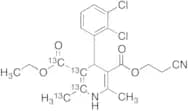
CAS:Controlled ProductFormula:C4C16H20Cl2N2O4Color and Shape:NeatMolecular weight:427.26(OC-6-11)- Tris(2,2'-bipyridine-κN1,κN1')Cobalt(3+) Tetrakis(cyano-κC)borate(1-)
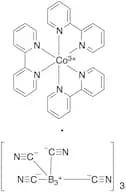
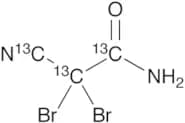
CAS:Controlled Product<p>Applications (OC-6-11)-Tris(2,2'-bipyridine-κN1,κN1')-tetrakis(cyano-κC)borate(1-) Cobalt(3+) is used as an electrolyte in phenothiazine based dye sensitized solar cells.<br>References El-Shishtawy, R, et al.: New J. Chem., 42, 9045 (2018)<br></p>Formula:C30H24CoN6C4BN4Color and Shape:NeatMolecular weight:642.16104Dibromocyanoacetamide-13C3
CAS:Controlled Product<p>Applications A labelled chemical additive to control bacterial contamination in ethanol fermentation.<br> Not a dangerous good if item is equal to or less than 1g/ml and there is less than 100g/ml in the package<br>References Vaisanen, O., et al.: J. Ind. Microbio., 4, 419 (1989), Costerton, J., et al.: J. Bacteriol., 176, 2137 (1994), Pirttijarvi, T., et al.: J. Appl. Bacteriol., 81, 445 (1996),<br></p>Formula:C3H2Br2N2OColor and Shape:NeatMolecular weight:244.854-(Dicyanomethylene)-2-methyl-6-(julolidin-9-yl-vinyl)-4H-pyran
CAS:Controlled Product<p>Applications 4-(Dicyanomethylene)-2-methyl-6-(julolidin-4-yl-vinyl)-4H-pyran (CAS# 51325-95-2) is a useful research chemical compound.<br></p>Formula:C23H21N3OColor and Shape:NeatMolecular weight:355.4322-Amino-5-bromo-3,4-di-cyanopyrole
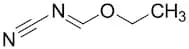
CAS:Controlled ProductFormula:C6H3BrN4Color and Shape:NeatMolecular weight:211.019Ethyl Cyanoimidoformate
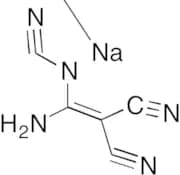
CAS:Controlled ProductFormula:C4H6N2OColor and Shape:NeatMolecular weight:98.1031-Amino-1-cyanamido-2,2-dicyanoethylene Sodium Salt
CAS:Controlled Product<p>Applications 1-Amino-1-cyanamido-2,2-dicyanoethylene Sodium Salt s an intermediate in the synthesis of 2,4,6-Triamino-5-pyrimidinecarbonitrile which is a photodegradation product of two isostructural pesticides in aqueous solution: Cyromazine (C989300) and Dicyclanil.<br>References Kimbrough, R., et al.: Environ. Sci. Technol., 30, 908 (1996), Root, D., et al.: Pesticide Sci., 48, 25 (1996), Yokley, R., et al.: J. Agric. Food Chem., 48, 3352 (2000),<br></p>Formula:C5H2N5NaColor and Shape:NeatMolecular weight:155.095-Amino-3-cyano-4-iodo-1-[2,6-dichloro-4-(trifluoromethyl)phenyl]pyrazole
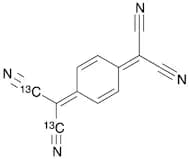
CAS:Controlled Product<p>Applications 5-Amino-3-cyano-4-iodo-1-[2,6-dichloro-4-(trifluoromethyl)phenyl]pyrazole is an intermediate in the synthesis of Fipronil (F342200), an broad spectrum insecticide which actively disrupts the CNS of contacted insects by blocking the passage of chloride ions through GABA receptors.<br>References Ling, S., et al.: App. Entomol. Zool., 44, 543 (2009), Li, X., et al.: Environ. Toxicol. Chem., 29, 127 (2010), Savant, R., et al.: J. Agric. Food Chem., 58, 1447 (2010),<br></p>Formula:C11H4Cl2F3IN4Color and Shape:NeatMolecular weight:446.98Tetracyanoquinodimethane-13C2
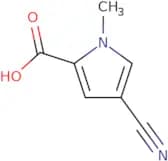
CAS:Controlled ProductFormula:C2C10H4N4Color and Shape:NeatMolecular weight:206.1724-cyano-1-methyl-1H-pyrrole-2-carboxylic acid
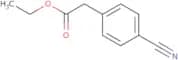
CAS:<p>Versatile small molecule scaffold</p>Formula:C7H6N2O2Purity:Min. 95%Molecular weight:150.14 g/molEthyl 4-cyanophenylacetate
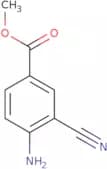
CAS:<p>Versatile small molecule scaffold</p>Formula:C11H11NO2Purity:Min. 95%Molecular weight:189.21 g/molMethyl 4-amino-3-cyanobenzoate
CAS:<p>Versatile small molecule scaffold</p>Formula:C9H8N2O2Purity:Min. 95%Molecular weight:176.17 g/molMethyl 3-cyanobicyclo[1.1.1]pentane-1-carboxylate
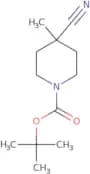
CAS:<p>Versatile small molecule scaffold</p>Formula:C8H9NO2Purity:Min. 95%Molecular weight:151.16 g/moltert-Butyl 4-cyano-4-methylpiperidine-1-carboxylate
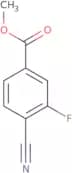
CAS:<p>Versatile small molecule scaffold</p>Formula:C12H20N2O2Purity:Min. 95%Molecular weight:224.3 g/molMethyl 4-cyano-3-fluorobenzoate
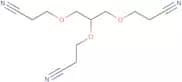
CAS:<p>Please enquire for more information about Methyl 4-cyano-3-fluorobenzoate including the price, delivery time and more detailed product information at the technical inquiry form on this page</p>Formula:C9H6FNO2Purity:Min. 95%Molecular weight:179.15 g/mol1,2,3-Tris(2-cyanoethoxy)propane
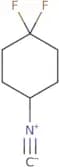
CAS:<p>1,2,3-Tris(2-cyanoethoxy)propane is a contaminant that has low detection limits and can be detected on-line. It has been shown to interact with oxygenated solutes in the chromatographic method used to analyze silicone. 1,2,3-Tris(2-cyanoethoxy)propane has also been shown to be an injectable solute that can desorb from silicone during the chromatographic analysis. This contaminant is not expressed by S. pneumoniae or S. pyogenes, but is expressed by E. coli and Streptococcus sp.</p>Formula:C12H17N3O3Purity:Min. 95%Molecular weight:251.29 g/mol1,1-Difluoro-4-isocyanocyclohexane
CAS:<p>Versatile small molecule scaffold</p>Formula:C7H9NF2Purity:Min. 95%Molecular weight:145.14 g/molPotassium hexacyanoruthenate(II) trihydrate
CAS:Controlled Product<p>Please enquire for more information about Potassium hexacyanoruthenate(II) trihydrate including the price, delivery time and more detailed product information at the technical inquiry form on this page</p>Formula:C6H2K4N6ORuPurity:Min. 95%Molecular weight:431.58 g/molethyl 3-(cyanomethyl)pyridine-2-carboxylate
CAS:<p>Versatile small molecule scaffold</p>Formula:C10H10N2O2Purity:Min. 95%Molecular weight:190.2 g/molN-Butyl cyanoacetate
CAS:<p>N-Butyl cyanoacetate is a colorless liquid that has a strong, unpleasant odor. It is used in the production of industrial chemicals and as an active methylene reagent in organic synthesis. It can be used to make diazonium salts and c1-c4 haloalkyl compounds. N-Butyl cyanoacetate is known to cause allergic reactions and has been shown to have an effect on the central nervous system, causing low energy levels and receptor activity.</p>Formula:C7H11NO2Purity:Min. 95%Molecular weight:141.17 g/mol4-chloro-3-cyanobenzenesulfonyl chloride
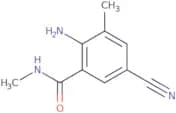
CAS:<p>Versatile small molecule scaffold</p>Formula:C7H3Cl2NO2SPurity:Min. 95%Molecular weight:236.07 g/mol2-Amino-5-cyano-N,3-dimethylbenzamide
CAS:<p>2-Amino-5-cyano-N,3-dimethylbenzamide is a diester of methylamine and an ester of an acid. It has shown antiinflammatory activity in rats and mice. 2-Amino-5-cyano-N,3-dimethylbenzamide has been shown to inhibit the production of prostaglandin E2 by inhibiting cyclooxygenase (COX) activity.</p>Formula:C10H11N3OPurity:Min. 95%Molecular weight:189.22 g/molMethyl 4-cyanopicolinate
CAS:<p>Versatile small molecule scaffold</p>Formula:C8H6N2O2Purity:Min. 95%Molecular weight:162.15 g/mol2-(2-chloro-6-cyanophenyl)acetic acid
CAS:<p>Versatile small molecule scaffold</p>Formula:C9H6ClNO2Purity:Min. 95%Molecular weight:195.6 g/mol3-cyano-5-methoxybenzoic acid
CAS:<p>Versatile small molecule scaffold</p>Formula:C9H7NO3Purity:Min. 95%Molecular weight:177.16 g/mol1-[(tert-butoxy)carbonyl]-3-cyanopyrrolidine-3-carboxylic acid
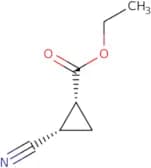
CAS:<p>Versatile small molecule scaffold</p>Formula:C11H16N2O4Purity:Min. 95%Molecular weight:240.3 g/molcis-ethyl (1R,2S)-2-cyanocyclopropane-1-carboxylate
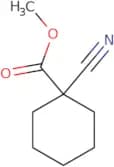
CAS:<p>Versatile small molecule scaffold</p>Formula:C7H9NO2Purity:Min. 95%Molecular weight:139.15 g/molMethyl 1-cyanocyclohexanecarboxylate
CAS:<p>Versatile small molecule scaffold</p>Formula:C9H13NO2Purity:Min. 95%Molecular weight:167.21 g/molMethyl 2-cyano-3-methylbenzoate
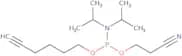
CAS:<p>Versatile small molecule scaffold</p>Formula:C10H9NO2Purity:Min. 95%Molecular weight:175.18 g/mol5-Hexyn-1-yl-(2-cyanoethyl)-(N,N-diisopropyl)-phosphoramidite
CAS:<p>Please enquire for more information about 5-Hexyn-1-yl-(2-cyanoethyl)-(N,N-diisopropyl)-phosphoramidite including the price, delivery time and more detailed product information at the technical inquiry form on this page</p>Purity:Min. 95%Methyl 5-cyanopicolinate
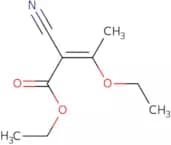
CAS:<p>Methyl 5-cyanopicolinate is a medicinal compound that is used in the treatment of various diseases. It has been shown to block the activation of plasminogen by plasmin, which prevents the breakdown of fibrin and other proteins. Methyl 5-cyanopicolinate has also been found to be an inhibitor of acetylcholinesterase, which leads to increased acetylcholine levels in the brain and can be used for the treatment of Alzheimer's disease. The synthesis and chemical studies of this substance are still ongoing.</p>Formula:C8H6N2O2Purity:Min. 95%Molecular weight:162.15 g/molethyl (2E)-2-cyano-3-ethoxybut-2-enoate
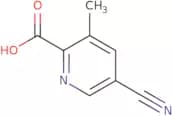
CAS:<p>Ethyl (2E)-2-cyano-3-ethoxybut-2-enoate is an activated ester that can be synthesized by the reaction of ethyl chloroformate and 2-aminoacrylic acid in ethanol. This compound is used as a reagent for the synthesis of amidrazones, which are used as reactive intermediates in organic chemistry. The x-ray structural analysis shows that it is a racemic mixture of two diastereomers, with the more stable configuration being the one with the trans double bond on the benzene ring. It has been shown to have an nmr spectrum consisting of two signals at δ = 3.47 ppm and δ = 3.53 ppm, respectively, in a two dimensional nmr analysis.</p>Formula:C9H13NO3Purity:Min. 95%Molecular weight:183.21 g/mol5-cyano-3-methylpyridine-2-carboxylic acid
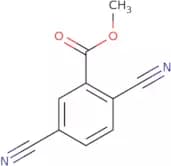
CAS:<p>5-cyano-3-methylpyridine-2-carboxylic acid is a medicinal drug used to treat chronic diseases. It belongs to the group of p-glycoprotein (Pgp) inhibitors, which are trifluoromethylated compounds that are effluxed by Pgp from cells. 5-cyano-3-methylpyridine-2-carboxylic acid has been shown to inhibit BACE1, an enzyme responsible for the production of amyloid beta, which can lead to Alzheimer's disease. This compound also inhibits neural cell growth and nervous system activity in rats. The trifluoromethyl group in this molecule is important for optimization as it increases the affinity for binding with proteins.</p>Formula:C8H6N2O2Purity:Min. 95%Molecular weight:162.14 g/molmethyl 2,5-dicyanobenzoate
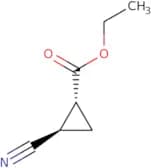
CAS:<p>Versatile small molecule scaffold</p>Formula:C10H6N2O2Purity:Min. 95%Molecular weight:186.17 g/molEthyl trans-2-cyanocyclopropane-1-carboxylate
CAS:<p>Versatile small molecule scaffold</p>Formula:C7H9NO2Purity:Min. 95%Molecular weight:139.15 g/mol2-(4-cyanophenyl)-N-methylacetamide
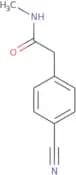
CAS:<p>Versatile small molecule scaffold</p>Formula:C10H10N2OPurity:Min. 95%Molecular weight:174.2 g/molMethyl 4-cyanotetrahydro-2H-pyran-4-carboxylate
CAS:<p>Versatile small molecule scaffold</p>Formula:C8H11NO3Purity:Min. 95%Molecular weight:169.18 g/molEthyl 2-(4-cyanophenoxy)acetate
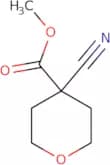
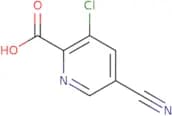
CAS:<p>Versatile small molecule scaffold</p>Formula:C11H11NO3Purity:Min. 95%Molecular weight:205.21 g/mol3-Chloro-5-cyano-2-pyridinecarboxylic acid
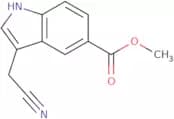
CAS:<p>Versatile small molecule scaffold</p>Formula:C7H3ClN2O2Purity:Min. 95%Molecular weight:182.56 g/molMethyl 3-(cyanomethyl)-1H-indole-5-carboxylate
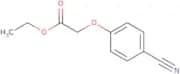
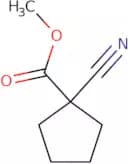
CAS:<p>Versatile small molecule scaffold</p>Formula:C12H10N2O2Purity:Min. 95%Molecular weight:214.22 g/molMethyl 1-cyanocyclopentanecarboxylate
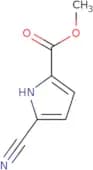
CAS:<p>Versatile small molecule scaffold</p>Formula:C8H11NO2Purity:Min. 95%Molecular weight:153.18 g/molMethyl 5-cyano-1H-pyrrole-2-carboxylate
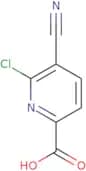
CAS:<p>Methyl 5-cyano-1H-pyrrole-2-carboxylate is a chiral, intramolecular catalysis inhibitor of the enzyme acetylcholinesterase. It is a potent compound that inhibits the activity of this enzyme and prevents the breakdown of acetylcholine in the brain. Methyl 5-cyano-1H-pyrrole-2-carboxylate binds to the active site with an axial orientation and has been shown to be selective for parp-1. This molecule also inhibits other enzymes that are involved in protein synthesis and cell signaling, such as alkenes and alkaloids. Methyl 5-cyano-1H-pyrrole-2-carboxylate may have therapeutic value as a treatment for Alzheimer's disease due to its ability to inhibit acetylcholinesterase activity.</p>Formula:C7H6N2O2Purity:Min. 95%Molecular weight:150.13 g/mol6-chloro-5-cyanopyridine-2-carboxylic acid
CAS:<p>6-Chloro-5-cyanopyridine-2-carboxylic acid is an antitumor agent that inhibits tumor cell proliferation and induces cell death. It has been shown to be a selective inhibitor of the enzyme hepg2, which is involved in the conversion of cholesterol to bile acids. 6-Chloro-5-cyanopyridine-2-carboxylic acid has also been shown to inhibit the growth of tumor cells by binding to pyrimidine derivatives and acylating them. This reaction leads to the formation of reactive nitrogen species that cause DNA damage and lead to apoptotic cell death. The compound can be synthesized efficiently through an acylation reaction with benzoyl chloride.</p>Formula:C7H3ClN2O2Purity:Min. 95%Molecular weight:182.6 g/mol1,9-Dicyanononane
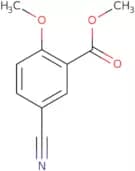
CAS:<p>1,9-Dicyanonane is a reactive compound that is used in enzymatic reactions. It has an affinity for the carboxylate group of the enzyme and reacts with it to form products. 1,9-Dicyanonane can be used as an affinity label to identify enzymes in a reaction. This compound can also be labeled with stable isotopes of carbon, nitrogen, or hydrogen to make it more useful in NMR spectroscopy and mass spectrometry. The stable isotopes are usually 13C, 15N, or 2H. The use of these labels allows for calculation of the number of molecules in a sample by measuring the intensity of the peaks corresponding to the specific isotope.</p>Formula:C11H18N2Purity:Min. 95%Molecular weight:178.27 g/molMethyl 5-cyano-2-methoxybenzoate
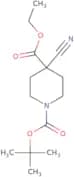
CAS:<p>Versatile small molecule scaffold</p>Formula:C10H9NO3Purity:Min. 95%Molecular weight:191.18 g/mol1-tert-Butyl 4-ethyl 4-cyanopiperidine-1,4-dicarboxylate
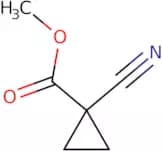
CAS:<p>Versatile small molecule scaffold</p>Formula:C14H22N2O4Purity:Min. 95%Molecular weight:282.34 g/molMethyl 1-cyanocyclopropanecarboxylate
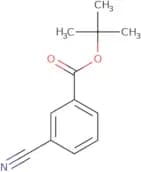
CAS:<p>Versatile small molecule scaffold</p>Formula:C6H7NO2Purity:Min. 95%Molecular weight:125.13 g/moltert-Butyl 3-cyanobenzoate
CAS:<p>Versatile small molecule scaffold</p>Formula:C12H13NO2Purity:Min. 95%Molecular weight:203.24 g/molMethyl 6-cyanonicotinate
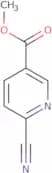
CAS:<p>Versatile small molecule scaffold</p>Formula:C8H6N2O2Purity:Min. 95%Molecular weight:162.15 g/moltert-Butyl 3-cyano-3-(hydroxymethyl)azetidine-1-carboxylate
CAS:<p>Versatile small molecule scaffold</p>Formula:C10H16N2O3Purity:Min. 95%Molecular weight:212.25 g/mol4-Chloro-3-cyanobenzoic acid
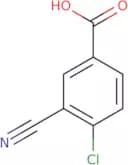
CAS:<p>Versatile small molecule scaffold</p>Formula:C8H4ClNO2Purity:Min. 95%Molecular weight:181.58 g/mol2-Isocyano-1,3-dimethyl-benzene
CAS:<p>2-Isocyano-1,3-dimethyl-benzene is an organic compound that is used to synthesize other compounds. It has a redox potential of -0.6 volts and a crystallography of orthorhombic with a space group of Pbca. It reacts with nitrogen atoms in the reaction solution to form stable complexes and can react with copper ions to form a copper complex. 2-Isocyano-1,3-dimethyl-benzene has been shown to undergo transfer reactions with molybdenum in the presence of xylene as solvent and ammonia gas as a catalyst. This chemical reaction mechanism leads to the formation of an isocyanide intermediate, which then reacts with water molecules to create an aminium ion and hydrogen cyanide. Titration calorimetry experiments have shown that 2-isocyano-1,3-dimethylbenzene has an enthalpy change of -2</p>Formula:C9H9NPurity:Min. 95%Molecular weight:131.17 g/molPotassiumhexacyanocobaltate(III)
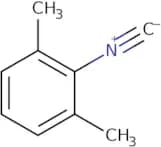
CAS:Controlled Product<p>Potassiumhexacyanocobaltate(III) is a compound that is an optical material with a yellow colour. It has a high degree of anisotropy, and it can be used in magneto-optical devices. Potassiumhexacyanocobaltate(III) is bifunctional, meaning that it can have both magnetic and light emitting properties. The magnetic property arises from the spin-orbit coupling between the metal ions, while the light emission is due to radiative transitions involving the electrons in the metal ion. Potassiumhexacyanocobaltate(III) has been used to produce light emission in crystalline materials such as gallium arsenide and zinc selenide, as well as in devices such as LEDs.</p>Formula:C5CoK3N6Purity:Min. 95%Molecular weight:320.32 g/molMethyl 4-cyano-2-methoxybenzoate
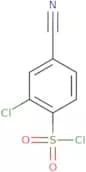
CAS:<p>Versatile small molecule scaffold</p>Formula:C10H9NO3Purity:Min. 95%Molecular weight:191.18 g/mol2-Chloro-4-cyanobenzenesulfonyl chloride
CAS:<p>Versatile small molecule scaffold</p>Formula:C7H3Cl2NO2SPurity:Min. 95%Molecular weight:236.08 g/molMethyl 6-chloro-5-cyanopicolinate
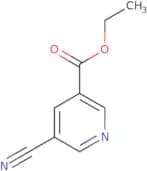
CAS:<p>Versatile small molecule scaffold</p>Formula:C8H5ClN2O2Purity:Min. 95%Molecular weight:196.59 g/molEthyl 5-cyanonicotinate
CAS:<p>Versatile small molecule scaffold</p>Formula:C9H8N2O2Purity:Min. 95%Molecular weight:176.17 g/mol5-cyano-2-methoxybenzoic acid
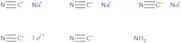
CAS:<p>Versatile small molecule scaffold</p>Formula:C9H7NO3Purity:Min. 95%Molecular weight:177.16 g/molSodium Pentacyanoammineferroate(II) Hydrate
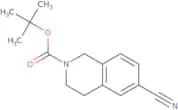
CAS:Controlled Product<p>Please enquire for more information about Sodium Pentacyanoammineferroate(II) Hydrate including the price, delivery time and more detailed product information at the technical inquiry form on this page</p>Formula:C5H3FeN6Na3·xH2OPurity:Min. 95%Molecular weight:271.94 g/moltert-Butyl 6-cyano-3,4-dihydroisoquinoline-2(1H)-carboxylate
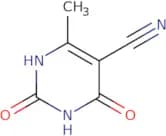
CAS:<p>Versatile small molecule scaffold</p>Formula:C15H18N2O2Purity:Min. 95%Molecular weight:258.32 g/mol6-Methyl-5-cyanouracil
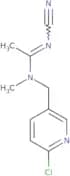
CAS:<p>Versatile small molecule scaffold</p>Formula:C6H5N3O2Purity:Min. 95%Molecular weight:151.12 g/molN-(6-Chloro-3-pyridylmethyl)-N-cyano-N-methylacetamidine
CAS:<p>N-(6-Chloro-3-pyridylmethyl)-N-cyano-N-methylacetamidine is a chemical pesticide that belongs to the class of chlorinated acetamides. It has been shown to be highly resistant to biological degradation, which means it can persist in the environment for a long time and accumulate in living organisms. This pesticide has been shown to have genotoxic effects in vivo and in vitro, and it has been shown to have an adverse effect on the kidney bean α subunit gene expression. In vitro assays have also shown that this compound is able to inhibit locomotor activity, as well as surface methodology optical sensor assays. N-(6-Chloro-3-pyridylmethyl)-N-cyano-N-methylacetamidine appears to be a promising candidate for wastewater treatment because it does not appear to be toxic at sublethal doses.</p>Formula:C10H11ClN4Purity:Min. 95%Molecular weight:222.67 g/mol4-Chloro-2-cyanophenylsulfonyl Chloride
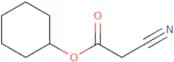
CAS:<p>Versatile small molecule scaffold</p>Formula:C7H3NO2SCl2Purity:Min. 95%Molecular weight:236.07 g/molCyclohexyl cyanoacetate
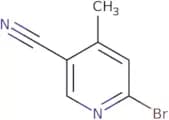
CAS:<p>Cyclohexyl cyanoacetate is an amide derivative and a pyrimidine derivative. It is used in pharmaceutical formulations as an intermediate for the synthesis of pyrazoles, which are used in the treatment of hyperproliferative disorders. Cyclohexyl cyanoacetate inhibits bacterial growth by inhibiting protein synthesis, as it binds to ribosomes and blocks the binding site for amino acids. Cyclohexyl cyanoacetate also has antifungal properties and is an acid catalyst.</p>Formula:C9H13NO2Purity:Min. 95%Molecular weight:167.21 g/mol2-Bromo-5-cyano-4-picoline
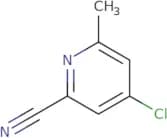
CAS:<p>2-Bromo-5-cyano-4-picoline is a tyrosine kinase inhibitor that binds to the ATP binding site of the enzyme, inhibiting its activity. It has been shown to be effective in preclinical studies for the treatment of arthritis and cellular proliferation. 2-Bromo-5-cyano-4-picoline has been shown to be reversible and orally active.</p>Formula:C7H5BrN2Purity:Min. 95%Molecular weight:197.04 g/mol4-Chloro-2-cyano-6-methylpyrimidine
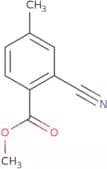
CAS:<p>Versatile small molecule scaffold</p>Formula:C6H4ClN3Purity:Min. 95%Molecular weight:153.57 g/molMethyl 2-cyano-4-methylbenzoate
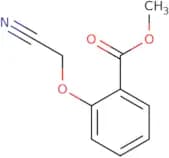
CAS:<p>Versatile small molecule scaffold</p>Formula:C10H9NO2Purity:Min. 95%Molecular weight:175.18 g/molMethyl 2-(cyanomethoxy)benzoate
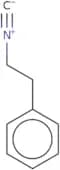
CAS:<p>Versatile small molecule scaffold</p>Formula:C10H9NO3Purity:Min. 95%Molecular weight:191.18 g/mol2-Isocyanoethylbenzene
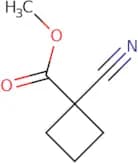
CAS:<p>2-Isocyanoethylbenzene, also known as 2-IBAB, is an organic compound that contains a carbonyl group and two isocyanate groups. It is used as a catalyst in hydrosilylation reactions to synthesize polymers such as polyurethanes. The reaction between 2-isocyanoethylbenzene and copper complex produces an imine that reacts with phosphite to form quinoline derivatives. These quinoline derivatives are then reacted with carboxylates to form ruthenium complexes, which catalyze the polymerization of deionized water. The polymerization initiator for this process is typically an organic peroxide or azide.</p>Formula:C9H9NPurity:Min. 95%Molecular weight:131.18 g/molMethyl 1-cyanocyclobutanecarboxylate
CAS:<p>Versatile small molecule scaffold</p>Formula:C7H9NO2Purity:Min. 95%Molecular weight:139.16 g/mol(E)-ethyl 2-cyano-3-((3,5-difluorophenyl)amino)acrylate
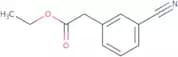
CAS:<p>Versatile small molecule scaffold</p>Formula:C12H10F2N2O2Purity:Min. 95%Molecular weight:252.22 g/molEthyl 2-(3-cyanophenyl)acetate
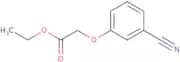
CAS:<p>Versatile small molecule scaffold</p>Formula:C11H11NO2Purity:Min. 95%Molecular weight:189.21 g/molEthyl 2-(3-cyanophenoxy)acetate
CAS:<p>Versatile small molecule scaffold</p>Formula:C11H11NO3Purity:Min. 95%Molecular weight:205.21 g/mol2-[4-(2,2-Dicyanovinyl)-N-ethyl-3-Methylaniline]ethyl carbanilate
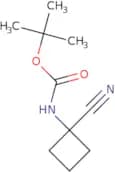
CAS:<p>Please enquire for more information about 2-[4-(2,2-Dicyanovinyl)-N-ethyl-3-Methylaniline]ethyl carbanilate including the price, delivery time and more detailed product information at the technical inquiry form on this page</p>Formula:C22H22N4O2Purity:Min. 95%Molecular weight:374.44 g/moltert-Butyl N-(1-cyanocyclobutyl)carbamate
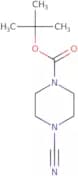
CAS:<p>Versatile small molecule scaffold</p>Formula:C10H16N2O2Purity:Min. 95%Molecular weight:196.25 g/moltert-butyl 4-cyanopiperazine-1-carboxylate
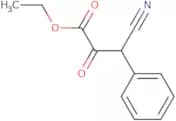
CAS:<p>Versatile small molecule scaffold</p>Formula:C10H17N3O2Purity:Min. 95%Molecular weight:211.26 g/molEthyl 3-cyano-3-phenylpyruvate
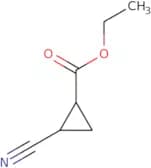
CAS:<p>Ethyl 3-cyano-3-phenylpyruvate is a chemical compound that is used as an antiviral agent. It has been shown in vitro to inhibit influenza virus and depression. Ethyl 3-cyano-3-phenylpyruvate is synthesized by the alkylation of furyl with phenyl group, followed by the reduction of the tetronic acid formed. The antiviral activity of ethyl 3-cyano-3-phenylpyruvate was analyzed by assessing the ability to inhibit viral replication and production of new viruses. The sodium salt form of this compound is used in foodstuff as a preservative.</p>Formula:C12H11NO3Purity:Min. 95%Molecular weight:217.22 g/molethyl 2-cyanocyclopropane-1-carboxylate
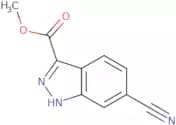
CAS:<p>Ethyl 2-cyanocyclopropane-1-carboxylate is a reactive chemical reagent that can be used to synthesize a variety of compounds. It is an aliphatic compound with a carbonyl group at the end of the molecule and belongs to a class of compounds called chlorohydrins. Ethyl 2-cyanocyclopropane-1-carboxylate has been used as an organoindium compound for the synthesis of stilbene derivatives. It can also be used to synthesize chlorinated alkenes, oxiranes, and other cyclopropanes. Ethyl 2-cyanocyclopropane-1-carboxylate can react with alcohols or phenols in presence of acid to form acetals or ketals, respectively.</p>Formula:C7H9NO2Purity:Min. 95%Molecular weight:139.15 g/molMethyl 6-cyano-1H-indazole-3-carboxylate
CAS:<p>Versatile small molecule scaffold</p>Formula:C10H7N3O2Purity:Min. 95%Molecular weight:201.18 g/moltert-Butyl 4-(2-cyanoacetyl)piperidine-1-carboxylate
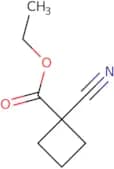
CAS:<p>Versatile small molecule scaffold</p>Formula:C13H20N2O3Purity:Min. 95%Molecular weight:252.31 g/molEthyl 1-cyanocyclobutanecarboxylate
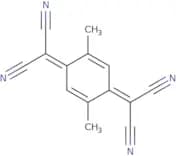
CAS:<p>Ethyl 1-cyanocyclobutanecarboxylate is a cyclic molecule that belongs to the homologues of ethylene. This compound has been shown to react with carbanions in the presence of a base to form anionic initiator molecules. Ethyl 1-cyanocyclobutanecarboxylate can be used as an experimental monomer for ring-opening polymerization reactions, which are nonquantitative and may require temperatures as high as 110°C. The rate of these reactions is determined by the concentration of monomers, which should be made as monodisperse as possible.</p>Formula:C8H11NO2Purity:Min. 95%Molecular weight:153.18 g/mol2,5-Dimethyl-7,7,8,8-tetracyanoquinodimethane
CAS:<p>2,5-Dimethyl-7,7,8,8-tetracyanoquinodimethane is a layered compound that has been modified to have magnetic properties. This modification can be used for research purposes and the magnetically induced transfer of elements between compounds. 2,5-Dimethyl-7,7,8,8-tetracyanoquinodimethane can also be modified by adding an acceptor group to one of the layers in order to create an optical probe. The structural modifications of this molecule make it possible to create a sponge that can be used as a nanoreactor for catalysis or other reactions.</p>Formula:C14H8N4Purity:Min. 95%Color and Shape:PowderMolecular weight:232.25 g/mol2-Propenoic acid, 3-(4-cyanophenyl)-, (E)-
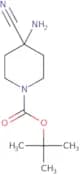
CAS:<p>2-Propenoic acid, 3-(4-cyanophenyl)-, (E)- is a fatty acid that is used in the production of biodiesel. This reaction is catalyzed by an acid methyl ester, which can be either reactive or unreactive. The product of this reaction - fatty acid methyl esters - has significant activity as an anion and has a high boiling point. It also has the potential to be used as a fuel in the future.</p>Formula:C10H7NO2Purity:Min. 95%Molecular weight:173.17 g/mol4-Amino-4-cyanopiperidine, N1-BOC protected
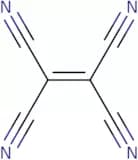
CAS:<p>Versatile small molecule scaffold</p>Formula:C11H19N3O2Purity:Min. 95%Molecular weight:225.29 g/molTetracyanoethylene
CAS:<p>Used for post-functional addition to polyphenylacetylene derivatives</p>Formula:C6N4Color and Shape:White PowderMolecular weight:128.09 g/molMethyl 4-cyanobicyclo[2.2.2]octane-1-carboxylate
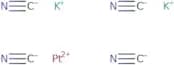
CAS:<p>Versatile small molecule scaffold</p>Formula:C11H15NO2Purity:Min. 95%Molecular weight:193.24 g/molPotassium tetracyanoplatinate(II)
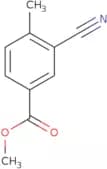
CAS:Controlled Product<p>Potassium tetracyanoplatinate(II) is a metal-organic framework that has been synthesized by the layer-by-layer self-assembly of potassium ions and cyanide anions. It can reversibly bind to anions such as chloride, sulfate, nitrate, and phosphate. The structural biology of this material was investigated using X-ray diffraction data in combination with electron microscopy techniques. The salt form of potassium tetracyanoplatinate(II) has been found to be stable up to 100 °C. Potassium tetracyanoplatinate(II) has shown antimicrobial properties against Bordetella pertussis.</p>Formula:C4K2N4PtPurity:Min. 95%Color and Shape:PowderMolecular weight:377.35 g/molMethyl 3-cyano-4-methylbenzoate
CAS:<p>Versatile small molecule scaffold</p>Formula:C10H9NO2Purity:Min. 95%Molecular weight:175.18 g/molEthyl 6-cyanoimidazo[1,2-a]pyridine-2-carboxylate
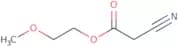
CAS:<p>Versatile small molecule scaffold</p>Formula:C11H9N3O2Purity:Min. 95%Molecular weight:215.21 g/molAcetic acid, 2-cyano-, 2-methoxyethyl ester
CAS:<p>2-Cyano-2-methoxyethyl acetic acid is a reactive organic solvent that has a boiling point of 152°C. It is soluble in water and has an acidic pH. This compound is used as a monomer, and is also used as an alkylating agent for the synthesis of polymers. 2-Cyano-2-methoxyethyl acetic acid can be copolymerized with other compounds to create a variety of products with different properties. The reaction time depends on the type of product being synthesized, but it typically takes up to 48 hours to complete the reaction. 2-Cyano-2-methoxyethyl acetic acid can react with c1–6 alkyl groups, which may affect its solubility. This compound has a high degree of configurability, which may allow it to be used in more chemical reactions than other organic solvents.</p>Formula:C6H9NO3Purity:Min. 95%Molecular weight:143.14 g/mol3-(Isocyanomethyl)pyridine
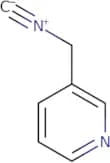
CAS:<p>3-(Isocyanomethyl)pyridine is a nucleophilic amine that is used in organic chemistry as a reagent. It can be used either as a primary amine or as an isocyanide, depending on the desired functionality. 3-(Isocyanomethyl)pyridine reacts with electrophiles such as phenols, alcohols, and carboxylic acids to form reactive intermediates. These intermediates are often useful for generating new molecules. 3-(Isocyanomethyl)pyridine is also capable of reacting with primary and secondary amines to yield multigram quantities of products.<br>3-(Isocyanomethyl)pyridine has been shown to be an innovative chemical that can be used in many different applications.</p>Formula:C7H6N2Purity:Min. 95%Molecular weight:118.14 g/mol3-cyano-2-hydroxybenzoicacid
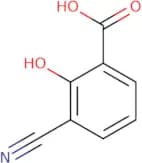
CAS:<p>Versatile small molecule scaffold</p>Formula:C8H5NO3Purity:Min. 95%Molecular weight:163.13 g/molEthyl 5-cyano-6-methylnicotinate
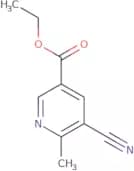
CAS:<p>Versatile small molecule scaffold</p>Formula:C10H10N2O2Purity:Min. 95%Molecular weight:190.2 g/moltert-Butyl 4-(4-cyanophenyl)tetrahydro-1(2H)-pyrazinecarboxylate
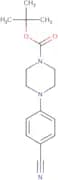
CAS:<p>Versatile small molecule scaffold</p>Formula:C16H21N3O2Purity:Min. 95%Molecular weight:287.36 g/mol7-Amino-6-cyanopyrazolo[1,5-a]pyrimidine
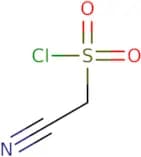
CAS:<p>Versatile small molecule scaffold</p>Formula:C7H5N5Purity:Min. 95%Molecular weight:159.15 g/molcyanomethanesulfonyl chloride
CAS:<p>Cyanomethanesulfonyl chloride is the precursor to a series of pharmaceuticals that are tyrosine kinase inhibitors. These compounds inhibit the growth and proliferation of cells by binding to the receptor tyrosine kinase, preventing it from activating and regulating other proteins. Cyanomethanesulfonyl chloride has been shown to inhibit inflammatory bowel disease in animal models. It also inhibits the production of amines and chloride, which may be responsible for its anti-inflammatory effects.</p>Formula:C2H2ClNO2SPurity:Min. 95%Molecular weight:139.6 g/molBenzyl 2-cyanoacetate
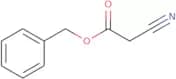
CAS:<p>Benzyl 2-cyanoacetate is an aliphatic hydrocarbon that has been used in the synthesis of various quinoline derivatives. It can be prepared by the reaction of malonic acid with hydrochloric acid, followed by borohydride reduction and the addition of active methylene. Benzyl 2-cyanoacetate is also a precursor to a number of other compounds, including β-amino acids, which are used as pharmaceutical preparations. The chloride ions in benzyl 2-cyanoacetate react with nitro groups to form chloroquinolines. This compound is also an efflux pump inhibitor that blocks bacterial cells from exporting antibiotic molecules out of the cell.</p>Formula:C10H9NO2Purity:Min. 95%Molecular weight:175.19 g/moltert-Butyl N-(1-cyano-1-methylethyl)carbamate
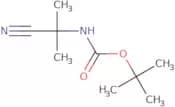
CAS:<p>Versatile small molecule scaffold</p>Formula:C9H16N2O2Purity:Min. 95%Molecular weight:184.24 g/molEthyl-2-isocyanoacetate
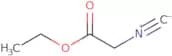
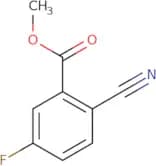
CAS:<p>Ethyl-2-isocyanoacetate is a chemical substance that is used in organic chemistry as a reagent for the synthesis of esters and amides. It has been shown to have strong antimicrobial activity against bacteria, including methicillin-resistant Staphylococcus aureus. This compound has also been shown to inhibit the growth of skin cancer cells, which may be due to its ability to induce apoptosis. Ethyl-2-isocyanoacetate reacts with nitro groups in proteins and amino acids by replacement of an oxygen atom from the hydroxyl group with a nitrogen atom from the carboxylic acid group. This reaction mechanism is catalyzed by ns3 protease, which is activated by hydrogen peroxide and thioredoxin reductase.</p>Formula:C5H7NO2Purity:Min. 95%Color and Shape:Clear LiquidMolecular weight:113.11 g/molMethyl 2-cyano-5-fluorobenzoate
CAS:<p>Versatile small molecule scaffold</p>Formula:C9H6FNO2Purity:Min. 95%Molecular weight:179.15 g/molTris(2-cyanoethyl)phosphine
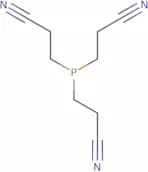
CAS:<p>Tris(2-cyanoethyl)phosphine (TCEP) is a metal carbonyl compound that has been used as a reagent in organic chemistry. TCEP is an amphoteric molecule that can react with both acids and bases, and is stable in the pH range of 5 to 9. It has been shown to have anti-inflammatory properties by inhibiting neutrophil migration. TCEP also has biological properties, such as its ability to inhibit the growth of Cryptococcus neoformans. TCEP binds to the mitochondrial membrane potential, which prevents proton leakage through the membrane and inhibits oxidative phosphorylation. TCEP binds strongly to minerals such as sodium salts, which can be used to isolate this molecule from reaction solutions. TCEP can be obtained by laser ablation or X-ray crystallography techniques.</p>Formula:C9H12N3PPurity:Min. 95 Area-%Molecular weight:193.19 g/mol3-chloro-4-cyanobenzoic acid
CAS:<p>Versatile small molecule scaffold</p>Formula:C8H4ClNO2Purity:Min. 95%Molecular weight:181.58 g/mol4-Amino-6-bromo-5-cyano-7H-pyrrol[2,3-d]pyrimidine
CAS:<p>4-Amino-6-bromo-5-cyano-7H-pyrrol[2,3-d]pyrimidine is a synthetic compound that can inhibit the growth of tumor cells by preventing RNA replication. It has been shown to be an efficient method for screening potential antitumor agents. 4AB5C7H is extracted from the tumor cell lines and catalyzed by a variety of enzymes. The debromination process yields high yields of 4AB5C7H, which can be used as a potential inhibitor in cancer therapy.</p>Purity:Min. 95%





![sodium 4-{[4-(ethylamino)-3-methylphenyl][(1Z,4E)-4-(ethylimino)-3-methylcyclohexa-2,5-dien-1-ylid…](/_next/image/?url=https%3A%2Fstatic.cymitquimica.com%2Fproducts%2FIN%2Fthumb-webp%2FDA00DEQ5.webp&w=3840&q=75)


![3-((3R,4R)-3-((2-chloro-7H-pyrrolo[2,3-d]pyrimidin-4-yl)(methyl)amino)-4-methylpiperidin-1-yl)-3-o…](/_next/image/?url=https%3A%2Fstatic.cymitquimica.com%2Fproducts%2FIN%2Fthumb-webp%2FDA00ABHF.webp&w=3840&q=75)


![1-(4-chlorophenyl)-N-{3-cyano-4-[4-(morpholin-4-yl)piperidin-1-yl]phenyl}-5-methylpyrazole-4-carbo…](/_next/image/?url=https%3A%2Fstatic.cymitquimica.com%2Fproducts%2FIN%2Fthumb-webp%2FDA002WO3.webp&w=3840&q=75)
![[1,1'-Biphenyl]-4-carbonitrile, 4'-propoxy-](/_next/image/?url=https%3A%2Fstatic.cymitquimica.com%2Fproducts%2FIN%2Fthumb-webp%2FDA00I9FD.webp&w=3840&q=75)











![5-Amino-3-cyano-4-iodo-1-[2,6-dichloro-4-(trifluoromethyl)phenyl]pyrazole](/_next/image/?url=https%3A%2Fstatic.cymitquimica.com%2Fproducts%2F3D%2Fthumb-webp%2FFA99521.webp&w=3840&q=75)









![5-Amino-3-cyano-4-iodo-1-[2,6-dichloro-4-(trifluoromethyl)phenyl]pyrazole](/_next/image/?url=https%3A%2Fstatic.cymitquimica.com%2Fproducts%2FTR%2Fthumb-webp%2FA603945.webp&w=3840&q=75)
![Methyl 3-cyanobicyclo[1.1.1]pentane-1-carboxylate](/_next/image/?url=https%3A%2Fstatic.cymitquimica.com%2Fproducts%2F3D%2Fthumb-webp%2FGGA32962.webp&w=3840&q=75)




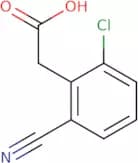
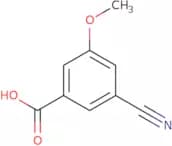
![1-[(tert-butoxy)carbonyl]-3-cyanopyrrolidine-3-carboxylic acid](/_next/image/?url=https%3A%2Fstatic.cymitquimica.com%2Fproducts%2F3D%2Fthumb-webp%2FIWB75928.webp&w=3840&q=75)









![2-[4-(2,2-Dicyanovinyl)-N-ethyl-3-Methylaniline]ethyl carbanilate](/_next/image/?url=https%3A%2Fstatic.cymitquimica.com%2Fproducts%2F3D%2Fthumb-webp%2FFD171547.webp&w=3840&q=75)


![Methyl 4-cyanobicyclo[2.2.2]octane-1-carboxylate](/_next/image/?url=https%3A%2Fstatic.cymitquimica.com%2Fproducts%2F3D%2Fthumb-webp%2FECA20205.webp&w=3840&q=75)
![Ethyl 6-cyanoimidazo[1,2-a]pyridine-2-carboxylate](/_next/image/?url=https%3A%2Fstatic.cymitquimica.com%2Fproducts%2F3D%2Fthumb-webp%2FPIA95833.webp&w=3840&q=75)
![7-Amino-6-cyanopyrazolo[1,5-a]pyrimidine](/_next/image/?url=https%3A%2Fstatic.cymitquimica.com%2Fproducts%2F3D%2Fthumb-webp%2FPDA97557.webp&w=3840&q=75)

![4-Amino-6-bromo-5-cyano-7H-pyrrol[2,3-d]pyrimidine](/_next/image/?url=https%3A%2Fstatic.cymitquimica.com%2Fproducts%2F3D%2Fthumb-webp%2FFA145040.webp&w=3840&q=75)