Building Blocks
This section contains fundamental products for the synthesis of organic and biological compounds. Building blocks are the essential starting materials used to construct complex molecules through various chemical reactions. They play a critical role in drug discovery, material science, and chemical research. At CymitQuimica, we offer a diverse range of high-quality building blocks to support your innovative research and industrial projects, ensuring you have the essential components for successful synthesis.
Subcategories of "Building Blocks"
- Boronic Acids & Boronic Acid Derivatives(5,778 products)
- Chiral Building Blocks(1,242 products)
- Hydrocarbon Building Blocks(6,098 products)
- Organic Building Blocks(61,034 products)
Found 199601 products of "Building Blocks"
Sort by
Purity (%)
0
100
|
0
|
50
|
90
|
95
|
100
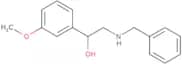
2-(Benzylamino)-1-(3-methoxyphenyl)ethan-1-ol
CAS:<p>Versatile small molecule scaffold</p>Formula:C16H19NO2Purity:Min. 95%Molecular weight:257.33 g/mol2-(4-Oxo-3,4-dihydrophthalazin-1-yl)acetonitrile
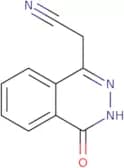
CAS:<p>Versatile small molecule scaffold</p>Formula:C10H7N3OPurity:Min. 95%Molecular weight:185.18 g/mol2-Hydroxy-4,5,6-trimethylnicotinonitrile
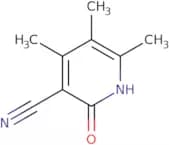
CAS:<p>Versatile small molecule scaffold</p>Formula:C9H10N2OPurity:Min. 95%Molecular weight:162.19 g/mol4-Chloro-2,6-dimethylpyridine-3-carbonitrile
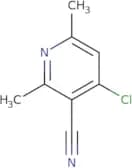
CAS:<p>Versatile small molecule scaffold</p>Formula:C8H7ClN2Purity:Min. 95%Molecular weight:166.61 g/mol2-Chloro-4,5,6-trimethylpyridine-3-carbonitrile
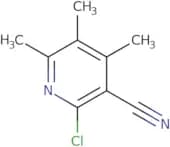
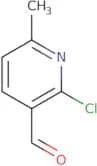
CAS:<p>Versatile small molecule scaffold</p>Formula:C9H9ClN2Purity:Min. 95%Molecular weight:180.63 g/mol2-Chloro-6-methylpyridine-3-carbaldehyde
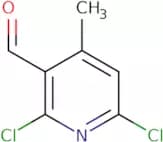
CAS:<p>Versatile small molecule scaffold</p>Formula:C7H6ClNOPurity:Min. 95%Molecular weight:155.58 g/mol2,6-dichloro-4-methylpyridine-3-carbaldehyde
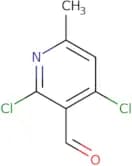
CAS:<p>2,6-Dichloro-4-methylpyridine-3-carbaldehyde is a photochromic compound that undergoes electrocyclization in the presence of UV irradiation. This reaction produces a transient intermediate that has two different forms: one is colorless and the other has a blue color. The reaction can be reversed by exposure to visible light or by heating.</p>Formula:C7H5Cl2NOPurity:Min. 95%Molecular weight:190.02 g/mol2,4-Dichloro-6-methylpyridine-3-carbaldehyde
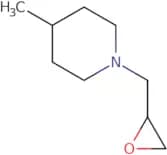
CAS:<p>Versatile small molecule scaffold</p>Formula:C7H5Cl2NOPurity:Min. 95%Molecular weight:190.02 g/mol4-Methyl-1-(oxiran-2-ylmethyl)piperidine
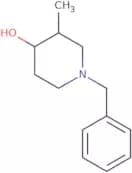
CAS:<p>Versatile small molecule scaffold</p>Formula:C9H17NOPurity:Min. 95%Molecular weight:155.24 g/mol1-Benzyl-3-methylpiperidin-4-ol
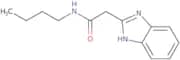
CAS:<p>Versatile small molecule scaffold</p>Formula:C13H19NOPurity:Min. 95%Molecular weight:205.3 g/mol2-(1H-1,3-Benzodiazol-2-yl)-N-butylacetamide
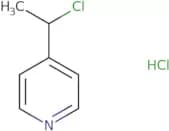
CAS:<p>Versatile small molecule scaffold</p>Formula:C13H17N3OPurity:Min. 95%Molecular weight:231.29 g/mol4-(1-Chloroethyl)pyridine hydrochloride
CAS:<p>Versatile small molecule scaffold</p>Formula:C7H9Cl2NPurity:Min. 95%Molecular weight:178.06 g/mol1-(2-Ethoxy-2-oxoethyl)-1H-1,2,3-triazole-4-carboxylic acid
CAS:<p>Versatile small molecule scaffold</p>Formula:C7H9N3O4Purity:Min. 95%Molecular weight:199.17 g/mol[4-Chloro-3-(trifluoromethyl)phenyl]hydrazine
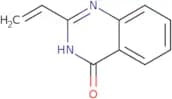
CAS:<p>Versatile small molecule scaffold</p>Formula:C7H6ClF3N2Purity:Min. 95%Molecular weight:210.58 g/mol2-Vinyl-4-quinazolinol
CAS:<p>Versatile small molecule scaffold</p>Formula:C10H8N2OPurity:Min. 95%Molecular weight:172.19 g/mol{4-[3-(Dimethylamino)propoxy]phenyl}methanamine
CAS:<p>Versatile small molecule scaffold</p>Formula:C12H20N2OPurity:Min. 95%Molecular weight:208.3 g/mol1-Cyclohexyl-4-iodobenzene
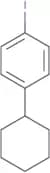
CAS:<p>1-Cyclohexyl-4-iodobenzene is a chemical that reacts with solvents to form diaryliodonium salts. It is soluble in acetone, ethanol, and benzene but not in water. The reaction rate is affected by the solvent used as well as the concentration of 1-cyclohexyl-4-iodobenzene.</p>Formula:C12H15IPurity:Min. 95%Molecular weight:286.15 g/mol2-(4-(tert-Butyl)phenyl)-2-hydroxyacetonitrile
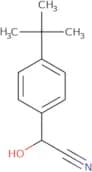
CAS:<p>Versatile small molecule scaffold</p>Formula:C12H15NOPurity:Min. 95%Molecular weight:189.25 g/mol1-Benzyl-5-methylpyrrolidin-2-one
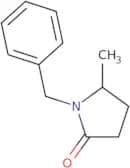
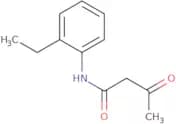
CAS:<p>1-Benzyl-5-methylpyrrolidin-2-one is a catalyst that can be used in the reductive amination reaction. It is an ionic liquid that has been immobilized on a graphene oxide surface. This catalyst is also able to catalyze the cyclization of ammonia, amines, and alcohols. 1-Benzyl-5-methylpyrrolidin-2-one can be recycled for use in other catalytic reactions by first reducing it with ruthenium metal ions in an ionic liquid. The reactivity of this catalyst is dependent upon the nature of the metal ions present and their concentration.</p>Formula:C12H15NOPurity:Min. 95%Molecular weight:189.25 g/molN-(2-Ethylphenyl)-3-oxobutanamide
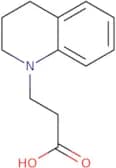
CAS:<p>Versatile small molecule scaffold</p>Formula:C12H15NO2Purity:Min. 95%Molecular weight:205.25 g/mol3-(1,2,3,4-Tetrahydroquinolin-1-yl)propanoic acid
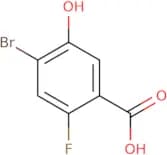
CAS:<p>Versatile small molecule scaffold</p>Formula:C12H15NO2Purity:Min. 95%Molecular weight:205.25 g/molBenzoic acid, 4-bromo-2-fluoro-5-hydroxy-
CAS:<p>Versatile small molecule scaffold</p>Formula:C7H4BrFO3Purity:Min. 95%Molecular weight:235.01 g/mol3-Chloro-1,2,4-benzotriazine
CAS:3-Chloro-1,2,4-benzotriazine is an organic compound that is used as an anti-cancer agent. It is a cytotoxin that inhibits the growth of cells by binding to DNA. The Suzuki reaction was used to synthesize this compound in high yields. 3-Chloro-1,2,4-benzotriazine has potential anti-cancer activity and can be used in conjunction with other cytotoxic agents to treat cancer. This drug has been shown to have cytotoxic effects on tumor cells by inhibiting DNA synthesis and cell division.Formula:C7H4ClN3Purity:Min. 95%Molecular weight:165.58 g/mol5-Methyl-1-oxo-1λ4-thiomorpholine-3-carboxylic acid hydrochloride
CAS:<p>Versatile small molecule scaffold</p>Formula:C6H12ClNO3SPurity:Min. 95%Molecular weight:213.7 g/mol4-[(Thiophen-2-yl)methyl]phenol
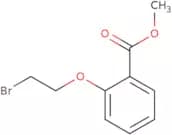
CAS:<p>4-[(Thiophen-2-yl)methyl]phenol is a compound that inhibits the uptake of serotonin in the brain and has been shown to act as an antinociceptive and an anti-inflammatory. It also inhibits inflammatory bowel disease. 4-[(Thiophen-2-yl)methyl]phenol has been shown to be orally active, acting on 5HT uptake. This drug has also been shown to be an active inhibitor of leukotriene A4 (LTA4), which is the precursor for leukotrienes that are involved in pain signaling, inflammation, and asthma.</p>Formula:C11H10OSPurity:Min. 95%Molecular weight:190.26 g/molMethyl 2-(2-bromoethoxy)benzoate
CAS:<p>Versatile small molecule scaffold</p>Formula:C10H11BrO3Purity:Min. 95%Molecular weight:259.1 g/molEthyl 2-{8-methyl-8-azabicyclo[3.2.1]octan-3-yl}acetate
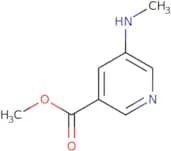
CAS:<p>Versatile small molecule scaffold</p>Formula:C12H21NO2Purity:Min. 95%Molecular weight:211.3 g/molMethyl 5-(methylamino)nicotinate
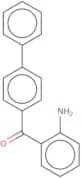
CAS:<p>Versatile small molecule scaffold</p>Formula:C8H10N2O2Purity:Min. 95%Molecular weight:166.18 g/mol2-(4-Phenylbenzoyl)aniline
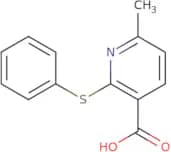
CAS:<p>Versatile small molecule scaffold</p>Formula:C19H15NOPurity:Min. 95%Molecular weight:273.3 g/mol6-Methyl-2-(phenylsulfanyl)pyridine-3-carboxylic acid
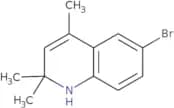
CAS:<p>Versatile small molecule scaffold</p>Formula:C13H11NO2SPurity:Min. 95%Molecular weight:245.3 g/mol6-Bromo-2,2,4-trimethyl-1,2-dihydroquinoline
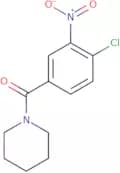
CAS:<p>Versatile small molecule scaffold</p>Formula:C12H14BrNPurity:Min. 95%Molecular weight:252.15 g/mol1-(4-Chloro-3-nitrobenzoyl)piperidine
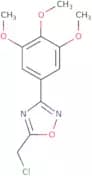
CAS:<p>Versatile small molecule scaffold</p>Formula:C12H13ClN2O3Purity:Min. 95%Molecular weight:268.69 g/mol5-(Chloromethyl)-3-(3,4,5-trimethoxyphenyl)-1,2,4-oxadiazole
CAS:<p>Versatile small molecule scaffold</p>Formula:C12H13ClN2O4Purity:Min. 95%Molecular weight:284.69 g/mol1-[(tert-Butoxy)carbonyl]-3-hydroxypyrrolidine-2-carboxylic acid
CAS:<p>Versatile small molecule scaffold</p>Formula:C10H17NO5Purity:Min. 95%Molecular weight:231.25 g/mol[5-(3,4-Dimethoxyphenyl)-2H-tetrazol-2-yl]acetic acid
CAS:<p>Versatile small molecule scaffold</p>Formula:C11H12N4O4Purity:Min. 95%Molecular weight:264.24 g/molEthyl 2-{[5-(3,4-dimethoxyphenyl)-4-phenyl-4H-1,2,4-triazol-3-yl]sulfanyl}acetate
CAS:<p>Versatile small molecule scaffold</p>Formula:C20H21N3O4SPurity:Min. 95%Molecular weight:399.5 g/mol3-[(1,1-dioxido-2-isothiazolidinyl)methyl]-benzenamine
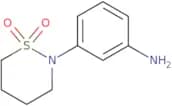
CAS:<p>Versatile small molecule scaffold</p>Formula:C10H14N2O2SPurity:Min. 95%Molecular weight:226.3 g/mol3-(tetrahydro-1,1-dioxido-2H-1,2-thiazin-2-yl)-benzenamine
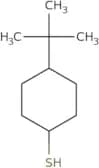
CAS:<p>Versatile small molecule scaffold</p>Formula:C10H14N2O2SPurity:Min. 95%Molecular weight:226.3 g/mol4-tert-Butylcyclohexane-1-thiol
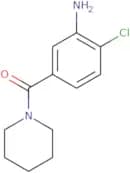
CAS:<p>4-tert-Butylcyclohexane-1-thiol (4BCT) is an alkane that has been studied for its potential as a source of transferable deuterium. The mechanism of 4BCT is not yet fully understood, but it has been shown to be a thiol and undergoes refluxing with dioxane in the presence of aluminate.<br>The mechanism of 4BCT is not yet fully understood, but it has been shown to be a thiol and undergoes refluxing with dioxane in the presence of aluminate.</p>Formula:C10H20SPurity:Min. 95%Molecular weight:172.33 g/mol2-Chloro-5-(1-piperidinylcarbonyl)aniline
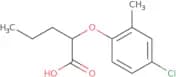
CAS:<p>Versatile small molecule scaffold</p>Formula:C12H15ClN2OPurity:Min. 95%Molecular weight:238.72 g/mol2-(4-Chloro-2-methylphenoxy)pentanoic acid
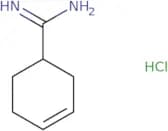
CAS:<p>Versatile small molecule scaffold</p>Formula:C12H15ClO3Purity:Min. 95%Molecular weight:242.7 g/molCyclohex-3-ene-1-carboximidamide hydrochloride
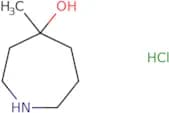
CAS:<p>Versatile small molecule scaffold</p>Formula:C7H13ClN2Purity:Min. 95%Molecular weight:160.64 g/mol4-Methylazepan-4-ol hydrochloride
CAS:<p>Versatile small molecule scaffold</p>Formula:C7H15NO·HClPurity:Min. 95%Molecular weight:165.66 g/mol2-[2-(But-3-yn-1-yl)-1,3-dioxolan-2-yl]ethan-1-ol
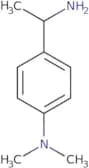
CAS:<p>Versatile small molecule scaffold</p>Formula:C9H14O3Purity:Min. 95%Molecular weight:170.21 g/mol4-(1-Aminoethyl)-N,N-dimethylaniline
CAS:<p>Versatile small molecule scaffold</p>Formula:C10H16N2Purity:Min. 95%Molecular weight:164.25 g/mol7,9-Dimethyl-1,3-diazaspiro[4.5]decane-2,4-dione
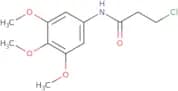
CAS:<p>Versatile small molecule scaffold</p>Formula:C10H16N2O2Purity:Min. 95%Molecular weight:196.25 g/mol3-Chloro-N-(3,4,5-trimethoxyphenyl)propanamide
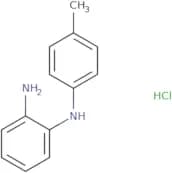
CAS:<p>Versatile small molecule scaffold</p>Formula:C12H16ClNO4Purity:Min. 95%Molecular weight:273.71 g/mol1-N-(4-Methylphenyl)benzene-1,2-diamine
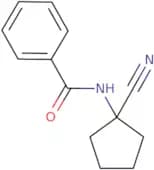
CAS:<p>Versatile small molecule scaffold</p>Formula:C13H15ClN2Purity:Min. 95%Molecular weight:234.72 g/molN-(1-Cyanocyclopentyl)benzamide
CAS:<p>Versatile small molecule scaffold</p>Formula:C13H14N2OPurity:Min. 95%Molecular weight:214.26 g/molN-{[4-(Methylsulfanyl)phenyl]methyl}pyridin-2-amine
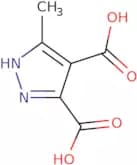
CAS:<p>Versatile small molecule scaffold</p>Formula:C13H14N2SPurity:Min. 95%Molecular weight:230.33 g/mol5-Methyl-1H-pyrazole-3,4-dicarboxylic acid
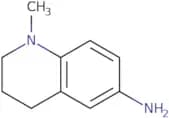
CAS:<p>5-Methyl-1H-pyrazole-3,4-dicarboxylic acid is a benzimidazole compound that is used in electrophotography. It reacts with polyvinyl chloride to form a molecule that adsorbs water vapor and other molecules. 5-Methyl-1H-pyrazole-3,4-dicarboxylic acid is also used as a synthetic intermediate in the production of triazine herbicides.</p>Formula:C6H6N2O4Purity:Min. 95%Molecular weight:170.12 g/mol1-Methyl-1,2,3,4-tetrahydroquinolin-6-amine
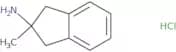
CAS:<p>Versatile small molecule scaffold</p>Formula:C10H14N2Purity:Min. 95%Molecular weight:162.23 g/mol2-Methyl-2,3-dihydro-1H-inden-2-amine hydrochloride
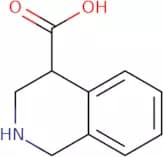
CAS:<p>Versatile small molecule scaffold</p>Formula:C10H13N·HClPurity:Min. 95%Molecular weight:183.68 g/mol1,2,3,4-Tetrahydroisoquinoline-4-carboxylic acid
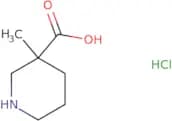
CAS:<p>Versatile small molecule scaffold</p>Formula:C10H11NO2Purity:Min. 95%Molecular weight:177.2 g/mol3-Methylpiperidine-3-carboxylic Acid Hydrochloride
CAS:<p>Versatile small molecule scaffold</p>Formula:C7H13NO2·HClPurity:Min. 95%Molecular weight:179.64 g/mol1-Benzoyl-3-methylpiperidine-3-carboxylic acid
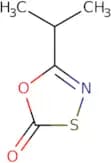
CAS:<p>Versatile small molecule scaffold</p>Formula:C14H17NO3Purity:Min. 95%Molecular weight:247.29 g/mol5-(Propan-2-yl)-2H-1,3,4-oxathiazol-2-one
CAS:<p>Versatile small molecule scaffold</p>Formula:C5H7NO2SPurity:Min. 95%Molecular weight:145.18 g/mol2-(2-Oxopropyl)-1λ⁶-thiolane-1,1-dione
CAS:<p>Versatile small molecule scaffold</p>Formula:C7H12O3SPurity:Min. 95%Molecular weight:176.2 g/molN-[(4-Benzylmorpholin-2-yl)methyl]-2,2,2-trifluoroacetamide
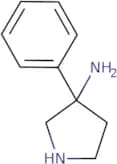
CAS:<p>Versatile small molecule scaffold</p>Formula:C14H17F3N2O2Purity:Min. 95%Molecular weight:302.29 g/mol3-Phenylpyrrolidin-3-amine
CAS:<p>Versatile small molecule scaffold</p>Formula:C10H14N2Purity:Min. 95%Molecular weight:162.23 g/mol4-[4-(Methylsulfanyl)phenyl]butanoic acid
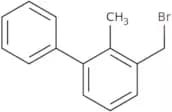
CAS:<p>Versatile small molecule scaffold</p>Formula:C11H14O2SPurity:Min. 95%Molecular weight:210.29 g/mol3-(Bromomethyl)-2-methyl-1,1'-biphenyl
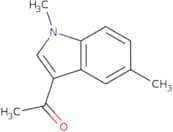
CAS:<p>Versatile small molecule scaffold</p>Formula:C14H13BrPurity:Min. 95%Molecular weight:261.16 g/mol1-(5-Methyl-1-methyl-1H-indol-3-yl)-ethanone
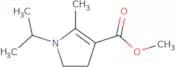
CAS:Controlled Product<p>Versatile small molecule scaffold</p>Formula:C12H13NOPurity:Min. 95%Molecular weight:187.24 g/molMethyl 2-methyl-1-(propan-2-yl)-4,5-dihydro-1H-pyrrole-3-carboxylate
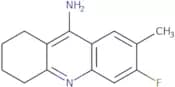
CAS:Versatile small molecule scaffoldFormula:C10H17NO2Purity:Min. 95%Molecular weight:183.25 g/mol6-Fluoro-7-methyl-1,2,3,4-tetrahydroacridin-9-amine
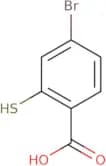
CAS:<p>Versatile small molecule scaffold</p>Formula:C14H15FN2Purity:Min. 95%Molecular weight:230.28 g/mol4-Bromo-2-sulfanylbenzoic acid
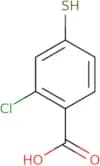
CAS:<p>Versatile small molecule scaffold</p>Formula:C7H5BrO2SPurity:Min. 95%Molecular weight:233.08 g/mol2-Chloro-4-sulfanylbenzoic acid
CAS:<p>Versatile small molecule scaffold</p>Formula:C7H5ClO2SPurity:Min. 95%Molecular weight:188.63 g/mol1,6-Dihydro-6-methyl-7H-pyrrolo[2,3-c]pyridin-7-one
CAS:<p>Versatile small molecule scaffold</p>Formula:C8H8N2OPurity:Min. 95%Molecular weight:148.16 g/mol2-Benzyl-2-azabicyclo[2.2.1]heptane
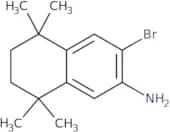
CAS:<p>Versatile small molecule scaffold</p>Formula:C13H17NPurity:Min. 95%Molecular weight:187.3 g/mol3-Bromo-5,5,8,8-tetramethyl-5,6,7,8-tetrahydronaphthalen-2-amine
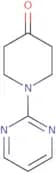
CAS:<p>Versatile small molecule scaffold</p>Formula:C14H20BrNPurity:Min. 95%Molecular weight:282.22 g/mol1-Pyrimidin-2-yl-piperidin-4-one
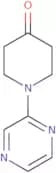
CAS:<p>Versatile small molecule scaffold</p>Formula:C9H11N3OPurity:Min. 95%Molecular weight:177.2 g/mol1-(Pyrazin-2-yl)piperidin-4-one
CAS:<p>Versatile small molecule scaffold</p>Formula:C9H11N3OPurity:Min. 95%Molecular weight:177.2 g/mol7-Bromo-1H,2H,3H-pyrazolo[1,5-a]imidazole
CAS:Versatile small molecule scaffoldFormula:C5H6BrN3Purity:Min. 95%Molecular weight:188.03 g/mol4-[(Dimethylamino)methyl]-1,3-thiazol-2-amine
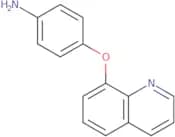
CAS:<p>4-[(Dimethylamino)methyl]-1,3-thiazol-2-amine is a modulating agent that is used for the treatment of heart disease. This drug has been shown to inhibit the uptake of cholesterol in macrophages by blocking the cholesterol transport protein. The drug also increases membrane permeability and reduces the production of inflammatory mediators, such as prostaglandins and leukotrienes. 4-[(Dimethylamino)methyl]-1,3-thiazol-2-amine has been shown to reduce cardiovascular risk factors, including high blood pressure, obesity, diabetes mellitus type II, and hyperlipidemia. 4-[(Dimethylamino)methyl]-1,3-thiazol-2-amine can be used to treat infectious diseases by inhibiting bacterial growth and decreasing inflammation. It also prevents fatty acid oxidation and modulates lipid metabolism in animals with environmental pollution or excessive levels of fatty acids.</p>Formula:C6H11N3SPurity:Min. 95%Molecular weight:157.24 g/mol4-(Quinolin-8-yloxy)aniline
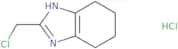
CAS:<p>Versatile small molecule scaffold</p>Formula:C15H12N2OPurity:Min. 95%Molecular weight:236.27 g/mol2-(Chloromethyl)-4,5,6,7-tetrahydro-1H-1,3-benzodiazole hydrochloride
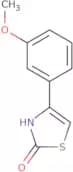
CAS:<p>Versatile small molecule scaffold</p>Formula:C8H12Cl2N2Purity:Min. 95%Molecular weight:207.1 g/mol4-(3-Methoxyphenyl)-2,3-dihydro-1,3-thiazol-2-one
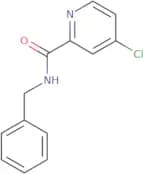
CAS:<p>Versatile small molecule scaffold</p>Formula:C10H9NO2SPurity:Min. 95%Molecular weight:207.25 g/molN-Benzyl-4-chloropyridine-2-carboxamide
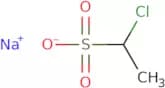
CAS:<p>Versatile small molecule scaffold</p>Formula:C13H11ClN2OPurity:Min. 95%Molecular weight:246.69 g/molSodium 1-chloroethane-1-sulfonate
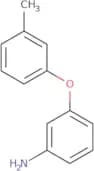
CAS:<p>Sodium 1-chloroethane-1-sulfonate is a sulfamate that has a hydroxy group. It is an inorganic compound that has been used in the form of its sodium salt as a clinical treatment for hyperkalemia. It reacts with hydroxyl groups to form vinyl alcohol and can be aminated to form piperazine. The acidic pH of the environment also promotes amination reactions. This chemical is reactive and cationic, which makes it useful as a surfactant or detergent.</p>Formula:C2H4ClNaO3SPurity:Min. 95%Molecular weight:166.56 g/mol3-(3-Methylphenoxy)aniline
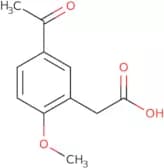
CAS:<p>Versatile small molecule scaffold</p>Formula:C13H13NOPurity:Min. 95%Molecular weight:199.25 g/mol2-(5-Acetyl-2-methoxyphenyl)acetic acid
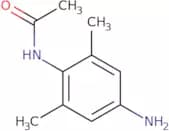
CAS:<p>Versatile small molecule scaffold</p>Formula:C11H12O4Purity:Min. 95%Molecular weight:208.21 g/molN-(4-Amino-2,6-dimethylphenyl)acetamide
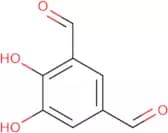
CAS:<p>Versatile small molecule scaffold</p>Formula:C10H14N2OPurity:Min. 95%Molecular weight:178.23 g/mol1,2-Dihydroxy-3,5-diformylbenzene
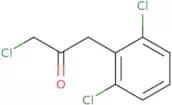
CAS:<p>Versatile small molecule scaffold</p>Formula:C8H6O4Purity:Min. 95%Molecular weight:166.13 g/mol1-Chloro-3-(2,6-dichlorophenyl)propan-2-one
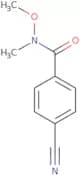
CAS:<p>Versatile small molecule scaffold</p>Formula:C9H7Cl3OPurity:Min. 95%Molecular weight:237.5 g/mol4-Cyano-N-methoxy-N-methylbenzenecarboxamide
CAS:<p>4-Cyano-N-methoxy-N-methylbenzenecarboxamide is a genotoxic agent that can be detected in wastewater samples. It can cause genotoxic effects in human cells and animal experiments, but the toxicity of 4-cyano-N-methoxy-N-methylbenzenecarboxamide to humans has not been studied. The compound may be present as an environmental pollutant in wastewater treatment plants and may have a toxic potential for the intestinal microflora and for healthy controls. The compound has been analysed in congenital cases with no significant association found.</p>Formula:C10H10N2O2Purity:Min. 95%Molecular weight:190.2 g/molEthyl 2-[(dimethylamino)methylidene]-4-methyl-3-oxopentanoate
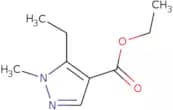
CAS:<p>Versatile small molecule scaffold</p>Formula:C11H19NO3Purity:Min. 95%Molecular weight:213.27 g/molEthyl 5-ethyl-1-methyl-1H-pyrazole-4-carboxylate
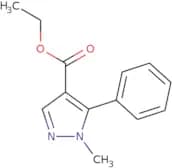
CAS:<p>Versatile small molecule scaffold</p>Formula:C9H14N2O2Purity:Min. 95%Molecular weight:182.22 g/molEthyl 1-methyl-5-phenyl-1H-pyrazole-4-carboxylate
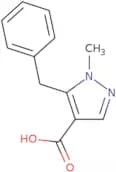
CAS:<p>Versatile small molecule scaffold</p>Formula:C13H14N2O2Purity:Min. 95%Molecular weight:230.26 g/mol5-Benzyl-1-methyl-1H-pyrazole-4-carboxylic acid
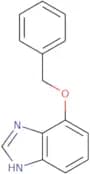
CAS:<p>Versatile small molecule scaffold</p>Formula:C12H12N2O2Purity:Min. 95%Molecular weight:216.24 g/mol4-(Benzyloxy)-1H-1,3-benzodiazole
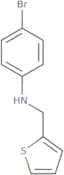
CAS:<p>Versatile small molecule scaffold</p>Formula:C14H12N2OPurity:Min. 95%Molecular weight:224.26 g/mol4-Bromo-N-(thiophen-2-ylmethyl)aniline
CAS:Versatile small molecule scaffoldFormula:C11H10BrNSPurity:Min. 95%Molecular weight:268.17 g/mol4-Bromo-5-chloro-2-fluoroaniline
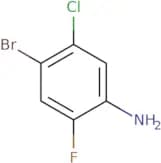
CAS:<p>Versatile small molecule scaffold</p>Formula:C6H4BrClFNPurity:Min. 95%Molecular weight:224.46 g/molN-Benzyl(cyclopropyl)methanamine
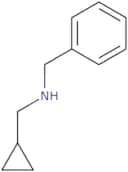
CAS:<p>N-Benzyl(cyclopropyl)methanamine is a phenanthrene derivative that is synthesized by the reaction of benzylic methylene with methanol. This compound can be hydrolyzed to benzoic acid and cyclopropanol. N-Benzyl(cyclopropyl)methanamine has been used as an electrode material for organic electrochemical cells as it has high electron transfer and overpotential, making this compound more suitable than other materials such as benzylic or alkyl groups. The synthesis of esters from N-benzyl(cyclopropyl)methanamine can be achieved through the use of acetals.</p>Formula:C11H15NPurity:Min. 95%Molecular weight:161.24 g/molMethyl 3-chloropyridine-2-carboxylate
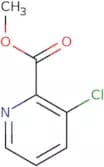
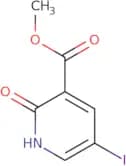
CAS:<p>Methyl 3-chloropyridine-2-carboxylate is a synthetic, orally active analog of picolinic acid. It is used in the synthesis of pharmaceuticals and agrochemicals. Methyl 3-chloropyridine-2-carboxylate is a bactericidal drug that inhibits bacterial growth by inhibiting protein synthesis, which leads to cell death. This compound has been shown to be effective against cancer cells, with low toxicity to normal tissues.</p>Formula:C7H6ClNO2Purity:Min. 95%Molecular weight:171.58 g/molMethyl 5-iodo-2-oxo-1,2-dihydropyridine-3-carboxylate
CAS:<p>Versatile small molecule scaffold</p>Formula:C7H6INO3Purity:Min. 95%Molecular weight:279.03 g/mol2-Fluoro-4-isothiocyanato-1-methylbenzene
CAS:<p>2-Fluoro-4-isothiocyanato-1-methylbenzene is an industrial chemical that belongs to the class of triethylene diamines. The 2-Fluoro-4-isothiocyanato-1-methylbenzene molecule has a carbon disulfide group in its structure. It is used as a raw material for the production of carbon tetrachloride, hexamethylenetetramine, and other organic compounds. 2-Fluoro-4-isothiocyanato-1-methylbenzene is also used in the synthesis of 2,2'-dithiodiethanol, which is a useful precursor in organic chemistry.</p>Formula:C8H6FNSPurity:Min. 95%Molecular weight:167.21 g/mol1-[(4-Bromophenyl)methyl]-5-oxopyrrolidine-2-carboxylic acid
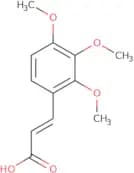
CAS:Controlled Product<p>1-[(4-Bromophenyl)methyl]-5-oxopyrrolidine-2-carboxylic acid is a peptide that belongs to a class of inhibitors. It has been shown to inhibit the activity of ion channels and is used as a research tool in cell biology and pharmacology. 1-[(4-Bromophenyl)methyl]-5-oxopyrrolidine-2-carboxylic acid interacts with specific receptors and ligands, which may contribute to its ability to inhibit the activity of ion channels.</p>Formula:C12H12BrNO3Purity:Min. 95%Molecular weight:298.13 g/mol-3(2,3,4-trimethoxyphenyl)acrylic acid
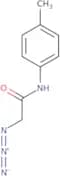
CAS:<p>-3(2,3,4-trimethoxyphenyl)acrylic acid is a versatile compound that has various applications in different fields. It is used as a hydrogen atom donor in chemical reactions and as a precursor for the synthesis of eszopiclone, an FDA-approved medication for insomnia. Additionally, it is utilized in the production of herbicides and research chemicals.</p>Formula:C12H14O5Purity:Min. 95%Molecular weight:238.24 g/mol2-Azido-N-(4-methylphenyl)acetamide
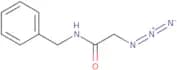
CAS:<p>Versatile small molecule scaffold</p>Formula:C9H10N4OPurity:Min. 95%Molecular weight:190.2 g/mol2-Azido-N-benzylacetamide
CAS:<p>2-Azido-N-benzylacetamide (2ABA) is a strain that can be used in biochemistry, specifically for the study of amides. It has been shown to be chemically stable and has a number of strategies that can be employed. 2ABA is an amide with phenyl substituents that have functional groups such as azides and traceless. The hydrogen bond in 2ABA forms through the bond cleavage reaction rate and ligation, which are triggered by triggerable bonds.</p>Formula:C9H10N4OPurity:Min. 95%Molecular weight:190.2 g/mol


![[4-Chloro-3-(trifluoromethyl)phenyl]hydrazine](/_next/image/?url=https%3A%2Fstatic.cymitquimica.com%2Fproducts%2F3D%2Fthumb-webp%2FRDA62653.webp&w=3840&q=75)
![{4-[3-(Dimethylamino)propoxy]phenyl}methanamine](/_next/image/?url=https%3A%2Fstatic.cymitquimica.com%2Fproducts%2F3D%2Fthumb-webp%2FRDA63776.webp&w=3840&q=75)

![4-[(Thiophen-2-yl)methyl]phenol](/_next/image/?url=https%3A%2Fstatic.cymitquimica.com%2Fproducts%2F3D%2Fthumb-webp%2FRDA68055.webp&w=3840&q=75)
![Ethyl 2-{8-methyl-8-azabicyclo[3.2.1]octan-3-yl}acetate](/_next/image/?url=https%3A%2Fstatic.cymitquimica.com%2Fproducts%2F3D%2Fthumb-webp%2FRDA69087.webp&w=3840&q=75)
![1-[(tert-Butoxy)carbonyl]-3-hydroxypyrrolidine-2-carboxylic acid](/_next/image/?url=https%3A%2Fstatic.cymitquimica.com%2Fproducts%2F3D%2Fthumb-webp%2FRDA72643.webp&w=3840&q=75)
![[5-(3,4-Dimethoxyphenyl)-2H-tetrazol-2-yl]acetic acid](/_next/image/?url=https%3A%2Fstatic.cymitquimica.com%2Fproducts%2F3D%2Fthumb-webp%2FRDA75961.webp&w=3840&q=75)
![Ethyl 2-{[5-(3,4-dimethoxyphenyl)-4-phenyl-4H-1,2,4-triazol-3-yl]sulfanyl}acetate](/_next/image/?url=https%3A%2Fstatic.cymitquimica.com%2Fproducts%2F3D%2Fthumb-webp%2FRDA75972.webp&w=3840&q=75)
![3-[(1,1-dioxido-2-isothiazolidinyl)methyl]-benzenamine](/_next/image/?url=https%3A%2Fstatic.cymitquimica.com%2Fproducts%2F3D%2Fthumb-webp%2FRDA76117.webp&w=3840&q=75)
![2-[2-(But-3-yn-1-yl)-1,3-dioxolan-2-yl]ethan-1-ol](/_next/image/?url=https%3A%2Fstatic.cymitquimica.com%2Fproducts%2F3D%2Fthumb-webp%2FRDA79892.webp&w=3840&q=75)
![7,9-Dimethyl-1,3-diazaspiro[4.5]decane-2,4-dione](/_next/image/?url=https%3A%2Fstatic.cymitquimica.com%2Fproducts%2F3D%2Fthumb-webp%2FRDA80045.webp&w=3840&q=75)
![N-{[4-(Methylsulfanyl)phenyl]methyl}pyridin-2-amine](/_next/image/?url=https%3A%2Fstatic.cymitquimica.com%2Fproducts%2F3D%2Fthumb-webp%2FRDA80793.webp&w=3840&q=75)

![N-[(4-Benzylmorpholin-2-yl)methyl]-2,2,2-trifluoroacetamide](/_next/image/?url=https%3A%2Fstatic.cymitquimica.com%2Fproducts%2F3D%2Fthumb-webp%2FREA16326.webp&w=3840&q=75)
![4-[4-(Methylsulfanyl)phenyl]butanoic acid](/_next/image/?url=https%3A%2Fstatic.cymitquimica.com%2Fproducts%2F3D%2Fthumb-webp%2FREA17433.webp&w=3840&q=75)
![1,6-Dihydro-6-methyl-7H-pyrrolo[2,3-c]pyridin-7-one](/_next/image/?url=https%3A%2Fstatic.cymitquimica.com%2Fproducts%2F3D%2Fthumb-webp%2FREA21246.webp&w=3840&q=75)
![2-Benzyl-2-azabicyclo[2.2.1]heptane](/_next/image/?url=https%3A%2Fstatic.cymitquimica.com%2Fproducts%2F3D%2Fthumb-webp%2FREA23022.webp&w=3840&q=75)
![7-Bromo-1H,2H,3H-pyrazolo[1,5-a]imidazole](/_next/image/?url=https%3A%2Fstatic.cymitquimica.com%2Fproducts%2F3D%2Fthumb-webp%2FREA24833.webp&w=3840&q=75)
![4-[(Dimethylamino)methyl]-1,3-thiazol-2-amine](/_next/image/?url=https%3A%2Fstatic.cymitquimica.com%2Fproducts%2F3D%2Fthumb-webp%2FREA25253.webp&w=3840&q=75)
![Ethyl 2-[(dimethylamino)methylidene]-4-methyl-3-oxopentanoate](/_next/image/?url=https%3A%2Fstatic.cymitquimica.com%2Fproducts%2F3D%2Fthumb-webp%2FREA34409.webp&w=3840&q=75)

![1-[(4-Bromophenyl)methyl]-5-oxopyrrolidine-2-carboxylic acid](/_next/image/?url=https%3A%2Fstatic.cymitquimica.com%2Fproducts%2F3D%2Fthumb-webp%2FREA40423.webp&w=3840&q=75)