


Building Blocks
This section contains fundamental products for the synthesis of organic and biological compounds. Building blocks are the essential starting materials used to construct complex molecules through various chemical reactions. They play a critical role in drug discovery, material science, and chemical research. At CymitQuimica, we offer a diverse range of high-quality building blocks to support your innovative research and industrial projects, ensuring you have the essential components for successful synthesis.
Subcategories of "Building Blocks"
- Boronic Acids & Boronic Acid Derivatives(5,756 products)
- Chiral Building Blocks(1,242 products)
- Hydrocarbon Building Blocks(6,095 products)
- Organic Building Blocks(60,526 products)
Found 195848 products of "Building Blocks"
Sort by
Purity (%)
0
100
|
0
|
50
|
90
|
95
|
100
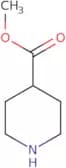
Methyl piperidine-4-carboxylate hydrochloride
CAS:<p>Methyl piperidine-4-carboxylate hydrochloride is a peptidomimetic drug that is designed to inhibit the δ-opioid receptor. It has been shown to have anticancer properties, including the ability to inhibit fibrinogen synthesis and suppress tumor growth. Methyl piperidine-4-carboxylate hydrochloride also has analgesic effects and may be used to treat chronic pain. This drug is an analog of the endogenous peptide dynorphin A (1–13) with a pharmacophore derived from the sequence of this endogenous peptide. Methyl piperidine-4-carboxylate hydrochloride has two tautomers, which are distinguished by the position of the hydrogen atom on carbon 4: as a protonated amine or as an unprotonated amine. The functionalities of these tautomers are different, and they are stereoisomers because they can rotate polarized light</p>Formula:C7H14ClNO2Purity:Min. 95%Molecular weight:179.64 g/mol2-Hydroxy-5-methyl-3-nitropyridine
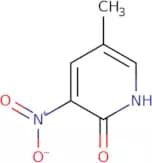
CAS:<p>2-Hydroxy-5-methyl-3-nitropyridine (HMPN) is a synthetic compound that is used as a reagent for the synthesis of other compounds. It has been shown to be reactive with molybdenum and chloride, boosting the reaction yield and reaction time. The functional theory of HMPN has been used to explain its reactivity with xylene. 2-Hydroxy-5-methyl-3-nitropyridine can be described as a compound that is capable of undergoing dehydration reactions, which are characterized by the removal of water molecules from the molecule to form a new product. This process can be achieved through the addition of phenylacetonitrile or azobenzene to HMPN.</p>Formula:C6H6N2O3Purity:Min. 95%Molecular weight:154.12 g/mol1-(Tetrahydro-pyran-4-yl)-propan-1-one
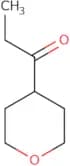
CAS:<p>Versatile small molecule scaffold</p>Formula:C8H14O2Purity:Min. 95%Molecular weight:142.2 g/mol4-(2-Acetamidoethyl)benzoic acid
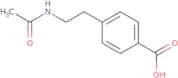
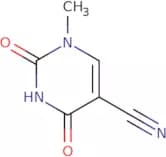
CAS:<p>Versatile small molecule scaffold</p>Formula:C11H13NO3Purity:Min. 95%Molecular weight:207.23 g/mol1-Methyl-2,4-dioxo-1,2,3,4-tetrahydro-5-pyrimidinecarbonitrile
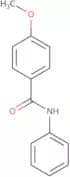
CAS:<p>Versatile small molecule scaffold</p>Formula:C6H5N3O2Purity:Min. 95%Molecular weight:151.13 g/mol4-Methoxy-N-phenyl-benzamide
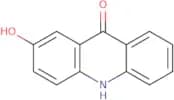
CAS:<p>4-Methoxy-N-phenyl-benzamide is a biomolecule that belongs to the class of amides. It is synthesized from anilines and amines by coupling with diazo compounds. The reaction mechanism involves the formation of a carbon-nitrogen bond in an electrophilic aromatic substitution reaction. The Langmuir adsorption isotherm technique was used to study the adsorption of 4-methoxybenzamide on copper salt, which has been shown to have high adsorption capacity. This compound also has acidic properties, as it reacts with nitric acid to form a nitro group.</p>Formula:C14H13NO2Purity:Min. 95%Molecular weight:227.26 g/mol2-Hydroxy-9,10-dihydroacridin-9-one
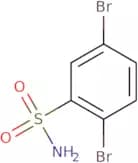
CAS:<p>Versatile small molecule scaffold</p>Formula:C13H9NO2Purity:Min. 95%Molecular weight:211.22 g/mol2,5-Dibromobenzenesulfonamide
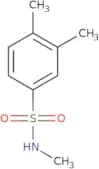
CAS:<p>Versatile small molecule scaffold</p>Formula:C6H5Br2NO2SPurity:Min. 95%Molecular weight:314.99 g/molN,3,4-Trimethylbenzene-1-sulfonamide
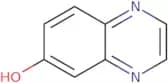
CAS:<p>Versatile small molecule scaffold</p>Formula:C9H13NO2SPurity:Min. 95%Molecular weight:199.27 g/molQuinoxalin-6-ol
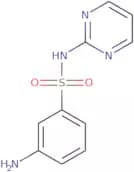
CAS:<p>Quinoxalin-6-ol is an antibacterial agent that has shown to be effective against gram-negative bacteria such as Escherichia coli, Salmonella enteritidis, and Pseudomonas aeruginosa. It also has antifungal activity against Candida albicans and Saccharomyces cerevisiae. Quinoxalin-6-ol is a quinone that can be synthesized from crotonic acid or ethyl acetoacetate. This compound can be found in the form of two isomers (E and Z) which are distinguished by their physical properties.</p>Formula:C8H6N2OPurity:Min. 95%Molecular weight:146.15 g/mol3-Amino-N-(pyrimidin-2-yl)benzene-1-sulfonamide
CAS:<p>Versatile small molecule scaffold</p>Formula:C10H10N4O2SPurity:Min. 95%Molecular weight:250.28 g/mol4-(2-Methylbut-3-yn-2-yl)morpholine
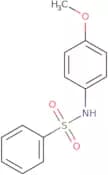
CAS:<p>Versatile small molecule scaffold</p>Formula:C9H15NOPurity:Min. 95%Molecular weight:153.22 g/molN-(4-Methoxyphenyl)benzenesulfonamide
CAS:<p>N-(4-Methoxyphenyl)benzenesulfonamide is a pyridinium salt that can be used as a heterogeneous catalyst. It is soluble in organic solvents, such as acetonitrile and amines, and forms micelles at higher concentrations. The pyridinium salt has been shown to be effective in the reduction of indian boronic acids by electrolysis and homogeneous catalysts. It can also be used for the synthesis of conjugates through the reaction with polyvinylpyrrolidone (PVP) or hydrotalcite (HT). This drug was encapsulated into nanoparticles for oral administration.</p>Formula:C13H13NO3SPurity:Min. 95%Molecular weight:263.31 g/mol7-(2-Bromoethoxy)-4-methyl-2H-chromen-2-one
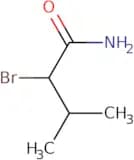
CAS:<p>Versatile small molecule scaffold</p>Formula:C12H11BrO3Purity:Min. 95%Molecular weight:283.12 g/mol2-Bromo-3-methylbutanamide
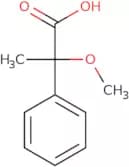
CAS:<p>Versatile small molecule scaffold</p>Formula:C5H10BrNOPurity:Min. 95%Molecular weight:180.04 g/mol2-Methoxy-2-phenylpropanoic acid
CAS:<p>2-Methoxy-2-phenylpropanoic acid is a fatty acid that is an immunoregulatory agent. It has been shown to have anti-inflammatory effects in animal models of inflammatory bowel disease and other inflammatory diseases. 2-Methoxy-2-phenylpropanoic acid also has cancer preventive properties, which are mediated through its ability to reduce the formation of amines and hydroxyl groups from amino acids. 2-Methoxy-2-phenylpropanoic acid is used as a pharmaceutical preparation because it is soluble in water, has a low viscosity, and does not react with proteins or other chemicals. This drug can be used as both a dietary supplement and as a pharmaceutical preparation for UV absorption.</p>Formula:C10H12O3Purity:Min. 95%Molecular weight:180.2 g/molN-[3-(Dimethylamino)phenyl]acetamide
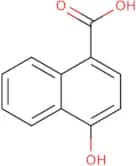
CAS:<p>Versatile small molecule scaffold</p>Formula:C10H14N2OPurity:Min. 95%Molecular weight:178.23 g/mol4-Hydroxynaphthalene-1-carboxylic acid
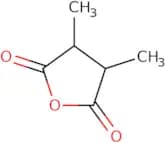
CAS:<p>4-Hydroxynaphthalene-1-carboxylic acid (4HNAC) is a naturally occurring compound, which has been isolated from the Streptomyces lividans. 4HNAC can be synthesized in the laboratory by reacting p-hydroxybenzoic acid with ammonia and sodium hydroxide. 4HNAC is an inhibitor of aerobic respiration, and it can be used as a preservative for food because it inhibits spoilage microorganisms such as fungi and yeast. 4HNAC also reacts with amines to form diazo compounds that are useful as dyestuffs or fungicides.</p>Formula:C11H8O3Purity:Min. 95%Molecular weight:188.18 g/mol3,4-Dimethyloxolane-2,5-dione
CAS:<p>3,4-Dimethyloxolane-2,5-dione is an organic compound with a molecular weight of 136.16 g/mol and a melting point of −36 °C. This compound has been used as a model for hydrogen bonds in urine samples to detect hiv infection. It is also reactive with hydrochloric acid and has been used for the treatment of inflammatory diseases. 3,4-Dimethyloxolane-2,5-dione has been shown to have anti-inflammatory properties and may be useful in the treatment of pain models. 3,4-Dimethyloxolane-2,5-dione has also been shown to inhibit the activity of diacylglycerol acyltransferase (DGAT) which is involved in lipid metabolism in hepatocytes cells.</p>Formula:C6H8O3Purity:Min. 95%Molecular weight:128.13 g/molMethyl 2-chloro-2-phenylacetate
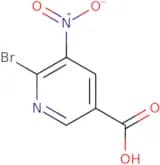
CAS:<p>Methyl 2-chloro-2-phenylacetate is a pyrimidine compound that has been shown to have anti-inflammatory effects. It inhibits the activity of histone deacetylase (HDAC) enzyme, which prevents the activation of inflammatory bowel disease. This drug also has an inhibitory effect on the synthesis of proinflammatory cytokines and chemokines, such as IL-1β and TNFα. Methyl 2-chloro-2-phenylacetate is an inhibitor of clopidogrel, which is used for the prevention of cardiovascular diseases. The molecule does not inhibit CYP450 enzymes in vitro, which means that it does not affect the metabolism of other drugs. Methyl 2-chloro-2-phenylacetate has been shown to be effective against autoimmune diseases such as multiple sclerosis and Crohn's disease.</p>Formula:C9H9ClO2Purity:Min. 95%Molecular weight:184.62 g/mol6-Bromo-5-nitropyridine-3-carboxylic acid
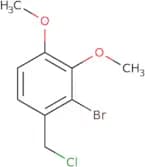
CAS:<p>Versatile small molecule scaffold</p>Formula:C6H3BrN2O4Purity:Min. 95%Molecular weight:247 g/mol2-Bromo-1-(chloromethyl)-3,4-dimethoxybenzene
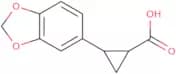
CAS:<p>Versatile small molecule scaffold</p>Formula:C9H10BrClO2Purity:Min. 95%Molecular weight:265.53 g/molrac-(1R,2R)-2-(1,3-Dioxaindan-5-yl)cyclopropane-1-carboxylic acid
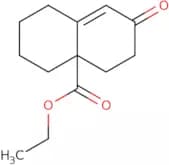
CAS:<p>Versatile small molecule scaffold</p>Formula:C11H10O4Purity:Min. 95%Molecular weight:206.19 g/molEthyl 7-oxo-1,2,3,4,4a,5,6,7-octahydronaphthalene-4a-carboxylate
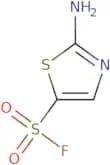
CAS:<p>Versatile small molecule scaffold</p>Formula:C13H18O3Purity:Min. 95%Molecular weight:222.28 g/mol2-Amino-1,3-thiazole-5-sulfonyl fluoride
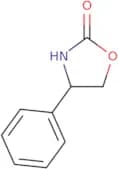
CAS:<p>Versatile small molecule scaffold</p>Formula:C3H3FN2O2S2Purity:Min. 95%Molecular weight:182.2 g/mol4-Phenyloxazolidin-2-one
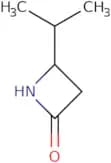
CAS:<p>4-Phenyloxazolidin-2-one is a biologically active compound that is activated by hydrochloride salts to form 4-phenyloxazolidin-2,4-dione. This compound can be used as a monosubstituted, enantiopure, or racemic mixture of the two stereoisomers. It is also available in an enantiopure form that has been synthesized through a triphosgene reaction. The vibrational, nmr spectra and functional groups are also studied to determine the chemical structure of this molecule.</p>Formula:C9H9NO2Purity:Min. 95%Molecular weight:163.18 g/mol4-(Propan-2-yl)azetidin-2-one
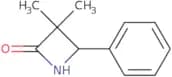
CAS:<p>Versatile small molecule scaffold</p>Formula:C6H11NOPurity:Min. 95%Molecular weight:113.16 g/mol3,3-Dimethyl-4-phenylazetidin-2-one
CAS:<p>Versatile small molecule scaffold</p>Formula:C11H13NOPurity:Min. 95%Molecular weight:175.23 g/mol9-Azabicyclo[6.2.0]decane
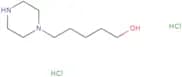
CAS:<p>Versatile small molecule scaffold</p>Formula:C9H17NPurity:Min. 95%Molecular weight:139.24 g/mol5-(Piperazin-1-yl)pentan-1-ol dihydrochloride
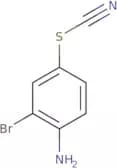
CAS:<p>Versatile small molecule scaffold</p>Formula:C9H22Cl2N2OPurity:Min. 95%Molecular weight:245.19 g/mol2-Bromo-4-thiocyanatoaniline
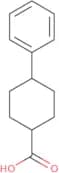
CAS:<p>Versatile small molecule scaffold</p>Formula:C7H5BrN2SPurity:Min. 95%Molecular weight:229.1 g/mol4-Phenylcyclohexanecarboxylic acid
CAS:<p>Versatile small molecule scaffold</p>Formula:C13H16O2Purity:Min. 95%Molecular weight:204.26 g/mol[4-(Dimethylamino)phenyl](phenyl)methanol
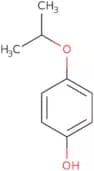
CAS:<p>[4-(Dimethylamino)phenyl](phenyl)methanol is an aromatic compound that can be synthesized from benzotriazole and a grignard reagent. It has been used as a reagent in the synthesis of hydroxybenzaldehydes, pyridine, resorcinol, naphthol, or aryl groups. The condensation reaction between 4-dimethylaminophenyl methyl ether and phenylmagnesium bromide is catalyzed by pyridine and produces the desired product. This compound is also used in the synthesis of benzotriazolyl.</p>Formula:C15H17NOPurity:Min. 95%Molecular weight:227.3 g/mol4-Isopropoxyphenol
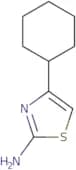
CAS:<p>4-Isopropoxyphenol is a reactive molecule that can undergo nucleophilic attack. It is an intermediate in the reaction mechanism of phenolic antioxidants, such as salicylaldoxime and mequinol. 4-Isopropoxyphenol is synthesized by the condensation of anilines with phenols, followed by acid hydrolysis. The nature of 4-isopropoxyphenol is primarily nucleophilic, making it a potential candidate for optimization or predictive modelling.</p>Formula:C9H12O2Purity:Min. 95%Molecular weight:152.19 g/mol2-Thiazolamine, 4-cyclohexyl-
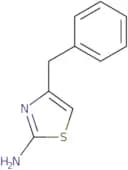
CAS:<p>Versatile small molecule scaffold</p>Formula:C9H14N2SPurity:Min. 95%Molecular weight:182.29 g/mol4-benzyl-1,3-thiazol-2-amine
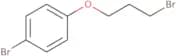
CAS:<p>Versatile small molecule scaffold</p>Formula:C10H10N2SPurity:Min. 95%Molecular weight:190.26 g/mol4-Bromophenyl 3-bromopropyl ether
CAS:<p>Versatile small molecule scaffold</p>Formula:C9H10Br2OPurity:Min. 95%Molecular weight:293.99 g/mol7-Chloro-[1,2,4]triazolo[4,3-c]pyrimidin-8-amine
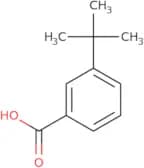
CAS:<p>Versatile small molecule scaffold</p>Formula:C5H4ClN5Purity:Min. 95%Molecular weight:169.57 g/mol3-tert-Butylbenzoic acid
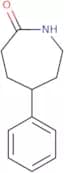
CAS:<p>3-tert-Butylbenzoic acid is a heat-resistant organic compound that has been used in the production of polymers and plastics. 3-tert-Butylbenzoic acid can be used as a nucleation agent for crystallization, or as an enhancer for crystallization. In this application, 3-tert-butylbenzoic acid is used to increase the number of crystals formed and to make them larger. The processability of 3-tert-butylbenzoic acid is also enhanced with the addition of 3-tert-butylbenzoic acid. This substance can be measured by calorimetry, which measures the enthalpy change associated with its melting point. The melting point of 3-tert-butylbenzoic acid is between 100°C and 140°C.</p>Formula:C11H14O2Purity:Min. 95%Molecular weight:178.23 g/mol5-Phenylazepan-2-one
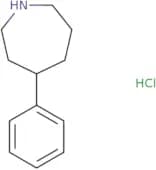
CAS:<p>Versatile small molecule scaffold</p>Formula:C12H15NOPurity:Min. 95%Molecular weight:189.25 g/mol4-Phenylazepane hydrochloride
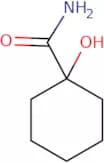
CAS:<p>Versatile small molecule scaffold</p>Formula:C12H17N·HClPurity:Min. 95%Molecular weight:211.73 g/mol1-Hydroxycyclohexane-1-carboxamide
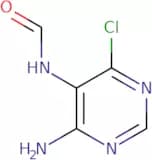
CAS:<p>Versatile small molecule scaffold</p>Formula:C7H13NO2Purity:Min. 95%Molecular weight:143.18 g/molN-(4-Amino-6-chloropyrimidin-5-yl)formamide
CAS:<p>Versatile small molecule scaffold</p>Formula:C5H5ClN4OPurity:Min. 95%Molecular weight:172.57 g/molEthyl [(3-nitrophenyl)carbamoyl]formate
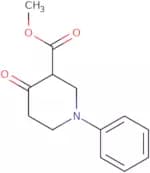
CAS:<p>Versatile small molecule scaffold</p>Formula:C10H10N2O5Purity:Min. 95%Molecular weight:238.2 g/molMethyl 4-oxo-1-phenylpiperidine-3-carboxylate
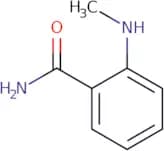
CAS:<p>Versatile small molecule scaffold</p>Formula:C13H15NO3Purity:Min. 95%Molecular weight:233.26 g/mol2-Methylaminobenzamide
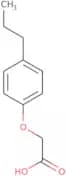
CAS:<p>2-Methylaminobenzamide (2MAB) is a fluorescent compound that can be used to detect the presence of an anthranilic acid. 2MAB is prepared by reacting methylamine with benzoyl chloride and hydrochloric acid to form an amide in the tautomeric form. This compound has been shown to have neuroprotective properties and also inhibits the metabolic pathway of aromatic amino acids, which may play a role in Alzheimer's disease. 2MAB is also used in the preparation of other fluorescent compounds.</p>Formula:C8H10N2OPurity:Min. 95%Molecular weight:150.18 g/mol2-(4-Propylphenoxy)acetic acid
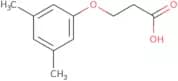
CAS:<p>Versatile small molecule scaffold</p>Formula:C11H14O3Purity:Min. 95%Molecular weight:194.23 g/mol3-(3,5-Dimethylphenoxy)propanoic acid
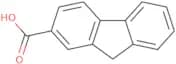
CAS:<p>Versatile small molecule scaffold</p>Formula:C11H14O3Purity:Min. 95%Molecular weight:194.23 g/mol9H-Fluorene-2-carboxylic acid
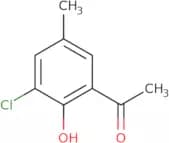
CAS:<p>9H-Fluorene-2-carboxylic acid is a fluorescent chemical that has been modified to include fluorine atoms. Fluorescence is a property of 9H-fluorene-2-carboxylic acid that can be used to track its distribution in the body. This modification also reduces the affinity for the D4 receptor, which may lead to side effects such as mitogenesis, and it does not have any effect on dopamine D3 receptors. The synthesis of this compound is possible through a reaction with an olefinic compound in nonpolar solvents or solvents. The linker between the fluorene moiety and the carboxylic acid group may be important for determining its biological activity.</p>Formula:C14H10O2Purity:Min. 95%Molecular weight:210.23 g/mol1-(3-Chloro-2-hydroxy-5-methylphenyl)ethan-1-one
CAS:<p>Versatile small molecule scaffold</p>Formula:C9H9ClO2Purity:Min. 95%Molecular weight:184.62 g/mol3-Nitro-6,7,8,9-tetrahydro-5H-benzo[7]annulen-5-one
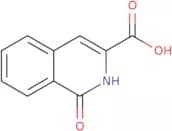
CAS:<p>Versatile small molecule scaffold</p>Formula:C11H11NO3Purity:Min. 95%Molecular weight:205.21 g/mol1-Oxo-1,2-dihydroisoquinoline-3-carboxylic acid
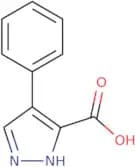
CAS:<p>1-Oxo-1,2-dihydroisoquinoline-3-carboxylic acid (ODHC) is a synthetic compound that has been shown to have anti-tumor activity in mouse melanoma cells. ODHC inhibits the production of aldehydes through the interaction with thiourea and homophthalic acid. ODHC also binds to topoisomerase II, which prevents the unwinding of DNA and limits DNA replication. This leads to cell death by inhibition of DNA synthesis. ODHC has been shown to be photostable and has a low toxicity for healthy cells. It is also able to chelate metal ions, such as iron, copper, or zinc, which are important for cancer cell growth and proliferation.</p>Formula:C10H7NO3Purity:Min. 95%Molecular weight:189.17 g/mol4-Phenyl-1H-pyrazole-3-carboxylic acid
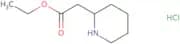
CAS:<p>4-Phenyl-1H-pyrazole-3-carboxylic acid is a chiral, alkoxycarbonyl, regulator that has been used agriculturally as a growth regulator and weed control. It can be used in the form of an alkyl ester or carbonic ester. It has been shown to have active oxygen and hydrochloric acid which are responsible for its regulatory properties. 4-Phenyl-1H-pyrazole-3-carboxylic acid has been shown to be effective against weeds like Triazole resistant weeds.</p>Formula:C10H8N2O2Purity:Min. 95%Molecular weight:188.18 g/molEthyl 2-(piperidin-2-yl)acetate hydrochloride
CAS:<p>Versatile small molecule scaffold</p>Formula:C9H18ClNO2Purity:Min. 95%Molecular weight:207.7 g/mol1-Bromo-7-methylnaphthalene
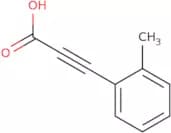
CAS:<p>Versatile small molecule scaffold</p>Formula:C11H9BrPurity:Min. 95%Molecular weight:221.09 g/mol3-(2-Methylphenyl)prop-2-ynoic acid
CAS:<p>Versatile small molecule scaffold</p>Formula:C10H8O2Purity:Min. 95%Molecular weight:160.17 g/mol[(1E)-4-Bromobut-1-en-1-yl]benzene
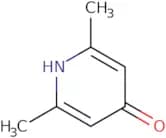
CAS:<p>Versatile small molecule scaffold</p>Formula:C10H11BrPurity:Min. 95%Molecular weight:211.1 g/mol2,6-Dimethyl-1,4-dihydropyridin-4-one
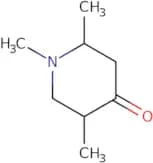
CAS:<p>2,6-Dimethyl-1,4-dihydropyridin-4-one is an organic acid that is used as a surface active agent. It has been shown to have coccidiosis in poultry and can be recycled from reaction solutions. 2,6-Dimethyl-1,4-dihydropyridin-4-one reacts with hydrochloric acid to form salicylic acid and hydrogen chloride gas. Impurities are removed by ion exchange or activated charcoal. Chlorine gas is added to neutralize the solution of 2,6-dimethylpyridine 4-one and convert it into salicylic acid. Finally, the solution is chlorinated to remove any remaining impurities. The organic solvent is then evaporated off and 2,6-dimethylpyridine 4 one crystals are left behind.</p>Formula:C7H9NOPurity:Min. 95%Molecular weight:123.15 g/mol1,2,5-Trimethylpiperidin-4-one
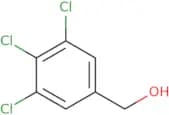
CAS:<p>1,2,5-Trimethylpiperidin-4-one is an active substance that belongs to the class of benzofuran derivatives. It has been shown to be a potent inhibitor of the enzyme oxalate oxidase and has been used in the synthesis of analogs. The tautomeric form of 1,2,5-trimethylpiperidin-4-one is its enol form with an oxime group on the alpha carbon atom. This molecule can react with ethyl bromoacetate in a condensation reaction to produce an amide derivative.</p>Formula:C8H15NOPurity:Min. 95%Molecular weight:141.21 g/mol(3,4,5-Trichlorophenyl)methanol
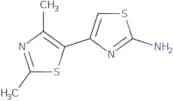
CAS:<p>Versatile small molecule scaffold</p>Formula:C7H5Cl3OPurity:Min. 95%Molecular weight:211.5 g/mol4-(Dimethyl-1,3-thiazol-5-yl)-1,3-thiazol-2-amine
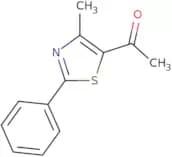
CAS:<p>Versatile small molecule scaffold</p>Formula:C8H9N3S2Purity:Min. 95%Molecular weight:211.3 g/mol1-(4-Methyl-2-phenyl-1,3-thiazol-5-yl)ethan-1-one
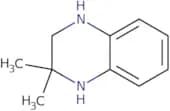
CAS:<p>Versatile small molecule scaffold</p>Formula:C12H11NOSPurity:Min. 95%Molecular weight:217.29 g/mol2,2-Dimethyl-1,2,3,4-tetrahydroquinoxaline
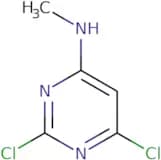
CAS:<p>Versatile small molecule scaffold</p>Formula:C10H14N2Purity:Min. 95%Molecular weight:162.23 g/mol2,6-dichloro-N-methylpyrimidin-4-amine
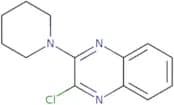
CAS:<p>Versatile small molecule scaffold</p>Formula:C5H5Cl2N3Purity:Min. 95%Molecular weight:178 g/mol2-Chloro-3-(piperidin-1-yl)quinoxaline
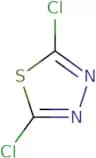
CAS:<p>Versatile small molecule scaffold</p>Formula:C13H14ClN3Purity:Min. 95%Molecular weight:247.72 g/moldichloro-1,3,4-thiadiazole
CAS:<p>Dichloro-1,3,4-thiadiazole is a dipole molecule with a nitrogen atom in the center of two chlorine atoms. It has a molecular electrostatic potential of -0.6 and an efficiency of 73%. Dichloro-1,3,4-thiadiazole is a polar molecule that can be described by three geometries: amide, dimethylformamide, and chlorine. The geometry of dichloro-1,3,4-thiadiazole is optimized using parameters such as the distance between two chlorine atoms (-2.8) and the distance between two nitrogen atoms (1.7).</p>Formula:C2Cl2N2SPurity:Min. 95%Molecular weight:155 g/molN-tert-Butyl-3-methylpyridine-2-carboxamide
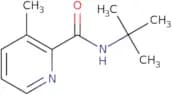
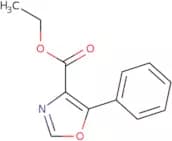
CAS:<p>Versatile small molecule scaffold</p>Formula:C11H16N2OPurity:Min. 95%Molecular weight:192.26 g/molEthyl 5-phenyl-1,3-oxazole-4-carboxylate
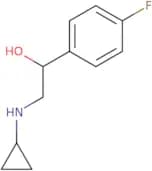
CAS:<p>Versatile small molecule scaffold</p>Formula:C12H11NO3Purity:Min. 95%Molecular weight:217.22 g/mol2-(Cyclopropylamino)-1-(4-fluorophenyl)ethan-1-ol
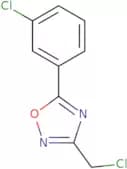
CAS:<p>Versatile small molecule scaffold</p>Formula:C11H14FNOPurity:Min. 95%Molecular weight:195.23 g/mol3-(Chloromethyl)-5-(3-chlorophenyl)-1,2,4-oxadiazole
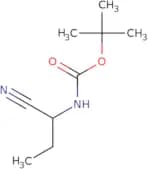
CAS:<p>Versatile small molecule scaffold</p>Formula:C9H6Cl2N2OPurity:Min. 95%Molecular weight:229.06 g/moltert-Butyl N-(1-cyanopropyl)carbamate
CAS:<p>Versatile small molecule scaffold</p>Formula:C9H16N2O2Purity:Min. 95%Molecular weight:184.24 g/mol[5-(3-Chlorophenyl)-1,2-oxazol-3-yl]methanol
CAS:<p>Versatile small molecule scaffold</p>Formula:C10H8ClNO2Purity:Min. 95%Molecular weight:209.63 g/mol3-Iodo-2,6-dihydro-4H-pyrrolo[3,4-c]pyrazole-5-carboxylic acid tert-butyl ester
CAS:<p>Versatile small molecule scaffold</p>Formula:C10H14IN3O2Purity:Min. 95%Molecular weight:335.14 g/mol4-[5-(Difluoromethyl)-1,3,4-oxadiazol-2-yl]benzoic acid
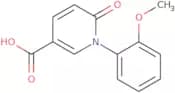
CAS:<p>Versatile small molecule scaffold</p>Formula:C10H6F2N2O3Purity:Min. 95%Molecular weight:240.16 g/mol1-(2-Methoxyphenyl)-6-oxo-1,6-dihydropyridine-3-carboxylic acid
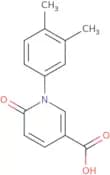
CAS:<p>Versatile small molecule scaffold</p>Formula:C13H11NO4Purity:Min. 95%Molecular weight:245.23 g/mol1-(3,4-Dimethylphenyl)-6-oxo-1,6-dihydropyridine-3-carboxylic acid
CAS:<p>Versatile small molecule scaffold</p>Formula:C14H13NO3Purity:Min. 95%Molecular weight:243.26 g/mol9-[(2-Chloropyridin-4-yl)methyl]-9H-purin-6-amine
CAS:<p>Versatile small molecule scaffold</p>Formula:C11H9ClN6Purity:Min. 95%Molecular weight:260.68 g/mol6-[(3-Bromophenyl)sulfanyl]pyridine-2-carboxylic acid
CAS:<p>Versatile small molecule scaffold</p>Formula:C12H8BrNO2SPurity:Min. 95%Molecular weight:310.17 g/mol1-[(2-Cyanophenyl)methyl]pyrrolidine-2-carboxamide
CAS:<p>Versatile small molecule scaffold</p>Formula:C13H15N3OPurity:Min. 95%Molecular weight:229.28 g/mol3-[(2-Methoxyphenyl)methoxy]-2-methylaniline
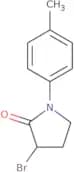
CAS:<p>Versatile small molecule scaffold</p>Formula:C15H17NO2Purity:Min. 95%Molecular weight:243.3 g/mol3-Bromo-1-(4-methylphenyl)pyrrolidin-2-one
CAS:<p>Versatile small molecule scaffold</p>Formula:C11H12BrNOPurity:Min. 95%Molecular weight:254.12 g/mol1-[3-Chloro-5-(trifluoromethyl)pyridin-2-yl]pyrrolidin-3-amine
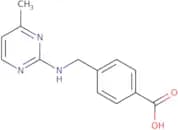
CAS:<p>Versatile small molecule scaffold</p>Formula:C10H11ClF3N3Purity:Min. 95%Molecular weight:265.66 g/mol4-(((4-Methylpyrimidin-2-yl)amino)methyl)benzoic acid
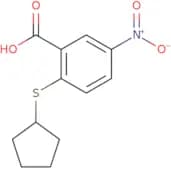
CAS:<p>Versatile small molecule scaffold</p>Formula:C13H13N3O2Purity:Min. 95%Molecular weight:243.26 g/mol2-(Cyclopentylsulfanyl)-5-nitrobenzoic acid
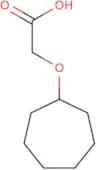
CAS:<p>Versatile small molecule scaffold</p>Formula:C12H13NO4SPurity:Min. 95%Molecular weight:267.3 g/mol2-(Cycloheptyloxy)acetic acid
CAS:<p>Versatile small molecule scaffold</p>Formula:C9H16O3Purity:Min. 95%Molecular weight:172.22 g/mol2-(5-Amino-2-chlorophenyl)-2-azaspiro[4.4]nonane-1,3-dione
CAS:<p>Versatile small molecule scaffold</p>Formula:C14H15ClN2O2Purity:Min. 95%Molecular weight:278.73 g/molN,N-Dimethyl-1,2,3,4-tetrahydroquinolin-7-amine dihydrochloride
CAS:<p>Versatile small molecule scaffold</p>Formula:C11H18Cl2N2Purity:Min. 95%Molecular weight:249.2 g/mol4-{[Benzyl(methyl)amino]methyl}-N-methylpyridin-2-amine
CAS:<p>Versatile small molecule scaffold</p>Formula:C15H19N3Purity:Min. 95%Molecular weight:241.33 g/mol4-[(5-Methylpyridin-2-yl)oxy]benzoic acid
CAS:<p>Versatile small molecule scaffold</p>Formula:C13H11NO3Purity:Min. 95%Molecular weight:229.2 g/mol1-{[1,2,3,4]Tetrazolo[1,5-a]pyrazin-5-yl}-1H-pyrazole-4-carboxylic acid
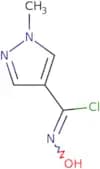
CAS:<p>Versatile small molecule scaffold</p>Formula:C8H5N7O2Purity:Min. 95%Molecular weight:231.17 g/molN-Hydroxy-1-methyl-1H-pyrazole-4-carbonimidoyl chloride
CAS:<p>Versatile small molecule scaffold</p>Formula:C5H6ClN3OPurity:Min. 95%Molecular weight:159.57 g/mol3-Methyl-1-(propan-2-yl)-4,5-dihydro-1H-1,2,4-triazol-5-one
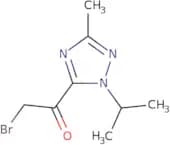
CAS:<p>Versatile small molecule scaffold</p>Formula:C6H11N3OPurity:Min. 95%Molecular weight:141.2 g/mol2-bromo-1-(1-isopropyl-3-methyl-1H-1,2,4-triazol-5-yl)ethanone
CAS:<p>Versatile small molecule scaffold</p>Formula:C8H12BrN3OPurity:Min. 95%Molecular weight:246.11 g/mol1-[(Methylsulfonyl)methyl]-4-(4,4,5,5-tetramethyl-1,3,2-dioxaborolan-2-yl)-1H-pyrazole
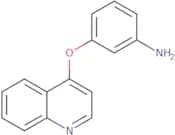
CAS:<p>Versatile small molecule scaffold</p>Formula:C11H19BN2O4SPurity:Min. 95%Molecular weight:286.16 g/mol3-(Quinolin-4-yloxy)aniline
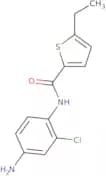
CAS:<p>Versatile small molecule scaffold</p>Formula:C15H12N2OPurity:Min. 95%Molecular weight:236.27 g/molN-(4-Amino-2-chlorophenyl)-5-ethylthiophene-2-carboxamide
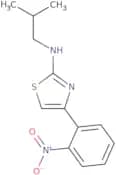
CAS:<p>Versatile small molecule scaffold</p>Formula:C13H13ClN2OSPurity:Min. 95%Molecular weight:280.77 g/molN-(2-Methylpropyl)-4-(2-nitrophenyl)-1,3-thiazol-2-amine
CAS:<p>Versatile small molecule scaffold</p>Formula:C13H15N3O2SPurity:Min. 95%Molecular weight:277.34 g/mol2-Methyl-4H,5H,6H,7H-pyrazolo[1,5-a]pyrimidine
CAS:<p>Versatile small molecule scaffold</p>Formula:C7H11N3Purity:Min. 95%Molecular weight:137.18 g/mol[1,3-Bis(4-methylphenyl)propan-2-yl](methyl)amine
CAS:Controlled Product<p>Versatile small molecule scaffold</p>Formula:C18H23NPurity:Min. 95%Molecular weight:253.4 g/mol1-[4-(Difluoromethoxy)phenyl]piperidin-3-amine
CAS:<p>Versatile small molecule scaffold</p>Formula:C12H16F2N2OPurity:Min. 95%Molecular weight:242.26 g/mol



![N-[3-(Dimethylamino)phenyl]acetamide](/_next/image/?url=https%3A%2Fstatic.cymitquimica.com%2Fproducts%2F3D%2Fthumb-webp%2FHAA47495.webp&w=3840&q=75)

![9-Azabicyclo[6.2.0]decane](/_next/image/?url=https%3A%2Fstatic.cymitquimica.com%2Fproducts%2F3D%2Fthumb-webp%2FHAA48952.webp&w=3840&q=75)
methanol](/_next/image/?url=https%3A%2Fstatic.cymitquimica.com%2Fproducts%2F3D%2Fthumb-webp%2FHAA49477.webp&w=3840&q=75)
![7-Chloro-[1,2,4]triazolo[4,3-c]pyrimidin-8-amine](/_next/image/?url=https%3A%2Fstatic.cymitquimica.com%2Fproducts%2F3D%2Fthumb-webp%2FHAA49826.webp&w=3840&q=75)
![Ethyl [(3-nitrophenyl)carbamoyl]formate](/_next/image/?url=https%3A%2Fstatic.cymitquimica.com%2Fproducts%2F3D%2Fthumb-webp%2FHAA50169.webp&w=3840&q=75)
![3-Nitro-6,7,8,9-tetrahydro-5H-benzo[7]annulen-5-one](/_next/image/?url=https%3A%2Fstatic.cymitquimica.com%2Fproducts%2F3D%2Fthumb-webp%2FHAA50793.webp&w=3840&q=75)

![[(1E)-4-Bromobut-1-en-1-yl]benzene](/_next/image/?url=https%3A%2Fstatic.cymitquimica.com%2Fproducts%2F3D%2Fthumb-webp%2FHAA51541.webp&w=3840&q=75)
![[5-(3-Chlorophenyl)-1,2-oxazol-3-yl]methanol](/_next/image/?url=https%3A%2Fstatic.cymitquimica.com%2Fproducts%2F3D%2Fthumb-webp%2FHBB42479.webp&w=3840&q=75)
![3-Iodo-2,6-dihydro-4H-pyrrolo[3,4-c]pyrazole-5-carboxylic acid tert-butyl ester](/_next/image/?url=https%3A%2Fstatic.cymitquimica.com%2Fproducts%2F3D%2Fthumb-webp%2FHBB42843.webp&w=3840&q=75)
![4-[5-(Difluoromethyl)-1,3,4-oxadiazol-2-yl]benzoic acid](/_next/image/?url=https%3A%2Fstatic.cymitquimica.com%2Fproducts%2F3D%2Fthumb-webp%2FHBC02266.webp&w=3840&q=75)
![9-[(2-Chloropyridin-4-yl)methyl]-9H-purin-6-amine](/_next/image/?url=https%3A%2Fstatic.cymitquimica.com%2Fproducts%2F3D%2Fthumb-webp%2FHBC14810.webp&w=3840&q=75)
![6-[(3-Bromophenyl)sulfanyl]pyridine-2-carboxylic acid](/_next/image/?url=https%3A%2Fstatic.cymitquimica.com%2Fproducts%2F3D%2Fthumb-webp%2FHBC16823.webp&w=3840&q=75)
![1-[(2-Cyanophenyl)methyl]pyrrolidine-2-carboxamide](/_next/image/?url=https%3A%2Fstatic.cymitquimica.com%2Fproducts%2F3D%2Fthumb-webp%2FHBC17213.webp&w=3840&q=75)
![3-[(2-Methoxyphenyl)methoxy]-2-methylaniline](/_next/image/?url=https%3A%2Fstatic.cymitquimica.com%2Fproducts%2F3D%2Fthumb-webp%2FHBC18533.webp&w=3840&q=75)
![1-[3-Chloro-5-(trifluoromethyl)pyridin-2-yl]pyrrolidin-3-amine](/_next/image/?url=https%3A%2Fstatic.cymitquimica.com%2Fproducts%2F3D%2Fthumb-webp%2FHBC23008.webp&w=3840&q=75)
![2-(5-Amino-2-chlorophenyl)-2-azaspiro[4.4]nonane-1,3-dione](/_next/image/?url=https%3A%2Fstatic.cymitquimica.com%2Fproducts%2F3D%2Fthumb-webp%2FHBC33895.webp&w=3840&q=75)
![4-{[Benzyl(methyl)amino]methyl}-N-methylpyridin-2-amine](/_next/image/?url=https%3A%2Fstatic.cymitquimica.com%2Fproducts%2F3D%2Fthumb-webp%2FHBC37035.webp&w=3840&q=75)
![4-[(5-Methylpyridin-2-yl)oxy]benzoic acid](/_next/image/?url=https%3A%2Fstatic.cymitquimica.com%2Fproducts%2F3D%2Fthumb-webp%2FHBC41715.webp&w=3840&q=75)
![1-{[1,2,3,4]Tetrazolo[1,5-a]pyrazin-5-yl}-1H-pyrazole-4-carboxylic acid](/_next/image/?url=https%3A%2Fstatic.cymitquimica.com%2Fproducts%2F3D%2Fthumb-webp%2FHBC43407.webp&w=3840&q=75)
![1-[(Methylsulfonyl)methyl]-4-(4,4,5,5-tetramethyl-1,3,2-dioxaborolan-2-yl)-1H-pyrazole](/_next/image/?url=https%3A%2Fstatic.cymitquimica.com%2Fproducts%2F3D%2Fthumb-webp%2FHBC53099.webp&w=3840&q=75)
![2-Methyl-4H,5H,6H,7H-pyrazolo[1,5-a]pyrimidine](/_next/image/?url=https%3A%2Fstatic.cymitquimica.com%2Fproducts%2F3D%2Fthumb-webp%2FHBC59736.webp&w=3840&q=75)
amine](/_next/image/?url=https%3A%2Fstatic.cymitquimica.com%2Fproducts%2F3D%2Fthumb-webp%2FHBC60292.webp&w=3840&q=75)
![1-[4-(Difluoromethoxy)phenyl]piperidin-3-amine](/_next/image/?url=https%3A%2Fstatic.cymitquimica.com%2Fproducts%2F3D%2Fthumb-webp%2FHBC71139.webp&w=3840&q=75)