Building Blocks
This section contains fundamental products for the synthesis of organic and biological compounds. Building blocks are the essential starting materials used to construct complex molecules through various chemical reactions. They play a critical role in drug discovery, material science, and chemical research. At CymitQuimica, we offer a diverse range of high-quality building blocks to support your innovative research and industrial projects, ensuring you have the essential components for successful synthesis.
Subcategories of "Building Blocks"
- Boronic Acids & Boronic Acid Derivatives(5,756 products)
- Chiral Building Blocks(1,242 products)
- Hydrocarbon Building Blocks(6,095 products)
- Organic Building Blocks(61,036 products)
Found 195887 products of "Building Blocks"
Sort by
Purity (%)
0
100
|
0
|
50
|
90
|
95
|
100
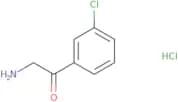
2-Amino-1-(3-chlorophenyl)ethanone hydrochloride
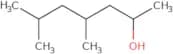
CAS:Controlled Product<p>Versatile small molecule scaffold</p>Formula:C8H9Cl2NOPurity:Min. 95%Molecular weight:206.07 g/mol4,6-Dimethylheptan-2-ol
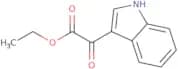
CAS:<p>Versatile small molecule scaffold</p>Formula:C9H20OPurity:Min. 95%Molecular weight:144.25 g/molEthyl 2-(indol-3-yl)-2-oxoacetate
CAS:<p>Ethyl 2-(indol-3-yl)-2-oxoacetate is a hydroxy derivative of the amino acid tyrosine. It inhibits the enzyme tyrosine hydroxylase, which catalyzes the conversion of tyrosine to L-DOPA. This in turn affects dopamine synthesis and has an inhibitory effect on rat brain. Ethyl 2-(indol-3-yl)-2-oxoacetate also inhibits methylmagnesium borohydride in vitro, which is a reagent that breaks down esters, amides, and nitriles. Tyrosine hydroxylase is inhibited by the presence of two hydroxy groups on the ethyl side chain and one hydroxy group on the indole ring. It can be used as a structural analogue for other drugs that are used to treat Parkinson's disease or depression.</p>Formula:C12H11NO3Purity:Min. 95%Molecular weight:217.22 g/mol1-[(tert-butoxy)carbonyl]-2,5-dihydro-1H-pyrrole-2-carboxylic acid
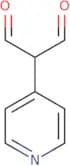
CAS:<p>Versatile small molecule scaffold</p>Formula:C10H15NO4Purity:Min. 95%Molecular weight:213.2 g/mol2-(4-Pyridyl)malondialdehyde
CAS:<p>2-(4-Pyridyl)malondialdehyde (2-PMAL) is a zwitterionic molecule that is soluble in polar organic solvents. It forms hydrogen bonds with other molecules and has a microporous structure. 2-PMAL has been shown to be an x-ray contrast agent for imaging biological systems. The connectivity of 2-PMAL and the x-ray structure have been determined by single crystal x-ray diffraction studies. The adsorption of 2-PMAL on polymers has been studied experimentally, and its topology has been determined using helical modelling.<br>2-(4-Pyridyl)malondialdehyde is a compound with both planar and helical structures, which may give it the ability to adsorb onto surfaces or dissolve in water or organic solvents.</p>Formula:C8H7NO2Purity:Min. 95%Molecular weight:149.15 g/mol4-Hydroxypiperidine-1-carbonitrile
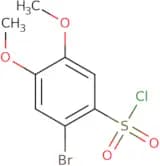
CAS:<p>Versatile small molecule scaffold</p>Formula:C6H10N2OPurity:Min. 95%Molecular weight:126.16 g/mol2-Bromo-4,5-dimethoxybenzene-1-sulfonyl chloride
CAS:<p>Versatile small molecule scaffold</p>Formula:C8H8BrClO4SPurity:Min. 95%Molecular weight:315.57 g/mol[(1,1-Dioxo-tetrahydro-1λ*6*-thiophen-3-yl)-methyl-amino]-acetic acid
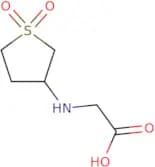
CAS:<p>Versatile small molecule scaffold</p>Formula:C7H13NO4SPurity:Min. 95%Molecular weight:207.24 g/mol(1,1-Dioxotetrahydro-1-λ*6*-thiophen-3-yl-amino)acetic acid
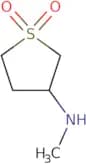
CAS:<p>Versatile small molecule scaffold</p>Formula:C6H11NO4SPurity:Min. 95%Molecular weight:193.22 g/mol3-(Methylamino)tetrahydrothiophene 1,1-dioxide
CAS:<p>Versatile small molecule scaffold</p>Formula:C5H11NO2SPurity:Min. 95%Molecular weight:149.21 g/molMethyl 1-azabicyclo[2.2.2]octane-4-carboxylate
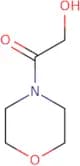
CAS:<p>Versatile small molecule scaffold</p>Formula:C9H15NO2Purity:Min. 95%Molecular weight:169.22 g/mol2-hydroxy-1-(morpholin-4-yl)ethan-1-one
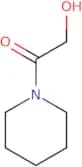
CAS:<p>2-Hydroxy-1-(morpholin-4-yl)ethan-1-one is an anti-tuberculosis drug that inhibits the synthesis of the mycolic acid layer in Mycobacterium tuberculosis. It binds to the nitrogen and electrons of the muramic acid residues and prevents their condensation with amines, thereby inhibiting the synthesis of glycolic acid and disubstituted acids. 2HME also has inhibitory effects on growth at concentrations below its MIC. This drug may have a structural similarity to amides, which are known as inhibitors for bacterial cell wall biosynthesis. 2HME has been shown to be effective against Mycobacterium tuberculosis strains resistant to other drugs such as isoniazid and rifampin.</p>Formula:C6H11NO3Purity:Min. 95%Molecular weight:145.15 g/mol2-oxo-2-piperidin-1-ylethanol
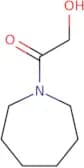
CAS:<p>2-Oxo-2-piperidin-1-ylethanol (OPAH) is an alkynyl with a benzene ring and a pyridyl. It can be synthesized by cross-linking the alkylene, which is unsaturated, to an alkenyl. The carbamoyl group can be attached to the amide or alkyl of the alkynyl. The cycloalkyl is attached to the phenyl at its 1-4 position.</p>Formula:C7H13NO2Purity:Min. 95%Molecular weight:143.18 g/mol1-(Azepan-1-yl)-2-hydroxyethan-1-one
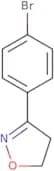
CAS:<p>Versatile small molecule scaffold</p>Formula:C8H15NO2Purity:Min. 95%Molecular weight:157.21 g/mol3-(4-Bromophenyl)-4,5-dihydro-1,2-oxazole
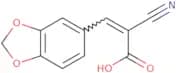
CAS:<p>Versatile small molecule scaffold</p>Formula:C9H8BrNOPurity:Min. 95%Molecular weight:226.07 g/mol3-(1,3-Dioxaindan-5-yl)-2-cyanoprop-2-enoic acid
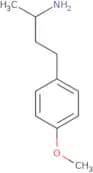
CAS:<p>Versatile small molecule scaffold</p>Formula:C11H7NO4Purity:Min. 95%Molecular weight:217.18 g/mol3-(4-Methoxy-phenyl)-1-methyl-propylamine
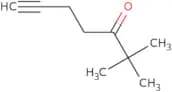
CAS:<p>3-(4-Methoxy-phenyl)-1-methyl-propylamine is a chiral compound that inhibits the growth of bacteria. It has significant growth inhibition against Gram-positive bacteria, including Staphylococcus aureus and Enterococcus faecalis. 3-(4-Methoxy-phenyl)-1-methyl-propylamine also has significant growth inhibition against Gram-negative bacteria, including Salmonella typhimurium, Escherichia coli, and Pseudomonas aeruginosa. This drug has antifeedant activity as well as significant growth inhibition against certain fungi and protozoa.</p>Formula:C11H17NOPurity:Min. 95%Molecular weight:179.26 g/mol2,2-Dimethylhept-6-yn-3-one
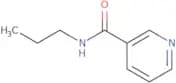
CAS:<p>Versatile small molecule scaffold</p>Formula:C9H14OPurity:Min. 95%Molecular weight:138.21 g/molN-Propylnicotinamide
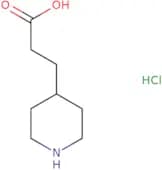
CAS:<p>N-Propylnicotinamide is a marker of nutritional status and a methyl donor. It is a nicotinamide that can be quantified in blood, plasma, and urine. This compound has been validated as a marker for the measurement of dietary methionine intake in human subjects. N-Propylnicotinamide has also been used as an internal standard for the detection of fluorescence in biological samples by liquid chromatography with fluorescence detection (LC-FLD).</p>Formula:C9H12N2OPurity:Min. 95%Molecular weight:164.2 g/mol3-(Piperidin-4-yl)propanoic acid hydrochloride
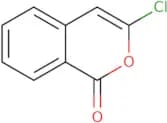
CAS:<p>Versatile small molecule scaffold</p>Formula:C8H16ClNO2Purity:Min. 95%Molecular weight:193.67 g/mol3-Chloro-1H-isochromen-1-one
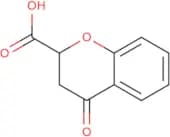
CAS:<p>3-Chloro-1H-isochromen-1-one is a boronic acid that can be used as a catalyst. It has been shown to be efficient in the Suzuki reaction, which is the coupling of an aryl or alkyl halide with an organoboron compound. The yield is usually high and the method is stable, so it has been used for synthesizing polycyclic aromatic compounds. 3-Chloro-1H-isochromen-1-one also has been used in palladium coupling reactions and boronic acid pinacol couplings with terminal alkynes.</p>Formula:C9H5ClO2Purity:Min. 95%Molecular weight:180.59 g/mol4-Oxo-3,4-dihydro-2H-1-benzopyran-2-carboxylic acid
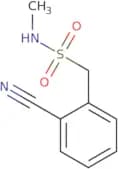
CAS:<p>4-Oxo-3,4-dihydro-2H-1-benzopyran-2-carboxylic acid is a copper salt that is the active compound in lipase. It is inexpensively prepared by heating the corresponding ester with sodium hydroxide in an organic solvent. 4-Oxo-3,4-dihydro-2H-1-benzopyran-2-carboxylic acid inhibits alkali metal and phosphine ligands and can be used as a source of chlorine atoms. The compound has been shown to have two isomers: one with a chlorine atom and one with fluorine.</p>Formula:C10H8O4Purity:Min. 95%Molecular weight:192.17 g/mol1-(2-Cyanophenyl)-N-methylmethanesulfonamide
CAS:<p>Versatile small molecule scaffold</p>Formula:C9H10N2O2SPurity:Min. 95%Molecular weight:210.26 g/molDicyclopropylmethanamine hydrochloride
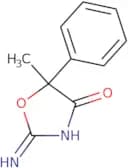
CAS:<p>Dicyclopropylmethanamine hydrochloride is a member of the class of hydroxyalkyl, amino group regulators. It can be used as a growth regulator in plants. Dicyclopropylmethanamine hydrochloride has been used for medicinal purposes and as an herbicide. This compound also shows properties that are similar to those of some cardiovascular drugs and may have potential for use in treating cardiovascular diseases.</p>Formula:C7H14ClNPurity:Min. 95%Molecular weight:147.65 g/mol2-Amino-5-methyl-5-phenyl-4,5-dihydro-1,3-oxazol-4-one
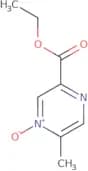
CAS:<p>Versatile small molecule scaffold</p>Formula:C10H10N2O2Purity:Min. 95%Molecular weight:190.2 g/mol5-(Ethoxycarbonyl)-2-methylpyrazin-1-ium-1-olate
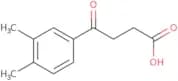
CAS:<p>Versatile small molecule scaffold</p>Formula:C8H10N2O3Purity:Min. 95%Molecular weight:182.18 g/mol4-(3,4-Dimethyl-phenyl)-4-oxo-butyric acid
CAS:<p>Versatile small molecule scaffold</p>Formula:C12H14O3Purity:Min. 95%Molecular weight:206.24 g/mol3-Piperidinesulfonic Acid
CAS:<p>Versatile small molecule scaffold</p>Formula:C5H11NO3SPurity:Min. 95%Molecular weight:165.21 g/mol9-Thia-3-azabicyclo[4.2.1]nonan-4-one
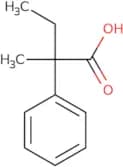
CAS:<p>Versatile small molecule scaffold</p>Formula:C7H11NOSPurity:Min. 95%Molecular weight:157.24 g/mol2-Methyl-2-phenylbutanoic acid
CAS:<p>2-Methyl-2-phenylbutanoic acid is a molecule with a formula of C8H14O2. It has one hydroxyl group and one acceptor, which are the two functional groups that have an effect on the molecular electrostatic potential. The molecule also has a butyric acid group, which is a short-chain fatty acid. 2-Methyl-2-phenylbutanoic acid is an anticomplement agent and is used in research to study the complement system's role in inflammation and tissue damage. The molecule's structure can be described by its functional groups, which are antiinflammatory in nature.</p>Formula:C11H14O2Purity:Min. 95%Molecular weight:178.23 g/mol8-Methyl-1-tetralone
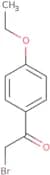
CAS:<p>8-Methyl-1-tetralone is a reactive compound that can be used in research. It has been shown to have geometries, polymethyl and energy transfer properties. The benzoyl group is also important for this molecule's reactivity. 8-Methyl-1-tetralone diffuses slowly because of its size and mass. This product is kinetically stable, but it may undergo product research artefacts with prolonged exposure to air or light.</p>Formula:C11H12OPurity:Min. 95%Molecular weight:160.21 g/mol2-Bromo-1-(4-ethoxyphenyl)ethanone
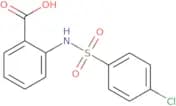
CAS:<p>Versatile small molecule scaffold</p>Formula:C10H11BrO2Purity:Min. 95%Molecular weight:243.1 g/mol2-(4-Chloro-benzenesulfonylamino)-benzoic acid
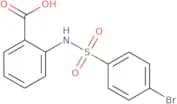
CAS:<p>Versatile small molecule scaffold</p>Formula:C13H10ClNO4SPurity:Min. 95%Molecular weight:311.74 g/mol2-(4-Bromobenzenesulfonamido)benzoic acid
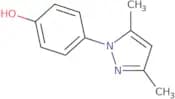
CAS:<p>2-(4-Bromobenzenesulfonamido)benzoic acid is a centrosymmetric molecule that has a hydrogen bond and a crystal structure. It is made up of two molecules of benzoic acid, which are bonded together in a dimer. The hydrogen bonds form between the hydroxyl groups on the benzene rings, and the molecule has two dihedral angles. The molecule is asymmetric due to the different positions of the bromine atoms, which cause it to have an undefined rotation axis.</p>Formula:C13H10BrNO4SPurity:Min. 95%Molecular weight:356.19 g/mol4-(3,5-Dimethyl-1H-pyrazol-1-yl)phenol
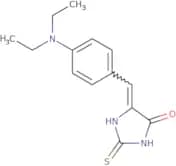
CAS:<p>Versatile small molecule scaffold</p>Formula:C11H12N2OPurity:Min. 95%Molecular weight:188.23 g/mol5-(4-Diethylamino-benzylidene)-2-thioxo-imidazolidin-4-one
CAS:<p>Versatile small molecule scaffold</p>Formula:C14H17N3OSPurity:Min. 95%Molecular weight:275.37 g/molN-[(1-Hydroxycyclopentyl)methyl]acetamide
CAS:<p>Versatile small molecule scaffold</p>Formula:C8H15NO2Purity:Min. 95%Molecular weight:157.21 g/mol(2-Propylphenyl)thiourea
CAS:<p>Versatile small molecule scaffold</p>Formula:C10H14N2SPurity:Min. 95%Molecular weight:194.3 g/mol3-(3-Bromo-4-fluorophenyl)-2-methylpropanoic acid
CAS:<p>Versatile small molecule scaffold</p>Formula:C10H10BrFO2Purity:Min. 95%Molecular weight:261.09 g/molN-(2-Azidoethyl)-2-methylpropanamide
CAS:<p>Versatile small molecule scaffold</p>Formula:C6H12N4OPurity:Min. 95%Molecular weight:156.19 g/mol1-Ethyl-2-(4-iodobenzoyl)-1H-imidazole
CAS:Controlled Product<p>Versatile small molecule scaffold</p>Formula:C12H11IN2OPurity:Min. 95%Molecular weight:326.13 g/mol3-{[Methyl(1,3-thiazol-4-ylmethyl)amino]methyl}aniline
CAS:<p>Versatile small molecule scaffold</p>Formula:C12H15N3SPurity:Min. 95%Molecular weight:233.33 g/mol2-[(2-Methoxyphenyl)methyl]cyclopentan-1-ol
CAS:<p>Versatile small molecule scaffold</p>Formula:C13H18O2Purity:Min. 95%Molecular weight:206.28 g/mol2-(4-Fluoro-3-methoxyphenyl)morpholine
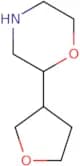
CAS:<p>Versatile small molecule scaffold</p>Formula:C11H14FNO2Purity:Min. 95%Molecular weight:211.23 g/mol2-(Oxolan-3-yl)morpholine
CAS:<p>Versatile small molecule scaffold</p>Formula:C8H15NO2Purity:Min. 95%Molecular weight:157.21 g/mol2-Cyclohexylmorpholine
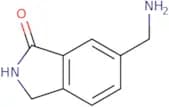
CAS:<p>Versatile small molecule scaffold</p>Formula:C10H19NOPurity:Min. 95%Molecular weight:169.26 g/mol6-(Aminomethyl)isoindolin-1-one
CAS:<p>6-(Aminomethyl)isoindolin-1-one is a cyano compound that has been shown to be an effective hydrogenation catalyst. It can be used to catalyze reactions in which the hydrogen source is not the only carbon source. The synthetic reaction for 6-(aminomethyl)isoindolin-1-one involves the conversion of an aminomethyl ketone with sodium cyanide and a transition metal catalyst. This process produces two products: 6-(aminomethyl)isoindolin-1-one and 2,4,6-trichlorophenol. The use of this compound as a catalyst has been shown to be more efficient than traditional catalysts, such as palladium on carbon, in some instances.</p>Formula:C9H10N2OPurity:Min. 95%Molecular weight:162.19 g/mol1-Bromo-3-(2-methoxyethoxy)methylbenzene
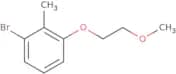
CAS:<p>Versatile small molecule scaffold</p>Formula:C10H13BrO2Purity:Min. 95%Molecular weight:245.12 g/mol6-Oxo-1-(propan-2-yl)-1,4,5,6-tetrahydropyridazine-3-carboxylic acid
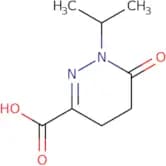
CAS:<p>Versatile small molecule scaffold</p>Formula:C8H12N2O3Purity:Min. 95%Molecular weight:184.19 g/mol2-(2-Fluorophenyl)-2-methylcyclopropane-1-carboxylic acid
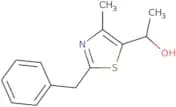
CAS:<p>Versatile small molecule scaffold</p>Formula:C11H11FO2Purity:Min. 95%Molecular weight:194.2 g/mol1-(2-Benzyl-4-methyl-1,3-thiazol-5-yl)ethan-1-ol
CAS:<p>Versatile small molecule scaffold</p>Formula:C13H15NOSPurity:Min. 95%Molecular weight:233.33 g/mol[1-(6-Chloropyrimidin-4-yl)pyrrolidin-2-yl]methanol
CAS:<p>Versatile small molecule scaffold</p>Formula:C9H12ClN3OPurity:Min. 95%Molecular weight:213.66 g/mol2-Methyl-2-(prop-2-ynoylamino)propanoic acid
CAS:<p>Versatile small molecule scaffold</p>Formula:C7H9NO3Purity:Min. 95%Molecular weight:155.15 g/mol3-[(2,4-Difluorophenyl)sulfanyl]piperidine
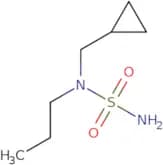
CAS:<p>Versatile small molecule scaffold</p>Formula:C11H13F2NSPurity:Min. 95%Molecular weight:229.29 g/molN-(Cyclopropylmethyl)-N-propylaminosulfonamide
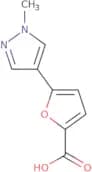
CAS:<p>Versatile small molecule scaffold</p>Formula:C7H16N2O2SPurity:Min. 95%Molecular weight:192.3 g/mol5-(1-Methyl-1H-pyrazol-4-yl)furan-2-carboxylic acid
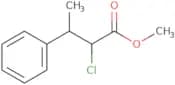
CAS:<p>Versatile small molecule scaffold</p>Formula:C9H8N2O3Purity:Min. 95%Molecular weight:192.17 g/molMethyl 2-chloro-3-phenylbutanoate
CAS:<p>Versatile small molecule scaffold</p>Formula:C11H13ClO2Purity:Min. 95%Molecular weight:212.67 g/mol{[2-(Methylcarbamoyl)ethyl]carbamoyl}formic acid
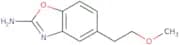
CAS:<p>Versatile small molecule scaffold</p>Formula:C6H10N2O4Purity:Min. 95%Molecular weight:174.15 g/mol5-(2-Methoxyethyl)-1,3-benzoxazol-2-amine
CAS:<p>Versatile small molecule scaffold</p>Formula:C10H12N2O2Purity:Min. 95%Molecular weight:192.21 g/mol2-[(4-Aminopyridin-2-yl)oxy]ethan-1-ol
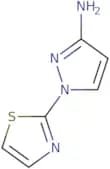
CAS:<p>Versatile small molecule scaffold</p>Formula:C7H10N2O2Purity:Min. 95%Molecular weight:154.17 g/mol1-(1,3-Thiazol-2-yl)-1H-pyrazol-3-amine
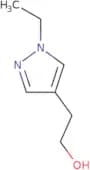
CAS:<p>Versatile small molecule scaffold</p>Formula:C6H6N4SPurity:Min. 95%Molecular weight:166.21 g/mol2-(1-Ethyl-1H-pyrazol-4-yl)ethan-1-ol
CAS:<p>2-(1-Ethyl-1H-pyrazol-4-yl)ethan-1-ol is an optical calibration agent that has the ability to introduce a primary target. It can be used in calibrating optical sensors and for introducing antigen-presenting cells. This chemical has been shown to have high specificity and sensitivity, as it can be used to detect inflammatory diseases, such as asthma, psoriasis, and arthritis. 2-(1-Ethyl-1H-pyrazol-4-yl)ethan-1-ol is also a primary target for inflammatory diseases such as asthma or psoriasis. The chemical has been shown to inhibit leukotriene A4 (LTA4) synthesis in human cells and may act as a caspase inhibitor. This compound is also capable of coding for proliferative disorders such as cancer or skin disorders like psoriasis. 2-(1-Ethyl-1H pyrazol 4-) eth</p>Formula:C7H12N2OPurity:Min. 95%Molecular weight:140.18 g/mol2-(Chloromethyl)-6-ethoxypyridine
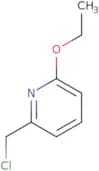
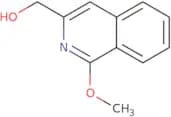
CAS:<p>Versatile small molecule scaffold</p>Formula:C8H10ClNOPurity:Min. 95%Molecular weight:171.62 g/mol(1-Methoxyisoquinolin-3-yl)methanol
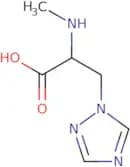
CAS:<p>Versatile small molecule scaffold</p>Formula:C11H11NO2Purity:Min. 95%Molecular weight:189.21 g/mol2-(Methylamino)-3-(1H-1,2,4-triazol-1-yl)propanoic acid
CAS:<p>Versatile small molecule scaffold</p>Formula:C6H10N4O2Purity:Min. 95%Molecular weight:170.2 g/mol[2-(4-Chloro-1H-pyrazol-1-yl)-6-methylpyridin-3-yl]methanamine
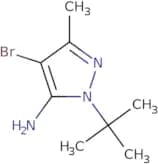
CAS:<p>Versatile small molecule scaffold</p>Formula:C10H11ClN4Purity:Min. 95%Molecular weight:222.67 g/mol4-bromo-1-tert-butyl-3-methyl-1H-pyrazol-5-amine
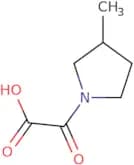
CAS:<p>Versatile small molecule scaffold</p>Formula:C8H14BrN3Purity:Min. 95%Molecular weight:232.13 g/mol2-(3-Methylpyrrolidin-1-yl)-2-oxoacetic acid
CAS:<p>Versatile small molecule scaffold</p>Formula:C7H11NO3Purity:Min. 95%Molecular weight:157.17 g/mol1H-Pyrazolo[3,4-b]pyridine-6-carboxylic acid
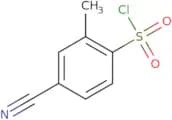
CAS:<p>1-H-Pyrazolo[3,4-b]pyridine-6-carboxylic acid is a synthetic compound that has been used in the synthesis of various other compounds. It is an intermediate for the synthesis of pyruvic acid, which can be converted to a variety of products including aldehydes, aromatic aldehydes, and cyclic condensation products. The mechanism of this compound is not well understood, but it is thought that 1H-pyrazolo[3,4-b]pyridine-6-carboxylic acid undergoes cyclocondensation reactions with ketones, amines or alcohols to form heterocyclic compounds.</p>Formula:C7H5N3O2Purity:Min. 95%Molecular weight:163.13 g/mol4-Cyano-2-methylbenzene-1-sulfonyl chloride
CAS:<p>Versatile small molecule scaffold</p>Formula:C8H6ClNO2SPurity:Min. 95%Molecular weight:215.66 g/mol2-(Phenoxymethyl)pyrimidin-4-amine
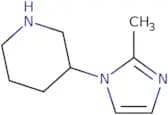
CAS:<p>Versatile small molecule scaffold</p>Formula:C11H11N3OPurity:Min. 95%Molecular weight:201.22 g/mol3-(2-Methyl-1H-imidazol-1-yl)piperidine
CAS:<p>Versatile small molecule scaffold</p>Formula:C9H15N3Purity:Min. 95%Molecular weight:165.24 g/mol4-Methyl-2-(oxolan-3-yl)-1,3-thiazole-5-carboxylic acid
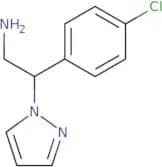
CAS:<p>Versatile small molecule scaffold</p>Formula:C9H11NO3SPurity:Min. 95%Molecular weight:213.26 g/mol2-(4-Chlorophenyl)-2-(1H-pyrazol-1-yl)ethan-1-amine
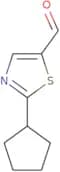
CAS:<p>Versatile small molecule scaffold</p>Formula:C11H12ClN3Purity:Min. 95%Molecular weight:221.68 g/mol2-Cyclopentyl-1,3-thiazole-5-carbaldehyde
CAS:<p>Versatile small molecule scaffold</p>Formula:C9H11NOSPurity:Min. 95%Molecular weight:181.26 g/mol1-(1H-Pyrrol-1-yl)cyclopentane-1-carboxylic acid
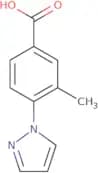
CAS:<p>Versatile small molecule scaffold</p>Formula:C10H13NO2Purity:Min. 95%Molecular weight:179.22 g/mol3-Methyl-4-(1H-pyrazol-1-yl)benzoic acid
CAS:<p>Versatile small molecule scaffold</p>Formula:C11H10N2O2Purity:Min. 95%Color and Shape:PowderMolecular weight:202.21 g/mol1-[1-(3-Ethyl-1,2,4-oxadiazol-5-yl)ethyl]piperazine
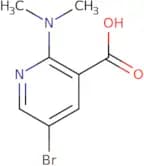
CAS:<p>Versatile small molecule scaffold</p>Formula:C10H18N4OPurity:Min. 95%Molecular weight:210.28 g/mol5-Bromo-2-(dimethylamino)pyridine-3-carboxylic acid
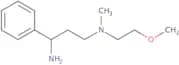
CAS:<p>Versatile small molecule scaffold</p>Formula:C8H9BrN2O2Purity:Min. 95%Molecular weight:245.07 g/mol(3-Amino-3-phenylpropyl)(2-methoxyethyl)methylamine
CAS:<p>Versatile small molecule scaffold</p>Formula:C13H22N2OPurity:Min. 95%Molecular weight:222.33 g/molN-Methyl-1-[(3-methyl-1,2-oxazol-5-yl)methyl]piperidin-4-amine
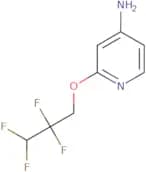
CAS:<p>Versatile small molecule scaffold</p>Formula:C11H19N3OPurity:Min. 95%Molecular weight:209.29 g/mol2-(2,2,3,3-Tetrafluoropropoxy)pyridin-4-amine
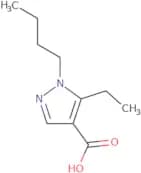
CAS:<p>Versatile small molecule scaffold</p>Formula:C8H8F4N2OPurity:Min. 95%Molecular weight:224.16 g/mol1-Butyl-5-ethyl-1H-pyrazole-4-carboxylic acid
CAS:<p>Versatile small molecule scaffold</p>Formula:C10H16N2O2Purity:Min. 95%Molecular weight:196.25 g/mol[4-(4-Fluorophenoxy)pyridin-2-yl]methanamine
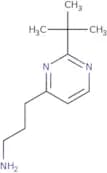
CAS:<p>Versatile small molecule scaffold</p>Formula:C12H11FN2OPurity:Min. 95%Molecular weight:218.23 g/mol3-(2-tert-Butylpyrimidin-4-yl)propan-1-amine
CAS:<p>Versatile small molecule scaffold</p>Formula:C11H19N3Purity:Min. 95%Molecular weight:193.29 g/mol4-Chloro-2-cyanophenylsulfonyl Chloride
CAS:<p>Versatile small molecule scaffold</p>Formula:C7H3NO2SCl2Purity:Min. 95%Molecular weight:236.07 g/mol2-[(Difluoromethyl)sulfanyl]phenol
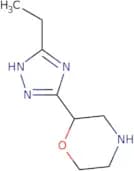
CAS:<p>Versatile small molecule scaffold</p>Formula:C7H6F2OSPurity:Min. 95%Molecular weight:176.19 g/mol2-(3-Ethyl-1H-1,2,4-triazol-5-yl)morpholine
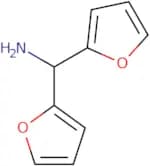
CAS:<p>Versatile small molecule scaffold</p>Formula:C8H14N4OPurity:Min. 95%Molecular weight:182.22 g/mol1,1-Di-2-furylmethanamine
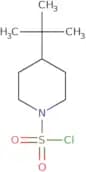
CAS:<p>Versatile small molecule scaffold</p>Formula:C9H9NO2Purity:Min. 95%Molecular weight:163.17 g/mol4-tert-Butylpiperidine-1-sulfonyl chloride
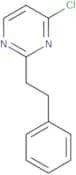
CAS:<p>Versatile small molecule scaffold</p>Formula:C9H18ClNO2SPurity:Min. 95%Molecular weight:239.76 g/mol4-Chloro-2-(2-phenylethyl)pyrimidine
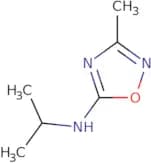
CAS:<p>Versatile small molecule scaffold</p>Formula:C12H11ClN2Purity:Min. 95%Molecular weight:218.68 g/mol3-Methyl-N-(propan-2-yl)-1,2,4-oxadiazol-5-amine
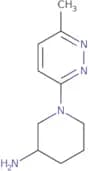
CAS:<p>Versatile small molecule scaffold</p>Formula:C6H11N3OPurity:Min. 95%Molecular weight:141.17 g/mol1-(6-Methylpyridazin-3-yl)piperidin-3-amine
CAS:<p>Versatile small molecule scaffold</p>Formula:C10H16N4Purity:Min. 95%Molecular weight:192.26 g/mol3-(4-Methyl-1H-pyrazol-1-yl)benzoic acid
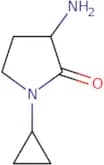
CAS:<p>Versatile small molecule scaffold</p>Formula:C11H10N2O2Purity:Min. 95%Molecular weight:202.21 g/mol3-Amino-1-cyclopropylpyrrolidin-2-one
CAS:<p>Versatile small molecule scaffold</p>Formula:C7H12N2OPurity:Min. 95%Molecular weight:140.18 g/molMethyl({1-[3-(pyridin-4-yl)phenyl]ethyl})amine
CAS:<p>Versatile small molecule scaffold</p>Formula:C14H16N2Purity:Min. 95%Molecular weight:212.29 g/mol3-[(4-Bromo-1H-pyrazol-1-yl)methyl]-5-propyl-1,2,4-oxadiazole
CAS:<p>Versatile small molecule scaffold</p>Formula:C9H11BrN4OPurity:Min. 95%Molecular weight:271.11 g/moltert-Butyl N-methyl-N-[(2-methyloxiran-2-yl)methyl]carbamate
CAS:<p>Versatile small molecule scaffold</p>Formula:C10H19NO3Purity:Min. 95%Molecular weight:201.26 g/mol[2-Amino-1-(2-methylphenyl)propyl]dimethylamine
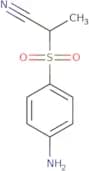
CAS:<p>Versatile small molecule scaffold</p>Formula:C12H20N2Purity:Min. 95%Molecular weight:192.3 g/mol2-(4-Aminobenzenesulfonyl)propanenitrile
CAS:<p>Versatile small molecule scaffold</p>Formula:C9H10N2O2SPurity:Min. 95%Molecular weight:210.26 g/mol

![1-[(tert-butoxy)carbonyl]-2,5-dihydro-1H-pyrrole-2-carboxylic acid](/_next/image/?url=https%3A%2Fstatic.cymitquimica.com%2Fproducts%2F3D%2Fthumb-webp%2FBCA07713.webp&w=3840&q=75)

![[(1,1-Dioxo-tetrahydro-1λ*6*-thiophen-3-yl)-methyl-amino]-acetic acid](/_next/image/?url=https%3A%2Fstatic.cymitquimica.com%2Fproducts%2F3D%2Fthumb-webp%2FBCA07058.webp&w=3840&q=75)
![Methyl 1-azabicyclo[2.2.2]octane-4-carboxylate](/_next/image/?url=https%3A%2Fstatic.cymitquimica.com%2Fproducts%2F3D%2Fthumb-webp%2FBCA06926.webp&w=3840&q=75)
![9-Thia-3-azabicyclo[4.2.1]nonan-4-one](/_next/image/?url=https%3A%2Fstatic.cymitquimica.com%2Fproducts%2F3D%2Fthumb-webp%2FBCA03034.webp&w=3840&q=75)
![N-[(1-Hydroxycyclopentyl)methyl]acetamide](/_next/image/?url=https%3A%2Fstatic.cymitquimica.com%2Fproducts%2F3D%2Fthumb-webp%2FBCA00422.webp&w=3840&q=75)


![3-{[Methyl(1,3-thiazol-4-ylmethyl)amino]methyl}aniline](/_next/image/?url=https%3A%2Fstatic.cymitquimica.com%2Fproducts%2F3D%2Fthumb-webp%2FBAC20006.webp&w=3840&q=75)
![2-[(2-Methoxyphenyl)methyl]cyclopentan-1-ol](/_next/image/?url=https%3A%2Fstatic.cymitquimica.com%2Fproducts%2F3D%2Fthumb-webp%2FBAC19992.webp&w=3840&q=75)



![[1-(6-Chloropyrimidin-4-yl)pyrrolidin-2-yl]methanol](/_next/image/?url=https%3A%2Fstatic.cymitquimica.com%2Fproducts%2F3D%2Fthumb-webp%2FBAC14677.webp&w=3840&q=75)

![3-[(2,4-Difluorophenyl)sulfanyl]piperidine](/_next/image/?url=https%3A%2Fstatic.cymitquimica.com%2Fproducts%2F3D%2Fthumb-webp%2FBAC14450.webp&w=3840&q=75)
![{[2-(Methylcarbamoyl)ethyl]carbamoyl}formic acid](/_next/image/?url=https%3A%2Fstatic.cymitquimica.com%2Fproducts%2F3D%2Fthumb-webp%2FBAC13813.webp&w=3840&q=75)
![2-[(4-Aminopyridin-2-yl)oxy]ethan-1-ol](/_next/image/?url=https%3A%2Fstatic.cymitquimica.com%2Fproducts%2F3D%2Fthumb-webp%2FBAC13177.webp&w=3840&q=75)
![[2-(4-Chloro-1H-pyrazol-1-yl)-6-methylpyridin-3-yl]methanamine](/_next/image/?url=https%3A%2Fstatic.cymitquimica.com%2Fproducts%2F3D%2Fthumb-webp%2FBAC11888.webp&w=3840&q=75)
![1H-Pyrazolo[3,4-b]pyridine-6-carboxylic acid](/_next/image/?url=https%3A%2Fstatic.cymitquimica.com%2Fproducts%2F3D%2Fthumb-webp%2FBAC11124.webp&w=3840&q=75)



![1-[1-(3-Ethyl-1,2,4-oxadiazol-5-yl)ethyl]piperazine](/_next/image/?url=https%3A%2Fstatic.cymitquimica.com%2Fproducts%2F3D%2Fthumb-webp%2FBAC10102.webp&w=3840&q=75)
![N-Methyl-1-[(3-methyl-1,2-oxazol-5-yl)methyl]piperidin-4-amine](/_next/image/?url=https%3A%2Fstatic.cymitquimica.com%2Fproducts%2F3D%2Fthumb-webp%2FBAC09946.webp&w=3840&q=75)
![[4-(4-Fluorophenoxy)pyridin-2-yl]methanamine](/_next/image/?url=https%3A%2Fstatic.cymitquimica.com%2Fproducts%2F3D%2Fthumb-webp%2FBAC08808.webp&w=3840&q=75)

![2-[(Difluoromethyl)sulfanyl]phenol](/_next/image/?url=https%3A%2Fstatic.cymitquimica.com%2Fproducts%2F3D%2Fthumb-webp%2FBAC08472.webp&w=3840&q=75)

![Methyl({1-[3-(pyridin-4-yl)phenyl]ethyl})amine](/_next/image/?url=https%3A%2Fstatic.cymitquimica.com%2Fproducts%2F3D%2Fthumb-webp%2FBAC06101.webp&w=3840&q=75)
![3-[(4-Bromo-1H-pyrazol-1-yl)methyl]-5-propyl-1,2,4-oxadiazole](/_next/image/?url=https%3A%2Fstatic.cymitquimica.com%2Fproducts%2F3D%2Fthumb-webp%2FBAC04876.webp&w=3840&q=75)
![tert-Butyl N-methyl-N-[(2-methyloxiran-2-yl)methyl]carbamate](/_next/image/?url=https%3A%2Fstatic.cymitquimica.com%2Fproducts%2F3D%2Fthumb-webp%2FBAC04731.webp&w=3840&q=75)
![[2-Amino-1-(2-methylphenyl)propyl]dimethylamine](/_next/image/?url=https%3A%2Fstatic.cymitquimica.com%2Fproducts%2F3D%2Fthumb-webp%2FBAC04257.webp&w=3840&q=75)