Building Blocks
This section contains fundamental products for the synthesis of organic and biological compounds. Building blocks are the essential starting materials used to construct complex molecules through various chemical reactions. They play a critical role in drug discovery, material science, and chemical research. At CymitQuimica, we offer a diverse range of high-quality building blocks to support your innovative research and industrial projects, ensuring you have the essential components for successful synthesis.
Subcategories of "Building Blocks"
- Boronic Acids & Boronic Acid Derivatives(5,756 products)
- Chiral Building Blocks(1,242 products)
- Hydrocarbon Building Blocks(6,095 products)
- Organic Building Blocks(61,036 products)
Found 195887 products of "Building Blocks"
Sort by
Purity (%)
0
100
|
0
|
50
|
90
|
95
|
100
7-Bromo-2-(trifluoromethyl)imidazo[1,2-a]pyridine
CAS:<p>Versatile small molecule scaffold</p>Formula:C8H4BrF3N2Purity:Min. 95%Molecular weight:265.03 g/mol5-(Difluoromethoxy)pyridine-2-carbonitrile
CAS:<p>Versatile small molecule scaffold</p>Formula:C7H4F2N2OPurity:Min. 95%Molecular weight:170.12 g/mol5-(Chloromethyl)-4-methyl-2-propyl-1,3-oxazole
CAS:<p>Versatile small molecule scaffold</p>Formula:C8H12ClNOPurity:Min. 95%Molecular weight:173.64 g/mol2-Chloro-3-(trifluoromethoxy)pyridine
CAS:<p>Versatile small molecule scaffold</p>Formula:C6H3ClF3NOPurity:Min. 95%Molecular weight:197.55 g/mol[2-(4-Chlorophenyl)-1,3-thiazol-5-yl]methanamine
CAS:<p>Versatile small molecule scaffold</p>Formula:C10H9ClN2SPurity:Min. 95%Molecular weight:224.7 g/molmethyl 8-chloroimidazo[1,2-a]pyrazine-2-carboxylate
CAS:<p>Versatile small molecule scaffold</p>Formula:C8H6ClN3O2Purity:Min. 95%Molecular weight:211.61 g/mol8-Bromo-2-(trifluoromethyl)imidazo[1,2-a]pyridine
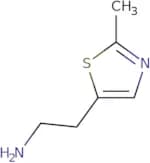
CAS:<p>Versatile small molecule scaffold</p>Formula:C8H4BrF3N2Purity:Min. 95%Molecular weight:265.03 g/mol2-(2-Methyl-1,3-thiazol-5-yl)ethan-1-amine
CAS:<p>Versatile small molecule scaffold</p>Formula:C6H10N2SPurity:Min. 95%Molecular weight:142.22 g/mol(2-Ethyl-1,3-oxazol-5-yl)methanamine
CAS:<p>Versatile small molecule scaffold</p>Formula:C6H10N2OPurity:Min. 95%Molecular weight:126.16 g/mol2-Bromo-4-(difluoromethoxy)pyridine
CAS:<p>Versatile small molecule scaffold</p>Formula:C6H4BrF2NOPurity:Min. 95%Molecular weight:224.01 g/mol4-Chloro-3-fluorobenzene-1,2-diamine
CAS:<p>Versatile small molecule scaffold</p>Formula:C6H6ClFN2Purity:Min. 95%Molecular weight:160.58 g/mol2-Fluoro-6-(4,4,5,5-tetramethyl-1,3,2-dioxaborolan-2-yl)aniline
CAS:<p>Versatile small molecule scaffold</p>Formula:C12H17BFNO2Purity:Min. 95%Molecular weight:237.08 g/mol4-Amino-N-(1,3-dioxaindan-5-yl)benzamide
CAS:<p>Versatile small molecule scaffold</p>Formula:C14H12N2O3Purity:Min. 95%Molecular weight:256.26 g/mol1-[(4-Fluorophenyl)methyl]pyrrolidine-3-carboxylic acid hydrochloride
CAS:<p>Versatile small molecule scaffold</p>Formula:C12H15ClFNO2Purity:Min. 95%Molecular weight:259.7 g/mol3-Cyclohexyl-2-(4-fluorophenyl)propanoic acid
CAS:<p>Versatile small molecule scaffold</p>Formula:C15H19FO2Purity:Min. 95%Molecular weight:250.31 g/molN-(Pyridin-2-yl)piperidine-3-carboxamide dihydrochloride
CAS:<p>Versatile small molecule scaffold</p>Formula:C11H17Cl2N3OPurity:Min. 95%Molecular weight:278.18 g/mol5-Cyclopropylthiazol-2-amine
CAS:<p>Versatile small molecule scaffold</p>Formula:C6H8N2SPurity:Min. 95%Molecular weight:140.21 g/mol1-(4-Aminobenzenesulfonyl)piperidine-3-carboxylic acid
CAS:<p>Versatile small molecule scaffold</p>Formula:C12H16N2O4SPurity:Min. 95%Molecular weight:284.33 g/molN-[(2-Fluorophenyl)methyl]-5-methyl-[1,2,4]triazolo[1,5-a]pyrimidin-7-amine
CAS:<p>Versatile small molecule scaffold</p>Formula:C13H12FN5Purity:Min. 95%Molecular weight:257.27 g/molN-(Carbamoylmethyl)butanamide
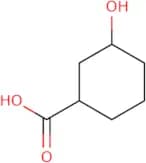
CAS:<p>Versatile small molecule scaffold</p>Formula:C6H12N2O2Purity:Min. 95%Molecular weight:144.17 g/mol3-Hydroxycyclohexanecarboxylic Acid (cis- and trans- mixture)
CAS:<p>3-Hydroxycyclohexanecarboxylic Acid is a chiral, synthesized organic compound. It is used as a precursor to medicines and has been shown to be effective in inhibiting plasmin activity through the formation of an aluminium complex. 3-Hydroxycyclohexanecarboxylic Acid is also used for the production of chromatographic columns, sensors, and aluminium oxide. It can be purified by crystallization or by using a formylation reaction with benzyl chloride. 3-Hydroxycyclohexanecarboxylic Acid has acidic properties at high pH and forms an aluminium complex with the cavity of an aluminium oxide sensor. The efficiency of this compound is related to its chirality, which can be determined by gas chromatography.</p>Formula:C7H12O3Purity:Min. 95%Molecular weight:144.17 g/mol3-Butanoyl-1,3-thiazolidine-4-carboxylic acid
CAS:<p>Versatile small molecule scaffold</p>Formula:C8H13NO3SPurity:Min. 95%Molecular weight:203.26 g/mol2,6-Difluoro-3-nitrobenzaldehyde
CAS:<p>2,6-Difluoro-3-nitrobenzaldehyde is a compound with an antiviral potential. It has been shown to inhibit the replication of the human cytomegalovirus (HCMV). This compound was found to be effective in immunocompromised patients, as well as resistant strains. The efficiency of 2,6-Difluoro-3-nitrobenzaldehyde was increased by optimizing its chemical structure and it has been shown to be safe for use in clinics.</p>Formula:C7H3F2NO3Purity:Min. 95%Molecular weight:187.1 g/mol1-[(tert-Butoxy)carbonyl]-4-(2-methoxyethyl)piperidine-4-carboxylic acid
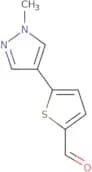
CAS:<p>Versatile small molecule scaffold</p>Formula:C14H25NO5Purity:Min. 95%Molecular weight:287.35 g/mol5-(1-Methyl-1H-pyrazol-4-yl)thiophene-2-carbaldehyde
CAS:<p>Versatile small molecule scaffold</p>Formula:C9H8N2OSPurity:Min. 95%Molecular weight:192.24 g/mol2-[(2-Hydroxy-4-methoxyphenyl)formamido]pentanedioic acid
CAS:<p>2-[(2-Hydroxy-4-methoxyphenyl)formamido]pentanedioic acid (2HMPDA) is a fluorescent dye that is used for staining and quantification of estrone. It can be used to measure the amount of estrone in wastewater samples. 2HMPDA is also a metabolic product of glutamate and can be used as an extracellular marker for this amino acid. The use of 2HMPDA to detect glutamate has been shown in both synthetic and natural environments, such as activated sludge and soil bacteria. 2HMPDA can also be used as an indicator for degraders in activated sludge wastewater treatment systems. The sequence of the gene encoding this compound has been determined, revealing it belongs to a novel group of enzymes called diterpene synthases.</p>Formula:C13H15NO7Purity:Min. 95%Molecular weight:297.3 g/mol5-bromo-2-methylphenylacetonitrile
CAS:<p>Versatile small molecule scaffold</p>Formula:C9H8BrNPurity:Min. 95%Molecular weight:210.07 g/mol4-Chloro-1-ethynyl-2-(trifluoromethyl)benzene
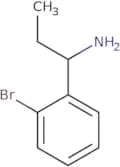
CAS:<p>Versatile small molecule scaffold</p>Formula:C9H4ClF3Purity:Min. 95%Molecular weight:204.57 g/mol1-(2-Bromophenyl)propan-1-amine
CAS:<p>Versatile small molecule scaffold</p>Formula:C9H12BrNPurity:Min. 95%Molecular weight:214.1 g/mol(3-Methylbutyl)hydrazine hydrochloride
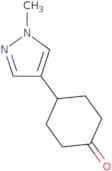
CAS:<p>Versatile small molecule scaffold</p>Formula:C5H15ClN2Purity:Min. 95%Molecular weight:138.64 g/mol4-(1-Methyl-1H-pyrazol-4-yl)cyclohexan-1-one
CAS:<p>Versatile small molecule scaffold</p>Formula:C10H14N2OPurity:Min. 95%Molecular weight:178.23 g/mol6-Hydroxy-4-methyl-2,3-dihydro-1,3-benzoxazol-2-one
CAS:<p>Versatile small molecule scaffold</p>Formula:C8H7NO3Purity:Min. 95%Molecular weight:165.15 g/mol4-Methyl-1H-1,3-benzodiazol-6-ol
CAS:<p>Versatile small molecule scaffold</p>Formula:C8H8N2OPurity:Min. 95%Molecular weight:148.16 g/mol7-Hydroxy-5-methyl-2H-benzo[b][1,4]oxazin-3(4H)-one
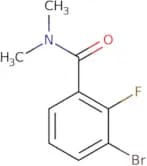
CAS:<p>Versatile small molecule scaffold</p>Formula:C9H9NO3Purity:Min. 95%Molecular weight:179.17 g/mol3-Bromo-2-fluoro-N,N-dimethylbenzamide
CAS:<p>Versatile small molecule scaffold</p>Formula:C9H9BrFNOPurity:Min. 95%Molecular weight:246.08 g/mol3-Bromo-2-fluoro-N-methylbenzamide
CAS:<p>Versatile small molecule scaffold</p>Formula:C8H7BrFNOPurity:Min. 95%Molecular weight:232.05 g/mol7-(4,4,5,5-tetramethyl-1,3,2-dioxaborolan-2-yl)-3,4-dihydroisoquinolin-1(2H)-one
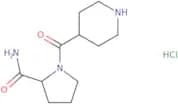
CAS:<p>Versatile small molecule scaffold</p>Formula:C15H20BNO3Purity:Min. 95%Molecular weight:273.14 g/mol1-(Piperidine-4-carbonyl)pyrrolidine-2-carboxamide hydrochloride
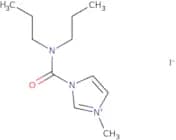
CAS:<p>Versatile small molecule scaffold</p>Formula:C11H20ClN3O2Purity:Min. 95%Molecular weight:261.75 g/mol1-(Dipropylcarbamoyl)-3-methyl-1H-imidazol-3-ium iodide
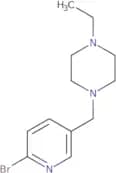
CAS:<p>Versatile small molecule scaffold</p>Formula:C11H20IN3OPurity:Min. 95%Molecular weight:337.2 g/mol1-((6-Bromopyridin-3-yl)methyl)-4-ethylpiperazine
CAS:<p>Versatile small molecule scaffold</p>Formula:C12H18BrN3Purity:Min. 95%Molecular weight:284.2 g/mol3-Methyl-6-(4,4,5,5-tetramethyl-1,3,2-dioxaborolan-2-yl)-[1,2,4]triazolo[4,3-a]pyridine
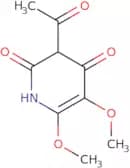
CAS:<p>Versatile small molecule scaffold</p>Formula:C13H18BN3O2Purity:Min. 95%Molecular weight:259.11 g/mol3-Acetyl-4-hydroxy-5,6-dimethoxy-1,2-dihydropyridin-2-one
CAS:<p>Versatile small molecule scaffold</p>Formula:C9H11NO5Purity:Min. 95%Molecular weight:213.19 g/mol1-[4-(Ethoxycarbonyl)piperidine-1-carbonyl]-3-methyl-1H-imidazol-3-ium iodide
CAS:<p>Versatile small molecule scaffold</p>Formula:C13H20IN3O3Purity:Min. 95%Molecular weight:393.22 g/molSodium 6-(3-((2-carboxylato-4-oxo-4H-chromen-5-yl)oxy)-2-hydroxypropoxy)-4-oxo-4H-chromene-2-carboxylate
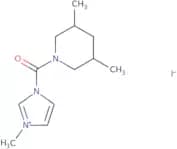
CAS:<p>Versatile small molecule scaffold</p>Formula:C23H14Na2O11Purity:Min. 95%Molecular weight:512.3 g/mol1-(3,5-Dimethylpiperidine-1-carbonyl)-3-methyl-1H-imidazol-3-ium iodide
CAS:<p>Versatile small molecule scaffold</p>Formula:C12H20IN3OPurity:Min. 95%Molecular weight:349.21 g/mol1-[Butyl(ethyl)carbamoyl]-3-methyl-1H-imidazol-3-ium iodide
CAS:<p>Versatile small molecule scaffold</p>Formula:C11H20IN3OPurity:Min. 95%Molecular weight:337.2 g/mol1-[4-(Methoxycarbonyl)piperidine-1-carbonyl]-3-methyl-1H-imidazol-3-ium iodide
CAS:<p>Versatile small molecule scaffold</p>Formula:C12H18IN3O3Purity:Min. 95%Molecular weight:379.19 g/mol1-(Dibutylcarbamoyl)-3-methyl-1H-imidazol-3-ium iodide
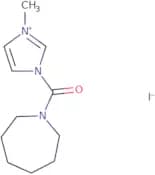
CAS:<p>Versatile small molecule scaffold</p>Formula:C13H24IN3OPurity:Min. 95%Molecular weight:365.25 g/mol1-(Azepane-1-carbonyl)-3-methyl-1H-imidazol-3-ium iodide
CAS:<p>Versatile small molecule scaffold</p>Formula:C11H18IN3OPurity:Min. 95%Molecular weight:335.18 g/mol[(5-tert-Butyl-1H-pyrazol-3-yl)methyl]methylaminedihydrochloride
CAS:<p>Versatile small molecule scaffold</p>Formula:C9H19Cl2N3Purity:Min. 95%Molecular weight:240.18 g/mol1-{[(3-Fluorophenyl)methyl](methyl)carbamoyl}-3-methyl-1H-imidazol-3-ium iodide
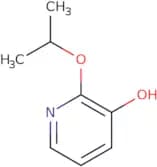
CAS:<p>Versatile small molecule scaffold</p>Formula:C13H15FIN3OPurity:Min. 95%Molecular weight:375.18 g/mol2-(Propan-2-yloxy)pyridin-3-ol
CAS:<p>Versatile small molecule scaffold</p>Formula:C8H11NO2Purity:Min. 95%Molecular weight:153.18 g/mol3-(2,2,2-Trifluoroethyl)-3-azabicyclo[3.1.0]hexane-6-carboxylic acid
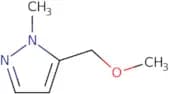
CAS:<p>Versatile small molecule scaffold</p>Formula:C8H10F3NO2Purity:Min. 95%Molecular weight:209.17 g/mol5-(Methoxymethyl)-1-methyl-1H-pyrazole
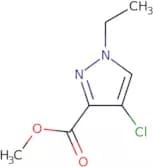
CAS:<p>Versatile small molecule scaffold</p>Formula:C6H10N2OPurity:Min. 95%Molecular weight:126.16 g/molMethyl 4-chloro-1-ethyl-1H-pyrazole-3-carboxylate
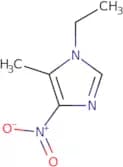
CAS:<p>Versatile small molecule scaffold</p>Formula:C7H9ClN2O2Purity:Min. 95%Molecular weight:188.61 g/mol1-Ethyl-5-methyl-4-nitro-1H-imidazole
CAS:<p>Versatile small molecule scaffold</p>Formula:C6H9N3O2Purity:Min. 95%Molecular weight:155.15 g/mol7-Oxabicyclo[2.2.1]heptane-2-carbohydrazide
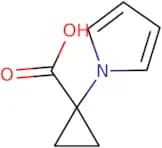
CAS:<p>Versatile small molecule scaffold</p>Formula:C7H12N2O2Purity:Min. 95%Molecular weight:156.18 g/mol1-(1H-Pyrrol-1-yl)cyclopropane-1-carboxylic acid
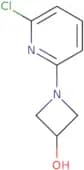
CAS:<p>Versatile small molecule scaffold</p>Formula:C8H9NO2Purity:Min. 95%Molecular weight:151.16 g/mol1-(6-Chloropyridin-2-yl)azetidin-3-ol
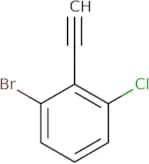
CAS:<p>Versatile small molecule scaffold</p>Formula:C8H9ClN2OPurity:Min. 95%Molecular weight:184.62 g/mol1-Bromo-3-chloro-2-ethynylbenzene
CAS:<p>Versatile small molecule scaffold</p>Formula:C8H4BrClPurity:Min. 95%Molecular weight:215.47 g/mol2-(Bromomethyl)-7-oxabicyclo[2.2.1]heptane
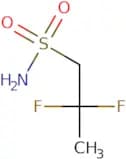
CAS:<p>Versatile small molecule scaffold</p>Formula:C7H11BrOPurity:Min. 95%Molecular weight:191.07 g/mol2,2-Difluoropropane-1-sulfonamide
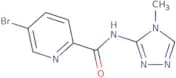
CAS:<p>Versatile small molecule scaffold</p>Formula:C3H7F2NO2SPurity:Min. 95%Molecular weight:159.16 g/mol5-Bromo-N-(4-methyl-4H-1,2,4-triazol-3-yl)pyridine-2-carboxamide
CAS:<p>Versatile small molecule scaffold</p>Formula:C9H8BrN5OPurity:Min. 95%Molecular weight:282.1 g/mol6-(But-3-yn-1-yl)-6-azaspiro[3.5]nonane
CAS:<p>Versatile small molecule scaffold</p>Formula:C12H19NPurity:Min. 95%Molecular weight:177.3 g/mol3H-Imidazo[4,5-c]pyridin-2-ol
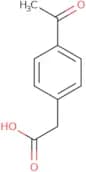
CAS:<p>3H-Imidazo[4,5-c]pyridin-2-ol is a reactive compound that is used in the synthesis of other compounds. It can be generated by the nitration of aniline and subsequent reduction of the nitro group to an amine. This product can also be synthesized from 2-aminoethane and ethyl acetate. 3H-Imidazo[4,5-c]pyridin-2-ol reacts with nucleophiles such as chloride ions to form carboxylates, which leads to its use in assays for amines. It has been shown that this product dimerizes in the presence of water or alcohols and reacts with primary amines to form tetrones.</p>Formula:C6H5N3OPurity:Min. 95%Molecular weight:135.12 g/mol4-Acetylphenylacetic acid
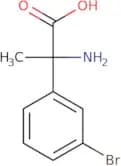
CAS:<p>4-Acetylphenylacetic acid (4APA) is a chemical compound that is used as a catalyst. It is also used to functionalize carboxyl groups and to catalyze the reaction between ethylenediamine and citric acid, forming flavylium ion. 4APA can be used in the functionalization of amines with acetic anhydride and N,N-dimethylformamide to form acetic acid amides. 4APA can also be used for the synthesis of citric acids by coupling acetaldehyde with citric acid.</p>Formula:C10H10O3Purity:Min. 95%Color and Shape:PowderMolecular weight:178.18 g/mol2-Amino-2-(3-bromophenyl)propanoic acid
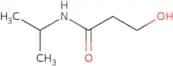
CAS:<p>Versatile small molecule scaffold</p>Formula:C9H10BrNO2Purity:Min. 95%Molecular weight:244.09 g/mol3-Hydroxy-N-(propan-2-yl)propanamide
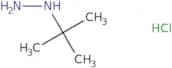
CAS:<p>Versatile small molecule scaffold</p>Formula:C6H13NO2Purity:Min. 95%Molecular weight:131.17 g/mol1-(tert-Butyl)hydrazine hydrochloride
CAS:<p>1-(tert-Butyl)hydrazine hydrochloride is a chemical with the molecular formula CHN. It is a white solid that is soluble in water, acetone, and ethanol. 1-(tert-Butyl)hydrazine hydrochloride reacts with trifluoroacetic acid to produce methyl ethyl amines. The compound has been shown to be effective in wastewater treatment. 1-(tert-Butyl)hydrazine hydrochloride will react with an amine to form a regiospecific unsymmetrical pyrazole. This reaction takes place in the presence of hydrochloric acid and produces nitrogen gas as a byproduct.</p>Formula:C4H12N2·HClPurity:Min. 95%Molecular weight:124.61 g/molDimethyl 3-thiaadipate
CAS:<p>Dimethyl 3-thiaadipate is a monomer that is used in the synthesis of polybenzimidazole sulfide. This monomer has been shown to be an anti-oxidant, which may be due to its ability to scavenge free radicals. Dimethyl 3-thiaadipate can also act as a membrane stabilizer and has thermal stability up to 300°C. Dimethyl 3-thiaadipate is highly soluble in most solvents and has low volatility. It is not a reactive compound and does not form hydrogen bonds with other molecules, making it an unreactive reagent.</p>Formula:C7H12O4SPurity:Min. 95%Molecular weight:192.23 g/mol4-Chloro-N-(2-hydroxyethyl)benzamide
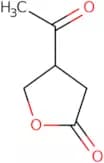
CAS:<p>4-Chloro-N-(2-hydroxyethyl)benzamide (4CBEA) is a dopamine uptake inhibitor that has been shown to inhibit the uptake of noradrenaline. It also inhibits apoptotic cell death in human liver cells, which may be due to its ability to induce cell cycle arrest and apoptosis. 4CBEA has been shown to have clinical efficacy in patients with Parkinson's disease, although it should not be used in conjunction with levodopa or other drugs that act on dopaminergic neurons. The affinity of 4CBEA for dopamine uptake sites is weaker than its affinity for noradrenaline uptake sites. It has been shown that 4CBEA binds to the amide group of proteins such as flavin adenine dinucleotide (FAD) and water molecule. Oxidases are enzymes that catalyze the oxidation of organic molecules and can lead to a decrease in the activity of 4CBEA, but this</p>Formula:C9H10ClNO2Purity:Min. 95%Molecular weight:199.63 g/mol4-Acetyloxolan-2-one
CAS:<p>Versatile small molecule scaffold</p>Formula:C6H8O3Purity:Min. 95%Molecular weight:128.13 g/mol3-Amino-4-methoxy-n,n-dimethyl-benzenesulfonamide
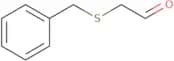
CAS:<p>Versatile small molecule scaffold</p>Formula:C9H14N2O3SPurity:Min. 95%Molecular weight:230.29 g/mol2-(Benzylsulfanyl)acetaldehyde
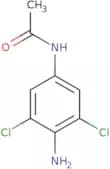
CAS:<p>Versatile small molecule scaffold</p>Formula:C9H10OSPurity:Min. 95%Molecular weight:166.24 g/molN-(4-Amino-3,5-dichlorophenyl)acetamide
CAS:<p>Versatile small molecule scaffold</p>Formula:C8H8Cl2N2OPurity:Min. 95%Molecular weight:219.06 g/mol4-(4-Chlorobenzenesulfonyl)phenol
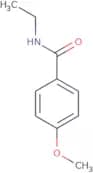
CAS:<p>4-(4-Chlorobenzenesulfonyl)phenol is a potassium salt that is used as an intermediate for the production of polymers. It is mainly used as a polymerization inhibitor and can be used in the production of polyurethane. 4-(4-Chlorobenzenesulfonyl)phenol has a melting point of about 95°C, and it is soluble in water, alcohols, ketones, ethers, chloroform, acetone, benzene, toluene and some other solvents. The molecular weight of 4-(4-chlorobenzenesulfonyl)phenol is 254.3 g/mol.</p>Formula:C12H9ClO3SPurity:Min. 95%Molecular weight:268.72 g/molN-Ethyl-4-methoxybenzamide
CAS:<p>Versatile small molecule scaffold</p>Formula:C10H13NO2Purity:Min. 95%Molecular weight:179.22 g/mol2-Chloro-N,N-diisopropylacetamide
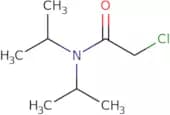
CAS:<p>2-Chloro-N,N-diisopropylacetamide is a quinoline derivative that has been shown to be a potent ligand for lanthanide metal ions. It has been used as a fluorescent probe for nitrate anions and shows constant fluorescence intensity over a wide range of pH values. 2-Chloro-N,N-diisopropylacetamide also exhibits luminescence properties and can be used as a sensor for amide anions. The compound has been shown to enhance the emission of lanthanide metal ions in the near infrared region when excited. 2-Chloro-N,N-diisopropylacetamide is also an efficient catalyst for desulfurization reactions.</p>Formula:C8H16ClNOPurity:Min. 95%Molecular weight:177.67 g/mol2-[(2,2-Dimethylpropyl)amino]ethan-1-ol
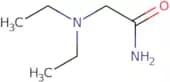
CAS:<p>Versatile small molecule scaffold</p>Formula:C7H17NOPurity:Min. 95%Molecular weight:131.22 g/mol2-(Diethylamino)acetamide
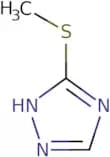
CAS:<p>2-(Diethylamino)acetamide is an aliphatic hydrocarbon that inhibits the replication of viruses. It also has anti-inflammatory activity and can be used to treat respiratory allergies, such as asthma and hay fever. 2-(Diethylamino)acetamide may be used as a scrubbing agent in the removal of pollutants from industrial emissions. The compound is stable at high temperatures and has been shown to inhibit the growth of bacteria by interfering with their respiration process. 2-(Diethylamino)acetamide also inhibits the production of monocarboxylic acids such as formic acid, acetic acid, and lactic acid in bacteria, which are important for their survival.</p>Formula:C6H14N2OPurity:Min. 95%Molecular weight:130.19 g/mol3-(Methylthio)-4H-1,2,4-triazole
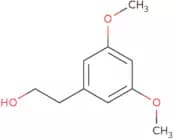
CAS:<p>3-(Methylthio)-4H-1,2,4-triazole is a compound that belongs to the class of triazoles. It is an insecticide with a broad spectrum of activity against coleoptera, diptera, and lepidoptera. 3-(Methylthio)-4H-1,2,4-triazole is also a solid catalyst for organic synthesis reactions. This compound has been shown to be capable of catalyzing the reaction time in solvents such as dimethylformamide. The tautomeric forms of 3-(methylthio)-4H-1,2,4-triazole are important for understanding the molecular mechanism and quantum theory of this molecule. The tautomers are classified into two groups based on the symmetry between them: meso compounds and racemic compounds.</p>Formula:C3H5N3SPurity:Min. 95%Molecular weight:115.16 g/mol2-(3,5-Dimethoxymethyl)ethanol
CAS:<p>2-(3,5-Dimethoxymethyl)ethanol is a chemical compound that has been shown to have antiproliferative effects. It inhibits the growth of cells by binding to and inhibiting the activation of growth factor receptors. 2-(3,5-Dimethoxymethyl)ethanol is also a nitro derivative that can be reduced with sodium borohydride to form 3,5-dimethoxyacetophenone. This conversion is facilitated by the presence of an acid catalyst such as hydrochloric acid or acetic acid. The synthesis of 2-(3,5-dimethoxymethyl)ethanol has been shown to follow a functional theory whereby the reactant is converted into the product in one step with no intermediate compounds formed.</p>Formula:C10H14O3Purity:Min. 95%Molecular weight:182.22 g/molN-(2-Nitrophenyl)formamide
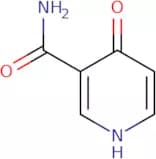
CAS:<p>N-(2-Nitrophenyl)formamide is a nucleophilic carbonyl compound that can be used as a catalyst in reactions involving acid solutions. It is activated by the addition of an acid or base, and can react with anions to form covalent bonds. The nucleophilicity of N-(2-nitrophenyl)formamide is high and it has been shown to be unreactive towards anhydrous ammonia gas. This molecule also reacts with nucleophiles to form new molecules, which are then either stable or unstable. The rate of reaction for this compound is determined by the kinetics and the concentration of the reactants.</p>Formula:C7H6N2O3Purity:Min. 95%Molecular weight:166.13 g/mol4-Hydroxypyridine-3-carboxamide
CAS:<p>4-Hydroxypyridine-3-carboxamide is an amide of 4-hydroxypyridine and carbamic acid. It is a metabolite of tryptophan that is synthesized in the liver. Deficient patients may have elevated levels of this compound, which can cause renal transplantation failure. 4-Hydroxypyridine-3-carboxamide is produced by the oxidation of pyridones and aldehydes. This compound also produces carbon dioxide and water when it reacts with chloride ions, producing carbonation. In addition, this molecule contains a ribonucleotide at its C4 position, which can be hydrolyzed to form ammonium ion and ribonucleotide monophosphate (AMP). Ammonolysis then converts the molecule into a pyridine ring.</p>Formula:C6H6N2O2Purity:Min. 95%Molecular weight:138.12 g/mol7a-Phenyl-hexahydro-1H-pyrrolo[1,2-a]imidazolidin-5-one
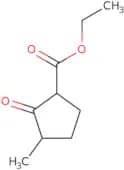
CAS:<p>Versatile small molecule scaffold</p>Formula:C12H14N2OPurity:Min. 95%Molecular weight:202.25 g/molEthyl 3-methyl-2-oxocyclopentane-1-carboxylate
CAS:<p>The major product of the reaction is tert-butyl 3-methyl-2-oxocyclopentane-1-carboxylate, which can be converted to ethyl 3-methylcyclohexane carboxylate by treatment with lithium aluminium hydride. The reaction proceeds in high yield and provides a convenient route to the cyclic ketone, quinine. The synthesis of the axial fragment is also enantioselective, giving an almost racemic mixture of both diastereoisomers. The tertiary alcohol functions as a nucleophile in this process.</p>Formula:C9H14O3Purity:Min. 95%Molecular weight:170.21 g/mol2-[(2-{2-[(2-Hydroxyethyl)sulfanyl]ethoxy}ethyl)sulfanyl]ethan-1-ol
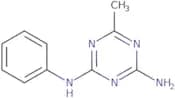
CAS:<p>Versatile small molecule scaffold</p>Formula:C8H18O3S2Purity:Min. 95%Molecular weight:226.4 g/mol6-Methyl-2-N-phenyl-1,3,5-triazine-2,4-diamine
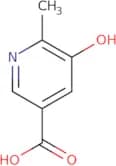
CAS:<p>Versatile small molecule scaffold</p>Formula:C10H11N5Purity:Min. 95%Molecular weight:201.23 g/mol5-Hydroxy-6-methylpyridine-3-carboxylic acid
CAS:<p>5-Hydroxy-6-methylpyridine-3-carboxylic acid (5HMP) is a water soluble compound that is used as a substrate binding agent in enzymatic reactions. 5HMP is dissolved in water, then added to the substrate and enzyme mixture. The reaction mechanism of 5HMP is via ring opening, which is catalyzed by the enzyme flavin reductase. The kinetic constants for this reaction are Km=0.2 mM and Vmax=32 nmol/min/mg of protein. 5HMP has been shown to have antibiotic properties against P. aeruginosa, an opportunistic pathogen that can cause serious infections in people with cystic fibrosis or chronic obstructive pulmonary disease. 5HMP also binds to tetracycline, preventing the drug from binding to ribosomes and inhibiting protein synthesis.</p>Formula:C7H7NO3Purity:Min. 95%Molecular weight:153.14 g/molMethyl 2-(1-oxo-1,2,3,4-tetrahydronaphthalen-2-yl)acetate
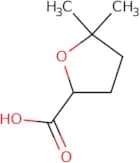
CAS:<p>Versatile small molecule scaffold</p>Formula:C13H14O3Purity:Min. 95%Molecular weight:218.2 g/mol5,5-Dimethyltetrahydrofuran-2-carboxylic acid
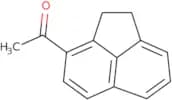
CAS:<p>Versatile small molecule scaffold</p>Formula:C7H12O3Purity:Min. 95%Molecular weight:144.17 g/mol1-(1,2-Dihydroacenaphthylen-3-yl)ethan-1-one
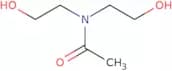
CAS:<p>Versatile small molecule scaffold</p>Formula:C14H12OPurity:Min. 95%Molecular weight:196.24 g/molN,N-Bis(2-hydroxyethyl)acetamide
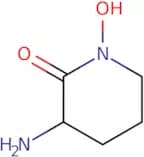
CAS:<p>N,N-Bis(2-hydroxyethyl)acetamide is a nonionic surfactant which is used as an emulsifier and dispersing agent. It is often used in detergents, textile processing, papermaking, and for the production of cosmetics. N,N-Bis(2-hydroxyethyl)acetamide has been shown to suppress the growth of Candida parapsilosis and other microbial strains. It also inhibits the production of fluconazole by wild-type Candida albicans. N,N-Bis(2-hydroxyethyl)acetamide may be used in conjunction with benzyl alcohol as an antifungal agent for topical application.br>br>NMR spectra have shown that this molecule has acetal groups that can copolymerize with other molecules. These acetal groups are resistant to degradation by enzymes such as beta-glucosidase and alpha-amylase.</p>Formula:C6H13NO3Purity:Min. 95%Molecular weight:147.17 g/mol3-Amino-1-hydroxypiperidin-2-one
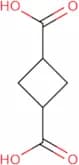
CAS:<p>Versatile small molecule scaffold</p>Formula:C5H10N2O2Purity:Min. 95%Molecular weight:130.15 g/moltrans-Cyclobutane-1,3-dicarboxylic acid
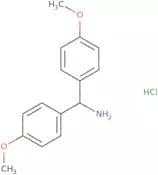
CAS:<p>Trans-cyclobutane-1,3-dicarboxylic acid (trans-CBA) is a cycloalkane that is used as a reagent in organic synthesis. It has been shown to react with malonic acid to form a 1:1 adduct, which can be used for the synthesis of other cycloalkanes. Trans-CBA can also react with sodium salt of furfural to form the corresponding trans-CBA sodium salt. This reaction system has been optimized and is suitable for laboratory use. The molecular formula for trans-CBA is C4H4O4. The molecular weight of trans-CBA is 104.12 g/mol. Pharmacokinetic studies have been done on rats and dogs, showing that this molecule can be absorbed orally and distributed throughout the body quickly. Trans-CBA has a half life of 3 hours when administered orally, with an elimination half life of 6 hours when given intravenously.</p>Formula:C6H8O4Purity:Min. 95%Molecular weight:144.13 g/molBis(4-methoxyphenyl)methanamine hydrochloride
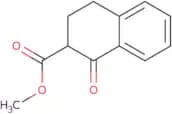
CAS:<p>Versatile small molecule scaffold</p>Formula:C15H18ClNO2Purity:Min. 95%Molecular weight:279.76 g/molMethyl 1-Oxo-1,2,3,4-tetrahydronaphthalene-2-carboxylate
CAS:<p>Methyl 1-oxo-1,2,3,4-tetrahydronaphthalene-2-carboxylate is a reactive intermediate that can be used in the synthesis of aldehydes. It is prepared by reacting benzaldehyde with formaldehyde and methanol in a three-step process. Methyl 1-oxo-1,2,3,4-tetrahydronaphthalene-2-carboxylate is stable at room temperature and has been shown to form stable complexes with racemic or optically pure alcohols. The product can react with aniline under acid catalysis to form imines.</p>Formula:C12H12O3Purity:Min. 95%Molecular weight:204.23 g/molDiaminophosphoryloxybenzene
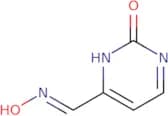
CAS:<p>Diaminophosphoryloxybenzene (DAPOB) is a chemical that can be used to measure the uptake of creatine kinase in human serum. It has been shown to form a complex with the enzyme, which is then transported into cells. The uptake of creatine kinase in the cells can be measured by measuring the amount of DAPOB that is released from the inside of the cells and into the surrounding medium. In order to use this technique, a collagen gel needs to be prepared and placed around the sample containing DAPOB. The kinetic properties of DAPOB are determined by observing how quickly it reacts with other chemicals in solution. DAPOB also forms intramolecular hydrogen bonds with itself, which may affect its ability to react with other compounds. X-ray crystal structures have revealed that DAPOB binds to protein synthesis enzymes such as polymerase chain reaction (PCR). These interactions are thought to be important for understanding how DAPOB affects protein</p>Formula:C6H9N2O2PPurity:Min. 95%Color and Shape:PowderMolecular weight:172.12 g/mol2-Oxo-1,2-dihydro-4-pyrimidinecarbaldehyde oxime
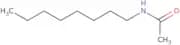
CAS:<p>Versatile small molecule scaffold</p>Formula:C5H5N3O2Purity:Min. 95%Molecular weight:139.11 g/molN-Octylacetamide
CAS:<p>N-Octylacetamide is an organic solvent that is used in the acetylation of fatty acids and amines. The extraction yield is increased by adding hydrochloric acid to the aqueous phase. It is also used as a cationic surfactant in coatings. N-Octylacetamide can be used for analytical methods, such as element analysis and vitro assays. This compound has been shown to react with technetium, forming a stable technetium-N-octylacetamide complex.</p>Formula:C10H21NOPurity:Min. 95%Molecular weight:171.28 g/mol
![7-Bromo-2-(trifluoromethyl)imidazo[1,2-a]pyridine](/_next/image/?url=https%3A%2Fstatic.cymitquimica.com%2Fproducts%2F3D%2Fthumb-webp%2FGYB97890.webp&w=3840&q=75)


![[2-(4-Chlorophenyl)-1,3-thiazol-5-yl]methanamine](/_next/image/?url=https%3A%2Fstatic.cymitquimica.com%2Fproducts%2F3D%2Fthumb-webp%2FGYB98091.webp&w=3840&q=75)
![methyl 8-chloroimidazo[1,2-a]pyrazine-2-carboxylate](/_next/image/?url=https%3A%2Fstatic.cymitquimica.com%2Fproducts%2F3D%2Fthumb-webp%2FGYB98134.webp&w=3840&q=75)
![8-Bromo-2-(trifluoromethyl)imidazo[1,2-a]pyridine](/_next/image/?url=https%3A%2Fstatic.cymitquimica.com%2Fproducts%2F3D%2Fthumb-webp%2FGYB98168.webp&w=3840&q=75)


![1-[(4-Fluorophenyl)methyl]pyrrolidine-3-carboxylic acid hydrochloride](/_next/image/?url=https%3A%2Fstatic.cymitquimica.com%2Fproducts%2F3D%2Fthumb-webp%2FGYC75197.webp&w=3840&q=75)


![N-[(2-Fluorophenyl)methyl]-5-methyl-[1,2,4]triazolo[1,5-a]pyrimidin-7-amine](/_next/image/?url=https%3A%2Fstatic.cymitquimica.com%2Fproducts%2F3D%2Fthumb-webp%2FGZA13600.webp&w=3840&q=75)



![1-[(tert-Butoxy)carbonyl]-4-(2-methoxyethyl)piperidine-4-carboxylic acid](/_next/image/?url=https%3A%2Fstatic.cymitquimica.com%2Fproducts%2F3D%2Fthumb-webp%2FGZB15830.webp&w=3840&q=75)
![2-[(2-Hydroxy-4-methoxyphenyl)formamido]pentanedioic acid](/_next/image/?url=https%3A%2Fstatic.cymitquimica.com%2Fproducts%2F3D%2Fthumb-webp%2FGZB21768.webp&w=3840&q=75)





![7-Hydroxy-5-methyl-2H-benzo[b][1,4]oxazin-3(4H)-one](/_next/image/?url=https%3A%2Fstatic.cymitquimica.com%2Fproducts%2F3D%2Fthumb-webp%2FGZB75012.webp&w=3840&q=75)


![3-Methyl-6-(4,4,5,5-tetramethyl-1,3,2-dioxaborolan-2-yl)-[1,2,4]triazolo[4,3-a]pyridine](/_next/image/?url=https%3A%2Fstatic.cymitquimica.com%2Fproducts%2F3D%2Fthumb-webp%2FGZB93447.webp&w=3840&q=75)
![1-[4-(Ethoxycarbonyl)piperidine-1-carbonyl]-3-methyl-1H-imidazol-3-ium iodide](/_next/image/?url=https%3A%2Fstatic.cymitquimica.com%2Fproducts%2F3D%2Fthumb-webp%2FGZB95231.webp&w=3840&q=75)
![1-[Butyl(ethyl)carbamoyl]-3-methyl-1H-imidazol-3-ium iodide](/_next/image/?url=https%3A%2Fstatic.cymitquimica.com%2Fproducts%2F3D%2Fthumb-webp%2FGZB95575.webp&w=3840&q=75)
![1-[4-(Methoxycarbonyl)piperidine-1-carbonyl]-3-methyl-1H-imidazol-3-ium iodide](/_next/image/?url=https%3A%2Fstatic.cymitquimica.com%2Fproducts%2F3D%2Fthumb-webp%2FGZB95611.webp&w=3840&q=75)

![[(5-tert-Butyl-1H-pyrazol-3-yl)methyl]methylaminedihydrochloride](/_next/image/?url=https%3A%2Fstatic.cymitquimica.com%2Fproducts%2F3D%2Fthumb-webp%2FGZB96165.webp&w=3840&q=75)
carbamoyl}-3-methyl-1H-imidazol-3-ium iodide](/_next/image/?url=https%3A%2Fstatic.cymitquimica.com%2Fproducts%2F3D%2Fthumb-webp%2FGZB96734.webp&w=3840&q=75)
![3-(2,2,2-Trifluoroethyl)-3-azabicyclo[3.1.0]hexane-6-carboxylic acid](/_next/image/?url=https%3A%2Fstatic.cymitquimica.com%2Fproducts%2F3D%2Fthumb-webp%2FGZC04075.webp&w=3840&q=75)
![7-Oxabicyclo[2.2.1]heptane-2-carbohydrazide](/_next/image/?url=https%3A%2Fstatic.cymitquimica.com%2Fproducts%2F3D%2Fthumb-webp%2FGZC11130.webp&w=3840&q=75)
![2-(Bromomethyl)-7-oxabicyclo[2.2.1]heptane](/_next/image/?url=https%3A%2Fstatic.cymitquimica.com%2Fproducts%2F3D%2Fthumb-webp%2FGZC58378.webp&w=3840&q=75)
![6-(But-3-yn-1-yl)-6-azaspiro[3.5]nonane](/_next/image/?url=https%3A%2Fstatic.cymitquimica.com%2Fproducts%2F3D%2Fthumb-webp%2FGZC85420.webp&w=3840&q=75)
![3H-Imidazo[4,5-c]pyridin-2-ol](/_next/image/?url=https%3A%2Fstatic.cymitquimica.com%2Fproducts%2F3D%2Fthumb-webp%2FHAA39768.webp&w=3840&q=75)




![2-[(2,2-Dimethylpropyl)amino]ethan-1-ol](/_next/image/?url=https%3A%2Fstatic.cymitquimica.com%2Fproducts%2F3D%2Fthumb-webp%2FHAA40368.webp&w=3840&q=75)
![7a-Phenyl-hexahydro-1H-pyrrolo[1,2-a]imidazolidin-5-one](/_next/image/?url=https%3A%2Fstatic.cymitquimica.com%2Fproducts%2F3D%2Fthumb-webp%2FHAA42162.webp&w=3840&q=75)
![2-[(2-{2-[(2-Hydroxyethyl)sulfanyl]ethoxy}ethyl)sulfanyl]ethan-1-ol](/_next/image/?url=https%3A%2Fstatic.cymitquimica.com%2Fproducts%2F3D%2Fthumb-webp%2FHAA42602.webp&w=3840&q=75)