Building Blocks
This section contains fundamental products for the synthesis of organic and biological compounds. Building blocks are the essential starting materials used to construct complex molecules through various chemical reactions. They play a critical role in drug discovery, material science, and chemical research. At CymitQuimica, we offer a diverse range of high-quality building blocks to support your innovative research and industrial projects, ensuring you have the essential components for successful synthesis.
Subcategories of "Building Blocks"
- Boronic Acids & Boronic Acid Derivatives(5,756 products)
- Chiral Building Blocks(1,242 products)
- Hydrocarbon Building Blocks(6,093 products)
- Organic Building Blocks(60,525 products)
Found 195536 products of "Building Blocks"
Sort by
Purity (%)
0
100
|
0
|
50
|
90
|
95
|
100
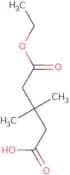
5-Ethoxy-3,3-dimethyl-5-oxopentanoic acid
CAS:<p>Versatile small molecule scaffold</p>Formula:C9H16O4Purity:Min. 95%Molecular weight:188.22 g/mol4-(Diethylcarbamoyl)benzoic acid
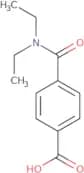
CAS:<p>4-(Diethylcarbamoyl)benzoic acid is a compound that has a carboxylic acid group and a chloro group. It can be used to synthesize functionalized derivatives, including sulfones, sulfonamides, ureas, and amides. The functional groups on the molecule are complementary to each other. This allows for the introduction of substituents with different reactivities, such as esters and amines. These different reactive groups allow for the synthesis of compounds with varied properties.</p>Formula:C12H15NO3Purity:Min. 95%Molecular weight:221.26 g/molAG 1295
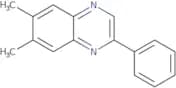
CAS:<p>AG 1295 is a growth factor that binds to the tyrosine kinase receptor. It is also a potent inhibitor of the receptor activity of PDGF-BB and other tyrosine kinases. AG 1295 was originally developed as an eluting agent for protein purification, but has been shown to have therapeutic potential for vascular injury repair and angiogenesis. The drug can be used in vitro to inhibit the phosphorylation of PDGF-BB by blocking its binding to the PDGF-BB receptor.</p>Formula:C16H14N2Purity:Min. 95%Molecular weight:234.3 g/molUndec-1-en-6-one
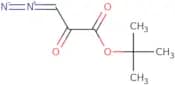
CAS:<p>Undec-1-en-6-one is a product of the reaction between pentenyl and hexanal. It can be synthesized by the carbonylation of calvine. This compound has been used to produce other products, such as alkaloids, which are important for medicinal and pharmaceutical applications.</p>Formula:C11H20OPurity:Min. 95%Molecular weight:168.3 g/moltert-Butyl 3-diazo-2-oxopropanoate
CAS:<p>Versatile small molecule scaffold</p>Formula:C7H10N2O3Purity:Min. 95%Molecular weight:170.17 g/mol2-(([(tert-Butoxy)carbonyl]amino)methyl)-1,3-thiazole-4-carboxylic acid
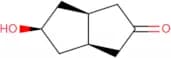
CAS:<p>Versatile small molecule scaffold</p>Formula:C10H14N2O4SPurity:Min. 95%Molecular weight:258.3 g/molrac-(3aR,5R,6aS)-5-Hydroxy-octahydropentalen-2-one
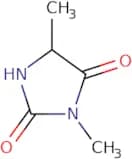
CAS:<p>Versatile small molecule scaffold</p>Formula:C8H12O2Purity:Min. 95%Molecular weight:140.2 g/mol(5R)-3,5-Dimethylimidazolidine-2,4-dione
CAS:<p>Versatile small molecule scaffold</p>Formula:C5H8N2O2Purity:Min. 95%Molecular weight:128.1 g/mol(5S)-3,5-Dimethylimidazolidine-2,4-dione
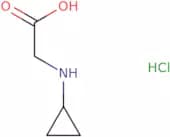
CAS:<p>Versatile small molecule scaffold</p>Formula:C5H8N2O2Purity:Min. 95%Molecular weight:128.1 g/mol2-(cyclopropylamino)acetic acid hydrochloride
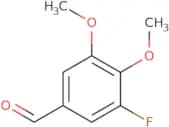
CAS:<p>2-(Cyclopropylamino)acetic acid hydrochloride is a hydrogen atom donor and an antibacterial agent. It is used in pharmaceutical preparations for the treatment of bacterial infections. 2-(Cyclopropylamino)acetic acid hydrochloride inhibits the growth of bacteria by inhibiting the synthesis of their cell walls, which are made up of polymers of amino acids linked to each other by peptide bonds. This compound has been shown to be effective against Gram-negative bacteria, such as Acinetobacter baumannii and Pseudomonas aeruginosa, as well as some Gram-positive bacteria, such as Staphylococcus aureus. 2-(Cyclopropylamino)acetic acid hydrochloride also has an inhibitory effect on phosphoric acid bacteria and can be used to synthesize α-amino acids.</p>Formula:C5H10ClNO2Purity:Min. 95%Molecular weight:151.59 g/mol3-Fluoro-4,5-Dimethoxybenzaldehyde
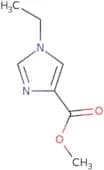
CAS:<p>Versatile small molecule scaffold</p>Formula:C9H9FO3Purity:Min. 95%Molecular weight:184.16 g/molMethyl 1-ethyl-1H-imidazole-4-carboxylate
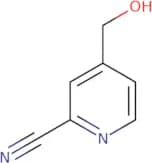
CAS:<p>Versatile small molecule scaffold</p>Formula:C7H10N2O2Purity:Min. 95%Molecular weight:154.17 g/mol4-(Hydroxymethyl)picolinonitrile
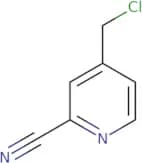
CAS:<p>Versatile small molecule scaffold</p>Formula:C7H6N2OPurity:Min. 95%Molecular weight:134.14 g/mol4-(chloromethyl)pyridine-2-carbonitrile
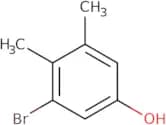
CAS:<p>Versatile small molecule scaffold</p>Formula:C7H5N2ClPurity:Min. 95%Molecular weight:152.58 g/mol3-Bromo-4,5-dimethylphenol
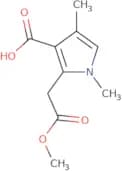
CAS:<p>3-Bromo-4,5-dimethylphenol is a bromination product of the structurally related compound 4,5-dimethylphenol. The electrophilic character of 3-bromo-4,5-dimethylphenol is due to the bromine atom. It can be used as an intermediate for the synthesis of other chemicals. Bromination of 4,5-dimethylphenol takes place in two steps: first a nucleophilic attack by bromide ion on one of the carbon atoms in 4,5-dimethylphenol and then an electrophilic substitution reaction between the bromine atom and one of the hydroxyl groups. The mechanisms for these reactions are shown below:</p>Formula:C8H9BrOPurity:Min. 95%Molecular weight:201.06 g/mol2-(2-Methoxy-2-oxoethyl)-1,4-dimethyl-1H-pyrrole-3-carboxylic acid
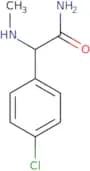
CAS:<p>Versatile small molecule scaffold</p>Formula:C10H13NO4Purity:Min. 95%Molecular weight:211.21 g/mol2-(4-Chlorophenyl)-2-(methylamino)acetamide
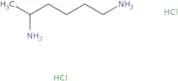
CAS:<p>Versatile small molecule scaffold</p>Formula:C9H11ClN2OPurity:Min. 95%Molecular weight:198.65 g/molHexane-1,5-diamine dihydrochloride
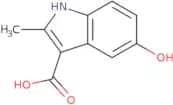
CAS:<p>Versatile small molecule scaffold</p>Formula:C6H18Cl2N2Purity:Min. 95%Molecular weight:189.12 g/mol5-Hydroxy-2-methyl-1H-indole-3-carboxylic acid
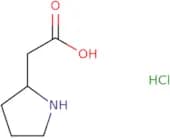
CAS:<p>Versatile small molecule scaffold</p>Formula:C10H9NO3Purity:Min. 95%Molecular weight:191.18 g/molPyrrolidin-2-yl-acetic acid hydrochloride
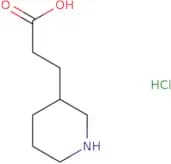
CAS:<p>Versatile small molecule scaffold</p>Formula:C6H11NO2·HClPurity:Min. 95%Molecular weight:165.62 g/mol3-(3-Piperidine)propionic acid hcl
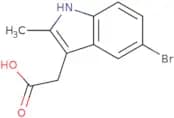
CAS:<p>Versatile small molecule scaffold</p>Formula:C8H16ClNO2Purity:Min. 95%Molecular weight:193.67 g/mol2-(5-bromo-2-methyl-1H-indol-3-yl)acetic acid
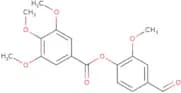
CAS:<p>Versatile small molecule scaffold</p>Formula:C11H10BrNO2Purity:Min. 95%Molecular weight:268.1 g/mol4-Formyl-2-methoxyphenyl 3,4,5-trimethoxybenzoate
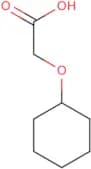
CAS:<p>Versatile small molecule scaffold</p>Formula:C18H18O7Purity:Min. 95%Molecular weight:346.3 g/mol2-(Cyclohexyloxy)acetic acid
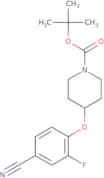
CAS:<p>2-(Cyclohexyloxy)acetic acid is a synthetic organic compound that has the chemical formula CH2OCH2COCH2OH. It is an acid catalyst with a pK of 1.6, and it can be used to catalyze the reaction between sodium carbonate and cyclohexanol. 2-(Cyclohexyloxy)acetic acid is also used as a solid catalyst in the conversion of ethyl diazoacetate to phenyl acetic acid. It has been shown to be effective for wastewater treatment, as well as for removal of nitrogen from wastewater. 2-(Cyclohexyloxy)acetic acid has been found to be toxic to aquatic organisms at relatively low concentrations, so care should be taken if this substance is released into the environment.</p>Formula:C8H14O3Purity:Min. 95%Molecular weight:158.2 g/moltert-Butyl 4-(4-cyano-2-fluorophenoxy)piperidine-1-carboxylate
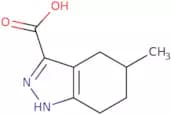
CAS:<p>Versatile small molecule scaffold</p>Formula:C17H21FN2O3Purity:Min. 95%Molecular weight:320.36 g/mol5-Methyl-4,5,6,7-tetrahydro-1H-indazole-3-carboxylic acid
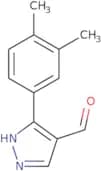
CAS:<p>Versatile small molecule scaffold</p>Formula:C9H12N2O2Purity:Min. 95%Molecular weight:180.2 g/mol3-(3,4-Dimethylphenyl)-1H-pyrazole-4-carbaldehyde
CAS:<p>Versatile small molecule scaffold</p>Formula:C12H12N2OPurity:Min. 95%Molecular weight:200.24 g/mol3-[4-(Propan-2-yl)phenyl]-1H-pyrazole-4-carbaldehyde
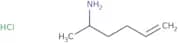
CAS:<p>Versatile small molecule scaffold</p>Formula:C13H14N2OPurity:Min. 95%Molecular weight:214.26 g/molHex-5-en-2-amine hydrochloride
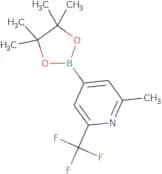
CAS:<p>Versatile small molecule scaffold</p>Formula:C6H14ClNPurity:Min. 95%Molecular weight:135.6 g/mol2-Methyl-4-(4,4,5,5-tetramethyl-1,3,2-dioxaborolan-2-yl)-6-(trifluoromethyl)pyridine
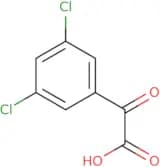
CAS:<p>Versatile small molecule scaffold</p>Formula:C13H17BF3NO2Purity:Min. 95%Molecular weight:287.09 g/mol2-(3,5-Dichlorophenyl)-2-oxoacetic acid
CAS:<p>Versatile small molecule scaffold</p>Formula:C8H4Cl2O3Purity:Min. 95%Molecular weight:219.02 g/mol2-[(4-Chlorophenyl)methyl]benzaldehyde
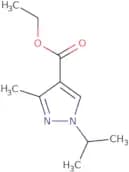
CAS:<p>Versatile small molecule scaffold</p>Formula:C14H11ClOPurity:Min. 95%Molecular weight:230.69 g/molEthyl 3-methyl-1-(propan-2-yl)-1H-pyrazole-4-carboxylate
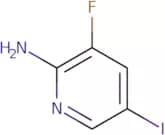
CAS:<p>Versatile small molecule scaffold</p>Formula:C10H16N2O2Purity:Min. 95%Molecular weight:196.25 g/mol3-fluoro-5-iodopyridin-2-amine
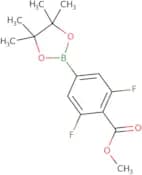
CAS:<p>Versatile small molecule scaffold</p>Formula:C5H4FIN2Purity:Min. 95%Molecular weight:238 g/molMethyl 2,6-difluoro-4-(4,4,5,5-tetramethyl-1,3,2-dioxaborolan-2-yl)benzoate
CAS:<p>Versatile small molecule scaffold</p>Formula:C14H17BF2O4Purity:Min. 95%Molecular weight:298.09 g/mol2-{1-[(tert-Butoxy)carbonyl]-2,3-dihydro-1H-indol-3-yl}acetic acid
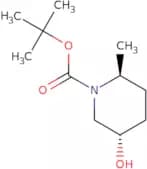
CAS:<p>Versatile small molecule scaffold</p>Formula:C15H19NO4Purity:Min. 95%Molecular weight:277.31 g/mol1-Boc-(2S,5S)-5-hydroxy-2-methylpiperidine ee
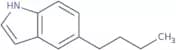
CAS:<p>Versatile small molecule scaffold</p>Formula:C11H21NO3Purity:Min. 95%Molecular weight:215.29 g/mol5-Butyl-1H-indole
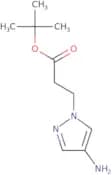
CAS:<p>Versatile small molecule scaffold</p>Formula:C12H15NPurity:Min. 95%Molecular weight:173.25 g/moltert-Butyl 3-(4-amino-1H-pyrazol-1-yl)propanoate
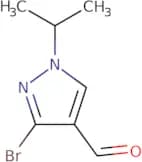
CAS:<p>Versatile small molecule scaffold</p>Formula:C10H17N3O2Purity:Min. 95%Molecular weight:211.26 g/mol3-Bromo-1-(propan-2-yl)-1H-pyrazole-4-carbaldehyde
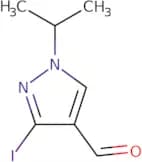
CAS:<p>Versatile small molecule scaffold</p>Formula:C7H9BrN2OPurity:Min. 95%Molecular weight:217.06 g/mol3-Iodo-1-(propan-2-yl)-1H-pyrazole-4-carbaldehyde
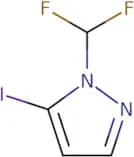
CAS:<p>Versatile small molecule scaffold</p>Formula:C7H9IN2OPurity:Min. 95%Molecular weight:264.06 g/mol1-(Difluoromethyl)-5-iodo-1H-pyrazole
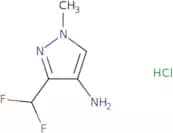
CAS:<p>Versatile small molecule scaffold</p>Formula:C4H3F2IN2Purity:Min. 95%Molecular weight:243.98 g/mol3-(Difluoromethyl)-1-methyl-1H-pyrazol-4-amine hydrochloride
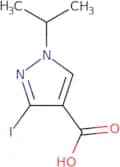
CAS:<p>Versatile small molecule scaffold</p>Formula:C5H8ClF2N3Purity:Min. 95%Molecular weight:183.59 g/mol3-Iodo-1-(propan-2-yl)-1H-pyrazole-4-carboxylic acid
CAS:<p>Versatile small molecule scaffold</p>Formula:C7H9IN2O2Purity:Min. 95%Molecular weight:280.06 g/mol3-Chloropyridine-2-sulfonamide
CAS:<p>3-Chloropyridine-2-sulfonamide is an insecticide. It can be used as an insecticidal agent to control a variety of pests, such as cockroaches, ants, and flea larvae. This chemical is effective against a wide range of pests and does not have any adverse effects on humans or animals when used in accordance with directions. 3-Chloropyridine-2-sulfonamide is a sulfonamide that inhibits the activity of cholinesterase enzymes. It also has some effect on the nervous system.</p>Formula:C5H5ClN2O2SPurity:Min. 95%Molecular weight:192.62 g/mol2-Methyl-1H-1,3-benzodiazol-7-amine
CAS:<p>Versatile small molecule scaffold</p>Formula:C8H9N3Purity:Min. 95%Molecular weight:147.18 g/mol{3-[(tert-Butyldimethylsilyl)oxy]phenyl}methanol
CAS:<p>Versatile small molecule scaffold</p>Formula:C13H22O2SiPurity:Min. 95%Molecular weight:238.4 g/mol{2-[(tert-Butyldimethylsilyl)oxy]phenyl}methanol
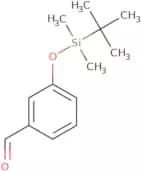
CAS:<p>Versatile small molecule scaffold</p>Formula:C13H22O2SiPurity:Min. 95%Molecular weight:238.4 g/mol3-tert-Butyldimethylsilyloxybenzaldehyde
CAS:<p>3-tert-Butyldimethylsilyloxybenzaldehyde is a synthetic opioid that has been used in the screening of opioid receptor targets. It is soluble in organic solvents, such as chloroform and ether, with a melting point of about -30°C. 3-tert-Butyldimethylsilyloxybenzaldehyde has been shown to have analgesic activity in mice at low doses. The analgesic effect is due to stimulation of μ opioid receptors. In addition, this compound also has the ability to inhibit amide formation with low temperatures. 3-tert-Butyldimethylsilyloxybenzaldehyde can be synthesized by alkylation or derivatization of benzyl alcohol or benzyl chloride. It can also be obtained through the condensation of 2,6-dimethylaniline with acetone followed by reduction with lithium aluminum hydride or sodium borohydride.</p>Formula:C13H20O2SiPurity:Min. 95%Molecular weight:236.38 g/molMethyl 2-(1-oxo-2,3-dihydro-1H-isoindol-2-yl)acetate
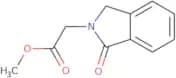
CAS:<p>Versatile small molecule scaffold</p>Formula:C11H11NO3Purity:Min. 95%Molecular weight:205.21 g/mol1-Methyl-1H-pyrazolo[3,4-d]pyridazin-4-amine
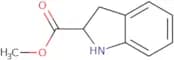
CAS:<p>Versatile small molecule scaffold</p>Formula:C6H7N5Purity:Min. 95%Molecular weight:149.15 g/molmethyl (S)-indoline-2-carboxylate hydrochloride
CAS:<p>Methyl (S)-indoline-2-carboxylate hydrochloride is a lipase inhibitor that belongs to the class of antibiotics. It inhibits the lipid acylase by reversibly binding to the enzyme and blocking the esterification reaction. The interaction between methyl (S)-indoline-2-carboxylate hydrochloride and the enzyme is reversible, which allows for a kinetic analysis of the inhibition. Methyl (S)-indoline-2-carboxylate hydrochloride has been shown to inhibit cyclic nitroindole synthesis in vitro, but not in vivo. This compound also interacts with o-glycosylations, as it can be seen with its optical rotation. Methyl (S)-indoline-2-carboxylate hydrochloride has been shown to have an effect on allyl carbonates, which have similar ring structures as glycosides.</p>Formula:C10H12ClNO2Purity:Min. 95%Molecular weight:213.66 g/mol5-Methanesulfonyl-1-methyl-1H-1,2,3,4-tetrazole
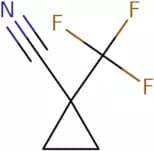
CAS:<p>5-Methanesulfonyl-1-methyl-1H-1,2,3,4-tetrazole is a ligand that binds to metal cations and forms coordination complexes. It is used in the synthesis of polymeric materials with magnetic properties. 5MSMT was found to be soluble in chloroform or dichloromethane. The compound has been shown to have magnetic properties and x-ray diffraction analysis showed that it has a crystal structure.</p>Formula:C3H6N4O2SPurity:Min. 95%Molecular weight:162.17 g/mol1-(Trifluoromethyl)cyclopropane-1-carbonitrile
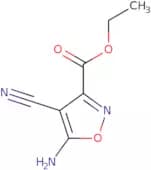
CAS:<p>Versatile small molecule scaffold</p>Formula:C5H4F3NPurity:Min. 95%Molecular weight:135.09 g/molEthyl 5-amino-4-cyanoisoxazole-3-carboxylate
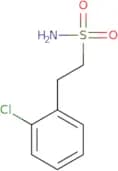
CAS:<p>Versatile small molecule scaffold</p>Formula:C7H7N3O3Purity:Min. 95%Molecular weight:181.15 g/mol2-(2-Chlorophenyl)ethane-1-sulfonamide
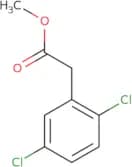
CAS:<p>Versatile small molecule scaffold</p>Formula:C8H10ClNO2SPurity:Min. 95%Molecular weight:219.69 g/molMethyl 2-(2,5-dichlorophenyl)acetate
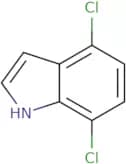
CAS:<p>Versatile small molecule scaffold</p>Formula:C9H8Cl2O2Purity:Min. 95%Molecular weight:219.06 g/mol4,7-Dichloro-1H-indole
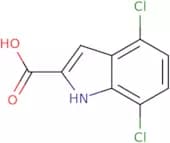
CAS:<p>4,7-Dichloro-1H-indole (4,7-DCI) is an indole that is obtained by the reaction of potassium with 3,4-dichloroaniline. The compound has been found to be a potent inhibitor of the growth of plants and algae. It has also been shown to inhibit the growth of bacteria by binding to their DNA and inhibiting transcription. This process prevents protein synthesis and leads to cell death. 4,7-DCI can be synthesized using zinc chloride as a catalyst. It reacts with potassium carbonate in an alkaline environment to form potassium chloride and 4,7-DCI.</p>Formula:C8H5NCl2Purity:Min. 95%Molecular weight:186.03 g/mol4,7-Dichloro-1H-indole-2-carboxylic acid
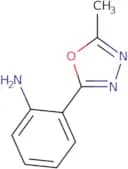
CAS:<p>Versatile small molecule scaffold</p>Formula:C9H5Cl2NO2Purity:Min. 95%Molecular weight:230.04 g/mol2-(5-Methyl-1,3,4-oxadiazol-2-yl)aniline
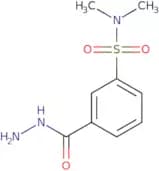
CAS:<p>Versatile small molecule scaffold</p>Formula:C9H9N3OPurity:Min. 95%Molecular weight:175.19 g/mol3-(Hydrazinecarbonyl)-N,N-dimethylbenzene-1-sulfonamide
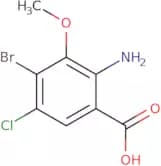
CAS:<p>Versatile small molecule scaffold</p>Formula:C9H13N3O3SPurity:Min. 95%Molecular weight:243.29 g/mol2-Amino-4-bromo-5-chloro-3-methoxybenzoic acid
CAS:<p>Versatile small molecule scaffold</p>Formula:C8H7BrClNO3Purity:Min. 95%Molecular weight:280.5 g/mol6-(tert-Butoxy)pyridin-2-amine
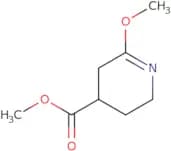
CAS:<p>Versatile small molecule scaffold</p>Formula:C9H14N2OPurity:Min. 95%Molecular weight:166.2 g/molMethyl 6-methoxy-2,3,4,5-tetrahydropyridine-4-carboxylate
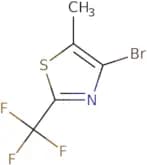
CAS:<p>Versatile small molecule scaffold</p>Formula:C8H13NO3Purity:Min. 95%Molecular weight:171.19 g/mol4-Bromo-5-methyl-2-(trifluoromethyl)-1,3-thiazole
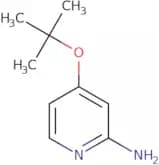
CAS:<p>Versatile small molecule scaffold</p>Formula:C5H3BrF3NSPurity:Min. 95%Molecular weight:246.05 g/mol4-(tert-Butoxy)pyridin-2-amine
CAS:<p>Versatile small molecule scaffold</p>Formula:C9H14N2OPurity:Min. 95%Molecular weight:166.22 g/mol4-[Ethyl({[(9H-fluoren-9-yl)methoxy]carbonyl})amino]butanoic acid
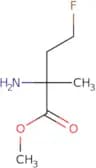
CAS:<p>Versatile small molecule scaffold</p>Formula:C21H23NO4Purity:Min. 95%Molecular weight:353.4 g/molMethyl 2-amino-4-fluoro-2-methylbutanoate
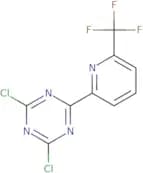
CAS:<p>Versatile small molecule scaffold</p>Formula:C6H12FNO2Purity:Min. 95%Molecular weight:149.16 g/mol2,4-Dichloro-6-(6-(trifluoromethyl)pyridin-2-yl)-1,3,5-triazine
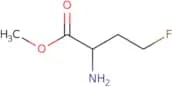
CAS:<p>Versatile small molecule scaffold</p>Formula:C9H3Cl2F3N4Purity:Min. 95%Molecular weight:295.04 g/molMethyl 2-amino-4-fluorobutanoate
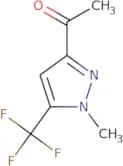
CAS:<p>Versatile small molecule scaffold</p>Formula:C5H10FNO2Purity:Min. 95%Molecular weight:135.14 g/mol1-(1-Methyl-5-(trifluoromethyl)-1H-pyrazol-3-yl)ethanone
CAS:<p>Versatile small molecule scaffold</p>Formula:C7H7F3N2OPurity:Min. 95%Molecular weight:192.14 g/mol5-{[(9H-Fluoren-9-ylmethoxy)carbonyl]amino}-1-benzothiophene-2-carboxylic acid
CAS:<p>Versatile small molecule scaffold</p>Formula:C24H17NO4SPurity:Min. 95%Molecular weight:415.5 g/mol(1R,5S)-2-Boc-2-azabicyclo[3.1.0]hexane-1-carboxylic acid
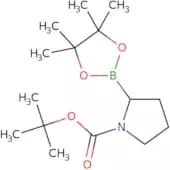
CAS:<p>Versatile small molecule scaffold</p>Formula:C11H17NO4Purity:Min. 95%Molecular weight:227.26 g/molN-Boc H-Boroproline Pinacol
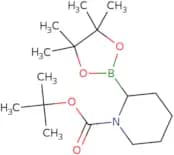
CAS:<p>Versatile small molecule scaffold</p>Formula:C15H28BNO4Purity:Min. 95%Molecular weight:297.2 g/mol1-Boc-piperidine-2-boronic Acid Pinacol Ester
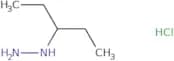
CAS:<p>Versatile small molecule scaffold</p>Formula:C16H30BNO4Purity:Min. 95%Molecular weight:311.23 g/mol(Pentan-3-yl)hydrazine hydrochloride
CAS:<p>Versatile small molecule scaffold</p>Formula:C5H15ClN2Purity:Min. 95%Molecular weight:138.64 g/mol4-Chloroimidazo[1,5-a]quinoxaline
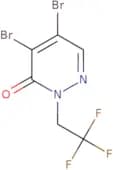
CAS:<p>Versatile small molecule scaffold</p>Formula:C10H6ClN3Purity:Min. 95%Molecular weight:203.63 g/mol4,5-Dibromo-2-(2,2,2-trifluoroethyl)-2,3-dihydropyridazin-3-one
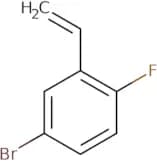
CAS:<p>Versatile small molecule scaffold</p>Formula:C6H3Br2F3N2OPurity:Min. 95%Molecular weight:335.9 g/mol5-Bromo-2-fluorostyrene
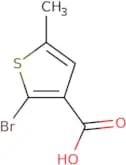
CAS:<p>Versatile small molecule scaffold</p>Formula:C8H6BrFPurity:Min. 95%Molecular weight:201.04 g/mol2-bromo-5-methylthiophene-3-carboxylic acid
CAS:<p>Versatile small molecule scaffold</p>Formula:C6H5BrO2SPurity:Min. 95%Molecular weight:221.1 g/mol3-{[(2-Methylpropoxy)carbonyl]amino}naphthalene-2-carboxylic acid
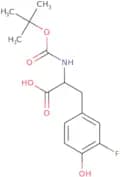
CAS:<p>Versatile small molecule scaffold</p>Formula:C16H17NO4Purity:Min. 95%Molecular weight:287.31 g/molBoc-3-fluoro-DL-tyrosine
CAS:<p>Versatile small molecule scaffold</p>Formula:C14H18FNO5Purity:Min. 95%Molecular weight:299.3 g/mol[4-Bromo-2-(trifluoromethyl)phenyl]hydrazine hydrochloride
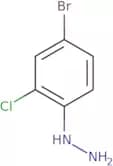
CAS:<p>Versatile small molecule scaffold</p>Formula:C7H7BrClF3N2Purity:Min. 95%Molecular weight:291.49 g/mol(4-Bromo-2-chlorophenyl)hydrazine
CAS:<p>Versatile small molecule scaffold</p>Formula:C6H6BrClN2Purity:Min. 95%Molecular weight:221.48 g/molMethyl 5H,6H,7H-cyclopenta[b]pyridine-2-carboxylate
CAS:<p>Versatile small molecule scaffold</p>Formula:C10H11NO2Purity:Min. 95%Molecular weight:177.2 g/mol5H,6H,7H-Cyclopenta[b]pyridin-2-ylmethanamine
CAS:<p>Versatile small molecule scaffold</p>Formula:C9H12N2Purity:Min. 95%Molecular weight:148.2 g/mol[1-(1,3-Dioxaindan-5-yl)cyclopropyl]methanamine
CAS:<p>Versatile small molecule scaffold</p>Formula:C11H13NO2Purity:Min. 95%Molecular weight:191.23 g/mol[(6-chloropyridin-3-yl)methyl]dimethylamine
CAS:<p>Versatile small molecule scaffold</p>Formula:C8H11ClN2Purity:Min. 95%Molecular weight:170.64 g/mol2-Methyl-6-(morpholin-4-yl)pyridin-3-amine
CAS:<p>Versatile small molecule scaffold</p>Formula:C10H15N3OPurity:Min. 95%Molecular weight:193.25 g/mol4-[2-(Dimethylamino)ethoxy]-3-fluoroaniline
CAS:Controlled Product<p>Versatile small molecule scaffold</p>Formula:C10H15FN2OPurity:Min. 95%Molecular weight:198.24 g/mol3-Fluoro-4-(2-methoxyethoxy)aniline
CAS:<p>Versatile small molecule scaffold</p>Formula:C9H12FNO2Purity:Min. 95%Molecular weight:185.2 g/mol2-(Difluoromethoxy)-6-fluorobenzonitrile
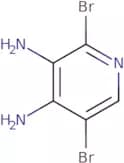
CAS:<p>Versatile small molecule scaffold</p>Formula:C8H4F3NOPurity:Min. 95%Molecular weight:187.12 g/mol2,5-Dibromo-3,4-pyridinediamine
CAS:<p>2,5-Dibromo-3,4-pyridinediamine (DBPD) is a heterocyclic compound that is used in the preparation of diazo compounds and as a precursor to 2,5-dichloropyridine. The reaction between DBPD and magnesium sulfate produces an unstable intermediate that can be stabilized by adding pyridine or quenching with diazole. This reaction process is used for the industrial production of 2,5-dichloropyridine.</p>Formula:C5H5Br2N3Purity:Min. 95%Molecular weight:266.92 g/mol2,5-dibromopyridin-4-amine
CAS:<p>Versatile small molecule scaffold</p>Formula:C5H4Br2N2Purity:Min. 95%Molecular weight:251.91 g/mol4-Iodo-2-methylbutan-2-ol
CAS:<p>4-Iodo-2-methylbutan-2-ol is an aliphatic compound that undergoes hydrogen atom transfer reactions. It has been shown to be a selective transfer agent for the synthesis of substituted alkenes in the presence of halides and hydroalkylation. 4-Iodo-2-methylbutan-2-ol is also an unactivated, catalytic system that can produce predictable reactions with electrophiles.</p>Formula:C5H11IOPurity:Min. 95%Molecular weight:214.04 g/mol2-Oxo-2,3-dihydro-1H-benzimidazole-5-carbonitrile
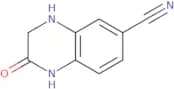
CAS:<p>Versatile small molecule scaffold</p>Formula:C8H5N3OPurity:Min. 95%Molecular weight:159.15 g/mol2-Oxo-1,2,3,4-tetrahydroquinoxaline-6-carbonitrile
CAS:<p>Versatile small molecule scaffold</p>Formula:C9H7N3OPurity:Min. 95%Molecular weight:173.17 g/mol5-(Dimethylamino)pyrazine-2-carbonitrile
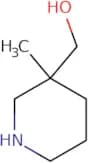
CAS:<p>Versatile small molecule scaffold</p>Formula:C7H8N4Purity:Min. 95%Molecular weight:148.17 g/mol(3-Methylpiperidin-3-yl)methanol
CAS:<p>Versatile small molecule scaffold</p>Formula:C7H15NOPurity:Min. 95%Molecular weight:129.2 g/mol6-Bromo-2-methyl-2H-1,4-benzoxazin-3(4H)-one
CAS:<p>Bromo-2-methyl-2H-1,4-benzoxazin-3(4H)-one is a chemical compound that can be used as an intermediate in organic synthesis. It is a protonated form of the base molecule and has a neutral pH. Bromo-2-methyl-2H-1,4-benzoxazin-3(4H)-one has been shown to damage the surface of skin and other tissues due to its ability to react with proteins and lipids. This chemical also damages cell membranes by disrupting their lipid bilayers, which leads to less efficient cellular function.</p>Formula:C9H8BrNO2Purity:Min. 95%Molecular weight:242.07 g/mol


![2-(([(tert-Butoxy)carbonyl]amino)methyl)-1,3-thiazole-4-carboxylic acid](/_next/image/?url=https%3A%2Fstatic.cymitquimica.com%2Fproducts%2F3D%2Fthumb-webp%2FWCA90480.webp&w=3840&q=75)
![3-[4-(Propan-2-yl)phenyl]-1H-pyrazole-4-carbaldehyde](/_next/image/?url=https%3A%2Fstatic.cymitquimica.com%2Fproducts%2F3D%2Fthumb-webp%2FWCB64674.webp&w=3840&q=75)
![2-[(4-Chlorophenyl)methyl]benzaldehyde](/_next/image/?url=https%3A%2Fstatic.cymitquimica.com%2Fproducts%2F3D%2Fthumb-webp%2FWCC53925.webp&w=3840&q=75)
![2-{1-[(tert-Butoxy)carbonyl]-2,3-dihydro-1H-indol-3-yl}acetic acid](/_next/image/?url=https%3A%2Fstatic.cymitquimica.com%2Fproducts%2F3D%2Fthumb-webp%2FWCC84322.webp&w=3840&q=75)
![{3-[(tert-Butyldimethylsilyl)oxy]phenyl}methanol](/_next/image/?url=https%3A%2Fstatic.cymitquimica.com%2Fproducts%2F3D%2Fthumb-webp%2FWDA01377.webp&w=3840&q=75)
![{2-[(tert-Butyldimethylsilyl)oxy]phenyl}methanol](/_next/image/?url=https%3A%2Fstatic.cymitquimica.com%2Fproducts%2F3D%2Fthumb-webp%2FWDA01379.webp&w=3840&q=75)
![1-Methyl-1H-pyrazolo[3,4-d]pyridazin-4-amine](/_next/image/?url=https%3A%2Fstatic.cymitquimica.com%2Fproducts%2F3D%2Fthumb-webp%2FWDA01756.webp&w=3840&q=75)

![4-[Ethyl({[(9H-fluoren-9-yl)methoxy]carbonyl})amino]butanoic acid](/_next/image/?url=https%3A%2Fstatic.cymitquimica.com%2Fproducts%2F3D%2Fthumb-webp%2FWHC47830.webp&w=3840&q=75)
![5-{[(9H-Fluoren-9-ylmethoxy)carbonyl]amino}-1-benzothiophene-2-carboxylic acid](/_next/image/?url=https%3A%2Fstatic.cymitquimica.com%2Fproducts%2F3D%2Fthumb-webp%2FWHC85988.webp&w=3840&q=75)
![(1R,5S)-2-Boc-2-azabicyclo[3.1.0]hexane-1-carboxylic acid](/_next/image/?url=https%3A%2Fstatic.cymitquimica.com%2Fproducts%2F3D%2Fthumb-webp%2FWHC94755.webp&w=3840&q=75)
![4-Chloroimidazo[1,5-a]quinoxaline](/_next/image/?url=https%3A%2Fstatic.cymitquimica.com%2Fproducts%2F3D%2Fthumb-webp%2FWIA02538.webp&w=3840&q=75)
![3-{[(2-Methylpropoxy)carbonyl]amino}naphthalene-2-carboxylic acid](/_next/image/?url=https%3A%2Fstatic.cymitquimica.com%2Fproducts%2F3D%2Fthumb-webp%2FWIA07099.webp&w=3840&q=75)
![[4-Bromo-2-(trifluoromethyl)phenyl]hydrazine hydrochloride](/_next/image/?url=https%3A%2Fstatic.cymitquimica.com%2Fproducts%2F3D%2Fthumb-webp%2FWIA09241.webp&w=3840&q=75)
![Methyl 5H,6H,7H-cyclopenta[b]pyridine-2-carboxylate](/_next/image/?url=https%3A%2Fstatic.cymitquimica.com%2Fproducts%2F3D%2Fthumb-webp%2FWIA13708.webp&w=3840&q=75)
![5H,6H,7H-Cyclopenta[b]pyridin-2-ylmethanamine](/_next/image/?url=https%3A%2Fstatic.cymitquimica.com%2Fproducts%2F3D%2Fthumb-webp%2FWIA13723.webp&w=3840&q=75)
![[1-(1,3-Dioxaindan-5-yl)cyclopropyl]methanamine](/_next/image/?url=https%3A%2Fstatic.cymitquimica.com%2Fproducts%2F3D%2Fthumb-webp%2FWIA13744.webp&w=3840&q=75)
![[(6-chloropyridin-3-yl)methyl]dimethylamine](/_next/image/?url=https%3A%2Fstatic.cymitquimica.com%2Fproducts%2F3D%2Fthumb-webp%2FWIA14631.webp&w=3840&q=75)

![4-[2-(Dimethylamino)ethoxy]-3-fluoroaniline](/_next/image/?url=https%3A%2Fstatic.cymitquimica.com%2Fproducts%2F3D%2Fthumb-webp%2FWIA19882.webp&w=3840&q=75)