Building Blocks
This section contains fundamental products for the synthesis of organic and biological compounds. Building blocks are the essential starting materials used to construct complex molecules through various chemical reactions. They play a critical role in drug discovery, material science, and chemical research. At CymitQuimica, we offer a diverse range of high-quality building blocks to support your innovative research and industrial projects, ensuring you have the essential components for successful synthesis.
Subcategories of "Building Blocks"
- Boronic Acids & Boronic Acid Derivatives(5,756 products)
- Chiral Building Blocks(1,242 products)
- Hydrocarbon Building Blocks(6,093 products)
- Organic Building Blocks(60,522 products)
Found 195533 products of "Building Blocks"
Sort by
Purity (%)
0
100
|
0
|
50
|
90
|
95
|
100
3-Hydrazinopyridine 2HCl
CAS:<p>3-Hydrazinopyridine 2HCl is a carboxylic acid that occurs naturally in the form of its dihydrochloride salt, 3-hydrazinopyridine dihydrochloride. It is an intermediate in the synthesis of numerous other compounds and has been used as a precursor to maleic anhydride. 3-Hydrazinopyridine 2HCl is also a reagent for the production of dialkylated or chlorinated derivatives. The hydrolysis of 3-hydrazinopyridine 2HCl with sodium hydroxide yields acetic acid, which can be oxidized to form maleic acid, or reduced to form acrylonitrile.</p>Formula:C5H9Cl2N3Purity:Min. 95%Color and Shape:PowderMolecular weight:182.05 g/molTetrahydro-1,3-dimethyl-1H-pyrimidin-2-one
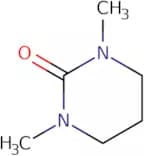
CAS:<p>Tetrahydro-1,3-dimethyl-1H-pyrimidin-2-one is an organic compound that is used in the synthesis of drugs and other organic compounds. It can be synthesized by reacting hydrogen fluoride with nitrogen atoms. Tetrahydro-1,3-dimethyl-1H-pyrimidin-2-one can form stable complexes with iodination reactions and has been used to prepare monoclonal antibodies. This molecule has also been studied using x-ray crystal structures and titration calorimetry to investigate its reaction mechanism. The light emission from this molecule is due to intermolecular hydrogen bonding between a pyrazole ring and a phenyl ring.</p>Formula:C6H12N2OPurity:Min. 98%Color and Shape:Colorless Slightly Yellow Clear LiquidMolecular weight:128.17 g/mol5-Chloroisatoic Anhydride
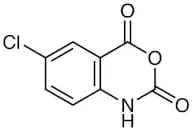
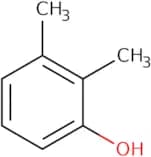
CAS:Formula:C8H4ClNO3Purity:>98.0%(T)(HPLC)Color and Shape:White to Light yellow powder to crystalMolecular weight:197.571-Hydroxy-2,3-dimethylbenzene
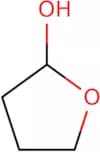
CAS:<p>1-Hydroxy-2,3-dimethylbenzene (1,2-DMB) is a chemical compound that is used as an industrial catalyst. It has been shown to be an efficient catalyst for the treatment of wastewater, and has been studied in the removal of nitrogen from industrial gases. 1,2-DMB has also been found to be active against bacteria such as Pseudomonas aeruginosa and Staphylococcus aureus. This compound reacts with copper ions to form an organometallic complex, which then reacts with trifluoroacetic acid in an organic solution to form an aldehyde group.</p>Formula:C8H10OPurity:Min. 95%Color and Shape:Off-White PowderMolecular weight:122.16 g/mol2-Hydroxytetrahydrofuran
CAS:<p>2-Hydroxytetrahydrofuran is a glycol ether that is used as an agent in various industrial processes. It has been shown to be a potent inhibitor of the Mcl-1 protein, which plays an important role in apoptosis. 2-Hydroxytetrahydrofuran has also been found to be effective against autoimmune diseases and metabolic disorders such as diabetes mellitus. In addition, this chemical is known for its ability to inhibit the oxidation of hydrogen peroxide by acting as a catalyst. 2-Hydroxytetrahydrofuran is used in wastewater treatment because it prevents the formation of nitrates and nitrites from nitrogen-containing organic compounds. This chemical can also cause eye disorders if it penetrates the cornea or other parts of the eye.</p>Formula:C4H8O2Purity:Min. 95 Area-%Color and Shape:Colorless Clear LiquidMolecular weight:88.11 g/mol2,3,3-Trimethyl-3H-benzo[e]indole
CAS:<p>2,3,3-Trimethyl-3H-benzo[e]indole is a reactive molecule that has been shown to be an effective treatment for cervical cancer. It can be used in conjunction with monoclonal antibodies that have been designed to target the acidic protonation sites on the surface of cervical cancer cells. This active form binds to the site and emits fluorescence when illuminated with a laser, which can then be detected by a confocal microscope. This technique can also be used for the diagnosis of other cancers. 2,3,3-Trimethyl-3H-benzo[e]indole is not toxic to human serum as it does not react with this type of tissue.</p>Formula:C15H15NPurity:Min. 98 Area-%Color and Shape:PowderMolecular weight:209.29 g/mol6-Hydroxyquinoline-(1H)-2-one
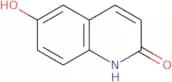
CAS:<p>6-Hydroxyquinoline-(1H)-2-one is an organic compound that has been shown to inhibit the uptake of carbostyril by bacterial cells. This inhibition causes increased uptake of xanthurenic acid and anthranilic acid, which are two compounds that are found in wastewater treatment. 6-Hydroxyquinoline-(1H)-2-one may be a potential anticancer agent, as it inhibits the growth of astroglia cells and bladder cancer cells. It also reacts with acylation reactions to form quinolinic acid, which has been shown to have anticancer effects.</p>Formula:C9H7NO2Purity:Min. 95%Color and Shape:White SolidMolecular weight:161.16 g/mol4-Chloro-6-iodoquinazoline
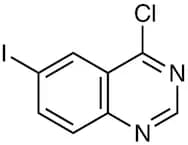
CAS:Formula:C8H4ClIN2Purity:>98.0%(GC)Color and Shape:White to Yellow to Green powder to crystalMolecular weight:290.492,2':6',2'-Terpyridine-4,4',4''-tricarboxylic acid
CAS:<p>2,2':6',2'-Terpyridine-4,4',4''-tricarboxylic acid is a model system that has been studied for its photochemical properties. In this molecule, there are two carboxyl groups and three pyridine rings. The molecule can be protonated easily by electron transfer to form a positively charged anion. This allows the molecule to undergo electron transfer reactions with other molecules in the presence of radiation or visible light. 2,2':6',2'-Terpyridine-4,4',4''-tricarboxylic acid absorbs photons easily and then transfers its energy to a nearby electron. The electron then passes on the energy to another molecule, which can produce a photocurrent.</p>Formula:C18H11N3O6Purity:Min. 95%Color and Shape:Brown SolidMolecular weight:365.3 g/mol2-Amino-5(6)-benzoylbenzimidazole
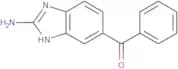
CAS:<p>2-Amino-5(6)-benzoylbenzimidazole is an antifilarial and anthelmintic drug that belongs to the benzimidazole class. It is used for the treatment of filarial infections in humans, including lymphatic filariasis, which is caused by worms transmitted by mosquitoes. 2-Amino-5(6)-benzoylbenzimidazole has low bioavailability due to its poor water solubility. The drug can be administered orally or topically and is metabolized in the liver. The metabolites are excreted in urine as glucuronides and sulfates.</p>Formula:C14H11N3OPurity:Min. 95%Color and Shape:PowderMolecular weight:237.26 g/mol4-Chloro-1-butene
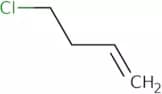
CAS:<p>4-Chloro-1-butene is an organic compound with the chemical formula CHCl. It is a colorless gas that has a sweet odor. It is a monomethylated ethane and can be produced by reacting ethylene with chlorine in the presence of a catalyst. The reaction requires high temperatures and pressures, but yields a constant amount of 4-chloro-1-butene per mole of ethylene. This compound exists as two stereoisomers, cis and trans, which are both present in significant amounts in the gas phase. Elimination reactions occur when trans 4-chloro-1-butene reacts with chloride to form 1,2-dichloroethane or chloroform. Functional groups on the molecule include chlorides and carbons. Covid®19 Pandemic is a polyatomic molecule consisting of four carbon atoms and one chlorine atom that has been shown to have low energy and thus may be able to penetrate protective surfaces such as</p>Formula:C4H7ClPurity:Min. 95%Color and Shape:Colorless Clear LiquidMolecular weight:90.55 g/molBis(2-bromoethyl) Ether
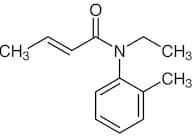
CAS:Formula:C4H8Br2OPurity:>98.0%(GC)Color and Shape:Colorless to Yellow clear liquidMolecular weight:231.92N-Ethyl-o-crotonotoluidide
CAS:Formula:C13H17NOPurity:>95.0%(GC)Color and Shape:Colorless to Light yellow to Light orange clear liquidMolecular weight:203.292'-Hydroxy-4',5'-dimethylacetophenone
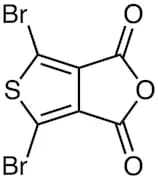
CAS:<p>2'-Hydroxy-4',5'-dimethylacetophenone is a chalcone that is structurally similar to the catecholamines. It has been shown to inhibit bacterial growth in vitro and in vivo and to be active against both Gram-positive and Gram-negative bacteria. This compound also has antiviral activity, inhibiting the replication of herpes simplex virus type 1 (HSV-1) in cell culture. 2'-Hydroxy-4',5'-dimethylacetophenone also has antibacterial activity against Trichophyton mentagrophytes and Melaleuca alternifolia, an Australian tree that produces a range of bioactive compounds with antimicrobial properties. 2'-Hydroxy-4',5'-dimethylacetophenone binds to the enzyme phosphodiesterase, blocking the conversion of cyclic adenosine monophosphate (cAMP) into its inactive form cAMP hydrolysis product (cAMP). Inhibition of this enzyme</p>Formula:C10H12O2Purity:Min. 95%Color and Shape:Off-White To Yellow SolidMolecular weight:164.2 g/mol2,5-Dibromo-3,4-thiophenedicarboxylic Anhydride
CAS:Formula:C6Br2O3SPurity:>98.0%(GC)Color and Shape:Light yellow to Brown to Dark green powder to crystalMolecular weight:311.934-(Hydroxymethyl)cyclohexanol
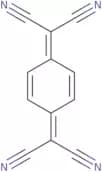
CAS:<p>4-(Hydroxymethyl)cyclohexanol is a versatile building block that can be used in the synthesis of complex compounds. This chemical has been shown to have a high degree of purity and is a useful intermediate or reaction component for many different reactions. It is also an excellent scaffold for synthesizing other organic molecules.</p>Formula:C7H14O2Purity:Min. 95%Color and Shape:Clear To White To Off-White SolidMolecular weight:130.18 g/mol7,7,8,8-Tetracyanoquinodimethane
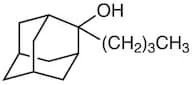
CAS:<p>7,7,8,8-Tetracyanoquinodimethane is a quinoid compound that is used as an analytical chemical reagent. It has been shown to be a powerful reducing agent and can be used in the determination of trace amounts of metals. 7,7,8,8-Tetracyanoquinodimethane also reacts with cationic surfactants and hydroxyl groups to form stable compounds. The nitrogen atoms in this molecule are capable of multiple transfer reactions with other molecules.br>br> <br>The redox potentials of this substance are negative and it has been shown to have the ability to transport pharmaceutical preparations across cell membranes. Boron nitride (BN) has been shown to stabilize the structure of 7,7,8,8-tetracyanoquinodimethane by forming strong hydrogen bonds between the BN and hydroxyl groups on this molecule.</p>Formula:C12H4N4Purity:Min. 95%Color and Shape:Yellow To Green Or Brown SolidMolecular weight:204.19 g/mol2-Butyl-2-adamantanol
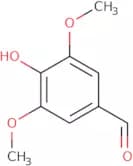
CAS:Formula:C14H24OPurity:>98.0%(GC)Color and Shape:White to Almost white powder to crystalMolecular weight:208.354-Hydroxy-3,5-dimethoxybenzaldehyde
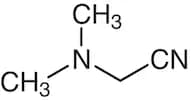
CAS:<p>4-Hydroxy-3,5-dimethoxybenzaldehyde (4HMB) is a phenolic compound that can be obtained from lignin. 4HMB is the precursor in the synthesis of vanillin, which has a characteristic flavor and odor. It is also used as an additive in perfumes. The compound is found naturally in plants, such as in the bark of cinchona trees, and can be extracted using preparative high performance liquid chromatography (HPLC). 4HMB can be synthesized by reacting p-hydroxybenzoic acid with 3,4,5-trimethoxybenzyl alcohol in the presence of copper chloride. This chemical reaction results in an aldehyde form of the molecule. 4HMB binds to sodium salts to form a water soluble salt that can be used for wastewater treatment. It also has antioxidant properties due to its ability to scavenge free radicals. The enzyme activities of 4HMB are not well</p>Formula:C9H10O4Purity:Min. 95%Color and Shape:Off-White PowderMolecular weight:182.17 g/mol(Dimethylamino)acetonitrile
CAS:Formula:C4H8N2Purity:>96.0%(GC)(T)Color and Shape:Colorless to Light yellow to Light orange clear liquidMolecular weight:84.12



![2,3,3-Trimethyl-3H-benzo[e]indole](/_next/image/?url=https%3A%2Fstatic.cymitquimica.com%2Fproducts%2F3D%2Fthumb-webp%2FFT29018.webp&w=3840&q=75)