Building Blocks
This section contains fundamental products for the synthesis of organic and biological compounds. Building blocks are the essential starting materials used to construct complex molecules through various chemical reactions. They play a critical role in drug discovery, material science, and chemical research. At CymitQuimica, we offer a diverse range of high-quality building blocks to support your innovative research and industrial projects, ensuring you have the essential components for successful synthesis.
Subcategories of "Building Blocks"
- Boronic Acids & Boronic Acid Derivatives(5,756 products)
- Chiral Building Blocks(1,242 products)
- Hydrocarbon Building Blocks(6,095 products)
- Organic Building Blocks(61,038 products)
Found 196817 products of "Building Blocks"
Sort by
Purity (%)
0
100
|
0
|
50
|
90
|
95
|
100
N-Tosyl-L-alanine 3-indoxyl ester
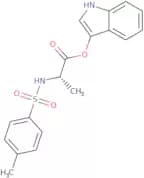
CAS:<p>N-Tosyl-L-alanine 3-indoxyl ester is applied specifically to urine samples. In the presence of leukocyte esterase, N-Tosyl-L-alanine-3-indoxyl ester will be hydrolysed to afford indoxyl. The sample is later exposed to diazonium salts that form azo dyes with the indoxyl. If sufficent indoxyl is formed, it indicates elevated numbers of white blood cells in the urine sample and this indicates that the host has contracted a urinary tract infection.</p>Formula:C18H18N2O4SPurity:Min. 98.0 Area-%Molecular weight:358.42 g/molN-Boc-4-piperidinemethanol
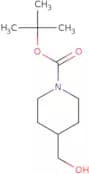
CAS:<p>N-Boc-4-piperidinemethanol is a curcumin analogue that binds to the epidermal growth factor receptor (EGFR) and prevents the binding of ligands. In vitro studies have shown that N-Boc-4-piperidinemethanol can inhibit tumor growth and induce apoptosis in cancer cells. The drug is also capable of inhibiting the proliferation of normal cells, which may be due to its ability to recruit EGFR from outside the cell membrane. This process triggers signaling events that lead to cell death.</p>Formula:C11H21NO3Purity:Min. 98 Area-%Color and Shape:PowderMolecular weight:215.29 g/mol2-Hydroxy-4-(pyrrolidin-1-yl)benzaldehyde
CAS:<p>Versatile small molecule scaffold</p>Formula:C11H13NO2Purity:Min. 95%Molecular weight:191.23 g/molBoc-L-alanine
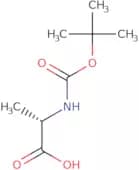
CAS:<p>Boc-L-alanine is an amino acid that is used as a building block in the synthesis of peptides and proteins. It has been shown to be stable at high temperatures and to form complexes with sephadex g-100. Boc-L-alanine has also been shown to have antimicrobial activity against Gram-positive bacteria, such as Staphylococcus aureus and Streptococcus pneumoniae, and Gram-negative bacteria, such as Pseudomonas aeruginosa. This compound can act as a hydrogen bond donor or acceptor depending on the other molecule it interacts with. Boc-L-alanine hydrochloride is an ester of boc-L-alanine and hydrochloric acid that has been activated by trifluoroacetic acid. The hydroxyl group on the molecule can react with hydrogen fluoride to form an ester hydrochloride.</p>Formula:C8H15NO4Purity:Min. 98 Area-%Color and Shape:White Off-White PowderMolecular weight:189.21 g/molDL-Arginine hydrochloride
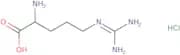
CAS:<p>L-Arginine is a conditionally essential amino acid that is used in the biosynthesis of proteins. It has been shown to inhibit the activity of specific enzymes, such as casein kinase II and phospholipase A2, which are involved in cellular processes. L-Arginine has been found to be beneficial for patients with type 2 diabetes mellitus who have poor glucose homeostasis and renal dysfunction. L-Arginine also enhances uptake of cationic surfactants by cells. L-Arginine HCl is an inorganic acid that may be used for pharmacokinetic studies in humans or animals.</p>Formula:C6H14N4O2•(HCl)xPurity:Min. 95%Color and Shape:PowderMolecular weight:174.2 g/mol4-Amino-2-phenylphenol
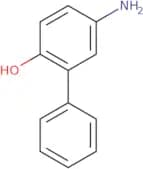
CAS:<p>Versatile small molecule scaffold</p>Formula:C12H11NOPurity:Min. 95%Color and Shape:PowderMolecular weight:185.22 g/molL-Arginine methyl ester dihydrochloride
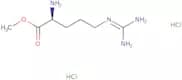
CAS:<p>L-Arginine methyl ester dihydrochloride is a bioactive form of L-arginine, which is an amino acid. L-Arginine methyl ester dihydrochloride has been shown to increase the production of cyclic guanosine monophosphate (cGMP) in mammalian cells. It also causes protein synthesis and cell division in C. neoformans and is a substrate for nitric oxide synthase (NOS). It has been shown to have opioid receptor activity and can act as an alpha-2 adrenergic agonist. L-Arginine methyl ester dihydrochloride can inhibit serine proteases by binding to their active site and preventing them from breaking down proteins such as collagen and elastin.</p>Formula:C7H16N4O2·2HClPurity:Min. 95%Color and Shape:White PowderMolecular weight:261.15 g/mol4-Acetylbenzoic acid
CAS:<p>4-Acetylbenzoic acid is a reactive functional group that is used to synthesize esters and amides. It has been shown to have anticancer activity in vitro, which may be due to the disruption of basic cellular proteins involved in DNA replication. 4-Acetylbenzoic acid is soluble in neutral pH and reacts with nucleophiles such as hydroxide ions or alcohols, forming alcohols or acetates respectively. The reaction mechanism for this compound is nucleophilic attack on the carbonyl carbon, followed by loss of water from the leaving group. Significant cytotoxicity has been observed in vitro at concentrations of 2mM and higher. This effect was particularly pronounced for cells exposed to radiation or treated with 4-acetylbenzoic acid before being exposed to radiation.</p>Formula:C9H8O3Purity:Min. 95%Color and Shape:White PowderMolecular weight:164.16 g/mol2-Amino-6-chlorobenzoic acid
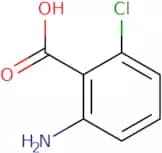
CAS:<p>2-Amino-6-chlorobenzoic acid is a reactive compound that can be used as an antimicrobial agent. It binds to the active site of enzymes and inhibits their function, thereby preventing bacterial growth. 2-Amino-6-chlorobenzoic acid also has acidic properties, which may be due to its ability to hydrolyze esters by acting as a dehydrating agent. This chemical is thermodynamically stable and can be synthesized from malonic acid or other compounds. The chemical reactions of 2-amino-6-chlorobenzoic acid can be followed by NMR spectroscopy, which provides the structural information about the molecule. The reaction mechanism for 2-amino-6-chlorobenzoic acid is similar to that of amides.</p>Formula:C7H6ClNO2Purity:Min. 95%Color and Shape:PowderMolecular weight:171.58 g/mol(1S)-3-(Methylsulfanyl)-1-(2H-1,2,3,4-tetrazol-5-yl)propan-1-amine
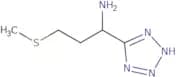
CAS:<p>Versatile small molecule scaffold</p>Formula:C5H11N5SPurity:Min. 95%Color and Shape:PowderMolecular weight:173.24 g/mol8-Bromoadenine
CAS:<p>8-Bromoadenine is a nucleophile that reacts with electrophiles to form adducts. 8-Bromoadenine has been shown to induce DNA strand breaks and oxidative damage in vitro, which may be due to its ability to react with DNA bases and form intramolecular hydrogen bonds. 8-Bromoadenine has also been shown to cause inflammatory bowel disease in mice by increasing the production of proinflammatory cytokines. 8-Bromoadenine induces Toll-like receptor 4 (TLR4) signaling, which leads to enhancement of radiation response. This drug can also be used as the monosodium salt for treating cancer, although it only has a limited number of sequences that can be synthesized.</p>Formula:C5H4BrN5Purity:Min. 95%Color and Shape:White PowderMolecular weight:214.02 g/mol3'-Bromoacetophenone
CAS:<p>3'-Bromoacetophenone is a synthetic chemical that has been synthesized for the purpose of studying molecular orbitals and vibrational spectra. It is an enantiopure compound with a formyl group and an ethyl bromoacetate. The molecule has four nitrogen atoms and two methyl ketones, which are bonded to each other in the form of a ring. 3'-Bromoacetophenone can be used as a starting material in the synthesis of other compounds. It can also be used as a reagent to make carbon-carbon bonds in organic molecules. 3'-Bromoacetophenone has been shown to have optical properties that can be used for detection of light and fluorescence microscopy.</p>Formula:C8H7BrOPurity:Min. 98.5 Area-%Color and Shape:Slightly Yellow Clear LiquidMolecular weight:199.04 g/mol2-(3,5-Dimethyl-1H-pyrazol-4-yl)aniline
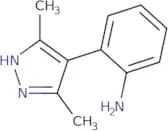
CAS:<p>Versatile small molecule scaffold</p>Formula:C11H13N3Purity:Min. 95%Color and Shape:PowderMolecular weight:187.24 g/mol2-Benzoylpyridine
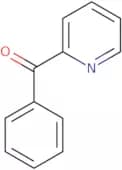
CAS:<p>2-Benzoylpyridine is a novel, potent antimicrobial compound that kills bacteria by targeting the bacterial membrane. 2-Benzoylpyridine binds to the bacterial membrane and causes leakage of ions and other molecules that disrupts the cell's redox potential. It has been shown to be active against human colon adenocarcinoma cells in vitro, with significant cytotoxicity observed. 2-Benzoylpyridine also has a coordination geometry that allows for intermolecular hydrogen bonding, which may contribute to its high potency as an antimicrobial agent.</p>Formula:C12H9NOPurity:Min. 99.0 Area-%Color and Shape:Slightly Yellow PowderMolecular weight:183.21 g/mol5-Amino-2-nitrobenzoic acid
CAS:<p>5-Amino-2-nitrobenzoic acid is a useful chemical building block that is used in the synthesis of complex compounds and useful scaffolds.</p>Formula:C7H6N2O4Molecular weight:182.13 g/molRef: 3D-A-6800
25gTo inquire50gTo inquire100gTo inquire250gTo inquire500gTo inquire-Unit-ggTo inquireL-Alaninamide hydrochloride
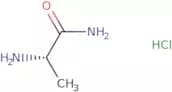
CAS:<p>L-Alaninamide hydrochloride is a hydrogen bond donor that has been shown to have anti-inflammatory properties. L-Alaninamide hydrochloride is able to crosslink hyaluronic acid, which can act as an immunosuppressant and inhibit the production of proinflammatory cytokines. In addition, L-alaninamide hydrochloride has been found to be effective in the treatment of amyloid protein aggregation diseases such as Alzheimer's disease. The drug binds to amyloid proteins by binding to their receptor site and inhibits the formation of amyloid fibrils by preventing cross-linking reactions between polypeptides. L-alaninamide hydrochloride also inhibits the formation of benzimidazole compounds, which are used in the treatment of rheumatoid arthritis.br>br><br>The structure of L-alaninamide hydrochloride is an intramolecular hydrogen bond donor with a carbonyl group. It</p>Formula:C3H8N2O•HClPurity:(Titration) Min 98%Color and Shape:PowderMolecular weight:124.57 g/mol5-Phenyl-3H-furan-2-one
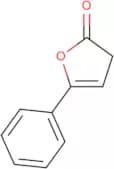
CAS:<p>5-Phenyl-3H-furan-2-one is an antiviral agent that belongs to the group of aldehydes. It is used as an active ingredient in influenza vaccines. The virus is inactivated by 5-phenyl-3H-furan-2-one and produces a recemic product that can be detected with a branched chain profile after chemical hydrolysis.</p>Formula:C10H8O2Purity:Min. 95%Color and Shape:PowderMolecular weight:160.17 g/molTricyclo[2.2.1.0,2,6]heptane-1-carboxylic acid
CAS:<p>Versatile small molecule scaffold</p>Formula:C8H10O2Purity:Min. 95%Molecular weight:138.16 g/mol4-Bromo-2-fluoropyridine
CAS:<p>4-Bromo-2-fluoropyridine is a heterocyclic amine that belongs to the class of cannabinoid type. It has been shown to be stereoselective, and can be used as a sulfamidate in biomolecular studies. 4-Bromo-2-fluoropyridine is activated by chloride and nucleophilic, which are properties that make it useful for functional groups. The fluorine atom on this molecule also makes it reactive, making it possible to use the substance as an enantiopure catalyst for organic reactions.</p>Formula:C5H3BrFNPurity:Min. 98 Area-%Color and Shape:Colorless Clear LiquidMolecular weight:175.99 g/mol2-Amino-5-nitrobenzoic acid
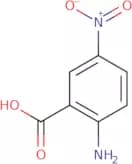
CAS:<p>2-Amino-5-nitrobenzoic acid is a plant metabolite that contains a nitro group. It has been found to be an effective inhibitor of glutamate dehydrogenase, one of the enzymes involved in the metabolism of amino acids. 2-Amino-5-nitrobenzoic acid has also been shown to have no effect on other enzyme activities such as amines and nitrosamines. This natural product has been shown to be useful as a model system for understanding how hydrochloric acid interacts with plants, by inhibiting their growth.</p>Formula:C7H6N2O4Purity:Min. 97.5%Color and Shape:Yellow PowderMolecular weight:182.13 g/mol





![Tricyclo[2.2.1.0,2,6]heptane-1-carboxylic acid](/_next/image/?url=https%3A%2Fstatic.cymitquimica.com%2Fproducts%2F3D%2Fthumb-webp%2FAAA69725.webp&w=3840&q=75)