Building Blocks
This section contains fundamental products for the synthesis of organic and biological compounds. Building blocks are the essential starting materials used to construct complex molecules through various chemical reactions. They play a critical role in drug discovery, material science, and chemical research. At CymitQuimica, we offer a diverse range of high-quality building blocks to support your innovative research and industrial projects, ensuring you have the essential components for successful synthesis.
Subcategories of "Building Blocks"
- Boronic Acids & Boronic Acid Derivatives(5,756 products)
- Chiral Building Blocks(1,242 products)
- Hydrocarbon Building Blocks(6,095 products)
- Organic Building Blocks(61,038 products)
Found 196817 products of "Building Blocks"
Sort by
Purity (%)
0
100
|
0
|
50
|
90
|
95
|
100
4-Cyclobutylbenzaldehyde
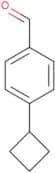
CAS:<p>4-Cyclobutylbenzaldehyde is a versatile building block that is used in the synthesis of complex compounds. This chemical is a reagent and speciality chemical which can be used for research purposes. It also has potential use as an intermediate or scaffold in organic synthesis. 4-Cyclobutylbenzaldehyde is a high quality compound with a CAS number of 875306-94-8.</p>Formula:C11H12OPurity:Min. 95%Color and Shape:Clear LiquidMolecular weight:160.22 g/mol(2S,3S)-3-Aminobutan-2-ol hydrochloride
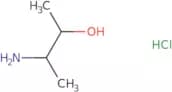
CAS:<p>(2S,3S)-3-Aminobutan-2-ol hydrochloride is a high quality chemical that is used as a reagent, intermediate in the production of fine chemicals, and building block for synthesis of other compounds. It is also an important building block in the preparation of speciality chemicals. This compound can be used as an intermediate for the synthesis of various pharmaceuticals, pesticides, dyes, and flavors. (2S,3S)-3-Aminobutan-2-ol hydrochloride can be used in research to prepare new compounds with different properties. It is also a versatile building block that can be used to synthesize many different types of products.</p>Formula:C4H12ClNOPurity:Min. 95%Color and Shape:Clear LiquidMolecular weight:125.6 g/mol2-tert-Butylcyclobutan-1-one
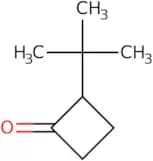
CAS:<p>2-tert-Butylcyclobutan-1-one is a research chemical that is used to study the regioselectivity and carbonyl reactivity of nucleophilic substitution reactions. This compound is synthesized by the reaction of benzannulation with cyclobutanone and stabilizes reactive carbonyl groups, which can be used for mechanistic studies. The mechanism of this reaction has been studied and it has been found that the stabilization of the carbonyl group is due to an intramolecular hydrogen bond between the carbonyl oxygen and the hydroxyl group on C2. 2-tert-Butylcyclobutan-1-one can be used as a biomolecular building block in synthetic organic chemistry.</p>Formula:C8H14OPurity:Min. 95%Color and Shape:Clear LiquidMolecular weight:126.2 g/molMethyl 6-hydroxyhexanoate
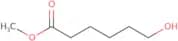
CAS:<p>Methyl 6-hydroxyhexanoate is a reaction intermediate in the synthesis of glycol ethers and polycarboxylic acids. It is also used as a precursor for monoclonal antibodies for cancer therapy. Methyl 6-hydroxyhexanoate reacts with metal ions to form hydrogen bonds, which are important in the stabilization of the covalent bond between the two compounds. This reaction is catalyzed by an enzyme called lipase. The rate of this reaction is increased by adding glycosidation, which increases the number of hydrogen bonding sites on the compound. Methyl 6-hydoxyhexanoate can also be produced from methyl hydroxy and glycol ethers through a reaction that involves metal ion, glycosidation, and a lipase. The antigenicity of methyl 6-hydroxyhexanoate can be altered by changing its carboxyl group to a benzyl group.</p>Formula:C7H14O3Purity:Min. 95%Molecular weight:146.18 g/molγ-Polyglutamic acid sodium - MW > 700,000
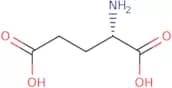
CAS:<p>Gamma-Polyglutamic acid sodium - MW > 700,000 is a high molecular weight biopolymer, which is a salt form of polyglutamic acid. Its unique structure consists of glutamic acid units linked via γ-amide bonds, resulting in a robust and biodegradable polymer.The mode of action of gamma-Polyglutamic acid sodium involves its high water-binding capacity and viscosity, which make it exceptional in forming hydrogels. This property is pivotal in applications that require moisture retention or controlled release of active ingredients. Its biodegradability and non-toxic nature add to its versatility and safety profile.Gamma-Polyglutamic acid sodium is used across various fields, including biotechnology, pharmaceuticals, agriculture, and cosmetics. In biotechnology and pharmaceuticals, it is utilized as a drug delivery vehicle and tissue engineering scaffold due to its compatibility with human tissues. Its agricultural applications include acting as a soil conditioner and enhancing water retention. In cosmetics, it serves as a potent moisturizer and anti-aging ingredient.</p>Formula:(C5H7NO3)n•NaxPurity:Min. 90 Area-%Color and Shape:White Powder2-Nitrobenzenesulfonyl chloride
CAS:<p>2-Nitrobenzenesulfonyl chloride is a cyclic peptide that has been shown to be effective in the synthesis of a variety of biologically active compounds. It is used in the preparation of hydrochloric acid, hydroxyl group, lysine residues, and methyl ketones. It also has been used in analytical methods for the determination of cancer. 2-Nitrobenzenesulfonyl chloride is an aziridine with a Michaelis-Menten kinetics. This chemical structure allows hydrogen bonding with proteins, which is important for conformational changes and biological activity. 2-Nitrobenzenesulfonyl chloride has also been shown to inhibit cancer cells as well as human serum through hydrogen bond interactions.</p>Formula:C6H4ClNO4SPurity:Min. 95%Color and Shape:Slightly Yellow PowderMolecular weight:221.62 g/mol4-(2H-1,2,3,4-Tetrazol-2-yl)aniline
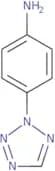
CAS:<p>Versatile small molecule scaffold</p>Formula:C7H7N5Purity:Min. 95%Color and Shape:PowderMolecular weight:161.16 g/mol8-Hydroxy-2-methylquinoline-5-carboxylic acid hydrochloride
CAS:<p>Please enquire for more information about 8-Hydroxy-2-methylquinoline-5-carboxylic acid hydrochloride including the price, delivery time and more detailed product information at the technical inquiry form on this page</p>Formula:C11H9NO3•(HCl)xPurity:Min. 95%Molecular weight:203.19 g/mol2,4,6-Trimethoxyaniline
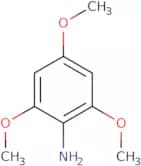
CAS:<p>2,4,6-Trimethoxyaniline is a tetrazole compound that has been shown to inhibit glycosidases. The inhibition of these enzymes prevents the hydrolysis of glycosidic bonds in carbohydrates and other biomolecules. 2,4,6-Trimethoxyaniline is used as an antibacterial agent against methicillin-resistant Staphylococcus aureus (MRSA) and other bacteria. It also inhibits the growth of Mycobacterium tuberculosis and Mycobacterium avium complex due to its ability to inhibit protein synthesis by inhibiting RNA synthesis. 2,4,6-Trimethoxyaniline can be synthesized by demethylation of anisidine with tribromide or chloroform.</p>Formula:C9H13NO3Purity:Min. 97 Area-%Color and Shape:Yellow PowderMolecular weight:183.2 g/mol1-Naphthol dihydrogen phosphate monosodium monohydrate
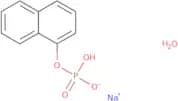
CAS:<p>1-Naphthol dihydrogen phosphate monosodium salt monohydrate is an organic compound that is a useful scaffold for the synthesis of other organic compounds. It is also used as a reagent and building block in organic synthesis. 1-Naphthol dihydrogen phosphate monosodium salt monohydrate has CAS No. 81012-89-7 and can be used as a reaction component, intermediate, or building block in the synthesis of complex compounds. This compound is soluble in water, ethanol, ethers, benzene, chloroform, and acetone. The purity level of 1-naphthol dihydrogen phosphate monosodium salt monohydrate ranges from 99% to 100%.</p>Formula:C10H9O4P•Na•H2OPurity:Min. 98%Color and Shape:PowderMolecular weight:265.16 g/mol1,1,1-Tris(hydroxymethyl)ethane
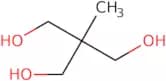
CAS:<p>1,1,1-Tris(hydroxymethyl)ethane is a liquid that can be used in the treatment of wastewater. It is a non-ionic surfactant that reacts with metal hydroxides to form insoluble salts. 1,1,1-Tris(hydroxymethyl)ethane has been shown to have a light emission property at room temperature and below. The structure of 1,1,1-Tris(hydroxymethyl)ethane has been determined using spectroscopic analysis and chemical synthesis. Hypoglycemic effects have been demonstrated in mice fed a high-fat diet supplemented with 1,1,1-Tris(hydroxymethyl)ethane as well as in rats fed an experimental diet containing this compound.</p>Formula:C5H12O3Purity:Min. 95 Area-%Color and Shape:White Off-White PowderMolecular weight:120.15 g/mol[1-(Aminomethyl)cyclohexyl]methanamine
CAS:<p>Cyclohexane-1,1-dicarboxylic acid is a cyclic dicarboxylic acid that is used in the production of polyols. It can be obtained by the hydrogenation of terephthalic acid or by the isomerization of adipic acid. Cyclohexane-1,1-dicarboxylic acid has been shown to have anti-leukemic activity against leukemia cells in mice. The mechanism is not well understood, but it may be due to its ability to produce hydrogen peroxide and tellurate ions. In addition, cyclohexane-1,1-dicarboxylic acid can also react with polyols to form imines and axial alcohols.</p>Formula:C8H18N2Purity:Min. 95%Color and Shape:Colorless Clear LiquidMolecular weight:142.24 g/mol3-Azidopropanoate-N-hydroxysuccinimide ester
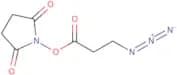
CAS:<p>3-Azidopropanoate-N-hydroxysuccinimide ester is a fluorescent probe that can be activated by the addition of an azide donor. The fluorescence of 3-azidopropanoate-N-hydroxysuccinimide ester is dependent on the presence of serum albumin and can be used as a model system for studying albumin uptake and metabolism. This probe has been shown to have good uptake in lung cancer cells, which may be due to its ability to bind with the receptor on the cell surface. 3-Azidopropanoate-N-hydroxysuccinimide ester binds to proteolytic enzymes such as plasmin, cathepsins, and elastase, which are found in high concentrations in lung cancer cells.</p>Formula:C7H8N4O4Purity:Min. 95%Color and Shape:PowderMolecular weight:212.16 g/mol3-Bromo-5-methylisoxazole-4-carboxylic acid
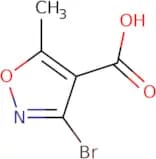
CAS:<p>Versatile small molecule scaffold</p>Formula:C5H4BrNO3Purity:Min. 95%Molecular weight:206 g/molL-Tyrosine - non-animal origin
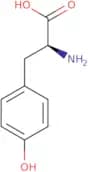
CAS:<p>Amino acid; precursor to neurotransmitters, hormones, pigments, natural phenols</p>Formula:C9H11NO3Color and Shape:White Off-White PowderMolecular weight:181.19 g/mol4-Nitroindole
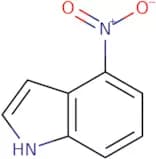
CAS:<p>4-Nitroindole is a chemical compound that is used to synthesize 5-hydroxytryptamine (5-HT) and also has been used as a substitute for tryptophan in the synthesis of serotonin. It can be prepared by reacting sodium nitrite with an organic acid such as acetic acid or propionic acid. The reaction proceeds through a diazonium salt intermediate, which is hydrolyzed with hydrochloric acid to give 4-nitroindole. 4-Nitroindole can also be prepared by the Friedel-Crafts reaction between an aromatic nitro compound and an alkyl halide. The hydrogen bond between the hydroxyl group and nitrogen atom in the molecule makes it soluble in organic solvents. In addition, the constant boiling point of the compound allows it to be analyzed using gas chromatography.</p>Formula:C8H6N2O2Purity:Min. 95%Color and Shape:PowderMolecular weight:162.15 g/mol3-(3-(But-3-yn-1-yl)-3H-diazirin-3-yl)propanoic acid
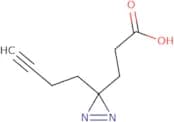
CAS:<p>3-(3-(But-3-yn-1-yl)-3H-diazirin-3-yl)propanoic acid (BDPA) is a reagent that is used as a starting material or intermediate for the synthesis of pharmaceuticals and other chemical compounds. This compound has been shown to be an excellent scaffold for the synthesis of complex structures, such as peptides and natural products. BDPA is also a versatile building block for organic syntheses, which can be used in reactions with other chemicals to form new compounds. Research chemicals such as BDPA are not approved by the FDA, so they should only be handled and used by professionals.</p>Formula:C8H10N2O2Purity:Min. 95%Color and Shape:PowderMolecular weight:166.18 g/mol8-(tert-Butoxycarbonyl)-1-oxa-8-azaspiro[4.5]decane-2-carboxylic acid
CAS:<p>8-(tert-Butoxycarbonyl)-1-oxa-8-azaspiro[4.5]decane-2-carboxylic acid is a useful scaffold for the preparation of new compounds. This compound is an intermediate in the synthesis of other compounds, and can be used as a building block in the synthesis of complex compounds. It has been used as a reagent for organic reactions and has shown high quality. 8-(tert-Butoxycarbonyl)-1-oxa-8-azaspiro[4.5]decane-2-carboxylic acid is also known by CAS No. 1160246-88-7 and has a variety of speciality uses, such as research chemicals or fine chemicals.</p>Formula:C14H23NO5Purity:Min. 95%Molecular weight:285.34 g/mol1,3,5-Triazine
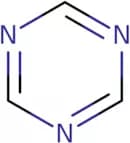
CAS:<p>1,3,5-Triazine is a nitrogen-containing heterocyclic compound that is used as a precursor for the synthesis of other compounds. It has been shown to inhibit the polymerase chain reaction and to bind to the enzyme DNA polymerase. This binding prevents the formation of an enzyme-substrate complex required for DNA replication. 1,3,5-Triazine also inhibits oxidative injury in experimental models and inhibits cellular physiology by decreasing the production of growth factor-β1. 1,3,5-Triazine has been shown to be a natural compound with inhibitory properties against growth factors and cell proliferation. This chemical also exhibits antioxidant effects by scavenging reactive oxygen species or inhibiting lipid peroxidation.END></p>Formula:C3H3N3Purity:Min. 95%Color and Shape:White PowderMolecular weight:81.08 g/mol2-Amino-4-methoxybutanoic acid
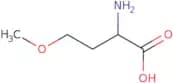
CAS:<p>2-Amino-4-methoxybutanoic acid (2AMBA) is a diagnostic agent that belongs to the class of hydroxyl group containing antimicrobial agents. It has been shown to have conformational properties, which are the spatial arrangement of atoms in a molecule. 2AMBA is a small molecule with neutral pH and has been used as a substrate for peptide synthesis by the yeast Pichia pastoris. 2AMBA has also been shown to have antimicrobial activity against infectious diseases such as Escherichia coli and Pseudomonas aeruginosa, among others. This compound is synthesized by reacting malonic acid with an amine or amide. The reaction forms a cyclic peptide that contains a disulfide bond and fatty acid, which are important for its structure and function.</p>Formula:C5H11NO3Purity:Min. 95%Color and Shape:PowderMolecular weight:133.15 g/mol


![[1-(Aminomethyl)cyclohexyl]methanamine](/_next/image/?url=https%3A%2Fstatic.cymitquimica.com%2Fproducts%2F3D%2Fthumb-webp%2FEAA44155.webp&w=3840&q=75)
![8-(tert-Butoxycarbonyl)-1-oxa-8-azaspiro[4.5]decane-2-carboxylic acid](/_next/image/?url=https%3A%2Fstatic.cymitquimica.com%2Fproducts%2F3D%2Fthumb-webp%2FKWB24688.webp&w=3840&q=75)