Building Blocks
This section contains fundamental products for the synthesis of organic and biological compounds. Building blocks are the essential starting materials used to construct complex molecules through various chemical reactions. They play a critical role in drug discovery, material science, and chemical research. At CymitQuimica, we offer a diverse range of high-quality building blocks to support your innovative research and industrial projects, ensuring you have the essential components for successful synthesis.
Subcategories of "Building Blocks"
- Boronic Acids & Boronic Acid Derivatives(5,756 products)
- Chiral Building Blocks(1,242 products)
- Hydrocarbon Building Blocks(6,095 products)
- Organic Building Blocks(61,038 products)
Found 196817 products of "Building Blocks"
Sort by
Purity (%)
0
100
|
0
|
50
|
90
|
95
|
100
tert-Butyl octahydrocyclopenta[c]pyrrol-4-ylcarbamate
CAS:<p>Tert-Butyl octahydrocyclopenta[c]pyrrol-4-ylcarbamate is a versatile building block that is a useful intermediate. It can be used as an additive in the synthesis of pharmaceuticals and other organic compounds. Tert-Butyl octahydrocyclopenta[c]pyrrol-4-ylcarbamate has been shown to possess antiviral activity, which may be due to its ability to inhibit viral DNA polymerase.</p>Formula:C12H22N2O2Purity:Min. 95%Color and Shape:PowderMolecular weight:226.32 g/molPiperazine-1,4-bis(2-ethanesulfonic acid) disodium
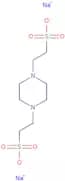
CAS:<p>Piperazine-1,4-bis(2-ethanesulfonic acid) disodium (PIPES) is a conjugate that can be used as a catalyst in organic syntheses. PIPES is also used to modulate biological processes, such as the treatment of chronic pain. It has been shown to be an effective inhibitor of cholesterol esterase and gene product, which are enzymes associated with the development of Alzheimer's disease. PIPES has been shown to reduce axonal growth in vitro.</p>Formula:C8H18N2O6S2•Na2Color and Shape:PowderMolecular weight:348.35 g/mol2-(Trifluoromethoxy)aniline
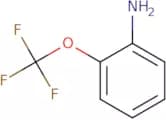
CAS:<p>2-(Trifluoromethoxy)aniline is a heterocyclic aromatic compound that can act as an electrophilic catalyst. It is a strong nucleophile and reacts with various types of nucleophiles. 2-(Trifluoromethoxy)aniline has been used for the synthesis of aliphatic sulfoxides under acidic conditions, including alcohols, phenols, and thiols. The reaction mechanism is often a 1,2-addition of the nucleophile to the carbonyl group of 2-(trifluoromethoxy)aniline. This reaction is catalytic and produces a stable dimerized product. 2-(Trifluoromethoxy)aniline also has mesoporous properties, which allow it to be used in reactions involving alcohols or other polar molecules because they are soluble in the pores.</p>Formula:C7H6F3NOPurity:Min. 95%Color and Shape:Clear LiquidMolecular weight:177.12 g/mol(1S,3S)-1-(Boc-amino)cyclohexan-3-amine
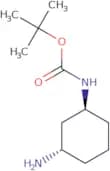
CAS:<p>Versatile small molecule scaffold</p>Formula:C11H22N2O2Purity:Min. 95%Molecular weight:214.3 g/mol2-Pyridinepropanol
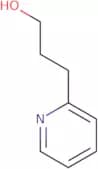
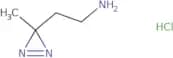
CAS:<p>2-Pyridinepropanol is a tetranuclear compound that contains two nitrogen atoms and two silver ions. It has been shown to be an inhibitor of arthropoda development in the laboratory. 2-Pyridinepropanol also has potent inhibitory activity against the growth of bacteria, including Staphylococcus aureus and Pseudomonas aeruginosa. This compound was synthesized from 2-benzoylbenzoic acid, which is a product of the plant metabolism. The structure of this molecule was determined by X-ray crystallography and electrochemical studies.<br>2-Pyridinepropanol binds to the bacterial enzyme hydrogenase, which catalyzes the production of hydrogen gas, thereby inhibiting its activity (hydrogenase is an enzyme that catalyses the reduction of protons to hydrogen gas).</p>Formula:C8H11NOPurity:Min. 95%Color and Shape:Colorless PowderMolecular weight:137.18 g/mol2-(3-Methyl-3H-diazirin-3-yl)ethan-1-amine hydrochloride
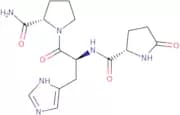
CAS:<p>2-(3-Methyl-3H-diazirin-3-yl)ethan-1-amine hydrochloride is an organic compound with a molecular formula of C8H11N2 and a molecular weight of 181.19 g/mol. It is soluble in water, and insoluble in most organic solvents. 2-(3-Methyl-3H-diazirin-3-yl)ethan-1-amine hydrochloride is a versatile building block that can be used to synthesize many complex compounds. This chemical has been shown to be useful as a reagent, intermediate, or scaffold for research into new drugs and materials. 2-(3Methyl 3H diazirin 3yl)ethan 1amine hydrochloride is also used as a speciality chemical or building block for high quality synthesis of other compounds.</p>Formula:C4H10ClN3Purity:Min. 95%Color and Shape:PowderMolecular weight:135.59 g/molL-Pyroglutamyl-L-histidyl-L-prolinamide
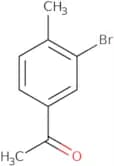
CAS:<p>L-Pyroglutamyl-L-histidyl-L-prolinamide (PGC) is a pyrrolidine that is used for the treatment of neurologic disorders. It has been shown to be effective in treating depression and a number of other neurologic disorders, including Parkinson's disease, Alzheimer's disease, and epilepsy. PGC has also been shown to have an antidepressant effect in women with depression who are pregnant or have recently given birth. In addition, it has been found to be clinically effective in the treatment of symptoms associated with Parkinson’s Disease. PGC is not absorbed into the bloodstream and must be injected directly into muscle tissue or fat cells in order to produce its therapeutic effects.</p>Formula:C16H22N6O4Purity:Min. 95%Color and Shape:White PowderMolecular weight:362.38 g/mol3'-Bromo-4'-methylacetophenone
CAS:<p>3'-Bromo-4'-methylacetophenone is a reactive methyl ester that binds to the receptor in the central nervous system. It has been found to be an effective anti-cancer drug, and also inhibits serotonin release in the brain. 3'-Bromo-4'-methylacetophenone is chiral, meaning it can exist as two different forms, or enantiomers. These two forms have different pharmacological profiles, with one being more potent than the other. 3'-Bromo-4'-methylacetophenone is synthesized from methylamine and acetaldehyde using diethyl ether as a solvent. The reaction product is then hydrolyzed by acetonitrile to produce the final product. This drug is used for the treatment of Parkinson's disease and schizophrenia.</p>Formula:C9H9BrOPurity:Min. 95%Color and Shape:PowderMolecular weight:213.07 g/moltert-butyl N-{2-azabicyclo[2.1.1]hexan-1-ylmethyl}carbamate
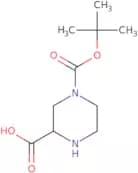
CAS:<p>Versatile small molecule scaffold</p>Formula:C11H20N2O2Purity:Min. 95%Molecular weight:212.3 g/molN-4-Boc-2-piperazine carboxylic acid
CAS:<p>N-4-Boc-2-piperazine carboxylic acid is an organic acid that functions in the metabolism of purine and bile acids. It is also involved in the metabolic pathway of the kidney, which is important for the elimination of waste products from the body. N-4-Boc-2-piperazine carboxylic acid has been shown to be useful as a marker for distinguishing between different types of kidney disease. It is a metabolite found in urine and can be used as an analytical tool for detecting renal function. This compound has also been shown to have long term effects on bile acid metabolism.</p>Formula:C10H18N2O4Purity:Min. 95%Color and Shape:White PowderMolecular weight:230.26 g/molDL-Penicillamine
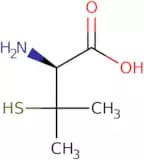
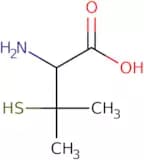
CAS:<p>DL-Penicillamine is a penicillamine that is used in the treatment of various diseases such as rheumatoid arthritis and primary sclerosing cholangitis. It has been shown to inhibit the production of inflammatory prostaglandins, which are responsible for pain and swelling. DL-Penicillamine has been used as a fluorescence probe for the detection of nonsteroidal anti-inflammatory drugs in water samples. DL-Penicillamine is also used to study coordination geometry and rate constants in solid tumours using fluorescence spectroscopy. This drug can be analyzed using chromatographic techniques or by X-ray diffraction data obtained with an electrochemical impedance spectroscopy system. The analytical method was published in 1981 by J.D. Hamer, et al., in "Analytical Chemistry".</p>Formula:C5H11NO2SPurity:Min. 95%Color and Shape:White PowderMolecular weight:149.21 g/molPivaldehyde
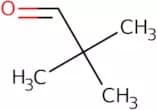
CAS:<p>Intermediate in organic syntheses; stereoselective synthesis</p>Formula:C5H10OPurity:Min. 95%Color and Shape:Colorless Clear LiquidMolecular weight:86.13 g/molN-Phospho-L-arginine lithium salt hydrate
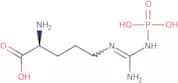
CAS:<p>N-Phospho-L-arginine lithium salt hydrate is an arginine derivative that has a complex life cycle. It is used as a substrate for ATP synthesis, and also participates in the formation of disulfide bonds during protein folding. N-Phospho-L-arginine lithium salt hydrate is an important component of many enzymes, which are vital to the body's metabolic processes. This compound can be used to study biochemical properties of enzymes in biological samples and infectious diseases, which could lead to new treatments for these diseases.</p>Formula:C6H15N4O5P·xLi·yH2OPurity:Min. 95%Color and Shape:PowderMolecular weight:254.18 g/mol7-Methoxy-2,3,4,5-tetrahydro-1H-1-benzazepine
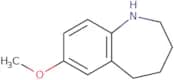
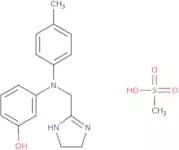
CAS:<p>7-Methoxy-2,3,4,5-tetrahydro-1H-1-benzazepine is a fine chemical with CAS No. 46180-98-7. It is a versatile building block and useful intermediate for the synthesis of complex compounds with various functions. 7-Methoxy-2,3,4,5-tetrahydro-1H-1-benzazepine is also a reagent that can be used in research chemicals and speciality chemicals. This compound has been shown to have high quality and is an excellent reaction component for reactions producing new synthetic intermediates.</p>Formula:C11H15NOPurity:Min. 95%Molecular weight:177.24 g/molPhentolamine methanesulfonate
CAS:<p>Phentolamine is a synthetic mesylate that is used as an antihypertensive agent, and for the treatment of Raynaud's syndrome and pheochromocytoma. Phentolamine is also used to prevent frostbite and to treat various types of shock. Phentolamine blocks alpha-2-adrenergic receptors, thereby decreasing sympathetic nerve impulses to the heart, blood vessels, kidneys, and other organs. This drug also acts as a histamine antagonist by blocking H1-receptors on vascular smooth muscle cells. Phentolamine has been shown to have no significant effects on 5-hydroxytryptamine (5HT) release in vitro or in vivo.</p>Formula:C18H23N3O4SPurity:Min. 95%Color and Shape:White PowderMolecular weight:377.46 g/mol1-[3-(Trifluoromethyl)phenyl]-1H-1,2,3-triazole-4-carboxylic acid
CAS:<p>1-[3-(Trifluoromethyl)phenyl]-1H-1,2,3-triazole-4-carboxylic acid (TFTCA) is a versatile building block used as a reagent in research and speciality chemical synthesis. TFTCA is used as a reactant in the synthesis of complex compounds and can be used as an intermediate or scaffold. The compound has been used to synthesize drugs such as 3,5-dichloro-N-(3-(trifluoromethyl)phenyl)-2-thiophenecarboxamide (PF23410), which is a potent inhibitor of protein kinase C.</p>Formula:C10H6F3N3O2Purity:Min. 95%Color and Shape:PowderMolecular weight:257.17 g/molD-Penicillamine
CAS:<p>D-Penicillamine is a nonsteroidal anti-inflammatory drug that is used to treat bowel disease, including ulcerative colitis and Crohn's disease. It has also been used as a treatment for schizophrenia that is unresponsive to other treatments. D-Penicillamine binds covalently to reactive oxygen species (ROS), thereby preventing their interaction with proteins and DNA. The binding of ROS by D-penicillamine can be monitored using electrochemical impedance spectroscopy (EIS). The compound has also been shown to reduce the expression of bcl-2 protein in human cells, which may result in increased oxidative injury and rates of cell proliferation. D-Penicillamine has been shown to have therapeutic benefits for patients with primary sclerosing cholangitis, myocardial infarcts, or preparative high performance liquid chromatography (HPLC) analysis.</p>Formula:C5H11NO2SPurity:Min 97%Color and Shape:White PowderMolecular weight:149.21 g/mol2-(1H-1,2,4-Triazol-1-yl)pyridine-4-carboximidamide hydrochloride
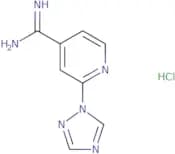
CAS:<p>2-(1H-1,2,4-Triazol-1-yl)pyridine-4-carboximidamide hydrochloride is a versatile building block that can be used in the synthesis of many compounds. This compound is a fine chemical and may be useful as a research chemical or as a speciality chemical. CAS No. 1421606-01-0.</p>Formula:C8H9ClN6Purity:Min. 95%Color and Shape:PowderMolecular weight:224.65 g/mol1H-Pyrazole
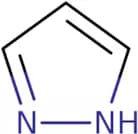
CAS:<p>1H-Pyrazole is a pharmacological agent that has been shown to have anti-cancer properties. It is a hydrogen-bonding compound that forms 1:1 complexes with coumarin derivatives, which are found in plants and other natural sources. The 1H-pyrazole ring has been shown to bind to the x-ray crystal structures of mitochondrial membranes and induce changes in their potential. This drug also inhibits the growth of solid tumours in vitro by inhibiting the synthesis of DNA and proteins. In addition, 1H-pyrazole has been shown to be an analytical method for measuring the concentration of natural compounds in water samples.</p>Formula:C3H4N2Purity:Min. 95%Color and Shape:PowderMolecular weight:68.08 g/molL-Phenylalanine
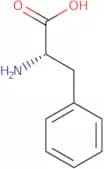
CAS:<p>L-phenylalanine is an amino acid that is naturally present in the human body. It is an essential amino acid, meaning it cannot be synthesized by the body and must be obtained through diet or supplementation. L-Phenylalanine has been shown to inhibit oxidative injury by scavenging reactive oxygen species (ROS) and reducing lipid peroxidation. It also has a protective effect on the intestinal tract by increasing the activity of bowel enzymes and preventing intestinal ulcers. L-Phenylalanine is used in biochemical studies to measure the activities of various enzymes, such as chymotrypsin, aminopeptidase, and carboxypeptidase. L-Phenylalanine can be converted into dopamine and norepinephrine, which are neurotransmitters in the brain that are important for memory, learning, mood regulation, sleep cycles, and other brain functions. L-Phenylalanine toxicity can lead to liver failure</p>Formula:C9H11NO2Color and Shape:White PowderMolecular weight:165.19 g/mol
![tert-Butyl octahydrocyclopenta[c]pyrrol-4-ylcarbamate](/_next/image/?url=https%3A%2Fstatic.cymitquimica.com%2Fproducts%2F3D%2Fthumb-webp%2FKHA69312.webp&w=3840&q=75)

![tert-butyl N-{2-azabicyclo[2.1.1]hexan-1-ylmethyl}carbamate](/_next/image/?url=https%3A%2Fstatic.cymitquimica.com%2Fproducts%2F3D%2Fthumb-webp%2FAAC99746.webp&w=3840&q=75)
![1-[3-(Trifluoromethyl)phenyl]-1H-1,2,3-triazole-4-carboxylic acid](/_next/image/?url=https%3A%2Fstatic.cymitquimica.com%2Fproducts%2F3D%2Fthumb-webp%2FNEA93433.webp&w=3840&q=75)