Building Blocks
This section contains fundamental products for the synthesis of organic and biological compounds. Building blocks are the essential starting materials used to construct complex molecules through various chemical reactions. They play a critical role in drug discovery, material science, and chemical research. At CymitQuimica, we offer a diverse range of high-quality building blocks to support your innovative research and industrial projects, ensuring you have the essential components for successful synthesis.
Subcategories of "Building Blocks"
- Boronic Acids & Boronic Acid Derivatives(5,756 products)
- Chiral Building Blocks(1,242 products)
- Hydrocarbon Building Blocks(6,095 products)
- Organic Building Blocks(61,055 products)
Found 199650 products of "Building Blocks"
Sort by
Purity (%)
0
100
|
0
|
50
|
90
|
95
|
100
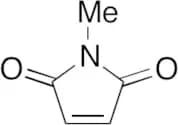
N-Methylmaleimide
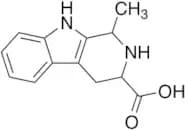
CAS:Controlled Product<p>Applications N-Methylmaleimide is an electron deficient olefin that acts as a thiol-blocking reagent in living human cells. N-Methylmaleimide also has the ability to undergo free-radical homopolymerization, and is used as a model for resins that contain the maleimide functional group.<br> Not a dangerous good if item is equal to or less than 1g/ml and there is less than 100g/ml in the package<br>References Sandreczki, T. & Brown, I.: Macromolecules, 23, 1979 (1990); Shibata, A., et al.: Bioorg. Med. Chem. Lett., 18, 2246 (2008); Yin, J. & Liebeskind, L.: J. Am. Chem. Soc., 121, 5811 (1999)<br></p>Formula:C5H5NO2Color and Shape:NeatMolecular weight:111.11-Methyl-2,3,4,9-tetrahydro-1H-b-carboline-3-carboxylic Acid
CAS:Controlled ProductFormula:C13H14N2O2Color and Shape:NeatMolecular weight:230.263',4',5'-Trifluoro-[1,1'-biphenyl]-2-amine
CAS:Controlled Product<p>Applications 3',4',5'-Trifluoro-[1,1'-biphenyl]-2-amine is a building block used in various chemical synthesis.<br></p>Formula:C12H8F3NColor and Shape:NeatMolecular weight:223.191,6-Anhydro-β-D-glucopyranose
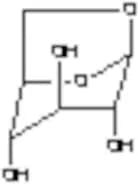
CAS:<p>Stability Hygroscopic<br>Applications 1,6-Anhydrohexopyranoses have proven to be valuable synthons for the preparation of biologically important and structurally diverse products (e.g. rifamycin S, indanomycin, thromboxane B2, (+)-biotin, tetrodotoxin, quinone, and macrolide antibiotics) as well as for modified sugars.The chemical/physical/toxicological properties have not been thoroughly investigated. Since it is known to be a minor component of certain food materials it may be regarded as of relatively low toxicity.<br>References Fraser-Reid, B., et al. J. Am. Chem. Soc. 106, 731 (1984); Edwards, M.P., et al. J. Org. Chem. 49, 3503 (1984); Kelly, A.G., and Roberts, J.S. J. Chem. Soc., Chem. Commun. 228, (1980); Ogawa, T., et al. Carbohydr. Res. 57, C31 (1977); Isobe, M., et al. Tetrahedron Lett. 28, 6485 (1987); Fresnos, J.N. and Swenton, J.S. , J. Chem. Soc., Chem. Commun. 658, (1985); Kochetkov, N.K. et al., Tetrahedron Lett. 22, 4315, 4319 (1981); Georges, M. et al., Carbohydr. Res. 130, 115 (1984); Paulsen, et al., Chem. Ber. 114, 322 (1981).<br></p>Formula:C6H10O5Color and Shape:NeatMolecular weight:162.145-Bromoacetyl-2-hydroxybenzamide
CAS:Controlled Product<p>Stability Moisture Sensitive<br>Applications 5-Bromoacetyl-2-hydroxybenzamide is a reagent used in the synthesis of bisthiazole derivatives and novel 7-methylguanine derivatives targeting influenza polymerase binding domains.<br>References Pautus, S. et al.: J. Med. Chem., 56, 8915 (2013); Araniciu, C. et al.: Revista. Chim., 64, 1067 (2013);<br></p>Formula:C9H8BrNO3Color and Shape:NeatMolecular weight:258.07(S)-2,2',2''-(10-(2-((3-((4-(Amino(carboxy)methyl)-2,6-diiodophenoxy)methyl)phenyl)amino)-2-oxoethyl)-1,4,7,10-tetraazacyclododecane-1,4,7-triyl)triacetic Acid
Controlled ProductFormula:C31H40I2N6O10Color and Shape:NeatN,N-Dimethylpropanolamine
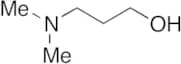
CAS:Controlled ProductFormula:C5H13NOColor and Shape:NeatMolecular weight:103.163,3',5,5'-Tetramethylbenzidine
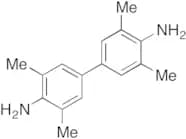
CAS:Controlled Product<p>Applications 3,3',5,5'-Tetramethylbenzidine is a chromogenic substrate used in staining procedures in immunohistochemistry as well as being a visualising reagent used in enzyme-linked immunosorbent assays (ELISA). Dyes and metabolites, Environmental Testing.<br>References Josephy, P. David., et al.: J. Biol. Chem., 257, 3669 (1982);<br></p>Formula:C16H20N2Color and Shape:NeatMolecular weight:240.34Citraconic Acid
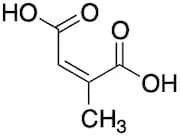
CAS:Controlled Product<p>Applications Citraconic Acid (cas# 498-23-7) is a useful research chemical.<br></p>Formula:C5H6O4Color and Shape:NeatMolecular weight:130.09Z-2-Fluoro-3-(3-pyridyl)acrylic Acid
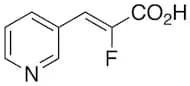
CAS:Controlled Product<p>Applications Z-2-Fluoro-3-(3-pyridyl)acrylic Acid (cas# 359435-42-0) is a compound useful in organic synthesis.<br></p>Formula:C8H6FNO2Color and Shape:NeatMolecular weight:167.14rac-Citronellal (>90%)
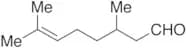
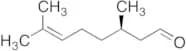
CAS:Controlled Product<p>Stability Hygroscopic<br>Applications rac-Citronellal is a monoterpenoid and the major isolate in citronella oil. Citronella oil is an essential oil bearing insecticidal properties. rac-Citronellal is also often used as a fragrance ingredient.<br>References Waliwitiya, R., et al.: J. Med. Entomol., 49, 614 (2012);<br></p>Formula:C10H18OPurity:>90%Color and Shape:NeatMolecular weight:154.25Meprylcaine Hydrochloride
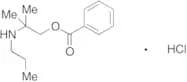
CAS:Controlled Product<p>Applications Meprylcaine Hydrochloride is a local anaesthetic used in medical procedures.<br> Not a dangerous good if item is equal to or less than 1g/ml and there is less than 100g/ml in the package<br>References Morita, K. et al.: Brain Res., 1057, 153 (2005); Toshihiro, D. et al.: Curr. Med. Chem., Cent. Nerv. Sys. Agents, 5, 89 (2005);<br></p>Formula:C14H21NO2·ClHColor and Shape:NeatMolecular weight:271.78(+)-Citronellal
CAS:Controlled Product<p>Applications (+)-Citronellal is a monoterpene compound that is formed by the metabolism of plants. (+)-Citronellal is a natural insect repellant, and is the main component of citronellal oil. (+)-Citronellal is also used as a starting material in the one pot synthesis of (-)-Menthol (M218875).<br>References Kwon, Y., et al.: Curr. Biol., 20, 1672 (2010); Lenardão, E., et al.: Tetrahedron, 63, 6671 (2007); Milone, C., et al.: Appl. Catal. A-Gen., 199, 239 (2000)<br></p>Formula:C10H18OPurity:>90%Color and Shape:NeatMolecular weight:154.25Malonuric Acid
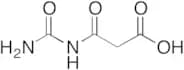
CAS:Controlled Product<p>Applications Malonuric Acid is produced during degradation of sodium barbiturates.<br>References Fretwurst, F., et al.: Arzneimittel-Forschung, 8, 44-50 (1958)<br></p>Formula:C4H6N2O4Color and Shape:NeatMolecular weight:146.12,3-Diethyl-5-methylpyrazine
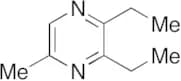
CAS:Controlled Product<p>Applications 2,3-Diethyl-5-methylpyrazine is a volatile compound found in food such as almonds and swiss cheese.<br>References Manzano, P. et. al.: J. Sep. Sci., 37, 675 (2014); Taylor, K., et. al.: J. Food Sci., 78, C1509 (2013)<br></p>Formula:C9H14N2Color and Shape:NeatMolecular weight:150.22Pyruvic Acid Sodium Salt
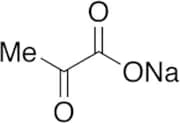
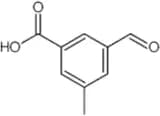
CAS:Controlled Product<p>Applications Intermediate in sugar metabolism and in enzymatic carbohydrate degradation (alcoholic fermentation) where it is converted to acetaldehyde and CO2 by carboxylase. In muscle, Pyruvic acid (derived from glycogen) is reduced to lactic acid during exertion, which is reoxidized and partially retransformed to glycogen during rest. The liver can convert Pyruvic acid to alanine by amination. A diagnostic agent for Parkinson disease.<br>References Wenzel, A., et al.: J. Neurosci., 21, 53 (2001), Martinez., et al.: Development, 6, 851 (2002), Nakayama, K., et al.: J. Biochem., 146, 757 (2009), Tanaka, T., et al.: J. Pharmacol. Sci., 109, 24 (2009),<br></p>Formula:C3H3O3·NaColor and Shape:NeatMolecular weight:110.043-Formyl-5-methylbenzoic Acid
CAS:Controlled Product<p>Applications 3-Formyl-5-methylbenzoic Acid<br></p>Formula:C9H8O3Color and Shape:NeatMolecular weight:164.162,4,5-Trifluorobenzoic Acid
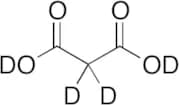
CAS:Controlled Product<p>Applications 2,4,5-Trifluorobenzoic Acid is a useful synthetic intermediate. It can be used to synthesize quinolone antibacterial agnts.<br>References Sanchez, J., et al.: J. Med. Chem., 31, 983 (1988); Tran, T., et al.: Bioorg. Med. Chem. Lett., 14, 4405 (2004)<br></p>Formula:C7H3F3O2Color and Shape:NeatMolecular weight:176.09Malonic Acid-d4
CAS:Controlled Product<p>Stability Moisture Sensitive<br>Applications Malonic Acid-d4 is the isotope labelled analog of Malonic Acid (M158005); a small bioactive molecule that can be used in various reactions. It is the classic example of a competitive inhibitor which acts against succinate dehydrogenase (complex II) in the respiratory electron transport chain.<br>References Weiner, N., "Malonic Acid", Org. Synth.; Coll. Vol. 2: 376<br></p>Formula:C3D4O4Color and Shape:NeatMolecular weight:108.086

![3',4',5'-Trifluoro-[1,1'-biphenyl]-2-amine](/_next/image/?url=https%3A%2Fstatic.cymitquimica.com%2Fproducts%2FTR%2Fthumb-webp%2FT304270.webp&w=3840&q=75)