Building Blocks
This section contains fundamental products for the synthesis of organic and biological compounds. Building blocks are the essential starting materials used to construct complex molecules through various chemical reactions. They play a critical role in drug discovery, material science, and chemical research. At CymitQuimica, we offer a diverse range of high-quality building blocks to support your innovative research and industrial projects, ensuring you have the essential components for successful synthesis.
Subcategories of "Building Blocks"
- Boronic Acids & Boronic Acid Derivatives(5,756 products)
- Chiral Building Blocks(1,242 products)
- Hydrocarbon Building Blocks(6,095 products)
- Organic Building Blocks(61,038 products)
Found 196817 products of "Building Blocks"
Sort by
Purity (%)
0
100
|
0
|
50
|
90
|
95
|
100
2-Methoxy-3-methylbenzoic acid
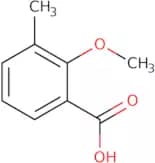
CAS:<p>2-Methoxy-3-methylbenzoic acid is a methoxy methyl, benzyl, methyl ether that can be used as a reagent in organic chemistry. It is an intermediate in the synthesis of phthalic anhydride and in the production of esters and quinones. 2-Methoxy-3-methylbenzoic acid is also used to produce potassium t-butoxide, which can be used for the synthesis of new types of reagents for organic synthesis. The chemical reacts with potassium hydroxide or potassium t-butoxide to form potassium 2-methoxy 3-methyl benzoate, which is soluble in water. This compound can also be produced from methoxy methyl benzyl chloride by reacting it with either potassium or sodium hydroxide.</p>Formula:C9H10O3Purity:Min. 95%Color and Shape:White PowderMolecular weight:166.17 g/mol1,2,4-Triazole
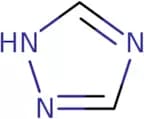
CAS:<p>1,2,4-Triazole is a heterocyclic compound that is used as an intermediate in the synthesis of many other organic compounds. It can be obtained by reacting trifluoroacetic acid with nitrobenzene in the presence of ammonia. This reaction yields a protonated 1,2,4-triazole and ammonium chloride as byproducts. The thermodynamic data for this compound has been determined using an electrochemical impedance spectroscopy method and it was found that the protonation state of 1,2,4-triazole depends on pH. <br>1,2,4-Triazole has been shown to cause genotoxic effects in carcinoma cell lines. It is also capable of inhibiting the growth of bacteria by binding to nitrogen atoms present on their surface. This leads to a decrease in bacterial activity and may be useful for biological treatment purposes. Nitro groups are able to react with 1,2,4</p>Formula:C2H3N3Purity:Min. 95%Color and Shape:PowderMolecular weight:69.07 g/mol1-[(2S)-2-(Hydroxymethyl)pyrrolidin-1-yl]ethan-1-one
CAS:<p>1-[(2S)-2-(Hydroxymethyl)pyrrolidin-1-yl]ethan-1-one is a molecule with biological properties. It is a non-competitive inhibitor of exonucleases and circularizes DNA, stabilizing it. The molecule has been sequenced and shown to be polymorphic in different individuals, which may affect its biological properties. 1-[(2S)-2-(Hydroxymethyl)pyrrolidin-1-yl]ethan-1-one is an acid molecule that can be used as a translation inhibitor on RNA polymerase II.</p>Formula:C7H13NO2Purity:Min. 95%Molecular weight:143.18 g/mol5-Amino-4-bromo-2-fluorobenzoic acid hydrochloride
CAS:<p>Please enquire for more information about 5-Amino-4-bromo-2-fluorobenzoic acid hydrochloride including the price, delivery time and more detailed product information at the technical inquiry form on this page</p>Formula:C7H5BrFNO2•HClMolecular weight:270.48 g/mol5-Amino-1-[2,6-dichloro-4-(trifluoromethyl)phenyl]-4-[(trifluoromethyl)sulfinyl]-1H-pyrazole-3-carbonitrile
CAS:<p>5-Amino-1-[2,6-dichloro-4-(trifluoromethyl)phenyl]-4-[(trifluoromethyl)sulfinyl]-1H-pyrazole-3-carbonitrile (TCFP), also known as CX-546, is a photosynthetic activity enhancer that inhibits oxidative injury to chloroplasts. TCFP is a pyrazole ring with a sulfinyl group and a chlorine atom. TCFP has been shown to have no genotoxic or carcinogenic potential in vitro and in vivo studies. TCFP is not active against infectious diseases. TCFP can be used as an analytical reagent for the detection of cytochrome P450 activities in human serum.</p>Formula:C12H4Cl2F6N4OSPurity:Min. 95%Color and Shape:PowderMolecular weight:437.15 g/mol4-(Acetylamino)phenetole
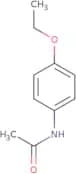
CAS:<p>4-(Acetylamino)phenetole is a drug that belongs to the class of nonsteroidal anti-inflammatory drugs. It is a reactive, toxic chemical that has been shown to inhibit ATP binding cassette transporter (ABC) proteins and can be used for treatment of pain. 4-(Acetylamino)phenetole inhibits cellular energy metabolism by inhibiting an enzyme in the electron transport chain, which prevents the formation of reactive oxygen species necessary for cell growth. 4-(Acetylamino)phenetole also binds to DNA and reduces the transcriptional activity of certain genes. This drug has been found to show cytotoxicity in solid tumours and can be used as a chemotherapeutic agent.</p>Formula:C10H13NO2Purity:Min. 95%Color and Shape:White PowderMolecular weight:179.22 g/mol6-[(1E)-2-(3,4-Dihydroxyphenyl)ethenyl]-3,4-dihydroxy-2H-pyran-2-one
CAS:<p>Versatile small molecule scaffold</p>Formula:C13H10O6Purity:Min. 95%Color and Shape:PowderMolecular weight:262.2 g/molPhentolamine methanesulfonate
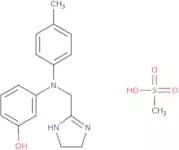
CAS:<p>Phentolamine is a synthetic mesylate that is used as an antihypertensive agent, and for the treatment of Raynaud's syndrome and pheochromocytoma. Phentolamine is also used to prevent frostbite and to treat various types of shock. Phentolamine blocks alpha-2-adrenergic receptors, thereby decreasing sympathetic nerve impulses to the heart, blood vessels, kidneys, and other organs. This drug also acts as a histamine antagonist by blocking H1-receptors on vascular smooth muscle cells. Phentolamine has been shown to have no significant effects on 5-hydroxytryptamine (5HT) release in vitro or in vivo.</p>Formula:C18H23N3O4SPurity:Min. 95%Color and Shape:White PowderMolecular weight:377.46 g/mol2-{1-[(tert-Butoxy)carbonyl]piperidin-4-yl}-2-methylpropanoic acid
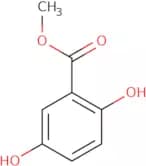
CAS:<p>2-{1-[(tert-Butoxy)carbonyl]piperidin-4-yl}-2-methylpropanoic acid is a reagent that can be used as a building block for the synthesis of complex compounds. This compound is also useful for the preparation of fine chemicals, research chemicals, and speciality chemicals. 2-{1-[(tert-Butoxy)carbonyl]piperidin-4-yl}-2-methylpropanoic acid is a versatile intermediate that has been employed in many reactions. It is also an excellent reaction component for use in organic chemistry.</p>Formula:C14H25NO4Purity:Min. 95%Color and Shape:PowderMolecular weight:271.4 g/molMethyl gentisate
CAS:<p>Starting material for euonyminol synthesis; inhibits melanogenesis</p>Formula:C8H8O4Purity:Min. 98 Area-%Color and Shape:PowderMolecular weight:168.15 g/molPotassium nonafluoro-1-butanesulfonate
CAS:<p>Potassium nonafluoro-1-butanesulfonate (NBS) is a chemical compound that is used to remove trifluoroacetic acid from wastewater. It can also be used as an analytical reagent to measure cytosolic calcium concentrations in cells. In addition, NBS has been shown to have a high degree of chemical stability, but it may react with hydrogen fluoride and cause toxicity in humans. The pharmacokinetic properties of this drug are not well-known, but it has been shown to accumulate in the liver and fat tissues and pass into the maternal blood stream during pregnancy. NBS also inhibits the synthesis of p-hydroxybenzoic acid, which leads to hepatic steatosis in mice with diet-induced obesity. This drug also affects 3t3-l1 preadipocytes and human serum.</p>Formula:C4F9KO3SColor and Shape:PowderMolecular weight:338.19 g/molDL-Tyrosine
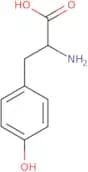
CAS:<p>DL-Tyrosine is a non-essential amino acid that can be synthesized in the body from phenylalanine or obtained from food. DL-Tyrosine is a precursor of the neurotransmitter dopamine, which is involved in regulating mood, movement, and cognitive functions. DL-Tyrosine has been shown to inhibit the conversion of tyrosine to 3,4-dihydroxyphenylacetic acid (DOPAC) by dopamine β-hydroxylase. Tyrosine also prevents the formation of reactive oxygen species due to its chemical stability and ability to scavenge free radicals. DL-Tyrosine may have implications for treating Parkinson's disease, ADHD, depression, and chronic fatigue syndrome.</p>Formula:C9H11NO3Purity:Min. 95%Color and Shape:PowderMolecular weight:181.19 g/mol8-(tert-Butoxycarbonyl)-1-oxa-8-azaspiro[4.5]decane-2-carboxylic acid
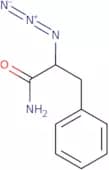
CAS:<p>8-(tert-Butoxycarbonyl)-1-oxa-8-azaspiro[4.5]decane-2-carboxylic acid is a useful scaffold for the preparation of new compounds. This compound is an intermediate in the synthesis of other compounds, and can be used as a building block in the synthesis of complex compounds. It has been used as a reagent for organic reactions and has shown high quality. 8-(tert-Butoxycarbonyl)-1-oxa-8-azaspiro[4.5]decane-2-carboxylic acid is also known by CAS No. 1160246-88-7 and has a variety of speciality uses, such as research chemicals or fine chemicals.</p>Formula:C14H23NO5Purity:Min. 95%Molecular weight:285.34 g/mol2-Azido-3-phenylpropanamide
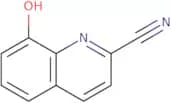
CAS:<p>Versatile small molecule scaffold</p>Formula:C9H10N4OPurity:Min. 95%Color and Shape:PowderMolecular weight:190.2 g/mol8-Hydroxy-2-quinolinecarbonitrile
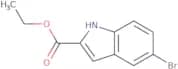
CAS:8-Hydroxy-2-quinolinecarbonitrile is an uncomplexed ligand that can be used for the synthesis of metal complexes. 8-Hydroxy-2-quinolinecarbonitrile is insoluble in most solvents, including water, and has a high melting point. This compound can be synthesized from acetonitrile and primary amines by condensing with formaldehyde. It is not possible to catalyze this reaction, as it does not undergo homolysis or heterolysis reactions. The uncomplexed ligand has been shown to bind to metal ions such as copper and silver. Its diffraction pattern was found to have a polynuclear nature with a number of diffraction peaks within the range of 5–9 Å.Formula:C10H6N2OPurity:Min. 95%Color and Shape:PowderMolecular weight:170.17 g/mol5-Bromoindole-2-carboxylic acid ethyl ester
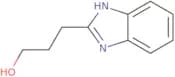
CAS:<p>5-Bromoindole-2-carboxylic acid ethyl ester (5-BIEC) is a carboxamide antibiotic that inhibits the growth of gram-negative bacteria, including pneumoniae. 5-BIEC has been shown to have an inhibitory concentration (IC50) of 0.9 μM against Escherichia coli and other gram negative bacteria. It also has anti-proliferative effects on cancer cells, which may be due to its ability to inhibit DNA replication by binding to the beta subunit of DNA gyrase. 5-BIEC is currently being studied as a potential anticancer drug for the treatment of breast cancer, colon cancer, and leukemia.</p>Formula:C11H10BrNO2Purity:Min. 98 Area-%Color and Shape:PowderMolecular weight:268.11 g/mol2-(3-Hydroxypropyl)benzimidazole
CAS:<p>2-(3-Hydroxypropyl)benzimidazole is a chloroform extract of the bark of the tree, Pongamia pinnata. It has been shown to have antibacterial and antitumor activity. 2-(3-Hydroxypropyl)benzimidazole has been found to be active against methicillin-resistant Staphylococcus aureus (MRSA), showing strong inhibitory effects on bacterial cell growth in vitro. The mechanism of action may be due to its ability to bind to DNA and RNA, preventing transcription and replication. 2-(3-Hydroxypropyl)benzimidazole also inhibits protein synthesis by binding to ribosomes and interfering with the function of enzymes that are involved in this process such as cytochrome c reductase, glutathione reductase, and 3-ketoacyl coenzyme A thiolase.</p>Formula:C10H12N2OPurity:Min. 95%Color and Shape:White PowderMolecular weight:176.22 g/mol1,3,3-Trimethoxypropene
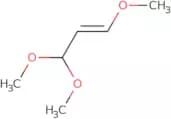
CAS:<p>1,3,3-Trimethoxypropene is a fluorophore that can be used for the labeling of nucleic acids. It has been shown to be photostable and can be used in fluorescence techniques. 1,3,3-Trimethoxypropene has also been used in structural biology research and studies on the physicochemical properties of fluorescent probes. This compound can also be used as a building block for the synthesis of supramolecular structures and conjugates with other molecules that have different properties. 1,3,3-Trimethoxypropene is a fluorophore that emits cyanines in the visible range of light.</p>Formula:C6H12O3Purity:Min. 95%Color and Shape:Clear LiquidMolecular weight:132.16 g/molN-Benzyloxycarbonylhydroxylamine
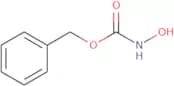
CAS:<p>N-Benzyloxycarbonylhydroxylamine is a synthetic amino acid that is used in the synthesis of hydroxamic acids. It is prepared by the reaction of benzyl groups with sodium periodate and then irradiation with UV light. The resulting triazolopyrimidine can be oxidized to form an N-benzyloxycarbonylhydroxylamine. This product has been shown to be a potent inhibitor of bacterial enzymes, such as β-aminoacylase, which are involved in the synthesis of peptides and proteins. Hydroxamic acids have also been shown to have cationic surfactant properties and are used in synthesizing organocatalysts for organic reactions.</p>Formula:C8H9NO3Purity:Min. 95%Molecular weight:167.16 g/mol(3S)-3-Amino-1-hydroxy-1,2,3,4-tetrahydroquinolin-2-one
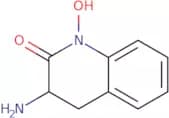
CAS:<p>(3S)-3-Amino-1-hydroxy-1,2,3,4-tetrahydroquinolin-2-one is a fine chemical with versatile building block properties. This compound has been used as a reagent and in the synthesis of complex compounds. It has also been used as a speciality chemical in research and can be used as a useful intermediate for organic reactions. (3S)-3-Amino-1-hydroxy-1,2,3,4-tetrahydroquinolin-2-one is an intermediate that can be used to synthesize other compounds or scaffolds with different functional groups. CAS No.: 34783-48-7</p>Formula:C9H10N2O2Purity:Min. 95%Color and Shape:PowderMolecular weight:178.19 g/mol

![1-[(2S)-2-(Hydroxymethyl)pyrrolidin-1-yl]ethan-1-one](/_next/image/?url=https%3A%2Fstatic.cymitquimica.com%2Fproducts%2F3D%2Fthumb-webp%2FRCA15868.webp&w=3840&q=75)
![5-Amino-1-[2,6-dichloro-4-(trifluoromethyl)phenyl]-4-[(trifluoromethyl)sulfinyl]-1H-pyrazole-3-car…](/_next/image/?url=https%3A%2Fstatic.cymitquimica.com%2Fproducts%2F3D%2Fthumb-webp%2FFA23290.webp&w=3840&q=75)
![6-[(1E)-2-(3,4-Dihydroxyphenyl)ethenyl]-3,4-dihydroxy-2H-pyran-2-one](/_next/image/?url=https%3A%2Fstatic.cymitquimica.com%2Fproducts%2F3D%2Fthumb-webp%2FZWC96466.webp&w=3840&q=75)
![2-{1-[(tert-Butoxy)carbonyl]piperidin-4-yl}-2-methylpropanoic acid](/_next/image/?url=https%3A%2Fstatic.cymitquimica.com%2Fproducts%2F3D%2Fthumb-webp%2FQJB15685.webp&w=3840&q=75)

![8-(tert-Butoxycarbonyl)-1-oxa-8-azaspiro[4.5]decane-2-carboxylic acid](/_next/image/?url=https%3A%2Fstatic.cymitquimica.com%2Fproducts%2F3D%2Fthumb-webp%2FKWB24688.webp&w=3840&q=75)