Building Blocks
This section contains fundamental products for the synthesis of organic and biological compounds. Building blocks are the essential starting materials used to construct complex molecules through various chemical reactions. They play a critical role in drug discovery, material science, and chemical research. At CymitQuimica, we offer a diverse range of high-quality building blocks to support your innovative research and industrial projects, ensuring you have the essential components for successful synthesis.
Subcategories of "Building Blocks"
- Boronic Acids & Boronic Acid Derivatives(5,756 products)
- Chiral Building Blocks(1,242 products)
- Hydrocarbon Building Blocks(6,095 products)
- Organic Building Blocks(61,038 products)
Found 196817 products of "Building Blocks"
Sort by
Purity (%)
0
100
|
0
|
50
|
90
|
95
|
100
5-Bromoindole
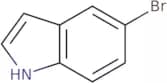
CAS:<p>The optimal reaction conditions for the acylation of 5-bromoindole with 2,2,2-trichloroethyl chloroformate are a mixture of methanol and sodium hydroxide solution. Reaction products include 2-chloro-5-(trichloromethyl)quinoline and the quinoline derivative 1-(2,2,2-trichloroethyl)-1H-imidazole. UV absorption spectra of these products have been recorded in the range of 200 to 400 nm. The reaction is successfully monitored by following changes in the NMR spectrum. The liquid chromatography method is based on a reverse phase column and detection at 220 nm.</p>Formula:C8H6BrNColor and Shape:Slightly Yellow PowderMolecular weight:196.04 g/mol11-Bromoundecanoic acid
CAS:<p>11-Bromoundecanoic acid is a heterobifunctional reagent that is used in the synthesis of phospholipids. This chemical reacts with an amide group on a phosphatidylcholine to introduce a bromine atom, which can be used as a fluorophore. The reaction is done in an organic solvent, such as dichloromethane, which facilitates the reaction by dissolving the reactants. The reaction can be monitored using fluorescence assay techniques and 11-bromoundecanoic acid is characterized by its constant ring-opening constant and fatty acid chain length.</p>Formula:C11H21BrO2Purity:Min. 95%Color and Shape:PowderMolecular weight:265.19 g/mol2,2'-Bipyridine-6,6'-dicarboxylic acid
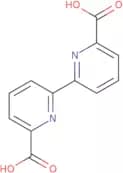
CAS:<p>2,2'-Bipyridine-6,6'-dicarboxylic acid is a molecule that has an acidic functional group. It has been found to have a molecular weight of 220.2 g/mol and is soluble in water at elevated temperatures. 2,2'-Bipyridine-6,6'-dicarboxylic acid has been shown to be photoprocessable in the presence of sodium carbonate as a catalyst. The reaction rate can be increased by adding a diluent to the solution or by using linear models.</p>Formula:C12H8N2O4Purity:Min. 95%Color and Shape:Off-White PowderMolecular weight:244.21 g/molBenzylamine
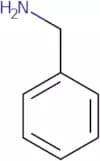
CAS:<p>Substrate of benzylamine oxidase and monoamine oxidase B</p>Formula:C7H9NPurity:Min. 98.0 Area-%Color and Shape:Colorless Slightly Yellow Clear LiquidMolecular weight:107.15 g/molBenzaldehyde dimethyl acetal
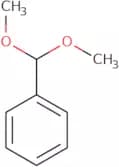
CAS:<p>Vegetable, nutty and floral flavour/fragrance</p>Formula:C9H12O2Purity:Min. 95%Color and Shape:Clear LiquidMolecular weight:152.19 g/mol5-Bromo-7-azaindole
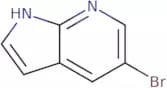
CAS:<p>5-Bromo-7-azaindole is a nitrogen heterocycle that has shown promising anti-cancer properties. This compound is synthesized by the reaction of sodium azide and 5-bromo-2,4,6-trinitrobenzene in anhydrous conditions. 5-Bromo-7-azaindole displays significant cytotoxicity against human ovarian carcinoma cells in vivo and inhibits the proliferation of cancer cells by binding to ATP synthase. The anticancer activity of this compound is due to its ability to inhibit the synthesis of DNA and RNA, which are vital for cell division. 5-Bromo-7-azaindole also shows an increase in hydrogen bonding, which can be used to explain its structural analysis.</p>Formula:C7H5BrN2Purity:Min. 98 Area-%Color and Shape:PowderMolecular weight:197.03 g/mol5-Bromo-2,4-dichloropyrimidine
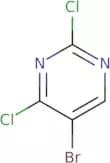
CAS:<p>5-Bromo-2,4-dichloropyrimidine is an aryl halide compound that is synthesized from 2,4-dichloropyrimidine and bromine. It has been shown to have inhibitory activities against cancer cells in vitro. 5-Bromo-2,4-dichloropyrimidine is used in the synthesis of the drug palbociclib (also known as PLX4720), which prevents mitotic progression by binding to the mitotic checkpoint protein (e.g., cyclin B). The reaction yield for this compound is low and its absorption enhancer properties are not well understood. 5-Bromo-2,4-dichloropyrimidine has also been used in conjunction with crotonic acid as a potential anticancer agent.</p>Formula:C4HBrCl2N2Purity:Min. 95%Color and Shape:Off-White Clear LiquidMolecular weight:227.87 g/mol4-Bromo-2-hydroxybenzaldehyde
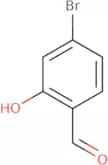
CAS:<p>4-Bromo-2-hydroxybenzaldehyde is a chemical compound that is used in the synthesis of azides. It has a molecular formula of C6H5BrO, a diameter of 197.037 pm, and a structural formula of CHBrO. 4-Bromo-2-hydroxybenzaldehyde can be prepared by reacting bromine with hydroxybenzaldehyde in the presence of an amine catalyst. This product has been shown to have synergistic effects when used in combination with other anticancer agents such as aminopyrimidines, coumarin derivatives, or 2-(4'-hydroxyphenyl) benzoxazole. The photophysical properties of 4-bromo-2-hydroxybenzaldehyde are characterized by its fluorescence emission at 272 nm and its absorption at 270 nm. This product also shows low detection levels in human liver tissue samples, which may be due to its high water sol</p>Formula:C7H5BrO2Purity:Min. 95%Color and Shape:White PowderMolecular weight:201.02 g/mol4-Bromopyrimidine hydrobromide
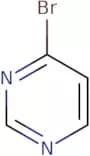
CAS:<p>4-Bromopyrimidine hydrobromide is a synthetic analog of phenylpyrimidine. It has been shown in vivo to lower the blood glucose levels of diabetic patients by inhibiting the activity of phosphoenolpyruvate carboxykinase, which is involved in the conversion of glucose to pyruvate. 4-Bromopyrimidine hydrobromide also inhibits the synthesis of glycogen and lowers serum triglycerides in both db/db mice and normal mice. The drug has not been evaluated for its effects on other metabolic parameters such as cholesterol or insulin resistance. 4-Bromopyrimidine hydrobromide may have potential as an anti-obesity drug because it reduces food intake and weight gain in db/db mice.</p>Formula:C4H3BrN2•HBrPurity:Min. 95 Area-%Color and Shape:Slightly Yellow PowderMolecular weight:239.9 g/molO-Benzyl-L-tyrosine
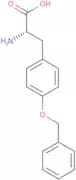
CAS:<p>O-Benzyl-L-tyrosine is an alkylated aromatic amino acid, which is synthesized by the reaction of chloromethyl ketone with proctolin. It has been shown to have anti-obesity properties in mice and rats. O-Benzyl-L-tyrosine has also been used to encapsulate a variety of drugs, including insulin, as well as small drug molecules like chemotherapeutic agents. The drug is immobilized in an organic polymer film through ester linkage. The film can be removed from the drug by dissolving it in chloroformate, or by exposing it to light and heat.</p>Formula:C16H17NO3Purity:Min. 95%Color and Shape:White/Off-White SolidMolecular weight:271.31 g/mol2,2'-Biquinoline-4,4'-dicarboxylic acid disodium salt
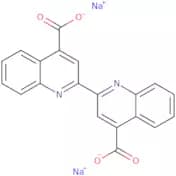
CAS:<p>2,2'-Biquinoline-4,4'-dicarboxylic acid disodium salt is a model system for studying the sequence and hydrogen bonding interactions of polymers. It is a biocompatible polymer that has been shown to have inhibitory properties in response to atherosclerotic lesions. 2,2'-Biquinoline-4,4'-dicarboxylic acid disodium salt has shown optical properties that can be used as a signal in recording sequences. This polymerase chain reaction (PCR) substrate is able to bind with DNA and protein molecules when they are present in an appropriate buffer. The sequence of 2,2'-biquinoline-4,4'-dicarboxylic acid disodium salt is controlled by the coordination geometry of the metal ions involved in its formation.</p>Formula:C20H10N2Na2O4Purity:Min. 95%Color and Shape:PowderMolecular weight:388.28 g/mol5-Bromoindole-2-carboxylic acid ethyl ester
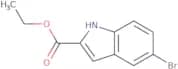
CAS:<p>5-Bromoindole-2-carboxylic acid ethyl ester (5-BIEC) is a carboxamide antibiotic that inhibits the growth of gram-negative bacteria, including pneumoniae. 5-BIEC has been shown to have an inhibitory concentration (IC50) of 0.9 μM against Escherichia coli and other gram negative bacteria. It also has anti-proliferative effects on cancer cells, which may be due to its ability to inhibit DNA replication by binding to the beta subunit of DNA gyrase. 5-BIEC is currently being studied as a potential anticancer drug for the treatment of breast cancer, colon cancer, and leukemia.</p>Formula:C11H10BrNO2Purity:Min. 98 Area-%Color and Shape:PowderMolecular weight:268.11 g/mol(S)-N-Boc-2-aminopent-4-en-1-ol
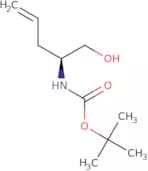
CAS:<p>(S)-N-Boc-2-aminopent-4-en-1-ol is an organic compound that is a useful scaffold for the synthesis of complex compounds. It is also a useful intermediate in organic synthesis and can be used as a building block to synthesize fine chemicals. The chemical has been registered with CAS number 116613-81-1.</p>Formula:C10H19NO3Purity:Min. 95%Color and Shape:Colourless To Yellow LiquidMolecular weight:201.26 g/mol3-Buten-3-ethyl-1-ol
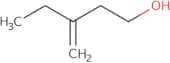
CAS:<p>3-Buten-3-ethyl-1-ol is a versatile building block that can be used as a reagent for chemical synthesis. It is a complex compound that can be used as a reaction component or intermediate in organic synthesis. 3-Buten-3-ethyl-1-ol has been shown to have antiinflammatory properties, which may be due to the inhibition of prostaglandin synthesis.</p>Formula:C6H12OPurity:Min. 95%Color and Shape:Clear LiquidMolecular weight:100.16 g/mol2-Bromo-4-hydroxyacetophenone
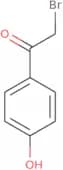
CAS:<p>2-Bromo-4-hydroxyacetophenone is a membrane permeable inhibitor of monoamine oxidase (MAO) that has been shown to inhibit the enzyme's activity with an IC50 of 10 μM. It is used as a research tool in biological studies and has been shown to be active against MAO A, MAO B, and MAO C. 2-Bromo-4-hydroxyacetophenone has also been shown to inhibit the growth of carcinoma cells in vitro. This molecule is also a β-unsaturated ketone that binds to catalytic domains and forms covalent bonds with chloride ions. 2-Bromo-4-hydroxyacetophenone can be used as an industrial process catalyst for chemical reactions involving chloride.<br>2-Bromo-4-hydroxyacetophenone synergistically inhibits the growth of cancer cells when combined with other compounds such as trifluoroacetic acid or dichloromet</p>Formula:C8H7BrO2Purity:(%) Min. 85%Color and Shape:PowderMolecular weight:215.04 g/molNα-Nim-Bis-Z-L-histidine ethanol
CAS:<p>Please enquire for more information about Nα-Nim-Bis-Z-L-histidine ethanol including the price, delivery time and more detailed product information at the technical inquiry form on this page</p>Formula:C22H21N3O6•C2H6OPurity:Min. 95%Color and Shape:PowderMolecular weight:469.49 g/molBP fluor 647 NHS ester trisodium
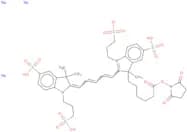
CAS:<p>Please enquire for more information about BP fluor 647 NHS ester trisodium including the price, delivery time and more detailed product information at the technical inquiry form on this page</p>Formula:C40H46N3Na3O16S4Purity:90%MinColor and Shape:PowderMolecular weight:1,022 g/mol6-Bromo-2-oxindole
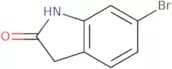
CAS:<p>6-Bromo-2-oxindole is a crystalline compound with a molecular formula of C10H6BrO. It has been shown to have a high efficiency in the production of butyric acid and other organic acids. 6-Bromo-2-oxindole is also used in electron microscopy studies as an electron acceptor, and can be used for producing polymers with crystalline structures and dihedral angles. The compound has been shown to inhibit the growth of breast cancer cells by preventing the synthesis of mda-mb-231 breast cancer cells. It also has been shown to inhibit the production of isoindigo and morphology.</p>Formula:C8H6BrNOPurity:Min. 98 Area-%Color and Shape:PowderMolecular weight:212.04 g/mol1-Butene-3,4-diol
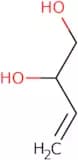
CAS:<p>1-Butene-3,4-diol is a reactive compound that is used in analytical methods. It can be synthesized by an asymmetric synthesis from 1,2-butanediol. This product has been shown to inhibit aminotransferase activity in rat liver microsomes and to be metabolized through the cytochrome P450 system. 1-Butene-3,4-diol also inhibits polymerase chain reactions and is reactive with hydrochloric acid. It may cause fatty acid metabolism and hydroxyl group formation.</p>Formula:C4H8O2Purity:Min. 95%Color and Shape:Colorless Clear LiquidMolecular weight:88.11 g/mol2-(Bromomethyl)benzoic acid
CAS:<p>2-(Bromomethyl)benzoic acid is a functional group that can be found in many organic compounds. It is a derivative of phthalic acid and has some similar properties, including the ability to form micelles and radical species. 2-(Bromomethyl)benzoic acid has been shown to react with carbon tetrachloride or terephthalic acid to produce peroxides. This reaction is initiated by oxidation of the carbon-carbon double bond, which produces a radical pair that reacts with oxygen in the air to form radicals that are stabilized by resonance. 2-(Bromomethyl)benzoic acid also reacts with an inorganic base such as sodium hydroxide or potassium hydroxide to produce bromine gas and water.</p>Formula:C8H7BrO2Purity:Min. 97 Area-%Color and Shape:White Off-White PowderMolecular weight:215.04 g/mol