Building Blocks
Subcategories of "Building Blocks"
- Boronic Acids & Boronic Acid Derivatives(5,781 products)
- Chiral Building Blocks(1,242 products)
- Hydrocarbon Building Blocks(6,101 products)
- Organic Building Blocks(61,033 products)
Found 205320 products of "Building Blocks"
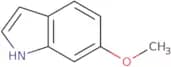
6-Methoxyindole
CAS:6-Methoxyindole is an acetate extract of the plant 5-methoxyindole. It has been shown to be a 5-HT1A receptor agonist in animals, and has been shown to have cardiac effects in rats. 6-Methoxyindole is also used as a precursor for the synthesis of diphenylacetylindoles. 6-Methoxyindole is one of the molecules that can be recombined to form a batcho-leimgruber indole (BLI).
Formula:C9H9NOPurity:Min. 99 Area-%Color and Shape:PowderMolecular weight:147.17 g/molMaleimide
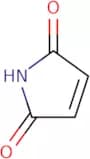
CAS:Maleimide is a chemical compound that can be synthesized from maleic anhydride and hydrogen fluoride. It has been used as a fluorescent probe for the measurement of electrochemical impedance spectroscopy (EIS) in biological systems. Maleimide is also used to study the interaction with mouse monoclonal antibody, which can be used to detect the presence of specific proteins or antigens in blood. Maleimides are covalently linked to proteins and other macromolecules through their thiol groups, forming a stable linkage. Maleimide reacts with hydrogen gas at high temperatures, leading to a decrease in its redox potentials. The reaction solution can be analyzed by plasma mass spectrometry, which determines the concentration of maleimide and its reactants by measuring ions produced by ionization or fragmentation reactions.Formula:C4H3NO2Purity:Min. 95%Color and Shape:Off-White PowderMolecular weight:97.07 g/mol4-[2-(Dimethylamino)ethoxy]benzene-1-carboximidamide
CAS:Controlled ProductVersatile small molecule scaffoldFormula:C11H17N3OPurity:Min. 90%Color and Shape:PowderMolecular weight:207.27 g/mol6-Methoxy-2-naphthol
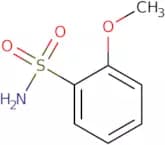
CAS:6-Methoxy-2-naphthol is a synthetic compound. It has been shown to be an effective antibacterial agent against Gram-positive bacteria when tested in vitro. 6-Methoxy-2-naphthol also inhibits methyltransferase activity and can be used in the treatment of cancer. The optical properties of 6-Methoxy-2-naphthol have been studied extensively, and it has been found to have strong absorption bands at 350 nm and 575 nm, making it a potential candidate for photodynamic therapy.Formula:C11H10O2Purity:Min. 95%Color and Shape:Brown PowderMolecular weight:174.2 g/mol2-Methoxybenzene sulphonamide
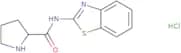
CAS:2-Methoxybenzene sulphonamide is an anti-cancer drug that belongs to the class of hydroxylated aromatic compounds. It has been shown to inhibit the growth of cancer cells in culture and in animals, and to prevent the formation of metastases. 2-Methoxybenzene sulphonamide is also a vasodilator drug used for the treatment of congestive heart failure. This drug binds to dopamine receptors in humans and may inhibit phosphatase activity. It has been shown to act as an antihypertensive by inhibiting angiotensin II mediated hypertrophy of cardiac tissue.Formula:C7H9NO3SPurity:Min. 95%Color and Shape:White PowderMolecular weight:187.22 g/molN-(1,3-Benzothiazol-2-yl)pyrrolidine-2-carboxamide hydrochloride
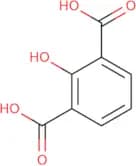
CAS:Versatile small molecule scaffoldFormula:C12H14ClN3OSPurity:Min. 95%Color and Shape:PowderMolecular weight:283.78 g/mol2-Hydroxyisophthalic acid
CAS:2-Hydroxyisophthalic acid is a hydroxylated derivative of p-hydroxybenzoic acid. It is used in the manufacture of esters such as 2-ethoxyethanol and 2-ethoxyethyl acetate. It has also been shown to have a number of enzyme activities, including esterases, glycosidases, and lipases. The macrocyclic structure of 2-hydroxyisophthalic acid is responsible for its ability to interact with other molecules through hydrogen bonding and coordination chemistry. The carboxylate group on 2-hydroxyisophthalic acid interacts with the hydroxy group on the fatty acids found in soap, which leads to its use as an emulsifying agent. The carbonyl oxygens on 2-hydroxyisophthalic acid are responsible for its anti-inflammatory properties as they inhibit prostaglandin synthesis when they bind to the cyclooxygenase enzymes that catalyze
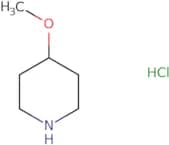
Formula:C8H6O5Purity:Min. 95 Area-%Color and Shape:PowderMolecular weight:182.13 g/mol4-Methoxypiperidine hydrochloride
CAS:4-Methoxypiperidine hydrochloride is an organic compound that belongs to the chemical class of aminomethylpiperidines. It is a cycloaddition reaction product of 5-hydroxyisoquinoline and an aldehyde, and it has been used to synthesize aminomethylene derivatives. 4-Methoxypiperidine hydrochloride is also reductively aminated with ammonia or ammonium salts to form alkylamine derivatives. The ring system in 4-methoxypiperidine hydrochloride can be modified by substituting the methyl group with other groups, such as ethyl or phenyl.Formula:C6H13NO•HClPurity:Min. 95%Molecular weight:151.63 g/mol4-Azidopiperidine hydrochloride
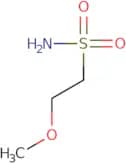
CAS:4-Azidopiperidine hydrochloride is a chemical compound that is used as a versatile building block in the synthesis of complex chemical compounds. It is also used as a reagent or speciality chemical, and has many applications in research, such as being an intermediate for the synthesis of other chemicals. 4-Azidopiperidine hydrochloride can be used to make useful building blocks, reaction components, and scaffolds for chemical reactions.Formula:C5H11ClN4Purity:Min. 95%Color and Shape:PowderMolecular weight:162.62 g/mol2-Methoxyethanesulfonamide
CAS:Versatile small molecule scaffoldFormula:C3H9NO3SPurity:Min. 95%Color and Shape:Clear LiquidMolecular weight:139.17 g/molN2-Isobutyryl-5'-O-(4,4'-dimethoxytrityl)-2'-deoxyguanosine-3'-O-succinate triethylamine
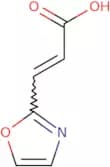
CAS:Please enquire for more information about N2-Isobutyryl-5'-O-(4,4'-dimethoxytrityl)-2'-deoxyguanosine-3'-O-succinate triethylamine including the price, delivery time and more detailed product information at the technical inquiry form on this pageFormula:C39H41N5O10•C6H15NPurity:Min. 95%Molecular weight:840.96 g/mol(2E)-3-(1,3-Oxazol-2-yl)prop-2-enoic acid
CAS:1,3-Oxazole is an organic compound that belongs to the class of 1,3-diketones. It is a versatile building block that can be used in many different reactions. 1,3-Oxazole has been shown to be a reagent for use in research and as a speciality chemical. It has also been shown to be a useful intermediate for the synthesis of complex compounds. The compound is also a useful scaffold for developing high quality drug candidates with potential applications in medicine or other fields.
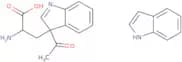
Formula:C6H5NO3Purity:Min. 95%Molecular weight:139.11 g/molIndole-3-acetyl-DL-tryptophan
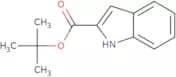
CAS:Please enquire for more information about Indole-3-acetyl-DL-tryptophan including the price, delivery time and more detailed product information at the technical inquiry form on this pageFormula:C21H19N3O3Purity:Min. 95%Color and Shape:PowderMolecular weight:361.4 g/molIndole-2-carboxylic acid tert-butyl ester
CAS:Indole-2-carboxylic acid tert-butyl ester is a synthetic compound that exhibits potent antiapoptotic activity. It has been shown to inhibit the bcl-2 family of proteins, which are involved in the regulation of apoptosis. Indole-2-carboxylic acid tert-butyl ester has also been shown to inhibit the growth of cancer cells in cell culture and induce apoptosis in these cells. This compound also inhibits the production of furan, which is a functional group found on some carcinogenic chemicals. Indole-2-carboxylic acid tert-butyl ester is an inhibitor of Bax protein, a proapoptotic protein that plays a role in regulating cell death.Formula:C13H15NO2Purity:Min. 95%Color and Shape:PowderMolecular weight:217.26 g/molN-Hydroxysuccinimide
CAS:An additive in carbodiimide peptide coupling
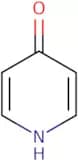
Formula:C4H5NO3Color and Shape:White PowderMolecular weight:115.09 g/mol4-Hydroxypyridine
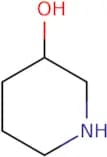
CAS:4-Hydroxypyridine is a nitrite ion that contains two nitrogen atoms. It is used to study microbial metabolism and the role of nitrogen in biological systems. 4-Hydroxypyridine can be synthesized from pyridinium, which can be prepared by treating aniline with nitrous acid. The synthesis of 4-hydroxypyridine has been investigated using a hydroxylation reaction catalyzed by palladium, followed by cyclization to form a cyclic peptide. This reaction has been shown to have significant cytotoxicity against HIV-infected cells, with light emission as a result of the reaction between the hydrogen atom on the pyridine ring and oxygen molecule.Formula:C5H5NOPurity:Min. 98 Area-%Color and Shape:White PowderMolecular weight:95.1 g/mol3-Hydroxypiperidine
CAS:3-Hydroxypiperidine is a chemical compound that contains an asymmetric carbonyl group. It has been used in the synthesis of enantiopure pharmaceuticals, and is also a competitive inhibitor for some enzymes. 3-Hydroxypiperidine can be synthesized by hydrogenation reduction or hydroxylation of piperidine. This compound has been shown to have pharmacokinetic properties in rats and mice, as well as inhibitory effects on brain functions such as memory retention and learning. 3-Hydroxypiperidine has also been shown to induce apoptosis in breast cancer cells, which may be due to its ability to inhibit protein synthesis in these cells.Formula:C5H11NOPurity:Min. 95%Color and Shape:White PowderMolecular weight:101.15 g/mol4-Hydroxy-3-methoxybenzoic acid
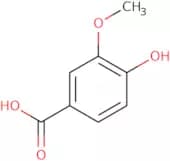
CAS:Flavoring agent; interacts with TPRV receptors and ASIC channels
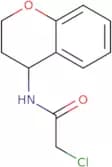
Formula:C8H8O4Purity:Min. 98 Area-%Color and Shape:White Beige PowderMolecular weight:168.15 g/mol2-Chloro-N-(3,4-dihydro-2H-1-benzopyran-4-yl)acetamide
CAS:Versatile small molecule scaffoldFormula:C11H12ClNO2Purity:Min. 95%Color and Shape:PowderMolecular weight:225.67 g/mol4-Methoxycyclohexane-1-sulfonyl chloride
CAS:Versatile small molecule scaffoldFormula:C7H13ClO3SPurity:Min. 95%Color and Shape:Clear LiquidMolecular weight:212.7 g/mol

![4-[2-(Dimethylamino)ethoxy]benzene-1-carboximidamide](/_next/image/?url=https%3A%2Fstatic.cymitquimica.com%2Fproducts%2F3D%2Fthumb-webp%2FSQB04906.webp&w=3840&q=75)