Building Blocks
This section contains fundamental products for the synthesis of organic and biological compounds. Building blocks are the essential starting materials used to construct complex molecules through various chemical reactions. They play a critical role in drug discovery, material science, and chemical research. At CymitQuimica, we offer a diverse range of high-quality building blocks to support your innovative research and industrial projects, ensuring you have the essential components for successful synthesis.
Subcategories of "Building Blocks"
- Boronic Acids & Boronic Acid Derivatives(5,784 products)
- Chiral Building Blocks(1,242 products)
- Hydrocarbon Building Blocks(6,105 products)
- Organic Building Blocks(61,065 products)
Found 205418 products of "Building Blocks"
Sort by
Purity (%)
0
100
|
0
|
50
|
90
|
95
|
100
3-Methyl-1,2,5,6,7,8-hexahydroquinoxalin-2-one
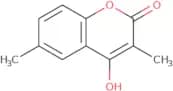
CAS:Versatile small molecule scaffoldFormula:C9H12N2OPurity:Min. 95%Molecular weight:164.2 g/mol4-Hydroxy-3,6-dimethyl-2H-chromen-2-one
CAS:Versatile small molecule scaffoldFormula:C11H10O3Purity:Min. 95%Molecular weight:190.19 g/moltert-Butyl N-[(2S)-4-oxobutan-2-yl]carbamate
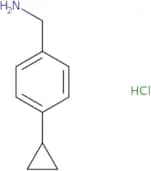
CAS:Versatile small molecule scaffoldFormula:C9H17NO3Purity:Min. 95%Molecular weight:187.24 g/mol(4-Cyclopropylphenyl)methanamine hydrochloride
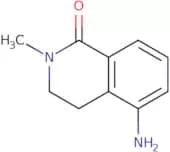
CAS:Versatile small molecule scaffoldFormula:C10H14ClNPurity:Min. 95%Molecular weight:183.68 g/mol5-Amino-2-methyl-1,2,3,4-tetrahydroisoquinolin-1-one
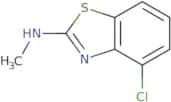
CAS:Versatile small molecule scaffoldFormula:C10H12N2OPurity:Min. 95%Molecular weight:176.21 g/mol4-Chloro-N-methyl-1,3-benzothiazol-2-amine
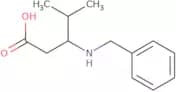
CAS:Versatile small molecule scaffoldFormula:C8H7ClN2SPurity:Min. 95%Molecular weight:198.67 g/mol3-(Benzylamino)-4-methylpentanoic acid
CAS:Versatile small molecule scaffoldFormula:C13H19NO2Purity:Min. 95%Molecular weight:221.29 g/mol2-[(5-Nitroquinolin-8-yl)oxy]acetic acid
CAS:Versatile small molecule scaffoldFormula:C11H8N2O5Purity:Min. 95%Molecular weight:248.19 g/mol3-(3-Bromophenyl)-2,2-dimethylpropanenitrile
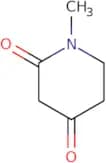
CAS:Versatile small molecule scaffoldFormula:C11H12BrNPurity:Min. 95%Molecular weight:238.12 g/mol1-Methylpiperidine-2,4-dione
CAS:1-Methylpiperidine-2,4-dione is a biologically active molecule with anti-inflammatory and analgesic properties. It is synthesized by reacting a ketone with an amine to form a 1,3-diketone. The carbonyl group of the diketone reacts with an aldehyde to form an enamine, which can be reduced to yield the desired product. This reaction can be carried out either intramolecularly or intermolecularly. Reduction reactions are used in organic chemistry as they are often easier than oxidation reactions for carbonyl compounds.
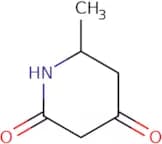
Formula:C6H9NO2Purity:Min. 95%Molecular weight:127.14 g/mol6-Methylpiperidine-2,4-dione
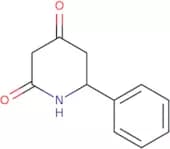
CAS:6-Methylpiperidine-2,4-dione is an alkaloid that has been shown to have antitumor activity. It has low toxicity and can be administered orally. 6-Methylpiperidine-2,4-dione also inhibits tumor growth and the formation of malignant tumors in mice. The mechanism of action is not known but may involve inhibition of protein synthesis or DNA replication. This drug is a remedy for malignant tumors and tumors in general.Formula:C6H9NO2Purity:Min. 95%Molecular weight:127.14 g/mol6-Phenylazaperhydroine-2,4-dione
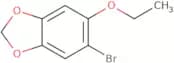
CAS:6-Phenylazaperhydroine-2,4-dione is an analog of azaperhydroine-2,4-dione that is synthesised by the addition of a phenyl group to the alpha carbon. This compound has been shown to inhibit the growth of mycobacteria in vitro and in vivo. It also shows high antimycobacterial activity against strains of Mycobacterium tuberculosis and Mycobacterium avium complex. 6-Phenylazaperhydroine-2,4-dione inhibits mycobacterial DNA gyrase and topoisomerase IV, which are enzymes that maintain the integrity of bacterial DNA. It binds to bacterial 16S ribosomal RNA and inhibits protein synthesis, leading to cell death by inhibiting the production of proteins vital for cell division. The compound is also enantiopure and optically pure, with a dieckmann geometry. 6-PhenylFormula:C11H11NO2Purity:Min. 95%Molecular weight:189.21 g/mol5-Bromo-6-ethoxy-1,3-dioxaindane
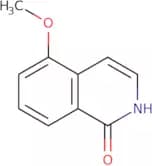
CAS:Versatile small molecule scaffoldFormula:C9H9BrO3Purity:Min. 95%Molecular weight:245.07 g/mol5-Methoxyisoquinolin-1(2H)-one
CAS:Versatile small molecule scaffoldFormula:C10H9NO2Purity:Min. 95%Molecular weight:175.19 g/mol2-Bromo-1-(3-methylbenzo[b]thiophen-2-yl)-ethan-1-one
CAS:Versatile small molecule scaffold
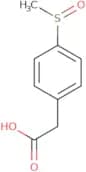
Formula:C11H9BrOSPurity:Min. 95%Molecular weight:269.2 g/mol2-(4-Methanesulfinylphenyl)acetic acid
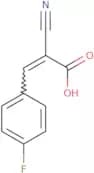
CAS:Versatile small molecule scaffoldFormula:C9H10O3SPurity:Min. 95%Molecular weight:198.24 g/molα-Cyano-4-fluorocinnamic acid
CAS:α-Cyano-4-fluorocinnamic acid is a matrix that has been used in experiments to target and visualize peptides. It selectively shows the peptide mass in analytical experiments by ionizing and then fragmenting the peptide. The resulting spectra are analyzed using mass spectrometry, which allows for fingerprinting of the peptide.Formula:C10H6FNO2Purity:Min. 95%Molecular weight:191.16 g/mol3-[(4-Fluorophenyl)carbonyl]piperidine hydrochloride
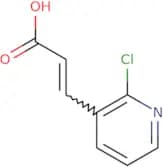
CAS:Versatile small molecule scaffoldFormula:C12H14FNO·HClPurity:Min. 95%Molecular weight:243.71 g/mol(2E)-3-(2-Chloropyridin-3-yl)prop-2-enoic acid
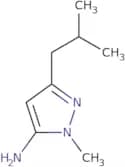
CAS:Versatile small molecule scaffoldFormula:C8H6ClNO2Purity:Min. 95%Molecular weight:183.59 g/mol1-Methyl-3-(2-methylpropyl)-1H-pyrazol-5-amine
CAS:Versatile small molecule scaffoldFormula:C8H15N3Purity:Min. 95%Molecular weight:153.22 g/mol

![tert-Butyl N-[(2S)-4-oxobutan-2-yl]carbamate](/_next/image/?url=https%3A%2Fstatic.cymitquimica.com%2Fproducts%2F3D%2Fthumb-webp%2FTEA17326.webp&w=3840&q=75)
![2-[(5-Nitroquinolin-8-yl)oxy]acetic acid](/_next/image/?url=https%3A%2Fstatic.cymitquimica.com%2Fproducts%2F3D%2Fthumb-webp%2FTEA24955.webp&w=3840&q=75)

![2-Bromo-1-(3-methylbenzo[b]thiophen-2-yl)-ethan-1-one](/_next/image/?url=https%3A%2Fstatic.cymitquimica.com%2Fproducts%2F3D%2Fthumb-webp%2FTEA33733.webp&w=3840&q=75)
![3-[(4-Fluorophenyl)carbonyl]piperidine hydrochloride](/_next/image/?url=https%3A%2Fstatic.cymitquimica.com%2Fproducts%2F3D%2Fthumb-webp%2FTEA41266.webp&w=3840&q=75)