Building Blocks
Subcategories of "Building Blocks"
- Boronic Acids & Boronic Acid Derivatives(5,805 products)
- Chiral Building Blocks(1,248 products)
- Hydrocarbon Building Blocks(6,118 products)
- Organic Building Blocks(61,447 products)
Found 208423 products of "Building Blocks"
tert-Butyl N-{[2-(methylamino)pyridin-4-yl]methyl}carbamate
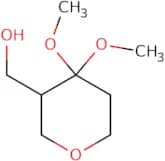
CAS:Versatile small molecule scaffoldFormula:C12H19N3O2Purity:Min. 95%Molecular weight:237.3 g/mol(4,4-Dimethoxyoxan-3-yl)methanol
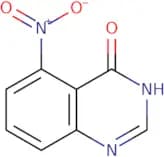
CAS:Versatile small molecule scaffoldFormula:C8H16O4Purity:Min. 95%Molecular weight:176.2 g/mol5-Nitroquinazolin-4-ol
CAS:Versatile small molecule scaffoldFormula:C8H5N3O3Purity:Min. 95%Molecular weight:191.14 g/molL-Alaninol
CAS:L-Alaninol is a chemical compound that is used as a building block in organic synthesis.Formula:C3H9NOMolecular weight:75.11 g/mol(3,4-Dimethylphenyl)urea
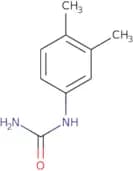
CAS:Versatile small molecule scaffoldFormula:C9H12N2OPurity:Min. 95%Molecular weight:164.2 g/molChlorendic Acid
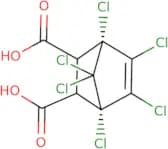
CAS:Chlorendic Acid is an inorganic acid that is used as a hydrogen donor. It has been shown to be effective in the reduction of ethylene diamine and 2,4-dichlorobenzoic acid and can be used as a catalyst for the synthesis of glycol ethers. Chlorendic Acid has also been shown to cause liver lesions in rats when given intraperitoneally at high doses, with no evidence of carcinogenicity. Chlorendic Acid is not considered to be a carcinogenic hazard and does not show genotoxicity or mutagenicity properties.
Formula:C9H4Cl6O4Purity:Min. 95%Molecular weight:388.83 g/molParamethadione-d3
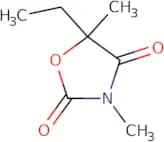
CAS:Paramethadione is a drug that has been shown to be an immunosuppressant and anti-inflammatory agent. It is used in the treatment of autoimmune diseases, such as polycystic ovarian syndrome and rheumatoid arthritis. Paramethadione also has been shown to reduce disease activity in patients with chronic oral fungal infections. This drug interacts with other drugs by inhibiting enzymes that metabolize these drugs, which can lead to increased levels of active drugs in the blood. These interactions are important factors to consider when taking this medication.Formula:C7H8D3NO3Purity:Min. 95%Molecular weight:160.19 g/molHexachloropropanone
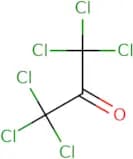
CAS:Hexachloropropanone (HCP) is a molecule that is structurally similar to the amines and has a hydroxyl group. It is activated by intramolecular hydrogen bonding, which results in the formation of a redox potential. This property makes it an excellent reagent for conversion of halides to chlorides and vice versa. Hexachloropropanone also reacts with chlorine atoms, forming chlorine radicals and other reactive species, which can be used as a catalyst in organic synthesis reactions. The molecule has a carbonyl group on one end, which facilitates its interaction with hydrocarbons.Formula:C3Cl6OPurity:Min. 95%Molecular weight:264.75 g/molDichloroacetic Acid Methyl Ester
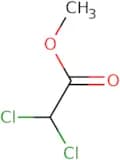
CAS:Dichloroacetic acid methyl ester (DCA) is a metabolic disorder agent that belongs to the group of detergent compositions. It is an important intermediate in the synthesis of sodium salts and hiv infection inhibitors, such as hydrochloric acid and covalent linkages. DCA reacts with water molecules to form hydroxyl groups and then reacts with metal carbonyls to produce anhydrous sodium. This product also reacts with fatty acids to produce alcohol residue and can be used in the reaction solution. The product has a pyrazole ring with a hydroxyl group at one end and an alcohol residue at the other end.Formula:C3H4Cl2O2Purity:Min. 95%Molecular weight:142.97 g/mol4-Chlorophthalic anhydride
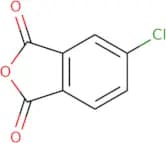
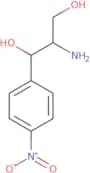
CAS:4-Chlorophthalic anhydride is a colorless crystalline solid that is soluble in acetone and ethanol. It is used to synthesize dyes, paints, varnishes, and other organic compounds. This compound can be produced by the reaction of copper chloride with chloral hydrate or by the dehydration of phthalic anhydride with concentrated sulfuric acid. 4-Chlorophthalic anhydride reacts with hydrogen chloride to form 4-chlorophthalic acid. The solubility of this compound in water varies depending on the temperature and pH levels. The solubilities of 4-chlorophthalic anhydride are determined using experimental solubility data and calculated using thermodynamic values and vibrational frequencies. Phase equilibrium studies show that at low temperatures, 4-chlorophthalic anhydride is more soluble in water than at higher temperatures due to its lower energy state.Formula:C8H3ClO3Purity:Min. 95%Molecular weight:182.56 g/mol2-Amino-1-(4-nitrophenyl)-1,3-propanediol
CAS:2-Amino-1-(4-nitrophenyl)-1,3-propanediol (2APPD) is a diagnostic reagent that can be used to identify tuberculosis infections. 2APPD is an acidic compound that can be synthesized by the reaction of 4-nitrophenol and formaldehyde. The absorbance of 2APPD at 400 nm can be measured using a colorimetric method. It has been shown that the initial rate of deaggregation of 2APPD depends on the pH and ionic strength of the environment. A schematic diagram illustrating this process is available in this article. Gold nanoparticles are uncharged and do not react with 2APPD, which makes them ideal for use in developing biosensors for detecting this compound.
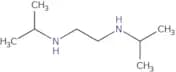
Formula:C9H12N2O4Purity:Min. 95%Color and Shape:PowderMolecular weight:212.2 g/molN,N-Diisopropylethylenediamine
CAS:N,N-Diisopropylethylenediamine is an organic compound that has been used as a building block for the synthesis of many other chemicals. It is a colorless liquid with a strong smell. N,N-Diisopropylethylenediamine reacts with bases in acidic environments to produce an amide. This reaction can be monitored by measuring the fluorescence resonance of the molecule. The molecule will emit light when it is excited by a laser at certain wavelengths. N,N-Diisopropylethylenediamine has been shown to have anticancer activity and benzyl groups on its structure make it more reactive than other molecules, which may account for its cancer-fighting effects. The reactivity of this molecule also makes it useful in ring-opening reactions and in the formation of acid environments.Formula:C8H20N2Purity:Min. 95%Molecular weight:144.26 g/mol3-Aminobenzenesulfonic acid
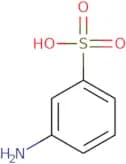
CAS:3-Aminobenzenesulfonic acid (ABAS) is a chemical that belongs to the group of inhibitor molecules. It has been shown to be an efficient inhibitor of the enzyme carbonic anhydrase, which is essential for the conversion of CO2 to bicarbonate and protons. This inhibition causes a decrease in pH and increased thermal expansion, leading to increased permeability of water through cell walls. ABAS has also been shown to have antibacterial efficacy against bacteria such as Escherichia coli, Pseudomonas aeruginosa, and Staphylococcus aureus. Furthermore, it has been used in wastewater treatment due to its ability to break down organic matter into simpler compounds.
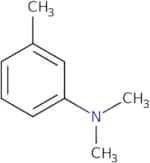
Formula:H2NC6H4SO3HPurity:Min. 95%Molecular weight:173.19 g/molN,N,3-Trimethylaniline
CAS:N,N,3-Trimethylaniline is a precursor for the production of 3-isopropylaniline. The compound is an isomer of trimethylamine. N,N,3-trimethylaniline undergoes cationic polymerization with acrylonitrile to produce a polyacrylonitrile. It also reacts with cellulose acetate to form cellulose nitrate. This compound has been shown to be useful in the synthesis of anthracene and peroxide. It can be used as a reagent for the demethylation of phenols and quinones.
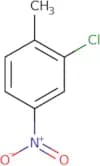
Formula:C9H13NPurity:Min. 95%Molecular weight:135.21 g/mol2-Chloro-4-nitrotoluene
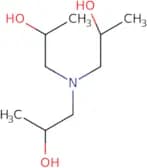
CAS:2-Chloro-4-nitrotoluene is a chemical compound that belongs to the class of nitro compounds. It is used in the manufacture of other chemicals and as an additive for gasoline. 2-Chloro-4-nitrotoluene has been shown to have toxic effects on human lung cells. It has also been shown to inhibit mitochondrial membrane potential, leading to cell death by apoptosis. 2-Chloro-4-nitrotoluene can be used in nanotubes as a detection method for hydrogen peroxide and other reactive oxygen species, with a sensitivity that is 10 times higher than that of conventional methods. 2CNTT has also been shown to enhance the electrochemical impedance spectroscopy properties of gold nanoparticles.Formula:C7H6ClNO2Purity:Min. 95%Molecular weight:171.58 g/molTriisopropanolamine (mixture of isomers)
CAS:Triisopropanolamine (TIPA) is a chemical that can be used as a pesticide. TIPA is used to control the growth of bacteria, fungi, and other organisms by disrupting their cell membranes. It is also used in textile industries for its ability to react with anhydrous sodium and glycol ethers to form a polymer that can be applied to fabric for water repellency. TIPA has been shown to be chemically stable at temperatures up to 150-200°C, which makes it useful in applications such as cleaning agents and paper coatings. The use of triisopropanolamine has been shown to inhibit bacterial strains resistant mutant strains of E. coli and Salmonella enterica. TIPA is also known as a precursor for the production of the neurotransmitter Ryanodine. TIPA can be converted into ryanodine via reaction with an acid in the presence of an oxidant such as hydrogen peroxide or potassium permFormula:C9H21NO3Purity:Min. 95%Color and Shape:PowderMolecular weight:191.27 g/mol±-Amylcinnamaldehyde
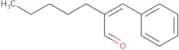
CAS:±-Amylcinnamaldehyde is a hydrocarbon that has been used as a fragrance and flavoring agent. The compound is found naturally in plants such as cinnamon, nutmeg, and cumin. It can be synthesized from acetone and benzaldehyde by the reaction of trifluoroacetic acid. ±-Amylcinnamaldehyde has been shown to stimulate growth factor production and to inhibit the growth of bacteria. This compound has also been shown to possess detergent compositions for use in detergent compositions, including hypochlorite-based detergents. The chemical structure of ±-Amylcinnamaldehyde is shown below: CH3COCH=CH2 ±-AMYLCINNAMALDEHYDE Molecular Weight: 180.25 Boiling Point: n/a Melting Point: n/a Density: 1.00 g/mL at 25°C
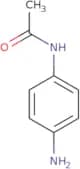
Formula:C14H18OPurity:90%MinMolecular weight:202.3 g/molN-(4-Aminophenyl)acetamide
CAS:N-(4-Aminophenyl)acetamide is a solid dispersion that is soluble in ethylene diamine. The copper complex of this molecule is redox active, with a redox potential of +0.26 V. The lc-ms/ms method for the detection of this molecule has been optimized for use in urine samples and human serum. N-(4-Aminophenyl)acetamide has been shown to have surfactant properties and can be used as a solvent for glycols and other similar compounds. This molecule also exhibits intermolecular hydrogen bonding, which may be due to its diazonium salt structure.Formula:C8H10N2OPurity:Min. 95%Molecular weight:150.18 g/mol3-(Chloromethyl)heptane
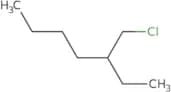
CAS:3-(Chloromethyl)heptane is a chlorinated hydrocarbon. It has been shown to be an effective adsorbent for the detection of alkali metals, such as sodium and potassium. 3-(Chloromethyl)heptane has also been used in the recirculating liquid phase method for environmental monitoring. The presence of 3-(chloromethyl)heptane in water causes a decrease in the pH and chloride ions are released from the compound, which can then be measured by ion-selective electrodes. 3-(Chloromethyl)heptane is also used for the determination of halides, such as chlorine and bromine, by titration with an acid or base solution. This compound releases hydrogen chloride or hydrogen fluoride when heated to decomposition.
Formula:C8H17ClPurity:Min. 95%Molecular weight:148.67 g/molN,N,N²,N²-Tetraethyldiethylenetriamine
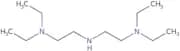
CAS:Tetraethyldiethylenetriamine is a labile amine that reacts as a nucleophile with nitro groups to form an acetonitrile derivative. The reaction rate of this compound is slow, taking on the order of days, and the nitrogen atoms are not involved in any other reactions. It has been shown that Tetraethyldiethylenetriamine binds to basic proteins such as albumin and alpha-chymotrypsin with high binding constants. When tetraethyldiethylenetriamine binds to these proteins, it can react with chloride ions to form an insoluble salt. This salt precipitates out of solution and can be used in the immobilization of enzymes.Formula:C12H29N3Purity:Min. 95%Molecular weight:215.38 g/mol
![tert-Butyl N-{[2-(methylamino)pyridin-4-yl]methyl}carbamate](/_next/image/?url=https%3A%2Fstatic.cymitquimica.com%2Fproducts%2F3D%2Fthumb-webp%2FZXC28843.webp&w=3840&q=75)