Building Blocks
Subcategories of "Building Blocks"
- Boronic Acids & Boronic Acid Derivatives(5,774 products)
- Chiral Building Blocks(1,237 products)
- Hydrocarbon Building Blocks(6,098 products)
- Organic Building Blocks(60,970 products)
Found 205135 products of "Building Blocks"
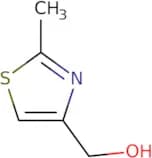
4-(Hydroxymethyl)-2-methylthiazole
CAS:4-(Hydroxymethyl)-2-methylthiazole (4HMT) is a scaffold that can be used as a building block for complex compounds. 4HMT has been shown to be an excellent reagent for the synthesis of heterocycles and other useful compounds. It is also useful in research, where it is often used as a reaction component. The high quality of 4HMT ensures that it is an excellent choice for use as a fine chemical or speciality chemical.
Formula:C5H7NOSPurity:Min. 95%Color and Shape:PowderMolecular weight:129.18 g/molRef: 3D-BDA63223
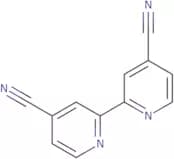
Discontinued product4,4'-Dicyano-2,2'-bipyridine
CAS:4,4'-Dicyano-2,2'-bipyridine is a ligand that binds to molybdenum and has been used in the diagnosis of mitochondrial DNA. It has been shown to be an effective treatment for tropical diseases such as malaria. This drug binds to the molybdenum cofactor in the enzyme ribonucleotide reductase, thereby inhibiting the production of ATP. 4,4'-Dicyano-2,2'-bipyridine also reacts with formic acid and ruthenium to produce a redshifted product that can be detected by electron paramagnetic resonance spectroscopy.
Formula:C12H6N4Purity:Min. 98 Area-%Color and Shape:PowderMolecular weight:206.2 g/molRef: 3D-FD04153
Discontinued product1-[3-(2,2,2-Trifluoroethoxy)propyl]piperazine
CAS:Versatile small molecule scaffold
Formula:C9H17F3N2OPurity:Min. 90%Color and Shape:Clear LiquidMolecular weight:226.24 g/molRef: 3D-IYB42034
Discontinued product2-Methoxy-1-((2-(trimethylsilyl)ethoxy)methyl)-1H-imidazole-5-carbaldehyde
Please enquire for more information about 2-Methoxy-1-((2-(trimethylsilyl)ethoxy)methyl)-1H-imidazole-5-carbaldehyde including the price, delivery time and more detailed product information at the technical inquiry form on this page
Formula:C11H20N2O3SiPurity:Min. 95%Color and Shape:PowderMolecular weight:256.37 g/mol2-[4-(Trifluoromethyl)phenyl]propanal
CAS:Versatile small molecule scaffold
Formula:C10H9F3OPurity:Min. 95%Color and Shape:Clear LiquidMolecular weight:202.17 g/molAdenine
CAS:Purine nucleobase; component of nucleic acids and coenzymes
Formula:C5H5N5Purity:Min. 98 Area-%Color and Shape:White PowderMolecular weight:135.13 g/mol5-(Trifluoromethyl)thiophene-3-carboxylic acid
CAS:Versatile small molecule scaffold
Formula:C6H3F3O2SPurity:Min. 95%Molecular weight:196.15 g/molRef: 3D-KAC67129
Discontinued product5-[(Pyrrolidin-3-yl)methyl]-1H-1,2,3,4-tetrazole hydrochloride
CAS:Versatile small molecule scaffold
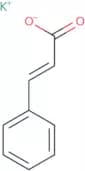
Formula:C6H12ClN5Purity:Min. 95%Color and Shape:PowderMolecular weight:189.65 g/molPotassium cinnamate
CAS:Potassium cinnamate is a white crystalline solid that is soluble in water, ethanol and acetone. It has been shown to be effective for wastewater treatment and can be used as a reducing agent. Potassium cinnamate has been shown to have high values of hydroxide solution, which are often used in the manufacturing of polymers. Potassium cinnamate also exhibits enzyme activities, such as being able to catalyze the oxidation of propionate. This product has been shown to have anti-oxidant properties and can be used for radiation protection. The polymerization of potassium cinnamate leads to polymaleic acid, which is used in the production of plastics.
Formula:C9H7KO2Purity:Min. 98 Area-%Color and Shape:White PowderMolecular weight:186.25 g/mol5,6-Dichlorovanillic acid
CAS:5,6-Dichlorovanillic acid is a high quality, versatile molecule that can be used as a reagent in organic synthesis or as a building block for the synthesis of complex compounds. It has many useful properties, such as being a fine chemical and research chemicals. 5,6-Dichlorovanillic acid is also a speciality chemical with versatile uses in building blocks or reaction components.
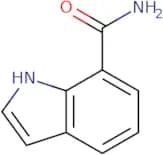
Formula:C8H6Cl2O4Purity:Min. 95%Color and Shape:PowderMolecular weight:237.04 g/mol1H-Indole-7-carboxamide
CAS:Rauwolscine is a pharmacological agent that acts as an alpha-2 adrenergic receptor agonist. It is used to treat eye disease, such as glaucoma and iritis, and also has been used for the treatment of disorders of the urogenital system, such as prostatic hypertrophy. Rauwolscine is metabolized by oxidation at the nitrogen atom to form active metabolites with similar effects. This drug has been shown to be effective for the treatment of cancer, although it does not have any significant effect on muscle tissue. The major route of elimination for this drug is through urine and it may accumulate in tissues with renal disease.
Formula:C9H8N2OPurity:90%MinColor and Shape:PowderMolecular weight:160.18 g/mol4-Nitroindole
CAS:4-Nitroindole is a versatile building block with a variety of applications. It can be used in the synthesis of complex compounds, research chemicals, and reagents. 4-Nitroindole is also useful in the synthesis of speciality chemicals and as an intermediate for the preparation of other compounds. This compound is high quality and has many uses as a reaction component or scaffold.
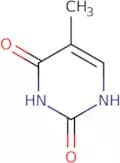
Formula:C8H6N2O2Molecular weight:162.15 g/molThymine
CAS:Pyrimidine nucleobase; component of nucleic acids
Formula:C5H6N2O2Purity:Min. 99 Area-%Color and Shape:White PowderMolecular weight:126.11 g/molRef: 3D-FT06260
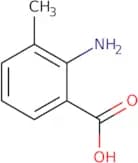
Discontinued product2-Amino-3-methylbenzoic acid
CAS:2-Amino-3-methylbenzoic acid is an organic compound with the formula H2CCH(NH2)(COOH). It is a white solid that is soluble in water. The molecule has a planar geometry, and the copper ion is coordinated by four oxygen atoms and three nitrogen atoms. This coordination geometry can be seen in the crystal structure of the molecule. 2-Amino-3-methylbenzoic acid has been shown to have antifungal activity against Aspergillus niger. It also inhibits 5-nitrosalicyclic acid and sodium carbonate, which are involved in the synthesis of nicotinamide adenine dinucleotide phosphate (NADPH) and ATP respectively. 2-Amino-3-methylbenzoic acid has also been shown to inhibit ryanodine receptor channels, which are important for calcium release from endoplasmic reticulum.
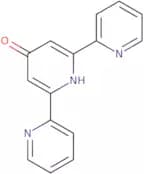
Formula:C8H9NO2Purity:Min. 95%Color and Shape:PowderMolecular weight:151.16 g/mol4'-Hydroxy-2,2':6',2''-terpyridine
CAS:4'-Hydroxy-2,2':6',2''-terpyridine is a molecule with the molecular formula C24H22N4O8. It is an organic compound that belongs to the group of heterocycles. It has been found to be a ligand for metal ions and has been shown to interact with particles at temperatures below 20°C. 4'-Hydroxy-2,2':6',2''-terpyridine crystallizes in two polymorphs: tetragonally (alpha) at room temperature and trigonally (beta) at temperatures below 20°C. The alpha form has been observed to undergo a photophysical reaction as it absorbs light and emits light in the ultraviolet region of the spectrum.
Formula:C15H11N3OPurity:Min. 95%Color and Shape:PowderMolecular weight:249.27 g/molRef: 3D-FH28808
Discontinued productN,1,3-Trimethylpiperidin-4-amine
CAS:Versatile small molecule scaffold
Formula:C8H18N2Purity:Min. 95%Color and Shape:PowderMolecular weight:142.24 g/molRef: 3D-ZZB61650
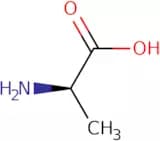
Discontinued productD-Alanine
CAS:D-Alanine is a small-molecule drug that inhibits the hepatitis B virus. It has been shown to decrease the levels of HBV-DNA in chronic hepatitis patients. D-Alanine may be effective for reducing hepatic steatosis and improving liver function, which may be due to its ability to reduce the expression of δ receptors. D-Alanine can inhibit viral replication by interfering with the polymerase chain reaction and inhibiting human serum albumin from binding to HBV-DNA. D-alanine also has an antioxidant effect and can scavenge anion radicals.
Formula:C3H7NO2Purity:Min. 98 Area-%Color and Shape:White PowderMolecular weight:89.09 g/molRef: 3D-FA00678
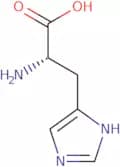
Discontinued productL-Histidine
CAS:L-histidine is a molecule that chelates metal ions and inhibits their function. L-Histidine is used as an analytical reagent for the determination of metal ions in water, a polymerase chain reaction (PCR) inhibitor, and an immunosuppressant. L-histidine is also used to treat bowel disease and cancer by inhibiting the production of certain molecules. L-histidine has been shown to bind to toll-like receptor 4 (TLR4) in intestinal cells, which activates the immune system to produce cytokines such as IL-8. In addition, L-histidine can act as a cofactor for enzymes involved in protein synthesis by protecting them from oxidation. L histidine can also be found in the protein that binds with gold particles, forming colloidal gold
Formula:C6H9N3O2Color and Shape:White PowderMolecular weight:155.15 g/molRef: 3D-FH15651
Discontinued product3-Nitrobenzamide
CAS:3-Nitrobenzamide is a substance that inhibits the replication of some viruses. It has been shown to inhibit the polymerase chain reaction and to be active against hepatitis B virus. 3-Nitrobenzamide was also observed to have inhibitory properties against herpes simplex virus type 1 (HSV-1) and HSV-2. The solid form of this compound is stable at room temperature, but may undergo hydrolysis in solution. 3-Nitrobenzamide reacts with water to form nitrous acid, which may cause corrosion of metal surfaces.
Formula:C7H6N2O3Purity:Min. 95%Color and Shape:PowderMolecular weight:166.13 g/molRef: 3D-FN70933
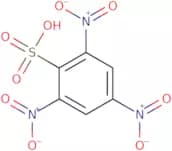
Discontinued product2,4,6-Trinitrobenzenesulfonic acid - 5% Aqueous solution
CAS:2,4,6-Trinitrobenzenesulfonic acid (also known as TNBS, TNSBA or picrylsulfonic acid) is a strongly oxidising organic acid that has long been used as a reagent to determine the presence of free primary amine groups. TNBS reacts rapidly with primary amines to form highly coloured N-trinitrophenyl acid products which can then be analysed by colorimetry. The amine can be regenerated by treatment with hydrazine. This analytical technique can also be applied to thiols and hydrazides. As is common with nitrated aromatic compounds, there is a risk of explosion and TNBS is typically commercially available as a solution. We also supply the 1% solution in DMF.Formula:C6H3N3O9SColor and Shape:Colorless Yellow Clear LiquidMolecular weight:293.17 g/mol

![1-[3-(2,2,2-Trifluoroethoxy)propyl]piperazine](/_next/image/?url=https%3A%2Fstatic.cymitquimica.com%2Fproducts%2F3D%2Fthumb-webp%2FIYB42034.webp&w=3840&q=75)
![2-[4-(Trifluoromethyl)phenyl]propanal](/_next/image/?url=https%3A%2Fstatic.cymitquimica.com%2Fproducts%2F3D%2Fthumb-webp%2FDEA10804.webp&w=3840&q=75)


![5-[(Pyrrolidin-3-yl)methyl]-1H-1,2,3,4-tetrazole hydrochloride](/_next/image/?url=https%3A%2Fstatic.cymitquimica.com%2Fproducts%2F3D%2Fthumb-webp%2FNKD27200.webp&w=3840&q=75)