Building Blocks
This section contains fundamental products for the synthesis of organic and biological compounds. Building blocks are the essential starting materials used to construct complex molecules through various chemical reactions. They play a critical role in drug discovery, material science, and chemical research. At CymitQuimica, we offer a diverse range of high-quality building blocks to support your innovative research and industrial projects, ensuring you have the essential components for successful synthesis.
Subcategories of "Building Blocks"
- Boronic Acids & Boronic Acid Derivatives(5,756 products)
- Chiral Building Blocks(1,242 products)
- Hydrocarbon Building Blocks(6,095 products)
- Organic Building Blocks(61,036 products)
Found 195887 products of "Building Blocks"
Sort by
Purity (%)
0
100
|
0
|
50
|
90
|
95
|
100
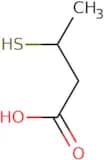
3-Sulfanylbutanoic acid
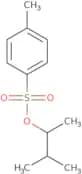
CAS:<p>Versatile small molecule scaffold</p>Formula:C4H8O2SPurity:Min. 95%Molecular weight:120.17 g/mol3-Methylbutan-2-yl 4-methylbenzene-1-sulfonate
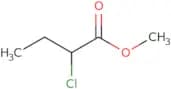
CAS:<p>Versatile small molecule scaffold</p>Formula:C12H18O3SPurity:Min. 95%Molecular weight:242.34 g/molMethyl 2-chlorobutanoate
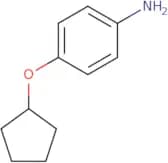
CAS:<p>Methyl 2-chlorobutanoate is an alkanoic acid that is used in pharmaceutical preparations and as a solvent. It has been shown to be effective in autoimmune diseases and cell lysis. Methyl 2-chlorobutanoate also inhibits the production of gamma-aminobutyric acid, which is important for muscle contractions, in cardiac cells. The compound has also been used to measure light emission, which can be used in the diagnosis of fatty acid disorders. Methyl 2-chlorobutanoate is found naturally in fruits and may have beneficial effects on skin cells.</p>Formula:C5H9ClO2Purity:Min. 95%Molecular weight:136.58 g/mol4-Cyclopentyloxy-phenylamine
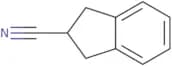
CAS:<p>Versatile small molecule scaffold</p>Formula:C11H15NOPurity:Min. 95%Molecular weight:177.24 g/mol2,3-Dihydro-1H-indene-2-carbonitrile
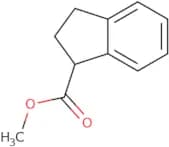
CAS:<p>2,3-Dihydro-1H-indene-2-carbonitrile is a chemical compound that is used to synthesize enantiopure naphthalenes. It reacts with benzylpiperidine in the presence of sodium methoxide and potassium carbonate in a kinetic, stereoselective manner to form a 2,3-dihydro-1H-indene derivative. The compound can also be decyanated with dichromate to yield an olefinic product. The 2,3-dihydro-1H-indene derivative can be converted into its corresponding indane by catalyzed hydrogenation or stereochemical means through the use of dichroism spectroscopy.</p>Formula:C10H9NPurity:Min. 95%Molecular weight:143.18 g/molMethyl 2,3-dihydro-1H-indene-1-carboxylate
CAS:<p>Methyl 2,3-dihydro-1H-indene-1-carboxylate is a lead compound that is a competitive inhibitor of the biaryl synthesis. It has kinetic properties that are efficient and enantioselective. Methyl 2,3-dihydro-1H-indene-1-carboxylate also undergoes racemisation with enzymatic activity. This product is expected to be used as an intermediate in organic synthesis and pharmaceuticals.</p>Formula:C11H12O2Purity:Min. 95%Molecular weight:176.21 g/mol3-{[2-(Dimethylamino)ethyl](methyl)amino}propan-1-ol
CAS:<p>Versatile small molecule scaffold</p>Formula:C8H20N2OPurity:Min. 95%Molecular weight:160.26 g/mol5-(4-Chlorophenyl)-4-(2-methoxyethyl)-4H-1,2,4-triazole-3-thiol
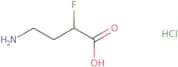
CAS:<p>Versatile small molecule scaffold</p>Formula:C11H12ClN3OSPurity:Min. 95%Molecular weight:269.75 g/mol4-Amino-2-fluorobutanoic acid hydrochloride
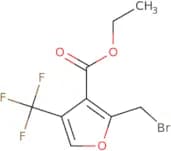
CAS:<p>Versatile small molecule scaffold</p>Formula:C4H9ClFNO2Purity:Min. 95%Molecular weight:157.57 g/molEthyl 2-(bromomethyl)-4-(trifluoromethyl)furan-3-carboxylate
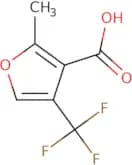
CAS:<p>Versatile small molecule scaffold</p>Formula:C9H8BrF3O3Purity:Min. 95%Molecular weight:301.06 g/mol2-Methyl-4-(Trifluoromethyl)-3-Furancarboxylic Acid
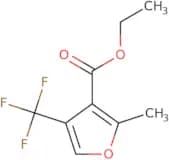
CAS:<p>Versatile small molecule scaffold</p>Formula:C7H5F3O3Purity:Min. 95%Molecular weight:194.11 g/molEthyl 2-methyl-4-(trifluoromethyl)furan-3-carboxylate
CAS:<p>Versatile small molecule scaffold</p>Formula:C9H9F3O3Purity:Min. 95%Molecular weight:222.16 g/mol3-[(3-Methoxyphenyl)amino]propanenitrile
CAS:<p>Versatile small molecule scaffold</p>Formula:C10H12N2OPurity:Min. 95%Molecular weight:176.21 g/mol2-(2,5-Dimethylthiophen-3-yl)ethan-1-ol
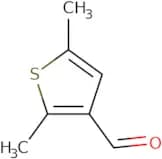
CAS:<p>Versatile small molecule scaffold</p>Formula:C8H12OSPurity:Min. 95%Molecular weight:156.25 g/mol2,5-Dimethyl-thiophene-3-carbaldehyde
CAS:<p>2,5-Dimethyl-thiophene-3-carbaldehyde (2,5-DMT) is a pyrylium salt that is used as an anticancer agent. It inhibits tumor cell growth by inhibiting the synthesis of nucleic acids and proteins. When combined with perchloric acid, 2,5-DMT has been shown to have antitumor activity against tumor cells in vitro. The anticancer activity of 2,5-DMT has been confirmed in vivo through xenografts in mice. This drug also has potential to be used as a screening tool for identifying compounds that inhibit cancer cell proliferation.</p>Formula:C7H8OSPurity:Min. 95%Molecular weight:140.21 g/mol3-(2,5-Dimethylthiophen-3-yl)propanoic acid
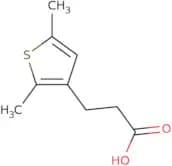
CAS:<p>Versatile small molecule scaffold</p>Formula:C9H12O2SPurity:Min. 95%Molecular weight:184.26 g/mol2-(2,5-Dimethylthiophen-3-yl)acetic acid
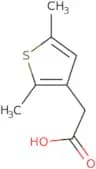
CAS:<p>Versatile small molecule scaffold</p>Formula:C8H10O2SPurity:Min. 95%Molecular weight:170.23 g/mol(2-Propylphenyl)thiourea
CAS:<p>Versatile small molecule scaffold</p>Formula:C10H14N2SPurity:Min. 95%Molecular weight:194.3 g/mol3-(3-Bromo-4-fluorophenyl)-2-methylpropanoic acid
CAS:<p>Versatile small molecule scaffold</p>Formula:C10H10BrFO2Purity:Min. 95%Molecular weight:261.09 g/molN-(2-Azidoethyl)-2-methylpropanamide
CAS:<p>Versatile small molecule scaffold</p>Formula:C6H12N4OPurity:Min. 95%Molecular weight:156.19 g/mol1-Ethyl-2-(4-iodobenzoyl)-1H-imidazole
CAS:Controlled Product<p>Versatile small molecule scaffold</p>Formula:C12H11IN2OPurity:Min. 95%Molecular weight:326.13 g/mol3-{[Methyl(1,3-thiazol-4-ylmethyl)amino]methyl}aniline
CAS:<p>Versatile small molecule scaffold</p>Formula:C12H15N3SPurity:Min. 95%Molecular weight:233.33 g/mol2-[(2-Methoxyphenyl)methyl]cyclopentan-1-ol
CAS:<p>Versatile small molecule scaffold</p>Formula:C13H18O2Purity:Min. 95%Molecular weight:206.28 g/mol2-(4-Fluoro-3-methoxyphenyl)morpholine
CAS:<p>Versatile small molecule scaffold</p>Formula:C11H14FNO2Purity:Min. 95%Molecular weight:211.23 g/mol2-(Oxolan-3-yl)morpholine
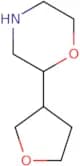
CAS:<p>Versatile small molecule scaffold</p>Formula:C8H15NO2Purity:Min. 95%Molecular weight:157.21 g/mol2-Cyclohexylmorpholine
CAS:<p>Versatile small molecule scaffold</p>Formula:C10H19NOPurity:Min. 95%Molecular weight:169.26 g/mol6-(Aminomethyl)isoindolin-1-one
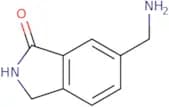
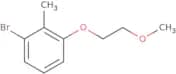
CAS:<p>6-(Aminomethyl)isoindolin-1-one is a cyano compound that has been shown to be an effective hydrogenation catalyst. It can be used to catalyze reactions in which the hydrogen source is not the only carbon source. The synthetic reaction for 6-(aminomethyl)isoindolin-1-one involves the conversion of an aminomethyl ketone with sodium cyanide and a transition metal catalyst. This process produces two products: 6-(aminomethyl)isoindolin-1-one and 2,4,6-trichlorophenol. The use of this compound as a catalyst has been shown to be more efficient than traditional catalysts, such as palladium on carbon, in some instances.</p>Formula:C9H10N2OPurity:Min. 95%Molecular weight:162.19 g/mol1-Bromo-3-(2-methoxyethoxy)methylbenzene
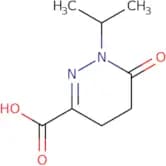
CAS:<p>Versatile small molecule scaffold</p>Formula:C10H13BrO2Purity:Min. 95%Molecular weight:245.12 g/mol6-Oxo-1-(propan-2-yl)-1,4,5,6-tetrahydropyridazine-3-carboxylic acid
CAS:<p>Versatile small molecule scaffold</p>Formula:C8H12N2O3Purity:Min. 95%Molecular weight:184.19 g/mol2-(2-Fluorophenyl)-2-methylcyclopropane-1-carboxylic acid
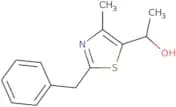
CAS:<p>Versatile small molecule scaffold</p>Formula:C11H11FO2Purity:Min. 95%Molecular weight:194.2 g/mol1-(2-Benzyl-4-methyl-1,3-thiazol-5-yl)ethan-1-ol
CAS:<p>Versatile small molecule scaffold</p>Formula:C13H15NOSPurity:Min. 95%Molecular weight:233.33 g/mol[1-(6-Chloropyrimidin-4-yl)pyrrolidin-2-yl]methanol
CAS:<p>Versatile small molecule scaffold</p>Formula:C9H12ClN3OPurity:Min. 95%Molecular weight:213.66 g/mol2-Methyl-2-(prop-2-ynoylamino)propanoic acid
CAS:<p>Versatile small molecule scaffold</p>Formula:C7H9NO3Purity:Min. 95%Molecular weight:155.15 g/mol3-[(2,4-Difluorophenyl)sulfanyl]piperidine
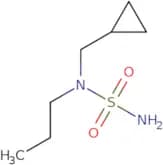
CAS:<p>Versatile small molecule scaffold</p>Formula:C11H13F2NSPurity:Min. 95%Molecular weight:229.29 g/molN-(Cyclopropylmethyl)-N-propylaminosulfonamide
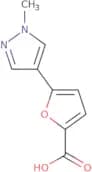
CAS:<p>Versatile small molecule scaffold</p>Formula:C7H16N2O2SPurity:Min. 95%Molecular weight:192.3 g/mol5-(1-Methyl-1H-pyrazol-4-yl)furan-2-carboxylic acid
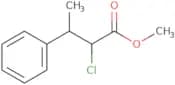
CAS:<p>Versatile small molecule scaffold</p>Formula:C9H8N2O3Purity:Min. 95%Molecular weight:192.17 g/molMethyl 2-chloro-3-phenylbutanoate
CAS:<p>Versatile small molecule scaffold</p>Formula:C11H13ClO2Purity:Min. 95%Molecular weight:212.67 g/mol{[2-(Methylcarbamoyl)ethyl]carbamoyl}formic acid
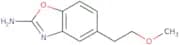
CAS:<p>Versatile small molecule scaffold</p>Formula:C6H10N2O4Purity:Min. 95%Molecular weight:174.15 g/mol5-(2-Methoxyethyl)-1,3-benzoxazol-2-amine
CAS:<p>Versatile small molecule scaffold</p>Formula:C10H12N2O2Purity:Min. 95%Molecular weight:192.21 g/mol2-[(4-Aminopyridin-2-yl)oxy]ethan-1-ol
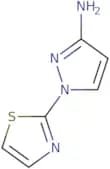
CAS:<p>Versatile small molecule scaffold</p>Formula:C7H10N2O2Purity:Min. 95%Molecular weight:154.17 g/mol1-(1,3-Thiazol-2-yl)-1H-pyrazol-3-amine
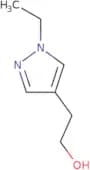
CAS:<p>Versatile small molecule scaffold</p>Formula:C6H6N4SPurity:Min. 95%Molecular weight:166.21 g/mol2-(1-Ethyl-1H-pyrazol-4-yl)ethan-1-ol
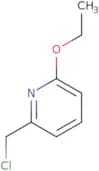
CAS:<p>2-(1-Ethyl-1H-pyrazol-4-yl)ethan-1-ol is an optical calibration agent that has the ability to introduce a primary target. It can be used in calibrating optical sensors and for introducing antigen-presenting cells. This chemical has been shown to have high specificity and sensitivity, as it can be used to detect inflammatory diseases, such as asthma, psoriasis, and arthritis. 2-(1-Ethyl-1H-pyrazol-4-yl)ethan-1-ol is also a primary target for inflammatory diseases such as asthma or psoriasis. The chemical has been shown to inhibit leukotriene A4 (LTA4) synthesis in human cells and may act as a caspase inhibitor. This compound is also capable of coding for proliferative disorders such as cancer or skin disorders like psoriasis. 2-(1-Ethyl-1H pyrazol 4-) eth</p>Formula:C7H12N2OPurity:Min. 95%Molecular weight:140.18 g/mol2-(Chloromethyl)-6-ethoxypyridine
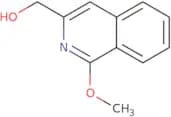
CAS:<p>Versatile small molecule scaffold</p>Formula:C8H10ClNOPurity:Min. 95%Molecular weight:171.62 g/mol(1-Methoxyisoquinolin-3-yl)methanol
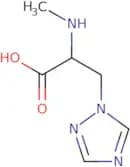
CAS:<p>Versatile small molecule scaffold</p>Formula:C11H11NO2Purity:Min. 95%Molecular weight:189.21 g/mol2-(Methylamino)-3-(1H-1,2,4-triazol-1-yl)propanoic acid
CAS:<p>Versatile small molecule scaffold</p>Formula:C6H10N4O2Purity:Min. 95%Molecular weight:170.2 g/mol[2-(4-Chloro-1H-pyrazol-1-yl)-6-methylpyridin-3-yl]methanamine
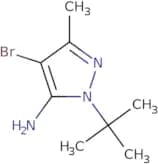
CAS:<p>Versatile small molecule scaffold</p>Formula:C10H11ClN4Purity:Min. 95%Molecular weight:222.67 g/mol4-bromo-1-tert-butyl-3-methyl-1H-pyrazol-5-amine
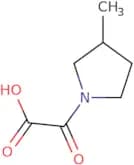
CAS:<p>Versatile small molecule scaffold</p>Formula:C8H14BrN3Purity:Min. 95%Molecular weight:232.13 g/mol2-(3-Methylpyrrolidin-1-yl)-2-oxoacetic acid
CAS:<p>Versatile small molecule scaffold</p>Formula:C7H11NO3Purity:Min. 95%Molecular weight:157.17 g/mol1H-Pyrazolo[3,4-b]pyridine-6-carboxylic acid
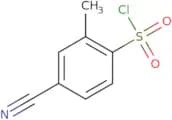
CAS:<p>1-H-Pyrazolo[3,4-b]pyridine-6-carboxylic acid is a synthetic compound that has been used in the synthesis of various other compounds. It is an intermediate for the synthesis of pyruvic acid, which can be converted to a variety of products including aldehydes, aromatic aldehydes, and cyclic condensation products. The mechanism of this compound is not well understood, but it is thought that 1H-pyrazolo[3,4-b]pyridine-6-carboxylic acid undergoes cyclocondensation reactions with ketones, amines or alcohols to form heterocyclic compounds.</p>Formula:C7H5N3O2Purity:Min. 95%Molecular weight:163.13 g/mol4-Cyano-2-methylbenzene-1-sulfonyl chloride
CAS:<p>Versatile small molecule scaffold</p>Formula:C8H6ClNO2SPurity:Min. 95%Molecular weight:215.66 g/mol2-(Phenoxymethyl)pyrimidin-4-amine
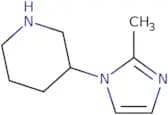
CAS:<p>Versatile small molecule scaffold</p>Formula:C11H11N3OPurity:Min. 95%Molecular weight:201.22 g/mol3-(2-Methyl-1H-imidazol-1-yl)piperidine
CAS:<p>Versatile small molecule scaffold</p>Formula:C9H15N3Purity:Min. 95%Molecular weight:165.24 g/mol4-Methyl-2-(oxolan-3-yl)-1,3-thiazole-5-carboxylic acid
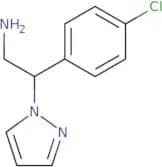
CAS:<p>Versatile small molecule scaffold</p>Formula:C9H11NO3SPurity:Min. 95%Molecular weight:213.26 g/mol2-(4-Chlorophenyl)-2-(1H-pyrazol-1-yl)ethan-1-amine
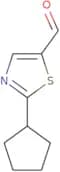
CAS:<p>Versatile small molecule scaffold</p>Formula:C11H12ClN3Purity:Min. 95%Molecular weight:221.68 g/mol2-Cyclopentyl-1,3-thiazole-5-carbaldehyde
CAS:<p>Versatile small molecule scaffold</p>Formula:C9H11NOSPurity:Min. 95%Molecular weight:181.26 g/mol1-(1H-Pyrrol-1-yl)cyclopentane-1-carboxylic acid
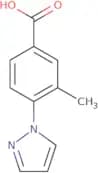
CAS:<p>Versatile small molecule scaffold</p>Formula:C10H13NO2Purity:Min. 95%Molecular weight:179.22 g/mol3-Methyl-4-(1H-pyrazol-1-yl)benzoic acid
CAS:<p>Versatile small molecule scaffold</p>Formula:C11H10N2O2Purity:Min. 95%Color and Shape:PowderMolecular weight:202.21 g/mol1-[1-(3-Ethyl-1,2,4-oxadiazol-5-yl)ethyl]piperazine
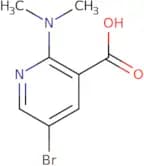
CAS:<p>Versatile small molecule scaffold</p>Formula:C10H18N4OPurity:Min. 95%Molecular weight:210.28 g/mol5-Bromo-2-(dimethylamino)pyridine-3-carboxylic acid
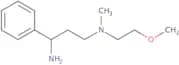
CAS:<p>Versatile small molecule scaffold</p>Formula:C8H9BrN2O2Purity:Min. 95%Molecular weight:245.07 g/mol(3-Amino-3-phenylpropyl)(2-methoxyethyl)methylamine
CAS:<p>Versatile small molecule scaffold</p>Formula:C13H22N2OPurity:Min. 95%Molecular weight:222.33 g/molN-Methyl-1-[(3-methyl-1,2-oxazol-5-yl)methyl]piperidin-4-amine
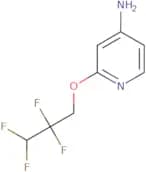
CAS:<p>Versatile small molecule scaffold</p>Formula:C11H19N3OPurity:Min. 95%Molecular weight:209.29 g/mol2-(2,2,3,3-Tetrafluoropropoxy)pyridin-4-amine
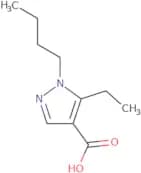
CAS:<p>Versatile small molecule scaffold</p>Formula:C8H8F4N2OPurity:Min. 95%Molecular weight:224.16 g/mol1-Butyl-5-ethyl-1H-pyrazole-4-carboxylic acid
CAS:<p>Versatile small molecule scaffold</p>Formula:C10H16N2O2Purity:Min. 95%Molecular weight:196.25 g/mol[4-(4-Fluorophenoxy)pyridin-2-yl]methanamine
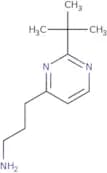
CAS:<p>Versatile small molecule scaffold</p>Formula:C12H11FN2OPurity:Min. 95%Molecular weight:218.23 g/mol3-(2-tert-Butylpyrimidin-4-yl)propan-1-amine
CAS:<p>Versatile small molecule scaffold</p>Formula:C11H19N3Purity:Min. 95%Molecular weight:193.29 g/mol4-Chloro-2-cyanophenylsulfonyl Chloride
CAS:<p>Versatile small molecule scaffold</p>Formula:C7H3NO2SCl2Purity:Min. 95%Molecular weight:236.07 g/mol2-[(Difluoromethyl)sulfanyl]phenol
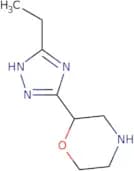
CAS:<p>Versatile small molecule scaffold</p>Formula:C7H6F2OSPurity:Min. 95%Molecular weight:176.19 g/mol2-(3-Ethyl-1H-1,2,4-triazol-5-yl)morpholine
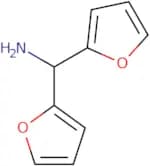
CAS:<p>Versatile small molecule scaffold</p>Formula:C8H14N4OPurity:Min. 95%Molecular weight:182.22 g/mol1,1-Di-2-furylmethanamine
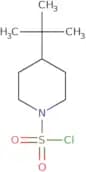
CAS:<p>Versatile small molecule scaffold</p>Formula:C9H9NO2Purity:Min. 95%Molecular weight:163.17 g/mol4-tert-Butylpiperidine-1-sulfonyl chloride
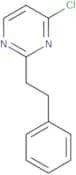
CAS:<p>Versatile small molecule scaffold</p>Formula:C9H18ClNO2SPurity:Min. 95%Molecular weight:239.76 g/mol4-Chloro-2-(2-phenylethyl)pyrimidine
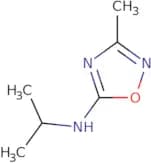
CAS:<p>Versatile small molecule scaffold</p>Formula:C12H11ClN2Purity:Min. 95%Molecular weight:218.68 g/mol3-Methyl-N-(propan-2-yl)-1,2,4-oxadiazol-5-amine
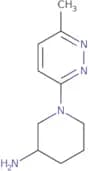
CAS:<p>Versatile small molecule scaffold</p>Formula:C6H11N3OPurity:Min. 95%Molecular weight:141.17 g/mol1-(6-Methylpyridazin-3-yl)piperidin-3-amine
CAS:<p>Versatile small molecule scaffold</p>Formula:C10H16N4Purity:Min. 95%Molecular weight:192.26 g/mol3-(4-Methyl-1H-pyrazol-1-yl)benzoic acid
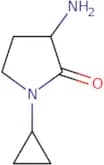
CAS:<p>Versatile small molecule scaffold</p>Formula:C11H10N2O2Purity:Min. 95%Molecular weight:202.21 g/mol3-Amino-1-cyclopropylpyrrolidin-2-one
CAS:<p>Versatile small molecule scaffold</p>Formula:C7H12N2OPurity:Min. 95%Molecular weight:140.18 g/molMethyl({1-[3-(pyridin-4-yl)phenyl]ethyl})amine
CAS:<p>Versatile small molecule scaffold</p>Formula:C14H16N2Purity:Min. 95%Molecular weight:212.29 g/mol3-[(4-Bromo-1H-pyrazol-1-yl)methyl]-5-propyl-1,2,4-oxadiazole
CAS:<p>Versatile small molecule scaffold</p>Formula:C9H11BrN4OPurity:Min. 95%Molecular weight:271.11 g/moltert-Butyl N-methyl-N-[(2-methyloxiran-2-yl)methyl]carbamate
CAS:<p>Versatile small molecule scaffold</p>Formula:C10H19NO3Purity:Min. 95%Molecular weight:201.26 g/mol[2-Amino-1-(2-methylphenyl)propyl]dimethylamine
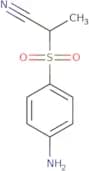
CAS:<p>Versatile small molecule scaffold</p>Formula:C12H20N2Purity:Min. 95%Molecular weight:192.3 g/mol2-(4-Aminobenzenesulfonyl)propanenitrile
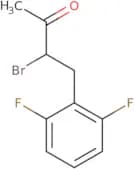
CAS:<p>Versatile small molecule scaffold</p>Formula:C9H10N2O2SPurity:Min. 95%Molecular weight:210.26 g/mol3-Bromo-4-(2,6-difluorophenyl)butan-2-one
CAS:<p>Versatile small molecule scaffold</p>Formula:C10H9BrF2OPurity:Min. 95%Molecular weight:263.08 g/molN-(2-Sulfamoylethyl)acetamide
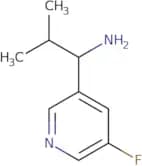
CAS:<p>Versatile small molecule scaffold</p>Formula:C4H10N2O3SPurity:Min. 95%Molecular weight:166.2 g/mol1-(5-Fluoropyridin-3-yl)-2-methylpropan-1-amine
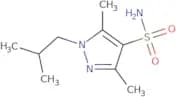
CAS:<p>Versatile small molecule scaffold</p>Formula:C9H13FN2Purity:Min. 95%Molecular weight:168.21 g/mol3,5-Dimethyl-1-(2-methylpropyl)-1H-pyrazole-4-sulfonamide
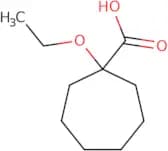
CAS:<p>Versatile small molecule scaffold</p>Formula:C9H17N3O2SPurity:Min. 95%Molecular weight:231.32 g/mol1-Ethoxycycloheptane-1-carboxylic acid
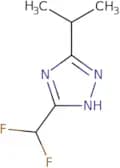
CAS:<p>Versatile small molecule scaffold</p>Formula:C10H18O3Purity:Min. 95%Molecular weight:186.25 g/mol5-(Difluoromethyl)-3-(propan-2-yl)-1H-1,2,4-triazole
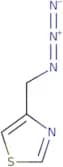
CAS:<p>Versatile small molecule scaffold</p>Formula:C6H9F2N3Purity:Min. 95%Molecular weight:161.15 g/mol4-(Azidomethyl)-1,3-thiazole
CAS:<p>Versatile small molecule scaffold</p>Formula:C4H4N4SPurity:Min. 95%Molecular weight:140.17 g/mol1-(3-Aminopyrrolidin-1-yl)-3-phenylpropan-1-one
CAS:<p>Versatile small molecule scaffold</p>Formula:C13H18N2OPurity:Min. 95%Molecular weight:218.29 g/mol3-(Boc-aminomethyl)pyrazole
CAS:<p>Versatile small molecule scaffold</p>Formula:C9H15N3O2Purity:Min. 95%Molecular weight:197.24 g/mol7-Bromoimidazo[1,2-a]pyrimidine
CAS:<p>Versatile small molecule scaffold</p>Formula:C6H4BrN3Purity:Min. 95%Molecular weight:198.02 g/mol2-{1-[(tert-Butoxy)carbonyl]-4-hydroxypiperidin-4-yl}-2-methylpropanoic acid
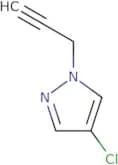
CAS:<p>Versatile small molecule scaffold</p>Formula:C14H25NO5Purity:Min. 95%Molecular weight:287.35 g/mol4-Chloro-1-(prop-2-yn-1-yl)-1H-pyrazole
CAS:<p>Versatile small molecule scaffold</p>Formula:C6H5ClN2Purity:Min. 95%Molecular weight:140.57 g/mol3-Amino-1-[4-(2-hydroxyethyl)phenyl]urea
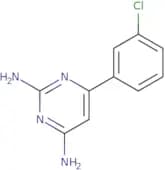
CAS:<p>Versatile small molecule scaffold</p>Formula:C9H13N3O2Purity:Min. 95%Molecular weight:195.22 g/mol6-(3-Chlorophenyl)pyrimidine-2,4-diamine
CAS:<p>Versatile small molecule scaffold</p>Formula:C10H9ClN4Purity:Min. 95%Molecular weight:220.66 g/mol2-(2-Methoxyethoxy)pyrimidin-5-amine
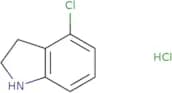
CAS:<p>Versatile small molecule scaffold</p>Formula:C7H11N3O2Purity:Min. 95%Molecular weight:169.18 g/mol4-Chloroindoline hydrochloride
CAS:<p>Versatile small molecule scaffold</p>Formula:C8H9Cl2NPurity:Min. 95%Molecular weight:190.07 g/moltert-Butyl 2,5-diazaspiro[3.6]decane-2-carboxylate
CAS:<p>Versatile small molecule scaffold</p>Formula:C13H24N2O2Purity:Min. 95%Molecular weight:240.34 g/molrac-tert-Butyl (3aS,6aR)-3a-amino-octahydrocyclopenta[b]pyrrole-1-carboxylate
CAS:<p>Versatile small molecule scaffold</p>Formula:C12H22N2O2Purity:Min. 95%Molecular weight:226.32 g/mol2-[(tert-butoxy)carbonyl]-8-oxa-2-azaspiro[4.5]decane-4-carboxylic acid
CAS:<p>Versatile small molecule scaffold</p>Formula:C14H23NO5Purity:Min. 95%Molecular weight:285.3 g/mol9-Boc-3-oxo-2,9-diazaspiro[5.5]undecane
CAS:<p>Versatile small molecule scaffold</p>Formula:C14H24N2O3Purity:Min. 95%Molecular weight:268.35 g/moltert-Butyl 3-bromo-8,9-dihydro-5H-[1,2,4]triazolo[4,3-d][1,4]diazepine-7(6H)-carboxylate
CAS:<p>Versatile small molecule scaffold</p>Formula:C11H17BrN4O2Purity:Min. 95%Molecular weight:317.18 g/molrac-(3aR,6aR)-5-[(tert-butoxy)carbonyl]-hexahydro-1H-furo[3,4-c]pyrrole-3a-carboxylic acid, trans
CAS:<p>Versatile small molecule scaffold</p>Formula:C12H19NO5Purity:Min. 95%Molecular weight:257.3 g/mol2-[(tert-Butoxy)carbonyl]-2-azabicyclo[4.1.0]heptane-7-carboxylic acid
CAS:<p>Versatile small molecule scaffold</p>Formula:C12H19NO4Purity:Min. 95%Molecular weight:241.28 g/moltert-Butyl 1-bromo-5,6,8,9-tetrahydro-7H-imidazo[1,5-d][1,4]diazepine-7-carboxylate
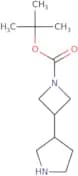
CAS:<p>Versatile small molecule scaffold</p>Formula:C12H18BrN3O2Purity:Min. 95%Molecular weight:316.19 g/moltert-Butyl 3-Pyrrolidin-3-ylazetidine-1-carboxylate
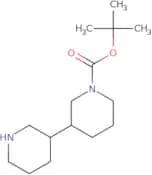
CAS:<p>Versatile small molecule scaffold</p>Formula:C12H22N2O2Purity:Min. 95%Molecular weight:226.31 g/moltert-butyl 3-(piperidin-3-yl)piperidine-1-carboxylate
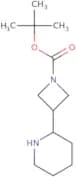
CAS:<p>Versatile small molecule scaffold</p>Formula:C15H28N2O2Purity:Min. 95%Molecular weight:268.4 g/moltert-Butyl 3-(piperidin-2-yl)azetidine-1-carboxylate
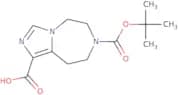
CAS:<p>Versatile small molecule scaffold</p>Formula:C13H24N2O2Purity:Min. 95%Molecular weight:240.34 g/mol5-[(tert-butoxy)carbonyl]-4H,5H,6H,7H,8H-pyrazolo[1,5-a][1,4]diazepine-7-carboxylic acid
CAS:<p>Versatile small molecule scaffold</p>Formula:C13H19N3O4Purity:Min. 95%Molecular weight:281.31 g/moltert-Butyl 9-amino-3-oxa-7-azabicyclo[3.3.1]nonane-7-carboxylate
CAS:<p>Versatile small molecule scaffold</p>Formula:C12H22N2O3Purity:Min. 95%Molecular weight:242.31 g/moltert-butyl 3,9-diazabicyclo[4.2.1]nonane-9-carboxylate
CAS:<p>Versatile small molecule scaffold</p>Formula:C12H22N2O2Purity:Min. 95%Molecular weight:226.3 g/mol3-Hydroxymethyl-1,4,5,7-tetrahydro-pyrazolo[3,4-c]pyridine-6-carboxylic acid tert-butyl ester
CAS:<p>Versatile small molecule scaffold</p>Formula:C12H19N3O3Purity:Min. 95%Molecular weight:253.29 g/molt-Butyl 3-(hydroxymethyl)-6,7-dihydroisoxazolo[4,5-c]pyridine-5(4H)-carboxylate
CAS:<p>Versatile small molecule scaffold</p>Formula:C12H18N2O4Purity:Min. 95%Molecular weight:254.28 g/mol4,5,7,8-Tetrahydro-2,3A,6-Triaza-Azulene-1,6-Dicarboxylic Acid 6-Tert-Butyl Ester
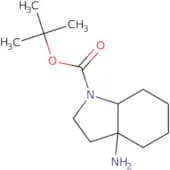
CAS:<p>Versatile small molecule scaffold</p>Formula:C13H19N3O4Purity:Min. 95%Molecular weight:281.31 g/moltert-Butyl 3a-aminooctahydro-1H-indole-1-carboxylate
CAS:<p>Versatile small molecule scaffold</p>Formula:C13H24N2O2Purity:Min. 95%Molecular weight:240.34 g/molrac-(3aR,6aS)-5-[(tert-Butoxy)carbonyl]-2-oxo-octahydropyrrolo[3,4-b]pyrrole-3a-carboxylic acid
CAS:<p>Versatile small molecule scaffold</p>Formula:C12H18N2O5Purity:Min. 95%Molecular weight:270.28 g/mol3-Boc-6-oxo-3-aza-bicyclo[3.1.1]heptane
CAS:<p>Versatile small molecule scaffold</p>Formula:C11H17NO3Purity:Min. 95%Molecular weight:211.26 g/mol2-Boc-octahydro-pyrrolo[3,4-d]azepine
CAS:<p>Versatile small molecule scaffold</p>Formula:C13H24N2O2Purity:Min. 95%Molecular weight:240.35 g/mol5-[(tert-butoxy)carbonyl]-5-azaspiro[2.3]hexane-1-carboxylic acid
CAS:<p>Versatile small molecule scaffold</p>Formula:C11H17NO4Purity:Min. 95%Molecular weight:227.3 g/moltert-Butyl 7-(aminomethyl)-6-oxa-2-azaspiro[3.5]nonane-2-carboxylate
CAS:<p>Versatile small molecule scaffold</p>Formula:C13H24N2O3Purity:Min. 95%Molecular weight:256.3 g/moltert-butyl 5-oxa-2,8-diazaspiro[3.5]nonane-2-carboxylate
CAS:<p>Versatile small molecule scaffold</p>Formula:C11H20N2O3Purity:Min. 95%Molecular weight:228.3 g/mol3-[(tert-Butoxy)carbonyl]-8-oxa-3-azabicyclo[3.2.1]octane-6-carboxylic acid
CAS:<p>Versatile small molecule scaffold</p>Formula:C12H19NO5Purity:Min. 95%Molecular weight:257.28 g/moltert-Butyl octahydro-1H-pyrrolo[3,2-b]pyridine-1-carboxylate
CAS:<p>Versatile small molecule scaffold</p>Formula:C12H22N2O2Purity:Min. 95%Molecular weight:226.32 g/molrac-tert-Butyl (3aR,7aR)-5-oxo-octahydro-1H-pyrrolo[3,2-b]pyridine-1-carboxylate
CAS:<p>Versatile small molecule scaffold</p>Formula:C12H20N2O3Purity:Min. 95%Molecular weight:240.3 g/mol3-Oxo-7-azaspiro[3.4]octane-7-carboxylate tert-butyl ester
CAS:<p>Versatile small molecule scaffold</p>Formula:C12H19NO3Purity:Min. 95%Molecular weight:225.28 g/mol4-Amino-8-oxa-2-aza-spiro[4.5]decane-2-carboxylic acid tert-butyl ester
CAS:<p>Versatile small molecule scaffold</p>Formula:C13H24N2O3Purity:Min. 95%Molecular weight:256.34 g/mol2-[(Benzyloxy)carbonyl]-8-oxa-2-azaspiro[4.5]decane-4-carboxylic acid
CAS:<p>Versatile small molecule scaffold</p>Formula:C17H21NO5Purity:Min. 95%Molecular weight:319.4 g/moltert-Butyl 6-(aminomethyl)-5-oxa-2-azaspiro[3.5]nonane-2-carboxylate
CAS:<p>Versatile small molecule scaffold</p>Formula:C13H24N2O3Purity:Min. 95%Molecular weight:256.34 g/mol2-(tert-Butoxycarbonyl)-5-oxa-2-azaspiro[3.4]octane-7-carboxylic acid
CAS:<p>Versatile small molecule scaffold</p>Formula:C12H19NO5Purity:Min. 95%Molecular weight:257.28 g/moltert-Butyl 2,6-diazaspiro[3.6]decane-2-carboxylate
CAS:<p>Versatile small molecule scaffold</p>Formula:C13H24N2O2Purity:Min. 95%Molecular weight:240.34 g/moltert-Butyl 8-oxo-2,7-diazaspiro[4.4]nonane-2-carboxylate
CAS:<p>Versatile small molecule scaffold</p>Formula:C12H20N2O3Purity:Min. 95%Molecular weight:240.3 g/mol9-[(tert-Butoxy)carbonyl]-1-oxa-9-azaspiro[5.5]undecane-2-carboxylic acid
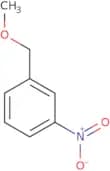
CAS:<p>Versatile small molecule scaffold</p>Formula:C15H25NO5Purity:Min. 95%Molecular weight:299.36 g/mol1-(Methoxymethyl)-3-nitrobenzene
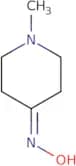
CAS:<p>Versatile small molecule scaffold</p>Formula:C8H9NO3Purity:Min. 95%Molecular weight:167.16 g/mol1-Methylpiperidin-4-one oxime
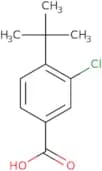
CAS:<p>Versatile small molecule scaffold</p>Formula:C6H12N2OPurity:Min. 95%Molecular weight:128.17 g/mol4-tert-Butyl-3-chlorobenzoic acid
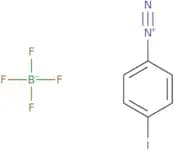
CAS:<p>Versatile small molecule scaffold</p>Formula:C11H13ClO2Purity:Min. 95%Molecular weight:212.67 g/mol4-Iodobenzene-1-diazonium tetrafluoroboranuide
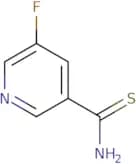
CAS:<p>Versatile small molecule scaffold</p>Formula:C6H4IN2•BF4Purity:Min. 95%Color and Shape:PowderMolecular weight:317.82 g/mol5-fluoropyridine-3-carbothioamide
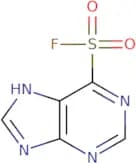
CAS:<p>Versatile small molecule scaffold</p>Formula:C6H5FN2SPurity:Min. 95%Molecular weight:156.18 g/mol9H-Purine-6-sulfonyl fluoride
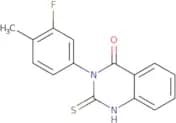
CAS:<p>The purpose of this study was to examine the association between fluoridated water and the prevalence of obesity in children. The study found that, in areas with a higher percentage of children who drank fluoridated water, there was a significant increase in the prevalence of obesity. It is important to note that fluoride has been shown to have health effects other than dental fluorosis. One such effect is an increase in bone fractures. Fluoride also interacts with physiological processes, such as blood pressure regulation and insulin secretion. This article reviews epidemiological studies that have investigated the association between fluoride exposure and various systemic diseases, including cardiovascular disease and diabetes mellitus type 2.</p>Formula:C5H3FN4O2SPurity:Min. 95%Molecular weight:202.17 g/mol3-(3-Fluoro-4-methylphenyl)-2-sulfanyl-3,4-dihydroquinazolin-4-one
CAS:<p>Versatile small molecule scaffold</p>Formula:C15H11FN2OSPurity:Min. 95%Molecular weight:286.3 g/mol5-Methylbenzo[b]thiophene-2-carboxylic acid
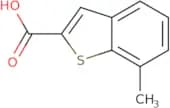
CAS:<p>Versatile small molecule scaffold</p>Formula:C10H8O2SPurity:Min. 95%Molecular weight:192.23 g/mol7-Methyl-1-benzothiophene-2-carboxylic acid
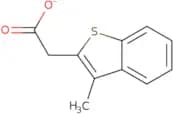
CAS:<p>Versatile small molecule scaffold</p>Formula:C10H8O2SPurity:Min. 95%Molecular weight:192.24 g/mol2-(3-methyl-1-benzothiophen-2-yl)acetic acid
CAS:<p>Versatile small molecule scaffold</p>Formula:C11H10O2SPurity:Min. 95%Molecular weight:206.27 g/mol4-(Thiophen-3-yl)butanoic acid
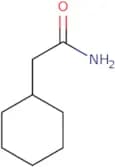
CAS:<p>Versatile small molecule scaffold</p>Formula:C8H10O2SPurity:Min. 95%Molecular weight:170.23 g/mol2-Cyclohexylacetamide
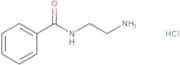
CAS:<p>2-Cyclohexylacetamide is a pharmaceutical compound that acts as an immunosuppressant and anti-inflammatory agent. It has been shown to protect against autoimmune diseases by suppressing the immune system. 2-Cyclohexylacetamide interacts with other drugs, increasing their effects or decreasing their effects, and may have cancer-fighting properties. This drug also binds to the ccr5 receptor in HIV cells and inhibits viral replication. 2-Cyclohexylacetamide is synthesized by reacting sodium citrate with deuterium isotope. The synthesis of this drug can be accomplished using a variety of methods, including protease activity, hydroxylation reactions, or by reductive amination of 2-chloroethanol.</p>Formula:C8H15NOPurity:Min. 95%Molecular weight:141.21 g/molN-Benzoylethylenediamine hydrochloride
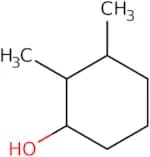
CAS:<p>Versatile small molecule scaffold</p>Formula:C9H13ClN2OPurity:Min. 95%Molecular weight:200.67 g/mol2,3-Dimethylcyclohexanol
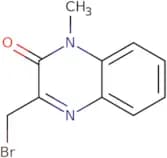
CAS:<p>2,3-Dimethylcyclohexanol is a tertiary butyl alcohol that has a boiling point of about 200°C. It is used in the production of esters, such as diethyl ester. 2,3-Dimethylcyclohexanol is also used in the production of cyclobutane and cyclohexanol. The reaction rate for this compound is slow and requires a large amount of heat to reach completion. This product reacts with aldehydes to form reaction products, which are usually volatile compounds. 2,3-Dimethylcyclohexanol can be synthesized from cyclobutane or cyclohexanol by reacting them with an organic acid or hydroxyl group.</p>Formula:C8H16OPurity:Min. 95%Molecular weight:128.22 g/mol3-(Bromomethyl)-1-methyl-1,2-dihydroquinoxalin-2-one
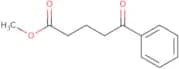
CAS:<p>Versatile small molecule scaffold</p>Formula:C10H9BrN2OPurity:Min. 95%Molecular weight:253.09 g/molMethyl 5-oxo-5-phenylpentanoate
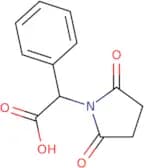
CAS:<p>Methyl 5-oxo-5-phenylpentanoate is a chiral, bimodal molecule that is an organic solvent. This compound has been shown to be consumed by bacteria and yeasts, which are the main contributors to butyric acid production. Methyl 5-oxo-5-phenylpentanoate can be used as a synthetic intermediate for the production of drugs and antibiotics. The formyl group on methyl 5-oxo-5-phenylpentanoate can act as an acceptor or nucleophile in reactions with other molecules, making it useful for biomolecular studies.</p>Formula:C12H14O3Purity:Min. 95%Molecular weight:206.24 g/mol2-(2,5-Dioxopyrrolidin-1-yl)-2-phenylacetic acid
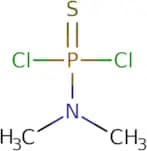
CAS:<p>Versatile small molecule scaffold</p>Formula:C12H11NO4Purity:Min. 95%Molecular weight:233.22 g/mol(Dimethylamino)phosphonothioyl dichloride
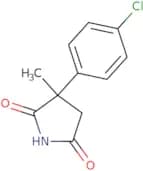
CAS:<p>Dimethylamino)phosphonothioyl dichloride is a linker that contains two phosphonothioic acid groups. It is an electron-deficient compound with symmetries, which are important for the design of anticancer drugs. This linker has been shown to cause chromosomal damage in vitro and inhibits DNA synthesis in cell cultures. The dimethylamino group of the molecule can be substituted with deuterated atoms to provide a tool for studying kinetics and ion pairs.</p>Formula:C2H6Cl2NPSPurity:Min. 95%Molecular weight:178.02 g/mol3-(4-Chlorophenyl)-3-methylpyrrolidine-2,5-dione
CAS:<p>Versatile small molecule scaffold</p>Formula:C11H10ClNO2Purity:Min. 95%Molecular weight:223.65 g/mol6-Azaspiro[3.4]octane-5,7-dione
CAS:<p>Versatile small molecule scaffold</p>Formula:C7H9NO2Purity:Min. 95%Molecular weight:139.15 g/mol3-Bromo-2-methyl-1H-indole
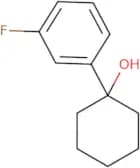
CAS:<p>Versatile small molecule scaffold</p>Formula:C9H8BrNPurity:Min. 95%Molecular weight:210.07 g/mol1-(3-Fluorophenyl)cyclohexanol
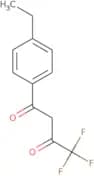
CAS:<p>Versatile small molecule scaffold</p>Formula:C12H15FOPurity:Min. 95%Molecular weight:194.25 g/mol1-(4-Ethylphenyl)-4,4,4-trifluorobutane-1,3-dione
CAS:<p>Versatile small molecule scaffold</p>Formula:C12H11F3O2Purity:Min. 95%Molecular weight:244.21 g/mol4-Amino-N-(3-fluorophenyl)benzenesulfonamide
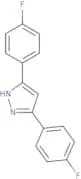
CAS:<p>Versatile small molecule scaffold</p>Formula:C12H11FN2O2SPurity:Min. 95%Molecular weight:266.29 g/mol3,5-Bis(4-fluorophenyl)-1H-pyrazole
CAS:<p>3,5-Bis(4-fluorophenyl)-1H-pyrazole is a dipolar compound that reacts with nucleophiles and electrophiles. It has been shown to be an effective drug for the treatment of Parkinson's disease. The alpha-synuclein protein in the brain can be labeled with 3,5-bis(4-fluorophenyl)-1H-pyrazole by a 1,3-dipolar cycloaddition reaction on the amine group of the protein. This labeling technique is useful for imaging alpha-synuclein deposits in the brain using positron emission tomography (PET) scans. 3,5-Bis(4-fluorophenyl)-1H-pyrazole has also been used as a model substrate for optimizing fluorogenic probes that are used in radiopharmaceuticals.</p>Formula:C15H10F2N2Purity:Min. 95%Molecular weight:256.25 g/molN-[2-(Phenylsulfanyl)phenyl]formamide
CAS:<p>Versatile small molecule scaffold</p>Formula:C13H11NOSPurity:Min. 95%Molecular weight:229.3 g/molEthyl 2-[benzyl(2-cyanoethyl)amino]acetate
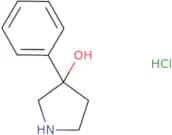
CAS:<p>Versatile small molecule scaffold</p>Formula:C14H18N2O2Purity:Min. 95%Molecular weight:246.3 g/mol3-Phenylpyrrolidin-3-ol hydrochloride
CAS:<p>Versatile small molecule scaffold</p>Formula:C10H14ClNOPurity:Min. 95%Molecular weight:199.68 g/mol2-Ethylpiperidine hydrochloride
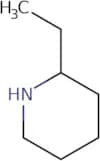
CAS:<p>Versatile small molecule scaffold</p>Formula:C7H16ClNPurity:Min. 95%Molecular weight:149.66 g/mol2-Ethylpiperidine
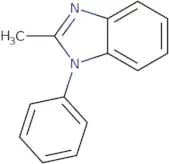
CAS:<p>2-Ethylpiperidine is a compound that has been shown to be highly cytotoxic against the diptera, culicidae. It reacts with two molecules of formaldehyde to produce a stable imine. The magnetic resonance spectra of 2-ethylpyridine in hexane solution indicates the presence of an amine and a methylene group. The chemical reaction products are mainly characterized by their nmr spectra. A chromatographic method was used to identify 2-ethylpyridine as the major product in this reaction.</p>Formula:C7H15NPurity:Min. 95%Molecular weight:113.2 g/mol2-Methyl-1-phenyl-1H-1,3-benzodiazole
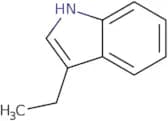
CAS:<p>2-Methyl-1-phenyl-1H-1,3-benzodiazole is a quinoline and cyanine dye that contains an organometallic group. It has substituents on the nitrogen atom and heterocyclic groups in the benzimidazole and benzothiazole rings. 2-Methyl-1-phenyl-1H-1,3-benzodiazole is used as a reagent in organic synthesis reactions. It also reacts with alkyl groups to form substituted 2,2′:6′,2″ -terpyridine compounds.</p>Formula:C14H12N2Purity:Min. 95%Molecular weight:208.26 g/mol3-Ethyl-1H-indole
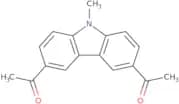
CAS:<p>3-Ethyl-1H-indole is a chiral compound with a high degree of stereoselectivity. It is synthesized by the reaction of ethyl formate and diethyl malonate in the presence of sulfuric acid, magnesium and liquid chromatography. The product can be purified by vacuum distillation or recrystallization. 3-Ethyl-1H-indole is used as a starting material for the synthesis of other aromatic compounds. 3-Ethyl-1H-indole has been shown to be useful in the production of pharmaceuticals and agrochemicals.</p>Formula:C10H11NPurity:Min. 95%Molecular weight:145.2 g/mol1-(6-Acetyl-9-methyl-9H-carbazol-3-yl)ethan-1-one
CAS:<p>Versatile small molecule scaffold</p>Formula:C17H15NO2Purity:Min. 95%Molecular weight:265.31 g/mol1-(6-Acetyl-9-ethyl-9H-carbazol-3-yl)ethan-1-one
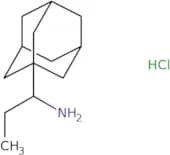
CAS:<p>Versatile small molecule scaffold</p>Formula:C18H17NO2Purity:Min. 95%Molecular weight:279.3 g/mol1-(Adamantan-1-yl)propan-1-amine hydrochloride
CAS:<p>Versatile small molecule scaffold</p>Formula:C13H24ClNPurity:Min. 95%Molecular weight:229.79 g/molSpiro[5.5]undecane-2,4-dione
CAS:<p>Spiro[5.5]undecane-2,4-dione is an analgesic drug that belongs to the class of carboxylic acid derivatives. It has been shown to be effective in treating chronic pain and neuropathic pain. Spiro[5.5]undecane-2,4-dione binds to a pharmacophore site on voltage gated sodium channels, preventing the influx of sodium ions into the cell, which blocks the conduction of nerve impulses and relieves pain. The chemical structure of Spiro[5.5]undecane-2,4-dione is similar to that of morphine but it does not have morphine's addictive properties or potential for abuse.</p>Formula:C11H16O2Purity:Min. 95%Molecular weight:180.25 g/mol4-Chromanol
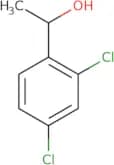
CAS:<p>4-Chromanol is a trifluoroacetic acid amide. It contains a hydroxyl group, which is important for its neuroprotective properties. 4-Chromanol's mechanism of action is not yet fully understood, but it has been shown to inhibit the growth of human serum and oral pathogens in vitro. The compound also has an anti-inflammatory effect by inhibiting the production of pro-inflammatory cytokines from human monocytes. 4-Chromanol's chemical structure consists of a hydroxy group, fatty acids, and benzyl groups on both sides of the carbonyl group at position 4.</p>Formula:C9H10O2Purity:Min. 95%Molecular weight:150.18 g/mol2,4-Dichloro-±-methylbenzyl Alcohol
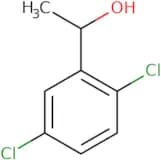
CAS:<p>2,4-Dichloro-±-methylbenzyl Alcohol is a metabolite of 2,4-dichlorobenzyl alcohol (2,4-DCBA) and is used as an antifungal drug. It has been shown to inhibit the growth of fungi by blocking octanoyl and pentyl groups in the synthesis of fatty acids. The metabolites are formed from 2,4-DCBA when it is activated by cytochrome P450 enzymes or monooxygenase. This compound also has a B1 chiral center that can exist in two forms: erythro and threo. The enantiomers have different effects on certain organisms.<br>2,4-Dichloro-±-methylbenzyl Alcohol is one of the metabolites formed from 2,4-dichlorobenzyl alcohol (2,4-DCBA). It has been shown to inhibit the growth of fungi by blocking octanoy</p>Formula:C8H8Cl2OPurity:Min. 95%Molecular weight:191.05 g/mol1-(2,5-Dichlorophenyl)ethanol
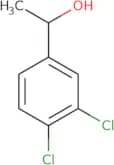
CAS:<p>Versatile small molecule scaffold</p>Formula:C8H8Cl2OPurity:Min. 95%Molecular weight:191.06 g/mol1-(3,4-Dichlorophenyl)ethanol
CAS:<p>1-(3,4-Dichlorophenyl)ethanol is a metabotropic glutamate receptor antagonist that has been shown to have strong affinity for the mGlu2 receptor. It is a potent antagonist of the mGlu2 receptor and displays high affinity for this receptor. The discovery of 1-(3,4-Dichlorophenyl)ethanol led to the discovery of other compounds with similar pharmacological profiles. This drug has been shown to be an agonist of the metabotropic glutamate receptors. 1-(3,4-Dichlorophenyl)ethanol has been used in studies investigating its use as a treatment for schizophrenia, obsessive compulsive disorder and depression.</p>Formula:C8H8Cl2OPurity:Min. 95%Molecular weight:191.05 g/molBicyclo[4.2.0]octa-1(6),2,4-triene-7-carbonyl chloride
CAS:<p>Versatile small molecule scaffold</p>Formula:C9H7ClOPurity:Min. 95%Molecular weight:166.6 g/mol6-Chloro-2-thiatricyclo[9.4.0.0,3,8]pentadeca-1(15),3,5,7,11,13-hexaen-9-one
CAS:<p>Versatile small molecule scaffold</p>Formula:C14H9ClOSPurity:Min. 95%Molecular weight:260.7 g/mol5,6-Dihydrobenzo[b]thiophen-7(4H)-one
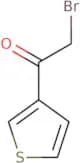
CAS:<p>5,6-Dihydrobenzo[b]thiophen-7(4H)-one is a sulfur-containing heterocycle that has been shown in studies to have cytotoxic activity. This compound has been found to induce apoptosis (programmed cell death) in cancer cells by binding to the protein kinase B (PKB/Akt), which is involved in the regulation of cell proliferation and survival. 5,6-Dihydrobenzo[b]thiophen-7(4H)-one also binds to DNA, preventing transcription and translation of proteins. The cytotoxic effects of this compound make it useful for treatment of ophthalmic conditions such as cataracts and glaucoma. This compound is being studied for use in the treatment of ovarian cancer and other types of cancer. It was recently shown that 5,6-dihydrobenzo[b]thiophen-7(4H)-one</p>Formula:C8H8OSPurity:Min. 95%Molecular weight:152.21 g/mol3-(Bromoacetyl)thiophene
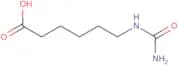
CAS:<p>3-(Bromoacetyl)thiophene is a chromophore that can be used as an antibacterial agent. It has potent inhibitory effects on bacteria, which are caused by the ring-opening of the thiophene ring in the presence of irradiation. 3-(Bromoacetyl)thiophene can also be used in electrochemical polymerization and cyclic voltammetry. In addition, it has been shown to have an inhibitory effect on dehydrogenase enzymes, which are important for energy production in cells. This compound is fluorescent and can be detected using electrochemical impedance spectroscopy (EIS).</p>Formula:C6H5BrOSPurity:Min. 95%Molecular weight:205.07 g/mol6-(Carbamoylamino)hexanoic acid
CAS:<p>6-(Carbamoylamino)hexanoic acid (6ACA) is a synlett that has been shown to be a potent and selective inhibitor of Hsp70. It is functional as a modulator through the interaction with the zinc-binding site, which inhibits ATPase activity. This molecule also acts as a lead molecule for the development of therapeutic agents against various diseases such as cancer, diabetes, and neurodegenerative disorders. The compound has been shown to have catalytic activity in acidic conditions and shows high stereoselectivity in multicomponent reactions.</p>Formula:C7H14N2O3Purity:Min. 95%Molecular weight:174.2 g/mol6-Methylbenzo[b]thiophene-2-carboxylic acid
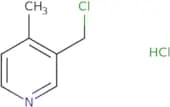
CAS:<p>Mebendazole is a benzimidazole anthelmintic drug that inhibits the growth of worms by binding to the benzimidazole-sensitive sites on the worm's nervous system. Mebendazole has been shown to be a potent and selective antagonist at the benzimidazole-sensitive site of the GABA receptor. This activity has been confirmed in vitro and in animal models, where it blocked convulsions induced by pentylenetetrazol. Mebendazole is also orally active, but modifications are needed to optimize its oral bioavailability and dosing. Mebendazole has been shown to have significant activity against some human parasites, including Entamoeba histolytica, Trichuris trichiura, and Giardia lamblia. In vivo studies have shown that mebendazole is well tolerated in humans when taken orally.</p>Formula:C10H8O2SPurity:Min. 95%Molecular weight:192.24 g/mol3-(Chloromethyl)-4-methylpyridine hydrochloride
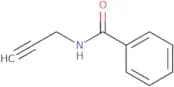
CAS:<p>Versatile small molecule scaffold</p>Formula:C7H9Cl2NPurity:Min. 95%Molecular weight:178.06 g/molN-(Prop-2-yn-1-yl)benzamide
CAS:<p>N-(Prop-2-yn-1-yl)benzamide is a potential drug for the treatment of Parkinson's disease. It has been shown to be an effective inhibitor of the enzyme tyrosine hydroxylase and is able to reduce dopamine levels in animals. N-(Prop-2-yn-1-yl)benzamide has also been shown to have antiinflammatory properties, which may be due to its ability to inhibit cyclooxygenase activity. This drug can be synthesized by a stepwise process starting with propargylamine and benzoyl chloride. The x-ray crystallography studies conducted on this compound show that it is a mononuclear arene with a crystallographic symmetry of C2v. The oxidized form of this molecule shows high reactivity towards electron rich aromatic compounds, such as ferrocene, which may explain its ability to catalyze the oxidation reactions of electron poor arenes such as isoindolines.</p>Formula:C10H9NOPurity:Min. 95%Molecular weight:159.18 g/mol2-[4-(Benzyloxy)-1H-indol-3-yl]acetic acid
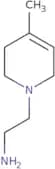
CAS:<p>Versatile small molecule scaffold</p>Formula:C17H15NO3Purity:Min. 95%Molecular weight:281.3 g/mol2-(4-Methyl-1,2,3,6-tetrahydropyridin-1-yl)ethan-1-amine
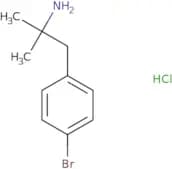
CAS:<p>Versatile small molecule scaffold</p>Formula:C8H16N2Purity:Min. 95%Molecular weight:140.23 g/mol1-(4-Bromophenyl)-2-methylpropan-2-amine hydrochloride
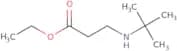
CAS:Controlled Product<p>Versatile small molecule scaffold</p>Formula:C10H15BrClNPurity:Min. 95%Molecular weight:264.59 g/molethyl 3-(tert-butylamino)propanoate
CAS:<p>Ethyl 3-(tert-butylamino)propanoate is an analyte that can be switched between two different states. It is a solvent that has been used in the field of microextraction to maximize and optimize the efficiency of gas chromatography. This compound has also been shown to be influential on parameters such as inorganic solvents, large-scale preconcentration, and fields.</p>Formula:C9H19NO2Purity:Min. 95%Molecular weight:173.3 g/mol2-(Dodecylsulfanyl)ethan-1-ol
CAS:<p>Versatile small molecule scaffold</p>Formula:C14H30OSPurity:Min. 95%Molecular weight:246.45 g/mol1-Bromo-2-(chloromethoxy)ethane
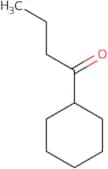
CAS:<p>Versatile small molecule scaffold</p>Formula:C3H6BrClOPurity:Min. 95%Molecular weight:173.43 g/mol1-Cyclohexylbutan-1-one
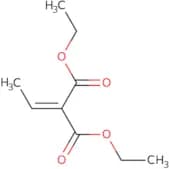
CAS:<p>1-Cyclohexylbutan-1-one is a white crystalline solid with a benzyl, methoxy, and oxime group. It is used in the production of pharmaceuticals and other chemical products. The chemical has been shown to be an alkylene, methylthio, nitro, and alicyclic compound that can undergo oxidation or reduction reactions. 1-Cyclohexylbutan-1-one also contains a polyunsaturated ring that can react with chloroacetanilides to produce phenylethyl and phenyl rings.</p>Formula:C10H18OPurity:Min. 95%Molecular weight:154.25 g/molDiethyl 2-ethylidenemalonate
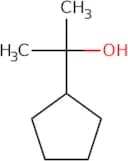
CAS:<p>Diethyl 2-ethylidenemalonate (DEEM) is a synthetic chemical that is used as an intermediate in the production of pharmaceuticals. It is a white solid and has a melting point of about 143°C. DEEM has been shown to be carcinogenic in rats, although it does not produce lung tumors. It also acts as an alkylating agent, which can lead to DNA mutations.</p>Formula:C9H14O4Purity:Min. 95%Molecular weight:186.21 g/mola,a-Dimethyl-cyclopentanemethanol
CAS:<p>Versatile small molecule scaffold</p>Formula:C8H16OPurity:Min. 95%Molecular weight:128.21 g/mol(4-Nitrophenyl)acetaldehyde
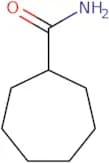
CAS:<p>4-Nitrophenylacetaldehyde is an organic compound that belongs to the group of reactive chemicals. It is synthetically derived from nitrobenzene and reacts with proton, covalent adducts, or other functional groups. 4-Nitrophenylacetaldehyde has been shown to be a target for cancer research because it can be used to produce cancer drugs by linking a variety of functional groups to the molecule. The nitrogen atom in the molecule is also a target for research because it can be converted into nitro groups and can help in the development of new drugs through dehydration reactions.</p>Formula:C8H7NO3Purity:Min. 95%Molecular weight:165.15 g/molCycloheptanecarboxamide
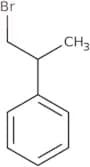
CAS:<p>Cycloheptanecarboxamide is a cellular amide that is used in the study of β-amino acids. Cycloheptanecarboxamide is a prodrug that is converted to cycloheptylamine, which has been shown to be an inhibitor of proliferation and a potent inhibitor of inflammatory diseases. Cycloheptylamine also inhibits the production of aliphatic hydrocarbons and mineralocorticoids, as well as the activation of mineralocorticoid receptors. It has been shown to be an organic solution that can be used to generate tartrate-resistant acid potassium ions (TRAP).</p>Formula:C8H15NOPurity:Min. 95%Molecular weight:141.21 g/mol1-Bromo-2-phenylpropane
CAS:<p>1-Bromo-2-phenylpropane is a chemical compound that can be used as an intermediate in the synthesis of other compounds. It is a rate enhancement agent that can be used to increase the reaction speed of chemical reactions. 1-Bromo-2-phenylpropane reacts with ethyl bromide and dimethylformamide to form the corresponding products, which are then reacted with proton sources to form bifluorenylidene. The deuterium isotope has been shown to improve the reaction rate by increasing the nucleophilic attack on halides. Organic chemists use this chemical compound to synthesize carbonyl groups from organic halides.</p>Formula:C9H11BrPurity:Min. 95%Molecular weight:199.09 g/mol5-Methylbenzo[c][1,2,5]thiadiazole
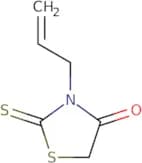
CAS:<p>5-Methylbenzo[c][1,2,5]thiadiazole is a chemical compound that belongs to the group of mixtures. It is a yellow solid that can be purified by recrystallization from water and ethanol. This compound is soluble in alcohol, chloroform and ether. 5-Methylbenzo[c][1,2,5]thiadiazole has been shown to be an oxidizing agent when mixed with potassium permanganate or potassium perchlorate. The reactivity of this substance can also be seen when it reacts with chlorine gas to form the corresponding thiocarbonyl chloride. 5-Methylbenzo[c][1,2,5]thiadiazole has not been found to have any commercial applications at this time.</p>Formula:C7H6N2SPurity:Min. 95%Molecular weight:150.2 g/mol3-Allylrhodanine
CAS:<p>3-Allylrhodanine is an anti-bacterial agent that has been shown to inhibit the growth of bacteria by interacting with transition metal ions. It is used in wastewater treatment to remove carbon disulfide and its condensation products. 3-Allylrhodanine reacts with aldehydes to form ethyl orthoformate and chloride, which are then converted into 2-bromo-3-nitrobenzoic acid. This compound is metabolized by nitroreductase and nitroreductase reductase, which produce hydrogen bond and thermodynamic effects, respectively. 3-Allylrhodanine also has hormone receptor binding activity that may lead to an increase in nitric oxide levels.</p>Formula:C6H7NOS2Purity:Min. 95%Molecular weight:173.26 g/mol3-(5-Methyl-furan-2-yl)-propionic acid
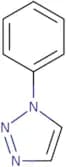
CAS:<p>Versatile small molecule scaffold</p>Formula:C8H10O3Purity:Min. 95%Molecular weight:154.17 g/mol1-Phenyl-1H-1,2,3-triazole
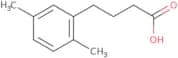
CAS:<p>1-Phenyl-1H-1,2,3-triazole is an antiinflammatory agent that belongs to the group of amides. It has been shown to be effective against plant diseases and acarids in animals. 1-Phenyl-1H-1,2,3-triazole has been shown to have antibacterial activity against bacteria by inhibiting the synthesis of proteins essential for cell division. The enantiomer of 1-phenyl-1H-1,2,3-triazole has a greater antibacterial effect than the racemic mixture. The ethyl bromoacetate moiety of this molecule is responsible for its strong activity as an antibiotic.</p>Formula:C8H7N3Purity:Min. 95%Molecular weight:145.16 g/mol4-(2,5-Dimethylphenyl)butanoic acid
CAS:<p>Versatile small molecule scaffold</p>Formula:C12H16O2Purity:Min. 95%Molecular weight:192.25 g/molIsothiazole-3-carbonitrile
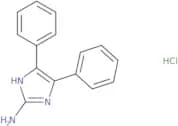
CAS:<p>Isothiazole-3-carbonitrile is a chemical compound that contains a nitrile group with two isothiazole rings. It is used in the synthesis of urea and in the production of carbon tetrachloride. This chemical has been shown to cause hypotoxicity mediated by cyano, epithelioma, disulfide, pyridine, carbon disulfide, dichloro, industrial, cutaneum and cancer. Isothiazole-3-carbonitrile has been shown to act as a signal molecule that can inhibit chlorine and cyanide reactions by acting as a competitive inhibitor.</p>Formula:C2H2N2SPurity:Min. 95%Molecular weight:110.14 g/mol4,5-Diphenyl-1H-imidazol-2-amine hydrochloride
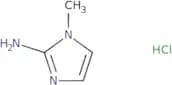
CAS:<p>Versatile small molecule scaffold</p>Formula:C15H14ClN3Purity:Min. 95%Molecular weight:271.74 g/mol1-Methyl-1H-imidazol-2-amine hydrochloride
CAS:<p>Versatile small molecule scaffold</p>Formula:C4H8ClN3Purity:Min. 95%Molecular weight:133.58 g/mol4-Bromopentanoic acid
CAS:<p>Versatile small molecule scaffold</p>Formula:C5H9BrO2Purity:Min. 95%Molecular weight:181.03 g/mol

amino}propan-1-ol](/_next/image/?url=https%3A%2Fstatic.cymitquimica.com%2Fproducts%2F3D%2Fthumb-webp%2FBBA43905.webp&w=3840&q=75)

![3-[(3-Methoxyphenyl)amino]propanenitrile](/_next/image/?url=https%3A%2Fstatic.cymitquimica.com%2Fproducts%2F3D%2Fthumb-webp%2FBBA42407.webp&w=3840&q=75)



![3-{[Methyl(1,3-thiazol-4-ylmethyl)amino]methyl}aniline](/_next/image/?url=https%3A%2Fstatic.cymitquimica.com%2Fproducts%2F3D%2Fthumb-webp%2FBAC20006.webp&w=3840&q=75)
![2-[(2-Methoxyphenyl)methyl]cyclopentan-1-ol](/_next/image/?url=https%3A%2Fstatic.cymitquimica.com%2Fproducts%2F3D%2Fthumb-webp%2FBAC19992.webp&w=3840&q=75)



![[1-(6-Chloropyrimidin-4-yl)pyrrolidin-2-yl]methanol](/_next/image/?url=https%3A%2Fstatic.cymitquimica.com%2Fproducts%2F3D%2Fthumb-webp%2FBAC14677.webp&w=3840&q=75)

![3-[(2,4-Difluorophenyl)sulfanyl]piperidine](/_next/image/?url=https%3A%2Fstatic.cymitquimica.com%2Fproducts%2F3D%2Fthumb-webp%2FBAC14450.webp&w=3840&q=75)
![{[2-(Methylcarbamoyl)ethyl]carbamoyl}formic acid](/_next/image/?url=https%3A%2Fstatic.cymitquimica.com%2Fproducts%2F3D%2Fthumb-webp%2FBAC13813.webp&w=3840&q=75)
![2-[(4-Aminopyridin-2-yl)oxy]ethan-1-ol](/_next/image/?url=https%3A%2Fstatic.cymitquimica.com%2Fproducts%2F3D%2Fthumb-webp%2FBAC13177.webp&w=3840&q=75)
![[2-(4-Chloro-1H-pyrazol-1-yl)-6-methylpyridin-3-yl]methanamine](/_next/image/?url=https%3A%2Fstatic.cymitquimica.com%2Fproducts%2F3D%2Fthumb-webp%2FBAC11888.webp&w=3840&q=75)
![1H-Pyrazolo[3,4-b]pyridine-6-carboxylic acid](/_next/image/?url=https%3A%2Fstatic.cymitquimica.com%2Fproducts%2F3D%2Fthumb-webp%2FBAC11124.webp&w=3840&q=75)



![1-[1-(3-Ethyl-1,2,4-oxadiazol-5-yl)ethyl]piperazine](/_next/image/?url=https%3A%2Fstatic.cymitquimica.com%2Fproducts%2F3D%2Fthumb-webp%2FBAC10102.webp&w=3840&q=75)
![N-Methyl-1-[(3-methyl-1,2-oxazol-5-yl)methyl]piperidin-4-amine](/_next/image/?url=https%3A%2Fstatic.cymitquimica.com%2Fproducts%2F3D%2Fthumb-webp%2FBAC09946.webp&w=3840&q=75)
![[4-(4-Fluorophenoxy)pyridin-2-yl]methanamine](/_next/image/?url=https%3A%2Fstatic.cymitquimica.com%2Fproducts%2F3D%2Fthumb-webp%2FBAC08808.webp&w=3840&q=75)

![2-[(Difluoromethyl)sulfanyl]phenol](/_next/image/?url=https%3A%2Fstatic.cymitquimica.com%2Fproducts%2F3D%2Fthumb-webp%2FBAC08472.webp&w=3840&q=75)

![Methyl({1-[3-(pyridin-4-yl)phenyl]ethyl})amine](/_next/image/?url=https%3A%2Fstatic.cymitquimica.com%2Fproducts%2F3D%2Fthumb-webp%2FBAC06101.webp&w=3840&q=75)
![3-[(4-Bromo-1H-pyrazol-1-yl)methyl]-5-propyl-1,2,4-oxadiazole](/_next/image/?url=https%3A%2Fstatic.cymitquimica.com%2Fproducts%2F3D%2Fthumb-webp%2FBAC04876.webp&w=3840&q=75)
![tert-Butyl N-methyl-N-[(2-methyloxiran-2-yl)methyl]carbamate](/_next/image/?url=https%3A%2Fstatic.cymitquimica.com%2Fproducts%2F3D%2Fthumb-webp%2FBAC04731.webp&w=3840&q=75)
![[2-Amino-1-(2-methylphenyl)propyl]dimethylamine](/_next/image/?url=https%3A%2Fstatic.cymitquimica.com%2Fproducts%2F3D%2Fthumb-webp%2FBAC04257.webp&w=3840&q=75)



![7-Bromoimidazo[1,2-a]pyrimidine](/_next/image/?url=https%3A%2Fstatic.cymitquimica.com%2Fproducts%2F3D%2Fthumb-webp%2FBAC03357.webp&w=3840&q=75)
![2-{1-[(tert-Butoxy)carbonyl]-4-hydroxypiperidin-4-yl}-2-methylpropanoic acid](/_next/image/?url=https%3A%2Fstatic.cymitquimica.com%2Fproducts%2F3D%2Fthumb-webp%2FBAC03253.webp&w=3840&q=75)
![3-Amino-1-[4-(2-hydroxyethyl)phenyl]urea](/_next/image/?url=https%3A%2Fstatic.cymitquimica.com%2Fproducts%2F3D%2Fthumb-webp%2FBAC02672.webp&w=3840&q=75)

![tert-Butyl 2,5-diazaspiro[3.6]decane-2-carboxylate](/_next/image/?url=https%3A%2Fstatic.cymitquimica.com%2Fproducts%2F3D%2Fthumb-webp%2FBAC02283.webp&w=3840&q=75)
![rac-tert-Butyl (3aS,6aR)-3a-amino-octahydrocyclopenta[b]pyrrole-1-carboxylate](/_next/image/?url=https%3A%2Fstatic.cymitquimica.com%2Fproducts%2F3D%2Fthumb-webp%2FBAC02147.webp&w=3840&q=75)
![2-[(tert-butoxy)carbonyl]-8-oxa-2-azaspiro[4.5]decane-4-carboxylic acid](/_next/image/?url=https%3A%2Fstatic.cymitquimica.com%2Fproducts%2F3D%2Fthumb-webp%2FBAC02124.webp&w=3840&q=75)
![9-Boc-3-oxo-2,9-diazaspiro[5.5]undecane](/_next/image/?url=https%3A%2Fstatic.cymitquimica.com%2Fproducts%2F3D%2Fthumb-webp%2FBAC02118.webp&w=3840&q=75)
![tert-Butyl 3-bromo-8,9-dihydro-5H-[1,2,4]triazolo[4,3-d][1,4]diazepine-7(6H)-carboxylate](/_next/image/?url=https%3A%2Fstatic.cymitquimica.com%2Fproducts%2F3D%2Fthumb-webp%2FBAC02006.webp&w=3840&q=75)
![rac-(3aR,6aR)-5-[(tert-butoxy)carbonyl]-hexahydro-1H-furo[3,4-c]pyrrole-3a-carboxylic acid, trans](/_next/image/?url=https%3A%2Fstatic.cymitquimica.com%2Fproducts%2F3D%2Fthumb-webp%2FBAC01997.webp&w=3840&q=75)
![2-[(tert-Butoxy)carbonyl]-2-azabicyclo[4.1.0]heptane-7-carboxylic acid](/_next/image/?url=https%3A%2Fstatic.cymitquimica.com%2Fproducts%2F3D%2Fthumb-webp%2FBAC01995.webp&w=3840&q=75)
![tert-Butyl 1-bromo-5,6,8,9-tetrahydro-7H-imidazo[1,5-d][1,4]diazepine-7-carboxylate](/_next/image/?url=https%3A%2Fstatic.cymitquimica.com%2Fproducts%2F3D%2Fthumb-webp%2FBAC01927.webp&w=3840&q=75)
![5-[(tert-butoxy)carbonyl]-4H,5H,6H,7H,8H-pyrazolo[1,5-a][1,4]diazepine-7-carboxylic acid](/_next/image/?url=https%3A%2Fstatic.cymitquimica.com%2Fproducts%2F3D%2Fthumb-webp%2FBAC01761.webp&w=3840&q=75)
![tert-Butyl 9-amino-3-oxa-7-azabicyclo[3.3.1]nonane-7-carboxylate](/_next/image/?url=https%3A%2Fstatic.cymitquimica.com%2Fproducts%2F3D%2Fthumb-webp%2FBAC01574.webp&w=3840&q=75)
![tert-butyl 3,9-diazabicyclo[4.2.1]nonane-9-carboxylate](/_next/image/?url=https%3A%2Fstatic.cymitquimica.com%2Fproducts%2F3D%2Fthumb-webp%2FBAC01563.webp&w=3840&q=75)
![3-Hydroxymethyl-1,4,5,7-tetrahydro-pyrazolo[3,4-c]pyridine-6-carboxylic acid tert-butyl ester](/_next/image/?url=https%3A%2Fstatic.cymitquimica.com%2Fproducts%2F3D%2Fthumb-webp%2FBAC01460.webp&w=3840&q=75)
![t-Butyl 3-(hydroxymethyl)-6,7-dihydroisoxazolo[4,5-c]pyridine-5(4H)-carboxylate](/_next/image/?url=https%3A%2Fstatic.cymitquimica.com%2Fproducts%2F3D%2Fthumb-webp%2FBAC01458.webp&w=3840&q=75)
![rac-(3aR,6aS)-5-[(tert-Butoxy)carbonyl]-2-oxo-octahydropyrrolo[3,4-b]pyrrole-3a-carboxylic acid](/_next/image/?url=https%3A%2Fstatic.cymitquimica.com%2Fproducts%2F3D%2Fthumb-webp%2FBAC01332.webp&w=3840&q=75)
![3-Boc-6-oxo-3-aza-bicyclo[3.1.1]heptane](/_next/image/?url=https%3A%2Fstatic.cymitquimica.com%2Fproducts%2F3D%2Fthumb-webp%2FBAC01326.webp&w=3840&q=75)
![2-Boc-octahydro-pyrrolo[3,4-d]azepine](/_next/image/?url=https%3A%2Fstatic.cymitquimica.com%2Fproducts%2F3D%2Fthumb-webp%2FBAC01307.webp&w=3840&q=75)
![5-[(tert-butoxy)carbonyl]-5-azaspiro[2.3]hexane-1-carboxylic acid](/_next/image/?url=https%3A%2Fstatic.cymitquimica.com%2Fproducts%2F3D%2Fthumb-webp%2FBAC01282.webp&w=3840&q=75)
![tert-Butyl 7-(aminomethyl)-6-oxa-2-azaspiro[3.5]nonane-2-carboxylate](/_next/image/?url=https%3A%2Fstatic.cymitquimica.com%2Fproducts%2F3D%2Fthumb-webp%2FBAC01244.webp&w=3840&q=75)
![tert-butyl 5-oxa-2,8-diazaspiro[3.5]nonane-2-carboxylate](/_next/image/?url=https%3A%2Fstatic.cymitquimica.com%2Fproducts%2F3D%2Fthumb-webp%2FBAC01105.webp&w=3840&q=75)
![3-[(tert-Butoxy)carbonyl]-8-oxa-3-azabicyclo[3.2.1]octane-6-carboxylic acid](/_next/image/?url=https%3A%2Fstatic.cymitquimica.com%2Fproducts%2F3D%2Fthumb-webp%2FBAC01077.webp&w=3840&q=75)
![tert-Butyl octahydro-1H-pyrrolo[3,2-b]pyridine-1-carboxylate](/_next/image/?url=https%3A%2Fstatic.cymitquimica.com%2Fproducts%2F3D%2Fthumb-webp%2FBAC01063.webp&w=3840&q=75)
![rac-tert-Butyl (3aR,7aR)-5-oxo-octahydro-1H-pyrrolo[3,2-b]pyridine-1-carboxylate](/_next/image/?url=https%3A%2Fstatic.cymitquimica.com%2Fproducts%2F3D%2Fthumb-webp%2FBAC01054.webp&w=3840&q=75)
![3-Oxo-7-azaspiro[3.4]octane-7-carboxylate tert-butyl ester](/_next/image/?url=https%3A%2Fstatic.cymitquimica.com%2Fproducts%2F3D%2Fthumb-webp%2FBAC01017.webp&w=3840&q=75)
![4-Amino-8-oxa-2-aza-spiro[4.5]decane-2-carboxylic acid tert-butyl ester](/_next/image/?url=https%3A%2Fstatic.cymitquimica.com%2Fproducts%2F3D%2Fthumb-webp%2FBAC00969.webp&w=3840&q=75)
![2-[(Benzyloxy)carbonyl]-8-oxa-2-azaspiro[4.5]decane-4-carboxylic acid](/_next/image/?url=https%3A%2Fstatic.cymitquimica.com%2Fproducts%2F3D%2Fthumb-webp%2FBAC00964.webp&w=3840&q=75)
![tert-Butyl 6-(aminomethyl)-5-oxa-2-azaspiro[3.5]nonane-2-carboxylate](/_next/image/?url=https%3A%2Fstatic.cymitquimica.com%2Fproducts%2F3D%2Fthumb-webp%2FBAC00952.webp&w=3840&q=75)
![2-(tert-Butoxycarbonyl)-5-oxa-2-azaspiro[3.4]octane-7-carboxylic acid](/_next/image/?url=https%3A%2Fstatic.cymitquimica.com%2Fproducts%2F3D%2Fthumb-webp%2FBAC00946.webp&w=3840&q=75)
![tert-Butyl 2,6-diazaspiro[3.6]decane-2-carboxylate](/_next/image/?url=https%3A%2Fstatic.cymitquimica.com%2Fproducts%2F3D%2Fthumb-webp%2FBAC00912.webp&w=3840&q=75)
![tert-Butyl 8-oxo-2,7-diazaspiro[4.4]nonane-2-carboxylate](/_next/image/?url=https%3A%2Fstatic.cymitquimica.com%2Fproducts%2F3D%2Fthumb-webp%2FBAC00903.webp&w=3840&q=75)
![9-[(tert-Butoxy)carbonyl]-1-oxa-9-azaspiro[5.5]undecane-2-carboxylic acid](/_next/image/?url=https%3A%2Fstatic.cymitquimica.com%2Fproducts%2F3D%2Fthumb-webp%2FBAC00793.webp&w=3840&q=75)
![5-Methylbenzo[b]thiophene-2-carboxylic acid](/_next/image/?url=https%3A%2Fstatic.cymitquimica.com%2Fproducts%2F3D%2Fthumb-webp%2FBAA50562.webp&w=3840&q=75)

![6-Azaspiro[3.4]octane-5,7-dione](/_next/image/?url=https%3A%2Fstatic.cymitquimica.com%2Fproducts%2F3D%2Fthumb-webp%2FBAA49716.webp&w=3840&q=75)


![N-[2-(Phenylsulfanyl)phenyl]formamide](/_next/image/?url=https%3A%2Fstatic.cymitquimica.com%2Fproducts%2F3D%2Fthumb-webp%2FBAA48924.webp&w=3840&q=75)
![Ethyl 2-[benzyl(2-cyanoethyl)amino]acetate](/_next/image/?url=https%3A%2Fstatic.cymitquimica.com%2Fproducts%2F3D%2Fthumb-webp%2FBAA48815.webp&w=3840&q=75)


![Spiro[5.5]undecane-2,4-dione](/_next/image/?url=https%3A%2Fstatic.cymitquimica.com%2Fproducts%2F3D%2Fthumb-webp%2FBAA48199.webp&w=3840&q=75)

![Bicyclo[4.2.0]octa-1(6),2,4-triene-7-carbonyl chloride](/_next/image/?url=https%3A%2Fstatic.cymitquimica.com%2Fproducts%2F3D%2Fthumb-webp%2FBAA47347.webp&w=3840&q=75)
![6-Chloro-2-thiatricyclo[9.4.0.0,3,8]pentadeca-1(15),3,5,7,11,13-hexaen-9-one](/_next/image/?url=https%3A%2Fstatic.cymitquimica.com%2Fproducts%2F3D%2Fthumb-webp%2FBAA46928.webp&w=3840&q=75)
![5,6-Dihydrobenzo[b]thiophen-7(4H)-one](/_next/image/?url=https%3A%2Fstatic.cymitquimica.com%2Fproducts%2F3D%2Fthumb-webp%2FBAA46884.webp&w=3840&q=75)
![6-Methylbenzo[b]thiophene-2-carboxylic acid](/_next/image/?url=https%3A%2Fstatic.cymitquimica.com%2Fproducts%2F3D%2Fthumb-webp%2FBAA46786.webp&w=3840&q=75)
![2-[4-(Benzyloxy)-1H-indol-3-yl]acetic acid](/_next/image/?url=https%3A%2Fstatic.cymitquimica.com%2Fproducts%2F3D%2Fthumb-webp%2FBAA46412.webp&w=3840&q=75)



![5-Methylbenzo[c][1,2,5]thiadiazole](/_next/image/?url=https%3A%2Fstatic.cymitquimica.com%2Fproducts%2F3D%2Fthumb-webp%2FBAA45793.webp&w=3840&q=75)