Building Blocks
This section contains fundamental products for the synthesis of organic and biological compounds. Building blocks are the essential starting materials used to construct complex molecules through various chemical reactions. They play a critical role in drug discovery, material science, and chemical research. At CymitQuimica, we offer a diverse range of high-quality building blocks to support your innovative research and industrial projects, ensuring you have the essential components for successful synthesis.
Subcategories of "Building Blocks"
- Boronic Acids & Boronic Acid Derivatives(5,756 products)
- Chiral Building Blocks(1,242 products)
- Hydrocarbon Building Blocks(6,095 products)
- Organic Building Blocks(61,055 products)
Found 199650 products of "Building Blocks"
Sort by
Purity (%)
0
100
|
0
|
50
|
90
|
95
|
100
3-Methyl-1,2,3,4-tetrahydroquinolin-8-ol
CAS:<p>Versatile small molecule scaffold</p>Formula:C10H13NOPurity:Min. 95%Molecular weight:163.22 g/mol2-[3-(Difluoromethyl)cyclobutyl]acetic acid
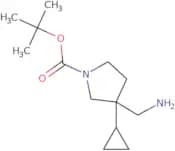
CAS:<p>Versatile small molecule scaffold</p>Formula:C7H10F2O2Purity:Min. 95%Molecular weight:164.15 g/mol(3-Cyclopropyl-1-Boc-pyrrolidin-3-yl)methanamine
CAS:<p>Versatile small molecule scaffold</p>Formula:C13H24N2O2Purity:Min. 95%Molecular weight:240.34 g/mol4-Bromo-5-fluoro-2-methoxybenzoic acid
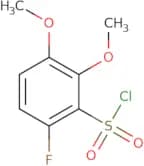
CAS:<p>Versatile small molecule scaffold</p>Formula:C8H6BrFO3Purity:Min. 95%Molecular weight:249.04 g/mol6-Fluoro-2,3-dimethoxybenzene-1-sulfonyl chloride
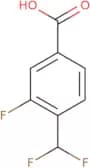
CAS:<p>Versatile small molecule scaffold</p>Formula:C8H8ClFO4SPurity:Min. 95%Molecular weight:254.66 g/mol4-(Difluoromethyl)-3-fluorobenzoic acid
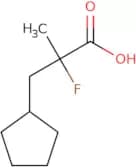
CAS:Versatile small molecule scaffoldFormula:C8H5F3O2Purity:Min. 95%Molecular weight:190.12 g/mol3-Cyclopentyl-2-fluoro-2-methylpropanoic acid
CAS:<p>Versatile small molecule scaffold</p>Formula:C9H15FO2Purity:Min. 95%Molecular weight:174.21 g/mol3-Amino-7-bromo-1-benzothiophene-2-carboxylic acid
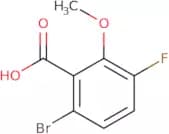
CAS:<p>Versatile small molecule scaffold</p>Formula:C9H6BrNO2SPurity:Min. 95%Molecular weight:272.12 g/mol6-Bromo-3-fluoro-2-methoxybenzoic acid
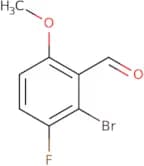
CAS:<p>Versatile small molecule scaffold</p>Formula:C8H6BrFO3Purity:Min. 95%Molecular weight:249.03 g/mol2-Bromo-3-fluoro-6-methoxybenzaldehyde
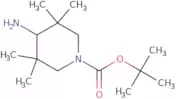
CAS:<p>Versatile small molecule scaffold</p>Formula:C8H6BrFO2Purity:Min. 95%Molecular weight:233.03 g/moltert-Butyl 4-amino-3,3,5,5-tetramethylpiperidine-1-carboxylate
CAS:<p>Versatile small molecule scaffold</p>Formula:C14H28N2O2Purity:Min. 95%Molecular weight:256.4 g/mol4-(4-Bromophenyl)-4-fluorotetrahydro-2H-pyran
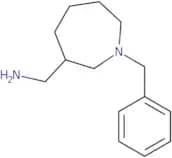
CAS:<p>Versatile small molecule scaffold</p>Formula:C11H12BrFOPurity:Min. 95%Molecular weight:259.11 g/mol(1-Benzylazepan-3-yl)methanamine
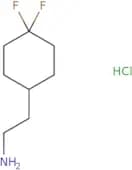
CAS:<p>Versatile small molecule scaffold</p>Formula:C14H22N2Purity:Min. 95%Molecular weight:218.34 g/mol2-(4,4-Difluorocyclohexyl)ethan-1-amine hydrochloride
CAS:<p>Versatile small molecule scaffold</p>Formula:C8H16ClF2NPurity:Min. 95%Molecular weight:199.67 g/mol3-(2-Methoxypyrimidin-4-yl)aniline
CAS:<p>Versatile small molecule scaffold</p>Formula:C11H11N3OPurity:Min. 95%Molecular weight:201.22 g/mol4,4-difluoropiperidine-3-carboxylic Acid hydrochloride
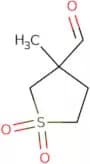
CAS:<p>Versatile small molecule scaffold</p>Formula:C6H9NO2F2·HClPurity:Min. 95%Molecular weight:201.59 g/molTetrahydro-3-methyl-3-thiophenecarboxaldehyde 1,1-dioxide
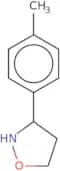
CAS:<p>Versatile small molecule scaffold</p>Formula:C6H10O3SPurity:Min. 95%Molecular weight:162.21 g/mol3-(4-Methylphenyl)-1,2-oxazolidine
CAS:<p>Versatile small molecule scaffold</p>Formula:C10H13NOPurity:Min. 95%Molecular weight:163.2 g/mol1-{1-[(tert-Butoxy)carbonyl]piperidin-2-yl}cyclopropane-1-carboxylic acid
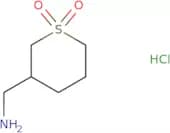
CAS:<p>Versatile small molecule scaffold</p>Formula:C14H23NO4Purity:Min. 95%Molecular weight:269.3 g/mol(1,1-Dioxothian-3-yl)methanamine hydrochloride
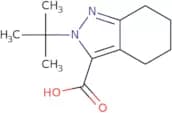
CAS:<p>Versatile small molecule scaffold</p>Formula:C6H14ClNO2SPurity:Min. 95%Molecular weight:199.7 g/mol2-tert-Butyl-4,5,6,7-tetrahydro-2H-indazole-3-carboxylic acid
CAS:<p>Versatile small molecule scaffold</p>Formula:C12H18N2O2Purity:Min. 95%Molecular weight:222.3 g/mol4-Fluorobicyclo[4.2.0]octa-1,3,5-triene-7-carboxylic acid
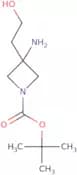
CAS:Versatile small molecule scaffoldFormula:C9H7FO2Purity:Min. 95%Molecular weight:166.15 g/moltert-Butyl 3-amino-3-(2-hydroxyethyl)azetidine-1-carboxylate
CAS:<p>Versatile small molecule scaffold</p>Formula:C10H20N2O3Purity:Min. 95%Molecular weight:216.28 g/mol1-Ethenyl-1H-pyrazole-5-carbaldehyde
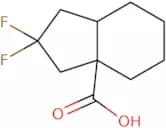
CAS:<p>Versatile small molecule scaffold</p>Formula:C6H6N2OPurity:Min. 95%Molecular weight:122.12 g/mol2,2-Difluoro-octahydro-1H-indene-3a-carboxylic acid
CAS:<p>Versatile small molecule scaffold</p>Formula:C10H14F2O2Purity:Min. 95%Molecular weight:204.21 g/mol{2-Azaspiro[4.5]decan-3-yl}methanol
CAS:<p>Versatile small molecule scaffold</p>Formula:C10H19NOPurity:Min. 95%Molecular weight:169.26 g/mol[2-(6-Methoxypyridin-3-yl)ethyl](methyl)amine
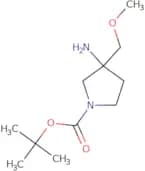
CAS:<p>Versatile small molecule scaffold</p>Formula:C9H14N2OPurity:Min. 95%Molecular weight:166.22 g/moltert-Butyl 3-amino-3-(methoxymethyl)pyrrolidine-1-carboxylate
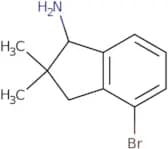
CAS:<p>Versatile small molecule scaffold</p>Formula:C11H22N2O3Purity:Min. 95%Molecular weight:230.3 g/mol4-Bromo-2,2-dimethyl-2,3-dihydro-1H-inden-1-amine
CAS:<p>Versatile small molecule scaffold</p>Formula:C11H14BrNPurity:Min. 95%Molecular weight:240.14 g/mol2-(Difluoromethyl)-1,3-benzothiazole-7-carboxylic acid
CAS:<p>Versatile small molecule scaffold</p>Formula:C9H5F2NO2SPurity:Min. 95%Molecular weight:229.21 g/moltert-Butyl N-[2-(2-methylpropyl)-3-oxopropyl]carbamate
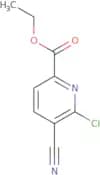
CAS:<p>Versatile small molecule scaffold</p>Formula:C12H23NO3Purity:Min. 95%Molecular weight:229.32 g/molEthyl 6-chloro-5-cyanopyridine-2-carboxylate
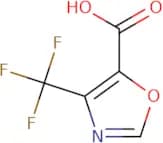
CAS:Versatile small molecule scaffoldFormula:C9H7ClN2O2Purity:Min. 95%Molecular weight:210.62 g/mol4-(Trifluoromethyl)-1,3-oxazole-5-carboxylic acid
CAS:<p>Versatile small molecule scaffold</p>Formula:C5H2F3NO3Purity:Min. 95%Molecular weight:181.07 g/mol5-Methyl-N-{6-[(2-methylpyridin-3-yl)oxy]pyridin-3-yl}-6-(trifluoromethyl)-2,3-dihydro-1H-indole-1-carboxamide dihydrochloride
CAS:<p>5-Methyl-N-{6-[(2-methylpyridin-3-yl)oxy]pyridin-3-yl}-6-(trifluoromethyl)-2,3-dihydro-1H-indole-1-carboxamide dihydrochloride is a serotonin receptor antagonist. It is structurally related to the prototypical 5HT2CR agonist, 8-(3-(4-(2,5-dimethoxyphenyl)-1-[1,2,4]triazol--5-- yl)phenoxy)octanoic acid (8OCPA). This drug has been shown to be an effective and selective 5HT2CR antagonist in animal studies. 5HT2CR antagonists have been shown to be effective in treating disorders such as depression and anxiety.</p>Formula:C22H21Cl2F3N4O2Purity:Min. 95%Molecular weight:501.3 g/mol3-Bromo-[1,2,4]triazolo[4,3-a]pyridine-6-carboxylicacid
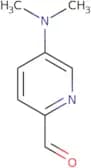
CAS:<p>Versatile small molecule scaffold</p>Formula:C7H4BrN3O2Purity:Min. 95%Molecular weight:242.03 g/mol5-(Dimethylamino)pyridine-2-carbaldehyde
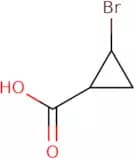
CAS:<p>Versatile small molecule scaffold</p>Formula:C8H10N2OPurity:Min. 95%Molecular weight:150.18 g/molrac-(1R,2R)-2-Bromocyclopropane-1-carboxylic acid
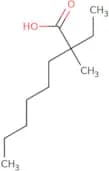
CAS:<p>Versatile small molecule scaffold</p>Formula:C4H5BrO2Purity:Min. 95%Molecular weight:164.99 g/mol2-Ethyl-2-methyloctanoic acid
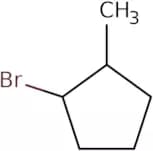
CAS:<p>Versatile small molecule scaffold</p>Formula:C11H22O2Purity:Min. 95%Molecular weight:186.29 g/mol1-Bromo-2-methylcyclopentane
CAS:<p>Versatile small molecule scaffold</p>Formula:C6H11BrPurity:Min. 95%Color and Shape:Clear LiquidMolecular weight:163.06 g/mol(2R)-2-{[(tert-Butoxy)carbonyl]amino}-3-{[(tert-butoxy)carbonyl]sulfanyl}propanoic acid
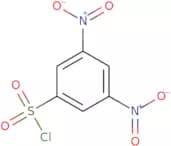
CAS:<p>Versatile small molecule scaffold</p>Formula:C13H23NO6SPurity:Min. 95%Molecular weight:321.39 g/mol3,5-Dinitrobenzene-1-sulfonyl chloride
CAS:3,5-Dinitrobenzenesulfonyl chloride is a sulfonyl chloride that is used as a precursor in the synthesis of dendrimers. 3,5-Dinitrobenzene-1-sulfonyl chloride has been used to synthesize dendrimers with sulfonate groups on their surface. The sulfonate groups can be used to attach other molecules to the dendrimer and provide functionality. This compound can also be used to form tetranitrochloride by reacting it with sodium chlorite in aqueous solution.Formula:C6H3ClN2O6SPurity:Min. 95%Molecular weight:266.62 g/mol5-Chloro-1,3-dimethyl-1,2,3,4-tetrahydropyrimidine-2,4-dione
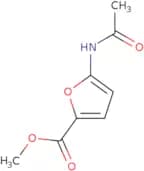
CAS:<p>5-Chloro-1,3-dimethyl-1,2,3,4-tetrahydropyrimidine-2,4-dione is a dipole that has a geometry of an equilateral triangle with a dihedral angle of 120°. It has two hydrogen bonds and one intermolecular hydrogen bond. The molecule is photodimerized in low concentration and can form dimers by stacking interactions at low concentrations. This compound also interacts with uracils and has been shown to be stable when exposed to light. 5-Chloro-1,3-dimethylpyrimidine-2,4-dione has been shown to have interactions with the ftir spectra of other compounds.</p>Formula:C6H7ClN2O2Purity:Min. 95%Molecular weight:174.58 g/molMethyl 5-acetamidofuran-2-carboxylate
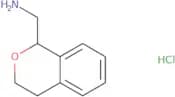
CAS:Versatile small molecule scaffoldFormula:C8H9NO4Purity:Min. 95%Molecular weight:183.16 g/mol(3,4-Dihydro-1H-2-benzopyran-1-yl)methanamine hydrochloride
CAS:<p>Versatile small molecule scaffold</p>Formula:C10H14ClNOPurity:Min. 95%Molecular weight:199.68 g/mol[(3,4-Dihydro-1H-2-benzopyran-1-yl)methyl](methyl)amine hydrochloride
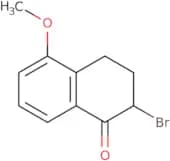
CAS:<p>Versatile small molecule scaffold</p>Formula:C11H16ClNOPurity:Min. 95%Molecular weight:213.7 g/mol2-Bromo-5-methoxy-3,4-dihydronaphthalen-1(2H)-one
CAS:<p>Versatile small molecule scaffold</p>Formula:C11H11BrO2Purity:Min. 95%Molecular weight:255.11 g/mol(1-tert-Butylazetidin-2-yl)methanol
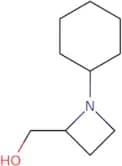
CAS:<p>Versatile small molecule scaffold</p>Formula:C8H17NOPurity:Min. 95%Molecular weight:143.23 g/mol(1-Cyclohexylazetidin-2-yl)methanol
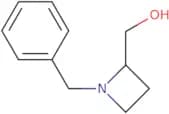
CAS:<p>Versatile small molecule scaffold</p>Formula:C10H19NOPurity:Min. 95%Molecular weight:169.26 g/mol(1-Benzylazetidin-2-yl)methanol
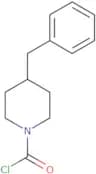
CAS:<p>Versatile small molecule scaffold</p>Formula:C11H15NOPurity:Min. 95%Molecular weight:177.24 g/mol4-Benzylpiperidine-1-carbonyl chloride
CAS:<p>Versatile small molecule scaffold</p>Formula:C13H16ClNOPurity:Min. 95%Molecular weight:237.72 g/mol3-Methyl-2-oxo-2,3-dihydro-1,3-benzothiazole-6-sulfonamide
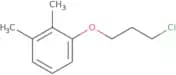
CAS:Versatile small molecule scaffoldFormula:C8H8N2O3S2Purity:Min. 95%Molecular weight:244.3 g/mol1-(3-Chloropropoxy)-2,3-dimethylbenzene
CAS:<p>Versatile small molecule scaffold</p>Formula:C11H15ClOPurity:Min. 95%Molecular weight:198.69 g/mol2',3'-Dihydro-1'H-spiro[cyclopropane-1,4'-isoquinoline]-1',3'-dione
CAS:<p>Versatile small molecule scaffold</p>Formula:C11H9NO2Purity:Min. 95%Molecular weight:187.19 g/mol4-Chloro-2-methylfuro[3,2-c]pyridine
CAS:<p>Versatile small molecule scaffold</p>Formula:C8H6ClNOPurity:Min. 95%Molecular weight:167.59 g/mol3-Ethyl-1-methyl-4,5-dihydro-1H-pyrazol-5-one
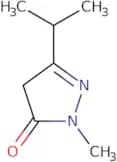
CAS:<p>Versatile small molecule scaffold</p>Formula:C6H10N2OPurity:Min. 95%Molecular weight:126.16 g/mol1-Methyl-3-(propan-2-yl)-4,5-dihydro-1H-pyrazol-5-one
CAS:<p>Versatile small molecule scaffold</p>Formula:C7H12N2OPurity:Min. 95%Molecular weight:140.18 g/mol5-Chloro-1-ethyl-3-methyl-1H-pyrazole
CAS:<p>Versatile small molecule scaffold</p>Formula:C6H9ClN2Purity:Min. 95%Molecular weight:144.6 g/mol1-(chloromethyl)pyrrolidin-2-one
CAS:<p>1-(Chloromethyl)pyrrolidin-2-one is a synthetic molecule that is used as an ion exchanger. It has been shown to be effective for the removal of chlorides, phosphates, and sulfates from solutions. This compound can also be used as a reagent in organic synthesis and can be used to prepare other compounds with higher molecular weights. 1-(Chloromethyl)pyrrolidin-2-one has been shown to interact with silicon and form a number of stable complexes. This molecule is labile and undergoes ring opening under acidic conditions to release chloride ions. X-ray diffraction studies have shown that 1-(chloromethyl)pyrrolidin-2-one adopts a planar conformation in the solid state.</p>Formula:C5H8ClNOPurity:Min. 95%Molecular weight:133.58 g/mol2-Iodo-4-methylpentane
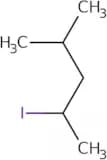
CAS:<p>Versatile small molecule scaffold</p>Formula:C6H13IPurity:Min. 95%Molecular weight:212.07 g/mol4-Bromo-5-methyl-3-phenyl-1,2-oxazole
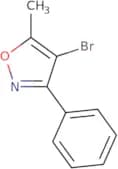
CAS:<p>Versatile small molecule scaffold</p>Formula:C10H8BrNOPurity:Min. 95%Molecular weight:238.08 g/molSpiro[4.4]non-3-en-2-one
CAS:<p>Versatile small molecule scaffold</p>Formula:C9H12OPurity:Min. 95%Molecular weight:136.19 g/mol2-[(Dimethylamino)(methylsulfanyl)methylidene]propanedinitrile
CAS:<p>Versatile small molecule scaffold</p>Formula:C7H9N3SPurity:Min. 95%Molecular weight:167.23 g/mol4-Methyl-1,10-phenanthroline
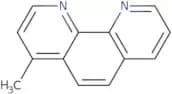
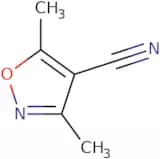
CAS:<p>4-Methyl-1,10-phenanthroline (4MP) is a functional molecule that has been extensively studied for its use as an anticancer agent. 4MP is a racemic mixture of 4-methyl and 1,10-phenanthroline enantiomers. It has shown anticancer activity in the L1210 murine leukemia model and cisplatin-resistant human ovarian cancer cells. The binding constants of 4MP to DNA depend on the orientation of the molecule with respect to the DNA helix. The cis configuration binds more tightly than the trans configuration, which may be due to steric hindrance. 4MP inhibits luminescence by interacting with micelles and forming aggregates in water.</p>Formula:C13H10N2Purity:Min. 95%Molecular weight:194.23 g/mol3,5-Dimethylisoxazole-4-carbonitrile
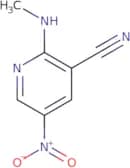
CAS:<p>Versatile small molecule scaffold</p>Formula:C6H6N2OPurity:Min. 95%Molecular weight:122.12 g/mol2-(Methylamino)-5-nitropyridine-3-carbonitrile
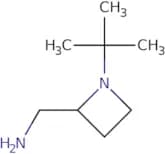
CAS:<p>Versatile small molecule scaffold</p>Formula:C7H6N4O2Purity:Min. 95%Molecular weight:178.15 g/mol(1-tert-Butylazetidin-2-yl)methanamine
CAS:<p>Versatile small molecule scaffold</p>Formula:C8H18N2Purity:Min. 95%Molecular weight:142.24 g/mol4-Bromo-N-(pyridin-2-ylmethyl)aniline
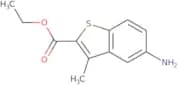
CAS:<p>Versatile small molecule scaffold</p>Formula:C12H11BrN2Purity:Min. 95%Molecular weight:263.13 g/molEthyl 5-amino-3-methyl-1-benzothiophene-2-carboxylate
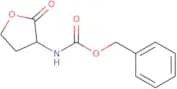
CAS:<p>Ethyl 5-amino-3-methyl-1-benzothiophene-2-carboxylate is a drug that inhibits the activity of 2,4-dichlorobenzoic acid, an enzyme involved in energy metabolism. It has been shown to bind to and inhibit a number of other enzymes, including carboxylase, decarboxylase, and transferase. This drug is used as an antimicrobial agent against pandemic influenza and other respiratory infections. The drug binds to the carboxylate group of the enzyme's active site and coordinates with the metal ion via its benzoate moiety. The coumarin derivative may be responsible for the observed inhibition by binding to a different site on the enzyme or by interacting with a second molecule of ethyl 5-amino-3-methyl-1-benzothiophene-2-carboxylate.</p>Formula:C12H13NO2SPurity:Min. 95%Molecular weight:235.3 g/molBenzyl N-(2-oxooxolan-3-yl)carbamate
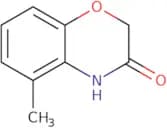
CAS:<p>Versatile small molecule scaffold</p>Formula:C12H13NO4Purity:Min. 95%Molecular weight:235.24 g/mol5-Methyl-2H-1,4-benzoxazin-3(4H)-one
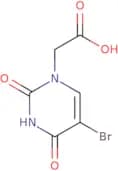
CAS:<p>Versatile small molecule scaffold</p>Formula:C9H9NO2Purity:Min. 95%Molecular weight:163.18 g/mol2-(5-Bromo-2,4-dioxo-1,2,3,4-tetrahydropyrimidin-1-yl)acetic acid
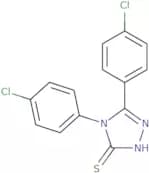
CAS:<p>Versatile small molecule scaffold</p>Formula:C6H5BrN2O4Purity:Min. 95%Molecular weight:249.02 g/molBis(4-chlorophenyl)-4H-1,2,4-triazole-3-thiol
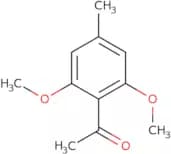
CAS:<p>Versatile small molecule scaffold</p>Formula:C14H9Cl2N3SPurity:Min. 95%Molecular weight:322.2 g/mol1-(2,6-Dimethoxy-4-methylphenyl)ethan-1-one
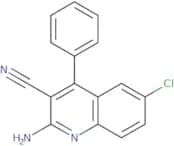
CAS:<p>Versatile small molecule scaffold</p>Formula:C11H14O3Purity:Min. 95%Molecular weight:194.23 g/mol2-Amino-3-cyano-4-phenyl-6-chloroquinoline
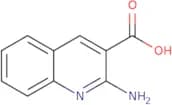
CAS:<p>Versatile small molecule scaffold</p>Formula:C16H10ClN3Purity:Min. 95%Molecular weight:279.72 g/mol2-Aminoquinoline-3-carboxylic acid
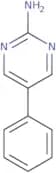
CAS:<p>2-Aminoquinoline-3-carboxylic acid is a heterocyclic compound that contains a carboxylic group and a cyano group. It is used in research as a trackable cation. 2-Aminoquinoline-3-carboxylic acid has been shown to inhibit the binding of chloride ions to the cytoplasmic membrane, which decreases the permeability of the membrane to chloride ions, thus inhibiting its transport into cells. This compound also inhibits nitric oxide synthase and exhibits anti-inflammatory effects by suppressing cytokine release from macrophages. 2-Aminoquinoline-3-carboxylic acid may be synthesized from 2 amino quinolines and chlorides.</p>Formula:C10H8N2O2Purity:Min. 95%Molecular weight:188.18 g/mol5-Phenylpyrimidin-2-amine
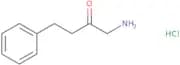
CAS:<p>5-Phenylpyrimidin-2-amine is a synthetic chemical that is an intermediate in the production of other chemicals. It can be used to produce sulfate, nucleophilic amines, or active methylene compounds. 5-Phenylpyrimidin-2-amine can also be used as a starting material for the production of triethyloxonium chloride and 13C NMR spectroscopy reagents. 5-Phenylpyrimidin-2-amine has a nucleophilic nature and is capable of reacting with a variety of functional groups. This chemical can undergo demethylation reactions with sulfate, chlorides, and cyanamide, which are all reactive with the methyl group on this chemical. 5-Phenylpyrimidin-2-amine is an isomeric compound that exists in two forms: one with substituents at positions 2 and 6 (syn) and one with substituents at positions 3</p>Formula:C10H9N3Purity:Min. 95%Molecular weight:171.2 g/mol1-Amino-4-phenylbutan-2-one hydrochloride
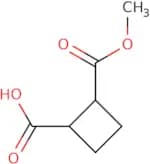
CAS:<p>Versatile small molecule scaffold</p>Formula:C10H14ClNOPurity:Min. 95%Molecular weight:199.68 g/molrac-(1R,2S)-2-(methoxycarbonyl)cyclobutane-1-carboxylic acid, cis
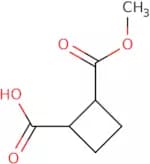
CAS:<p>Versatile small molecule scaffold</p>Formula:C7H10O4Purity:Min. 95%Molecular weight:158.2 g/molrac-(1R,2R)-2-(Methoxycarbonyl)cyclobutane-1-carboxylic acid
CAS:<p>Versatile small molecule scaffold</p>Formula:C7H10O4Purity:Min. 95%Molecular weight:158.15 g/molTrans-1,2-cyclopropane-dicarboxylic acid mono ethyl ester
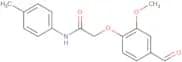
CAS:<p>Versatile small molecule scaffold</p>Formula:C7H10O4Purity:Min. 95%Molecular weight:158.2 g/mol2-(4-Formyl-2-methoxyphenoxy)-N-(4-methylphenyl)acetamide
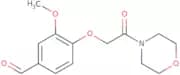
CAS:<p>Versatile small molecule scaffold</p>Formula:C17H17NO4Purity:Min. 95%Molecular weight:299.32 g/mol3-Methoxy-4-(2-morpholin-4-yl-2-oxoethoxy)benzaldehyde
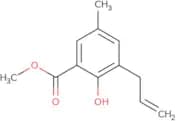
CAS:<p>Versatile small molecule scaffold</p>Formula:C14H17NO5Purity:Min. 95%Molecular weight:279.29 g/molMethyl 2-hydroxy-5-methyl-3-(prop-2-en-1-yl)benzoate
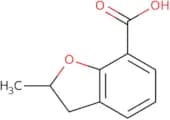
CAS:<p>Versatile small molecule scaffold</p>Formula:C12H14O3Purity:Min. 95%Molecular weight:206.24 g/mol2-Methyl-2,3-dihydro-1-benzofuran-7-carboxylic acid
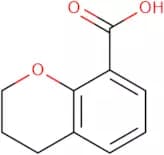
CAS:<p>Versatile small molecule scaffold</p>Formula:C10H10O3Purity:Min. 95%Molecular weight:178.18 g/molChroman-8-carboxylic acid
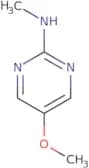
CAS:<p>Chroman-8-carboxylic acid is a phenolic compound that has biological activity. It is found in many plants, including crop plants like sugarcane and rice. Chroman-8-carboxylic acid can be isolated from the tannins of these plants, as well as from the bark of trees such as oak and chestnut. Chroman-8-carboxylic acid has been shown to have significant antibacterial activity against Gram positive bacteria such as Staphylococcus aureus. This compound also shows low activity against Gram negative bacteria such as Escherichia coli. The potential use for this compound is in fungal control because it is found in many types of fungi and has been shown to inhibit the growth of some species.</p>Formula:C10H10O3Purity:Min. 95%Molecular weight:178.19 g/mol5-Methoxy-N-methylpyrimidin-2-amine
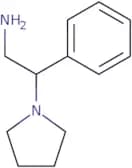
CAS:<p>Versatile small molecule scaffold</p>Formula:C6H9N3OPurity:Min. 95%Molecular weight:139.16 g/mol2-Phenyl-2-(pyrrolidin-1-yl)ethanamine
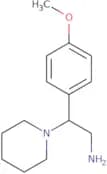
CAS:<p>Versatile small molecule scaffold</p>Formula:C12H18N2Purity:Min. 95%Molecular weight:190.28 g/mol2-(4-Methoxy-phenyl)-2-piperidin-1-yl-ethylamine
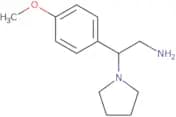
CAS:<p>Versatile small molecule scaffold</p>Formula:C14H22N2OPurity:Min. 95%Molecular weight:234.34 g/mol2-(4-Methoxy-phenyl)-2-pyrrolidin-1-yl-ethylamine
CAS:<p>Versatile small molecule scaffold</p>Formula:C13H20N2OPurity:Min. 95%Molecular weight:220.31 g/molrac-(1R,2R,4R)-5-Oxobicyclo[2.2.1]heptane-2-carboxylic acid
CAS:<p>Versatile small molecule scaffold</p>Formula:C8H10O3Purity:Min. 95%Molecular weight:154.2 g/mol1,3-Diethyl-1,3-dimethylurea
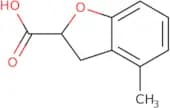
CAS:<p>Versatile small molecule scaffold</p>Formula:C7H16N2OPurity:Min. 95%Molecular weight:144.21 g/mol4-Methyl-2,3-dihydro-1-benzofuran-2-carboxylic acid
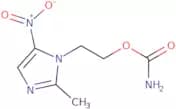
CAS:<p>Versatile small molecule scaffold</p>Formula:C10H10O3Purity:Min. 95%Molecular weight:178.18 g/mol2-(2-Methyl-5-nitro-1H-imidazol-1-yl)ethyl carbamate
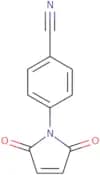
CAS:<p>2-(2-Methyl-5-nitro-1H-imidazol-1-yl)ethyl carbamate is a diluent that can be used to reconstitute fatty acids at high concentrations. It is also used in pharmaceutical preparations and conjugates. It has been shown to have an antiviral effect against chlamydia and has been used as a pharmaceutical dosage for the diagnosis of radiation exposure. The diluent can also be used in pharmaceutical preparations and conjugates, but it is not active against viruses or bacteria.</p>Formula:C7H10N4O4Purity:Min. 95%Molecular weight:214.18 g/mol4-(2,5-Dioxo-2,5-dihydro-1H-pyrrol-1-yl)benzonitrile
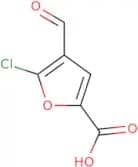
CAS:<p>4-(2,5-Dioxo-2,5-dihydro-1H-pyrrol-1-yl)benzonitrile is a versatile research chemical with various applications. It contains fluorine and is commonly used in the synthesis of copolymers, phenolic acids, and hydrocarbons. This compound also finds application in the field of medicine, where it has been studied for its potential as an antioxidant and for its activity on dopamine receptors. Additionally, 4-(2,5-Dioxo-2,5-dihydro-1H-pyrrol-1-yl)benzonitrile has been found to exhibit surface energy properties and can be used in interfacial processes or as an electrolyte. Its wide range of characteristics makes it a valuable compound for researchers across different fields.</p>Formula:C11H6N2O2Purity:Min. 95%Molecular weight:198.18 g/mol5-Chloro-4-formylfuran-2-carboxylic acid
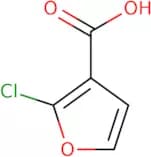
CAS:<p>Versatile small molecule scaffold</p>Formula:C6H3ClO4Purity:Min. 95%Molecular weight:174.54 g/mol2-chlorofuran-3-carboxylic acid
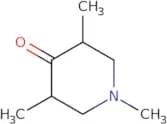
CAS:<p>2-Chloro-3-carboxylic acid is a broad spectrum inhibitor of human herpesvirus 1 (HSV-1) and human herpesvirus 2 (HSV-2). It is a non-nucleoside inhibitor of DNA polymerases. The compound binds to the active site of the enzyme, preventing the formation of an active complex with the template strand. 2-Chloro-3-carboxylic acid inhibits both DNA polymerases and RNA polymerases. This antiviral drug has been shown to inhibit HSV replication in culture by 95%. 2C3CA has been shown to have high specificity for HSV type 1 and type 2, as well as for all other human DNA viruses, including adenoviruses and cytomegalovirus.<br>2C3CA is not active against other animal DNA viruses or bacterial DNA viruses.</p>Formula:C5H3ClO3Purity:Min. 95%Molecular weight:146.53 g/molrac-(3R,5R)-1,3,5-Trimethylpiperidin-4-one
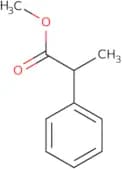
CAS:<p>Versatile small molecule scaffold</p>Formula:C8H15NOPurity:Min. 95%Molecular weight:141.2 g/molMethyl 2-phenylpropanoate
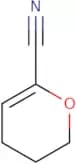
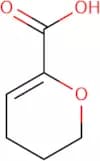
CAS:<p>Methyl 2-phenylpropanoate is the product of a lipase-catalyzed reaction between methanol and phenylacetic acid. The hydrolysis of the ester bond releases methanol, which can then react with another molecule of phenylacetic acid to form methyl 2-phenylpropanoate. Methyl 2-phenylpropanoate is a key intermediate in the synthesis of beta blockers, such as propranolol. It can also be used as an alternative to cyclopentane for synthesizing stereoisomers of cyclohexane. The reaction mechanism involves an activation energy that is kinetically favorable and has an asymmetric synthesis. The stereoselectivity of this reaction is due to the use of an acid catalyst and a chiral ligand.</p>Formula:C10H12O2Purity:Min. 95%Molecular weight:164.2 g/mol5,6-Dihydro-4h-pyran-2-carboxylic acid
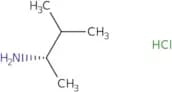
CAS:<p>5,6-Dihydro-4H-pyran-2-carboxylic acid is a diluent that is used in the manufacture of dry powders. It is also used as a diluting agent for influenza vaccines. 5,6-Dihydro-4H-pyran-2-carboxylic acid is one of the most commonly used diluents for vaccines and other biological products. This compound has been approved by the FDA for use in both injectable and nasal flu vaccine preparations. The particle size of this compound ranges from microns to millimeters. 5,6-Dihydro-4H-pyran-2-carboxylic acid can be mixed with water or saline to produce a solution with a pH between 3 and 8.</p>Formula:C6H8O3Purity:Min. 95%Molecular weight:128.13 g/mol(S)-3-Methyl-2-butylamine Hydrochloride ee
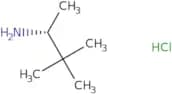
CAS:<p>Versatile small molecule scaffold</p>Formula:C5H14ClNPurity:Min. 95%Molecular weight:123.62 g/mol(2R)-3,3-Dimethylbutan-2-amine HCl
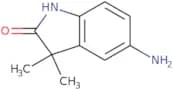
CAS:<p>Versatile small molecule scaffold</p>Formula:C6H16ClNPurity:Min. 95%Molecular weight:137.65 g/mol5-Amino-3,3-dimethyl-indolin-2-one
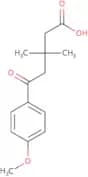
CAS:<p>Versatile small molecule scaffold</p>Formula:C10H12N2OPurity:Min. 95%Molecular weight:176.21 g/mol5-(4-Methoxyphenyl)-3,3-dimethyl-5-oxopentanoic acid
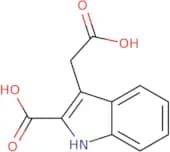
CAS:<p>Versatile small molecule scaffold</p>Formula:C14H18O4Purity:Min. 95%Molecular weight:250.29 g/mol3-(Carboxymethyl)-1H-indole-2-carboxylic acid
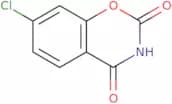
CAS:<p>3-(Carboxymethyl)-1H-indole-2-carboxylic acid is an intramolecular cyclization reaction that involves the amination of a propanoic acid and a ring system. This reaction is analogous to the synthesis of 2,5-diaminopentane, which is also a cyclization of an amine to form a five-membered ring. The nmda receptor complex has been shown to be efficient in binding 3-(carboxymethyl)-1H-indole-2-carboxylic acid and other analogues of this compound. In addition, 3-(carboxymethyl)-1H-indole-2-carboxylic acid has shown affinity for the glycine site on the nmda receptor complex. The chemistry behind this drug is not well understood due to its complexity.</p>Formula:C11H9NO4Purity:Min. 95%Molecular weight:219.19 g/mol7-Chloro-3,4-dihydro-2H-1,3-benzoxazine-2,4-dione
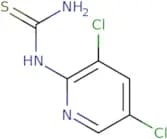
CAS:<p>Versatile small molecule scaffold</p>Formula:C8H4ClNO3Purity:Min. 95%Molecular weight:197.57 g/mol(3,5-Dichloro-pyridin-2-yl)-thiourea
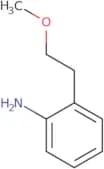
CAS:<p>Versatile small molecule scaffold</p>Formula:C6H5Cl2N3SPurity:Min. 95%Molecular weight:222.1 g/mol2-(2-Methoxyethyl)aniline
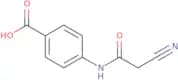
CAS:<p>2-(2-Methoxyethyl)aniline is a chemical compound with the chemical formula CH3OCH2NHCH2CH2SCl. It is a colorless, water-soluble liquid and has a pungent odor. 2-(2-Methoxyethyl)aniline reacts with trimethylamine to form trimethylammonium chloride. It also reacts with dimethyl sulfate to form dimethyl sulfate and methylamine. The reaction with hydrazine yields anilinohydrazide and methylated aniline, which can then be converted into borohydride or chlorotrimethylsilane by reacting it with lithium borohydride or chlorotrimethylsilane respectively.<br> 2-(2-Methoxyethyl)aniline is used in the synthesis of various organic compounds such as pharmaceuticals, dyes, pesticides, and perfumes.</p>Formula:C9H13NOPurity:Min. 95%Molecular weight:151.21 g/mol4-(2-Cyanoacetamido)benzoic acid
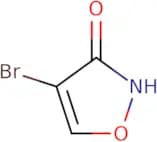
CAS:<p>Versatile small molecule scaffold</p>Formula:C10H8N2O3Purity:Min. 95%Molecular weight:204.18 g/mol4-Bromo-1,2-oxazol-3-ol
CAS:<p>Versatile small molecule scaffold</p>Formula:C3H2BrNO2Purity:Min. 95%Molecular weight:163.96 g/mol2-Benzylthiomorpholin-3-one
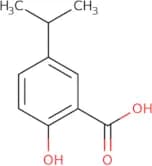
CAS:<p>Versatile small molecule scaffold</p>Formula:C11H13NOSPurity:Min. 95%Molecular weight:207.29 g/mol2-Hydroxy-5-(propan-2-yl)benzoic acid
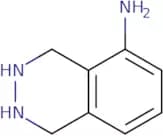
CAS:<p>Versatile small molecule scaffold</p>Formula:C10H12O3Purity:Min. 95%Molecular weight:180.2 g/mol1,2,3,4-Tetrahydrophthalazin-5-amine
CAS:<p>Versatile small molecule scaffold</p>Formula:C8H11N3Purity:Min. 95%Molecular weight:149.19 g/mol2-Oxo-2,3-dihydro-1,3-benzoxazole-5-sulfonamide
CAS:<p>Versatile small molecule scaffold</p>Formula:C7H6N2O4SPurity:Min. 95%Molecular weight:214.2 g/mol1H,7H-[1,2,4]Triazolo[1,5-a]pyrimidin-7-one
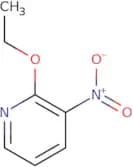
CAS:<p>Fluconazole is an oral antifungal drug that is used to treat a variety of fungal infections such as candida, cryptococcus, and histoplasmosis. It binds to the 14-alpha-demethylase enzyme in the fungal cell membrane and inhibits the synthesis of ergosterol, which is an essential component of the cell membrane. This prevents the formation of ergosterol crystals that are necessary for maintaining cell shape and function. Fluconazole has been shown to be effective against influenza virus and other viruses that use subunits similar to those found in fluconazole. Fluconazole also has antibacterial properties against bacteria such as Staphylococcus aureus and Streptococcus pneumonia. The pharmacokinetic properties of fluconazole have been studied using ethyl bromoacetate and carboxylate derivatives. Fluconazole has also been shown to inhibit methicillin-resistant Staphylococcus</p>Formula:C5H4N4OPurity:Min. 95%Molecular weight:136.11 g/mol2-Ethoxy-3-nitropyridine
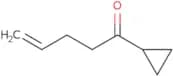
CAS:<p>2-Ethoxy-3-nitropyridine is an intermediate in the synthesis of other organic chemicals. It is a colorless, water soluble solid that is stable under normal conditions. 2-Ethoxy-3-nitropyridine is used as a precursor to other chemicals, including lithium and aldehydes. This compound can be efficiently synthesized from a variety of aldehydes using LiAlH4 or NaBH4. It has been shown to have developmental toxicity in rats and should not be handled by pregnant workers.</p>Formula:C7H8N2O3Purity:Min. 95%Molecular weight:168.15 g/mol1-Cyclopropylpent-4-en-1-one
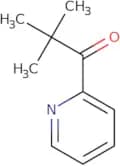
CAS:<p>Versatile small molecule scaffold</p>Formula:C8H12OPurity:Min. 95%Molecular weight:124.18 g/mol2,2-Dimethyl-1-(pyridin-2-yl)propan-1-one
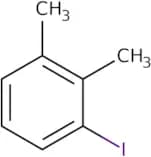
CAS:<p>2,2-Dimethyl-1-(pyridin-2-yl)propan-1-one is a n-oxide that can be synthesized by the intramolecular reaction of pyridine with ethyl acetoacetate. The carbonium ion formed in this process is ionic and can react with water to form an anhydride and rearrange to form the desired product. This reaction is reversible and has been reinvestigated to allow for the production of other n-oxides.</p>Formula:C10H13NOPurity:Min. 95%Molecular weight:163.22 g/mol3-Iodo-o-xylene
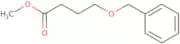
CAS:<p>3-Iodo-o-xylene is a dehydrating agent that can be used in the manufacture of amines and sulfoxides. It can also be used for the production of halides and water vapor. 3-Iodo-o-xylene reacts with palladium compounds to form complexes that are stable at high temperatures. This compound has been shown to have both bifunctional and dehydration properties, as it can react with amines or sulfides to form an amine or sulfoxide respectively, or react with water vapor to form a hydroxyl group. 3-Iodo-o-xylene is also thermal sensitive, so it should be handled carefully when exposed to heat.</p>Formula:C8H9IPurity:Min. 95%Molecular weight:232.06 g/molMethyl 4-(benzyloxy)butanoate
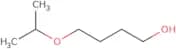
CAS:Controlled Product<p>Versatile small molecule scaffold</p>Formula:C12H16O3Purity:Min. 95%Molecular weight:208.25 g/mol4-(Propan-2-yloxy)butan-1-ol
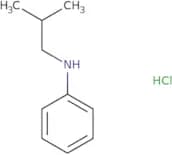
CAS:Controlled Product<p>4-(Propan-2-yloxy)butan-1-ol (4POB) is a potent inhibitor of virus, bacteria, and cancer cells. 4POB has been shown to inhibit the growth of viruses in human serum and immobilize them. It has also been shown to be an effective inhibitor of bacterial dna gyrase and dna topoisomerase I. 4POB is a potential anti-cancer agent as it can inhibit cancer cell proliferation by interfering with DNA synthesis and protein synthesis.</p>Formula:C7H16O2Purity:Min. 95%Molecular weight:132.2 g/molN-(2-Methylpropyl)aniline hydrochloride
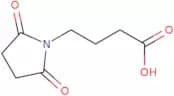
CAS:<p>Versatile small molecule scaffold</p>Formula:C10H16ClNPurity:Min. 95%Molecular weight:185.69 g/mol4-(2,5-Dioxopyrrolidin-1-yl)butanoic acid
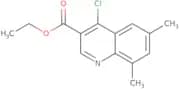
CAS:<p>Versatile small molecule scaffold</p>Formula:C8H11NO4Purity:Min. 95%Molecular weight:185.18 g/molEthyl 4-chloro-6,8-dimethylquinoline-3-carboxylate
CAS:<p>Versatile small molecule scaffold</p>Formula:C14H14ClNO2Purity:Min. 95%Molecular weight:263.72 g/mol1-(1H-1,2,3,4-Tetrazol-5-yl)propan-1-amine
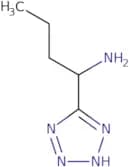
CAS:<p>Versatile small molecule scaffold</p>Formula:C4H9N5Purity:Min. 95%Molecular weight:127.15 g/mol1-(1H-1,2,3,4-Tetrazol-5-yl)butan-1-amine
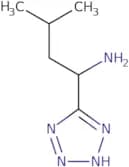
CAS:<p>Versatile small molecule scaffold</p>Formula:C5H11N5Purity:Min. 95%Molecular weight:141.18 g/mol3-Methyl-1-(1H-1,2,3,4-tetrazol-5-yl)butan-1-amine
CAS:<p>Versatile small molecule scaffold</p>Formula:C6H13N5Purity:Min. 95%Molecular weight:155.2 g/molMethyl N,N-bis(propan-2-yl)carbamate
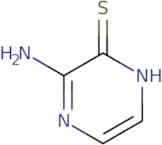
CAS:<p>Methyl N,N-bis(propan-2-yl)carbamate is a drug that can be used to treat reperfusion injury. It has been shown to protect the heart from reperfusion injury. Methyl N,N-bis(propan-2-yl)carbamate is an anticancer compound with physicochemical properties that make it suitable for intravenous administration. It inhibits the activity of formyl and other reactive oxygen species and attenuates the release of mitochondrial DNA into the cytosol. It also induces mitochondrial biogenesis by inhibiting the expression of p53 and caspase 9, which are apoptotic proteins in mitochondria.<br>Methyl N,N-bis(propan-2-yl)carbamate can be used as a drug candidate for treating reperfusion injury due to its pharmacokinetic properties and ability to attenuate infarct size following reperfusion.</p>Formula:C8H17NO2Purity:Min. 95%Molecular weight:159.23 g/mol3-Aminopyrazine-2-thiol
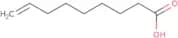
CAS:<p>3-Aminopyrazine-2-thiol (3APT) is a chemical compound that has been isolated from Australian soil. It was found to be an ethyl xanthate amplifier and the potassium salt of 3APT is used in preparation of the antibiotic phleomycin. The reactions of this substance with orthoesters lead to the formation of a number of interesting compounds, such as 3-(2-aminoethyl)isoxazolidines, which have been shown to be useful for the synthesis of various heterocycles.</p>Formula:C4H5N3SPurity:Min. 95%Molecular weight:127.17 g/mol8-Nonenoic Acid
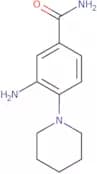
CAS:<p>8-Nonenoic acid is a fatty acid that has been shown to be an attractant for pheromones. 8-Nonenoic acid is found in the leaves of Solanum tuberosum, which are considered to be the main source of natural potato flavor. The fatty acid can also be synthesized from linoleic acid and cyclopentanol by a dehydration reaction. 8-Nonenoic acid has a ph optimum of 4.5 and is soluble in organic solvents such as chloroform, dichloromethane, ether, or acetone. This fatty acid can be used in preparative hplc methods to separate neutral compounds and esters. 8-Nonenoic acid has also been used as a stationary phase for solid phase microextraction with some success. The molecular formula for this compound is C10H18O2 and the molecular weight is 176.240 g/mol.</p>Formula:C9H16O2Purity:Min. 95%Molecular weight:156.22 g/mol3-Amino-4-piperidin-1-yl-benzamide
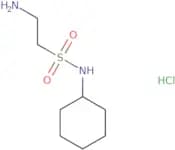
CAS:<p>Versatile small molecule scaffold</p>Formula:C12H17N3OPurity:Min. 95%Molecular weight:219.3 g/mol2-Amino-N-cyclohexylethane-1-sulfonamide hydrochloride
CAS:<p>Versatile small molecule scaffold</p>Formula:C8H19ClN2O2SPurity:Min. 95%Molecular weight:242.77 g/molBenzyl piperidin-3-ylcarbamate hydrochloride
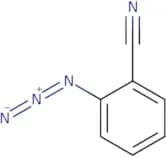
CAS:Versatile small molecule scaffoldFormula:C13H18N2O2·ClHPurity:Min. 95%Molecular weight:270.76 g/mol2-Azidobenzonitrile
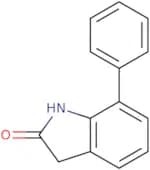
CAS:<p>Versatile small molecule scaffold</p>Formula:C7H4N4Purity:Min. 95%Molecular weight:144.13 g/mol7-Phenyl-2,3-dihydro-1H-indol-2-one
CAS:<p>Versatile small molecule scaffold</p>Formula:C14H11NOPurity:Min. 95%Molecular weight:209.24 g/mol5-Phenylpyridin-3-ol
CAS:<p>5-Phenylpyridin-3-ol is an organic compound with the formula C8H6O. It is a white solid that is stable in air. 5-Phenylpyridin-3-ol reacts with bromoacetate to give formate, the reaction being catalyzed by base. The synthetic method involves the use of ethyl bromoacetate and ammonium formate in aqueous solution at room temperature.</p>Formula:C11H9NOPurity:Min. 95%Molecular weight:171.19 g/mol1-{Bicyclo[2.2.1]heptan-2-yl}propan-2-one
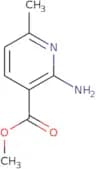
CAS:<p>Versatile small molecule scaffold</p>Formula:C10H16OPurity:Min. 95%Molecular weight:152.23 g/molmethyl 2-amino-6-methylpyridine-3-carboxylate
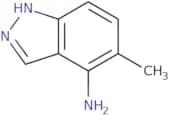
CAS:<p>Versatile small molecule scaffold</p>Formula:C8H10N2O2Purity:Min. 95%Molecular weight:166.2 g/mol5-Methyl-1H-indazol-4-amine
CAS:<p>5-Methyl-1H-indazol-4-amine is a tyrosine kinase inhibitor that has been shown to be potent in inhibiting the activity of various types of tyrosine kinases. It has good oral pharmacokinetics and is not metabolized by the liver. 5-Methyl-1H-indazol-4-amine binds to the ATP site on the enzyme and prevents phosphorylation, which inhibits cell proliferation and growth. This agent also inhibits DNA synthesis, protein synthesis, and phosphoinositide turnover in cells. 5-Methyl-1H-indazol-4-amine is an orally active inhibitor of tyrosine kinases with good oral pharmacokinetics and does not require metabolic activation by the liver. This agent may be used for the treatment of cancer or other diseases associated with uncontrolled cell growth.</p>Formula:C8H9N3Purity:Min. 95%Molecular weight:147.18 g/mol2-[[4-(Boc-amino)methyl]phenoxy]acetic acid
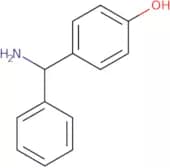
CAS:<p>Versatile small molecule scaffold</p>Formula:C14H19NO5Purity:Min. 95%Molecular weight:281.3 g/molalpha-(4-hydroxyphenyl)benzylamine
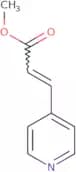
CAS:<p>Versatile small molecule scaffold</p>Formula:C13H13NOPurity:Min. 95%Molecular weight:199.25 g/mol(E)-Methyl 3-(pyridin-4-yl)acrylate
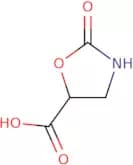
CAS:<p>Versatile small molecule scaffold</p>Formula:C9H9NO2Purity:Min. 95%Molecular weight:163.17 g/mol(5S)-2-Oxo-1,3-oxazolidine-5-carboxylic acid
CAS:<p>Versatile small molecule scaffold</p>Formula:C4H5NO4Purity:Min. 95%Molecular weight:131.09 g/mol2-[(1-Phenylpropyl)amino]ethan-1-ol
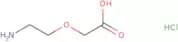
CAS:<p>Versatile small molecule scaffold</p>Formula:C11H17NOPurity:Min. 95%Molecular weight:179.26 g/mol2-(2-Aminoethoxy)acetic acid hydrochloride
CAS:<p>Versatile small molecule scaffold</p>Formula:C4H10ClNO3Purity:Min. 95%Molecular weight:155.58 g/mol4-[(4-Fluorophenyl)methoxy]piperidine
CAS:Versatile small molecule scaffoldFormula:C12H16FNOPurity:Min. 95%Molecular weight:209.26 g/mol4-[(2-Methylphenyl)methoxy]piperidine
CAS:<p>Versatile small molecule scaffold</p>Formula:C13H19NOPurity:Min. 95%Molecular weight:205.3 g/mol4-[(2-Methoxyphenyl)methoxy]piperidine hydrochloride
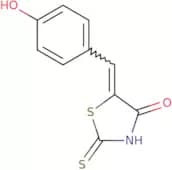
CAS:Versatile small molecule scaffoldFormula:C13H20ClNO2Purity:Min. 95%Molecular weight:257.75 g/mol(E)-5-(4-Hydroxybenzylidene)-2-mercaptothiazol-4(5H)-one
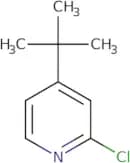
CAS:<p>Versatile small molecule scaffold</p>Formula:C10H7NO2S2Purity:Min. 95%Molecular weight:237.3 g/mol4-(tert-Butyl)-2-chloropyridine
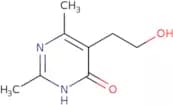
CAS:<p>4-(tert-Butyl)-2-chloropyridine is a ligand that has been used in the synthesis of a number of boronic acids and quinoline derivatives. It is also useful in cross-coupling reactions, which are nucleophilic substitution reactions involving two partners, such as an organometallic reagent and an organic halide or pseudohalide. The linker can be any group that connects the two partners together for these reactions. 4-(tert-Butyl)-2-chloropyridine is stable under acidic conditions, making it an excellent choice for coupling with amines to produce amides.</p>Formula:C9H12ClNPurity:Min. 95%Molecular weight:169.65 g/mol5-(2-Hydroxyethyl)-2,6-dimethylpyrimidin-4-ol
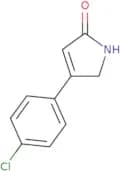
CAS:<p>Versatile small molecule scaffold</p>Formula:C8H12N2O2Purity:Min. 95%Molecular weight:168.19 g/mol4-(4-Chlorophenyl)-2,5-dihydro-1H-pyrrol-2-one
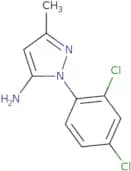
CAS:<p>Versatile small molecule scaffold</p>Formula:C10H8ClNOPurity:Min. 95%Molecular weight:193.63 g/mol1-(2,4-Dichlorophenyl)-3-methyl-1H-pyrazol-5-amine
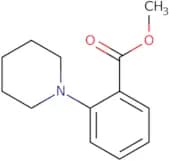
CAS:<p>Versatile small molecule scaffold</p>Formula:C10H9Cl2N3Purity:Min. 95%Molecular weight:242.1 g/molMethyl 2-(piperidin-1-yl)benzoate
CAS:<p>Versatile small molecule scaffold</p>Formula:C13H17NO2Purity:Min. 95%Molecular weight:219.28 g/mol8-Bromooct-1-yne
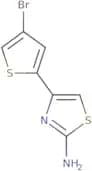
CAS:<p>8-Bromooct-1-yne has a chiral carbon and is therefore optically active. It has a boiling point of about 44 degrees Celsius, and it is soluble in ether and chloroform but not in water. The compound is stable at temperatures up to 130 degrees Celsius, and it is soluble in benzene and acetone but not in acetone. 8-Bromooct-1-yne has an optical rotation of +10.5 degrees. The molecule can be monosubstituted with a hydrogen atom or halogen atom, which changes the optical properties of the molecule. 8-Bromooct-1-yne has dichroism when viewed under polarized light, which means that the molecule absorbs light differently when it is rotated by 90° compared to when it is rotated by 0°. The compound's fluorescence emission maxima are at 488 nm and 514 nm. 8-Bromooct-1-yne's con</p>Formula:C8H13BrPurity:Min. 95%Molecular weight:189.09 g/mol4-(4-Bromothiophen-2-yl)-1,3-thiazol-2-amine
CAS:<p>Versatile small molecule scaffold</p>Formula:C7H5BrN2S2Purity:Min. 95%Molecular weight:261.2 g/mol4-(3-Bromo-2-thienyl)-1,3-thiazol-2-amine
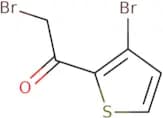
CAS:<p>Versatile small molecule scaffold</p>Formula:C7H5BrN2S2Purity:Min. 95%Molecular weight:261.2 g/mol2-Bromo-1-(3-bromo-2-thienyl)-1-ethanone
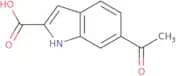
CAS:<p>Versatile small molecule scaffold</p>Formula:C6H4Br2OSPurity:Min. 95%Molecular weight:283.98 g/mol6-Acetyl-1H-indole-2-carboxylic acid
CAS:<p>Versatile small molecule scaffold</p>Formula:C11H9NO3Purity:Min. 95%Molecular weight:203.19 g/molMethyl 7-bromo-4-methoxy-1H-indole-2-carboxylate
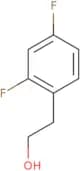
CAS:<p>Versatile small molecule scaffold</p>Formula:C11H10BrNO3Purity:Min. 95%Molecular weight:284.11 g/mol2-(2,4-Difluorophenyl)ethan-1-ol
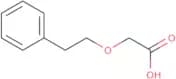
CAS:<p>Versatile small molecule scaffold</p>Formula:C8H8F2OPurity:Min. 95%Molecular weight:158.14 g/mol2-(2-Phenylethoxy)acetic acid
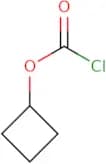
CAS:<p>2-(2-Phenylethoxy)acetic acid is an oleylethanolamide that has been shown to have antibacterial activity. It has been shown to activate lysosomal hydrolases and inhibit the growth of bacterial cells. 2-(2-Phenylethoxy)acetic acid also inhibits the synthesis of inflammatory molecules, such as leukotrienes, prostaglandins, and cytokines. This drug is a potent inhibitor of phospholipase A2 and can be used for the treatment of inflammatory diseases.</p>Formula:C10H12O3Purity:Min. 95%Molecular weight:180.2 g/molCyclobutyl carbonochloridate
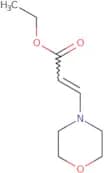
CAS:<p>Versatile small molecule scaffold</p>Formula:C5H7ClO2Purity:Min. 95%Molecular weight:134.56 g/molEthyl (2E)-3-(morpholin-4-yl)prop-2-enoate
CAS:<p>Versatile small molecule scaffold</p>Formula:C9H15NO3Purity:Min. 95%Molecular weight:185.22 g/mol4-Iodo-3-(methoxymethoxy)pyridine
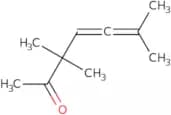
CAS:Versatile small molecule scaffoldFormula:C7H8INO2Purity:Min. 95%Molecular weight:265.05 g/mol3,3,6-Trimethylhepta-4,5-dien-2-one
CAS:<p>Versatile small molecule scaffold</p>Formula:C10H16OPurity:Min. 95%Molecular weight:152.23 g/molN-(Aza(1,3-dioxoindan-2-ylidene)methyl)-4-pyridylformamide
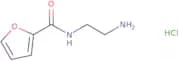
CAS:<p>Versatile small molecule scaffold</p>Formula:C15H9N3O3Purity:Min. 95%Molecular weight:279.25 g/molFuran-2-carboxylic acid (2-amino-ethyl)-amidehydrochloride
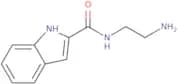
CAS:<p>Versatile small molecule scaffold</p>Formula:C7H11ClN2O2Purity:Min. 95%Molecular weight:190.63 g/molN-(2-Aminoethyl)-1H-indole-2-carboxamide
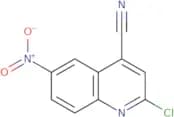
CAS:<p>Versatile small molecule scaffold</p>Formula:C11H13N3OPurity:Min. 95%Molecular weight:203.24 g/mol2-Chloro-6-nitroquinoline-4-carbonitrile
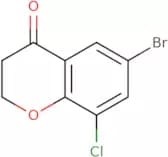
CAS:<p>Versatile small molecule scaffold</p>Formula:C10H4ClN3O2Purity:Min. 95%Molecular weight:233.61 g/mol6-Bromo-8-chloro-3,4-dihydro-2H-1-benzopyran-4-one
CAS:Versatile small molecule scaffoldFormula:C9H6BrClO2Purity:Min. 95%Molecular weight:261.5 g/molN-[(4-Ethoxy-3-methoxyphenyl)methylidene]hydroxylamine
CAS:Versatile small molecule scaffoldFormula:C10H13NO3Purity:Min. 95%Molecular weight:195.21 g/mol1-Methyl-2-[(1-methyl-1H-pyrrol-2-yl)methyl]-1H-pyrrole
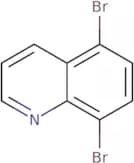
CAS:Versatile small molecule scaffoldFormula:C11H14N2Purity:Min. 95%Molecular weight:174.24 g/mol5,8-Dibromoquinoline
CAS:<p>5,8-Dibromoquinoline is a synthetic trisubstituted quinoline derivative that has been shown to form frameworks with nitrogen atoms. It has been synthesized from 2-hydroxyphenylacetic acid, which upon dehydration gives the corresponding n-oxide. 5,8-Dibromoquinoline forms an acidic solution in water and an alkaline solution in ethanol. 5,8-Dibromoquinoline can be hydrolysed by both acidic and alkaline conditions to produce 2,4-dichlorobenzene and 2-bromophenol. The reaction is stereoselective with the formation of only one product.</p>Formula:C9H5Br2NPurity:Min. 95%Molecular weight:286.95 g/molTrimethyl(trifluoromethyl)silane
CAS:<p>Please enquire for more information about Trimethyl(trifluoromethyl)silane including the price, delivery time and more detailed product information at the technical inquiry form on this page</p>Formula:C4H9F3SiPurity:Min. 95%Molecular weight:142.19 g/mol1,2,3,4-Tetrahydronaphthalene-2-carbaldehyde
CAS:Versatile small molecule scaffoldFormula:C11H12OPurity:Min. 95%Molecular weight:160.21 g/mol2-Ethynyl-5-methylthiophene
CAS:<p>Versatile small molecule scaffold</p>Formula:C7H6SPurity:Min. 95%Molecular weight:122.19 g/mol2-Ethynyl-3-methylthiophene
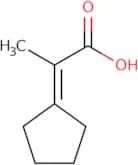
CAS:<p>Versatile small molecule scaffold</p>Formula:C7H6SPurity:Min. 95%Molecular weight:122.19 g/mol2-Cyclopentylidenepropanoic acid
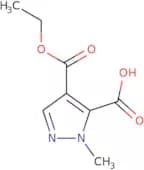
CAS:<p>Versatile small molecule scaffold</p>Formula:C8H12O2Purity:Min. 95%Molecular weight:140.18 g/mol4-(Ethoxycarbonyl)-1-methyl-1H-pyrazole-5-carboxylic acid
CAS:<p>Versatile small molecule scaffold</p>Formula:C8H10N2O4Purity:Min. 95%Molecular weight:198.18 g/mol2-Methyl-2H,6H,7H-pyrazolo[3,4-d]pyridazin-7-one
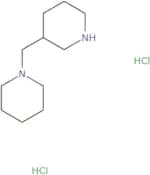
CAS:<p>Versatile small molecule scaffold</p>Formula:C6H6N4OPurity:Min. 95%Molecular weight:150.1 g/mol1-(3-Piperidinylmethyl)piperidine dihydrochloride
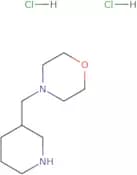
CAS:<p>Versatile small molecule scaffold</p>Formula:C11H24Cl2N2Purity:Min. 95%Molecular weight:255.22 g/mol4-(Piperidin-3-ylmethyl)morpholine dihydrochloride
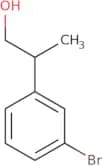
CAS:<p>Versatile small molecule scaffold</p>Formula:C10H22Cl2N2OPurity:Min. 95%Molecular weight:257.2 g/mol2-(3-Bromophenyl)propan-1-ol
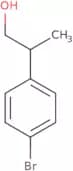
CAS:<p>Versatile small molecule scaffold</p>Formula:C9H11BrOPurity:Min. 95%Molecular weight:215.09 g/mol2-(4-Bromophenyl)propan-1-ol
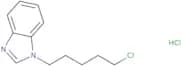
CAS:<p>Versatile small molecule scaffold</p>Formula:C9H11BrOPurity:Min. 95%Molecular weight:215.09 g/mol1-(5-Chloropentyl)-1H-1,3-benzodiazole hydrochloride
CAS:<p>Versatile small molecule scaffold</p>Formula:C12H16Cl2N2Purity:Min. 95%Molecular weight:259.17 g/mol3-[2-(methoxycarbonyl)phenyl]propanoic acid
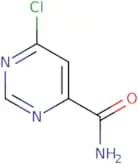
CAS:<p>Versatile small molecule scaffold</p>Formula:C11H12O4Purity:Min. 95%Molecular weight:208.2 g/mol6-Chloropyrimidine-4-carboxamide
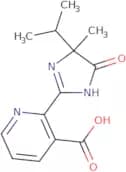
CAS:<p>Versatile small molecule scaffold</p>Formula:C5H4ClN3OPurity:Min. 95%Molecular weight:157.56 g/molImazapyr
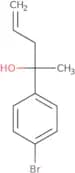
CAS:<p>Imazapyr is a herbicide that inhibits the activity of acetolactate synthase, an enzyme essential for plant growth. Imazapyr binds to the active site of acetolactate synthase and forms a stable complex with the enzyme, thereby inhibiting its activity. Imazapyr has been shown to have a low toxicity in mammals and is not absorbed through skin or lungs. This herbicide is also toxic to plants and fish, as it inhibits their growth by disrupting photosynthesis. Imazapyr does not bind to DNA, thus it does not induce mutations in bacterial chromosomes.</p>Formula:C13H15N3O3Purity:Min. 95%Molecular weight:261.28 g/mol2-(4-Bromophenyl)pent-4-en-2-ol
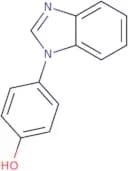
CAS:<p>Versatile small molecule scaffold</p>Formula:C11H13BrOPurity:Min. 95%Molecular weight:241.12 g/mol4-(1H-1,3-Benzodiazol-1-yl)phenol
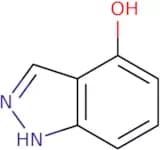
CAS:<p>Versatile small molecule scaffold</p>Formula:C13H10N2OPurity:Min. 95%Molecular weight:210.23 g/mol1H-Indazol-4-ol
CAS:<p>1H-Indazol-4-ol is a synthetic chemical with the molecular formula CHNO. It is the chloride, nitro, diammonium, enamine, divalent, methyl ester, acrylonitrile, polyethylene terephthalate and anion form of 1H-indazole. 1H-Indazol-4-ol is used in the synthesis of aminonaphthalenes and triazoles. The polymerization reaction for the production of cellulose acetate is also catalyzed by 1H-indazole. This chemical has been shown to have anion properties in solvents such as water and alcohols.</p>Formula:C7H6N2OPurity:Min. 95%Molecular weight:134.14 g/mol1-[(Benzyloxy)methyl]-4-bromobenzene
CAS:<p>Versatile small molecule scaffold</p>Formula:C14H13BrOPurity:Min. 95%Molecular weight:277.16 g/mol2,3-Dihydrospiro[indene-1,3'-pyrrolidine]-2',5'-dione
CAS:<p>Versatile small molecule scaffold</p>Formula:C12H11NO2Purity:Min. 95%Molecular weight:201.22 g/mol1,3-Dihydrospiro[indene-2,3'-pyrrolidine]-2',5'-dione
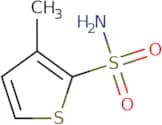
CAS:<p>Versatile small molecule scaffold</p>Formula:C12H11NO2Purity:Min. 95%Molecular weight:201.22 g/mol3-Methylthiophene-2-sulfonamide
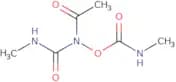
CAS:<p>Versatile small molecule scaffold</p>Formula:C5H7NO2S2Purity:Min. 95%Molecular weight:177.2 g/molN-(Methylcarbamoyl)acetamido N-methylcarbamate
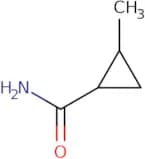
CAS:<p>N-(Methylcarbamoyl)acetamido N-methylcarbamate (NMCA) is a novel anti-cancer compound that selectively binds to the CB2 receptor. NMCA has been shown to inhibit the growth of cancer cells in vitro and in vivo, as well as reduce the size of bowel tumors. It also has a beneficial effect on cardiac function. The mechanism of action is not completely understood, but it may be due to binding to the CB2 receptor and blocking the activation of other receptors such as TNF-α. NMCA can be formulated into biocompatible polymers that are suitable for drug delivery. Furthermore, this compound can be used for treating inflammatory bowel disease and renal cell cancer.</p>Formula:C6H11N3O4Purity:Min. 95%Molecular weight:189.17 g/mol2-Methylcyclopropanecarboxamide
CAS:<p>2-Methylcyclopropanecarboxamide is a compound that has been shown to have anticoagulant properties. It binds to the active site of coagulation factor Xa and inhibits its activity, thereby preventing blood clots from forming. 2-Methylcyclopropanecarboxamide has also been shown to be an immunosuppressant, demonstrating a decrease in antibody response and reduced intestinal inflammation in mice. This drug has potential use as an anti-inflammatory agent or for the treatment of autoimmune diseases.</p>Formula:C5H9NOPurity:Min. 95%Molecular weight:99.13 g/mol2-[(4-Bromophenyl)methanesulfinyl]acetic acid
CAS:<p>Versatile small molecule scaffold</p>Formula:C9H9BrO3SPurity:Min. 95%Molecular weight:277.14 g/mol2-(4-Bromobenzylsulfonyl)acetic acid
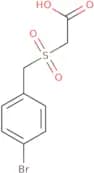
CAS:<p>Versatile small molecule scaffold</p>Formula:C9H9BrO4SPurity:Min. 95%Molecular weight:293.14 g/mol


![2-[3-(Difluoromethyl)cyclobutyl]acetic acid](/_next/image/?url=https%3A%2Fstatic.cymitquimica.com%2Fproducts%2F3D%2Fthumb-webp%2FFWC16737.webp&w=3840&q=75)





![1-{1-[(tert-Butoxy)carbonyl]piperidin-2-yl}cyclopropane-1-carboxylic acid](/_next/image/?url=https%3A%2Fstatic.cymitquimica.com%2Fproducts%2F3D%2Fthumb-webp%2FFWC26053.webp&w=3840&q=75)
![4-Fluorobicyclo[4.2.0]octa-1,3,5-triene-7-carboxylic acid](/_next/image/?url=https%3A%2Fstatic.cymitquimica.com%2Fproducts%2F3D%2Fthumb-webp%2FFWC27774.webp&w=3840&q=75)

![{2-Azaspiro[4.5]decan-3-yl}methanol](/_next/image/?url=https%3A%2Fstatic.cymitquimica.com%2Fproducts%2F3D%2Fthumb-webp%2FFWC30118.webp&w=3840&q=75)
amine](/_next/image/?url=https%3A%2Fstatic.cymitquimica.com%2Fproducts%2F3D%2Fthumb-webp%2FFWC30194.webp&w=3840&q=75)

![tert-Butyl N-[2-(2-methylpropyl)-3-oxopropyl]carbamate](/_next/image/?url=https%3A%2Fstatic.cymitquimica.com%2Fproducts%2F3D%2Fthumb-webp%2FFWC31836.webp&w=3840&q=75)
![5-Methyl-N-{6-[(2-methylpyridin-3-yl)oxy]pyridin-3-yl}-6-(trifluoromethyl)-2,3-dihydro-1H-indole-1…](/_next/image/?url=https%3A%2Fstatic.cymitquimica.com%2Fproducts%2F3D%2Fthumb-webp%2FFWC37225.webp&w=3840&q=75)
![3-Bromo-[1,2,4]triazolo[4,3-a]pyridine-6-carboxylicacid](/_next/image/?url=https%3A%2Fstatic.cymitquimica.com%2Fproducts%2F3D%2Fthumb-webp%2FFWC37628.webp&w=3840&q=75)
![(2R)-2-{[(tert-Butoxy)carbonyl]amino}-3-{[(tert-butoxy)carbonyl]sulfanyl}propanoic acid](/_next/image/?url=https%3A%2Fstatic.cymitquimica.com%2Fproducts%2F3D%2Fthumb-webp%2FGBA20258.webp&w=3840&q=75)

amine hydrochloride](/_next/image/?url=https%3A%2Fstatic.cymitquimica.com%2Fproducts%2F3D%2Fthumb-webp%2FGBA23158.webp&w=3840&q=75)


![2',3'-Dihydro-1'H-spiro[cyclopropane-1,4'-isoquinoline]-1',3'-dione](/_next/image/?url=https%3A%2Fstatic.cymitquimica.com%2Fproducts%2F3D%2Fthumb-webp%2FGBA26707.webp&w=3840&q=75)
![4-Chloro-2-methylfuro[3,2-c]pyridine](/_next/image/?url=https%3A%2Fstatic.cymitquimica.com%2Fproducts%2F3D%2Fthumb-webp%2FGBA27081.webp&w=3840&q=75)



![Spiro[4.4]non-3-en-2-one](/_next/image/?url=https%3A%2Fstatic.cymitquimica.com%2Fproducts%2F3D%2Fthumb-webp%2FGBA29751.webp&w=3840&q=75)
![2-[(Dimethylamino)(methylsulfanyl)methylidene]propanedinitrile](/_next/image/?url=https%3A%2Fstatic.cymitquimica.com%2Fproducts%2F3D%2Fthumb-webp%2FGBA29760.webp&w=3840&q=75)


![rac-(1R,2R,4R)-5-Oxobicyclo[2.2.1]heptane-2-carboxylic acid](/_next/image/?url=https%3A%2Fstatic.cymitquimica.com%2Fproducts%2F3D%2Fthumb-webp%2FGBA46753.webp&w=3840&q=75)



![1H,7H-[1,2,4]Triazolo[1,5-a]pyrimidin-7-one](/_next/image/?url=https%3A%2Fstatic.cymitquimica.com%2Fproducts%2F3D%2Fthumb-webp%2FGBA59208.webp&w=3840&q=75)




![1-{Bicyclo[2.2.1]heptan-2-yl}propan-2-one](/_next/image/?url=https%3A%2Fstatic.cymitquimica.com%2Fproducts%2F3D%2Fthumb-webp%2FGBA68373.webp&w=3840&q=75)
![2-[[4-(Boc-amino)methyl]phenoxy]acetic acid](/_next/image/?url=https%3A%2Fstatic.cymitquimica.com%2Fproducts%2F3D%2Fthumb-webp%2FGDA12340.webp&w=3840&q=75)
![2-[(1-Phenylpropyl)amino]ethan-1-ol](/_next/image/?url=https%3A%2Fstatic.cymitquimica.com%2Fproducts%2F3D%2Fthumb-webp%2FGDA13369.webp&w=3840&q=75)
![4-[(4-Fluorophenyl)methoxy]piperidine](/_next/image/?url=https%3A%2Fstatic.cymitquimica.com%2Fproducts%2F3D%2Fthumb-webp%2FGDA15135.webp&w=3840&q=75)
![4-[(2-Methylphenyl)methoxy]piperidine](/_next/image/?url=https%3A%2Fstatic.cymitquimica.com%2Fproducts%2F3D%2Fthumb-webp%2FGDA15151.webp&w=3840&q=75)
![4-[(2-Methoxyphenyl)methoxy]piperidine hydrochloride](/_next/image/?url=https%3A%2Fstatic.cymitquimica.com%2Fproducts%2F3D%2Fthumb-webp%2FGDA15157.webp&w=3840&q=75)





![N-[(4-Ethoxy-3-methoxyphenyl)methylidene]hydroxylamine](/_next/image/?url=https%3A%2Fstatic.cymitquimica.com%2Fproducts%2F3D%2Fthumb-webp%2FGDA25953.webp&w=3840&q=75)
![1-Methyl-2-[(1-methyl-1H-pyrrol-2-yl)methyl]-1H-pyrrole](/_next/image/?url=https%3A%2Fstatic.cymitquimica.com%2Fproducts%2F3D%2Fthumb-webp%2FGDA26387.webp&w=3840&q=75)


![2-Methyl-2H,6H,7H-pyrazolo[3,4-d]pyridazin-7-one](/_next/image/?url=https%3A%2Fstatic.cymitquimica.com%2Fproducts%2F3D%2Fthumb-webp%2FGDA30593.webp&w=3840&q=75)
![3-[2-(methoxycarbonyl)phenyl]propanoic acid](/_next/image/?url=https%3A%2Fstatic.cymitquimica.com%2Fproducts%2F3D%2Fthumb-webp%2FGDA32974.webp&w=3840&q=75)
![1-[(Benzyloxy)methyl]-4-bromobenzene](/_next/image/?url=https%3A%2Fstatic.cymitquimica.com%2Fproducts%2F3D%2Fthumb-webp%2FGDA39527.webp&w=3840&q=75)
![2,3-Dihydrospiro[indene-1,3'-pyrrolidine]-2',5'-dione](/_next/image/?url=https%3A%2Fstatic.cymitquimica.com%2Fproducts%2F3D%2Fthumb-webp%2FGDA40216.webp&w=3840&q=75)
![1,3-Dihydrospiro[indene-2,3'-pyrrolidine]-2',5'-dione](/_next/image/?url=https%3A%2Fstatic.cymitquimica.com%2Fproducts%2F3D%2Fthumb-webp%2FGDA40221.webp&w=3840&q=75)
![2-[(4-Bromophenyl)methanesulfinyl]acetic acid](/_next/image/?url=https%3A%2Fstatic.cymitquimica.com%2Fproducts%2F3D%2Fthumb-webp%2FGDA43133.webp&w=3840&q=75)