


Building Blocks
This section contains fundamental products for the synthesis of organic and biological compounds. Building blocks are the essential starting materials used to construct complex molecules through various chemical reactions. They play a critical role in drug discovery, material science, and chemical research. At CymitQuimica, we offer a diverse range of high-quality building blocks to support your innovative research and industrial projects, ensuring you have the essential components for successful synthesis.
Subcategories of "Building Blocks"
- Boronic Acids & Boronic Acid Derivatives(5,756 products)
- Chiral Building Blocks(1,242 products)
- Hydrocarbon Building Blocks(6,093 products)
- Organic Building Blocks(60,533 products)
Found 195534 products of "Building Blocks"
Sort by
Purity (%)
0
100
|
0
|
50
|
90
|
95
|
100
Methyl 5-Bromo-2-Methyl-2H-1,2,3-triazole-4-carboxylate
CAS:<p>Versatile small molecule scaffold</p>Formula:C5H6BrN3O2Purity:Min. 95%Molecular weight:220.02 g/mol2-Ethyl-2H-1,2,3-triazole-4-carboxylic acid
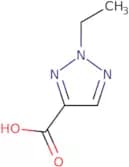
CAS:<p>Versatile small molecule scaffold</p>Formula:C5H7N3O2Purity:Min. 95%Molecular weight:141.13 g/mol(2S,4R)-4-Methoxy-2-(methoxymethyl)pyrrolidine hydrochloride
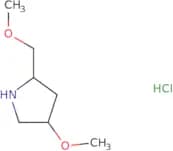
CAS:<p>Versatile small molecule scaffold</p>Formula:C7H16ClNO2Purity:Min. 95%Molecular weight:181.66 g/mol(1S)-1-(1,4-Dioxan-2-yl)ethan-1-ol
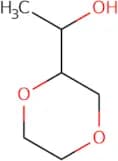
CAS:<p>Versatile small molecule scaffold</p>Formula:C6H12O3Purity:Min. 95%Molecular weight:132.16 g/mol3-Methylthieno[3,2-b]pyridine-6-carboxylic acid
CAS:<p>Versatile small molecule scaffold</p>Formula:C9H7NO2SPurity:Min. 95%Molecular weight:193.22 g/molMethyl 6-amino-2H,3H,4H-thieno[2,3-b]pyran-5-carboxylate
CAS:<p>Versatile small molecule scaffold</p>Formula:C9H11NO3SPurity:Min. 95%Molecular weight:213.26 g/mol5-Methyl-5-(trifluoromethyl)pyrrolidine-2,4-dione
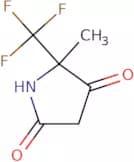
CAS:<p>Versatile small molecule scaffold</p>Formula:C6H6F3NO2Purity:Min. 95%Molecular weight:181.11 g/mol2-{[1-(Aminomethyl)-4,4-difluorocyclohexyl]oxy}ethan-1-ol
CAS:<p>Versatile small molecule scaffold</p>Formula:C9H17F2NO2Purity:Min. 95%Molecular weight:209.23 g/molEthyl 2-[(1,1,1-trifluoropropan-2-yl)amino]-1,3-thiazole-5-carboxylate
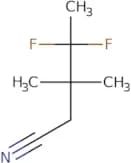
CAS:<p>Versatile small molecule scaffold</p>Formula:C9H11F3N2O2SPurity:Min. 95%Molecular weight:268.26 g/mol4,4-Difluoro-3,3-dimethylpentanenitrile
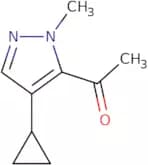
CAS:<p>Versatile small molecule scaffold</p>Formula:C7H11F2NPurity:Min. 95%Molecular weight:147.17 g/mol1-(4-Cyclopropyl-1-methyl-1H-pyrazol-5-yl)ethan-1-one
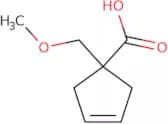
CAS:<p>Versatile small molecule scaffold</p>Formula:C9H12N2OPurity:Min. 95%Molecular weight:164.2 g/mol1-(Methoxymethyl)cyclopent-3-ene-1-carboxylic acid
CAS:<p>Versatile small molecule scaffold</p>Formula:C8H12O3Purity:Min. 95%Molecular weight:156.18 g/molPropan-2-yl N-[2-(1-methylpyrrolidin-2-yl)ethyl]carbamate
CAS:<p>Versatile small molecule scaffold</p>Formula:C11H22N2O2Purity:Min. 95%Molecular weight:214.3 g/moltert-Butyl N-[1-(2-methoxyacetyl)cyclopropyl]carbamate
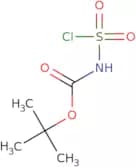
CAS:<p>Versatile small molecule scaffold</p>Formula:C11H19NO4Purity:Min. 95%Molecular weight:229.27 g/molCarbamic acid, N-(chlorosulfonyl)-, 1,1-dimethylethyl ester
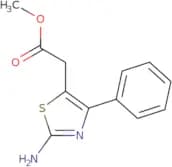
CAS:<p>Carbamic acid, N-(chlorosulfonyl)-, 1,1-dimethylethyl ester, is a synthetic compound that is used as an antibiotic. It inhibits protein synthesis by binding to the 30S ribosomal subunit and preventing peptidyl transferase from forming peptide bonds with amino acids. Carbamic acid, N-(chlorosulfonyl)-, 1,1-dimethylethyl ester has been shown to inhibit siderophores biosynthesis in Mycobacterium tuberculosis and Mycobacterium avium complex. The chemical structure was determined using two different methods: solid-phase synthesis and localization. Carbamic acid, N-(chlorosulfonyl)-, 1,1-dimethylethyl ester also has been shown to be useful for the treatment of tuberculosis and other bacterial diseases such as leprosy and brucellosis.</p>Formula:C5H10ClNO4SPurity:Min. 95%Molecular weight:215.66 g/molMethyl-2-(2-amino-4-phenylthiazol-5-yl)acetate
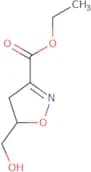
CAS:<p>Versatile small molecule scaffold</p>Formula:C12H12N2O2SPurity:Min. 95%Molecular weight:248.3 g/molEthyl 5-(hydroxymethyl)-4,5-dihydro-1,2-oxazole-3-carboxylate
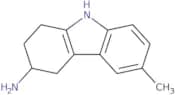
CAS:<p>Versatile small molecule scaffold</p>Formula:C7H11NO4Purity:Min. 95%Molecular weight:173.17 g/mol6-Methyl-2,3,4,9-tetrahydro-1H-carbazol-3-amine
CAS:<p>Versatile small molecule scaffold</p>Formula:C13H16N2Purity:Min. 95%Molecular weight:200.28 g/mol6-Chloro-2,3,4,9-tetrahydro-1H-carbazol-3-amine
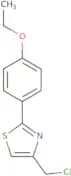
CAS:<p>Versatile small molecule scaffold</p>Formula:C12H13ClN2Purity:Min. 95%Molecular weight:220.7 g/mol4-(Chloromethyl)-2-(4-ethoxyphenyl)-1,3-thiazole
CAS:<p>Versatile small molecule scaffold</p>Formula:C12H12ClNOSPurity:Min. 95%Molecular weight:253.75 g/mol[2-(4-Ethoxyphenyl)-1,3-thiazol-4-yl]methanol
CAS:<p>Versatile small molecule scaffold</p>Formula:C12H13NO2SPurity:Min. 95%Molecular weight:235.3 g/mol(4-Chloronaphthalen-1-yl)boronic acid
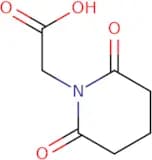
CAS:<p>Versatile small molecule scaffold</p>Formula:C10H8BClO2Purity:Min. 95%Molecular weight:206.43 g/mol2-(2,6-Dioxopiperidin-1-yl)acetic acid
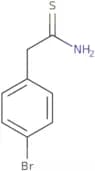
CAS:<p>Versatile small molecule scaffold</p>Formula:C7H9NO4Purity:Min. 95%Molecular weight:171.15 g/mol2-(4-Bromophenyl)thioacetamide
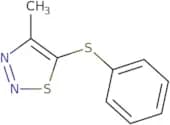
CAS:<p>Versatile small molecule scaffold</p>Formula:C8H8BrNSPurity:Min. 95%Molecular weight:230.12 g/mol4-Methyl-5-(phenylsulfanyl)-1,2,3-thiadiazole
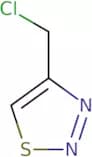
CAS:<p>Versatile small molecule scaffold</p>Formula:C9H8N2S2Purity:Min. 95%Molecular weight:208.3 g/mol4-(Chloromethyl)-1,2,3-thiadiazole
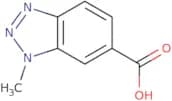
CAS:<p>Versatile small molecule scaffold</p>Formula:C3H3ClN2SPurity:Min. 95%Molecular weight:134.59 g/mol1-Methyl-1H-1,2,3-benzotriazole-6-carboxylic acid
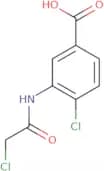
CAS:<p>Versatile small molecule scaffold</p>Formula:C8H7N3O2Purity:Min. 95%Molecular weight:177.16 g/mol4-Chloro-3-(2-chloroacetamido)benzoic acid
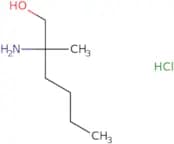
CAS:<p>Versatile small molecule scaffold</p>Formula:C9H7Cl2NO3Purity:Min. 95%Molecular weight:248.06 g/mol2-Amino-2-methylhexan-1-ol hydrochloride
CAS:<p>Versatile small molecule scaffold</p>Formula:C7H18ClNOPurity:Min. 95%Molecular weight:167.68 g/mol1-[(4-Chlorophenyl)methyl]-1H-1,2,4-triazol-3-amine
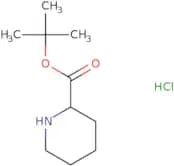
CAS:<p>Versatile small molecule scaffold</p>Formula:C9H9ClN4Purity:Min. 95%Molecular weight:208.65 g/moltert-Butyl 2-piperidinecarboxylate
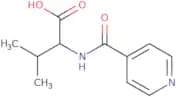
CAS:<p>Versatile small molecule scaffold</p>Formula:C10H19NO2Purity:Min. 95%Molecular weight:185.26 g/mol3-Methyl-2-(pyridin-4-ylformamido)butanoic acid
CAS:<p>Versatile small molecule scaffold</p>Formula:C11H14N2O3Purity:Min. 95%Molecular weight:222.24 g/mol3-[(Pyridin-4-yl)formamido]propanoic acid
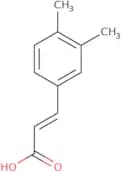
CAS:<p>Versatile small molecule scaffold</p>Formula:C9H10N2O3Purity:Min. 95%Molecular weight:194.19 g/mol(2E)-3-(3,4-dimethylphenyl)prop-2-enoic acid
CAS:<p>(2E)-3-(3,4-dimethylphenyl)prop-2-enoic acid is an organic compound that is used as a building block in organic synthesis. It can be prepared by the reaction of 3,4-dimethylbenzaldehyde with propionic acid. This building block is a precursor to many other compounds, including cinnamic acid and anthranilic acid. The synthesis of this compound proceeds through an amide formation with chloroacetic acid followed by uv irradiation. The reaction product has been shown to react with tetrahydrofuran under stereoselective conditions to form a dimerization product.</p>Formula:C11H12O2Purity:Min. 95%Molecular weight:176.22 g/mol2-({4-[2-(2H-1,2,3,4-Tetrazol-5-yl)phenyl]phenyl}methyl)-2,3-dihydro-1H-isoindole-1,3-dione
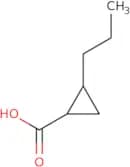
CAS:<p>Versatile small molecule scaffold</p>Formula:C22H19N5O2Purity:Min. 95%Molecular weight:385.4 g/mol(1R,2R)-2-Propylcyclopropane-1-carboxylic acid
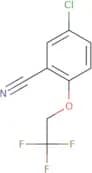
CAS:<p>Versatile small molecule scaffold</p>Formula:C7H12O2Purity:Min. 95%Molecular weight:128.17 g/mol5-Chloro-2-(2,2,2-trifluoroethoxy)benzonitrile
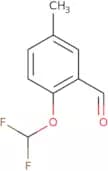
CAS:<p>Versatile small molecule scaffold</p>Formula:C9H5ClF3NOPurity:Min. 95%Molecular weight:235.59 g/mol2-(Difluoromethoxy)-5-methylbenzaldehyde
CAS:<p>Versatile small molecule scaffold</p>Formula:C9H8F2O2Purity:Min. 95%Molecular weight:186.15 g/mol(2R,4S)-1-[(tert-Butoxy)carbonyl]-4-methoxypyrrolidine-2-carboxylic acid
CAS:<p>Versatile small molecule scaffold</p>Formula:C11H19NO5Purity:Min. 95%Molecular weight:245.27 g/mol6-(4-Methoxyphenyl)-2-oxo-1,2-dihydropyridine-3-carbonitrile
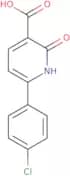
CAS:<p>Versatile small molecule scaffold</p>Formula:C13H10N2O2Purity:Min. 95%Molecular weight:226.23 g/mol6-(4-Chloro-phenyl)-2-oxo-1,2-dihydro-pyridine-3-carboxylic acid
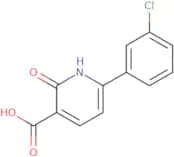
CAS:<p>Versatile small molecule scaffold</p>Formula:C12H8ClNO3Purity:Min. 95%Molecular weight:249.7 g/mol6-(3-Chlorophenyl)-2-oxo-1,2-dihydropyridine-3-carboxylic Acid
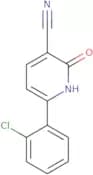
CAS:<p>Versatile small molecule scaffold</p>Formula:C12H8ClNO3Purity:Min. 95%Molecular weight:249.65 g/mol6-(2-Chlorophenyl)-2-oxo-1,2-dihydropyridine-3-carbonitrile
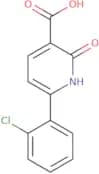
CAS:<p>Versatile small molecule scaffold</p>Formula:C12H7ClN2OPurity:Min. 95%Molecular weight:230.65 g/mol6-(2-Chlorophenyl)-2-oxo-1,2-dihydropyridine-3-carboxylic acid
CAS:<p>Versatile small molecule scaffold</p>Formula:C12H8ClNO3Purity:Min. 95%Molecular weight:249.65 g/molEthyl 2-(3-amino-2-oxo-1,2-dihydropyridin-1-yl)acetate
CAS:<p>Versatile small molecule scaffold</p>Formula:C9H12N2O3Purity:Min. 95%Molecular weight:196.2 g/mol2-(3-Nitro-2-oxo-1,2-dihydropyridin-1-yl)acetic acid
CAS:<p>Versatile small molecule scaffold</p>Formula:C7H6N2O5Purity:Min. 95%Molecular weight:198.13 g/moltert-Butyl[(4-iodophenyl)methoxy]dimethylsilane
CAS:<p>Versatile small molecule scaffold</p>Formula:C13H21IOSiPurity:Min. 95%Molecular weight:348.29 g/mol3-Amino-1,1,1-trifluoropentan-2-ol hydrochloride
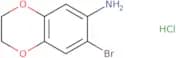
CAS:<p>Versatile small molecule scaffold</p>Formula:C5H11ClF3NOPurity:Min. 95%Molecular weight:193.59 g/mol7-bromo-2,3-dihydro-1,4-benzodioxin-6-amine hydrochloride
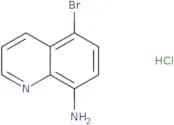
CAS:<p>Versatile small molecule scaffold</p>Formula:C8H9BrClNO2Purity:Min. 95%Molecular weight:266.5 g/mol5-Bromoquinolin-8-amine hydrochloride
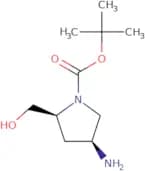
CAS:<p>Versatile small molecule scaffold</p>Formula:C9H8BrClN2Purity:Min. 95%Molecular weight:259.53 g/mol(2S,4S)-tert-Butyl 4-amino-2-(hydroxymethyl)pyrrolidine-1-carboxylate
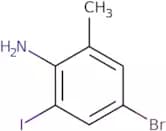
CAS:<p>Versatile small molecule scaffold</p>Formula:C10H20N2O3Purity:Min. 95%Molecular weight:216.28 g/mol4-bromo-2-iodo-6-methylaniline
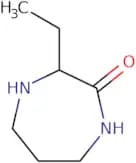
CAS:<p>Versatile small molecule scaffold</p>Formula:C7H7BrINPurity:Min. 95%Molecular weight:311.9 g/mol(3R)-3-Ethyl-1,4-diazepan-2-one
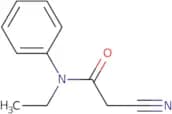
CAS:<p>Versatile small molecule scaffold</p>Formula:C7H14N2OPurity:Min. 95%Molecular weight:142.2 g/mol2-Cyano-N-ethyl-N-phenylacetamide
CAS:<p>Versatile small molecule scaffold</p>Formula:C11H12N2OPurity:Min. 95%Molecular weight:188.23 g/mol3-(Pyridin-4-yl)propan-1-amine dihydrochloride
CAS:<p>Versatile small molecule scaffold</p>Formula:C8H12N2·2HClPurity:Min. 95%Molecular weight:209.12 g/mol2-{1-[(tert-butoxy)carbonyl]piperidin-4-yl}-1,3-oxazole-4-carboxylic acid
CAS:<p>Versatile small molecule scaffold</p>Formula:C14H20N2O5Purity:Min. 95%Molecular weight:296.3 g/mol2-[5-Ethyl-3-(trifluoromethyl)-1H-pyrazol-1-yl]acetic acid
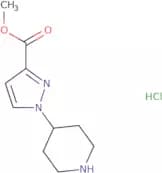
CAS:<p>Versatile small molecule scaffold</p>Formula:C8H9F3N2O2Purity:Min. 95%Molecular weight:222.16 g/molMethyl 1-(piperidin-4-yl)-1H-pyrazole-3-carboxylate hydrochloride
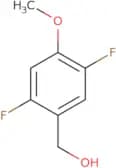
CAS:<p>Versatile small molecule scaffold</p>Formula:C10H16ClN3O2Purity:Min. 95%Molecular weight:245.7 g/mol2,5-Difluoro-4-methoxybenzyl alcohol
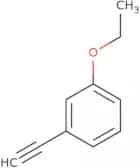
CAS:<p>Versatile small molecule scaffold</p>Formula:C8H8F2O2Purity:Min. 95%Molecular weight:174.14 g/mol1-Ethoxy-3-ethynylbenzene
CAS:<p>Versatile small molecule scaffold</p>Formula:C10H10OPurity:Min. 95%Molecular weight:146.19 g/mol2-Cyclopropylpyrazolo[1,5-a]pyrazin-4-ol
CAS:<p>Versatile small molecule scaffold</p>Formula:C9H9N3OPurity:Min. 95%Molecular weight:175.19 g/mol5-(3-Aminopropyl)piperidin-2-one
CAS:<p>Versatile small molecule scaffold</p>Formula:C8H16N2OPurity:Min. 95%Molecular weight:156.2 g/mol[1,2,3]Triazolo[1,5-a]pyridine-4-carboxylic acid
CAS:<p>Versatile small molecule scaffold</p>Formula:C7H5N3O2Purity:Min. 95%Molecular weight:163.13 g/mol2-(2-[(Propan-2-yloxy)methyl]phenyl)acetic acid
CAS:<p>Versatile small molecule scaffold</p>Formula:C12H16O3Purity:Min. 95%Molecular weight:208.3 g/mol2-(4-Methylphenyl)-4H,5H,6H,7H-pyrazolo[1,5-a]pyrimidine
CAS:<p>Versatile small molecule scaffold</p>Formula:C13H15N3Purity:Min. 95%Molecular weight:213.28 g/mol4-Methyl-4H,5H,6H,7H-pyrazolo[1,5-a]pyridine-3-carboxylic acid
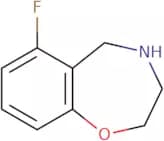
CAS:<p>Versatile small molecule scaffold</p>Formula:C9H12N2O2Purity:Min. 95%Molecular weight:180.2 g/mol6-Fluoro-2,3,4,5-tetrahydro-1,4-benzoxazepine
CAS:<p>Versatile small molecule scaffold</p>Formula:C9H10FNOPurity:Min. 95%Molecular weight:167.18 g/mol4-Oxo-4H,5H,6H,7H-furo[3,2-c]pyridine-3-carboxylic acid
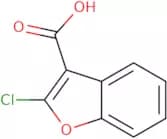
CAS:<p>Versatile small molecule scaffold</p>Formula:C8H7NO4Purity:Min. 95%Molecular weight:181.15 g/mol2-Chloro-1-benzofuran-3-carboxylic acid
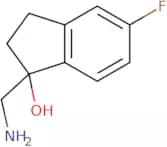
CAS:<p>Versatile small molecule scaffold</p>Formula:C9H5ClO3Purity:Min. 95%Molecular weight:196.58 g/mol1-(Aminomethyl)-5-fluoro-2,3-dihydro-1H-inden-1-ol
CAS:<p>Versatile small molecule scaffold</p>Formula:C10H12FNOPurity:Min. 95%Molecular weight:181.21 g/mol1,4-Dioxaspiro[5.5]undecane-9-carboxylic acid
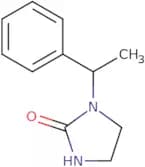
CAS:<p>Versatile small molecule scaffold</p>Formula:C10H16O4Purity:Min. 95%Molecular weight:200.23 g/mol1-(1-Phenylethyl)imidazolidin-2-one
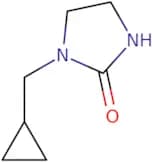
CAS:<p>Versatile small molecule scaffold</p>Formula:C11H14N2OPurity:Min. 95%Molecular weight:190.24 g/mol1-(Cyclopropylmethyl)imidazolidin-2-one
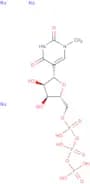
CAS:<p>Versatile small molecule scaffold</p>Formula:C7H12N2OPurity:Min. 95%Molecular weight:140.18 g/molN1-Methyl-pseudouridine-5'-triphosphate trisodium, 100mM aqueous solution
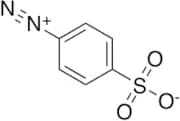
CAS:<p>Methyl-pseudouridine-5'-triphosphate trisodium is the triphosphate of 1-Methylpseudouridine is a substitute for uridine in modified mRNA. This substitution has shown to increase transfection by reducing immuogenicity. UV max wavelength = 272nm</p>Formula:C10H17N2O15P3•Na3Purity:Min. 95%Color and Shape:Clear LiquidMolecular weight:567.17 g/mol4-Diazobenzenesulfonic Acid
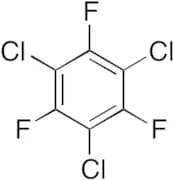
CAS:<p>Applications 4-Diazobenzenesulfonic acid (cas# 305-80-6) is a useful research chemical.<br></p>Formula:C6H4N2O3SMolecular weight:184.171,3,5-Trifluorotrichlorobenzene
CAS:<p>Applications 1,3,5-Trifluorotrichlorobenzene is a useful reagent.<br></p>Formula:C6Cl3F3Molecular weight:235.42Chlorpheniramine N-oxide
CAS:<p>Please enquire for more information about Chlorpheniramine N-oxide including the price, delivery time and more detailed product information at the technical inquiry form on this page</p>Formula:C16H19ClN2OPurity:Min. 95%Molecular weight:290.79 g/mol3-chloro-4-cyanobenzoic acid
CAS:<p>Versatile small molecule scaffold</p>Formula:C8H4ClNO2Purity:Min. 95%Molecular weight:181.58 g/mol1-(4-Chloro-2,6-dimethylphenyl)ethanone
CAS:<p>Versatile small molecule scaffold</p>Formula:C10H11ClOPurity:Min. 95%Molecular weight:182.64 g/mol1H-[1,2,3]Triazolo[4,5-d]pyrimidin-5-amine
CAS:<p>1H-[1,2,3]Triazolo[4,5-d]pyrimidin-5-amine is a nitro compound that binds to the receptor binding sites of certain inflammatory bowel disease and cancer cells. It also inhibits the production of adenosine in these cells. 1H-[1,2,3]Triazolo[4,5-d]pyrimidin-5-amine has been shown to be effective against bowel disease and cancer by inhibiting cyclic AMP (cAMP) degradation. This drug has also been shown to be an irreversible inhibitor of ischemia reperfusion injury in animal models. 1H-[1,2,3]Triazolo[4,5-d]pyrimidin-5-amine is a nitro compound that binds to the receptor binding sites of certain inflammatory bowel disease and cancer cells. It also inhibits the production of adenosine in these cells. 1H</p>Formula:C4H4N6Purity:Min. 95%Molecular weight:136.12 g/molN-Ethylcyclobutanamine hydrochloride
CAS:<p>Versatile small molecule scaffold</p>Formula:C6H13NPurity:Min. 95%Molecular weight:99.17 g/mol5-Bromo-1-methyl-3H-1,3-benzodiazol-2-one
CAS:<p>Versatile small molecule scaffold</p>Formula:C8H7BrN2OPurity:Min. 95%Molecular weight:227.06 g/mol(4-(tert-Butoxy)phenyl)methanamine
CAS:<p>(4-(tert-Butoxy)phenyl)methanamine (BPMT) is a ligand that binds to the alpha-2 receptor and acts as an antagonist. This compound has been shown to be a molecular target for positron emission tomography imaging, which is used in the diagnosis of tumours. BPMT is also used in the treatment of neuropeptide-associated disorders such as Parkinson's disease. The chiral nature of this compound makes it useful for the production of radiopharmaceuticals and other diagnostic agents with different physical properties.</p>Formula:C11H17NOPurity:Min. 95%Molecular weight:179.26 g/mol1-Boc 3-(2-bromoethyl)pyrrolidine
CAS:<p>Versatile small molecule scaffold</p>Formula:C11H20BrNO2Purity:Min. 95%Molecular weight:278.19 g/moltert-Butyl 3-(4-aminophenyl)pyrrolidine-1-carboxylate
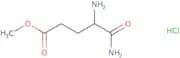
CAS:<p>Versatile small molecule scaffold</p>Formula:C15H22N2O2Purity:Min. 95%Molecular weight:262.35 g/molH-Glu(OMe)-NHdihydrochloride
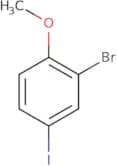
CAS:<p>Versatile small molecule scaffold</p>Formula:C6H13ClN2O3Purity:Min. 95%Molecular weight:196.63 g/mol2-Bromo-4-iodoanisole
CAS:<p>2-Bromo-4-iodoanisole is an electrophilic intermediate that can be synthetically prepared by regioselective halogenations of 4-iodoanisole. It is also a substrate for sequential halogenations with bromine or iodine. The 2-bromo-4-iodoanisole reacts with aluminum to form an aluminate, which can be used as a catalyst in organic synthesis. 2-Bromo-4-iodoanisole has been shown to react with aromatic rings by electrophilically attacking the ring and adding a second bromine atom to the ring, leading to quenching of the molecule and formation of structurally diverse products.</p>Formula:C7H6BrIOPurity:Min. 95%Molecular weight:312.93 g/mol2-[3-Chloro-5-(trifluoromethyl)-2-pyridinyl]-acetonitrile
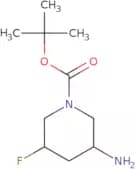
CAS:<p>Versatile small molecule scaffold</p>Formula:C8H4ClF3N2Purity:Min. 95%Color and Shape:PowderMolecular weight:220.58 g/moltert-Butyl (3S,5S)-3-amino-5-fluoropiperidine-1-carboxylate
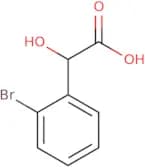
CAS:<p>Versatile small molecule scaffold</p>Formula:C10H19FN2O2Purity:Min. 95%Molecular weight:218.27 g/mol2-(2-Bromophenyl)-2-hydroxyacetic acid
CAS:<p>2-Bromophenyl-2-hydroxyacetic acid is a ligand that binds to the ethylene receptor in plants and can be used as a monomer for the polymerization of polyethylene. It has been shown that 2-bromophenyl-2-hydroxyacetic acid can also be used as an initiator for the polymerization of β-cyclodextrin. This compound has also been shown to be an analyte in gas chromatography, which is used to separate compounds based on their chemical properties. The use of this compound as a tethering agent has also been investigated with copolymerization reactions in order to create more stable polymers. 2-Bromophenyl-2-hydroxyacetic acid has been found to inhibit nonsteroidal antiinflammatory drugs and may have potential applications for chiral synthesis, such as mandelic acid production.</p>Formula:C8H7BrO3Purity:Min. 95%Molecular weight:231.04 g/mol1-(4-(4,4,5,5-Tetramethyl-1,3,2-dioxaborolan-2-yl)phenyl)cyclopropanecarbonitrile
CAS:<p>Versatile small molecule scaffold</p>Formula:C16H20BNO2Purity:Min. 95%Molecular weight:269.15 g/mol1-Methanesulfonyl-1H-pyrazol-4-amine
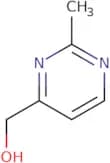
CAS:<p>Versatile small molecule scaffold</p>Formula:C4H7N3O2SPurity:Min. 95%Molecular weight:161.19 g/mol(2-Methyl-4-pyrimidinyl)methanol
CAS:<p>Versatile small molecule scaffold</p>Formula:C6H8N2OPurity:Min. 95%Molecular weight:124.14 g/molPotassium (cyclopropylmethyl)trifluoroborate
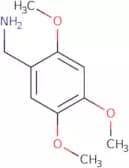
CAS:<p>Versatile small molecule scaffold</p>Formula:C4H7BF3KPurity:Min. 95%Molecular weight:162 g/mol2,4,5-Trimethoxybenzylamine
CAS:<p>2,4,5-Trimethoxybenzylamine is a synthetic compound that can be used as a precursor to the synthesis of other chemicals. It is prepared by reacting phenol with deuterium gas in a process called amination. This reaction is followed by reductive quaternization with cyanide. 2,4,5-Trimethoxybenzylamine is often used as an intermediate for the synthesis of drugs such as tamoxifen and clonidine.</p>Formula:C10H15NO3Purity:Min. 95%Color and Shape:PowderMolecular weight:197.23 g/molTriglycol dichloride
CAS:<p>Triglycol dichloride is a synthetic, water-soluble solid that is prepared by the reaction of 3-chloroperoxybenzoic acid with a hydroxide solution. It has been used in a variety of applications such as the preparation of hemicyanine, the synthesis of polymers, and the degradation of chlorinated hydrocarbons. Triglycol dichloride also has synergistic effects with other photocatalysts, increasing their activity and reducing their cost. Triglycol dichloride can be used to synthesize polymer films or coatings that are biodegradable, have low environmental impact, and are structurally stable. This compound is also unaffected by water or neutral pH and can be used in the production of semiconductors.</p>Formula:C6H12Cl2O2Purity:Min. 95%Color and Shape:Clear LiquidMolecular weight:187.06 g/mol1,1',1''-(1,3,5-Triazinane-1,3,5-triyl)tris(2-bromoethan-1-one)
CAS:<p>Please enquire for more information about 1,1',1''-(1,3,5-Triazinane-1,3,5-triyl)tris(2-bromoethan-1-one) including the price, delivery time and more detailed product information at the technical inquiry form on this page</p>Formula:C9H12Br3N3O3Purity:Min. 95%Color and Shape:PowderMolecular weight:449.82 g/molDL-Tropic acid
CAS:<p>Please enquire for more information about DL-Tropic acid including the price, delivery time and more detailed product information at the technical inquiry form on this page</p>Formula:C9H10O3Purity:Min. 95%Molecular weight:166.17 g/mol8-Quinolinesulfonyl chloride
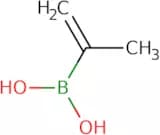
CAS:<p>8-Quinolinesulfonyl chloride (8QSC) is a quinoline derivative that has been shown to have anticancer activity. 8QSC binds to the receptor site of cells and inhibits the production of amines, which are important for cell growth and proliferation. It also binds to hydrogen bonds, which may be involved in the cytotoxicity observed in pancreatic cancer cells. 8QSC shows significant cytotoxicity against Panc-1 cells, but not against NIH 3T3 cells. This may be due to its ability to form supramolecular aggregates with copper ions and quinoline derivatives.</p>Purity:Min. 95%Prop-1-en-2-ylboronic acid
CAS:<p>Prop-1-en-2-ylboronic acid is a chemical compound that belongs to the group of aromatic hydrocarbons. It is used in pharmaceutical preparations as a monomer and as a chiral building block for the synthesis of oxazolidinones, which are used in medicinal chemistry as protein inhibitors against cancers. Prop-1-en-2-ylboronic acid is also used as a reagent in preparative high performance liquid chromatography. This chemical has shown maximal response against colorectal carcinoma cells and has been shown to be an inhibitor of cholesterol ester transfer.</p>Formula:C3H7BO2Purity:90%MinMolecular weight:85.9 g/mol(6,6)-Phenyl-C61 butyric acid methyl ester
CAS:<p>(6,6)-Phenyl-C61 butyric acid methyl ester (PCBM) is an organic semiconductor that has been used in molecular modeling studies and experimental models. The molecular structure of PCBM consists of a phenyl group on one end and a butyrate group on the other end. It has been shown that PCBM can be used to create polymer films with enhanced UV absorption properties. These films can be used as reaction products for low energy transport properties. This organic semiconductor is also known to have a high efficiency when it comes to cycloaddition processes, which can be achieved by multi-walled carbon nanotubes. PCBM has been shown to have a morphology that includes spherical particles with diameters between 10 and 20 nm.</p>Formula:C72H14O2Purity:Min. 95%Molecular weight:910.88 g/molPent-4-enylamine
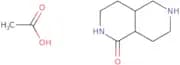
CAS:<p>Pent-4-enylamine is a nitrogen nucleophile that can react with alkenes to form compounds. Pent-4-enylamine reacts quickly with alcohols and ethers in the presence of an acid catalyst to produce an alkene. Pent-4-enylamine has been used in food chemistry as a reactive intermediate for the formation of functional groups, such as amines, hydroxyl groups, and nitriles. It is also a model system for studying aminoalkenes and their reactions with other functional groups. Pent-4-enylamine has been shown to be a reactive heterocycle that forms 5 membered heteroaryl rings using structural analysis and model system studies.</p>Formula:C5H11NPurity:Min. 95%Molecular weight:85.15 g/molOctahydro-2,6-naphthyridin-1(2H)-one acetate
CAS:Controlled Product<p>Please enquire for more information about Octahydro-2,6-naphthyridin-1(2H)-one acetate including the price, delivery time and more detailed product information at the technical inquiry form on this page</p>Formula:C8H14N2O•C2H4O2Purity:Min. 95%Molecular weight:214.26 g/mol10-Oxooctadecanoic acid
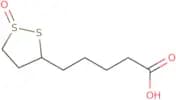
CAS:<p>Please enquire for more information about 10-Oxooctadecanoic acid including the price, delivery time and more detailed product information at the technical inquiry form on this page</p>Formula:C18H34O3Purity:Min. 95%Molecular weight:298.5 g/mol5-(1-Oxodithiolan-3-yl)pentanoic acid
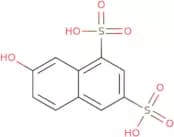
CAS:<p>Please enquire for more information about 5-(1-Oxodithiolan-3-yl)pentanoic acid including the price, delivery time and more detailed product information at the technical inquiry form on this page</p>Formula:C8H14O3S2Purity:Min. 95%Molecular weight:222.3 g/mol2-Naphthol-6,8-disulfonic acid
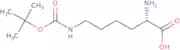
CAS:<p>2-Naphthol-6,8-disulfonic acid is a synthetic organic compound that was identified as an impurity in the glyphosate formulation, Roundup. 2-Naphthol-6,8-disulfonic acid has been shown to have good analytical properties and can be used for the analysis of glyphosate in wastewater samples. It is thermally stable with a melting point of about 220°C. The UV detection wavelength ranges from 220nm to 240nm and the chloride ion is detectable at concentrations greater than 0.1 ppm. 2-Naphthol-6,8-disulfonic acid can also be used for the analysis of fatty acids in plants and animals.</p>Formula:C10H8O7S2Purity:Min. 95%Color and Shape:White PowderMolecular weight:304.3 g/molH-Lys(Boc)-OH
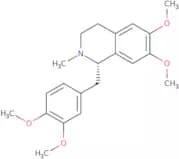
CAS:<p>H-Lys(Boc)-OH is an ε-amino-protected lysine that plays a pivotal role in solution phase peptide synthesis. Strategically protected at the ε-amino group, it allows controlled peptide assembly, and it serves as intermediate for synthesizing β-peptides. The bulky Boc (tert-butyloxycarbonyl) group shields its epsilon amine (NH2) group, acting as a protective measure to prevent unwanted side reactions.</p>Formula:C11H22N2O4Color and Shape:White PowderMolecular weight:246.3 g/mol(S)-Laudanosine
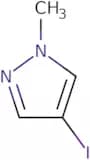
CAS:<p>Laudanosine is a gamma-aminobutyric acid (GABA) analog that is metabolized by the liver to form laudanosine. Laudanosine has been shown to be a competitive antagonist of benzodiazepine binding sites, including those of atracurium, mivacurium chloride, and diazepam. Laudanosine has also been shown to inhibit cyclic nucleotide phosphodiesterases in vitro, with clinical relevance for its use as an anti-epileptic drug.</p>Formula:C21H27NO4Purity:Min. 95%Molecular weight:357.44 g/mol4-Iodo-1-methylpyrazole
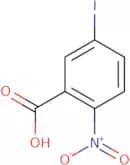
CAS:<p>4-Iodo-1-methylpyrazole is a reductive agent that is used in organic synthesis. It can be used as a reducing agent for the conversion of aldehydes and ketones to alcohols. 4-Iodo-1-methylpyrazole can be crystallized from diethyl etherate and blood. The product yield from this reaction is high, but it requires an oxidant such as trifluoride or plavix to react with the diacetates. 4-Iodo-1-methylpyrazole can also be synthesized by reacting allylsilanes with iodine gas in the presence of a base. This synthesis method produces 4-iodo-1-methylpyrazole in good yield and with little difficulty.</p>Formula:C4H5IN2Purity:Min. 95%Color and Shape:White To Light (Or Pale) Yellow To Tan SolidMolecular weight:208 g/mol5-Iodo-2-nitrobenzoic acid
CAS:<p>5-Iodo-2-nitrobenzoic acid is a fine chemical that is used as a building block in the synthesis of complex compounds and research chemicals. This compound has been shown to be an effective reagent for the synthesis of many different types of compounds. It can also be used as a reactant or intermediate in organic syntheses, such as those involving cross-coupling reactions. 5-Iodo-2-nitrobenzoic acid is a versatile building block that can be used in both simple and complex chemical reactions.</p>Formula:C7H4INO4Purity:Min. 95%Color and Shape:Yellow PowderMolecular weight:293.02 g/mol1-Boc-2-methyl (2R,3S)-3-hydroxypyrrolidine-2-carboxylate
CAS:<p>Please enquire for more information about 1-Boc-2-methyl (2R,3S)-3-hydroxypyrrolidine-2-carboxylate including the price, delivery time and more detailed product information at the technical inquiry form on this page</p>Formula:C11H19NO5Purity:Min. 95%Molecular weight:245.27 g/mol3-(boc-amino)-cyclobutanemethanol
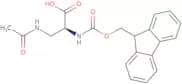
CAS:<p>Versatile small molecule scaffold</p>Formula:C10H19NO3Purity:Min. 95%Molecular weight:201.27 g/molFmoc-Dap(Ac)-OH
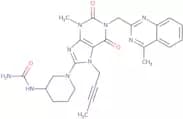
CAS:<p>Fmoc-Dap(Ac)-OH is a fine chemical that is used as a building block in the synthesis of complex compounds. It reacts with various nucleophiles to form an amide bond, and has been shown to be useful for both research and industrial applications. Fmoc-Dap(Ac)-OH can also be used as a reagent to synthesize peptides, which are biologically active compounds that form the basis of many drugs. This versatile intermediate is also used as a scaffold in the construction of more complex molecules. Fmoc-Dap(Ac)-OH has CAS No. 181952-29-4 and is classified as a speciality chemical by the International Union of Pure and Applied Chemistry (IUPAC).</p>Formula:C20H20N2O5Purity:Min. 95%Color and Shape:PowderMolecular weight:368.38 g/molN-Carbamoyl linagliptin
CAS:<p>N-Carbamoyl linagliptin is a synthetic drug that is a selective, reversible inhibitor of dipeptidyl peptidase-4 (DPP-4), an enzyme that breaks down the incretin hormones GLP-1 and GIP. This drug has been shown to help control blood glucose levels in patients with type 2 diabetes. It binds to the active site of DPP-4 and prevents it from breaking down GLP-1 and GIP, which leads to increased levels of these hormones in the body. N-Carbamoyl linagliptin has a long half life, making it suitable for once daily administration. It also lacks any significant interactions with other drugs or foods.</p>Formula:C26H29N9O3Purity:Min. 95%Molecular weight:515.6 g/mol3,4-Difluoro-1H-Pyrrole
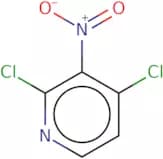
CAS:<p>3,4-Difluoro-1H-Pyrrole is a neutral compound with a molecular weight of 136.17 g/mol. It has the chemical formula C6H3F2N and it can be found in reactions involving the congener and coordination chemistry. 3,4-Difluoro-1H-Pyrrole is an intermediate in organic synthesis that is used as starting material for other organic compounds such as pharmaceuticals and agrochemicals. The redox potential of 3,4-Difluoro-1H-Pyrrole is -0.42 V for the reaction with chloride solution and its basicity is 0.89 mM at 25°C. This molecule has been studied by X-ray crystallography and by titration calorimetry for hydrogen bonding interactions.</p>Formula:C4H3F2NPurity:Min. 95%Molecular weight:103.07 g/mol2,4-Dichloro-3-nitropyridine
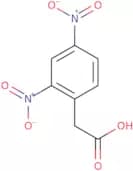
CAS:<p>2,4-Dichloro-3-nitropyridine is a halogenated pyridinium salt that has been shown to inhibit the influenza virus in vitro. This compound is also reactive with nucleophilic groups such as amines, alcohols, and thiols. 2,4-Dichloro-3-nitropyridine has been used for the synthesis of quinoline derivatives that have potential applications in autoimmune diseases or cancer. 2,4-Dichloro-3-nitropyridine has also been found to be an inhibitor of tumor necrosis factor alpha (TNFα) production by LPS stimulated human monocytes.</p>Formula:C5H2Cl2N2O2Purity:Min. 95%Color and Shape:White PowderMolecular weight:192.99 g/mol2,4-Dinitrophenylacetic acid
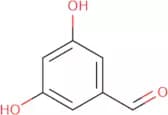
CAS:<p>2,4-Dinitrophenylacetic acid is a chemical substance with the potential to inhibit acetylation. It can be used as an antigen and has been detected in environmental chemistry. 2,4-Dinitrophenylacetic acid is produced by the reaction of chemicals that are found in the environment and it can be detected at low concentrations. This compound is able to react with proteins in cells, leading to high cytotoxicity. 2,4-Dinitrophenylacetic acid can also stabilize optical systems.</p>Formula:C8H6N2O6Purity:Min. 95%Color and Shape:PowderMolecular weight:226.14 g/mol3,5-Dihydroxybenzaldehyde
CAS:<p>3,5-Dihydroxybenzaldehyde (DHBA) is a plant metabolite that is classified as a phenolic compound. It is found in many plants and has important biological functions such as the production of carotenoids or the cleavage of carotenoid to form other compounds. DHBA can be extracted from plant tissue with hydrochloric acid or carbon sources. It has been shown that DHBA inhibits the growth of soil bacteria by binding to amines and thus preventing them from reacting with substrates. This may be due to its ability to act as an electron donor, which could also explain its inhibitory activity on carotenoid cleavage.</p>Formula:C7H6O3Purity:Min. 98 Area-%Color and Shape:Off-White To Beige To Brown SolidMolecular weight:138.12 g/mol3,5-Dihydroxy-4-methylbenzoic acid
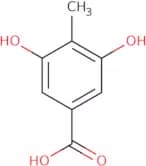
CAS:<p>3,5-Dihydroxy-4-methylbenzoic acid is an efficient synthesis of the natural product lucidin. It is a quinone that is found in citrifolia and morindone, compounds which are used as analgesics and antipyretics. This compound has been shown to inhibit the growth of fungi by inhibition of protein synthesis. 3,5-Dihydroxy-4-methylbenzoic acid also inhibits the production of citric acid cycle intermediates such as succinic acid and fumaric acid.</p>Formula:C8H8O4Purity:Min. 80%Color and Shape:PowderMolecular weight:168.15 g/mol3,4-Diaminobenzophenone
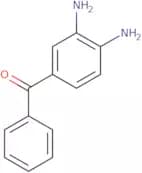
CAS:<p>3,4-Diaminobenzophenone is an unsymmetrical compound and a derivative of benzophenone. It is used in the synthesis of other organic compounds, such as pharmaceuticals. 3,4-Diaminobenzophenone is also used as a solubilizing agent for drugs that are insoluble in water. The molecular weight of 3,4-Diaminobenzophenone can be determined by gravimetric analysis or FTIR methods. 3,4-Diaminobenzophenone has been shown to have antioxidative properties. This molecule can bind to hydroxyl groups on biomolecules and protect them from oxidation by reactive oxygen species (ROS).</p>Formula:C13H12N2OPurity:Min 98.5%Color and Shape:PowderMolecular weight:212.25 g/mol1,4-Dicyanobenzene
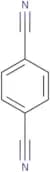
CAS:<p>1,4-Dicyanobenzene is an organic compound that is used as a reactant in the production of other chemicals. It has been shown to be reactive with nucleophiles such as amines and alcohols. 1,4-Dicyanobenzene has shown good transport properties and can be used in industrial preparation of polymers such as polyurethane. The reaction mechanism for 1,4-dicyanobenzene is nucleophilic attack by a nucleophile on the carbonyl carbon of the double bond. This reaction yields two products: an amide or an aliphatic hydrocarbon. 1,4-Dicyanobenzene can also undergo reactions involving hydrogen bonds with other molecules in order to form new compounds.</p>Formula:C8H4N2Purity:Min. 98 Area-%Color and Shape:Off-White PowderMolecular weight:128.13 g/mol4,4'-Dithiopyridine
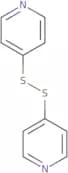
CAS:<p>4,4'-Dithiopyridine is a reactive molecule that can be used in the synthesis of other organic compounds. It is a disulfide bond with a redox potential of -0.43 V, which makes it readily available for reaction. The structural analysis of 4,4'-dithiopyridine has been performed using NMR spectroscopy and gas chromatography/mass spectrometry (GC/MS). This compound is an inhibitor of sugar transport and can be used to study the p-nitrophenyl phosphate reductase enzyme in bacteria. The reaction product between 4,4'-dithiopyridine and NADPH cytochrome P450 produces the fluorescent molecule 2-aminopurine. This fluorescent molecule may be used as a probe to study transfer reactions in bacteria.</p>Formula:C10H8N2S2Purity:Min. 95%Color and Shape:Off-White To Light (Or Pale) Yellow SolidMolecular weight:220.32 g/mol3,5-Dimethyl-4H-1,2,4-triazol-4-amine
CAS:<p>3,5-Dimethyl-4H-1,2,4-triazol-4-amine is a crystalline compound with antiproliferative and anti-inflammatory properties. It has been shown to inhibit the growth of cancer cells in vitro and in vivo. The mechanism of action is not fully understood but may be due to inhibition of DNA synthesis or by inhibiting the activity of topoisomerase II. 3,5-Dimethyl-4H-1,2,4-triazol-4-amine can also act as an antioxidant by scavenging reactive oxygen species (ROS). 3,5-Dimethyl-4H-1,2,4-triazol-4-amine has been shown to have a low toxicity in animals and humans.</p>Formula:C4H8N4Purity:Min. 95%Molecular weight:112.13 g/molDiiodomethane
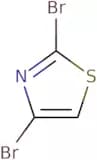
CAS:<p>Diiodomethane is a chemical compound with the molecular formula CHI. It is a colorless gas that can be obtained by reacting methyl ethyl and hydroxyl group in the presence of an oxidant such as boron nitride. Diiodomethane has been used as a substrate film for n-dimethyl formamide and reaction solution, which have been studied using spectroscopic data. The product of this reaction is water vapor that leaves the system due to its low boiling point. Reaction mechanism for this process is thought to be due to the kinetic energy of the particles that collide and produce diiodomethane molecules.</p>Formula:CH2I2Purity:Min. 95%Color and Shape:Yellow Clear LiquidMolecular weight:267.84 g/mol2,4-Dibromothiazole
CAS:<p>2,4-Dibromothiazole is a nicotinic acetylcholine receptor (nAChR) antagonist which selectively blocks the binding of acetylcholine to nAChRs. It has been shown to be effective in treating inflammatory bowel disease by inhibiting the production of inflammatory mediators. This drug also has anti-inflammatory effects and can be used for the treatment of autoimmune diseases such as Crohn's disease. 2,4-Dibromothiazole also has low energy properties and is used in palladium complexes for cross-coupling reactions. It can also be used as a cancer chemotherapeutic agent and as a cardiac drug.</p>Formula:C3HBr2NSPurity:Min. 95%Color and Shape:White PowderMolecular weight:242.92 g/mol4,6-Dichloro-5-nitropyrimidine
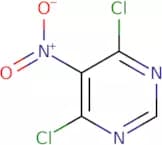
CAS:<p>4,6-Dichloro-5-nitropyrimidine is an intermediate in the synthesis of Tenofovir, a nucleophilic drug that inhibits HIV. It is produced by the reaction of chloride with amines and nitro compounds in the presence of ammonium chloride. 4,6-Dichloro-5-nitropyrimidine has been shown to have anticancer activity against human lymphocytes and other cancer cells. It can also be used for the treatment of AIDS. The biological properties of this compound are dose dependent and are dependent on the size of chlorine atoms attached to nitrogen atoms.</p>Formula:C4HCl2N3O2Purity:Min. 95%Color and Shape:Yellow PowderMolecular weight:193.98 g/mol2,4-Diamino-5-nitropyrimidine
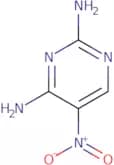
CAS:<p>2,4-Diamino-5-nitropyrimidine is a synthetic molecule that belongs to the class of heterocyclic amines. It has been shown to be a potent antiproliferative agent and has been found to inhibit hepg2 cell growth in vitro. This compound was also found to inhibit cancer cells, including mcf-7. 2,4-Diamino-5-nitropyrimidine binds nucleophilic sites on proteins and inhibits enzymes involved in DNA synthesis. The inhibition of these enzymes leads to cell death by preventing the production of new proteins needed for cell division.</p>Formula:C4H5N5O2Purity:Min. 95%Color and Shape:Off-White To Yellow SolidMolecular weight:155.12 g/mol4,4'-Diamino-2,2'-bipyridine
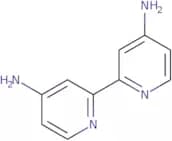
CAS:<p>4,4'-Diamino-2,2'-bipyridine (DABP) is a redox-active compound that is synthesized to be used as a single-stranded DNA probe. It has been shown to have high affinity for nucleic acids and can be used in many applications including the detection of mutations in human ovarian carcinoma cells. DABP can also be used as a model protein for studying interactions with other biomolecules. The immobilization of DABP on an electrode surface allows for the study of its electrochemical properties. This includes the correlation between the redox potential and luminescence intensity and the dependence on pH or ionic strength. DABP can also be used to detect oxygen concentration or ATP levels in mitochondria through its ability to absorb light at wavelengths from 400 nm to 800 nm which is then converted into light at lower wavelengths by uv irradiation.</p>Formula:C10H10N4Purity:Min. 97 Area-%Color and Shape:White PowderMolecular weight:186.21 g/mol2,5-Dibromo-3-aminopyrazine
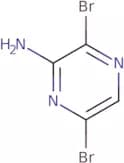
CAS:<p>2,5-Dibromo-3-aminopyrazine is an experimental drug with anticancer activity. It has been shown to have a high affinity for DNA and inhibit the growth of tumor cells in vivo. 2,5-Dibromo-3-aminopyrazine has undergone stability tests in vivo and in vitro and also completed clinical trials. This drug binds to DNA and inhibits the enzyme protein kinase C, leading to suppression of cellular proliferation. The pharmacokinetics of this drug were evaluated by measuring the concentration of 2,5-dibromo-3-aminopyrazine in plasma after oral administration to mice. This study found that the maximum concentration was achieved at 1 hour post dose and that there was a decrease in concentration over time. The drug has been shown to bind to the dimethoxybenzene metabolic pathway, which is involved in regulating cell proliferation.<br>2,5-Dibromo-3-aminopyrazine</p>Formula:C4H3Br2N3Purity:Min. 95%Color and Shape:PowderMolecular weight:252.89 g/mol3-Chloro-5-iodobenzoic acid methyl ester
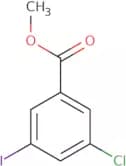
CAS:<p>3-Chloro-5-iodobenzoic acid methyl ester is a versatile building block that can be used to make many complex compounds, including research chemicals and reagents. 3-Chloro-5-iodobenzoic acid methyl ester is used as an intermediate for the production of speciality chemicals and has many uses in chemical reactions. This compound was previously sold under the CAS number 289039-85-6.</p>Formula:C8H6ClIO2Purity:Min. 95%Color and Shape:PowderMolecular weight:296.49 g/molN-[2-[(2S)-2-Cyano-4,4-difluoro-1-pyrrolidinyl]-2-oxoethyl]-6-[methyl[3-(1-piperazinyl)propyl]amino]-4-quinolinecarboxamide trifluor oacetate
CAS:<p>Please enquire for more information about N-[2-[(2S)-2-Cyano-4,4-difluoro-1-pyrrolidinyl]-2-oxoethyl]-6-[methyl[3-(1-piperazinyl)propyl]amino]-4-quinolinecarboxamide trifluor oacetate including the price, delivery time and more detailed product information at the technical inquiry form on this page</p>Formula:C25H31F2N7O2•(C2HF3O2)xPurity:Min. 95%Molecular weight:499.56 g/molD-Carnosine trifluoroacetate
CAS:<p>Please enquire for more information about D-Carnosine trifluoroacetate including the price, delivery time and more detailed product information at the technical inquiry form on this page</p>Formula:C9H14N4O3•(C2HF3O2)xPurity:Min. 95%(αR)-α-(2-Chlorophenyl)-2H-tetrazole-2-ethanol
CAS:<p>Please enquire for more information about (αR)-α-(2-Chlorophenyl)-2H-tetrazole-2-ethanol including the price, delivery time and more detailed product information at the technical inquiry form on this page</p>Formula:C9H9ClN4OPurity:Min. 95%Molecular weight:224.65 g/mol4-Chloro-N-[2-(1,2-dihydro-2-oxo-4-quinolinyl)ethyl]benzamide
CAS:<p>Please enquire for more information about 4-Chloro-N-[2-(1,2-dihydro-2-oxo-4-quinolinyl)ethyl]benzamide including the price, delivery time and more detailed product information at the technical inquiry form on this page</p>Formula:C18H15ClN2O2Purity:Min. 95%Molecular weight:326.78 g/molCoproporphyrin III
CAS:<p>Please enquire for more information about Coproporphyrin III including the price, delivery time and more detailed product information at the technical inquiry form on this page</p>Formula:C36H38N4O8Purity:Min. 95%Molecular weight:654.71 g/molCyanidin 3-O-rutinoside
CAS:<p>Please enquire for more information about Cyanidin 3-O-rutinoside including the price, delivery time and more detailed product information at the technical inquiry form on this page</p>Formula:C27H31O15Purity:Min. 95%Molecular weight:595.53 g/mol6-(Chloromethyl)pteridine-2,4-diamine monohydrochloride
CAS:<p>Please enquire for more information about 6-(Chloromethyl)pteridine-2,4-diamine monohydrochloride including the price, delivery time and more detailed product information at the technical inquiry form on this page</p>Formula:C7H7ClN6•HClPurity:Min. 95%Molecular weight:247.08 g/mol(3S)-3- [4- [(2-Chlorophenyl) methyl] phenoxy] tetrahydrofuran
CAS:<p>Please enquire for more information about (3S)-3- [4- [(2-Chlorophenyl) methyl] phenoxy] tetrahydrofuran including the price, delivery time and more detailed product information at the technical inquiry form on this page</p>Purity:Min. 95%2-Bromo-1-(4-chloro-3-fluorophenyl)ethanone
CAS:<p>Please enquire for more information about 2-Bromo-1-(4-chloro-3-fluorophenyl)ethanone including the price, delivery time and more detailed product information at the technical inquiry form on this page</p>Formula:C8H5BrCIFOPurity:Min. 95%Molecular weight:354.94 g/molChloroiodomethane, stabilised with copper
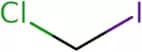
CAS:<p>Chloroiodomethane is a chemical that is used as an intermediate in the production of other chemicals. It is a colourless liquid with a strong odour. 3-Bromopropylamine hydrobromide reacts with chloroiodomethane to form 3-bromopropyl bromide, which can be reacted with hydrogen chloride to form the corresponding acid chloride. This reaction product can then be reacted with β-amino acids to form amides or esters. The reaction mechanism of this process involves nucleophilic substitution of chloroiodomethane by the amino group of the β-amino acid to produce an intermediate α,β-unsaturated carbonyl chloride, which undergoes elimination to give the final product. Chloroiodomethane also reacts rapidly with fatty acids and hydroxyl groups in biological systems, leading to inflammatory diseases such as HIV infection.</p>Formula:CH2ClIPurity:Min. 95%Color and Shape:Colorless Clear LiquidMolecular weight:176.38 g/molH-β-Cyclohexyl-Ala-OMe·HCl
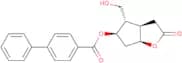
CAS:<p>Please enquire for more information about H-beta-Cyclohexyl-Ala-OMe·HCl including the price, delivery time and more detailed product information at the technical inquiry form on this page</p>Formula:C10H19NO2·HClPurity:Min. 95%Molecular weight:221.72 g/mol(-)-Corey lactone 4-phenylbenzoate
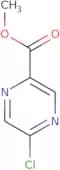
CAS:<p>Corey lactone 4-phenylbenzoate is an efficient, large-scale preparation of (-)-Corey lactone. It is synthesized in two steps from 4-phenylbenzoic acid and ethyl acetoacetate. Corey lactone 4-phenylbenzoate has been used for the synthesis of a variety of natural products. This compound is also a precursor to the synthesis of other compounds, such as 3-amino-4-(2'-hydroxyethoxy)benzaldehyde.</p>Formula:C21H20O5Purity:Min. 95%Molecular weight:352.38 g/mol5-Chloro-2-methoxycarbonyl pyrazine
CAS:<p>5-Chloro-2-methoxycarbonyl pyrazine is a linker that is used to connect two pharmacophores. β-Lactamase, which is an enzyme that degrades β-lactams antibiotics, was inhibited by 5-chloro-2-methoxycarbonyl pyrazine in vitro and in vivo. The inhibitory potency of 5-chloro-2-methoxycarbonyl pyrazine was increased when it was combined with other molecules. This molecule has shown antibacterial activity against Enterobacter cloacae, methicillin resistant Staphylococcus aureus (MRSA), and Mycobacterium tuberculosis.</p>Formula:C6H5ClN2O2Purity:Min. 95%Color and Shape:PowderMolecular weight:172.57 g/molR-(-)-3-Chloro-1,2-propanediol
CAS:<p>R-(-)-3-Chloro-1,2-propanediol is a chiral epoxide that is used in the synthesis of other chemicals. It has been shown to be active against bacterial strains such as corynebacterium and coryneform bacteria. This chemical can be synthesized from hydrochloric acid and chlorinated propane with an asymmetric synthesis. The R-(-)-3-Chloro-1,2-propanediol can also be synthesized through electrochemical methods using chloride ion as the reducing agent. This compound is soluble in water and shows kinetic activity with carbon sources when used as an antibiotic.</p>Formula:C3H7ClO2Purity:Min. 95%Color and Shape:Colorless Clear LiquidMolecular weight:110.54 g/mol6-Chlorohexanol
CAS:<p>6-Chlorohexanol is a fatty alcohol with a hydroxyl group. It is soluble in water and has a phase transition temperature of -114°C. 6-Chlorohexanol can be synthesized by reacting 2,6-dichlorophenol with hydrochloric acid and sodium hydroxide in the presence of azobenzene. The reaction solution is then heated to about 300°C for 3 hours. 6-Chlorohexanol is used as a model system for studying the photochemical reactions of fatty acids. Hydroxy groups are susceptible to light exposure, which leads to the formation of carbonyl compounds such as malonic acid and chloride monomers.</p>Formula:C6H13ClOPurity:Min. 95%Color and Shape:PowderMolecular weight:136.62 g/mol1,2-Bis(chlorodimethylsilyl)ethane
CAS:<p>1,2-Bis(chlorodimethylsilyl)ethane is a reactive chemical that is synthesized from hydroxychloroformates and hydrogen chloride. It reacts with silicon to form chlorosilanes, which are then used in the polymerization of siloxanes. 1,2-Bis(chlorodimethylsilyl)ethane has been shown to be an effective initiator for the polymerization of methyl methacrylate and ethylene glycol dimethacrylate. 1,2-Bis(chlorodimethylsilyl)ethane is also used as a hydroxyl group donor in organic reactions.</p>Formula:C6H16Cl2Si2Purity:Min. 95 Area-%Color and Shape:PowderMolecular weight:215.27 g/molN,N-bis(Hydroxyethyl)-2-aminoethanesulfonic acid sodium salt
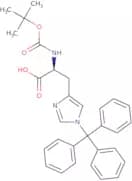
CAS:<p>N,N-bis(Hydroxyethyl)-2-aminoethanesulfonic acid sodium salt is a cross-linking agent for polymers. It has been shown to react with dimethylol propionic acid to form a hydroxyl group and a carboxylate. This reaction yields the product of bis(hydroxyethyl) aminosulfonic acid sodium salt. N,N-bis(Hydroxyethyl)-2-aminoethanesulfonic acid sodium salt can be used as a cross-linking agent in the manufacture of biodegradable polymers that are environmentally friendly and biocompatible. The viscosity of the reaction solution increases with an increase in temperature, which is due to the hydrophobic interaction between molecules.</p>Formula:C6H14NO5SNaPurity:Min. 95%Color and Shape:PowderMolecular weight:235.23 g/molBoc-His(Trt)-OH
CAS:<p>Boc-His(Trt)-OH is a chemical compound that has been used in the laboratory to study uptake and binding of compounds. It is stable in complex with albumin, which has led to its use as a model system for studying hepatic steatosis. This chemical can be synthesized by solid-phase synthesis with trifluoroacetic acid and polypeptide synthesis. FT-IR spectroscopy has been used to characterize Boc-His(Trt)-OH, revealing its chemical diversity.</p>Formula:C30H31N3O4Purity:Min. 95%Color and Shape:PowderMolecular weight:497.58 g/mol6-Bromo-4-hydroxypyrazolo[1,5-a]pyridine-3-carbonitrile
CAS:<p>Please enquire for more information about 6-Bromo-4-hydroxypyrazolo[1,5-a]pyridine-3-carbonitrile including the price, delivery time and more detailed product information at the technical inquiry form on this page</p>Formula:C8H4BrN3OPurity:Min. 95%Molecular weight:238.04 g/molBisaboloxide A
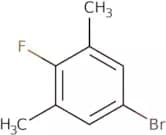
CAS:<p>Please enquire for more information about Bisaboloxide A including the price, delivery time and more detailed product information at the technical inquiry form on this page</p>Formula:C15H26O2Purity:Min. 95%Molecular weight:238.37 g/mol5-Bromo-2-fluoro-1,3-dimethylbenzene
CAS:<p>Please enquire for more information about 5-Bromo-2-fluoro-1,3-dimethylbenzene including the price, delivery time and more detailed product information at the technical inquiry form on this page</p>Formula:C8H8BrFPurity:Min. 95%Color and Shape:Clear Colourless To Yellow LiquidMolecular weight:203.05 g/mol3-Bromo-2-fluoro-6-methylpyridine
CAS:<p>Please enquire for more information about 3-Bromo-2-fluoro-6-methylpyridine including the price, delivery time and more detailed product information at the technical inquiry form on this page</p>Formula:C6H5BrFNPurity:Min. 95%Molecular weight:190.01 g/mol1-Hydroxycyclopentane-1-carbonitrile
CAS:<p>1-Hydroxycyclopentane-1-carbonitrile is a monomer that is hydrolyzed to form benzoin and cyanohydrins. It can be used in the production of scifinder as a monomer or dimerizer.</p>Formula:C6H9NOPurity:Min. 95%Molecular weight:111.14 g/mol(2,2-Difluoroethyl)hydrazine hydrochloride
CAS:<p>Versatile small molecule scaffold</p>Formula:C2H7ClF2N2Purity:Min. 95%Molecular weight:132.54 g/mol4,6-Dichloro-5-fluoronicotinic Acid
CAS:<p>Versatile small molecule scaffold</p>Formula:C6H2Cl2FNO2Purity:Min. 95%Molecular weight:209.99 g/molγ-L-Glutamyl-α-naphthylamide monohydrate
CAS:<p>Gamma-L-glutamyl-alpha-naphthylamide is an enzyme that catalyzes the conversion of L-glutamic acid to L-glutamate. It is expressed in red blood cells, human liver, and human serum. Gamma-L-glutamyl-alpha-naphthylamide has been shown to have various specificities for different tissues and isoenzymes. This enzyme also has immunoassay procedures that are used to detect it in tissues or cells. These assays use monoclonal antibodies or solubilized gamma-L-glutamyl-alpha-naphthylamide molecules as detection agents.</p>Formula:C15H16N2O3•H2OPurity:Min. 95%Color and Shape:PowderMolecular weight:290.31 g/molMethyl 2-(2-amino-5-ethyl-1,3-thiazol-4-yl)acetate
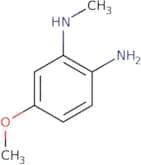
CAS:<p>Versatile small molecule scaffold</p>Formula:C8H12N2O2SPurity:Min. 95%Molecular weight:200.26 g/mol5-Methoxy-N1-methylbenzene-1,2-diamine
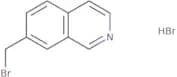
CAS:<p>Versatile small molecule scaffold</p>Formula:C8H12N2OPurity:Min. 95%Molecular weight:152.19 g/mol7-(Bromomethyl)isoquinoline hydrobromide
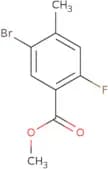
CAS:<p>Versatile small molecule scaffold</p>Formula:C10H8BrN·HBrPurity:Min. 95%Molecular weight:303 g/molMethyl 5-bromo-2-fluoro-4-methylbenzoate
CAS:<p>Versatile small molecule scaffold</p>Formula:C9H8BrFO2Purity:Min. 95%Molecular weight:247.06 g/moltert-Butyl 3-(piperidin-3-yl)azetidine-1-carboxylate
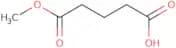
CAS:<p>Versatile small molecule scaffold</p>Formula:C13H24N2O2Purity:Min. 95%Molecular weight:240.35 g/molMonomethyl Glutarate
CAS:<p>Monomethyl glutarate is a monomer for the synthesis of polymers. It has been used in the past as a precursor for the production of polyacrylic acid and its copolymers. Monomethyl glutarate is synthesized by the reaction of hydrochloric acid, high salt, and an expression plasmid containing glutarate dehydrogenase. This compound is also used as a reagent in kinetic studies of fatty acids and glutaric acid. Monomethyl glutarate is an acidic compound with a pKa value of 3.5 at 25°C. It is rapidly hydrolyzed in water to form monomethyl glutarate acid, which has a pKa value of 2.4 at 25°C. Monomethyl glutarate can be ingested orally or applied topically due to its low energy requirements for hydrolysis in water.</p>Formula:C6H10O4Purity:Min. 95%Molecular weight:146.14 g/mol1-[4-(Propan-2-yl)phenyl]ethan-1-ol
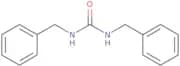
CAS:<p>Versatile small molecule scaffold</p>Formula:C11H16OPurity:Min. 95%Molecular weight:164.24 g/mol1,3-Dibenzylurea
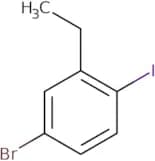
CAS:<p>1,3-Dibenzylurea is an organic molecule that has been used as a model system for the study of chemical reactions. This compound has been shown to have inhibitory properties against pain in animal studies and has been used to treat bowel disease. 1,3-Dibenzylurea can inhibit the inflammatory response by preventing the oxidative carbonylation of proteins. It also inhibits the production of inflammatory cytokines and chemokines in vitro. Nucleophilic attack by amines on the carbonyl group is a possible reaction pathway for this molecule.</p>Formula:C15H16N2OPurity:Min. 95%Molecular weight:240.3 g/mol4-Bromo-2-ethyliodobenzene
CAS:<p>Versatile small molecule scaffold</p>Formula:C8H8BrIPurity:Min. 95%Molecular weight:310.96 g/mol3,5-Dibromopyridin-4-ol
CAS:<p>Versatile small molecule scaffold</p>Formula:C5H3Br2NOPurity:Min. 95%Molecular weight:252.89 g/molDiethyl Acetylphosphonate
CAS:<p>Diethyl Acetylphosphonate is a synthetic chemical that is used in the production of ethyl esters, which are used as intermediates for the production of epoxides. It has shown to be a bidentate ligand and reacts with primary amines. Diethyl Acetylphosphonate can be made by reacting phosphorus pentachloride with ethyl acetate and hydrochloric acid. The reaction mechanism is similar to that of other organophosphorus compounds, in which a phosphine oxide intermediate reacts with an organic halide. Diethyl Acetylphosphonate has shown to be effective in detergent compositions and triethyl orthoformate, as well as alkanoic acid.</p>Formula:C6H13O4PPurity:Min. 95%Molecular weight:180.14 g/mol2-Octyldecanoic acid
CAS:<p>2-Octyldecanoic acid is a fatty acid that is used as a stabilizer in detergent compositions. This stabilizer is also utilizable at high alkali metal concentrations, which makes it suitable for use in hard water conditions. 2-Octyldecanoic acid has a low viscosity at room temperature, and the nature of its hydrocarbon chain leads to increased stability against decomposition when heated or exposed to carbon tetrachloride. It can be synthesized from an aliphatic hydrocarbon, such as octane, to form a macrocyclic ring structure. 2-Octyldecanoic acid also has optical properties that depend on the configuration of the carbon atoms. The molecule has two chiral centers and can exist in four different forms: erythro (E), threo (T), dithreo (D) and meso (M). The optical activity of 2-octyldecanoic acid depends</p>Formula:C18H36O2Purity:Min. 95%Molecular weight:284.5 g/mol1-Phenyl-1-butanol
CAS:<p>1-Phenyl-1-butanol (1PB) is a chiral compound that forms hydrogen bonds with itself. It is a colorless liquid that is soluble in organic solvents and has a boiling point of 61 °C. 1PB has been found to inhibit the growth of Pseudomonas aeruginosa by inhibiting fatty acid synthesis, which may be due to its ability to inhibit β-hydroxylase activity. 1PB also inhibits the growth of some bacteria (e.g., Staphylococcus aureus) by blocking the synthesis of fatty acids, which are important for bacterial cell membrane integrity. The hydroxyl group in 1PB helps it form hydrogen bonds with other molecules, including proteins and DNA strands, which makes it useful for chromatographic separation and as an antioxidant in food preservation.</p>Formula:C10H14OPurity:Min. 95%Molecular weight:150.22 g/mol2-{[(3αR,4S,6R,6αS)-6-Amino-2,2-dimethyltetrahydro-3αH-cyclopenta[d][1,3]-dioxol-4-yl] oxy}-1-ethol
CAS:<p>Versatile small molecule scaffold</p>Formula:C10H19NO4Purity:Min. 95%Color and Shape:PowderMolecular weight:217.26 g/mol2-[[(3aS,4R,6S,6aa)-4-[7-[[(1R,2S)-2-(3 ,4-Difluorophenyl)cyclopropyl]amino]-5-(propylthio)-3H-[1,2,3]triazolo[4 ,5-d]pyrimidin-3-yl]-2,2-dimethyl-tetrahydro-3aH-cyclopenta[d][1 ,3]dioxol-6-yl]oxy]ethanol
CAS:<p>2-[[(3aS,4R,6S,6aa)-4-[7-[[(1R,2S)-2-(3,4-Difluorophenyl)cyclopropyl]amino]-5-(propylthio)-3H-[1,2,3]triazolo[4,5-d]pyrimidin-3-yl]- 2,2-dimethyl-tetrahydro-3aH-cyclopenta[d][1,3]dioxol-6-yl]oxy]ethanol-d7 is a compound with brominated sparfloxacin. It has various applications in the field of biochemistry and research chemicals. This compound has been found to have interactions with adipocytes and adipose tissues. Additionally, it has shown potential effects on glycan metabolism and potassium ion channels. Furthermore, this compound has been studied for its potential as an herbicide and its interaction with other substances such as</p>Formula:C26H32F2N6O4SPurity:Min. 95%Molecular weight:562.63 g/mol2-Amino-5-bromo-3-fluorobenzoic acid
CAS:<p>Versatile small molecule scaffold</p>Formula:C7H5BrFNO2Purity:Min. 95%Molecular weight:234.03 g/molMethyl 3-chloro-4-iodobenzoate
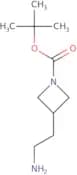
CAS:<p>Versatile small molecule scaffold</p>Formula:C8H6ClIO2Purity:Min. 95%Molecular weight:296.49 g/moltert-Butyl 3-(2-aminoethyl)azetidine-1-carboxylate
CAS:<p>Versatile small molecule scaffold</p>Formula:C10H20N2O2Purity:Min. 95%Molecular weight:200.28 g/mol4-chloropyrimidine-2-carbonitrile
CAS:<p>4-Chloropyrimidine-2-carbonitrile is an industrial chemical that belongs to the class of heterocycles. It is commonly used in the synthesis of amines, phenoxy compounds, and halides. This compound is widely used in research laboratories as a building block for the synthesis of various organic compounds. 4-Chloropyrimidine-2-carbonitrile is available in enantiopure form, making it suitable for chiral chemistry applications. It contains cyano and ethoxycarbonyl functional groups, which make it versatile for further derivatization. This compound exhibits solid catalyst properties and can be used as a methyl ether or amide precursor. Its emission properties make it useful in fluorescence-based assays and imaging techniques.</p>Formula:C5H2ClN3Purity:Min. 95%Molecular weight:139.5 g/molFG-2216
CAS:<p>FG-2216 is a peptide that activates the G protein-coupled receptor, leading to increased intracellular calcium. FG-2216 is a potent agonist of the GPRC6A receptor and has been shown to inhibit pain perception in animal models. FG-2216 has been shown to have no effect on ion channels and does not affect cellular proliferation or migration. FG-2216 may be useful as a research tool for studying the function of the GPRC6A receptor in animal models.</p>Formula:C12H9ClN2O4Purity:Min. 95%Molecular weight:280.66 g/mol3-Dimethylamino-1-pyridin-3-yl-propenone
CAS:<p>Versatile small molecule scaffold</p>Formula:C10H12N2OPurity:Min. 95%Molecular weight:176.22 g/molDibromoethane-d4
CAS:Controlled Product<p>Please enquire for more information about Dibromoethane-d4 including the price, delivery time and more detailed product information at the technical inquiry form on this page</p>Formula:C2H4Br2Purity:Min. 95%Molecular weight:191.89 g/mol7-bromo-3-iodoimidazo[1,2-a]pyridine
CAS:<p>Versatile small molecule scaffold</p>Formula:C7H4BrIN2Purity:Min. 95%Molecular weight:322.9 g/mol(1R)-1-(3-Fluoro-4-methylphenyl)ethan-1-amine hydrochloride
CAS:<p>Versatile small molecule scaffold</p>Formula:C9H13ClFNPurity:Min. 95%Molecular weight:189.66 g/molHexahydro-1H-pyrrolizin-1-amine
CAS:<p>Hexahydro-1H-pyrrolizin-1-amine is a synthetic compound that is used to control endophytic fungi and fungal diseases in plants. The activity of this molecule is due to the acid molecules that are released when it reacts with plant tissue, which prevents the growth of fungi by inhibiting their cell membranes. Hexahydro-1H-pyrrolizin-1-amine also has an antibacterial effect, which may be due to its ability to bind to bacterial 16S ribosomal RNA and inhibit protein synthesis. This product can be used on plants that are infected with endophytic fungi or fungal diseases. It can also be applied as a preventative measure against future infections.<br><br>The following table summarizes the information for each product:<br><br>Product Name <br>Characteristics <br>Description</p>Formula:C7H14N2Purity:Min. 95%Color and Shape:Clear LiquidMolecular weight:126.2 g/mol3-oxo-2,3,5,7-tetrahydro-pyrrolo[3,4-c]pyridazine-6-carboxylic acid tert-butyl ester
CAS:<p>Versatile small molecule scaffold</p>Formula:C11H15N3O3Purity:Min. 95%Molecular weight:237.25 g/molN-(2,6-Dimethylphenyl)-2-({[(2,6-dimethylphenyl)carbamoyl]methyl}amino)acetamide
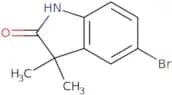
CAS:<p>2,6-Dimethylphenylacetic acid is a hydrogen phosphate that is soluble in solvents such as acetonitrile. It has been used in the synthesis of lidocaine with high sensitivity and specificity. It can be used to detect phosphoric compounds, which are often present in pharmaceuticals and food supplements. This compound has also been shown to have a solvent effect on the conditions of the reaction, making it a useful additive for optimizing processes. The main impurities of this compound are 2-methylbenzoic acid and benzoic acid.</p>Formula:C20H25N3O2Purity:Min. 95%Molecular weight:339.4 g/mol5-Bromo-3,3-dimethyl-2,3-dihydro-1H-indol-2-one
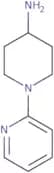
CAS:<p>Versatile small molecule scaffold</p>Formula:C10H10NOBrPurity:Min. 95%Molecular weight:240.09 g/mol(1-Pyridin-2-yl)piperidin-4-amine
CAS:<p>(1-Pyridin-2-yl)piperidin-4-amine is a drug that acts as an anorexiant. It binds to the serotonin 5HT3 receptor, which is involved in the regulation of appetite and mood. It also blocks the action of serotonin at the 5HT4 receptor, which is involved in mediating intestinal motility. This agent has been shown to have a potent antagonist effect on the 1-4c alkyl group of serotonin receptors. The phenoxy group and methyl group are also responsible for binding with serotonin receptors and blocking their activity.</p>Formula:C10H15N3Purity:Min. 95%Molecular weight:177.25 g/mol2,4,6-Trichloronicotinic acid
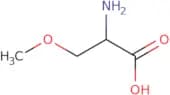
CAS:<p>Versatile small molecule scaffold</p>Formula:C6H2Cl3NO2Purity:Min. 95%Molecular weight:226.44 g/mol2-Amino-3-methoxypropanoic acid hydrochloride
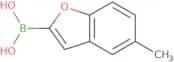
CAS:<p>2-Amino-3-methoxypropanoic acid hydrochloride is a mitochondrial enzyme inhibitor that is used as a research tool to study protein synthesis. It binds to the cytochrome b2 subunit of the mitochondrial respiratory chain, inhibiting the oxidation of pyruvate and affecting the production of ATP. 2-Amino-3-methoxypropanoic acid hydrochloride has been shown to induce apoptosis in human liver cells by triggering caspase 3, which is an important enzyme in the apoptotic pathway. 2-Amino-3-methoxypropanoic acid hydrochloride also has a number of chemical properties that make it useful for analytical chemistry. For example, 2-amino-3-methoxypropanoic acid hydrochloride can be used to measure carboxylic acids, acetylation reactions, hydrogen bonds and hydroxyl groups. It can also be used as a nucle</p>Formula:C4H10ClNO3Purity:Min. 95%Molecular weight:155.58 g/mol(5-methylbenzofuran-2-yl)boronic acid
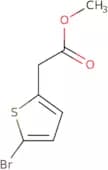
CAS:<p>Versatile small molecule scaffold</p>Formula:C9H9BO3Purity:Min. 95%Molecular weight:175.98 g/molMethyl 2-(5-bromothiophen-2-yl)acetate
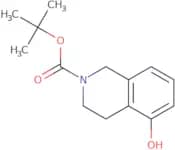
CAS:<p>Versatile small molecule scaffold</p>Formula:C7H7BrO2SPurity:Min. 95%Molecular weight:235.1 g/moltert-Butyl 5-hydroxy-3,4-dihydroisoquinoline-2(1H)-carboxylate
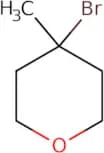
CAS:<p>Versatile small molecule scaffold</p>Formula:C14H19NO3Purity:Min. 95%Molecular weight:249.31 g/mol4-Bromo-4-methyltetrahydropyran
CAS:<p>Versatile small molecule scaffold</p>Formula:C6H11BrOPurity:Min. 95%Molecular weight:179.06 g/molN-Carbethoxy-4-hydroxypiperidine
CAS:<p>N-Carbethoxy-4-hydroxypiperidine is a drug substance that is a h1 receptor antagonist. It is used as an antihistamine to treat the symptoms of hay fever and other allergic reactions. N-Carbethoxy-4-hydroxypiperidine is available in two enantiomers, or mirror images, which are labelled S and R. The R enantiomer is more potent than the S enantiomer for inhibiting histamine h1 receptors. This drug has been shown to inhibit the growth of tuberculosis bacteria in cell culture and animal models, but not against Mycobacterium avium complex. N-Carbethoxy-4-hydroxypiperidine has also been shown to have significant antibacterial activity against Clostridium perfringens with minimal toxicity in mice.</p>Formula:C8H15NO3Purity:Min. 95%Molecular weight:173.21 g/molMethyl 4-chlorobenzenesulfonate
CAS:<p>Versatile small molecule scaffold</p>Formula:C7H7ClO3SPurity:Min. 95%Molecular weight:206.65 g/mol2,4-Dichloro-6-(propan-2-yl)pyrimidine
CAS:<p>Versatile small molecule scaffold</p>Formula:C7H8Cl2N2Purity:Min. 95%Molecular weight:191.05 g/mol1-(1-Benzyl-1H-pyrazol-4-yl)-ethanone
CAS:<p>Versatile small molecule scaffold</p>Formula:C12H12N2OPurity:Min. 95%Molecular weight:200.23 g/molN-(11-Bromoundecyl)carbamic acid t-butyl ester
CAS:<p>Versatile small molecule scaffold</p>Formula:C16H32BrNO2Purity:Min. 95%Molecular weight:350.33 g/mol4-{[(tert-butoxy)carbonyl]amino}bicyclo[2.2.2]octane-1-carboxylic acid
CAS:<p>Versatile small molecule scaffold</p>Formula:C14H23NO4Purity:Min. 95%Molecular weight:269.3 g/mol2-Amino-5-fluoro-4-methoxybenzoic acid
CAS:<p>Versatile small molecule scaffold</p>Formula:C8H8FNO3Purity:Min. 95%Molecular weight:185.15 g/mol(1R,8S,9s)-Bicyclo[6.1.0]non-4-yn-9-ylmethanol
CAS:<p>(1R,8S,9s)-Bicyclo[6.1.0]non-4-yn-9-ylmethanol is a congener that belongs to the class of monoclonal antibodies. It is a degradable and photophysical agent that enhances ionotropic gelation and proton exchange in an acidic environment. This agent has been shown to react with nucleophilic groups, such as amines and thiols, and has fluorescence properties that are sensitive to pH changes. The reactive nature of this compound makes it useful for the localization of model proteins in analytical chemistry experiments.</p>Formula:C10H14OPurity:Min. 95%Molecular weight:150.22 g/mol


![3-Methylthieno[3,2-b]pyridine-6-carboxylic acid](/_next/image/?url=https%3A%2Fstatic.cymitquimica.com%2Fproducts%2F3D%2Fthumb-webp%2FXEC92405.webp&w=3840&q=75)
![Methyl 6-amino-2H,3H,4H-thieno[2,3-b]pyran-5-carboxylate](/_next/image/?url=https%3A%2Fstatic.cymitquimica.com%2Fproducts%2F3D%2Fthumb-webp%2FXEC98572.webp&w=3840&q=75)
![2-{[1-(Aminomethyl)-4,4-difluorocyclohexyl]oxy}ethan-1-ol](/_next/image/?url=https%3A%2Fstatic.cymitquimica.com%2Fproducts%2F3D%2Fthumb-webp%2FXED21616.webp&w=3840&q=75)
![Ethyl 2-[(1,1,1-trifluoropropan-2-yl)amino]-1,3-thiazole-5-carboxylate](/_next/image/?url=https%3A%2Fstatic.cymitquimica.com%2Fproducts%2F3D%2Fthumb-webp%2FXED57815.webp&w=3840&q=75)
![Propan-2-yl N-[2-(1-methylpyrrolidin-2-yl)ethyl]carbamate](/_next/image/?url=https%3A%2Fstatic.cymitquimica.com%2Fproducts%2F3D%2Fthumb-webp%2FXED92886.webp&w=3840&q=75)
![tert-Butyl N-[1-(2-methoxyacetyl)cyclopropyl]carbamate](/_next/image/?url=https%3A%2Fstatic.cymitquimica.com%2Fproducts%2F3D%2Fthumb-webp%2FXED96836.webp&w=3840&q=75)

![[2-(4-Ethoxyphenyl)-1,3-thiazol-4-yl]methanol](/_next/image/?url=https%3A%2Fstatic.cymitquimica.com%2Fproducts%2F3D%2Fthumb-webp%2FXFA04636.webp&w=3840&q=75)

![1-[(4-Chlorophenyl)methyl]-1H-1,2,4-triazol-3-amine](/_next/image/?url=https%3A%2Fstatic.cymitquimica.com%2Fproducts%2F3D%2Fthumb-webp%2FXFA15933.webp&w=3840&q=75)
![3-[(Pyridin-4-yl)formamido]propanoic acid](/_next/image/?url=https%3A%2Fstatic.cymitquimica.com%2Fproducts%2F3D%2Fthumb-webp%2FXFA21838.webp&w=3840&q=75)
![2-({4-[2-(2H-1,2,3,4-Tetrazol-5-yl)phenyl]phenyl}methyl)-2,3-dihydro-1H-isoindole-1,3-dione](/_next/image/?url=https%3A%2Fstatic.cymitquimica.com%2Fproducts%2F3D%2Fthumb-webp%2FXFA22567.webp&w=3840&q=75)
![(2R,4S)-1-[(tert-Butoxy)carbonyl]-4-methoxypyrrolidine-2-carboxylic acid](/_next/image/?url=https%3A%2Fstatic.cymitquimica.com%2Fproducts%2F3D%2Fthumb-webp%2FXFA26670.webp&w=3840&q=75)



![tert-Butyl[(4-iodophenyl)methoxy]dimethylsilane](/_next/image/?url=https%3A%2Fstatic.cymitquimica.com%2Fproducts%2F3D%2Fthumb-webp%2FXFA28396.webp&w=3840&q=75)


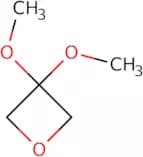
![2-{1-[(tert-butoxy)carbonyl]piperidin-4-yl}-1,3-oxazole-4-carboxylic acid](/_next/image/?url=https%3A%2Fstatic.cymitquimica.com%2Fproducts%2F3D%2Fthumb-webp%2FXLB51608.webp&w=3840&q=75)
![2-[5-Ethyl-3-(trifluoromethyl)-1H-pyrazol-1-yl]acetic acid](/_next/image/?url=https%3A%2Fstatic.cymitquimica.com%2Fproducts%2F3D%2Fthumb-webp%2FXLB51630.webp&w=3840&q=75)
![2-Cyclopropylpyrazolo[1,5-a]pyrazin-4-ol](/_next/image/?url=https%3A%2Fstatic.cymitquimica.com%2Fproducts%2F3D%2Fthumb-webp%2FXLC00695.webp&w=3840&q=75)
![[1,2,3]Triazolo[1,5-a]pyridine-4-carboxylic acid](/_next/image/?url=https%3A%2Fstatic.cymitquimica.com%2Fproducts%2F3D%2Fthumb-webp%2FXLC02642.webp&w=3840&q=75)
![2-(2-[(Propan-2-yloxy)methyl]phenyl)acetic acid](/_next/image/?url=https%3A%2Fstatic.cymitquimica.com%2Fproducts%2F3D%2Fthumb-webp%2FXLC02690.webp&w=3840&q=75)
![2-(4-Methylphenyl)-4H,5H,6H,7H-pyrazolo[1,5-a]pyrimidine](/_next/image/?url=https%3A%2Fstatic.cymitquimica.com%2Fproducts%2F3D%2Fthumb-webp%2FXLC03053.webp&w=3840&q=75)
![4-Methyl-4H,5H,6H,7H-pyrazolo[1,5-a]pyridine-3-carboxylic acid](/_next/image/?url=https%3A%2Fstatic.cymitquimica.com%2Fproducts%2F3D%2Fthumb-webp%2FXLC03204.webp&w=3840&q=75)
![4-Oxo-4H,5H,6H,7H-furo[3,2-c]pyridine-3-carboxylic acid](/_next/image/?url=https%3A%2Fstatic.cymitquimica.com%2Fproducts%2F3D%2Fthumb-webp%2FXLC03831.webp&w=3840&q=75)
![1,4-Dioxaspiro[5.5]undecane-9-carboxylic acid](/_next/image/?url=https%3A%2Fstatic.cymitquimica.com%2Fproducts%2F3D%2Fthumb-webp%2FXLC03939.webp&w=3840&q=75)



![1H-[1,2,3]Triazolo[4,5-d]pyrimidin-5-amine](/_next/image/?url=https%3A%2Fstatic.cymitquimica.com%2Fproducts%2F3D%2Fthumb-webp%2FKAA17984.webp&w=3840&q=75)


![2-[3-Chloro-5-(trifluoromethyl)-2-pyridinyl]-acetonitrile](/_next/image/?url=https%3A%2Fstatic.cymitquimica.com%2Fproducts%2F3D%2Fthumb-webp%2FHGA76410.webp&w=3840&q=75)














![N-[2-[(2S)-2-Cyano-4,4-difluoro-1-pyrrolidinyl]-2-oxoethyl]-6-[methyl[3-(1-piperazinyl)propyl]amin…](/_next/image/?url=https%3A%2Fstatic.cymitquimica.com%2Fproducts%2F3D%2Fthumb-webp%2FFC184139.webp&w=3840&q=75)

![4-Chloro-N-[2-(1,2-dihydro-2-oxo-4-quinolinyl)ethyl]benzamide](/_next/image/?url=https%3A%2Fstatic.cymitquimica.com%2Fproducts%2F3D%2Fthumb-webp%2FFC184071.webp&w=3840&q=75)


![(3S)-3- [4- [(2-Chlorophenyl) methyl] phenoxy] tetrahydrofuran](/_next/image/?url=https%3A%2Fstatic.cymitquimica.com%2Fproducts%2F3D%2Fthumb-webp%2FFC181171.webp&w=3840&q=75)






![6-Bromo-4-hydroxypyrazolo[1,5-a]pyridine-3-carbonitrile](/_next/image/?url=https%3A%2Fstatic.cymitquimica.com%2Fproducts%2F3D%2Fthumb-webp%2FFB182798.webp&w=3840&q=75)




![1-[4-(Propan-2-yl)phenyl]ethan-1-ol](/_next/image/?url=https%3A%2Fstatic.cymitquimica.com%2Fproducts%2F3D%2Fthumb-webp%2FBAA47510.webp&w=3840&q=75)




![2-{[(3αR,4S,6R,6αS)-6-Amino-2,2-dimethyltetrahydro-3αH-cyclopenta[d][1,3]-dioxol-4-yl] oxy}-1-ethol](/_next/image/?url=https%3A%2Fstatic.cymitquimica.com%2Fproducts%2F3D%2Fthumb-webp%2FZKA69355.webp&w=3840&q=75)
![2-[[(3aS,4R,6S,6aa)-4-[7-[[(1R,2S)-2-(3 ,4-Difluorophenyl)cyclopropyl]amino]-5-(propylthio)-3H-[1,…](/_next/image/?url=https%3A%2Fstatic.cymitquimica.com%2Fproducts%2F3D%2Fthumb-webp%2FZKA69326.webp&w=3840&q=75)




![7-bromo-3-iodoimidazo[1,2-a]pyridine](/_next/image/?url=https%3A%2Fstatic.cymitquimica.com%2Fproducts%2F3D%2Fthumb-webp%2FWZB18455.webp&w=3840&q=75)


![3-oxo-2,3,5,7-tetrahydro-pyrrolo[3,4-c]pyridazine-6-carboxylic acid tert-butyl ester](/_next/image/?url=https%3A%2Fstatic.cymitquimica.com%2Fproducts%2F3D%2Fthumb-webp%2FVFC49325.webp&w=3840&q=75)
![N-(2,6-Dimethylphenyl)-2-({[(2,6-dimethylphenyl)carbamoyl]methyl}amino)acetamide](/_next/image/?url=https%3A%2Fstatic.cymitquimica.com%2Fproducts%2F3D%2Fthumb-webp%2FVEB79807.webp&w=3840&q=75)




![4-{[(tert-butoxy)carbonyl]amino}bicyclo[2.2.2]octane-1-carboxylic acid](/_next/image/?url=https%3A%2Fstatic.cymitquimica.com%2Fproducts%2F3D%2Fthumb-webp%2FNJB30476.webp&w=3840&q=75)

![(1R,8S,9s)-Bicyclo[6.1.0]non-4-yn-9-ylmethanol](/_next/image/?url=https%3A%2Fstatic.cymitquimica.com%2Fproducts%2F3D%2Fthumb-webp%2FNAC16690.webp&w=3840&q=75)