Building Blocks
Subcategories of "Building Blocks"
- Boronic Acids & Boronic Acid Derivatives(5,778 products)
- Chiral Building Blocks(1,243 products)
- Hydrocarbon Building Blocks(6,098 products)
- Organic Building Blocks(61,042 products)
Found 204339 products of "Building Blocks"
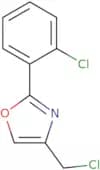
4-(Chloromethyl)-2-(2-chlorophenyl)-1,3-oxazole
CAS:Versatile small molecule scaffold
Formula:C10H7Cl2NOPurity:Min. 95%Molecular weight:228.07 g/molRef: 3D-DCB16508
Discontinued product1-[3-Fluoro-4-(piperidin-1-yl)phenyl]ethan-1-one
CAS:Versatile small molecule scaffold
Formula:C13H16FNOPurity:Min. 95%Molecular weight:221.27 g/molRef: 3D-DBA69848
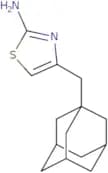
Discontinued product4-(Adamantan-1-ylmethyl)-1,3-thiazol-2-amine
CAS:Versatile small molecule scaffold
Formula:C14H20N2SPurity:Min. 95%Molecular weight:248.39 g/molRef: 3D-DBA59972
Discontinued product[(4-Amino-3-ethylphenyl)sulfanyl]formonitrile
CAS:Versatile small molecule scaffold
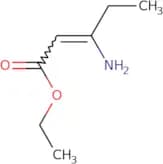
Formula:C9H10N2SPurity:Min. 95%Molecular weight:178.26 g/molEthyl 3-aminopent-2-enoate
CAS:Ethyl 3-aminopent-2-enoate is an enantioselective and efficient ligand that is used in asymmetric synthesis. It reacts with a variety of acceptors such as 2-bromo-3-methylpyridine to form the corresponding β-unsaturated ester. The reaction with cuprate leads to the formation of an α,β-unsaturated carbonyl compound. Ethyl 3-aminopent-2-enoate can be used to synthesize crotonates and esters by hydrolysis and alkylation respectively. The crotonate formed can be converted into its corresponding acid or ester using an enolate formed from ethyl malonate.
Formula:C7H13NO2Purity:Min. 95%Molecular weight:143.18 g/molRef: 3D-DAA22261
Discontinued product2-(5-Methyl-1H-pyrazol-1-yl)aniline
CAS:Versatile small molecule scaffold
Formula:C10H11N3Purity:Min. 95%Molecular weight:173.21 g/molRef: 3D-CWB58305
Discontinued product2-[Ethyl(propan-2-yl)amino]ethan-1-ol
CAS:Controlled ProductVersatile small molecule scaffold
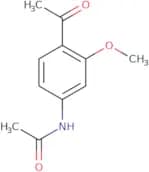
Formula:C7H17NOPurity:Min. 95%Molecular weight:131.22 g/molN-(4-Acetyl-3-methoxyphenyl)acetamide
CAS:Versatile small molecule scaffold
Formula:C11H13NO3Purity:Min. 95%Molecular weight:207.23 g/molRef: 3D-BCA41008
Discontinued productN-[4-(Hydroxymethyl)-2-thiazolyl]acetamide
CAS:Versatile small molecule scaffold
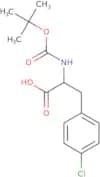
Formula:C6H8N2O2SPurity:Min. 95%Molecular weight:172.2 g/mol2-((tert-Butoxycarbonyl)amino)-3-(4-chlorophenyl)propanoic acid
CAS:Versatile small molecule scaffold
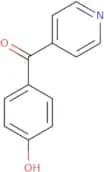
Formula:C14H18ClNO4Purity:Min. 95%Molecular weight:299.75 g/mol(4-Hydroxyphenyl)(4-pyridyl)methanone
CAS:Versatile small molecule scaffold
Formula:C12H9NO2Purity:Min. 95%Molecular weight:199.21 g/molRef: 3D-BCA24677
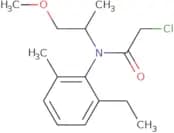
Discontinued productMetolachlor
CAS:Metolachlor is a herbicide with antimicrobial properties that is used to control weeds in agricultural and other settings. Metolachlor is a potent inducer of liver enzymes CYP1A2, CYP3A4, and CYP2E1. It also causes drug interactions with drugs metabolized by these enzymes such as the anti-HIV drug efavirenz. Metolachlor has been shown to cause toxic effects in the kidneys, heart, and brain. The chemical structure of metolachlor was first determined by X-ray crystallography in 1969. Metolachlor is not active against many common plant pests, but it does have activity against some fungi and bacteria. Metolachlor can be used for the control of infectious diseases caused by bacteria, such as salmonella or chlamydia.
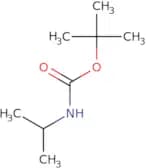
Formula:C15H22ClNO2Purity:Min. 95%Molecular weight:283.79 g/molTert-Butyl N-(Propan-2-Yl)Carbamate
CAS:Versatile small molecule scaffold
Formula:C8H17NO2Purity:Min. 95%Molecular weight:159.23 g/mol(2R)-3-[(Carboxymethyl)sulfanyl]-2-acetamidopropanoic acid
CAS:(2R)-3-[(Carboxymethyl)sulfanyl]-2-acetamidopropanoic acid is a metabolite of the drug sulfapyridine. It is formed by conjugation with glutathione in the liver to form 3-glutathione-2-sulfapyridine, and then excreted into bile. (2R)-3-[(Carboxymethyl)sulfanyl]-2-acetamidopropanoic acid has been found to be genotoxic in mice, which may be due to its ability to form reactive metabolites that bind to DNA. This compound also possesses cytotoxic properties, which may be due to its ability to inhibit protein synthesis.
Formula:C7H11NO5SPurity:Min. 95%Molecular weight:221.23 g/molRef: 3D-BBA17754
Discontinued product2-{2-Oxa-6-azaspiro[3.3]heptan-6-yl}ethan-1-ol
CAS:Versatile small molecule scaffold
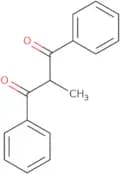
Formula:C7H13NO2Purity:Min. 95%Molecular weight:143.18 g/mol2-Methyl-1,3-diphenylpropane-1,3-dione
CAS:2-Methyl-1,3-diphenylpropane-1,3-dione is a divalent hydrocarbon that has been used as a coating for metals and plastics. It has also been used as a solid catalyst in organic reactions. This compound has shown the ability to inhibit the uptake of gemini surfactants by cells, thereby reducing the viscosity of cell culture media. 2-Methyl-1,3-diphenylpropane-1,3-dione is an inhibitor of cachexia (wasting syndrome) in mice and rats due to its regulatory effect on tumor necrosis factor (TNF). TNF is an inflammatory cytokine that regulates many other proinflammatory cytokines and chemokines. This compound has also been shown to increase the reaction time for benzyl groups with primary amino groups when exposed to light.
Formula:C16H14O2Purity:Min. 95%Molecular weight:238.28 g/molRef: 3D-BAA84629
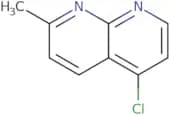
Discontinued product5-Chloro-2-methyl-1,8-naphthyridine
CAS:Versatile small molecule scaffold
Formula:C9H7ClN2Purity:Min. 95%Molecular weight:178.62 g/molRef: 3D-BAA77245
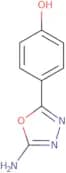
Discontinued product4-(5-Amino-1,3,4-oxadiazol-2-yl)phenol
CAS:Versatile small molecule scaffold
Formula:C8H7N3O2Purity:Min. 95%Molecular weight:177.16 g/molrac-(1R,2S,4S)-7-Oxabicyclo[2.2.1]heptane-2-carbonitrile, endo
CAS:Versatile small molecule scaffold
Formula:C7H9NOPurity:Min. 95%Molecular weight:123.15 g/molRef: 3D-BAA72796
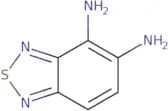
Discontinued product2,1,3-Benzothiadiazole-4,5-diamine
CAS:2,1,3-Benzothiadiazole-4,5-diamine is a ketone that can be derived from the condensation of styrene with ammonia. The yield of this reaction is low and it requires an excess of styrene. 2,1,3-Benzothiadiazole-4,5-diamine has been found to be environmentally viable as it does not produce any harmful byproducts when heated at high temperatures. This compound has also shown to have promising results in animal studies as a potential treatment for malaria.
Formula:C6H6N4SPurity:Min. 95%Molecular weight:166.21 g/molRef: 3D-BAA71166
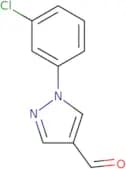
Discontinued product1-(3-Chlorophenyl)-1H-pyrazole-4-carbaldehyde
CAS:1-(3-Chlorophenyl)-1H-pyrazole-4-carbaldehyde is a pesticide that acts as a selective insecticide. It is effective against the larval stage of insects, such as the cabbage moth, Plutella xylostella. This compound has been shown to have biological activity against mites and insects with hydrazine hydrochloride and cinnabarinus. 1-(3-Chlorophenyl)-1H-pyrazole-4-carbaldehyde has also been shown to be able to cyclize with hydrazine to form an insecticidal compound.
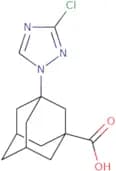
Formula:C10H7ClN2OPurity:Min. 95%Molecular weight:206.63 g/mol3-(3-Chloro-1H-1,2,4-triazol-1-yl)adamantane-1-carboxylic acid
CAS:Versatile small molecule scaffoldFormula:C13H16ClN3O2Purity:Min. 95%Molecular weight:281.74 g/molRef: 3D-ARA86955
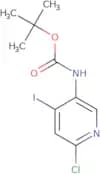
Discontinued product(6-Chloro-4-iodopyridin-3-yl)carbamic acid tert-butyl ester
CAS:Versatile small molecule scaffold
Formula:C10H12ClIN2O2Purity:Min. 95%Molecular weight:354.57 g/mol4-Bromo-1-[(4-chlorophenyl)methyl]-1H-pyrazol-3-amine
CAS:Versatile small molecule scaffold
Formula:C10H9BrClN3Purity:Min. 95%Molecular weight:286.55 g/moltert-Butyl 5-nitroisoindoline-2-carboxylate
CAS:tert-Butyl 5-nitroisoindoline-2-carboxylate is a platelet inhibitor that belongs to the group of antagonists. It has been shown to inhibit human platelets and inhibit the aggregation of fibrinogen. Tert-butyl 5-nitroisoindoline-2-carboxylate has also been shown to have high potency in animal models, but it is not yet known whether it will be effective in humans. The drug has been shown to be a potent antagonist at the platelet P2Y12 receptor, which mediates platelet aggregation and activation, as well as inhibiting ADP-, collagen-, thrombin-, and epinephrine-induced aggregation. Tert-butyl 5-nitroisoindoline-2-carboxylate may also act as a surrogate for agonists or mimetics of the P2Y12 receptor.
Formula:C13H16N2O4Purity:Min. 95%Molecular weight:264.28 g/molRef: 3D-ARA72763
Discontinued product2-Acetylbenzoic acid
CAS:2-Acetylbenzoic acid is a functional molecule that contains an acetyl group. It can form hydrogen bonds with other molecules and has been shown to induce apoptosis in cells. The reaction products of 2-acetylbenzoic acid are malonic acid, acetylsalicylic acid, and 2-benzoylbenzoic acid. These three compounds are made by the addition of hydrogen or hydroxide to the molecule 2-acetylbenzoic acid. The molecule has two functional groups: a carbonyl group and an acetyl group. The chemical structure of this molecule can be seen in the figure below.
2-Acetylbenzoic AcidFormula:C9H8O3Purity:Min. 95%Color and Shape:PowderMolecular weight:164.16 g/molRef: 3D-FA05086
Discontinued producttrans-1,2-Dichloroethylene
CAS:Trans-1,2-Dichloroethylene is a chlorinated hydrocarbon that is used in the production of polyvinyl chloride plastics. When ingested at dietary concentrations, trans-1,2-Dichloroethylene may cause liver damage and death in CD-1 mice. Trans-1,2-Dichloroethylene has been shown to react with nucleophilic substitutions and produce toxic reaction products. This chemical also causes polymerase chain reactions that can lead to cell death. The effective dose for this chemical is unknown because it has not been tested in clinical trials.
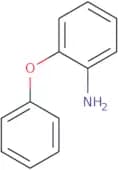
Formula:C2H2Cl2Purity:Min. 95%Molecular weight:96.94 g/mol2-Phenoxyaniline
CAS:2-Phenoxyaniline is a nitro compound that can be converted to the corresponding palladium complexes. It is an inhibitor of the acylation reaction, which is a type of chemical reaction in which an organic molecule reacts with an acid. The inhibition of this reaction has been shown to have an effect on heart disease, specifically by lowering cholesterol levels and reducing atherosclerosis. 2-Phenoxyaniline has also been shown to inhibit the activation energy for electron transfer reactions, making it useful as a catalyst in analytical methods. 2-Phenoxyaniline also undergoes vibrational spectroscopy when exposed to liquid chromatography and other analytical methods.
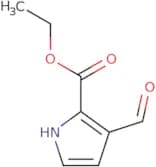
Formula:C12H11NOPurity:Min. 95%Color and Shape:Brown PowderMolecular weight:185.22 g/molethyl 3-formyl-1H-pyrrole-2-carboxylate
CAS:Ethyl 3-formyl-1H-pyrrole-2-carboxylate is a formyl compound with the molecular formula C8H8O3. It is a colorless liquid that has a strong odor. The compound can be obtained by the reaction of ethyl acetoacetate and pyrrole in the presence of aluminum chloride. The compound has been studied for its nuclear magnetic resonance (NMR) properties. It has two conformers, which are distinguished by their different chemical shifts, and this difference can be used to study coupling between the carbonyl group and other groups in the molecule.
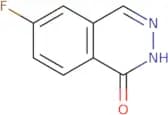
Formula:C8H9NO3Purity:Min. 95%Molecular weight:167.2 g/mol6-fluoro-1,2-dihydrophthalazin-1-one
CAS:Versatile small molecule scaffold
Formula:C8H5FN2OPurity:Min. 95%Molecular weight:164.14 g/mol3-(Methoxycarbonyl)pyridine-4-carboxylic acid
CAS:Versatile small molecule scaffold
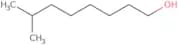
Formula:C8H7NO4Purity:Min. 95%Molecular weight:181.15 g/molIsononyl alcohol
CAS:Isononyl alcohol is a polycarboxylic acid that has been used in the treatment of skin conditions, such as atopic dermatitis and psoriasis. It has been shown to penetrate the skin and stimulate the production of sebum. Isononyl alcohol is also used as a plasticizer for polyvinyl chloride (PVC) and other plastics, which increases their flexibility. This chemical also has a hydrophobic effect, which may be due to its hydroxyl group. The unsaturated alkyl chain on this chemical also makes it susceptible to oxidation by ozone in air and water vapor in air. Isononyl alcohol is metabolized by humans through conjugation with glucuronic acid or sulfate esters.
Formula:C9H20OPurity:Min. 95%Color and Shape:Clear LiquidMolecular weight:144.25 g/molRef: 3D-FI146181
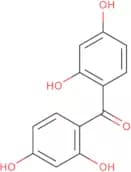
Discontinued product2,2',4,4'-tetrahydroxybenzophenone
CAS:2,2',4,4'-tetrahydroxybenzophenone is a hydroxylated benzophenone that has immunomodulatory effects. It binds to the receptor in the immune system and can cause an increase in cytokine production. 2,2',4,4'-tetrahydroxybenzophenone is cytotoxic and has significant toxicity in vitro. The molecule has been shown to disrupt mitochondrial membrane potential. This may be due to its ability to form hydrogen bonds with molecules on the mitochondrial membrane. 2,2',4,4'-tetrahydroxybenzophenone also modulates transcriptional regulation of genes involved in cell proliferation and apoptosis. The drug is detectable at low levels by mass spectrometry and is not known to have any toxicological effects.END>>
Formula:C13H10O5Purity:Min. 95%Color and Shape:Green PowderMolecular weight:246.22 g/molRef: 3D-FT55663
Discontinued product4-(Methylamino)benzene-1-sulfonamide
CAS:Versatile small molecule scaffold
Formula:C7H10N2O2SPurity:Min. 95%Molecular weight:186.23 g/mol3-Bromo-6,7-dihydro-4H-pyrazolo[1,5-a]pyrazine-5-carboxylic acid tert-butyl ester
CAS:Versatile small molecule scaffold
Formula:C11H16BrN3O2Purity:Min. 95%Molecular weight:302.17 g/mol2-Bromo-3,3,3-trifluoro-1-propene
CAS:Controlled Product2-Bromo-3,3,3-trifluoro-1-propene is a chemical compound that has been synthesized in an asymmetric reaction. The reactant is bromopropane and the product is 2,2,2-trifluoropropene. The methylene group on the propene molecule is activated by the nucleophilic attack of a fluoride ion from hydrogen fluoride to form a cavity with a highly strained bond. The kinetic study of this reaction revealed that the activation energy for the reaction is 42 kJ/mol. Palladium-catalyzed coupling reactions are catalyzed by palladium and require nonpolar solvents such as toluene or dichloromethane. This type of reaction has been shown to be exothermic with an isolated yield of 1%.
Formula:C3H2BrF3Purity:Min. 95%Color and Shape:Colorless PowderMolecular weight:174.95 g/moltert-Butyl 3-(trifluoromethyl)piperazine-1-carboxylate
CAS:Versatile small molecule scaffold
Formula:C10H17F3N2O2Purity:Min. 95%Molecular weight:254.25 g/moltert-Butyl 5-bromo-3,4-dihydro-2,7-naphthyridine-2(1H)-carboxylate
CAS:Versatile small molecule scaffold
Formula:C13H17BrN2O2Purity:Min. 95%Molecular weight:313.19 g/molH-Ser-Ala-Glu-Glu-Tyr-Glu-Tyr-Pro-Ser OH trifluoroacetate
CAS:Please enquire for more information about H-Ser-Ala-Glu-Glu-Tyr-Glu-Tyr-Pro-Ser OH trifluoroacetate including the price, delivery time and more detailed product information at the technical inquiry form on this page
Formula:C47H63N9O20•(C2HF3O2)xPurity:Min. 95%Ref: 3D-FS183525
Discontinued product

![1-[3-Fluoro-4-(piperidin-1-yl)phenyl]ethan-1-one](/_next/image/?url=https%3A%2Fstatic.cymitquimica.com%2Fproducts%2F3D%2Fthumb-webp%2FDBA69848.webp&w=3840&q=75)
![[(4-Amino-3-ethylphenyl)sulfanyl]formonitrile](/_next/image/?url=https%3A%2Fstatic.cymitquimica.com%2Fproducts%2F3D%2Fthumb-webp%2FDAA70345.webp&w=3840&q=75)

![2-[Ethyl(propan-2-yl)amino]ethan-1-ol](/_next/image/?url=https%3A%2Fstatic.cymitquimica.com%2Fproducts%2F3D%2Fthumb-webp%2FCAA89361.webp&w=3840&q=75)
![N-[4-(Hydroxymethyl)-2-thiazolyl]acetamide](/_next/image/?url=https%3A%2Fstatic.cymitquimica.com%2Fproducts%2F3D%2Fthumb-webp%2FBCA30738.webp&w=3840&q=75)
![(2R)-3-[(Carboxymethyl)sulfanyl]-2-acetamidopropanoic acid](/_next/image/?url=https%3A%2Fstatic.cymitquimica.com%2Fproducts%2F3D%2Fthumb-webp%2FBBA17754.webp&w=3840&q=75)
![2-{2-Oxa-6-azaspiro[3.3]heptan-6-yl}ethan-1-ol](/_next/image/?url=https%3A%2Fstatic.cymitquimica.com%2Fproducts%2F3D%2Fthumb-webp%2FBBA09635.webp&w=3840&q=75)
![rac-(1R,2S,4S)-7-Oxabicyclo[2.2.1]heptane-2-carbonitrile, endo](/_next/image/?url=https%3A%2Fstatic.cymitquimica.com%2Fproducts%2F3D%2Fthumb-webp%2FBAA72796.webp&w=3840&q=75)
![4-Bromo-1-[(4-chlorophenyl)methyl]-1H-pyrazol-3-amine](/_next/image/?url=https%3A%2Fstatic.cymitquimica.com%2Fproducts%2F3D%2Fthumb-webp%2FARA75316.webp&w=3840&q=75)




![3-Bromo-6,7-dihydro-4H-pyrazolo[1,5-a]pyrazine-5-carboxylic acid tert-butyl ester](/_next/image/?url=https%3A%2Fstatic.cymitquimica.com%2Fproducts%2F3D%2Fthumb-webp%2FWXB15425.webp&w=3840&q=75)