Building Blocks
This section contains fundamental products for the synthesis of organic and biological compounds. Building blocks are the essential starting materials used to construct complex molecules through various chemical reactions. They play a critical role in drug discovery, material science, and chemical research. At CymitQuimica, we offer a diverse range of high-quality building blocks to support your innovative research and industrial projects, ensuring you have the essential components for successful synthesis.
Subcategories of "Building Blocks"
- Boronic Acids & Boronic Acid Derivatives(5,756 products)
- Chiral Building Blocks(1,242 products)
- Hydrocarbon Building Blocks(6,095 products)
- Organic Building Blocks(61,037 products)
Found 196200 products of "Building Blocks"
Sort by
Purity (%)
0
100
|
0
|
50
|
90
|
95
|
100
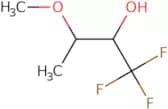
1,1,1-Trifluoro-3-methoxybutan-2-ol
CAS:<p>Versatile small molecule scaffold</p>Formula:C5H9F3O2Purity:Min. 95%Molecular weight:158.12 g/mol5-Methylindole
CAS:<p>5-Methylindole is a chemical that has been used as a building block in the synthesis of many complex compounds. It has been found to be useful in research due to its versatility, and it can also be used as a reaction component in the synthesis of speciality chemicals. 5-Methylindole is an intermediate for other chemical compounds, and is an important solvent for some reactions. 5-Methylindole is also used as a reagent for the production of indole derivatives.</p>Formula:C9H9NPurity:Min. 99 Area-%Molecular weight:131.18 g/molRef: 3D-M-3914
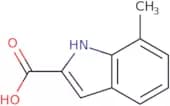
1kgTo inquire50gTo inquire100gTo inquire250gTo inquire500gTo inquire-Unit-ggTo inquire7-Methylindole-2-carboxylic acid
CAS:<p>7-Methylindole-2-carboxylic acid is a versatile building block that is used in the synthesis of complex compounds and research chemicals. It has been shown to be useful as a reagent, speciality chemical, and useful building block for the preparation of high quality materials with CAS No. 18474-60-7. 7-Methylindole-2-carboxylic acid is also an intermediate in the synthesis of some pharmaceuticals, such as amitriptyline (Tryptanol) and diazepam (Valium).</p>Formula:C10H9NO2Molecular weight:175.19 g/mol4-Methyl-3-nitrobenzoic acid
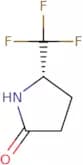
CAS:<p>4-Methyl-3-nitrobenzoic acid is a fine chemical that is used as a building block in the synthesis of complex compounds. It is often used as a reagent or speciality chemical, and it has a CAS number of 96-98-0. 4-Methyl-3-nitrobenzoic acid can be react with other chemicals to form useful intermediates or scaffolds for larger molecules. This chemical is versatile and can be used in many different reactions.</p>Formula:C8H7NO4Purity:Min. 98.0 Area-%Molecular weight:181.15 g/mol(5S)-5-(Trifluoromethyl)pyrrolidin-2-one
CAS:<p>5-Trifluoromethylpyrrolidin-2-one is an organic compound with the chemical formula C5H4F3O. It has a molecular weight of 113.13 g/mol. 5-Trifluoromethylpyrrolidin-2-one is a chiral molecule that occurs as two enantiomers, (5S)-5-(trifluoromethyl)pyrrolidin-2-one and (5R)-5-(trifluoromethyl)pyrrolidin-2-one. The former is more active than the latter. 5FP reacts with sulfur to give the corresponding sulfide, trifluoroethylsulfide.</p>Formula:C5H6F3NOPurity:Min. 95%Molecular weight:153.1 g/mol5-Fluoro-2-(1H-imidazol-1-yl)pyridine
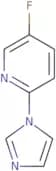
CAS:<p>Versatile small molecule scaffold</p>Formula:C8H6FN3Purity:Min. 95%Molecular weight:163.15 g/moltert-Butyl 4-oxo-decahydroquinoline-1-carboxylate
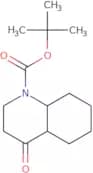
CAS:<p>Versatile small molecule scaffold</p>Formula:C14H23NO3Purity:Min. 95%Molecular weight:253.34 g/molCyclopropanesulfonohydrazide
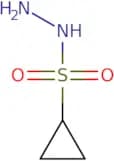
CAS:<p>Versatile small molecule scaffold</p>Formula:C3H8N2O2SPurity:Min. 95%Molecular weight:136.18 g/molMethyl 3-bromo-2-formylbenzoate
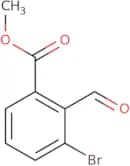
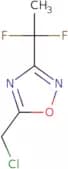
CAS:<p>Versatile small molecule scaffold</p>Formula:C9H7BrO3Purity:Min. 95%Molecular weight:243.05 g/mol5-(Chloromethyl)-3-(1,1-difluoroethyl)-1,2,4-oxadiazole
CAS:<p>Versatile small molecule scaffold</p>Formula:C5H5ClF2N2OPurity:Min. 95%Molecular weight:182.55 g/mol5-Chloroquinoxalin-6-amine
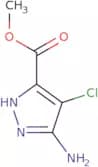
CAS:<p>Versatile small molecule scaffold</p>Formula:C8H6ClN3Purity:Min. 95%Molecular weight:179.6 g/molMethyl 5-amino-4-chloro-1H-pyrazole-3-carboxylate
CAS:<p>Versatile small molecule scaffold</p>Formula:C5H6ClN3O2Purity:Min. 95%Molecular weight:175.57 g/mol[6-(2,2-Dimethylpropanamido)pyridin-3-yl]boronic acid
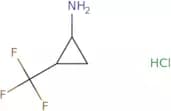
CAS:<p>Versatile small molecule scaffold</p>Formula:C10H15BN2O3Purity:Min. 95%Molecular weight:222.05 g/molrac-(1R,2R)-2-(Trifluoromethyl)cyclopropan-1-amine hydrochloride
CAS:<p>Versatile small molecule scaffold</p>Formula:C4H7ClF3NPurity:Min. 95%Molecular weight:161.55 g/mol3-[(Naphthalen-1-yl)methyl]pyrrolidin-2-one
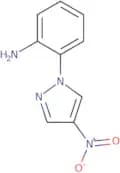
CAS:<p>Versatile small molecule scaffold</p>Formula:C15H15NOPurity:Min. 95%Molecular weight:225.3 g/mol2-(4-Nitro-1H-pyrazol-1-yl)aniline
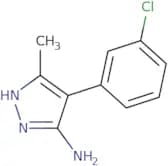
CAS:<p>Versatile small molecule scaffold</p>Formula:C9H8N4O2Purity:Min. 95%Molecular weight:204.19 g/mol4-(3-Chlorophenyl)-3-methyl-1H-pyrazol-5-amine hydrobromide
CAS:<p>Versatile small molecule scaffold</p>Formula:C10H10ClN3Purity:Min. 95%Molecular weight:207.66 g/mol1-(2-Phenylethyl)-1H-pyrrole-2-carboxylic acid
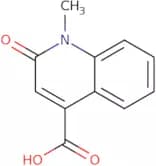
CAS:<p>Versatile small molecule scaffold</p>Formula:C13H13NO2Purity:Min. 95%Molecular weight:215.25 g/mol1-Methyl-2-oxo-1,2-dihydro-quinoline-4-carboxylic acid
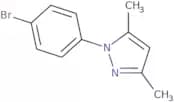
CAS:<p>Versatile small molecule scaffold</p>Formula:C11H9NO3Purity:Min. 95%Molecular weight:203.19 g/mol1-(4-Bromophenyl)-3,5-dimethyl-1H-pyrazole
CAS:<p>Versatile small molecule scaffold</p>Formula:C11H11BrN2Purity:Min. 95%Molecular weight:251.13 g/mol2-Bromo-1-[4-(bromomethyl)phenyl]ethan-1-one
CAS:<p>Versatile small molecule scaffold</p>Formula:C9H8Br2OPurity:Min. 95%Molecular weight:291.97 g/mol5-[(2-Chlorophenyl)sulfamoyl]-2-hydroxybenzoic acid
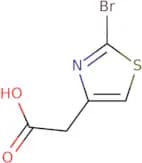
CAS:<p>Versatile small molecule scaffold</p>Formula:C13H10ClNO5SPurity:Min. 95%Molecular weight:327.74 g/mol2-(2-Bromothiazol-4-yl)acetic acid
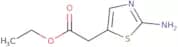
CAS:<p>Versatile small molecule scaffold</p>Formula:C5H4BrNO2SPurity:Min. 95%Molecular weight:222.1 g/molethyl 2-(2-amino-1,3-thiazol-5-yl)acetate
CAS:<p>Versatile small molecule scaffold</p>Formula:C7H10N2O2SPurity:Min. 95%Molecular weight:186.2 g/mol2,3,4,5-Tetrahydro-1-benzoxepine-3,5-dione
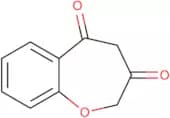
CAS:<p>2,3,4,5-Tetrahydro-1-benzoxepine-3,5-dione is an intermediate in the synthesis of phenelzine. It is a benzyl derivative that can be synthesized from 2,3,4,5-tetrahydrobenzo[b]thiophene and isopropylmagnesium chloride. This compound has been shown to react with methoxy groups as well as sulfur and alkenyl groups. The reaction with nitro groups leads to the formation of an unstable nitroso compound. The compounds derived from this intermediate have been shown to have significant antibacterial activity against intestinal bacteria such as enterobacteriaceae and coliforms.</p>Formula:C10H8O3Purity:Min. 95%Molecular weight:176.17 g/mol3,6-Dimethyl-2-nitrobenzene-1-sulfonyl chloride
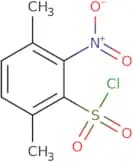
CAS:<p>Versatile small molecule scaffold</p>Formula:C8H8ClNO4SPurity:Min. 95%Molecular weight:249.67 g/mol5-Amino-1-methyl-1H-pyrazole-4-carbaldehyde
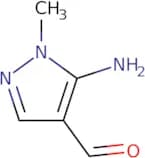
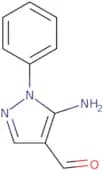
CAS:<p>5-Amino-1-methyl-1H-pyrazole-4-carbaldehyde (5AMPC) is a catalyst that activates alkyl groups. It is generated by the reaction of formaldehyde with cyanide. The cyanide group is then replaced by aminomethyl and cyano groups, which can be used in the synthesis of other organic compounds. 5AMPC has been extensively studied for its application as a catalyst in the production of nitriles from carbonyl compounds.</p>Formula:C5H7N3OPurity:Min. 95%Molecular weight:125.13 g/mol5-Amino-1-phenyl-1H-pyrazole-4-carbaldehyde
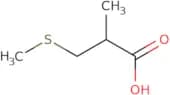
CAS:<p>Versatile small molecule scaffold</p>Formula:C10H9N3OPurity:Min. 95%Molecular weight:187.2 g/mol2-Methyl-3-(methylsulfanyl)propanoic acid
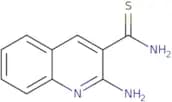
CAS:<p>Versatile small molecule scaffold</p>Formula:C5H10O2SPurity:Min. 95%Molecular weight:134.2 g/mol2-Aminoquinoline-3-carbothioamide
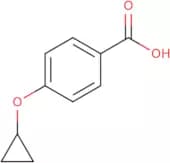
CAS:<p>Versatile small molecule scaffold</p>Formula:C10H9N3SPurity:Min. 95%Molecular weight:203.27 g/mol4-Cyclopropoxybenzoic acid
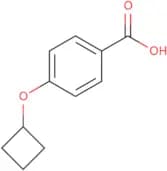
CAS:<p>Versatile small molecule scaffold</p>Formula:C10H10O3Purity:Min. 95%Molecular weight:178.18 g/mol4-Cyclobutoxybenzoic acid
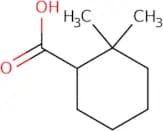
CAS:<p>Versatile small molecule scaffold</p>Formula:C11H12O3Purity:Min. 95%Molecular weight:192.21 g/mol2,2-Dimethylcyclohexane-1-carboxylic acid
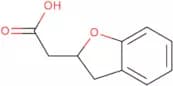
CAS:<p>Versatile small molecule scaffold</p>Formula:C9H16O2Purity:Min. 95%Molecular weight:156.22 g/mol2-(2,3-Dihydro-1-benzofuran-2-yl)acetic acid
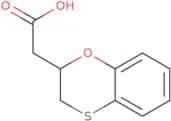
CAS:<p>Versatile small molecule scaffold</p>Formula:C10H10O3Purity:Min. 95%Molecular weight:178.18 g/mol2-(2,3-Dihydro-1,4-benzoxathiin-2-yl)acetic acid
CAS:<p>Versatile small molecule scaffold</p>Formula:C10H10O3SPurity:Min. 95%Molecular weight:210.25 g/molN-{[4-(Aminomethyl)phenyl]methyl}acetamide
CAS:<p>Versatile small molecule scaffold</p>Formula:C10H14N2OPurity:Min. 95%Molecular weight:178.23 g/molUndec-10-en-1-amine
CAS:<p>Undec-10-en-1-amine is a chemical compound with the molecular formula C11H23N. It has a reactive chemical structure that can undergo reactions with other molecules. Undec-10-en-1-amine is used as a model system in carbohydrate chemistry and biological studies. It is also used in silicon polymerizations, glycopolymer synthesis, and primary amino acid synthesis. Undec-10-en-1-amine has been shown to be cytotoxic, which may be due to its ability to deaminate cytidine residues on DNA. This reaction results in the formation of uracil, which blocks RNA synthesis and leads to cell death.</p>Formula:C11H23NPurity:Min. 95%Molecular weight:169.31 g/mol5,5-dimethylazepan-2-one
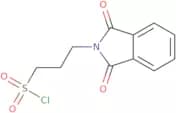
CAS:<p>Versatile small molecule scaffold</p>Formula:C8H15NOPurity:Min. 95%Molecular weight:141.21 g/mol3-(1,3-dioxo-1,3-dihydro-2H-isoindol-2-yl)propane-1-sulfonyl chloride
CAS:<p>Versatile small molecule scaffold</p>Formula:C11H10ClNO4SPurity:Min. 95%Molecular weight:287.71 g/mol3-Methanesulfonyl-5-methoxyaniline
CAS:<p>Versatile small molecule scaffold</p>Formula:C8H11NO3SPurity:Min. 95%Molecular weight:201.25 g/molBicyclo[4.1.0]heptane-1-carbaldehyde
CAS:<p>Versatile small molecule scaffold</p>Formula:C8H12OPurity:Min. 95%Molecular weight:124.18 g/mol{Bicyclo[4.1.0]heptan-1-yl}methanol
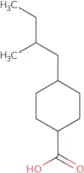
CAS:<p>Versatile small molecule scaffold</p>Formula:C8H14OPurity:Min. 95%Molecular weight:126.2 g/mol4-(2-Methylbutyl)cyclohexane-1-carboxylic acid
CAS:<p>Versatile small molecule scaffold</p>Formula:C12H22O2Purity:Min. 95%Molecular weight:198.3 g/mol4-(Piperidin-4-yl)phenol
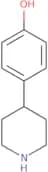
CAS:<p>4-(Piperidin-4-yl)phenol is a potent antipsychotic drug that belongs to the group of piperidines. It has been shown to be active in animal models and as an antipsychotic agent in humans. 4-(Piperidin-4-yl)phenol binds to alpha and beta adrenergic receptors, serotonin receptors, dopamine receptors, and histamine H1 receptors. It has been shown to have high potency and affinity for these receptors. This drug is also cloned from human brain tissue and has acted as a subtype-selective antagonist at cloned human alpha 1A-adrenergic receptor.</p>Formula:C11H15NOPurity:Min. 95%Molecular weight:177.25 g/molEthyl 2-methyl-4-oxocyclohexane-1-carboxylate
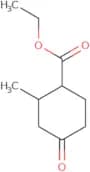
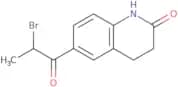
CAS:<p>Versatile small molecule scaffold</p>Formula:C10H16O3Purity:Min. 95%Molecular weight:184.23 g/mol6-(2-Bromopropanoyl)-1,2,3,4-tetrahydroquinolin-2-one
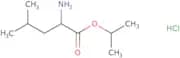
CAS:<p>Versatile small molecule scaffold</p>Formula:C12H12BrNO2Purity:Min. 95%Molecular weight:282.13 g/molPropan-2-yl (2S)-2-amino-4-methylpentanoate hydrochloride
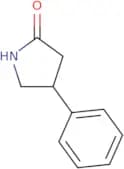
CAS:<p>Versatile small molecule scaffold</p>Formula:C9H20ClNO2Purity:Min. 95%Molecular weight:209.71 g/mol(4S)-4-Phenylpyrrolidin-2-one
CAS:<p>Versatile small molecule scaffold</p>Formula:C10H11NOPurity:Min. 95%Molecular weight:161.2 g/mol(2S)-2-{[(tert-Butoxy)carbonyl]amino}-3-(3,4-dihydroxyphenyl)-2-methylpropanoic acid
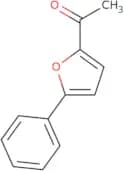
CAS:<p>Versatile small molecule scaffold</p>Formula:C15H21NO6Purity:Min. 95%Molecular weight:311.3 g/mol1-(5-Phenylfuran-2-yl)ethan-1-one
CAS:<p>1-(5-Phenylfuran-2-yl)ethan-1-one is a chemical compound that has been shown to be an effective method for synthesizing indole derivatives from 5-phenyl furan-2-carboxylic acid. The indole ring of the 1-(5-Phenylfuran-2-yl)ethan-1-one is derived from the furan ring, which is formed by a rearrangement of the carboxylic acid. This transformation can also be accomplished with other electrophilic reactants, such as thionyl chloride or phosphorus pentachloride. The synthesis of 1-(5-Phenylfuran-2-yl)ethan-1 can be achieved by the rearrangement of 2,3,4,5 tetrahydrofuran.<br>Synlett 2004, 1670</p>Formula:C12H10O2Purity:Min. 95%Molecular weight:186.21 g/mol




![[6-(2,2-Dimethylpropanamido)pyridin-3-yl]boronic acid](/_next/image/?url=https%3A%2Fstatic.cymitquimica.com%2Fproducts%2F3D%2Fthumb-webp%2FMBC75289.webp&w=3840&q=75)
![3-[(Naphthalen-1-yl)methyl]pyrrolidin-2-one](/_next/image/?url=https%3A%2Fstatic.cymitquimica.com%2Fproducts%2F3D%2Fthumb-webp%2FMBD71944.webp&w=3840&q=75)

![2-Bromo-1-[4-(bromomethyl)phenyl]ethan-1-one](/_next/image/?url=https%3A%2Fstatic.cymitquimica.com%2Fproducts%2F3D%2Fthumb-webp%2FMCA54651.webp&w=3840&q=75)
![5-[(2-Chlorophenyl)sulfamoyl]-2-hydroxybenzoic acid](/_next/image/?url=https%3A%2Fstatic.cymitquimica.com%2Fproducts%2F3D%2Fthumb-webp%2FMCA54709.webp&w=3840&q=75)
![N-{[4-(Aminomethyl)phenyl]methyl}acetamide](/_next/image/?url=https%3A%2Fstatic.cymitquimica.com%2Fproducts%2F3D%2Fthumb-webp%2FMCA59205.webp&w=3840&q=75)



![Bicyclo[4.1.0]heptane-1-carbaldehyde](/_next/image/?url=https%3A%2Fstatic.cymitquimica.com%2Fproducts%2F3D%2Fthumb-webp%2FMCA60934.webp&w=3840&q=75)
![{Bicyclo[4.1.0]heptan-1-yl}methanol](/_next/image/?url=https%3A%2Fstatic.cymitquimica.com%2Fproducts%2F3D%2Fthumb-webp%2FMCA60935.webp&w=3840&q=75)
![(2S)-2-{[(tert-Butoxy)carbonyl]amino}-3-(3,4-dihydroxyphenyl)-2-methylpropanoic acid](/_next/image/?url=https%3A%2Fstatic.cymitquimica.com%2Fproducts%2F3D%2Fthumb-webp%2FMCA63137.webp&w=3840&q=75)