Building Blocks
Subcategories of "Building Blocks"
- Boronic Acids & Boronic Acid Derivatives(5,780 products)
- Chiral Building Blocks(1,239 products)
- Hydrocarbon Building Blocks(6,100 products)
- Organic Building Blocks(61,005 products)
Found 205234 products of "Building Blocks"
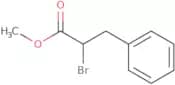
Methyl 2-bromo-3-phenylpropanoate
CAS:Methyl 2-bromo-3-phenylpropanoate is a chemical compound with the molecular formula CHBrCH(CO)C6H5. It has three asymmetric carbon atoms and two stereoisomers. The methyl group, the bromine atom, and the phenyl group are all in one plane. The molecule can rotate around its axis, which is known as optical activity. This configuration of the molecule allows it to be used as a surrogate for other compounds in biological research, such as pharmaceuticals or pesticides. Methyl 2-bromo-3-phenylpropanoate can be synthesized by biotechnology methods from natural products like lettuce and clostridium.Formula:C10H11BrO2Purity:Min. 95%Molecular weight:243.1 g/molMethyl 1-bromocyclohexanecarboxylate
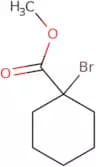
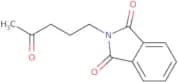
CAS:Methyl 1-bromocyclohexanecarboxylate is an enolate and amide that is used as a dehydrogenase inhibitor. The reaction mechanism of methyl 1-bromocyclohexanecarboxylate has been elucidated. It exists in the form of a crystal with a molecular formula of CHBrO. This compound inhibits the activity of dehydrogenases, which are enzymes that catalyze the oxidation of alcohols to aldehydes or ketones, by reacting with the chloride ion and forming a chalcone. The chalcone then reacts with nucleophilic molecules such as water or hydroxide ions, which leads to the production of an inhibitory product. Methyl 1-bromocyclohexanecarboxylate also has antinociceptive effects, which may be due to its inhibition of prostaglandin synthesis.Formula:C8H13BrO2Purity:Min. 95%Molecular weight:221.09 g/mol2-(4-Oxopentyl)-1H-isoindole-1,3(2H)-dione
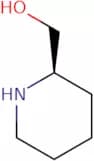
CAS:Versatile small molecule scaffoldFormula:C13H13NO3Purity:Min. 95%Molecular weight:231.25 g/mol(2R)-piperidin-2-ylmethanol
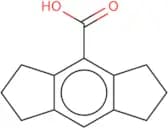
CAS:(2R)-Piperidin-2-ylmethanol is a chiral, enantioselective olefin with an aziridine ring. The synthesis of this compound is by a Wittig reaction, which is a type of olefination. This reaction involves the use of an organometallic reagent and a phosphonium salt to form a new carbon-carbon bond between two unactivated alkenes. INTERNATIONAL CLASSIFICATIONFormula:C6H13NOPurity:Min. 95%Molecular weight:115.17 g/mol1,2,3,5,6,7-Hexahydro-S-indacene-4-carboxylic acid
CAS:Versatile small molecule scaffold
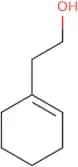
Formula:C13H14O2Purity:Min. 95%Molecular weight:202.2 g/mol2-(Cyclohex-1-en-1-yl)ethan-1-ol
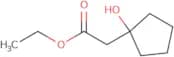
CAS:Versatile small molecule scaffoldFormula:C8H14OPurity:Min. 95%Molecular weight:126.2 g/molEthyl 2-(1-hydroxycyclopentyl)acetate
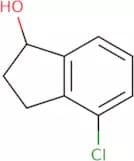
CAS:Versatile small molecule scaffoldFormula:C9H16O3Purity:Min. 95%Molecular weight:172.22 g/mol4-Chloro-2,3-dihydro-1H-inden-1-ol
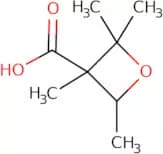
CAS:Versatile small molecule scaffoldFormula:C9H9ClOPurity:Min. 95%Molecular weight:168.62 g/molTetramethyloxetane-3-carboxylic acid
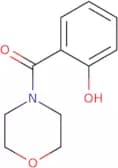
CAS:Versatile small molecule scaffoldFormula:C8H14O3Purity:Min. 95%Molecular weight:158.19 g/mol2-(Morpholine-4-carbonyl)phenol
CAS:2-(Morpholine-4-carbonyl)phenol is a rotenoid compound that has been shown to be a potent dehydrating agent. It readily reacts with amide and alkoxy radicals, cyclic alkali metal ions, and peptides. 2-(Morpholine-4-carbonyl)phenol can also react with chloride ions to form an unstable chloro radical. This reaction releases hydrogen chloride in the process and may result in the formation of carcinogenic nitro compounds. 2-(Morpholine-4-carbonyl)phenol has antiinflammatory activity and is used as an antimicrobial agent.Formula:C11H13NO3Purity:Min. 95%Molecular weight:207.23 g/mol4-Iodobutan-1-ol
CAS:4-Iodobutan-1-ol is an acylation agent that is used in the synthesis of amines and alcohols. It can be synthesized by reacting a Grignard reagent with iodine or an alkyl halide. 4-Iodobutan-1-ol is also used for the production of other organometallic compounds, such as azacycles, which are important intermediates in organic synthesis. The use of 4-iodobutan-1-ol is limited because it reacts with nucleophiles such as amines, hydroxides, and alkoxides to form adducts that are not useful. However, this compound has been shown to be effective in the synthesis of fatty esters and low density lipoproteins (LDL).Formula:C4H9IOPurity:Min. 95%Molecular weight:200.02 g/mol7-Chloro-[1,2,3,4]tetrazolo[1,5-c]pyrimidin-8-amine
CAS:Versatile small molecule scaffoldFormula:C4H3ClN6Purity:Min. 95%Molecular weight:170.56 g/molrac-[(1R,2R,4R)-Bicyclo[2.2.1]hept-5-en-2-yl]methanamine
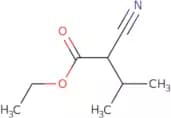
CAS:Versatile small molecule scaffoldFormula:C8H13NPurity:Min. 95%Molecular weight:123.2 g/molEthyl 2-cyano-3-methyl-butanoate
CAS:Ethyl 2-cyano-3-methyl-butanoate is a nitrile that has a pyridine ring and two carbon atoms. It is an ester of ethyl cyanoacetic acid, which has a methyl group attached to the carbon atom at the 3 position. The other carbon atom is attached to two hydrogen atoms and one oxygen atom. This substance also contains a cyano group with one hydrogen atom. Ethyl 2-cyano-3-methyl-butanoate can be used as an alkyl ester, which is made up of an alkyl group and an alkyl ester group, in the production of polymers. The monoxide can be released from this substance during the process of polymerization, which will result in unsaturated polymers.
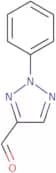
Formula:C8H13NO2Purity:Min. 95%Molecular weight:155.19 g/mol2-Phenyl-2H-1,2,3-triazole-4-carbaldehyde
CAS:2-Phenyl-2H-1,2,3-triazole-4-carbaldehyde is a white solid with an aromatic odor. It can be synthesized by the reaction of salicylaldehyde and d-xylose in the presence of catalytic amounts of iron(III) chloride. The compound is used as a ligand for copper(II) ions in asymmetric synthesis. 2-Phenyl-2H-1,2,3-triazole-4-carbaldehyde has been shown to react with diazo compounds to produce highly reactive nitrenes that are useful in organic synthesis. 2PMT has also been observed to be able to form covalent bonds with certain sugars such as darabinose and arabinose.
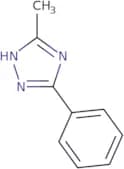
Formula:C9H7N3OPurity:Min. 95%Molecular weight:173.17 g/mol3-Methyl-5-phenyl-1H-1,2,4-triazole
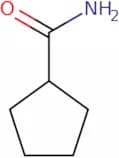
CAS:Versatile small molecule scaffoldFormula:C9H9N3Purity:Min. 95%Molecular weight:159.19 g/molCyclopentanecarboxamide
CAS:Cyclopentanecarboxamide is a protonated amide that has the potential to be used as an anti-inflammatory agent. It is synthesized from quinoline derivatives and fatty acids by means of a two-step process. Cyclopentanecarboxamide has been shown to inhibit chemokine production in vitro, suggesting it may have therapeutic value for autoimmune diseases and cancer. The synthesis of cyclopentanecarboxamide can be achieved through a number of methods including tissue culture and hydrogen bond activation.
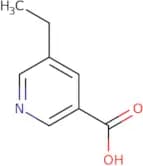
Formula:C6H11NOPurity:Min. 95%Molecular weight:113.16 g/mol5-Ethylpyridine-3-carboxylic acid
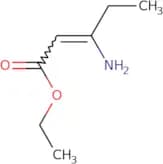
CAS:5-Ethylpyridine-3-carboxylic acid is a herbicide that inhibits the enzyme 5-enolpyruvylshikimate-3-phosphate synthase, which controls the synthesis of the aromatic amino acids. It is used for weed control on unifoliate plants such as wheat, rice, and oats. This herbicide has been shown to be effective against resistant weeds that have developed in response to other herbicides. The mechanism of action of 5-ethylpyridine-3-carboxylic acid is similar to that of thifensulfuron and it also binds to DNA. 5-Ethylpyridine-3-carboxylic acid can be metabolized by plants into toxic metabolites and has been shown to inhibit photosynthetic electron transport in leaves. The molecular structure of this compound can be classified as a conjugate with two benzene rings linked by an ethylene group. The names of thisFormula:C8H9NO2Purity:Min. 95%Molecular weight:151.16 g/molEthyl 3-aminopent-2-enoate
CAS:Ethyl 3-aminopent-2-enoate is an enantioselective and efficient ligand that is used in asymmetric synthesis. It reacts with a variety of acceptors such as 2-bromo-3-methylpyridine to form the corresponding β-unsaturated ester. The reaction with cuprate leads to the formation of an α,β-unsaturated carbonyl compound. Ethyl 3-aminopent-2-enoate can be used to synthesize crotonates and esters by hydrolysis and alkylation respectively. The crotonate formed can be converted into its corresponding acid or ester using an enolate formed from ethyl malonate.
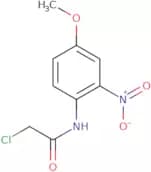
Formula:C7H13NO2Purity:Min. 95%Molecular weight:143.18 g/mol2-Chloro-N-(4-methoxy-2-nitro-phenyl)-acetamide
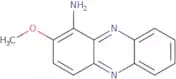
CAS:Versatile small molecule scaffoldFormula:C9H9ClN2O4Purity:Min. 95%Molecular weight:244.6 g/mol2-Methoxyphenazin-1-amine
CAS:Versatile small molecule scaffold
Formula:C13H11N3OPurity:Min. 95%Molecular weight:225.25 g/mol[(4-Chlorophenyl)sulfanyl]formonitrile
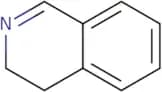
CAS:[(4-Chlorophenyl)sulfanyl]formonitrile is a versatile research chemical that has various applications in the field of medicinal chemistry. It is commonly used as a starting material for the synthesis of medicaments and agrochemicals. This compound is known to be highly reactive and requires careful handling due to its toxic gas nature.Formula:C7H4ClNSPurity:Min. 95%Molecular weight:169.63 g/mol3,4-Dihydroisoquinoline
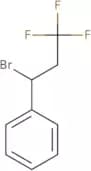
CAS:3,4-Dihydroisoquinoline is a heterocyclic compound that is used as an anti-inflammatory agent and has been shown to inhibit the production of prostaglandins. 3,4-Dihydroisoquinoline decreases the immune response in animals with autoimmune diseases. This drug also inhibits tumor cell growth in vitro and in vivo. 3,4-Dihydroisoquinoline has been shown to be effective against cervical cancer cells, adrenocortical carcinoma cells, and cancer cells from lymphocytic leukemia. In addition, 3,4-dihydroisoquinoline causes apoptosis by inhibiting protein synthesis through its inhibition of DNA gyrase and topoisomerase IV.Formula:C9H9NPurity:Min. 95%Molecular weight:131.17 g/mol(1-Bromo-3,3,3-trifluoropropyl)benzene
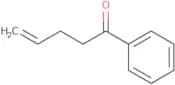
CAS:Versatile small molecule scaffoldFormula:C9H8BrF3Purity:Min. 95%Molecular weight:253.06 g/mol1-Phenylpent-4-en-1-one
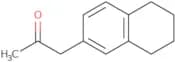
CAS:1-Phenylpent-4-en-1-one is a diazo compound that is used in organic synthesis. It can be prepared by the reaction of an organic solvent with a Grignard reagent. This product has been shown to yield carbon chains and terpenes when treated with a radical chain transfer agent. It is also used as a precursor to synthesize pyrrole and terpene compounds, which are anion and tetrahydrofuran derivatives, respectively.Formula:C11H12OPurity:Min. 95%Molecular weight:160.21 g/mol1-(5,6,7,8-Tetrahydronaphthalen-2-yl)propan-2-one
CAS:Versatile small molecule scaffoldFormula:C13H16OPurity:Min. 95%Molecular weight:188.26 g/mol4H-Imidazo[4,5-c]pyridin-4-one
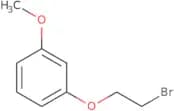
CAS:4H-Imidazo[4,5-c]pyridin-4-one is a water soluble compound that is soluble in water. It is a sulphonic acid that can be found in acid salts and deazaguanine. 4H-Imidazo[4,5-c]pyridin-4-one is used as a pharmaceutical dosage.Formula:C6H3N3OPurity:Min. 95%Molecular weight:133.11 g/mol1-(2-Bromoethoxy)-3-methoxybenzene
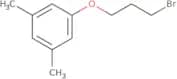
CAS:Versatile small molecule scaffoldFormula:C9H11BrO2Purity:Min. 95%Molecular weight:231.1 g/mol1-(3-Bromopropoxy)-3,5-dimethylbenzene
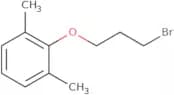
CAS:Versatile small molecule scaffoldFormula:C11H15BrOPurity:Min. 95%Molecular weight:243.14 g/mol2-(3-Bromopropoxy)-1,3-dimethylbenzene
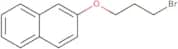
CAS:Versatile small molecule scaffoldFormula:C11H15BrOPurity:Min. 95%Molecular weight:243.14 g/mol2-(3-Bromopropoxy)naphthalene
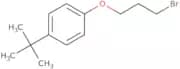
CAS:Versatile small molecule scaffoldFormula:C13H13BrOPurity:Min. 95%Molecular weight:265.14 g/mol1-(3-Bromopropoxy)-4-tert-butylbenzene
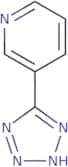
CAS:Versatile small molecule scaffoldFormula:C13H19BrOPurity:Min. 95%Molecular weight:271.19 g/mol5-(3-Pyridyl)-1H-tetrazole
CAS:5-(3-Pyridyl)-1H-tetrazole is a heterocyclic compound that belongs to the class of isomeric compounds. The nitrogen atoms are located in a plane and are separated by three carbon atoms, forming a trigonal planar structure. 5-(3-Pyridyl)-1H-tetrazole has been shown to activate plasma cholesterol levels through the generation of fatty acid hydroperoxides and oxidation products, which can lead to cell apoptosis. It also has the ability to catalyze reactions and form supramolecular complexes with other molecules. One such complex is formed with annexin, which may be due to hydrogen bonding interactions between the two molecules.Formula:C6H5N5Purity:Min. 95%Molecular weight:147.14 g/molN-Methyl-3,4,5,6-tetrahydropyridin-2-amine hydrochloride
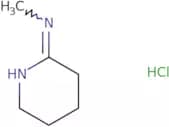
CAS:Versatile small molecule scaffold
Formula:C6H13ClN2Purity:Min. 95%Molecular weight:148.63 g/mol[4-(Prop-2-en-1-yloxy)phenyl]methanol
CAS:4-(Prop-2-en-1-yloxy)phenol is a divalent model compound that has been used in the study of fossil fuel and polymerized oils. It is also used for the synthesis of polymers, as well as monomers and compounds with phenyl groups. 4-(Prop-2-en-1-yloxy)phenol has two functional groups: a phenyl group and a propoxy group. This compound has been shown to have excellent thermal stability, which makes it an ideal candidate for use in high temperatures.Formula:C10H12O2Purity:Min. 95%Molecular weight:164.2 g/mol2-Hydroxy-2-[3-(trifluoromethyl)phenyl]propanoic acid
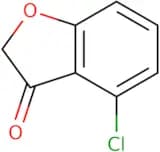
CAS:Versatile small molecule scaffoldFormula:C10H9F3O3Purity:Min. 95%Molecular weight:234.17 g/mol4-Chloro-2,3-dihydro-1-benzofuran-3-one
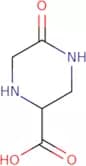
CAS:Versatile small molecule scaffoldFormula:C8H5ClO2Purity:Min. 95%Molecular weight:168.57 g/mol5-Oxopiperazine-2-carboxylic acid
CAS:Versatile small molecule scaffoldFormula:C5H8N2O3Purity:Min. 95%Molecular weight:144.13 g/mol1-{Bicyclo[4.2.0]octa-1,3,5-trien-7-yl}ethan-1-amine
CAS:Versatile small molecule scaffold
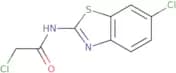
Formula:C10H13NPurity:Min. 95%Molecular weight:147.22 g/mol2-Chloro-N-(6-chloro-benzothiazol-2-yl)-acetamide
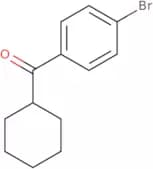
CAS:Versatile small molecule scaffoldFormula:C9H6Cl2N2OSPurity:Min. 95%Molecular weight:261.13 g/mol4-Bromophenyl cyclohexyl ketone
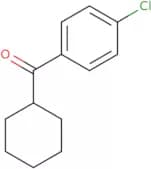
CAS:Versatile small molecule scaffoldFormula:C13H15BrOPurity:Min. 95%Molecular weight:267.16 g/mol4-Chlorophenyl cyclohexyl ketone
CAS:Versatile small molecule scaffoldFormula:C13H15ClOPurity:Min. 95%Molecular weight:222.71 g/mol1,8,8-Trimethylbicyclo[3.2.1]octane-2,4-dione
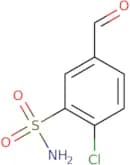
CAS:Versatile small molecule scaffoldFormula:C11H16O2Purity:Min. 95%Molecular weight:180.24 g/mol2-Chloro-5-formylbenzene-1-sulfonamide
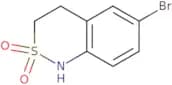
CAS:2-Chloro-5-formylbenzene-1-sulfonamide is a substance that belongs to the group of sulfonamides. It is a white powder that can be synthesized from 2,4,6-trinitrobenzenesulfonic acid and chlorobenzene. The substance has been shown to form an alkaline hydrolysis product when reacted with indapamide in a 1:1 ratio. This reaction was analyzed using LC/MS/MS and the product ions were quantified. The LC/MS/MS method used for this analysis was harmonization of the data collected on two different instruments, which is called synergi. The LC/MS/MS method consisted of three steps: (i) elution with acetonitrile and water, (ii) electrospray ionization, and (iii) quantification by selected reaction monitoring.Formula:C7H6ClNO3SPurity:Min. 95%Molecular weight:219.65 g/mol6-Bromo-3,4-dihydro-1H-2,1-benzothiazine 2,2-dioxide
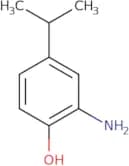
CAS:Versatile small molecule scaffoldFormula:C8H8BrNO2SPurity:Min. 95%Molecular weight:262.13 g/mol2-Amino-4-isopropylphenol
CAS:Versatile small molecule scaffold
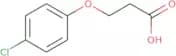
Formula:C9H13NOPurity:Min. 95%Molecular weight:151.21 g/mol3-(4-Chloro-phenoxy)-propionic acid
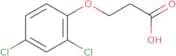
CAS:3-(4-Chloro-phenoxy)-propionic acid is a synthetic tyrosinase inhibitor. It has been shown to be effective in the treatment of hyperpigmentation disorders in humans, including melasma and solar lentigo. 3-(4-Chloro-phenoxy)-propionic acid inhibits tyrosinase activity by binding to its active site. This prevents the production of melanin and leads to lightening of skin pigmentation. The extraction process is efficient and can be scaled up for clinical use. The analyte can be easily quantified using a potent assay with high recovery rates and low detection limits.Formula:C9H9ClO3Purity:Min. 95%Molecular weight:200.62 g/mol3-(2,4-Dichlorophenoxy)propanoic acid
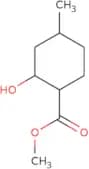
CAS:Versatile small molecule scaffoldFormula:C9H8Cl2O3Purity:Min. 95%Molecular weight:235.06 g/molMethyl 2-hydroxy-4-methylcyclohexane-1-carboxylate
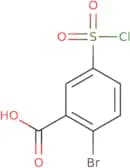
CAS:Versatile small molecule scaffoldFormula:C9H16O3Purity:Min. 95%Molecular weight:172.2 g/mol2-Bromo-5-(chlorosulfonyl)benzoic acid
CAS:Versatile small molecule scaffoldFormula:C7H4BrClO4SPurity:Min. 95%Molecular weight:299.53 g/mol


![7-Chloro-[1,2,3,4]tetrazolo[1,5-c]pyrimidin-8-amine](/_next/image/?url=https%3A%2Fstatic.cymitquimica.com%2Fproducts%2F3D%2Fthumb-webp%2FDAA21038.webp&w=3840&q=75)
![rac-[(1R,2R,4R)-Bicyclo[2.2.1]hept-5-en-2-yl]methanamine](/_next/image/?url=https%3A%2Fstatic.cymitquimica.com%2Fproducts%2F3D%2Fthumb-webp%2FDAA21186.webp&w=3840&q=75)
![[(4-Chlorophenyl)sulfanyl]formonitrile](/_next/image/?url=https%3A%2Fstatic.cymitquimica.com%2Fproducts%2F3D%2Fthumb-webp%2FDAA22637.webp&w=3840&q=75)
![4H-Imidazo[4,5-c]pyridin-4-one](/_next/image/?url=https%3A%2Fstatic.cymitquimica.com%2Fproducts%2F3D%2Fthumb-webp%2FDAA24324.webp&w=3840&q=75)
![[4-(Prop-2-en-1-yloxy)phenyl]methanol](/_next/image/?url=https%3A%2Fstatic.cymitquimica.com%2Fproducts%2F3D%2Fthumb-webp%2FDAA25645.webp&w=3840&q=75)
![2-Hydroxy-2-[3-(trifluoromethyl)phenyl]propanoic acid](/_next/image/?url=https%3A%2Fstatic.cymitquimica.com%2Fproducts%2F3D%2Fthumb-webp%2FDAA25938.webp&w=3840&q=75)
![1-{Bicyclo[4.2.0]octa-1,3,5-trien-7-yl}ethan-1-amine](/_next/image/?url=https%3A%2Fstatic.cymitquimica.com%2Fproducts%2F3D%2Fthumb-webp%2FDAA26433.webp&w=3840&q=75)
![1,8,8-Trimethylbicyclo[3.2.1]octane-2,4-dione](/_next/image/?url=https%3A%2Fstatic.cymitquimica.com%2Fproducts%2F3D%2Fthumb-webp%2FDAA27894.webp&w=3840&q=75)