Building Blocks
This section contains fundamental products for the synthesis of organic and biological compounds. Building blocks are the essential starting materials used to construct complex molecules through various chemical reactions. They play a critical role in drug discovery, material science, and chemical research. At CymitQuimica, we offer a diverse range of high-quality building blocks to support your innovative research and industrial projects, ensuring you have the essential components for successful synthesis.
Subcategories of "Building Blocks"
- Boronic Acids & Boronic Acid Derivatives(5,778 products)
- Chiral Building Blocks(1,242 products)
- Hydrocarbon Building Blocks(6,098 products)
- Organic Building Blocks(61,059 products)
Found 199580 products of "Building Blocks"
Sort by
Purity (%)
0
100
|
0
|
50
|
90
|
95
|
100
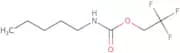
2,2,2-Trifluoroethyl N-pentylcarbamate
CAS:Versatile small molecule scaffoldFormula:C8H14F3NO2Purity:Min. 95%Molecular weight:213.2 g/mol4-Oxo-4-(2,2,2-trifluoroethoxy)butanoic acid
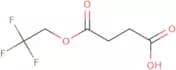
CAS:Versatile small molecule scaffoldFormula:C6H7F3O4Purity:Min. 95%Molecular weight:200.11 g/molN-(2,2,2-Trifluoroethyl)-3-(trifluoromethyl)aniline
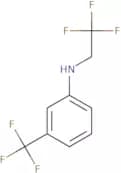
CAS:Versatile small molecule scaffoldFormula:C9H7F6NPurity:Min. 95%Molecular weight:243.15 g/mol4-Chloroquinoline-3-carbaldehyde
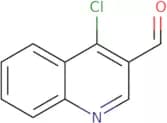
CAS:<p>4-Chloroquinoline-3-carbaldehyde is a monosubstituted aromatic compound. It has been studied in biological systems, where it has shown to have antioxidant and anti-inflammatory effects. 4-Chloroquinoline-3-carbaldehyde can be synthesized by the oxidation of 4-chloroquinoline with an oxidant such as hydrogen peroxide or potassium permanganate. The synthetic methods for this compound include the Wittig reaction and the naphthalene dihalogenation reaction, although these reactions are not typically used due to their hazardous nature. This chemical's fluorescence properties make it useful in fluorometric assays.</p>Formula:C10H6ClNOPurity:Min. 95%Molecular weight:191.61 g/molMethyl 1-benzylpyrrolidine-2-carboxylate
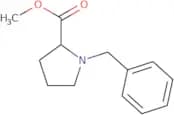
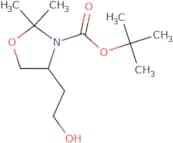
CAS:Versatile small molecule scaffoldFormula:C13H17NO2Purity:Min. 95%Molecular weight:219.28 g/moltert-Butyl (4R)-4-(2-hydroxyethyl)-2,2-dimethyl-1,3-oxazolidine-3-carboxylate
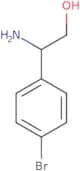
CAS:<p>Versatile small molecule scaffold</p>Formula:C12H23NO4Purity:Min. 95%Molecular weight:245.32 g/mol2-amino-2-(4-bromophenyl)ethan-1-ol
CAS:<p>Versatile small molecule scaffold</p>Formula:C8H10BrNOPurity:Min. 95%Molecular weight:216.1 g/mol5-(Naphthalen-1-yl)furan-2-carboxylic acid
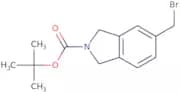
CAS:Versatile small molecule scaffoldFormula:C15H10O3Purity:Min. 95%Molecular weight:238.24 g/moltert-Butyl 5-(bromomethyl)-2,3-dihydro-1H-isoindole-2-carboxylate
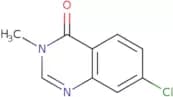
CAS:Versatile small molecule scaffoldFormula:C14H18BrNO2Purity:Min. 95%Molecular weight:312.2 g/mol7-Chloro-3-methyl-3,4-dihydroquinazolin-4-one
CAS:Versatile small molecule scaffoldFormula:C9H7ClN2OPurity:Min. 95%Molecular weight:194.62 g/molMethyl 3-(propan-2-yl)-1H-indole-5-carboxylate
CAS:Versatile small molecule scaffoldFormula:C13H15NO2Purity:Min. 95%Molecular weight:217.26 g/mol3-Isothiocyanatopentane
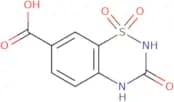
CAS:<p>Versatile small molecule scaffold</p>Formula:C6H11NSPurity:Min. 95%Molecular weight:129.23 g/mol3-Oxo-3,4-dihydro-2H-1,2,4-benzothiadiazine-7-carboxylic acid 1,1-dioxide
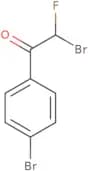
CAS:<p>Versatile small molecule scaffold</p>Formula:C8H6N2O5SPurity:Min. 95%Molecular weight:242.21 g/mol2-Bromo-1-(4-bromophenyl)-2-fluoroethan-1-one
CAS:Versatile small molecule scaffoldFormula:C8H5Br2FOPurity:Min. 95%Molecular weight:295.93 g/molrac-(1R,2R)-2-[4-(Trifluoromethyl)phenyl]cyclopropane-1-carboxylic acid
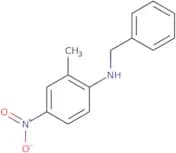
CAS:Versatile small molecule scaffoldFormula:C11H9F3O2Purity:Min. 95%Molecular weight:230.18 g/molN-Benzyl-2-methyl-4-nitroaniline
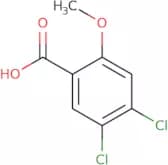
CAS:<p>N-Benzyl-2-methyl-4-nitroaniline is a molecule that belongs to the group of organic compounds. It has a phase transition temperature of -3 degrees Celsius and can be found in the crystal system of orthorhombic. The molecular weight of this compound is 194.16 g/mol, its diameter is 2.03 nm, and it has an activation energy of 3.56 eV. N-Benzyl-2-methyl-4-nitroaniline has a dipole moment and hydrogen bonding capabilities, which are due to the presence of polarizability and viscosity. It also has spontaneous emission properties and optical properties that depend on wavelength.</p>Formula:C14H14N2O2Purity:Min. 95%Molecular weight:242.27 g/mol4,5-Dichloro-2-methoxybenzoic acid
CAS:4,5-Dichloro-2-methoxybenzoic acid is a nonsubstituted benzoic acid. It is used as a chemical intermediate in the synthesis of dibenzofurans and catechols. 4,5-Dichloro-2-methoxybenzoic acid has been analyzed for its ability to inhibit the growth of bacteria, including Salmonella and Listeria. The strain of bacteria is unknown. 4,5-Dichloro-2-methoxybenzoic acid can be found in chlorinated and dichlorinated water sources, as well as in congeners such as 2,4,6,-trichlorophenol.Formula:C8H6Cl2O3Purity:Min. 95%Molecular weight:221.03 g/mol3-[(Morpholin-4-yl)methyl]oxan-4-one hydrochloride
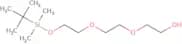
CAS:Versatile small molecule scaffoldFormula:C10H18ClNO3Purity:Min. 95%Molecular weight:235.71 g/mol2,2,3,3-Tetramethyl-4,7,10-trioxa-3-siladodecan-12-ol
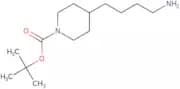
CAS:Versatile small molecule scaffoldFormula:C12H28O4SiPurity:Min. 95%Molecular weight:264.43 g/moltert-Butyl 4-(4-aminobutyl)piperidine-1-carboxylate
CAS:Versatile small molecule scaffoldFormula:C14H28N2O2Purity:Min. 95%Molecular weight:256.38 g/mol2-(Chloromethyl)-6,6-dimethyl-6,7-dihydrobenzo[D]oxazol-4(5H)-one
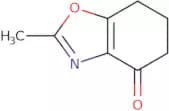
CAS:Versatile small molecule scaffoldFormula:C10H12ClNO2Purity:Min. 95%Molecular weight:213.66 g/mol2-Methyl-4,5,6,7-tetrahydro-1,3-benzoxazol-4-one
CAS:Versatile small molecule scaffoldFormula:C8H9NO2Purity:Min. 95%Molecular weight:151.16 g/mol2-Chloro-5,6-dihydro-4H-cyclopenta[d]thiazole
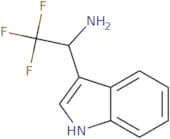
CAS:Versatile small molecule scaffoldFormula:C6H6ClNSPurity:Min. 95%Molecular weight:159.63 g/mol2,2,2-Trifluoro-1-(1H-indol-3-yl)ethan-1-amine
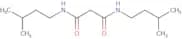
CAS:Versatile small molecule scaffoldFormula:C10H9F3N2Purity:Min. 95%Molecular weight:214.19 g/molN,N'-Bis(3-methylbutyl)propanediamide
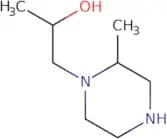
CAS:<p>Versatile small molecule scaffold</p>Formula:C13H26N2O2Purity:Min. 95%Molecular weight:242.36 g/mol1-(2-Methylpiperazin-1-yl)propan-2-ol
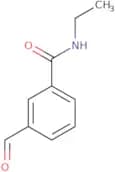
CAS:Versatile small molecule scaffoldFormula:C8H18N2OPurity:Min. 95%Molecular weight:158.24 g/molN-Ethyl-3-formylbenzamide
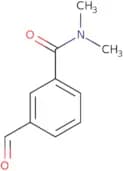
CAS:<p>Versatile small molecule scaffold</p>Formula:C10H11NO2Purity:Min. 95%Molecular weight:177.2 g/mol3-Formyl-N,N-dimethylbenzamide
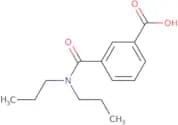
CAS:<p>Versatile small molecule scaffold</p>Formula:C10H11NO2Purity:Min. 95%Molecular weight:177.2 g/molN,N-Dipropyl-isophthalamic acid
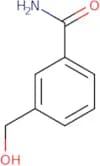
CAS:Versatile small molecule scaffoldFormula:C14H19NO3Purity:Min. 95%Molecular weight:249.3 g/mol3-(Hydroxymethyl)benzamide
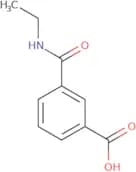
CAS:<p>Versatile small molecule scaffold</p>Formula:C8H9NO2Purity:Min. 95%Molecular weight:151.16 g/molN-Ethyl Benzamid-3-carboxylate
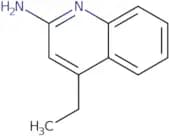
CAS:<p>Versatile small molecule scaffold</p>Formula:C10H11NO3Purity:Min. 95%Molecular weight:193.2 g/mol4-Ethylquinolin-2-amine
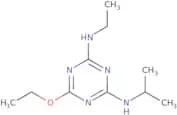
CAS:<p>Versatile small molecule scaffold</p>Formula:C11H12N2Purity:Min. 95%Molecular weight:172.23 g/mol6-Ethoxy-N2-ethyl-N4-(propan-2-yl)-1,3,5-triazine-2,4-diamine
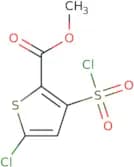
CAS:Versatile small molecule scaffoldFormula:C10H19N5OPurity:Min. 95%Molecular weight:225.29 g/molmethyl 5-chloro-3-(chlorosulfonyl)thiophene-2-carboxylate
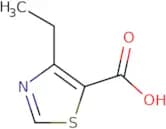
CAS:<p>Methyl 5-chloro-3-(chlorosulfonyl)thiophene-2-carboxylate is an industrial chemical that is used to produce other chemicals. Methyl 5-chloro-3-(chlorosulfonyl)thiophene-2-carboxylate is synthesized from the condensation of sarcosine and 2-aminopyridine with sodium methoxide in methanol. The reaction produces a methyl ester hydrochloride, which is subsequently converted into a methoxide by reacting with potassium hydroxide. Methyl 5-chloro-3-(chlorosulfonyl)thiophene-2-carboxylate has low toxicity and can be easily eliminated through the body's natural processes. It also has industrial applications, such as being used as a component in pesticides, herbicides, and insecticides.</p>Formula:C6H4Cl2O4S2Purity:Min. 95%Molecular weight:275.1 g/mol4-Ethylthiazole-5-carboxylic acid
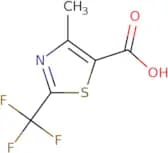
CAS:<p>Versatile small molecule scaffold</p>Formula:C6H7NO2SPurity:Min. 95%Molecular weight:157.19 g/mol4-Methyl-2-(trifluoromethyl)-1,3-thiazole-5-carboxylic acid
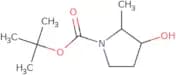
CAS:Versatile small molecule scaffoldFormula:C6H4F3NO2SPurity:Min. 95%Molecular weight:211.16 g/molrac-tert-Butyl (2R,3R)-3-hydroxy-2-methylpyrrolidine-1-carboxylate
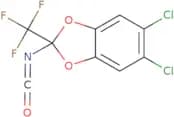
CAS:Versatile small molecule scaffoldFormula:C10H19NO3Purity:Min. 95%Molecular weight:201.26 g/mol5,6-Dichloro-2-isocyanato-2-(trifluoromethyl)-1,3-dioxaindane
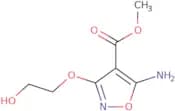
CAS:Versatile small molecule scaffoldFormula:C9H2Cl2F3NO3Purity:Min. 95%Molecular weight:300.01 g/molMethyl 5-amino-3-(2-hydroxyethoxy)-1,2-oxazole-4-carboxylate
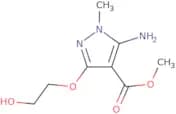
CAS:Versatile small molecule scaffoldFormula:C7H10N2O5Purity:Min. 95%Molecular weight:202.16 g/molMethyl 5-amino-3-(2-hydroxyethoxy)-1-methyl-1H-pyrazole-4-carboxylate
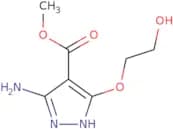
CAS:Versatile small molecule scaffoldFormula:C8H13N3O4Purity:Min. 95%Molecular weight:215.21 g/molMethyl 5-amino-3-(2-hydroxyethoxy)-1H-pyrazole-4-carboxylate
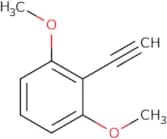
CAS:Versatile small molecule scaffoldFormula:C7H11N3O4Purity:Min. 95%Molecular weight:201.18 g/mol2,6-Dimethoxyphenylacetylene
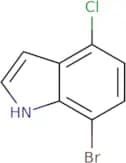
CAS:<p>Versatile small molecule scaffold</p>Formula:C10H10O2Purity:Min. 95%Molecular weight:162.18 g/mol7-Bromo-4-chloro-1H-indole
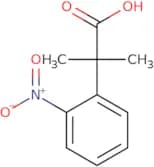
CAS:<p>Versatile small molecule scaffold</p>Formula:C8H5BrClNPurity:Min. 95%Molecular weight:230.49 g/mol2-Methyl-2-(2-nitrophenyl)propanoic acid
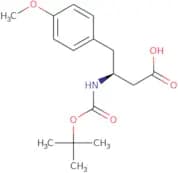
CAS:Biochanin A is a bioactive compound found in plants and has been shown to have anti-inflammatory and antioxidant properties. It is the major metabolite of genistein, an isoflavone found in soybean products. Biochanin A has been shown to inhibit tyrosine kinases, which are enzymes that promote cell growth by transmitting signals from receptors on the cell surface to the interior of the cell. It also inhibits angiogenesis, or the formation of new blood vessels. Biochanin A can be used as a prodrug for other drugs, such as butanoic acid, oxindole and prodrugs. This may be because it activates these molecules through bioreductive activation with ROS generated from H2O2.Formula:C10H11NO4Purity:Min. 95%Molecular weight:209.2 g/molBoc-(S)-3-amino-4-(4-methoxyphenyl)butyric acid
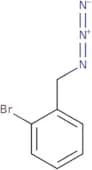
CAS:Versatile small molecule scaffoldFormula:C16H23NO5Purity:Min. 95%Molecular weight:309.36 g/mol1-(Azidomethyl)-2-bromobenzene
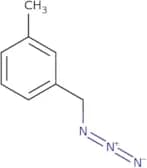
CAS:<p>1-(Azidomethyl)-2-bromobenzene is an orthogonal, efficient, and selective catalytic process for the coupling of aryl halides with acetylide. The mechanistic study of this reaction has demonstrated that this process proceeds by a catalytic cycle in which an acetylide reacts with a bromonium ion to form an intermediate cationic complex. This intermediate then reacts with an alkyl halide, generating the desired coupling product and regenerating the catalyst. The product of this reaction is obtained in high selectivity because this process does not require any protecting group manipulations, thus avoiding the formation of undesired side products.</p>Formula:C7H6BrN3Purity:Min. 95%Molecular weight:212.05 g/mol1-(Azidomethyl)-3-methylbenzene
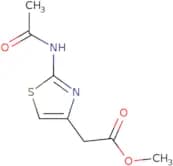
CAS:<p>1-(Azidomethyl)-3-methylbenzene is a cavity-forming molecule that can be used as a supramolecular host. It has been shown to interact with bioactive molecules and inorganic materials, such as metal cations. It has also been observed to have anti-inflammatory effects due to its ability to inhibit the production of prostaglandins. The crystal structure of 1-(azidomethyl)-3-methylbenzene was validated by approximations and simulations, which revealed that the molecule has two cavities. Crystals of 1-(azidomethyl)-3-methylbenzene are small enough for x-ray crystallography and desulfurization techniques.</p>Formula:C8H9N3Purity:Min. 95%Molecular weight:147.18 g/molMethyl 2-(2-acetamido-1,3-thiazol-4-yl)acetate
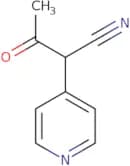
CAS:Versatile small molecule scaffoldFormula:C8H10N2O3SPurity:Min. 95%Molecular weight:214.24 g/mol3-Oxo-2-(pyridin-4-yl)butanenitrile
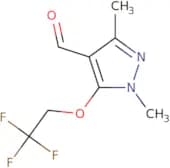
CAS:<p>Versatile small molecule scaffold</p>Formula:C9H8N2OPurity:Min. 95%Molecular weight:160.17 g/mol1,3-Dimethyl-5-(2,2,2-trifluoroethoxy)-1H-pyrazole-4-carbaldehyde
CAS:Versatile small molecule scaffoldFormula:C8H9F3N2O2Purity:Min. 95%Molecular weight:222.16 g/mol



![rac-(1R,2R)-2-[4-(Trifluoromethyl)phenyl]cyclopropane-1-carboxylic acid](/_next/image/?url=https%3A%2Fstatic.cymitquimica.com%2Fproducts%2F3D%2Fthumb-webp%2FBIA16418.webp&w=3840&q=75)
![3-[(Morpholin-4-yl)methyl]oxan-4-one hydrochloride](/_next/image/?url=https%3A%2Fstatic.cymitquimica.com%2Fproducts%2F3D%2Fthumb-webp%2FBIA14561.webp&w=3840&q=75)
![2-(Chloromethyl)-6,6-dimethyl-6,7-dihydrobenzo[D]oxazol-4(5H)-one](/_next/image/?url=https%3A%2Fstatic.cymitquimica.com%2Fproducts%2F3D%2Fthumb-webp%2FBIA02466.webp&w=3840&q=75)
![2-Chloro-5,6-dihydro-4H-cyclopenta[d]thiazole](/_next/image/?url=https%3A%2Fstatic.cymitquimica.com%2Fproducts%2F3D%2Fthumb-webp%2FBIA00649.webp&w=3840&q=75)