Building Blocks
This section contains fundamental products for the synthesis of organic and biological compounds. Building blocks are the essential starting materials used to construct complex molecules through various chemical reactions. They play a critical role in drug discovery, material science, and chemical research. At CymitQuimica, we offer a diverse range of high-quality building blocks to support your innovative research and industrial projects, ensuring you have the essential components for successful synthesis.
Subcategories of "Building Blocks"
- Boronic Acids & Boronic Acid Derivatives(5,756 products)
- Chiral Building Blocks(1,242 products)
- Hydrocarbon Building Blocks(6,095 products)
- Organic Building Blocks(61,038 products)
Found 196817 products of "Building Blocks"
Sort by
Purity (%)
0
100
|
0
|
50
|
90
|
95
|
100
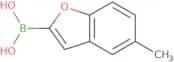
(5-methylbenzofuran-2-yl)boronic acid
CAS:<p>Versatile small molecule scaffold</p>Formula:C9H9BO3Purity:Min. 95%Molecular weight:175.98 g/molDibromoethane-d4
CAS:Controlled Product<p>Please enquire for more information about Dibromoethane-d4 including the price, delivery time and more detailed product information at the technical inquiry form on this page</p>Formula:C2H4Br2Purity:Min. 95%Molecular weight:191.89 g/mol6-Amino-4H,5H,6H,7H,8H-thieno[3,2-b]azepin-5-one hydrochloride
CAS:<p>Versatile small molecule scaffold</p>Formula:C8H11ClN2OSPurity:Min. 95%Molecular weight:218.7 g/mol7-bromo-3-iodoimidazo[1,2-a]pyridine
CAS:<p>Versatile small molecule scaffold</p>Formula:C7H4BrIN2Purity:Min. 95%Molecular weight:322.9 g/moltert-Butyl 9-oxo-4,8-diazaspiro[4.4]nonane-4-carboxylate
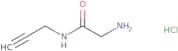
CAS:<p>Versatile small molecule scaffold</p>Formula:C12H20N2O3Purity:Min. 95%Molecular weight:240.3 g/mol2-Amino-N-(prop-2-yn-1-yl)acetamide hydrochloride
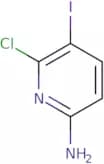
CAS:<p>Versatile small molecule scaffold</p>Formula:C5H9ClN2OPurity:Min. 95%Molecular weight:148.59 g/mol6-Chloro-5-iodopyridin-2-amine
CAS:<p>Versatile small molecule scaffold</p>Formula:C5H4ClIN2Purity:Min. 95%Molecular weight:254.46 g/mol4(4,4,5,5-Tetramethyl-1,3,2-dioxaborolan-2-yl)-2,3-dihydro-1H-inden-1-one
CAS:<p>Versatile small molecule scaffold</p>Formula:C15H19BO3Purity:Min. 95%Molecular weight:258.12 g/mol3-Bromo-6,7-dihydro-4H-pyrazolo[1,5-a]pyrazine-5-carboxylic acid tert-butyl ester
CAS:<p>Versatile small molecule scaffold</p>Formula:C11H16BrN3O2Purity:Min. 95%Molecular weight:302.17 g/moltert-Butyl 5-(4,4,5,5-tetramethyl-1,3,2-dioxaborolan-2-yl)-3,4-dihydropyridine-1(2h)-carboxylate
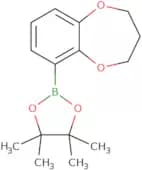
CAS:<p>Versatile small molecule scaffold</p>Formula:C16H28BNO4Purity:Min. 95%Molecular weight:309.21 g/mol2-(3,4-Dihydro-2H-1,5-benzodioxepin-6-yl)-4,4,5,5-tetramethyl-1,3,2-dioxaborolane
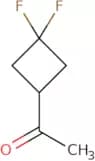
CAS:<p>Versatile small molecule scaffold</p>Formula:C15H21BO4Purity:Min. 95%Molecular weight:276.14 g/mol1-(3,3-Difluorocyclobutyl)ethan-1-one
CAS:<p>Versatile small molecule scaffold</p>Formula:C6H8F2OPurity:Min. 95%Molecular weight:134.13 g/molbenzyl 5-(tetramethyl-1,3,2-dioxaborolan-2-yl)-1,2,3,6-tetrahydropyridine-1-carboxylate
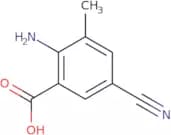
CAS:<p>Versatile small molecule scaffold</p>Formula:C19H26BNO4Purity:Min. 95%Molecular weight:343.2 g/mol2-amino-5-cyano-3-methylbenzoic acid
CAS:<p>2-Amino-5-cyano-3-methylbenzoic acid is a diester of methylamine. It is an acid ester that has been used in the synthesis of other compounds. 2-Amino-5-cyano-3-methylbenzoic acid is an intermediate in the synthesis of some pharmaceuticals, such as carbamazepine and methylphenidate. This compound has not been shown to have any biological activity.</p>Formula:C9H8N2O2Purity:Min. 95%Molecular weight:176.18 g/moltert-Butyl 4-amino-4-(aminomethyl)piperidine-1-carboxylate
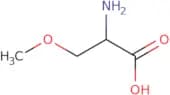
CAS:<p>Versatile small molecule scaffold</p>Formula:C11H23N3O2Purity:Min. 95%Molecular weight:229.32 g/mol2-Amino-3-methoxypropanoic acid hydrochloride
CAS:<p>2-Amino-3-methoxypropanoic acid hydrochloride is a mitochondrial enzyme inhibitor that is used as a research tool to study protein synthesis. It binds to the cytochrome b2 subunit of the mitochondrial respiratory chain, inhibiting the oxidation of pyruvate and affecting the production of ATP. 2-Amino-3-methoxypropanoic acid hydrochloride has been shown to induce apoptosis in human liver cells by triggering caspase 3, which is an important enzyme in the apoptotic pathway. 2-Amino-3-methoxypropanoic acid hydrochloride also has a number of chemical properties that make it useful for analytical chemistry. For example, 2-amino-3-methoxypropanoic acid hydrochloride can be used to measure carboxylic acids, acetylation reactions, hydrogen bonds and hydroxyl groups. It can also be used as a nucle</p>Formula:C4H10ClNO3Purity:Min. 95%Molecular weight:155.58 g/molBromo-PEG3-azide
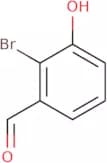
CAS:<p>Bromo-PEG3-azide is a PEG compound with two different functional groups (also known as heterobifunctional). Unlike homobifunctional PEG compounds (same functional group on both ends), this type of compounds are more versatile as have two different anchor points. Bromo-PEG3-azide is used as a linker and spacer to add a PEG moiety, via pegylation (a bioconjugation technique) to proteins, peptides, oligonucleotides, small molecules and nanoparticles.</p>Formula:C8H16BrN3O3Purity:Min. 95%Color and Shape:Clear LiquidMolecular weight:282.14 g/mol2-Bromo-3-hydroxy-benzaldehyde
CAS:<p>2-Bromo-3-hydroxy-benzaldehyde is a nitrate that has been shown to have anti-cancer properties. It inhibits the growth of cancer cells by binding to bromodomains in their DNA, thereby preventing transcription and replication. 2-Bromo-3-hydroxy-benzaldehyde also inhibits the production of nitric oxide, which may lead to an inhibitory effect on tumour angiogenesis. The stereoisomers of this compound are used as precursors for the synthesis of ammonium nitrate, which is used as a fertilizer and explosive. 2-Bromo-3-hydroxy-benzaldehyde is also used in organic synthesis as a precursor for acetylation or halide reactions with palladium complexes or halides.</p>Formula:C7H5BrO2Purity:Min. 95%Molecular weight:201.02 g/moltert-Butyl 3-bromobenzylcarbamate
CAS:<p>Versatile small molecule scaffold</p>Formula:C12H16BrNO2Purity:Min. 95%Molecular weight:286.16 g/mol4-Bromo-2-(hydroxymethyl)benzyl alcohol
CAS:<p>Versatile small molecule scaffold</p>Formula:C8H9BrO2Purity:Min. 95%Molecular weight:217.06 g/mol3-(3-Bromopropyl)thiophene
CAS:<p>Versatile small molecule scaffold</p>Formula:C7H9BrSPurity:Min. 95%Molecular weight:205.12 g/mol4-bromo-3-fluoro-1h-pyrazole
CAS:<p>Versatile small molecule scaffold</p>Formula:C3H2BrFN2Purity:Min. 95%Molecular weight:164.97 g/mol2-Methyl-1-(piperazin-1-yl)propan-1-one
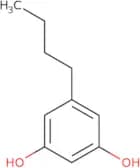
CAS:<p>Versatile small molecule scaffold</p>Formula:C8H16N2OPurity:Min. 95%Molecular weight:156.23 g/mol5-Butylbenzene-1,3-diol
CAS:<p>Versatile small molecule scaffold</p>Formula:C10H14O2Purity:Min. 95%Molecular weight:166.22 g/mol1,7-Diazaspiro[4.4]nonane-7-carboxylic acid tert-butyl ester
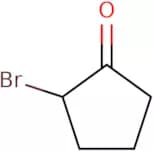
CAS:<p>Versatile small molecule scaffold</p>Formula:C12H22N2O2Purity:Min. 95%Molecular weight:226.32 g/mol2-Bromocyclopentanone
CAS:<p>2-Bromocyclopentanone is an organic molecule that is used in the synthesis of epoxides. It is also a potential precursor for the synthesis of polymers, dyes, and pharmaceuticals. 2-Bromocyclopentanone has been shown to undergo photolysis when irradiated with ultraviolet light or through chemical reaction with acetonitrile. This product has two conformers with different rotational barriers and corresponding spectral properties. The two conformers can be distinguished by their ultraviolet spectra. The synthetic methods for 2-bromocyclopentanone involve halogenation followed by hydrolysis to yield bromoacetic acid, which is then converted to the desired product by acylation or alkylation.</p>Formula:C5H7BrOPurity:Min. 95%Molecular weight:163.01 g/mol2-Imidazolidone-4-carboxylic acid
CAS:<p>2-Imidazolidone-4-carboxylic acid is a potent inhibitor of matrix metalloproteinases, which are enzymes that break down proteins in the extracellular matrix. 2-Imidazolidone-4-carboxylic acid inhibits the activity of both serine protease and matrix metalloproteinase, two enzymes involved in the inflammation process. 2-Imidazolidone-4-carboxylic acid has been shown to inhibit the transport of amino acids, leading to decreased protein synthesis and cell growth. It also inhibits cancer cells by disrupting their ability to grow new blood vessels and invade other tissues.</p>Formula:C4H6N2O3Purity:Min. 95%Molecular weight:130.1 g/mol3-Bromo-5-cyanobenzaldehyde
CAS:<p>Versatile small molecule scaffold</p>Formula:C8H4BrNOPurity:Min. 95%Molecular weight:210.04 g/mol8-Bromo-6-methoxyisoquinoline
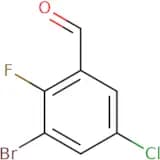
CAS:<p>Versatile small molecule scaffold</p>Formula:C10H8BrNOPurity:Min. 95%Molecular weight:238.08 g/mol3-bromo-5-chloro-2-fluorobenzaldehyde
CAS:Versatile small molecule scaffoldFormula:C7H3BrClFOPurity:Min. 95%Molecular weight:237.5 g/mol2,4,6-Trichloronicotinic acid
CAS:<p>Versatile small molecule scaffold</p>Formula:C6H2Cl3NO2Purity:Min. 95%Molecular weight:226.44 g/mol2-[5-(4,4,5,5-Tetramethyl-1,3,2-dioxaborolan-2-yl)pyrimidin-2-yl]propan-2-ol
CAS:<p>Versatile small molecule scaffold</p>Formula:C13H21BN2O3Purity:Min. 95%Molecular weight:264.13 g/mol(1R)-1-(3-Fluoro-4-methylphenyl)ethan-1-amine hydrochloride
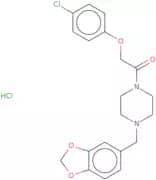
CAS:<p>Versatile small molecule scaffold</p>Formula:C9H13ClFNPurity:Min. 95%Molecular weight:189.66 g/molFipexide hydrochloride
CAS:<p>Fipexide is a dopamine analog that is used as an anti-inflammatory drug. Fipexide has been shown to be effective against inflammatory bowel disease, autoimmune diseases and chronic oral toxicity in animal models. The symptoms of fipexide are similar to the symptoms of Parkinson's disease, which include tremors, muscle rigidity and slowness of movement. Fipexide also has a reactive nitrogen atom in its molecular structure, which may contribute to its toxicity. It has been shown to have no effect on locomotor activity in animals with bowel disease.</p>Formula:C20H21ClN2O4·HClPurity:Min. 95%Molecular weight:425.31 g/mol1-[(4-Chlorophenyl)phenylmethyl]-4-[(3-methylphenyl)methyl]-piperazine hydrochloride
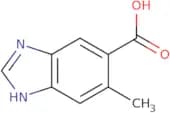
CAS:Please enquire for more information about 1-[(4-Chlorophenyl)phenylmethyl]-4-[(3-methylphenyl)methyl]-piperazine hydrochloride including the price, delivery time and more detailed product information at the technical inquiry form on this pageFormula:C25H27ClN2•HClPurity:Min. 95%Molecular weight:427.41 g/mol6-Methylbenzimidazole-5-carboxylic acid
CAS:<p>Versatile small molecule scaffold</p>Formula:C9H8N2O2Purity:Min. 95%Molecular weight:176.17 g/molPoly(dioxanone)
CAS:<p>Poly(dioxanone) is a biocompatible polymer that has been shown to promote bone growth in animal models. It is a cross-linking agent and can be used as an alternative to copper chromite, which is the most common cross-linking agent used in tissue engineering. Poly(dioxanone) has been shown to promote bone growth by stimulating the production of growth factors and increasing the activity of osteoblasts, cells that produce new bone. The material also promotes matrix deposition and remodeling, leading to increased bone density.</p>Formula:(C4H6O3)nPurity:Min. 95%Color and Shape:Powder4-Amino-2-mercaptopyrimidine-5-carboxylic acid methyl ester
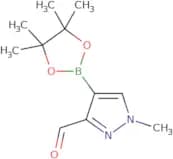
CAS:<p>Please enquire for more information about 4-Amino-2-mercaptopyrimidine-5-carboxylic acid methyl ester including the price, delivery time and more detailed product information at the technical inquiry form on this page</p>Formula:C6H7N3O2SPurity:Min. 95%Molecular weight:185.21 g/mol1-Methyl-4-(4,4,5,5-tetramethyl-1,3,2-dioxaborolan-2-yl)-1H-pyrazole-3-carboxaldehyde
CAS:<p>Versatile small molecule scaffold</p>Formula:C11H17BN2O3Purity:Min. 95%Molecular weight:236.08 g/molLithium orotate monohydrate
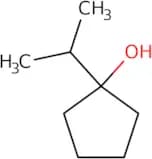
CAS:<p>Please enquire for more information about Lithium orotate monohydrate including the price, delivery time and more detailed product information at the technical inquiry form on this page</p>Formula:C5H3LiN2O4Purity:Min. 95%Molecular weight:162.10 g/mol1-(Propan-2-yl)cyclopentan-1-ol
CAS:<p>1-(Propan-2-yl)cyclopentan-1-ol is a chemical that belongs to the group of aliphatic alcohols. It has been synthesized in Australia.</p>Formula:C8H16OPurity:Min. 95%Molecular weight:128.21 g/mol6-Amino-1,2-dihydro-2-thioxo-5-pyrimidinecarboxylic acid sodium
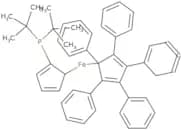
CAS:<p>Please enquire for more information about 6-Amino-1,2-dihydro-2-thioxo-5-pyrimidinecarboxylic acid sodium including the price, delivery time and more detailed product information at the technical inquiry form on this page</p>Formula:C5H5N3O2S•NaPurity:Min. 95%Molecular weight:194.17 g/mol1,2,3,4,5-Pentaphenyl-1'-(di-tert-butylphosphino)ferrocene
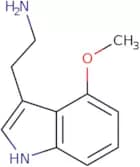
CAS:<p>1,2,3,4,5-Pentaphenyl-1'-(di-tert-butylphosphino)ferrocene (Pd(dba)2) is a reagent in the form of a dark brown liquid that can be used to synthesize benzene derivatives. It has been shown to be soluble in chloroform and toluene. This compound is stable at room temperature and it can be eluted with phenyl chloride. Pd(dba)2 is a ligand that binds to the metal palladium in order to facilitate the formation of complex compounds.</p>Formula:C48H47FePPurity:Min. 95%Color and Shape:Pink To Dark Red SolidMolecular weight:710.71 g/mol2-(4-Methoxy-1H-indol-3-yl)ethan-1-amine
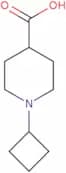
CAS:Controlled Product<p>2-(4-Methoxy-1H-indol-3-yl)ethan-1-amine is a synthetic compound that belongs to the class of organocatalysts. It is a serotonin receptor agonist, and has been shown to act as an antagonist at the 5HT2AR. This drug has been shown to have stereoselective effects in vitro, with high affinity for the S form of 5HT2AR. 2-(4-Methoxy-1H-indol-3-yl)ethan-1-amine also has some activity against dopamine receptors, but not as much as other compounds in its class. !--[if !supportLists]-->· !--[endif]-->This drug binds to speciogynine and alstovenine receptors, which are part of the opioid system.!--[if !supportLists]-->· !--[endif]-->Modelling studies suggest that 2-(4-M</p>Formula:C11H14N2OPurity:Min. 95%Color and Shape:PowderMolecular weight:190.24 g/mol1-Cyclobutylpiperidine-4-carboxylic acid
CAS:<p>Versatile small molecule scaffold</p>Formula:C10H17NO2Purity:Min. 95%Molecular weight:183.25 g/mol4,5-Dihydroxy-2,3-Pentanedione
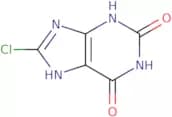
CAS:<p>4,5-Dihydroxy-2,3-pentanedione is a carbonyl compound that is the product of the oxidation of ascorbic acid. It is used in wastewater treatment and has antimicrobial properties against infectious diseases. This compound has been shown to inhibit protein synthesis by binding to the ribosome and preventing the formation of peptide bonds between amino acids. 4,5-Dihydroxy-2,3-pentanedione has also been shown to bind to plasma proteins, which may be due to its acyl chain structure. 4,5-Dihydroxy-2,3-pentanedione can be synthesized in a catalytic mechanism that involves dehydroascorbic acid and molecular oxygen.</p>Formula:C5H8O4Purity:Min. 95%Color and Shape:PowderMolecular weight:132.11 g/mol8-Chloro-3,7-dihydro-1H-purine-2,6-dione
CAS:<p>8-Chloro-3,7-dihydro-1H-purine-2,6-dione is a reactive molecule that binds to the active site of bacterial cyclic nucleotide phosphodiesterases and inhibits their activity. This inhibition prevents the breakdown of cAMP and cGMP, which are important second messengers in eukaryotic cells. 8-Chloro-3,7-dihydro-1H-purine-2,6-dione is also a potent inhibitor of protein synthesis and has been used in research studies on wheat leaves.</p>Formula:C5H3N4O2ClPurity:Min. 95%Color and Shape:PowderMolecular weight:186.56 g/molγ-Ethyl L-glutamate N-carboxyanhydride
CAS:<p>Please enquire for more information about γ-Ethyl L-glutamate N-carboxyanhydride including the price, delivery time and more detailed product information at the technical inquiry form on this page</p>Formula:C8H11NO5Purity:Min. 95%Molecular weight:201.18 g/mol4-(Boc-aminomethyl)pyrazole
CAS:<p>Versatile small molecule scaffold</p>Formula:C9H15N3O2Purity:Min. 95%Molecular weight:197.24 g/mol5-Chloro-3-methylpyridazine hydrochloride
CAS:<p>Versatile small molecule scaffold</p>Formula:C5H6Cl2N2Purity:Min. 95%Molecular weight:165 g/mol


![6-Amino-4H,5H,6H,7H,8H-thieno[3,2-b]azepin-5-one hydrochloride](/_next/image/?url=https%3A%2Fstatic.cymitquimica.com%2Fproducts%2F3D%2Fthumb-webp%2FTHC97972.webp&w=3840&q=75)
![7-bromo-3-iodoimidazo[1,2-a]pyridine](/_next/image/?url=https%3A%2Fstatic.cymitquimica.com%2Fproducts%2F3D%2Fthumb-webp%2FWZB18455.webp&w=3840&q=75)
![tert-Butyl 9-oxo-4,8-diazaspiro[4.4]nonane-4-carboxylate](/_next/image/?url=https%3A%2Fstatic.cymitquimica.com%2Fproducts%2F3D%2Fthumb-webp%2FWYB81845.webp&w=3840&q=75)

![3-Bromo-6,7-dihydro-4H-pyrazolo[1,5-a]pyrazine-5-carboxylic acid tert-butyl ester](/_next/image/?url=https%3A%2Fstatic.cymitquimica.com%2Fproducts%2F3D%2Fthumb-webp%2FWXB15425.webp&w=3840&q=75)






![1,7-Diazaspiro[4.4]nonane-7-carboxylic acid tert-butyl ester](/_next/image/?url=https%3A%2Fstatic.cymitquimica.com%2Fproducts%2F3D%2Fthumb-webp%2FWAB05563.webp&w=3840&q=75)



![2-[5-(4,4,5,5-Tetramethyl-1,3,2-dioxaborolan-2-yl)pyrimidin-2-yl]propan-2-ol](/_next/image/?url=https%3A%2Fstatic.cymitquimica.com%2Fproducts%2F3D%2Fthumb-webp%2FUCC25587.webp&w=3840&q=75)

![1-[(4-Chlorophenyl)phenylmethyl]-4-[(3-methylphenyl)methyl]-piperazine hydrochloride](/_next/image/?url=https%3A%2Fstatic.cymitquimica.com%2Fproducts%2F3D%2Fthumb-webp%2FFC183829.webp&w=3840&q=75)