Building Blocks
This section contains fundamental products for the synthesis of organic and biological compounds. Building blocks are the essential starting materials used to construct complex molecules through various chemical reactions. They play a critical role in drug discovery, material science, and chemical research. At CymitQuimica, we offer a diverse range of high-quality building blocks to support your innovative research and industrial projects, ensuring you have the essential components for successful synthesis.
Subcategories of "Building Blocks"
- Boronic Acids & Boronic Acid Derivatives(5,778 products)
- Chiral Building Blocks(1,242 products)
- Hydrocarbon Building Blocks(6,098 products)
- Organic Building Blocks(61,034 products)
Found 199601 products of "Building Blocks"
Sort by
Purity (%)
0
100
|
0
|
50
|
90
|
95
|
100
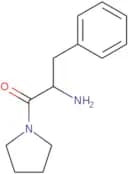
2-Amino-3-phenyl-1-(pyrrolidin-1-yl)propan-1-one
CAS:<p>2-Amino-3-phenyl-1-(pyrrolidin-1-yl)propan-1-one is a potent and selective activator of the metabotropic glutamate receptor type 2 (mGlu2). It is a ligand that activates mGlu2 receptors by binding to them. This drug has been shown to have no effect on ion channels, but it does have an inhibitory effect on the phosphorylation of proteins in cells. The antibody against this drug has been found to be useful for cell biology research, as well as in the study of various biological processes.</p>Formula:C13H18N2OPurity:Min. 95%Molecular weight:218.29 g/mol1-Boc-2-acetyl-pyrrolidine
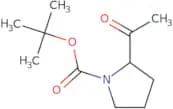
CAS:<p>Versatile small molecule scaffold</p>Formula:C11H19NO3Purity:Min. 95%Molecular weight:213.28 g/mol1,3-Diethyl-2-iodobenzene
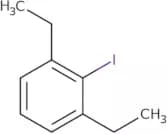
CAS:<p>Versatile small molecule scaffold</p>Formula:C10H13IPurity:Min. 95%Molecular weight:260.11 g/mol2-(3-Chlorophenyl)-2-methylpropan-1-amine
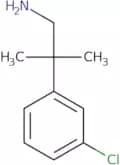
CAS:<p>Versatile small molecule scaffold</p>Formula:C10H14ClNPurity:Min. 95%Molecular weight:183.68 g/molSpiro[3.5]nonane-2-carboxylic acid
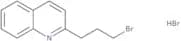
CAS:<p>Versatile small molecule scaffold</p>Formula:C10H16O2Purity:Min. 95%Molecular weight:168.23 g/mol2-(3-Bromopropyl)quinoline hydrobromide
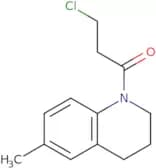
CAS:<p>Versatile small molecule scaffold</p>Formula:C12H13Br2NPurity:Min. 95%Molecular weight:331.05 g/mol3-Chloro-1-(6-methyl-3,4-dihydro-2H-quinolin-1-yl)propan-1-one
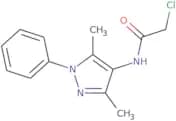
CAS:<p>Versatile small molecule scaffold</p>Formula:C13H16ClNOPurity:Min. 95%Molecular weight:237.72 g/mol2-Chloro-N-(3,5-dimethyl-1-phenyl-1H-pyrazol-4-yl)acetamide
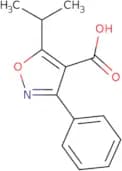
CAS:<p>Versatile small molecule scaffold</p>Formula:C13H14ClN3OPurity:Min. 95%Molecular weight:263.72 g/mol5-Isopropyl-3-phenylisoxazole-4-carboxylic acid
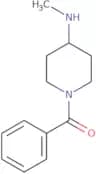
CAS:<p>Versatile small molecule scaffold</p>Formula:C13H13NO3Purity:Min. 95%Molecular weight:231.25 g/mol1-Benzoyl-N-methylpiperidin-4-amine
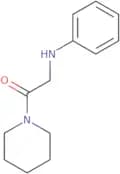
CAS:<p>Versatile small molecule scaffold</p>Formula:C13H18N2OPurity:Min. 95%Molecular weight:218.29 g/mol2-(Phenylamino)-1-(piperidin-1-yl)ethan-1-one
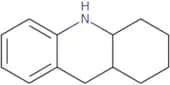
CAS:<p>Versatile small molecule scaffold</p>Formula:C13H18N2OPurity:Min. 95%Molecular weight:218.29 g/mol1,2,3,4,4a,9,9a,10-Octahydroacridine
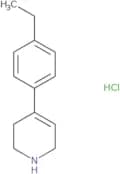
CAS:<p>1,2,3,4,4a,9,9a,10-Octahydroacridine (octahydroacridine) is an amine compound that has a high yield in the reaction scheme. The octahydroacridine molecule can be synthesized using a hydrogenation reaction with acid catalyst or by reacting a 3-substituted acrylonitrile with ammonia. The octahydroacridine molecule is a chiral compound and has two stereoisomers: <br>1R-octahydroacridine and 1S-octahydroacridine. These are differentiated by their ability to rotate plane polarized light in opposite directions.</p>Formula:C13H17NPurity:Min. 95%Molecular weight:187.28 g/mol4-(4-Ethylphenyl)-1,2,3,6-tetrahydropyridine hydrochloride
CAS:<p>Versatile small molecule scaffold</p>Formula:C13H18ClNPurity:Min. 95%Molecular weight:223.74 g/mol1-[4-Hydroxy-3-(pyrrolidin-1-ylmethyl)phenyl]ethan-1-one
CAS:<p>Versatile small molecule scaffold</p>Formula:C13H17NO2Purity:Min. 95%Molecular weight:219.28 g/mol1-[4-Hydroxy-3-(morpholin-4-ylmethyl)phenyl]ethan-1-one
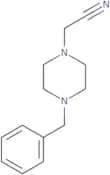
CAS:<p>Versatile small molecule scaffold</p>Formula:C13H18ClNO3Purity:Min. 95%Molecular weight:271.74 g/mol2-(4-Benzylpiperazin-1-yl)acetonitrile
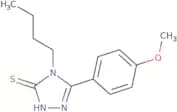
CAS:<p>Versatile small molecule scaffold</p>Formula:C13H17N3Purity:Min. 95%Molecular weight:215.29 g/mol4-Butyl-5-(4-methoxyphenyl)-4H-1,2,4-triazole-3-thiol
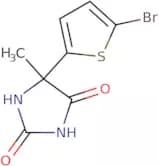
CAS:Versatile small molecule scaffoldFormula:C13H17N3OSPurity:Min. 95%Molecular weight:263.36 g/mol5-(5-Bromothiophen-2-yl)-5-methylimidazolidine-2,4-dione
CAS:<p>Versatile small molecule scaffold</p>Formula:C8H7BrN2O2SPurity:Min. 95%Molecular weight:275.12 g/mol2-[(4-Fluorophenyl)formamido]-3-methylbutanoic acid
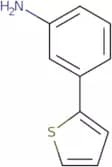
CAS:<p>Versatile small molecule scaffold</p>Formula:C12H14FNO3Purity:Min. 95%Molecular weight:239.24 g/mol3-(Thien-2-yl)aniline
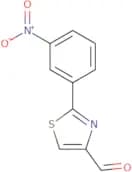
CAS:<p>3-(Thien-2-yl)aniline is a compound that can be used as an electron transport material in electrochemical studies. It has been shown to be capable of occluding and transferring electrons, which may be due to its ability to form thin films with a thickness of about 10 nm. 3-(Thien-2-yl)aniline is also magnetic and can undergo optical transitions when exposed to light, giving it the potential for use in photopolymerization and photoelectrochemistry. The nature of this compound is unknown, but it has been shown to inhibit fluorine on a thin film surface.<br>3-(Thien-2-yl)aniline may also be used as an electrode material in optical devices such as photocurrent generators or light emitting diodes (LEDs).</p>Formula:C10H9NSPurity:Min. 95%Molecular weight:175.25 g/mol2-(3-Nitrophenyl)-1,3-thiazole-4-carbaldehyde
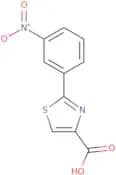
CAS:<p>Versatile small molecule scaffold</p>Formula:C10H6N2O3SPurity:Min. 95%Molecular weight:234.23 g/mol2-(3-Nitrophenyl)-1,3-thiazole-4-carboxylic acid
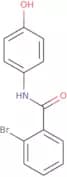
CAS:<p>Versatile small molecule scaffold</p>Formula:C10H6N2O4SPurity:Min. 95%Molecular weight:250.23 g/mol2-Bromo-N-(4-hydroxyphenyl)benzamide
CAS:<p>Versatile small molecule scaffold</p>Formula:C13H10BrNO2Purity:Min. 95%Molecular weight:292.13 g/molMethyl[1-(oxolan-2-yl)ethyl]amine
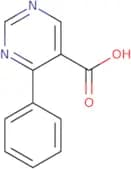
CAS:<p>Versatile small molecule scaffold</p>Formula:C7H15NOPurity:Min. 95%Molecular weight:129.2 g/mol4-Phenylpyrimidine-5-carboxylic acid
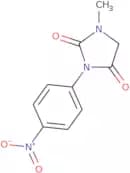
CAS:<p>Versatile small molecule scaffold</p>Formula:C11H8N2O2Purity:Min. 95%Molecular weight:200.19 g/mol1-Methyl-3-(4-nitrophenyl)imidazolidine-2,4-dione
CAS:<p>Versatile small molecule scaffold</p>Formula:C10H9N3O4Purity:Min. 95%Molecular weight:235.2 g/mol1-[5-(Hydroxymethyl)-1,2-oxazol-3-yl]ethan-1-one
CAS:Versatile small molecule scaffoldFormula:C6H7NO3Purity:Min. 95%Molecular weight:141.12 g/mol2-Chloro-N-{2-[4-(propan-2-yloxy)phenyl]ethyl}acetamide
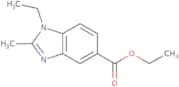
CAS:<p>Versatile small molecule scaffold</p>Formula:C13H18ClNO2Purity:Min. 95%Molecular weight:255.74 g/mol1-Ethyl-2-methyl-1H-benzoimidazole-5-carboxylicacid ethyl ester
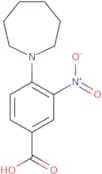
CAS:<p>1-Ethyl-2-methyl-1H-benzoimidazole-5-carboxylicacid ethyl ester is a heterocyclic compound that is used in the synthesis of other organic compounds and pharmaceuticals. The absorption of light at wavelengths from 400 nm to 700 nm leads to the formation of an excited state, which can undergo electron transfer reactions with other molecules. This process is called photochemistry.</p>Formula:C13H16N2O2Purity:Min. 95%Molecular weight:232.28 g/mol3-Nitro-4-(hexamethyleneimin-1-yl)benzoic acid
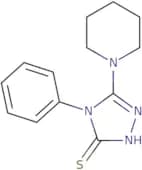
CAS:<p>Versatile small molecule scaffold</p>Formula:C13H16N2O4Purity:Min. 95%Molecular weight:264.28 g/mol4-Phenyl-5-(piperidin-1-yl)-4H-1,2,4-triazole-3-thiol
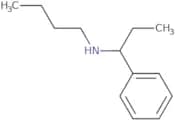
CAS:Versatile small molecule scaffoldFormula:C13H16N4SPurity:Min. 95%Molecular weight:260.36 g/molButyl(1-phenylpropyl)amine
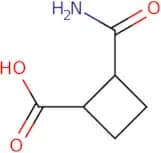
CAS:<p>Versatile small molecule scaffold</p>Formula:C13H21NPurity:Min. 95%Molecular weight:191.31 g/mol2-Carbamoylcyclobutane-1-carboxylic acid
CAS:<p>Versatile small molecule scaffold</p>Formula:C6H9NO3Purity:Min. 95%Molecular weight:143.14 g/mol4-Phenyl-2,5-dihydro-1H-pyrrol-2-one
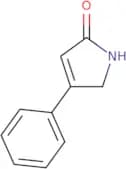
CAS:<p>4-Phenyl-2,5-dihydro-1H-pyrrol-2-one is an aralkyl that has vasodilatory effects. It is used in medicine to treat angina and other cardiovascular conditions. The cyclic alkyl group of this molecule inhibits the formation of new blood vessels, which can be helpful in cancer treatment. In cancer cells, 4-phenyl-2,5-dihydro-1H-pyrrol-2-one causes a decrease in metalloproteinase activity by binding to the active site on these enzymes. The decreased metalloproteinase activity prevents the degradation of tissue matrix proteins, leading to an increased rate of tumor growth inhibition.</p>Formula:C10H9NOPurity:Min. 95%Molecular weight:159.18 g/mol6-Phenyl-2-sulfanylpyridine-3-carbonitrile
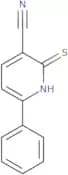
CAS:<p>6-Phenyl-2-sulfanylpyridine-3-carbonitrile is a molecule that has been studied experimentally and computationally. It is found to be anisotropic, with the highest dipole moment perpendicular to the plane of the molecule. The molecular geometry of this compound is planar and its electron density shows a strong preference for bonding with other atoms in one direction. This compound is also polarizable and has an electronegativity of 1.61, which means it can form covalent bonds with polar molecules such as water. 6-Phenyl-2-sulfanylpyridine-3-carbonitrile has optical properties, which can be seen when it absorbs light at wavelengths between 300 and 400 nm.</p>Formula:C12H8N2SPurity:Min. 95%Molecular weight:212.27 g/mol1-(Cyclohex-1-en-1-yl)propan-2-amine hydrochloride
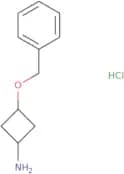
CAS:<p>Versatile small molecule scaffold</p>Formula:C9H18ClNPurity:Min. 95%Molecular weight:175.7 g/mol3-(Benzyloxy)cyclobutan-1-amine hydrochloride
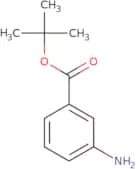
CAS:<p>Versatile small molecule scaffold</p>Formula:C11H16ClNOPurity:Min. 95%Molecular weight:213.7 g/moltert-Butyl 3-aminobenzoate
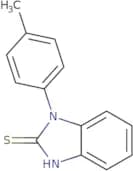
CAS:<p>Tert-Butyl 3-aminobenzoate is an n-terminal synthetic pseudopeptide that has been shown to have potent inhibitory properties against proteases. This molecule is a transition state analogue and mimics the peptide bond in the active site of the protease enzyme, which leads to inhibition of the catalytic activity. Tert-Butyl 3-aminobenzoate has shown excellent inhibitory properties against a broad range of proteases and isosteres, with potency comparable to that of benzamidine and bestatin. This molecule also has hydrogen bonding interactions with an aspartic acid residue in the active site of the enzyme, which may be responsible for its inhibitory properties. Tert-Butyl 3-aminobenzoate is synthesized by reacting tert-butyl alcohol with 2-(3-hydroxyphenoxy)ethylamine in a two step process. The first step involves conversion to tert-butyl</p>Formula:C11H15NO2Purity:Min. 95%Molecular weight:193.24 g/mol1-(4-Methylphenyl)-1H-1,3-benzodiazole-2-thiol
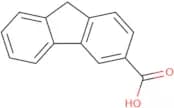
CAS:<p>Versatile small molecule scaffold</p>Formula:C14H12N2SPurity:Min. 95%Molecular weight:240.33 g/mol9H-Fluorene-3-carboxylic acid
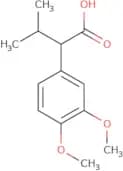
CAS:<p>Versatile small molecule scaffold</p>Formula:C14H10O2Purity:Min. 95%Molecular weight:210.23 g/mol2-(3,4-Dimethoxyphenyl)-3-methylbutanoic acid
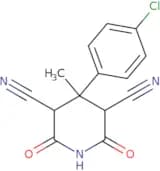
CAS:<p>Versatile small molecule scaffold</p>Formula:C13H18O4Purity:Min. 95%Molecular weight:238.28 g/mol4-(4-Chlorophenyl)-4-methyl-2,6-dioxopiperidine-3,5-dicarbonitrile
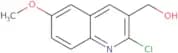
CAS:<p>Versatile small molecule scaffold</p>Formula:C14H10ClN3O2Purity:Min. 95%Molecular weight:287.7 g/mol2-Chloro-6-methoxyquinoline-3-methanol
CAS:<p>2-Chloro-6-methoxyquinoline-3-methanol is a supramolecular compound that is made up of a quinoline derivative and an alcohol. It has two isomers, which can be distinguished by observing their reaction time. The synthesis of 2-chloro-6-methoxyquinoline-3-methanol begins with the reaction of synthons and zinc oxide nanoparticles. This reaction produces a helical structure, which is then heated to produce acrylonitrile. The final step in the synthesis of 2CQM is the dehydration of the acrylonitrile using hydrogen bond interactions and heat to give 2CQM. Crystal x-ray diffraction studies have shown that 2CQM has a conformational skeletal structure with a ZnO core surrounded by four chloride ions and six methoxy groups on each side.</p>Formula:C11H10ClNO2Purity:Min. 95%Molecular weight:223.66 g/molMethyl[1-(oxolan-2-yl)-2-phenylethyl]amine hydrochloride
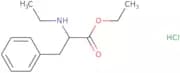
CAS:<p>Versatile small molecule scaffold</p>Formula:C13H20ClNOPurity:Min. 95%Molecular weight:241.8 g/molEthyl 2-(ethylamino)-3-phenylpropanoate hydrochloride
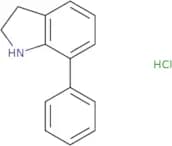
CAS:Versatile small molecule scaffoldFormula:C13H20ClNO2Purity:Min. 95%Molecular weight:257.75 g/mol7-Phenyl-2,3-dihydro-1H-indole hydrochloride
CAS:<p>Versatile small molecule scaffold</p>Formula:C14H14ClNPurity:Min. 95%Molecular weight:231.72 g/mol2-Hydroxy-5-[(4-methoxyphenyl)sulfamoyl]benzoic acid
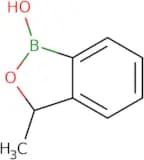
CAS:<p>Versatile small molecule scaffold</p>Formula:C14H13NO6SPurity:Min. 95%Molecular weight:323.32 g/mol3-Methyl-1,3-dihydro-2,1-benzoxaborol-1-ol
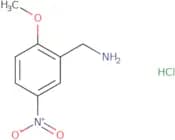
CAS:<p>Versatile small molecule scaffold</p>Formula:C8H9BO2Purity:Min. 95%Molecular weight:147.97 g/mol1-(2-Methoxy-5-nitrophenyl)methanamine hydrochloride
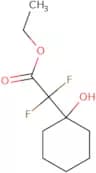
CAS:<p>Versatile small molecule scaffold</p>Formula:C8H11ClN2O3Purity:Min. 95%Molecular weight:218.64 g/molEthyl 2,2-difluoro-2-(1-hydroxycyclohexyl)acetate
CAS:<p>Versatile small molecule scaffold</p>Formula:C10H16F2O3Purity:Min. 95%Molecular weight:222.23 g/mol

![Spiro[3.5]nonane-2-carboxylic acid](/_next/image/?url=https%3A%2Fstatic.cymitquimica.com%2Fproducts%2F3D%2Fthumb-webp%2FSDA01584.webp&w=3840&q=75)
![1-[4-Hydroxy-3-(pyrrolidin-1-ylmethyl)phenyl]ethan-1-one](/_next/image/?url=https%3A%2Fstatic.cymitquimica.com%2Fproducts%2F3D%2Fthumb-webp%2FSDA04034.webp&w=3840&q=75)
![1-[4-Hydroxy-3-(morpholin-4-ylmethyl)phenyl]ethan-1-one](/_next/image/?url=https%3A%2Fstatic.cymitquimica.com%2Fproducts%2F3D%2Fthumb-webp%2FSDA04143.webp&w=3840&q=75)
![2-[(4-Fluorophenyl)formamido]-3-methylbutanoic acid](/_next/image/?url=https%3A%2Fstatic.cymitquimica.com%2Fproducts%2F3D%2Fthumb-webp%2FSDA05421.webp&w=3840&q=75)
![Methyl[1-(oxolan-2-yl)ethyl]amine](/_next/image/?url=https%3A%2Fstatic.cymitquimica.com%2Fproducts%2F3D%2Fthumb-webp%2FSDA07156.webp&w=3840&q=75)
![1-[5-(Hydroxymethyl)-1,2-oxazol-3-yl]ethan-1-one](/_next/image/?url=https%3A%2Fstatic.cymitquimica.com%2Fproducts%2F3D%2Fthumb-webp%2FSDA09606.webp&w=3840&q=75)
![2-Chloro-N-{2-[4-(propan-2-yloxy)phenyl]ethyl}acetamide](/_next/image/?url=https%3A%2Fstatic.cymitquimica.com%2Fproducts%2F3D%2Fthumb-webp%2FSDA10553.webp&w=3840&q=75)
![Methyl[1-(oxolan-2-yl)-2-phenylethyl]amine hydrochloride](/_next/image/?url=https%3A%2Fstatic.cymitquimica.com%2Fproducts%2F3D%2Fthumb-webp%2FSDA19603.webp&w=3840&q=75)
![2-Hydroxy-5-[(4-methoxyphenyl)sulfamoyl]benzoic acid](/_next/image/?url=https%3A%2Fstatic.cymitquimica.com%2Fproducts%2F3D%2Fthumb-webp%2FSDA20076.webp&w=3840&q=75)