Building Blocks
Subcategories of "Building Blocks"
- Boronic Acids & Boronic Acid Derivatives(5,805 products)
- Chiral Building Blocks(1,248 products)
- Hydrocarbon Building Blocks(6,118 products)
- Organic Building Blocks(61,447 products)
Found 208423 products of "Building Blocks"
3-(Azidopropyl)triethoxysilane
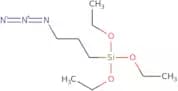
CAS:3-(Azidopropyl)triethoxysilane is a chemical compound that is used as an immobilization agent for metal ions. It is typically synthesized by reacting triethoxysilane with azide and can be used to immobilize metal ions on the surface of various materials, such as glass, silicon, or other substrates. 3-(Azidopropyl)triethoxysilane has been shown to have anticancer activity in vitro against MCF-7 cells. This compound induces cancer cell death by binding to the cell membrane and disrupting its lipid bilayer. 3-(Azidopropyl)triethoxysilane also has a diameter of 6.3 nm, which allows it to cross the membrane easily.
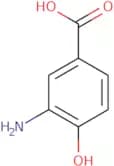
Formula:C9H21N3O3SiPurity:Min. 95 Area-%Color and Shape:Clear LiquidMolecular weight:247.37 g/mol3-Amino-4-hydroxybenzoic acid
CAS:3-Amino-4-hydroxybenzoic acid is a type of phenolic compound that can be found in human serum. It is also used as a chemical building block for the synthesis of coumarin derivatives, which are important compounds in biochemistry, pharmacology and medical research. 3-Amino-4-hydroxybenzoic acid has been shown to have diphenolase activity, which is an enzyme that cleaves two molecules of phenol from one molecule of diphenol. The light emission is likely due to a metal ion in the active site that acts as a catalyst. The high values seen in the experiments were most likely due to the presence of corynebacterium glutamicum, which is an organism with high levels of 3-amino-4-hydroxybenzoic acid production. This study also found that 3-amino-4-hydoxybenzoic acid may be an antimicrobial agent against HIV
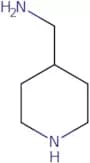
Formula:C7H7NO3Purity:Min. 95%Color and Shape:Off-White PowderMolecular weight:153.14 g/mol4-(Aminomethyl)piperidine
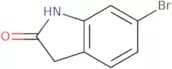
CAS:Inhibitor of CD4+ - GP120 binding during HIV infectionFormula:C6H14N2Purity:Min. 98 Area-%Color and Shape:PowderMolecular weight:114.19 g/mol6-Bromo-2-oxindole
CAS:6-Bromo-2-oxindole is a crystalline compound with a molecular formula of C10H6BrO. It has been shown to have a high efficiency in the production of butyric acid and other organic acids. 6-Bromo-2-oxindole is also used in electron microscopy studies as an electron acceptor, and can be used for producing polymers with crystalline structures and dihedral angles. The compound has been shown to inhibit the growth of breast cancer cells by preventing the synthesis of mda-mb-231 breast cancer cells. It also has been shown to inhibit the production of isoindigo and morphology.
Formula:C8H6BrNOPurity:Min. 98 Area-%Color and Shape:PowderMolecular weight:212.04 g/mol4-Acetylbenzoic acid
CAS:4-Acetylbenzoic acid is a reactive functional group that is used to synthesize esters and amides. It has been shown to have anticancer activity in vitro, which may be due to the disruption of basic cellular proteins involved in DNA replication. 4-Acetylbenzoic acid is soluble in neutral pH and reacts with nucleophiles such as hydroxide ions or alcohols, forming alcohols or acetates respectively. The reaction mechanism for this compound is nucleophilic attack on the carbonyl carbon, followed by loss of water from the leaving group. Significant cytotoxicity has been observed in vitro at concentrations of 2mM and higher. This effect was particularly pronounced for cells exposed to radiation or treated with 4-acetylbenzoic acid before being exposed to radiation.
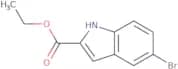
Formula:C9H8O3Purity:Min. 95%Color and Shape:White PowderMolecular weight:164.16 g/mol5-Bromoindole-2-carboxylic acid ethyl ester
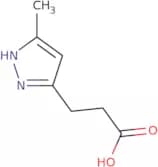
CAS:5-Bromoindole-2-carboxylic acid ethyl ester (5-BIEC) is a carboxamide antibiotic that inhibits the growth of gram-negative bacteria, including pneumoniae. 5-BIEC has been shown to have an inhibitory concentration (IC50) of 0.9 μM against Escherichia coli and other gram negative bacteria. It also has anti-proliferative effects on cancer cells, which may be due to its ability to inhibit DNA replication by binding to the beta subunit of DNA gyrase. 5-BIEC is currently being studied as a potential anticancer drug for the treatment of breast cancer, colon cancer, and leukemia.Formula:C11H10BrNO2Purity:Min. 98 Area-%Color and Shape:PowderMolecular weight:268.11 g/mol3-(3-Methyl-1H-pyrazol-5-yl)propanoic acid
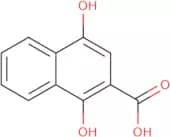
CAS:Versatile small molecule scaffoldFormula:C7H10N2O2Purity:Min. 95%Color and Shape:PowderMolecular weight:154.17 g/mol1,4-Dihydroxy-2-naphthoic acid
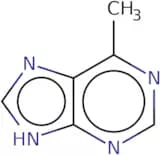
CAS:1,4-Dihydroxy-2-naphthoic acid is a glycol ether that is used as a reagent in vitro for the study of inflammatory bowel disease. It has been shown to have inhibitory effects on polymerase chain reactions and human immunoglobulin synthesis in vitro. This compound also inhibits the activity of enzymes involved in inflammatory bowel disease, such as erythrocyte glutathione reductase, cytochrome p450, and myeloperoxidase. 1,4-Dihydroxy-2-naphthoic acid is an inhibitor molecule with a natural compound structure that binds to enzymes involved in inflammatory bowel disease to inhibit their function.Formula:C11H8O4Purity:Min. 95%Color and Shape:PowderMolecular weight:204.18 g/mol6-Methylpurine
CAS:6-Methylpurine is a product of the nucleotide metabolism in E. coli, which is a model organism for protein synthesis. 6-Methylpurine inhibits protein synthesis and exerts significant cytotoxicity. It has been shown to inhibit the enzyme activities of DNA polymerase alpha, DNA ligase, and RNA polymerase, as well as other enzymes involved in nitrogen metabolism. 6-Methylpurine has been shown to be an analog of adenine and has a similar reaction mechanism. The uptake of 6-methyl purine by cells is mediated by hydrogen bonds with amino acid residues on the cell membrane surface. This molecule also forms glycosidic bonds with ribose sugar groups on cellular surfaces. 6-Methylpurine plays an important role in energy metabolism through its incorporation into glucose and glycogen molecules.
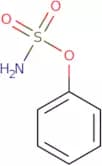
Formula:C6H6N4Purity:Min. 98 Area-%Color and Shape:White PowderMolecular weight:134.14 g/molPhenyl sulfamate
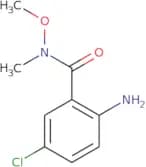
CAS:Phenyl sulfamate is a monosodium salt that has been shown to inhibit the growth of cancer cells in vitro. It has been used as an antimicrobial agent to treat chronic arthritis and atherosclerotic lesions. Phenyl sulfamate inhibits the activity of enzymes that are involved in the synthesis of proteins, such as collagenase, elastase, and proteases. The irreversible inhibition by phenyl sulfamate is due to its ability to react with sulfamoyl chloride (SOC). This reaction leads to the formation of a covalent bond between the enzyme and phenyl sulfamate, which cannot be reversed by any known chemical or enzymatic process.Formula:C6H7NO3SPurity:Min. 95%Color and Shape:PowderMolecular weight:173.19 g/mol2-Amino-5-chloro-N-methoxy-N-methylbenzamide
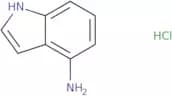
CAS:Versatile small molecule scaffoldFormula:C9H11ClN2O2Purity:Min. 95%Color and Shape:PowderMolecular weight:214.65 g/mol4-Aminoindole hydrochloride
CAS:4-Aminoindole hydrochloride is a white crystalline solid that can be used as a versatile building block in organic synthesis. It is also used as an intermediate in the production of various pharmaceuticals and other chemical compounds. 4-Aminoindole hydrochloride is soluble in most polar solvents, but insoluble in ethers and oils. This compound is also a useful reagent for the conversion of nitrobenzenes to aminobenzoic acids. CAS Number 174854-93-4
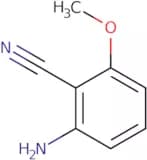
Formula:C8H9ClN2Purity:Min. 95%Color and Shape:PowderMolecular weight:168.62 g/mol2-Amino-6-methoxybenzonitrile
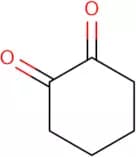
CAS:2-Amino-6-methoxybenzonitrile is an organic compound that belongs to a group of monosubstituted hydroxylamines. It has been used in the synthesis of various analogues, such as caprolactam and methoxyanthranilic acid. Hydrochloric acid reacts with 2-amino-6-methoxybenzonitrile to form 2-amino-6-hydroxybenzonitrile, which can be oxidized to 2-amino-6-(hydroxymethyl)benzonitrile. This reaction is catalyzed by copper or zinc metal.Formula:C8H8N2OPurity:Min. 95%Color and Shape:PowderMolecular weight:148.16 g/molCyclohexane-1,2-dione
CAS:Cyclohexane-1,2-dione is a natural compound that can be found in kidney beans and other plants. It has been shown to inhibit the growth of tumor cells in vitro. Cyclohexane-1,2-dione binds to DNA polymerase, preventing replication and transcription. This reaction mechanism is similar to that of the rifamycins. Cyclohexane-1,2-dione has also been shown to bind enzymes such as nitrite ion reductase with high affinity and inhibit their activity. Cyclohexane-1,2-dione is chemically stable and does not react with metal ions or form stable complexes with biological molecules. The redox potentials for this molecule are -0.42 V (5/6) under aerobic conditions and -0.52 V (5/6) under anaerobic conditions.
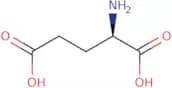
Formula:C6H8O2Purity:Min. 96.5%Color and Shape:PowderMolecular weight:112.13 g/molGlutamic acid
CAS:Glutamic acid is a non-essential amino acid that is present in all cells. It is one of the most abundant amino acids and plays an important role in the biochemical properties and biological properties of living organisms. Glutamic acid has been found to be an important neurotransmitter and is involved in neuronal activity, which can lead to death. It also has been shown to be a potent inhibitor of DNA polymerase, which may explain the structural analysis of glutamic acid as a divalent cation coordination-activator molecule. Glutamate can be used as a model system for studying glutamate receptor function and its optimum concentration is determined using vitro assays. The dinucleotide phosphate (NADPH) oxidase pathway may be involved in the toxicity of glutamic acid as it produces reactive oxygen species.
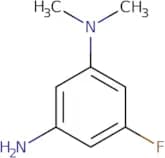
Formula:C5H9NO4Purity:Min. 95%Color and Shape:White PowderMolecular weight:147.13 g/mol5-Fluoro-N1,N1-dimethylbenzene-1,3-diamine
CAS:5-Fluoro-N1,N1-dimethylbenzene-1,3-diamine is a reaction component that can be used in the synthesis of compounds with a wide range of applications. It can be used as a reagent and has been shown to exhibit high quality in research. 5-Fluoro-N1,N1-dimethylbenzene-1,3-diamine is also known to be useful for the synthesis of pharmaceuticals, agrochemicals and other chemicals. The compound can be used as an intermediate or building block in the synthesis of more complex compounds. 5-Fluoro-N1,N1-dimethylbenzene-1,3-diamine is also versatile due to its ability to react with various types of functional groups including amines and thiols. This product is a fine chemical that exhibits a high degree of purity when synthesized.Formula:C8H11FN2Purity:Min. 95%Color and Shape:Clear LiquidMolecular weight:154.18 g/molH-Imidazo[1,2-a]pyridin-2-amine
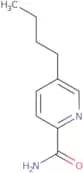
CAS:H-Imidazo[1,2-a]pyridin-2-amine is a synthetic compound that has been shown to bind selectively to the catalytic subunit of protein kinase A (PKA). This binding inhibits PKA's ability to phosphorylate proteins, which plays a key role in regulating physiological functions such as cell growth and proliferation. H-Imidazo[1,2-a]pyridin-2-amine has been shown to inhibit tumor growth and symptoms in mouse models by targeting amine receptors. The compound also inhibits the proliferation of cancer cells by signaling through the kinase pathways that regulate mitosis. H-Imidazo[1,2-a]pyridin-2-amine is scalable and can be produced at high yields from inexpensive starting materials.Formula:C7H7N3Purity:Min. 95%Molecular weight:133.15 g/mol5-Butylpyridine-2-carboxamide
CAS:5-Butylpyridine-2-carboxamide is a copper complex that has been shown to inhibit dopamine β-hydroxylase. It is used in clinical studies to measure the effects of dopamine on proximal tubules and pharmaceutical dosage. 5-Butylpyridine-2-carboxamide has a chemical stability that can be measured by picolinic acid. This drug is also used for the diagnosis of polymeric matrix glomerular filtration rate, as well as uv absorption. The hydrogen bonds between the drug and fatty acids are responsible for its cardiac activity.
Formula:C10H14N2OPurity:Min. 95%Color and Shape:PowderMolecular weight:178.23 g/molN-Acetylglycine
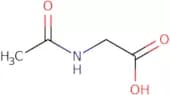
CAS:N-Acetylglycine is an amide, which is a molecule with both a carboxylate and hydroxyl group. It belongs to the class of antimicrobial agents and has been shown to inhibit the growth of bacteria by inhibiting synthesis of folic acid and other metabolites. N-Acetylglycine also inhibits the formation of terminal residues from amino acids. The analytical method for this compound is based on the reaction between n-acetylglycine and hydrogen chloride in methanol. This produces picolinic acid, which can be detected using ultraviolet spectroscopy at a wavelength of 325 nm.
Formula:C4H7NO3Purity:Min. 95%Color and Shape:White PowderMolecular weight:117.1 g/mol3-tert-Butyl-4-hydroxybenzoic acid
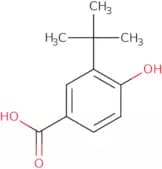
CAS:3-tert-Butyl-4-hydroxybenzoic acid is a phenolic compound that is found in the plant species of "Solanum xanthocarpum". It has antioxidant properties and has been shown to have anticancer activity in vitro. 3-tert-Butyl-4-hydroxybenzoic acid also inhibits the growth of human colon carcinoma cells. It is soluble in organic solvents and homopolymers at high temperatures, but insoluble at lower temperatures.Formula:C11H14O3Purity:Min. 95%Color and Shape:PowderMolecular weight:194.23 g/mol


![H-Imidazo[1,2-a]pyridin-2-amine](/_next/image/?url=https%3A%2Fstatic.cymitquimica.com%2Fproducts%2F3D%2Fthumb-webp%2FPBA58826.webp&w=3840&q=75)