


Building Blocks
Subcategories of "Building Blocks"
- Boronic Acids & Boronic Acid Derivatives(5,783 products)
- Chiral Building Blocks(1,242 products)
- Hydrocarbon Building Blocks(6,105 products)
- Organic Building Blocks(61,055 products)
Found 205383 products of "Building Blocks"
4-Hydrazinyl-1,1-dioxothiolan-3-ol
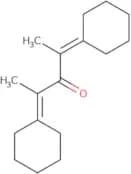
CAS:Versatile small molecule scaffoldFormula:C4H10N2O3SPurity:Min. 95%Molecular weight:166.2 g/mol1-cyclohexylidenepropan-2-one
CAS:1-cyclohexylidenepropan-2-one is a carboxylic acid that is used in the synthesis of medicines and other organic compounds. It has been shown to have antioxidant, anti-inflammatory, and hypocholesterolaemic properties. 1-cyclohexylidenepropan-2-one is also used as a pheromone in insects.Formula:C9H14OPurity:Min. 95%Molecular weight:138.21 g/molN-Methyl-4-methylbenzylamine hydrochloride
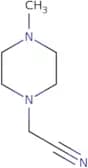
CAS:Versatile small molecule scaffoldFormula:C9H13N·HClPurity:Min. 95%Molecular weight:171.67 g/mol(4-Methyl-piperazin-1-yl)-acetonitrile
CAS:4-Methyl-piperazin-1-yl)-acetonitrile (4MPAN) is a synthetic compound that is used as an intermediate in the production of pharmaceuticals. It is a reaction rate accelerator and a dehydration agent. 4MPAN has been shown to be stereoselective, reacting faster with one enantiomer than with the other. It also reacts with halides and inorganic compounds. 4MPAN has been extensively studied for its biological properties, including potent antibacterial activity against staphylococcus and cyanides. This compound also reacts with amines, which may account for its antibacterial activity.Formula:C7H13N3Purity:Min. 95%Molecular weight:139.2 g/mol4-(2-Hydrazinylethyl)morpholine dihydrochloride
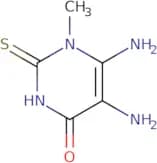
CAS:Versatile small molecule scaffoldFormula:C6H15N3O·2HClPurity:Min. 95%Molecular weight:218.13 g/mol5,6-Diamino-1-methyl-2-sulfanylidene-1,2,3,4-tetrahydropyrimidin-4-one
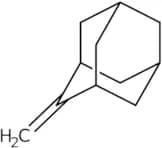
CAS:Versatile small molecule scaffoldFormula:C5H8N4OSPurity:Min. 95%Molecular weight:172.21 g/mol2-Methylideneadamantane
CAS:2-Methylideneadamantane is a molecule that has been shown to have patterning effects in some light-exposed samples. This compound can be used as a reactive functional group for polymerization initiators in the production of polymers and plastics. 2-Methylideneadamantane also has properties similar to an immunoassay, which are tests that measure the presence or concentration of a substance in blood or other bodily fluids. It is often used for the detection of chloride ions, immunoglobulins, and antigens. The compound is a colorless liquid with a strong odor and is soluble in water, alcohols, ethers, chloroform, carbon tetrachloride, and benzene. 2-Methylideneadamantane reacts with hydrochloric acid to form ethyl diazoacetate and hydrogen chloride gas. It reacts with ethyl diazoacetate to form methylenediadamantanFormula:C11H16Purity:Min. 95%Molecular weight:148.24 g/mol(1R,3S)-Cyclopentane-1,3-dicarboxylic acid
CAS:(1R,3S)-Cyclopentane-1,3-dicarboxylic acid is a cyclic organic compound. It has an energy of -10.5 kcal/mol and a population of 1. It has a geometry of linear and has the proton on the left side of the molecule. The conformational geometry is antiperiplanar with hydrogen bonds to the right side of the molecule. The intramolecular hydrogen bonding distance is 2.02 A and the intramolecular hydrogen bond strength is 3.2 kcal/mol. This compound is an organic acid that can form diacids or monoanions when two molecules interact in one half-equation, but cannot form dianions when interacting with itself in one half-equation as it lacks a second proton to donate to form three hydrogen bonds in that interaction.
Formula:C7H10O4Purity:Min. 95%Molecular weight:158.15 g/mol4-(Aminomethyl)-2,6-dimethylphenol
CAS:Versatile small molecule scaffoldFormula:C9H13NOPurity:Min. 95%Molecular weight:151.21 g/mol2-(1,1-Dioxidotetrahydrothien-3-yl)-1,1-dimethylhydrazine hydrochloride
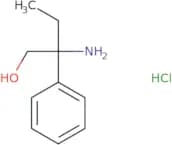
CAS:Versatile small molecule scaffoldFormula:C6H15ClN2O2SPurity:Min. 95%Molecular weight:214.71 g/mol2-Amino-2-phenylbutan-1-ol hydrochloride
CAS:Versatile small molecule scaffoldFormula:C10H16ClNOPurity:Min. 95%Molecular weight:201.69 g/mol6-Chlorocinnolin-4-ol
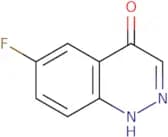
CAS:Versatile small molecule scaffoldFormula:C8H5ClN2OPurity:Min. 95%Molecular weight:180.59 g/mol6-Fluoro-1,4-dihydrocinnolin-4-one
CAS:Versatile small molecule scaffoldFormula:C8H5FN2OPurity:Min. 95%Molecular weight:164.14 g/mol4-Bromo-6-methyl-2,3-dihydro-1H-inden-1-one
CAS:Versatile small molecule scaffoldFormula:C10H9BrOPurity:Min. 95%Molecular weight:225.09 g/mol1-Phenyl-1H-pyrazol-5-ol
CAS:1-Phenyl-1H-pyrazol-5-ol is a nitrate that has a polyester, copper, and carbonyl backbone. The ligand in this compound is unidentate, bidentate, or c1-4 alkoxy. This ligand can bind to lanthanide metals with the help of oxygen atoms and phenyl rings. 1-Phenyl-1H-pyrazol-5-ol has many different bonding options because it has two carbonyl groups and two c1-4 alkoxy groups. It also has an anion on the phenyl ring that can be either c1-4 alkyl or O-.Formula:C9H8N2OPurity:Min. 95%Molecular weight:160.17 g/mol1,2,3,4,5-Pentachloro-6-methylbenzene
CAS:Pentachloro-6-methylbenzene is a chlorinated aromatic hydrocarbon that is used as an organic solvent. The chemical has been shown to be mutagenic, carcinogenic, and teratogenic in CD-1 mice. It also has the ability to cause light emission, which can be used for chemiluminescence or mechanoluminescence. Pentachloro-6-methylbenzene also reacts with magnesium oxide and fluorine to form 1,2,3,4,5-pentachloro-6-(4'-fluorophenyl)benzene (PCB), which is a highly chlorinated derivative of PCBM that can be used in organic light emitting diodes.Formula:C7H3Cl5Purity:Min. 95%Color and Shape:PowderMolecular weight:264.4 g/mol3-Mercapto-6-methyl-[1,2,4]triazolo[4,3-b][1,2,4]triazin-7-ol
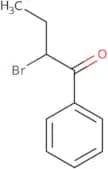
CAS:Versatile small molecule scaffoldFormula:C5H5N5OSPurity:Min. 95%Molecular weight:183.19 g/mol2-Bromo-1-phenylbutan-1-one
CAS:2-Bromo-1-phenylbutan-1-one is a copper salt that yields an acceptor in the presence of acetonitrile. It is used as a diagnostic agent, yielding a blue color when reacted with diazonium salt. 2-Bromo-1-phenylbutan-1-one also reacts with dopamine to form the diagnostic dye 2,6 dibromopurpurin. This compound has been shown to be cytotoxic for mammary cancer cells and other cancer cells, but not for healthy cells. The mechanism of action of this compound may involve sulfate and copper ions, which are required for its activity.Formula:C10H11BrOPurity:Min. 95%Molecular weight:227.1 g/mol3-Methyl-5-[2-(methylsulfanyl)ethyl]-2-sulfanylideneimidazolidin-4-one
CAS:Versatile small molecule scaffoldFormula:C7H12N2OS2Purity:Min. 95%Molecular weight:204.3 g/molDisodium [4-(sulfanidylmethanethioyl)piperazine-1-carbothioyl]sulfanide
CAS:Disodium [4-(sulfanidylmethanethioyl)piperazine-1-carbothioyl]sulfanide is a dithiocarbamate that has been shown to be an inhibitor of carbonic anhydrase. It has been used in the treatment of cancer and microbial infections. Disodium [4-(sulfanidylmethanethioyl)piperazine-1-carbothioyl]sulfanide is mainly used as a monovalent cation and inhibitor of anhydrase, which can cause eye disease and microbial infection.
Formula:C6H8N2Na2S4Purity:Min. 95%Molecular weight:282.4 g/mol









![3-Mercapto-6-methyl-[1,2,4]triazolo[4,3-b][1,2,4]triazin-7-ol](/_next/image/?url=https%3A%2Fstatic.cymitquimica.com%2Fproducts%2F3D%2Fthumb-webp%2FAAA87728.webp&w=3840&q=75)
![3-Methyl-5-[2-(methylsulfanyl)ethyl]-2-sulfanylideneimidazolidin-4-one](/_next/image/?url=https%3A%2Fstatic.cymitquimica.com%2Fproducts%2F3D%2Fthumb-webp%2FAAA87749.webp&w=3840&q=75)
![Disodium [4-(sulfanidylmethanethioyl)piperazine-1-carbothioyl]sulfanide](/_next/image/?url=https%3A%2Fstatic.cymitquimica.com%2Fproducts%2F3D%2Fthumb-webp%2FAAA87778.webp&w=3840&q=75)