Cyano-, Nitrile-
Found 9677 products of "Cyano-, Nitrile-"
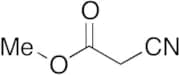
Methyl Cyanoacetate
CAS:Controlled ProductApplications Methyl Cyanoacetate is often used as a nucleophile in the electrochemical oxidation of catechols. Methyl Cyanoacetate is also a reagent in the synthesis of Methyl 2-Amino-4-trifluoromethylthiophene-3-carboxylate (M287290); a compound used in the synthesis of DPP-IV inhibitors for treating type 2 diabetes.
References Rafiee, M., et al.: J. Electroanal. Chem., 626, 36 (2009); Deng, J., et al.: Eur. J. Med. Chem., 46, 71 (2010)Formula:C4H5NO2Color and Shape:NeatMolecular weight:99.092-Cyano-N-((furan-2-ylmethyl)carbamoyl)acetamide
CAS:Controlled ProductApplications 2-Cyano-N-((furan-2-ylmethyl)carbamoyl)acetamide is an intermediate in the synthesis of novel 1- and 8-substituted-3-furfuryl xanthines as adenosine receptor antagonists.
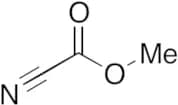
References Balo, M. C., et al.: Bioorg. Med. Chem., 17, 6755 (2009);Formula:C7H14O6·C3H8OColor and Shape:NeatMolecular weight:254.278Methyl Cyanoformate
CAS:Controlled ProductApplications Methyl cyanoformate is a reagent that is used in the preparation of XEN907, which is a spiro-oxindole blocker of Nav1.7 for the treatment of pain.
Not a dangerous good if item is equal to or less than 1g/ml and there is less than 100g/ml in the package
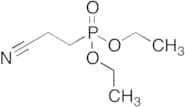
References Chowdhury, S., et al.: Bioorg. Med. Chem. Lett., 21, 3676 (2011);Formula:C3H3NO2Color and Shape:NeatMolecular weight:85.06Diethyl (2-cyanoethyl)phosphonate
CAS:Controlled ProductApplications Diethyl (2-cyanoethyl)phosphonate, is a useful reactant used in various chemical synthesis such as in synthesis of lipophilic oxoamides with activity against phospholipase A2, Triose phosphate isomerase of muscle inhibitors, and also in base-catalyzed stereospecific anti-Markovnikov addition.
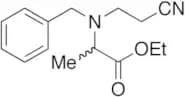
Formula:C7H14NO3PColor and Shape:NeatMolecular weight:191.16N-(beta-Cyanoethyl)-N-(ethoxycarbonylethyl)benzylamine
CAS:Controlled ProductApplications N-(β-Cyanoethyl)-N-(ethoxycarbonylethyl)benzylamine is a compound useful in organic synthesis.
Not a dangerous good if item is equal to or less than 1g/ml and there is less than 100g/ml in the packageFormula:C15H20N2O2Color and Shape:NeatMolecular weight:260.33Ethyl Cyanoformate
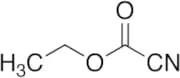
CAS:Controlled ProductApplications Ethyl Cyanoformate (cas# 623-49-4) is a compound useful in organic synthesis.
Formula:C4H5NO2Color and Shape:NeatMolecular weight:99.09Diethyl Cyanophosphonate
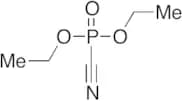
CAS:Controlled ProductFormula:C5H10NO3PColor and Shape:NeatMolecular weight:163.11a-Cyanocinnamic acid
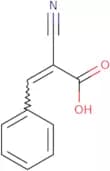
CAS:a-Cyanocinnamic acid is a 3-hydroxycinnamic acid that can be found in coffee. It has been shown to inhibit the growth of colorectal adenocarcinoma cells and other cancer cells by binding to an inhibitor site on fatty acid synthesis enzymes, such as pyruvate carboxylase, hydroxylase, and acetyl-CoA carboxylase. This inhibition leads to decreased levels of fatty acids and increased levels of pyruvate and hydrogen peroxide, which inhibits cell proliferation. In addition, a-cyanocinnamic acid has been shown to have a hypoxic tumor selectivity index of 10.7%, which means it selectively targets tumors with low oxygen levels.Formula:C10H7NO2Purity:Min. 95%Color and Shape:White PowderMolecular weight:173.17 g/molCyanoacetic acid - 70% aqueous solution
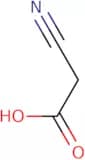
CAS:Cyanoacetic acid is an antimicrobial agent that can be used for the treatment of bowel disease, autoimmune diseases, and eye disorders. Cyanoacetic acid is a substrate molecule for sodium carbonate, which can be used to produce sodium carbonate by reacting with water. The reaction solution is then added to human serum or malonic acid to produce sodium carbonate, which can be used as a drug. Electrochemical impedance spectroscopy has been used as a tool to study the mechanism of cyanoacetic acid in treating inflammatory bowel disease.Formula:C3H3NO2Purity:Min. 95%Color and Shape:Yellow PowderMolecular weight:85.06 g/mol2-(3,4,5-Trimethylphenyl)acetonitrile
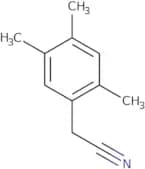
CAS:2-(3,4,5-Trimethylphenyl)acetonitrile (2TMPAN) is a versatile building block that can be used in the synthesis of complex compounds and research chemicals. This chemical is a reagent that can be used to synthesize high-quality and useful intermediates. 2TMPAN has been shown to have a number of applications as a reaction component or scaffold for the synthesis of pharmaceuticals and other organic molecules.Formula:C11H13NPurity:Min. 95%Molecular weight:159.23 g/mol2-Hydroxy-2-(trifluoromethyl)propionitrile
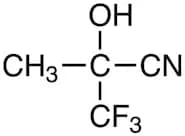
CAS:Formula:C4H4F3NOPurity:>96.0%(GC)Color and Shape:White to Almost white clear liquidMolecular weight:139.084-Cyano-3,5-difluorophenol
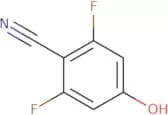
CAS:4-Cyano-3,5-difluorophenol (4CF) is a mesomorphic compound that has a number of reactions with chloride. 4CF is synthesized from 3,5-difluoroaniline and the reaction product is then heated with chlorine to produce 4CF. The optimal reaction temperature is between 100°C and 120°C. When exposed to light, 4CF will react with chloride ions in the presence of heat to form a hydrophobic chlorinated product. This product reacts with proton donors such as NaOH or KOH to produce hydrogen gas. At room temperature, 4CF can be used as a gas sensor.Formula:C7H3F2NOPurity:Min. 95 Area-%Molecular weight:155.1 g/mol2-Amino-1,1,3-tricyano-1-propene
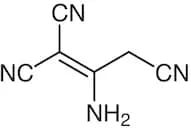
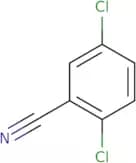
CAS:Formula:C6H4N4Purity:>98.0%(T)Color and Shape:White to Gray to Brown powder to crystalMolecular weight:132.132,5-Dichlorobenzonitrile
CAS:2,5-Dichlorobenzonitrile is a chemical compound that contains a nitrile group. It is used as an intermediate in organic synthesis, as well as for the production of various pharmaceuticals and pesticides. 2,5-Dichlorobenzonitrile is oxidized to form 2,5-dichlorophenol which can be further converted to 2,5-dichloroquinone. This redox cycle is reversible and can be used to synthesize other compounds. The reaction time of this process is about one hour at room temperature. Maleate has been shown to inhibit the hepatic metabolism of 2,5-Dichlorobenzonitrile. This may lead to accumulation of 2,5-Dichlorobenzonitrile in the liver and potentially cause hepatitis or even liver cancer. Chloromethylation of 2,5-Dichlorobenzonitrile leads to the formation of chlor
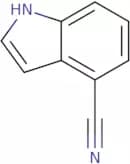
Formula:C7H3Cl2NPurity:Min. 95%Color and Shape:PowderMolecular weight:172.01 g/mol4-Cyanoindole
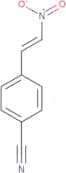
CAS:The 4-cyanoindole is a fluorescent molecule that binds to proteins and affects protein homeostasis. It has been shown to bind to the sodium salt form of proteins, which are typically found in human liver cells. The binding of 4-cyanoindole to these proteins leads to its reduction by borohydride and fluorescence resonance energy transfer (FRET) between the molecule and the protein. This binding can be detected using a fluorescence lifetime spectroscopy technique, which detects changes in the fluorescence's lifetime as well as intensity. The binding of 4-cyanoindole to proteins has been shown to have anti-cancer properties. It has also been used for detection of monoclonal antibodies against cancer cells or for fluorescent labeling of cancer cells for immunofluorescent microscopy.Formula:C9H6N2Color and Shape:White PowderMolecular weight:142.16 g/mol1-(4-Cyanophenyl)-2-nitroethene
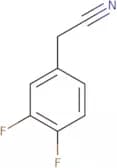
CAS:1-(4-Cyanophenyl)-2-nitroethene is a reactive intermediate that belongs to the group of carboxylic acids. It is an unsaturated compound with a cinnamic acid derivative. The nitration of 1-(4-cyanophenyl)-2-nitroethene leads to the formation of 1,2-dinitrobenzene, which can be used for the synthesis of other heterocyclic compounds. This intermediate has been shown to have catalytic activity in biomolecules, including carboxylic and phenolic groups, and can be used for the synthesis of other organic compounds.Formula:C9H6N2O2Purity:Min. 95%Molecular weight:174.16 g/mol3,4-Difluorophenylacetonitrile
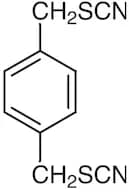
CAS:3,4-Difluorophenylacetonitrile is a fine chemical that is used as a reagent for the synthesis of complex compounds. It can be used as a useful intermediate for the production of fine chemicals and speciality chemicals. 3,4-Difluorophenylacetonitrile has been shown to be useful in the synthesis of versatile building blocks, which are reaction components that can be used in many different reactions. This compound has also been shown to be an excellent scaffold for the development of new drugs that target cancer cells.Formula:C8H5F2NPurity:Min. 95%Color and Shape:Clear LiquidMolecular weight:153.13 g/molp-Xylylene Dithiocyanate
CAS:Formula:C10H8N2S2Purity:>98.0%(GC)Color and Shape:White to Almost white powder to crystalineMolecular weight:220.313-Cyano-4-fluorobenzoic acid
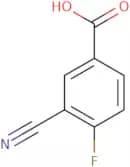
CAS:3-Cyano-4-fluorobenzoic acid is a fluorinated analog of 3-cyano-4-fluorobenzoic acid, which has been shown to be effective in the treatment of prostate cancer. It is a prodrug that is metabolized by activated esterases to release the active form. The 18F radiolabeled form of 3-Cyano-4-fluorobenzoic acid has a high affinity for prostate carcinoma cells and has been used as a diagnostic agent. This drug also has an excellent pharmacokinetic profile and can be used as a nonradioactive tracer for imaging tumor cells in vivo.Formula:C8H4FNO2Purity:Min. 95%Color and Shape:White To Off-White SolidMolecular weight:165.12 g/mol1,3-Bis(dicyanomethylidene)indan
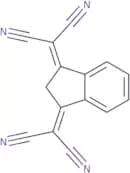
CAS:1,3-Bis(dicyanomethylidene)indan is a supramolecular dye that has been shown to form complexes with a variety of acceptors. The interaction between the dye and the acceptor is determined by the dipole moment, polarity, and electron affinity of the two molecules. 1,3-Bis(dicyanomethylidene)indan has been shown to interact with viologen and anion donors as well as organic dyes such as methylene blue. 1,3-Bis(dicyanomethylidene)indan has also been used in optical devices such as light emitting diodes (LEDs).
Formula:C15H6N4Purity:Min. 95%Color and Shape:PowderMolecular weight:242.24 g/mol