Cyano-, Nitrile-
Cyano and nitrile compounds are organic molecules that contain cyano (C≡N) or nitrile groups in their structure, characterized by the presence of nitrogen. These groups play important roles in various chemical reactions and industrial applications. In this category, you will find a wide range of cyano and nitrile compounds, ranging from simple to complex structures. At CymitQuimica, we offer high-quality cyano and nitrile compounds tailored to meet research and industrial needs. Our compounds are suitable for a variety of synthesis and analytical applications.
Found 9618 products of "Cyano-, Nitrile-"
Sort by
Purity (%)
0
100
|
0
|
50
|
90
|
95
|
100
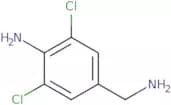
4-Amino-3,5-dichlorobenzylamine dihydrochloride
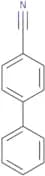
CAS:<p>4-Amino-3,5-dichlorobenzylamine dihydrochloride is a chemical intermediate that can be used as a reagent for the synthesis of other compounds. 4-Amino-3,5-dichlorobenzylamine dihydrochloride is considered to be a high quality chemical with versatile uses. It is listed in the Chemical Abstracts Service (CAS) registry under 164648-75-3, and can be obtained from various suppliers.</p>Formula:C7H8Cl2N2·2HClPurity:Min. 95%Color and Shape:PowderMolecular weight:263.98 g/mol4-Cyanobiphenyl
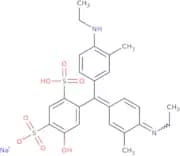
CAS:<p>4-Cyanobiphenyl is a contaminant of the environment. It is a reactive substance that can be found in the air, soil, and water. 4-Cyanobiphenyl is an active substance that can be used as an intermediate for the production of other chemicals. The chemical structure of 4-cyanobiphenyl has been elucidated by using a number of spectroscopic techniques including Raman spectroscopy. 4-Cyanobiphenyl is unstable in acidic conditions and reacts with chloride ions to form crotonic acid and benzoate. This reaction also occurs under basic conditions with biphenyl to form benzoate and low energy products such as benzene or phenol.</p>Formula:C13H9NPurity:Min. 95%Color and Shape:Off-White PowderMolecular weight:179.22 g/molXylene cyanol
CAS:<p>Xylene cyanol is a chemical compound that belongs to the group of phenols. It has been shown to be active in vitro against human skin cancer cells, and induces cell lysis. Xylene cyanol has also been found to bind to the BCR-ABL kinase domain, which is an enzyme that plays a crucial role in the development of leukemia and other autoimmune diseases. Xylene cyanol binds to dna binding domains on the protein surface and forms an adduct with bcr-abl kinase, which inhibits its activity. This inhibition prevents activation of this enzyme and leads to cell death by preventing DNA synthesis.</p>Formula:C25H27N2O7S2•NaPurity:Min. 90%Color and Shape:PowderMolecular weight:554.61 g/mol4-Bromobenzylamine
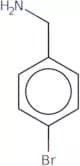
CAS:<p>4-Bromobenzylamine is a chemical compound that has been used to study the process optimization of sephadex g-100. It is also used as a chemotherapeutic treatment for cancer. 4-Bromobenzylamine binds to intracellular targets, such as nitrogen atoms and cell lysis, with physiological levels found in fetal bovine serum. The nitrogen atom is an essential structural component of 4-bromobenzylamine that is necessary for its biological activity and may be involved in binding to DNA polymerase. This drug has been shown to inhibit the growth of metastatic colorectal cancer cells by inhibiting cellular proliferation. Structural analysis has revealed that 4-bromobenzylamine interacts with the polymerase chain reaction (PCR) enzyme and inhibits the ability of DNA polymerases to add nucleotides to the growing strand of DNA.</p>Formula:C7H8BrNPurity:Min. 95%Color and Shape:PowderMolecular weight:186.05 g/mol2-Cyanobenzamide
CAS:<p>2-Cyanobenzamide is a corrosion inhibitor that is used in the electrochemical industry to protect metals from corrosion. It has been shown to be suitable for use as a corrosion inhibitor in salt water and other corrosive environments. 2-Cyanobenzamide has been shown to have light sensitive properties, which is why it should not be exposed to direct light or stored in dark containers. It also inhibits enzymes that are involved in the production of reactive oxygen species (ROS) such as superoxide anion and hydrogen peroxide. The reaction of 2-cyanobenzamide with aluminium, sodium sulfide, and polymeric matrices has also been studied extensively.<br>2-Cyanobenzamide can be synthesized by reacting benzoyl chloride with ammonia and cyanogen bromide. This reaction produces a mixture of mono-, di-, tri-, and tetramers of 2-cyanobenzamide. These products can then be separated using analytical methods such as</p>Formula:C8H6N2OPurity:Min. 95%Molecular weight:146.15 g/mol4-Aminophenylacetonitrile
CAS:<p>4-Aminophenylacetonitrile is a molecule that is structurally similar to nitrobenzene. 4-Aminophenylacetonitrile has been shown to be an efficient method for inhibiting faecalis growth and secretory phospholipase A2 (sPLA2) activity in vitro. It also inhibits the population growth of E. coli in vivo, which can be attributed to its ability to inhibit the enzyme catalysed by hydrogen bond formation.</p>Formula:C8H8N2Purity:Min. 95%Color and Shape:PowderMolecular weight:132.16 g/moltert-Butyl 4-cyanobenzylcarbamate
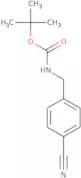
CAS:<p>tert-Butyl 4-cyanobenzylcarbamate (tB4Cbz) is a high quality chemical that can be used as a reagent, complex compound, or useful intermediate in the production of fine chemicals. Tert-Butyl 4-cyanobenzylcarbamate is also a useful scaffold for the synthesis of speciality chemicals and research chemicals. It can be used as a versatile building block for reactions involving amides, nitriles, esters, and amines.</p>Formula:C13H16N2O2Purity:Min. 95%Color and Shape:PowderMolecular weight:232.28 g/molCyano-3-phenoxybenzyl 3-(2,2-dichloroethenyl)-2,2-dimethylcyclopropanecarboxylate
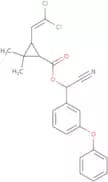
CAS:<p>Cypermethrin is an insecticide that belongs to the family of chemical pesticides. It is used in agriculture and in public health to control malaria-transmitting mosquitoes, head lice, and scabies mites. Cypermethrin disrupts the insect nervous system by inhibiting the function of synapses between nerves, resulting in paralysis and death. The compound also affects signal pathways that regulate locomotor activity and enzyme activities. Cypermethrin has been shown to have a high resistance to degradation by glycol ethers such as ethylene glycol monomethyl ether acetate (EGMEA). It has an optimum concentration of 0.01 ppm for mosquito control and 0.1 ppm for lice control. The analytical method involves liquid chromatography with sodium citrate as an ion-pairing agent and a linear calibration curve using a standard curve generated from known concentrations of cypermethrin.</p>Formula:C22H19Cl2NO3Purity:Min. 95%Color and Shape:Colorless Clear LiquidMolecular weight:416.3 g/mol4-(Benzyloxy)-3-methoxyphenylacetonitrile
CAS:<p>4-(Benzyloxy)-3-methoxyphenylacetonitrile is an anti-cancer drug that belongs to the class of dihydroisoquinolines. It is used as a monomer in the synthesis of other drugs and it has been shown to be an effective inhibitor of cancer cells when used with carbamic acid. 4-(Benzyloxy)-3-methoxyphenylacetonitrile is synthesised through the reaction of 2,4-dichloroisonicotinic acid and 3-fluoroacetamide in the presence of a strong acid catalyst. This compound has been shown to have a high level of stereoselectivity, which makes it useful for synthesising other compounds.</p>Formula:C16H15NO2Purity:Min. 95%Color and Shape:PowderMolecular weight:253.3 g/mol2-Bromo-5-cyanonitrobenzene
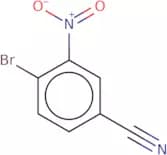
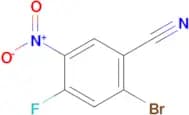
CAS:<p>2-Bromo-5-cyanonitrobenzene is a chemical compound that has been shown to have broad-spectrum activity against drug-resistant bacteria. It is able to kill gram-negative and gram-positive bacteria, including drug-resistant strains. The mechanism of action for 2-bromo-5-cyanonitrobenzene is not well understood but it has been observed that the molecule undergoes an oxidative cyclization reaction in the presence of chloride ions or hydroxides. This process leads to the formation of a nitrosobenzene metabolite which reacts with DNA to inhibit protein synthesis and cause cell death. 2-Bromo-5-cyanonitrobenzene has also been shown to be potent against a wide range of different types of bacteria, including those most commonly associated with skin infections, respiratory tract infections, and urinary tract infections.</p>Formula:C7H3BrN2O2Purity:Min. 95%Color and Shape:PowderMolecular weight:227.02 g/mol1,2-Diphenyl-1-cyanoethylene
CAS:<p>1,2-Diphenyl-1-cyanoethylene is a molecule that is involved in the cancer process. It has been shown to inhibit the growth of skin cancer cells and other types of cancer cells by binding to mitochondria and inhibiting the formation of proton gradients across mitochondrial membranes. This inhibition leads to a decrease in cellular ATP production and an increase in reactive oxygen species (ROS), resulting in cell death. 1,2-Diphenyl-1-cyanoethylene also has anticancer activity due to its ability to induce light emission from the skin and interfere with the optical properties of holothuria, which are sea cucumbers.</p>Formula:C15H11NPurity:Min. 95%Color and Shape:PowderMolecular weight:205.25 g/mol2,4,6-Trimethoxybenzonitrile
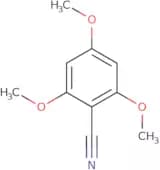
CAS:<p>2,4,6-Trimethoxybenzonitrile is a ligand that forms coordination complexes with metal ions. It can be used to make N-oxide compounds and reaction products with aryl chlorides. The 2,4,6-trimethoxybenzonitrile ligand has been shown to form cross-coupling complexes with benzotriazolyl. This compound is soluble in organic solvents and has a vapor pressure of 0.0025 mm Hg at 25°C. The molecular weight of this compound is 196.2 g/mol and its melting point is 190°C. 2,4,6-Trimethoxybenzonitrile has a symmetric molecule in the gas phase and an asymmetric molecule in solution due to the interactions of hydrogen bonding and van der Waals forces.</p>Formula:C10H11NO3Purity:Min. 95%Color and Shape:PowderMolecular weight:193.2 g/molN,N-Diethylcyanoacetamide
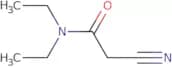
CAS:<p>N,N-Diethylcyanoacetamide is an organic compound that is used in the industrial production of polyurethane. It reacts with a nucleophile to form a new carbon-nitrogen bond. The reaction can be monitored in real time, and it has high specificity for the desired product. N,N-Diethylcyanoacetamide reacts with piperidine to produce a mixture of isomers in which the methyl group is attached to either the nitrogen or the oxygen atom. This mixture can be separated by crystallization, and it generates a pure product that can be used as a monocarboxylic acid.</p>Formula:C7H12N2OPurity:Min. 95%Color and Shape:Clear LiquidMolecular weight:140.18 g/mol1-Cyano-4-(dimethylamino)pyridinium tetrafluoroborate
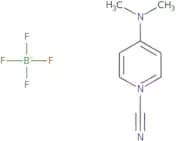
CAS:<p>1-Cyano-4-(dimethylamino)pyridinium tetrafluoroborate (CDAP) is an organic cyanylating agent. It is reactive under acidic conditions giving CDAP an advantage over other sulfhydryl labeling agents, as it can avoid potential thiol-disulfide exchange.</p>Formula:C8H10N3BF4Purity:Min. 98 Area-%Color and Shape:PowderMolecular weight:234.99 g/mol3-Cyano-5-bromopyridine
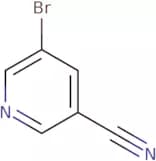
CAS:<p>3-Cyano-5-bromopyridine is an enantiopure organic compound that belongs to the group of halides. It is a functional group that is a reagent in organic synthesis, and it can be used as a precursor to dyestuffs. 3-Cyano-5-bromopyridine has been shown to have antimicrobial activity against bacteria and fungi. It also has a metabotropic glutamate receptor subtype selective affinity, which may be due to its ability to bind with glutamate in complex molecules.</p>Formula:C6H3BrN2Purity:Min. 95%Color and Shape:White To Beige To Light (Or Pale) Yellow SolidMolecular weight:183.01 g/mol4-Aminobenzonitrile
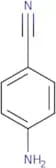
CAS:<p>4-Aminobenzonitrile is a chemical compound that has been shown to be an antimicrobial agent. It has been found to be active against bacteria and fungi, such as Candida albicans and Aspergillus niger. 4-Aminobenzonitrile binds with epidermal growth factor (EGF) by intramolecular hydrogen bonding, which leads to the disruption of the protein's tertiary structure. The nitrogen atoms in this compound have been shown to react with water vapor at high temperatures, which results in the release of hydrogen gas. This reaction can be used for phase transition temperature studies. 4-Aminobenzonitrile also shows intermolecular hydrogen bonding with fatty acids, which causes the molecule to change its shape and protonation state. These changes affect its frequency shift and molecular modeling study results.</p>Formula:C7H6N2Purity:Min. 95%Color and Shape:Off-White PowderMolecular weight:118.14 g/mol4-Cyano-2-hydroxybenzaldehyde
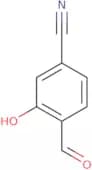
CAS:<p>4-Cyano-2-hydroxybenzaldehyde is a high quality chemical that can be used as a reagent and intermediate in the synthesis of complex compounds. It is also an important building block in the synthesis of fine chemicals. 4-Cyano-2-hydroxybenzaldehyde has been used as a versatile building block in the synthesis of organic compounds, useful scaffolds in medicinal chemistry, and reactive intermediates. It has also been shown to have anti-inflammatory properties and may be a potential treatment for inflammatory bowel disease.</p>Formula:C8H5NO2Purity:Min. 95%Molecular weight:147.13 g/molN-Cyanomorpholine
CAS:<p>N-Cyanomorpholine is a synthetic compound that is used as a reagent in organic synthesis. It has been shown to form stable complexes with amines, such as aniline and pyridine. In addition, it can be used in the intramolecular hydrogenation of alkenes, which is catalyzed by palladium on carbon. N-Cyanomorpholine was found to be effective against some viruses, such as herpes simplex virus type 1 and influenza virus type A. It also has been validated for use in the synthesis of dianthus caryophyllus and acrylonitrile.</p>Formula:C5H8N2OPurity:Min. 95%Molecular weight:112.13 g/molPhenoxyacetonitrile
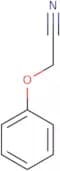
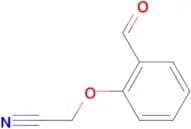
CAS:<p>Phenoxyacetonitrile is an efficient method for the synthesis of ethylene diamine by the reaction of hydrochloric acid, chloride and a carbon source. The nitro group can be reduced to an amine or a hydroxyl group by hydrogen chloride in acetonitrile. This method has been used in the synthesis of drugs such as acyclovir and penciclovir. Phenoxyacetonitrile also inhibits growth factor production, which may be due to its inhibitory properties on the enzyme houben-hoesch reaction.</p>Formula:C8H7NOPurity:Min. 95%Molecular weight:133.15 g/mol(2,3-Dichlorophenyl)acetonitrile
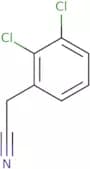
CAS:<p>(2,3-Dichlorophenyl)acetonitrile is a fine chemical that is useful as a building block in the synthesis of more complex compounds. It has been used in research as a reagent and as a speciality chemical. (2,3-Dichlorophenyl)acetonitrile reacts with many different types of compounds to form new molecules. This intermediate can be used in the synthesis of many different types of compounds and also serves as an important scaffold for larger molecules.</p>Formula:C8H5Cl2NPurity:Min. 95%Color and Shape:PowderMolecular weight:186.04 g/mol2,6-Dichlorophenylacetonitrile
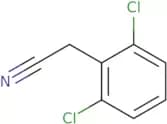
CAS:<p>2,6-Dichlorophenylacetonitrile (2,6-DCPA) is a cyanide herbicide that controls weed growth. 2,6-DCPA is used as a preemergent herbicide and is applied to the soil before planting. It can be mixed with calcium oxide or other materials to form a dust, which is then applied to the soil surface. 2,6-DCPA inhibits plant growth by interfering with the photosynthesis process, which may be due to its high cytotoxicity. The exact mechanism of action has not been determined but it may be due to interference with chloride transport or ethyl esters production in plants. This chemical has also been shown to inhibit amine metabolism in plants and animals.<br>2,6-DCPA has two isomers: cis and trans. They differ only in the position of the chlorine atom on the benzene ring: cis (left) and trans (right).</p>Formula:C8H5Cl2NPurity:Min. 95%Color and Shape:White PowderMolecular weight:186.04 g/mol4-Hydroxy-3-methoxybenzylamine hydrochloride
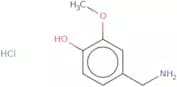
CAS:<p>4-Hydroxy-3-methoxybenzylamine hydrochloride is a reagent, complex compound and useful intermediate for the production of speciality chemicals. CAS No. 7149-10-2 is not a hazardous chemical and does not pose any significant risk to human health or the environment when used as intended. This chemical has many uses including being a useful scaffold in organic synthesis, a useful building block for the preparation of other compounds, and a versatile building block for the preparation of various compounds. It also has many applications in research such as being an intermediate for the synthesis of other compounds, or as a reactant in various reactions.</p>Formula:C8H12NO2ClPurity:Min. 98 Area-%Color and Shape:White PowderMolecular weight:189.64 g/mol3,4-Difluoro-5-nitrobenzonitrile
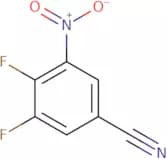
CAS:<p>3,4-Difluoro-5-nitrobenzonitrile is a hepatotoxic compound that is found in the environment. It has been shown to cause cirrhosis and overgrowth of the liver. 3,4-Difluoro-5-nitrobenzonitrile also inhibits hepatic encephalopathy and may be used to treat liver disease. This toxicant has been detected in the bowel and duodenum of humans with nonalcoholic steatohepatitis, as well as in the jejunum and duodenum of mice with spontaneous steatohepatitis. It also causes nonalcoholic steatohepatitis when given orally to rats.</p>Formula:C7H2F2N2O2Purity:Min. 95%Color and Shape:Yellow PowderMolecular weight:184.1 g/mol4-Cyano-4'-octylbiphenyl
CAS:<p>4-Cyano-4'-octylbiphenyl is a molecule that consists of an aromatic ring with two alkyl chains. This compound has been shown to be a model system for studying solute transport in liquids and gases. 4-Cyano-4'-octylbiphenyl also has the ability to form intramolecular hydrogen bonds, which are important for the fluidity of the substance. At high temperatures, this compound undergoes a phase transition from liquid to solid due to dipole interactions between molecules.</p>Formula:C21H25NPurity:Min. 95%Color and Shape:Colorless PowderMolecular weight:291.43 g/mol4-(4,4-Dimethyl-2,5-dioxoimidazolidin-1-yl)-2-trifluoromethylbenzonitrile
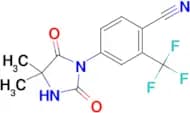
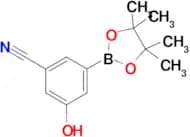
CAS:Formula:C13H10F3N3O2Purity:95%Molecular weight:297.2373-Hydroxy-5-(4,4,5,5-tetramethyl-1,3,2-dioxaborolan-2-yl)benzonitrile
CAS:Purity:95%Color and Shape:SolidMolecular weight:245.08999632-(3-Cyano-4-isobutoxyphenyl)-4-methylthiazole-5-carboxylic acid
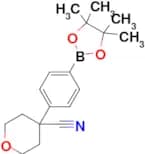
CAS:Formula:C16H16N2O3SPurity:95%Molecular weight:316.384-(4-(4,4,5,5-Tetramethyl-1,3,2-dioxaborolan-2-yl)phenyl)tetrahydro-2H-pyran-4-carbonitrile
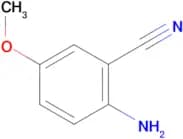
CAS:Purity:98%Color and Shape:SolidMolecular weight:313.20001222-Amino-5-methoxybenzonitrile
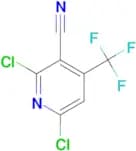
CAS:Formula:C8H8N2OPurity:95%Color and Shape:SolidMolecular weight:148.1653-Cyano-2,6-dichloro-4-(trifluoromethyl)pyridine
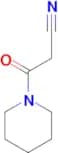
CAS:Formula:C7HCl2F3N2Purity:98%Color and Shape:SolidMolecular weight:240.993-Oxo-3-piperidin-1-ylpropanenitrile
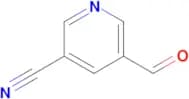
CAS:Formula:C8H12N2OPurity:97%Color and Shape:Solid, CrystallineMolecular weight:152.1975-Formylnicotinonitrile
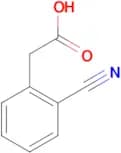
CAS:Formula:C7H4N2OPurity:97%Color and Shape:White powderMolecular weight:132.1222-(2-Cyanophenyl)acetic acid
CAS:Formula:C9H7NO2Purity:95%Color and Shape:Solid, White powderMolecular weight:161.163-(3-Cyano-phenyl)-acrylic acid methyl ester
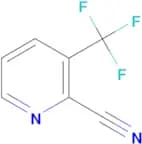
CAS:Formula:C11H9NO2Purity:97%Color and Shape:PowderMolecular weight:187.1983-(Trifluoromethyl)picolinonitrile
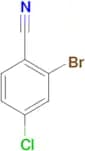
CAS:Formula:C7H3F3N2Purity:97%Color and Shape:LiquidMolecular weight:172.112-Bromo-4-chlorobenzonitrile
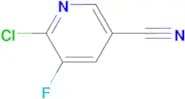
CAS:Formula:C7H3BrClNPurity:97%Color and Shape:SolidMolecular weight:216.466-Chloro-5-fluoronicotinonitrile
CAS:Formula:C6H2ClFN2Purity:96%Color and Shape:Liquid, No data available.Molecular weight:156.542-Amino-5,6,7,8-tetrahydro-4 H -cyclohepta[ b ]thiophene-3-carbonitrile
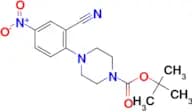
CAS:Formula:C10H12N2SPurity:95%Color and Shape:Solid, CrystallineMolecular weight:192.28tert-Butyl 4-(2-cyano-4-nitrophenyl)piperazine-1-carboxylate
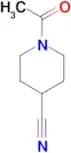
CAS:Formula:C16H20N4O4Purity:98%Molecular weight:332.361-Acetyl-piperidine-4-carbonitrile
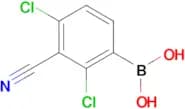
CAS:Formula:C8H12N2OPurity:95%Color and Shape:SolidMolecular weight:152.1972,4-Dichloro-3-cyanophenylboronic acid
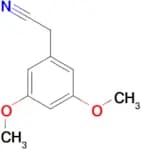
CAS:Formula:C7H4BCl2NO2Purity:98%Color and Shape:SolidMolecular weight:215.823,5-Dimethoxyphenylacetonitrile
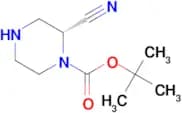
CAS:Formula:C10H11NO2Purity:96%Color and Shape:Solid, Crystalline Powder or Fibers or PowderMolecular weight:177.203(R)-tert-Butyl 2-cyanopiperazine-1-carboxylate
CAS:Formula:C10H17N3O2Purity:95%Color and Shape:Liquid, No data available.Molecular weight:211.2653-Fluoro-5-nitrobenzonitrile
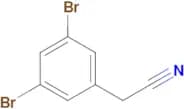
CAS:Formula:C7H3FN2O2Purity:98%Color and Shape:SolidMolecular weight:166.1113,5-Dibromobenzylcyanide
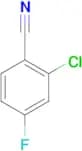
CAS:Formula:C8H5Br2NPurity:95%Color and Shape:No data available.Molecular weight:274.9432-Chloro-4-fluorobenzonitrile
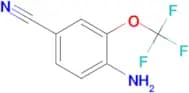
CAS:Formula:C7H3ClFNPurity:98%Color and Shape:SolidMolecular weight:155.564-Amino-3-(trifluoromethoxy)benzonitrile
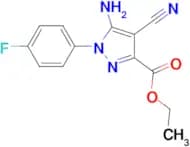
CAS:Formula:C8H5F3N2OPurity:97%Color and Shape:SolidMolecular weight:202.136Ethyl 5-amino-4-cyano-1-(4-fluorophenyl)-1H-pyrazole-3-carboxylate
CAS:Formula:C13H11FN4O2Purity:98%Molecular weight:274.2554-Fluoro-3-nitrobenzonitrile
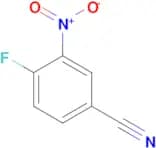
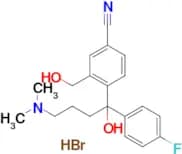
CAS:Formula:C7H3FN2O2Purity:97%Color and Shape:Crystalline PowderMolecular weight:166.1114-(4-(Dimethylamino)-1-(4-fluorophenyl)-1-hydroxybutyl)-3-(hydroxymethyl)benzonitrile hydrobromide
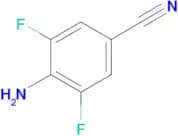
CAS:Purity:98%Molecular weight:423.32598884-Amino-3,5-difluorobenzonitrile
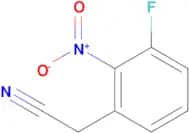
CAS:Formula:C7H4F2N2Purity:95%Color and Shape:LiquidMolecular weight:154.122-(3-Fluoro-2-nitrophenyl)acetonitrile
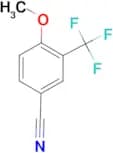
CAS:Formula:C8H5FN2O2Purity:97%Color and Shape:SolidMolecular weight:180.1384-Methoxy-3-(trifluoromethyl)benzonitrile
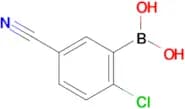
CAS:Formula:C9H6F3NOPurity:97%Color and Shape:SolidMolecular weight:201.1482-Chloro-5-cyanophenylboronic acid
CAS:Formula:C7H5BClNO2Purity:98%Color and Shape:SolidMolecular weight:181.382-(4,4,5,5-Tetramethyl-1,3,2-dioxaborolan-2-yl)benzonitrile
CAS:Formula:C13H16BNO2Purity:97%Color and Shape:White powderMolecular weight:229.093-(4-(4,4,5,5-Tetramethyl-1,3,2-dioxaborolan-2-yl)-1H-pyrazol-1-yl)butanenitrile
CAS:Purity:95%Molecular weight:261.13000492-Amino-2-[3-(trifluoromethyl)phenyl]acetonitrile hydrochloride
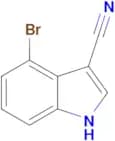
CAS:Purity:95%Molecular weight:236.61999514-Bromo-1H-indole-3-carbonitrile
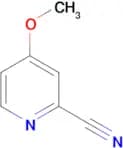
CAS:Formula:C9H5BrN2Purity:97%Color and Shape:SolidMolecular weight:221.0574-Methoxypyridine-2-carbonitrile
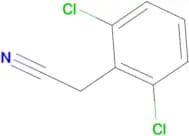
CAS:Formula:C7H6N2OPurity:98%Color and Shape:SolidMolecular weight:134.1382,6-Dichlorophenylacetonitrile
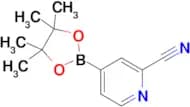
CAS:Formula:C8H5Cl2NPurity:98%Color and Shape:SolidMolecular weight:186.042-Cyanopyridine-4-boronic acid pinacol ester
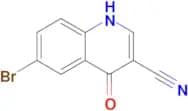
CAS:Formula:C12H15BN2O2Purity:98%Color and Shape:SolidMolecular weight:230.076-bromo-4-oxo-1,4-dihydroquinoline-3-carbonitrile
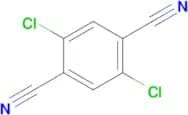
CAS:Formula:C10H5BrN2OPurity:96%Molecular weight:249.0672,5-Dichloroterephthalonitrile
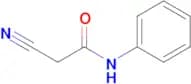
CAS:Formula:C8H2Cl2N2Purity:96%Color and Shape:SolidMolecular weight:197.022-cyano-N-[3-(trifluoromethyl)phenyl]acetamide
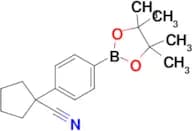
CAS:Formula:C10H7F3N2OPurity:98%Molecular weight:228.1741-(4-(4,4,5,5-Tetramethyl-1,3,2-dioxaborolan-2-yl)phenyl)cyclopentane-1-carbonitrile
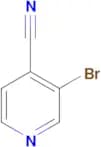
CAS:Purity:98%Molecular weight:297.20999153-Bromo-4-cyanopyridine
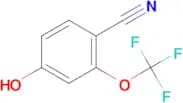
CAS:Formula:C6H3BrN2Purity:95%Color and Shape:Solid, Yellow powderMolecular weight:183.0084-HYDROXY-2-(TRIFLUOROMETHOXY)BENZONITRILE
CAS:Formula:C8H4F3NO2Purity:95%Color and Shape:SolidMolecular weight:203.124-(4-((4-(Benzo[d]thiazol-2-yl(cyano)methyl)pyrimidin-1-ium-2-yloxy)methyl)benzyl)morpholin-4-ium (2,2,2-trifluoroacetate)
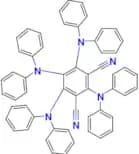
Purity:96%Molecular weight:685.62,4,5,6-Tetrakis(diphenylamino)isophthalonitrile
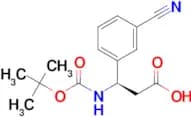
CAS:Purity:96%Color and Shape:SolidMolecular weight:796.9780273(R)-3-((tert-Butoxycarbonyl)amino)-3-(3-cyanophenyl)propanoic acid
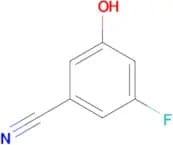
CAS:Formula:C15H18N2O4Purity:98%Color and Shape:Liquid, No data available.Molecular weight:290.3193-Fluoro-5-hydroxybenzonitrile
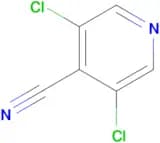
CAS:Formula:C7H4FNOPurity:95%Color and Shape:SolidMolecular weight:137.1133,5-Dichloroisonicotinonitrile
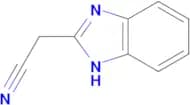
CAS:Formula:C6H2Cl2N2Purity:97%Color and Shape:SolidMolecular weight:1732-(Cyanomethyl)benzimidazole
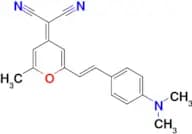
CAS:Formula:C9H7N3Purity:97%Color and Shape:Solid, Grey powderMolecular weight:157.176(E)-2-(2-(4-(DIMETHYLAMINO)STYRYL)-6-METHYL-4H-PYRAN-4-YLIDENE)MALONONITRILE
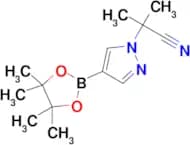
CAS:Formula:C19H17N3OPurity:95%Molecular weight:303.3652-METHYL-2-(4-(4,4,5,5-TETRAMETHYL-1,3,2-DIOXABOROLAN-2-YL)-1H-PYRAZOL-1-YL)PROPANENITRILE
CAS:Formula:C13H20BN3O2Purity:95+%Molecular weight:261.134-Bromo-6-hydroxypyrazolo[1,5-a]pyridine-3-carbonitrile
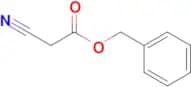
CAS:Formula:C8H4BrN3OPurity:96%Molecular weight:238.044Benzyl cyanoacetate
CAS:Formula:C10H9NO2Purity:97%Color and Shape:Liquid, ClearMolecular weight:175.187tert-Butyl (5-cyanopyridin-2-yl)carbamate
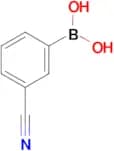
CAS:Formula:C11H13N3O2Purity:97%Color and Shape:SolidMolecular weight:219.2443-Cyanophenylboronic acid
CAS:Formula:C7H6BNO2Purity:97%Color and Shape:Solid, Powder or Crystalline PowderMolecular weight:146.945-Bromoisophthalonitrile
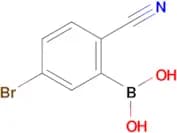
CAS:Formula:C8H3BrN2Purity:95%Color and Shape:Solid, Pale-yellow to yellow-brown solidMolecular weight:207.03(5-Bromo-2-cyanophenyl)boronic acid
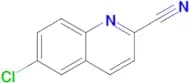
CAS:Formula:C7H5BBrNO2Purity:94%Color and Shape:SolidMolecular weight:225.846-Chloroquinoline-2-carbonitrile
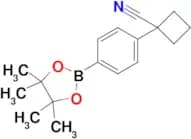
CAS:Formula:C10H5ClN2Purity:98%Color and Shape:SolidMolecular weight:188.611-(4-(4,4,5,5-Tetramethyl-1,3,2-dioxaborolan-2-yl)phenyl)cyclobutanecarbonitrile
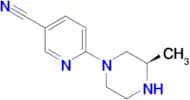
CAS:Purity:95+%Molecular weight:283.1799927(R)-6-(3-Methylpiperazin-1-yl)nicotinonitrile
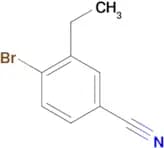
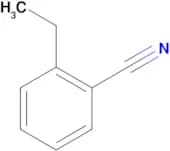
CAS:Formula:C11H14N4Purity:97%Color and Shape:No data available.Molecular weight:202.2614-Bromo-3-ethylbenzonitrile
CAS:Formula:C9H8BrNPurity:96%Color and Shape:SolidMolecular weight:210.0742-{6-hydroxy-4H-cyclopenta[b]thiophen-4-ylidene}propanedinitrile
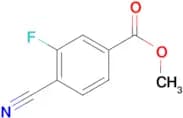
CAS:Purity:98%Molecular weight:200.2200012Methyl 4-cyano-3-fluorobenzoate
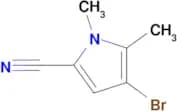
CAS:Formula:C9H6FNO2Purity:95%Color and Shape:SolidMolecular weight:179.154-bromo-1,5-dimethyl-1H-pyrrole-2-carbonitrile
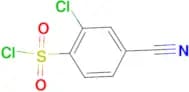
CAS:Formula:C7H7BrN2Purity:98%Color and Shape:SolidMolecular weight:199.0512-Chloro-4-cyano-benzenesulfonyl chloride
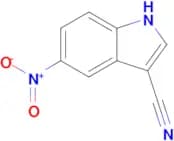
CAS:Formula:C7H3Cl2NO2SPurity:98%Color and Shape:SolidMolecular weight:236.075-Nitro-1H-indole-3-carbonitrile
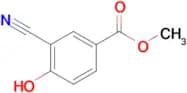
CAS:Formula:C9H5N3O2Purity:97%Color and Shape:SolidMolecular weight:187.158Methyl 3-cyano-4-hydroxybenzoate
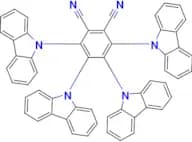
CAS:Formula:C9H7NO3Purity:95%Color and Shape:SolidMolecular weight:177.1593,4,5,6-tetrakis(carbazol-9-yl)-1,2-dicyanobenzene
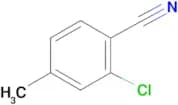
CAS:Purity:95%Color and Shape:SolidMolecular weight:788.91400152-Chloro-4-methylbenzonitrile
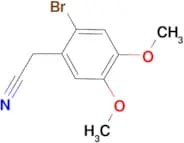
CAS:Formula:C8H6ClNPurity:96%Color and Shape:SolidMolecular weight:151.592-Bromo-4,5-dimethoxyphenylacetonitrile
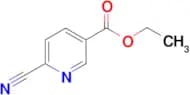
CAS:Formula:C10H10BrNO2Purity:95%Color and Shape:SolidMolecular weight:256.099Ethyl 6-cyanonicotinate
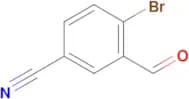
CAS:Formula:C9H8N2O2Purity:98%Color and Shape:Solid, Yellow powderMolecular weight:176.1754-Bromo-3-formylbenzonitrile
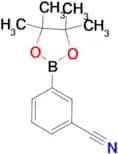
CAS:Formula:C8H4BrNOPurity:97%Color and Shape:SolidMolecular weight:210.033-(4,4,5,5-Tetramethyl-1,3,2-dioxaborolan-2-yl)benzonitrile
CAS:Formula:C13H16BNO2Purity:95%Color and Shape:Crystalline PowderMolecular weight:229.09Ethyl 4-amino-5-cyano-2-hydroxy-3-methylbenzoate
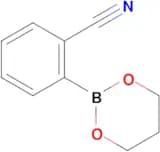
CAS:Formula:C11H12N2O3Purity:97%Color and Shape:No data available.Molecular weight:220.2282-Cyanophenylboronic acid,1,3-propanediol
CAS:Formula:C10H10BNO2Purity:97%Color and Shape:SolidMolecular weight:187.015,7-Dichloropyrazolo[1,5-a]pyrimidine-3-carbonitrile
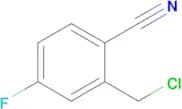
CAS:Formula:C7H2Cl2N4Purity:97%Color and Shape:Solid, Yellow powderMolecular weight:213.022-CYANO-5-FLUOROBENZYL CHLORIDE
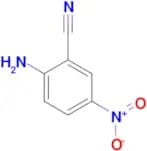
CAS:Formula:C8H5ClFNPurity:97%Color and Shape:No data available.Molecular weight:169.585-Nitroanthranilonitrile
CAS:Formula:C7H5N3O2Purity:95%Color and Shape:Solid, Crystalline PowderMolecular weight:163.136tert-Butyl 4-((4-bromobenzyl)amino)-4-cyanopiperidine-1-carboxylate
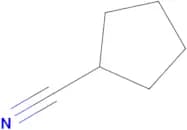
Purity:95%Molecular weight:394.3129883CYCLOPENTANECARBONITRILE
CAS:Formula:C6H9NPurity:95%Color and Shape:Liquid, No data available.Molecular weight:95.145Ref: 10-F761079
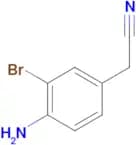
1g760.00€5g2,200.00€10g3,262.00€2.5g1,488.00€50mg217.00€100mg305.00€250mg421.00€500mg645.00€(4-Amino-3-bromophenyl)acetonitrile
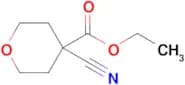
CAS:Formula:C8H7BrN2Purity:95%Color and Shape:SolidMolecular weight:211.062ETHYL 4-CYANOTETRAHYDRO-2H-PYRAN-4-CARBOXYLATE
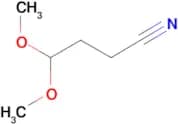
CAS:Formula:C9H13NO3Purity:97%Color and Shape:LiquidMolecular weight:183.2074,4-Dimethoxybutyronitrile
CAS:Formula:C6H11NO2Purity:98%Color and Shape:LiquidMolecular weight:129.159










![2-Amino-5,6,7,8-tetrahydro-4 H -cyclohepta[ b ]thiophene-3-carbonitrile](/_next/image/?url=https%3A%2Fstatic.cymitquimica.com%2Fproducts%2F10%2Fthumb-webp%2FF030582.webp&w=3840&q=75)
![1H-Pyrazolo[3,4-b]pyridine-3-carbonitrile, 5-fluoro-](/_next/image/?url=https%3A%2Fstatic.cymitquimica.com%2Fproducts%2F10%2Fthumb-webp%2FF861634.webp&w=3840&q=75)







![2-Amino-2-[3-(trifluoromethyl)phenyl]acetonitrile hydrochloride](/_next/image/?url=https%3A%2Fstatic.cymitquimica.com%2Fproducts%2F10%2Fthumb-webp%2FF669210.webp&w=3840&q=75)

![2-cyano-N-[3-(trifluoromethyl)phenyl]acetamide](/_next/image/?url=https%3A%2Fstatic.cymitquimica.com%2Fproducts%2F10%2Fthumb-webp%2FF426297.webp&w=3840&q=75)
![4-(4-((4-(Benzo[d]thiazol-2-yl(cyano)methyl)pyrimidin-1-ium-2-yloxy)methyl)benzyl)morpholin-4-ium …](/_next/image/?url=https%3A%2Fstatic.cymitquimica.com%2Fproducts%2F10%2Fthumb-webp%2FF986354.webp&w=3840&q=75)


![4-Bromo-6-hydroxypyrazolo[1,5-a]pyridine-3-carbonitrile](/_next/image/?url=https%3A%2Fstatic.cymitquimica.com%2Fproducts%2F10%2Fthumb-webp%2FF547665.webp&w=3840&q=75)




![2-{6-hydroxy-4H-cyclopenta[b]thiophen-4-ylidene}propanedinitrile](/_next/image/?url=https%3A%2Fstatic.cymitquimica.com%2Fproducts%2F10%2Fthumb-webp%2FF610899.webp&w=3840&q=75)

![3-Aminobicyclo[1.1.1]pentane-1-carbonitrile hydrochloride](/_next/image/?url=https%3A%2Fstatic.cymitquimica.com%2Fproducts%2F10%2Fthumb-webp%2FF625248.webp&w=3840&q=75)

![5,7-Dichloropyrazolo[1,5-a]pyrimidine-3-carbonitrile](/_next/image/?url=https%3A%2Fstatic.cymitquimica.com%2Fproducts%2F10%2Fthumb-webp%2FF210820.webp&w=3840&q=75)
![5-BROMOBENZO[B]THIOPHENE-2-CARBONITRILE](/_next/image/?url=https%3A%2Fstatic.cymitquimica.com%2Fproducts%2F10%2Fthumb-webp%2FF863504.webp&w=3840&q=75)