Cyano-, Nitrile-
Cyano and nitrile compounds are organic molecules that contain cyano (C≡N) or nitrile groups in their structure, characterized by the presence of nitrogen. These groups play important roles in various chemical reactions and industrial applications. In this category, you will find a wide range of cyano and nitrile compounds, ranging from simple to complex structures. At CymitQuimica, we offer high-quality cyano and nitrile compounds tailored to meet research and industrial needs. Our compounds are suitable for a variety of synthesis and analytical applications.
Found 9618 products of "Cyano-, Nitrile-"
Sort by
Purity (%)
0
100
|
0
|
50
|
90
|
95
|
100
4-Cyano-L-phenylalanine
CAS:<p>4-Cyano-L-phenylalanine is an unnatural aminoacid that has been shown to bind to amyloid protein, which is associated with Alzheimer's disease. The binding of 4-Cyano-L-phenylalanine inhibits the synthesis of amyloid protein and prevents the formation of amyloid fibrils. 4-Cyano-L-phenylalanine also irreversibly inhibits the enzyme responsible for the production of hydrochloric acid in bacteria. The x-ray crystal structures of 4-Cyano L-phenylalanine have been determined and show that this compound binds to the active site of the enzyme synthetase, preventing it from forming an amino acid bond. 4-Cyano L-phenylalanine is an analog of 4-L-phenylalanine and, thanks to its cyano (nitrile) group, is a good candidate for use as a fluorescence marker to study the peptide membrane interactions.</p>Formula:C10H10N2O2Purity:Min. 95%Color and Shape:PowderMolecular weight:190.2 g/mol2-Cyano-3-fluoro-4-bromo aniline
CAS:<p>2-Cyano-3-fluoro-4-bromo aniline is a plant growth regulator that can be used to prevent and control the spread of viral diseases in plants. 2-Cyano-3-fluoro-4-bromo aniline inhibits the replication of influenza virus strains by binding to the viral coat protein. It also has been shown to inhibit proteolytic enzymes when applied as a coating on particles. The main mechanism of this compound is through its ability to bind to regulatory proteins, which prevents them from binding with other regulatory proteins and activating transcription factors. The expression profile suggests that this compound may regulate the expression of genes involved in plant development, cell division, and response to stress.</p>Formula:C7H4BrFN2Purity:Min. 95%Color and Shape:PowderMolecular weight:215.02 g/mol3-Aminobenzonitrile
CAS:<p>3-Aminobenzonitrile is an amine that has been shown to inhibit the growth of bacteria. It was synthesized by the reaction of nitrobenzene with benzamide in the presence of acetic acid. The chemical structure of 3-aminobenzonitrile is similar to that of a group of natural amino acids, including cysteine and tryptophan, which are known inhibitors of bacterial growth. This compound is soluble in organic solvents and can be used as an injection solution. 3-Aminobenzonitrile has been evaluated by kinetic studies and found to have a high affinity for bacterial cells, with an inhibition constant (Ki) value of 0.37 mM. It is also active against other microorganisms such as yeast or mold fungi, but not against plant or animal cells. 3-Aminobenzonitrile inhibits the synthesis of proteins by binding to a number of different sites on the ribosomes where</p>Purity:Min. 95%Color and Shape:Yellow PowderMolecular weight:118.14 g/mol2-Hydroxy-2-(3-phenoxyphenyl)acetonitrile
CAS:<p>2-Hydroxy-2-(3-phenoxyphenyl)acetonitrile is an organic compound that is synthesized by the reaction of 3-phenoxybenzaldehyde with nitrous acid in aqueous solution. This compound can be racemized by the enzyme lipase and esterified to form an ester linkage. 2-Hydroxy-2-(3-phenoxyphenyl)acetonitrile has been shown to exhibit insecticidal activity against various strains of bacteria, including Bacillus subtilis, Staphylococcus aureus, and Escherichia coli. 2HPA is a pyrethroid insecticide that has been shown to inhibit lipid synthesis by binding to phospholipids in the bacterial cell membrane. This inhibits the production of fatty acids and glycerol phosphate, inhibiting the growth of the bacteria.</p>Formula:C14H11NO2Purity:Min. 95%Color and Shape:Clear LiquidMolecular weight:225.24 g/mol2-Bromo-6-fluorobenzonitrile
CAS:<p>2-Bromo-6-fluorobenzonitrile is an organic compound with a molecular formula of C6H3BrF. It is a colorless liquid that is used as a precursor in the synthesis of other compounds. 2-Bromo-6-fluorobenzonitrile has been shown to be an efficient fluorophore and can be activated by electron transfer, thermally, or chemically. 2-Bromo-6-fluorobenzonitrile also has a quantum efficiency of 0.5% and transport properties that make it ideal for fluorescence microscopy. The fluorescence intensity of 2-bromo-6-fluorobenzonitrile is proportional to the amount of energy absorbed, which makes it useful for quantifying the concentration of fluorescent molecules in solution. 2-Bromo-6-fluorobenzonitrile has also been shown to have high quantum yields and high efficiency levels when</p>Formula:C7H3BrFNPurity:Min. 95%Color and Shape:PowderMolecular weight:200.01 g/mol5-Cyano-DL-tryptophan
CAS:<p>5-Cyano-DL-tryptophan is an antimicrobial peptide that exhibits potent antimicrobial activity against Gram-positive and Gram-negative bacteria. It also has a high affinity for the bacterial ribosome, which leads to inhibition of protein synthesis. 5-Cyano-DL-tryptophan can be synthesized by dehydration of tryptophan in a model system. The molecule is an analog of the natural amino acid tryptophan and has fluorescence properties that are sensitive to hydration levels. 5-Cyano-DL-tryptophan binds to the peptide binding site on the ribosome and induces a frequency shift in its fluorescence emission spectrum when bound. This property makes it a useful tool for studying peptide binding sites on the ribosome.</p>Formula:C12H11N3O2Purity:Min. 95%Color and Shape:Yellow PowderMolecular weight:229.23 g/mol4-Cyanophenylacetic acid
CAS:<p>4-Cyanophenylacetic acid is a thiolated organic compound that can act as a framework for the attachment of other functional groups. The synthesis of this compound has been developed in various ways, such as through the use of photoluminescence or coordination chemistry.</p>Formula:C9H7NO2Purity:Min. 95%Color and Shape:PowderMolecular weight:161.16 g/molN-Allyl-n-(4-cyano-2-chlorophenyl)acetamide
CAS:<p>N-Allyl-N-(4-cyano-2-chlorophenyl)acetamide is a high quality reagent that has been used as an intermediate in the synthesis of fine chemicals, useful scaffolds and building blocks. It is also a versatile building block that can be used to synthesize high quality compounds with a wide range of functionalities. N-Allyl-N-(4-cyano-2-chlorophenyl)acetamide is a speciality chemical that can be used for research purposes. This compound has been shown to produce reactions with other compounds, such as nitrobenzene, to generate useful products.</p>Formula:C12H11ClN2OPurity:Min. 95%Molecular weight:234.68 g/mol3-Hydroxybenzylamine hydrochloride
CAS:<p>3-Hydroxybenzylamine hydrochloride (3HBH) is a chemical compound that has been used as a reagent and in the synthesis of other compounds. It is also known to be a useful scaffold for complex compounds, and can be used as a building block for the synthesis of fine chemicals. 3HBH has been found to have many applications in research, such as being an intermediate for pharmaceuticals, pesticides, dyes, and agrochemicals. 3HBH is also useful in organic syntheses where it has been found to react with nitriles and amides to form esters and amides respectively.</p>Formula:C7H9NO·HClPurity:Min. 95%Color and Shape:PowderMolecular weight:159.61 g/mol(2,3-Dichlorophenyl)acetonitrile
CAS:<p>(2,3-Dichlorophenyl)acetonitrile is a fine chemical that is useful as a building block in the synthesis of more complex compounds. It has been used in research as a reagent and as a speciality chemical. (2,3-Dichlorophenyl)acetonitrile reacts with many different types of compounds to form new molecules. This intermediate can be used in the synthesis of many different types of compounds and also serves as an important scaffold for larger molecules.</p>Formula:C8H5Cl2NPurity:Min. 95%Color and Shape:PowderMolecular weight:186.04 g/molLasalocid A sodium salt - 0.1mg/ml, in acetonitrile
CAS:<p>Lasalocid A sodium salt is a sodium salt of lasalocid, which is a macrolide antibiotic that inhibits bacterial growth by binding to the 50S ribosomal subunit. Lasalocid A sodium salt has intramolecular hydrogen bonds and exhibits high solubility in acetonitrile. The experimental solubility data was obtained using an analytical method with quillaja saponaria as a model system. Lasalocid A sodium salt has been used as an experimental model for congestive heart failure and is also used in biological samples such as blood, urine, or tissue. This drug is highly resistant to degradation by bacteria.</p>Formula:C34H53NaO8Purity:Min. 90 Area-%Color and Shape:Colorless Clear LiquidMolecular weight:612.77 g/molMethyl-4-cyanobenzoate
CAS:<p>Methyl-4-cyanobenzoate is a nucleophilic compound that reacts with electrophilic functional groups. It is used in organic chemistry as an immobilized reagent for the conversion of alcohols, amines, and thiols to their corresponding halides. Methyl-4-cyanobenzoate has been shown to have anti-inflammatory properties by inhibiting neutrophil migration into cutaneous tissue and reducing the production of proinflammatory compounds such as isobutene and naphthalene. It also inhibits the release of histamine from mast cells.</p>Formula:C9H7NO2Purity:Min. 95%Color and Shape:PowderMolecular weight:161.16 g/mol1-Isocyanoadamantane
CAS:<p>1-Isocyanoadamantane is a compound that exhibits anti-influenza drug activity. It has been shown to inhibit virus replication by interacting with the active site of the influenza virus ribonucleoprotein (RNP) and inhibiting the synthesis of viral proteins. 1-Isocyanoadamantane binds to the RNP through coordination chemistry, which is mediated by nitrogen atoms on the amides and amines in its structure. The reaction mechanism for 1-isocyanoadamantane consists of two steps: reductive elimination followed by functional group activation. In this process, an amide or an amine is eliminated as a hydrogen atom, while a functional group reacts with it to form a new bond.</p>Formula:C11H15NPurity:Min. 95%Color and Shape:White PowderMolecular weight:161.24 g/mol4-(Benzyloxy)-3-methoxyphenylacetonitrile
CAS:<p>4-(Benzyloxy)-3-methoxyphenylacetonitrile is an anti-cancer drug that belongs to the class of dihydroisoquinolines. It is used as a monomer in the synthesis of other drugs and it has been shown to be an effective inhibitor of cancer cells when used with carbamic acid. 4-(Benzyloxy)-3-methoxyphenylacetonitrile is synthesised through the reaction of 2,4-dichloroisonicotinic acid and 3-fluoroacetamide in the presence of a strong acid catalyst. This compound has been shown to have a high level of stereoselectivity, which makes it useful for synthesising other compounds.</p>Formula:C16H15NO2Purity:Min. 95%Color and Shape:PowderMolecular weight:253.3 g/mol4-Amino-2-chlorobenzonitrile
CAS:<p>4-Amino-2-chlorobenzonitrile (4ACB) is a copper salt that can be used in antimalarial therapy. It has been shown to have strong antiplasmodial activity against the parasite Plasmodium falciparum and other species of the genus Plasmodium. 4ACB is synthesized by nitro group reduction and ammonolysis, followed by an addition reaction with chloroformate. 4ACB binds to the enzyme ferredoxin reductase and inhibits electron transfer, which leads to inhibition of ATP production and cell death. The molecular modelling study showed that 4ACB is a reactive molecule with high affinity constants for copper ion.</p>Formula:C7H5ClN2Purity:Min. 95%Color and Shape:PowderMolecular weight:152.58 g/mol2-Chloro-4-fluorobenzonitrile
CAS:<p>2-Chloro-4-fluorobenzonitrile is a drug that has been shown to have antitumor effects by binding to the CB2 receptor. It inhibits hydrogenation reduction of the molecule, which may be due to its ability to react with both functional groups. 2-Chloro-4-fluorobenzonitrile has also been shown to inhibit progesterone receptor, which may lead to an increase in progesterone levels and a decrease in estrogen levels. The pharmacokinetic properties of this compound are not yet known.</p>Formula:C7H3ClFNPurity:Min. 95%Color and Shape:White PowderMolecular weight:155.56 g/mol3-Cyanobenzoic acid ethyl ester
CAS:<p>3-Cyanobenzoic acid ethyl ester is a reaction component that is used in organic synthesis. It is a versatile building block, useful intermediate, and useful building block. 3-Cyanobenzoic acid ethyl ester is a fine chemical that can be used as a reagent for the preparation of other compounds. This compound has been assigned CAS No. 2463-16-3 and has the molecular formula C7H6O2.</p>Formula:C10H9NO2Purity:Min. 95%Color and Shape:PowderMolecular weight:175.18 g/mol4-Cyanophenol
CAS:<p>4-Cyclohexyphenol is a natural compound that belongs to the class of compounds known as phenols. It has a hydroxyl group and an intramolecular hydrogen bond. The thermal expansion of 4-cyanophenol is approximately 6.6 × 10⁻⁶/°C, which is greater than the thermal expansion of p-hydroxybenzoic acid (approximately 1.8 × 10⁻⁶/°C). The reaction mechanism for 4-cyanophenol involves intramolecular hydrogen bonding, which leads to its rapid degradation. 4-Cyanophenol reacts with trifluoroacetic acid in the presence of sodium carbonate to form p-hydroxybenzoic acid, which can be determined by measuring its absorbance at 290 nm. Hydrogen bonding interactions with the surface are responsible for the high sensitivity and selectivity of this analytical method.<br>4-Cyanophenol may also be detected using plasma mass spect</p>Formula:C7H5NOPurity:Min. 95%Color and Shape:PowderMolecular weight:119.12 g/molEthyl (3-amino-3-cyanopropyl)methylphosphinate
CAS:<p>Ethyl (3-amino-3-cyanopropyl)methylphosphinate is a versatile building block that can be used as a reagent, speciality chemical, or research chemical. It is useful as an intermediate for complex compounds and can be used as a reaction component in the synthesis of high quality compounds. Ethyl (3-amino-3-cyanopropyl)methylphosphinate is also a useful scaffold in organic synthesis.</p>Formula:C7H15N2O2PPurity:Min. 95%Color and Shape:PowderMolecular weight:190.18 g/mol5-Cyanoindole-3-carboxaldehyde
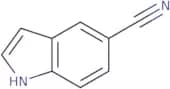
CAS:<p>5-Cyanoindole-3-carboxaldehyde is an aldehyde that is used in synthesis of β-unsaturated aldehydes. It is prepared by the reaction of 3-cyanoindole with formaldehyde. 5-Cyanoindole-3-carboxaldehyde has antibacterial activity against gram positive and gram negative bacteria. It also has a high yield and can be purified by filtration or by condensation with chlorobenzene. 5-Cyanoindole-3-carboxaldehyde can be activated by irradiation, which makes it useful for the production of pharmaceuticals.</p>Formula:C10H6N2OPurity:Min. 95%Molecular weight:170.17 g/mol4-Chloro-3,5-dinitrobenzonitrile
CAS:<p>4-Chloro-3,5-dinitrobenzonitrile is a mesomeric compound that has four amines and one nitro group. It is a dipole with chloride as the negative end and amine as the positive end. The reaction mechanism of this chemical is nucleophilic substitution. 4-Chloro-3,5-dinitrobenzonitrile reacts with an organic solvent to form a buffer. A buffer is an ionized solution that resists changes in pH when acid or base are added to it. This chemical also reacts with thionyl chloride to form hydrochloric acid, which can be used to leishmania parasites. 4-Chloro-3,5-dinitrobenzonitrile also reacts with an anion such as ClO4− or NO2− to form a salt such as chlorate or nitrate respectively.</p>Formula:C7H2ClN3O4Purity:Min. 95%Color and Shape:PowderMolecular weight:227.56 g/mol4-Bromo-2-cyanoanisole
CAS:<p>4-Bromo-2-cyanoanisole is a synthetic compound that can be used as a ligand in the transition metal catalyzed cross-coupling reaction. This chemical has been shown to form complexes with nickel, palladium, and platinum. 4-Bromo-2-cyanoanisole is also a biomolecule that interacts with other molecules and can be used in the study of natural products.</p>Formula:C8H6BrNOPurity:Min. 95%Color and Shape:PowderMolecular weight:212.04 g/mol4-Bromo-3-cyanotoluene
CAS:<p>4-Bromo-3-cyanotoluene is a quinazolinone that can be synthesized by reacting 2-bromotoluene with nitric acid. It is a substrate for the synthesis of other quinazolinones.</p>Formula:C8H6BrNPurity:Min. 95%Molecular weight:196.04 g/mol3-Cyano-4,6-dimethylcoumarin
CAS:<p>3-Cyano-4,6-dimethylcoumarin is a phenolic compound with potent inhibitory activity against bacteria. It has been shown to bind to the hydroxyl group of the coumarin ring and inhibit the growth of Gram-negative and Gram-positive bacteria. 3-Cyano-4,6-dimethylcoumarin also inhibits the growth of fungi by binding to the hydroxyl group on a phenolic hydroxyl substituent. 3-Cyano-4,6-dimethylcoumarin can be used as an antimicrobial agent for various types of infections.</p>Formula:C12H9NO2Purity:Min. 95%Color and Shape:PowderMolecular weight:199.21 g/mol4-Amino-2-cyanotoluene
CAS:<p>4-Amino-2-cyanotoluene is a quinazoline compound that inhibits the synthesis of thymine, which is necessary for DNA replication. This compound binds to the enzyme thymidylate synthetase, thereby inhibiting the synthesis of thymine. The inhibitory effect has been shown in a study using calf thymus DNA. 4-Amino-2-cyanotoluene also inhibits the synthesis of other nucleic acids such as adenine and guanine.</p>Formula:C8H8N2Purity:Min. 95%Color and Shape:PowderMolecular weight:132.16 g/molBenzylamine
CAS:<p>Substrate of benzylamine oxidase and monoamine oxidase B</p>Formula:C7H9NPurity:Min. 98.0 Area-%Color and Shape:Colorless Slightly Yellow Clear LiquidMolecular weight:107.15 g/molEthyl cyanoglyxylate-2-oxyme potassium salt
CAS:<p>Ethyl cyanoglyxylate-2-oxyme potassium salt is a high quality reagent for the production of complex compounds that can be used in fine chemicals, pharmaceuticals, and other speciality chemicals. It has been shown to be an intermediate for the synthesis of useful scaffolds and building blocks. The CAS number is 158014-03-0. This compound is a versatile building block that can be used in research chemicals, as well as reaction components for more complex syntheses.</p>Formula:C5H6N2O3KPurity:Min. 95%Color and Shape:PowderMolecular weight:181.21 g/mol2,5-Diaminobenzonitrile
CAS:<p>2,5-Diaminobenzonitrile is a chemical compound with the molecular formula C6H5N3. It is a white crystalline solid that is insoluble in water and soluble in organic solvents such as acetone, chloroform, and ether. 2,5-Diaminobenzonitrile has been shown to be an effective monomer for polymer synthesis due to its stability and high densities. This chemical also has the ability to undergo hydrogen bonding and form hydrogen peroxide when heated to a temperature of 100 °C. The thermal isomerization of 2,5-diaminobenzonitrile can be slowed by adding other amines or nitrites.</p>Formula:C7H7N3Purity:Min. 95%Color and Shape:PowderMolecular weight:133.15 g/molN,N-Diethylcyanoacetamide
CAS:<p>N,N-Diethylcyanoacetamide is an organic compound that is used in the industrial production of polyurethane. It reacts with a nucleophile to form a new carbon-nitrogen bond. The reaction can be monitored in real time, and it has high specificity for the desired product. N,N-Diethylcyanoacetamide reacts with piperidine to produce a mixture of isomers in which the methyl group is attached to either the nitrogen or the oxygen atom. This mixture can be separated by crystallization, and it generates a pure product that can be used as a monocarboxylic acid.</p>Formula:C7H12N2OPurity:Min. 95%Color and Shape:Clear LiquidMolecular weight:140.18 g/molEthyl acetamidocyanoacetate
CAS:<p>Ethyl acetamidocyanoacetate is an amide which inhibits the enzyme thrombin. It inhibits the conversion of fibrinogen to fibrin, and thus prevents blood clot formation. Ethyl acetamidocyanoacetate has been shown to inhibit serine protease, one of the most abundant enzymes in the human body. This inhibition causes a decrease in inflammatory diseases caused by these enzymes. Ethyl acetamidocyanoacetate also has analog properties that can be used for solid-phase synthesis.</p>Formula:C7H10N2O3Purity:Min. 98 Area-%Molecular weight:170.17 g/mol4-Nitrobenzylamine hydrochloride
CAS:<p>4-Nitrobenzylamine hydrochloride is a bifunctional immobilizing agent that can be used for the immobilization of Zn2+. It reacts with nitrogen atoms, forming an amination reaction. The linker is covalently immobilized to the surface and the nature of this chemical is synthetic. 4-Nitrobenzylamine hydrochloride is synthesized by reacting nitric acid with benzaldehyde in ammonia solution at room temperature. This chemical has shown to be effective in reactions where a flow rate is needed or when diamidines are present in the reaction mixture.</p>Formula:C7H8N2O2·HClPurity:Min. 95%Color and Shape:PowderMolecular weight:188.61 g/mol4-Aminophenylacetonitrile
CAS:<p>4-Aminophenylacetonitrile is a molecule that is structurally similar to nitrobenzene. 4-Aminophenylacetonitrile has been shown to be an efficient method for inhibiting faecalis growth and secretory phospholipase A2 (sPLA2) activity in vitro. It also inhibits the population growth of E. coli in vivo, which can be attributed to its ability to inhibit the enzyme catalysed by hydrogen bond formation.</p>Formula:C8H8N2Purity:Min. 95%Color and Shape:PowderMolecular weight:132.16 g/mol2-Amino-6-methoxybenzonitrile
CAS:<p>2-Amino-6-methoxybenzonitrile is an organic compound that belongs to a group of monosubstituted hydroxylamines. It has been used in the synthesis of various analogues, such as caprolactam and methoxyanthranilic acid. Hydrochloric acid reacts with 2-amino-6-methoxybenzonitrile to form 2-amino-6-hydroxybenzonitrile, which can be oxidized to 2-amino-6-(hydroxymethyl)benzonitrile. This reaction is catalyzed by copper or zinc metal.</p>Formula:C8H8N2OPurity:Min. 95%Color and Shape:PowderMolecular weight:148.16 g/mol4-Cyanobenzyl alcohol
CAS:<p>4-Cyanobenzyl alcohol is a phosphane that reacts with amines to form imines. This reaction can be used as a tool for the identification of amines in protein samples. The reaction time for this reaction is about 3 hours and can only be done at room temperature. 4-Cyanobenzyl alcohol also has potent inhibition activity against cyclopentadienyl, which is an important intermediate of organic synthesis. The ruthenium complex catalyzes this reaction and it can be used as a homogeneous catalyst.</p>Formula:C8H7NOPurity:Min. 95%Color and Shape:PowderMolecular weight:133.15 g/mol3,4-Difluoro-5-nitrobenzonitrile
CAS:<p>3,4-Difluoro-5-nitrobenzonitrile is a hepatotoxic compound that is found in the environment. It has been shown to cause cirrhosis and overgrowth of the liver. 3,4-Difluoro-5-nitrobenzonitrile also inhibits hepatic encephalopathy and may be used to treat liver disease. This toxicant has been detected in the bowel and duodenum of humans with nonalcoholic steatohepatitis, as well as in the jejunum and duodenum of mice with spontaneous steatohepatitis. It also causes nonalcoholic steatohepatitis when given orally to rats.</p>Formula:C7H2F2N2O2Purity:Min. 95%Color and Shape:Yellow PowderMolecular weight:184.1 g/mol(3R,5R)-6-Cyano-3,5-dihydroxy-hexanoic acid tert-butyl ester
CAS:<p>(3R,5R)-6-Cyano-3,5-dihydroxy-hexanoic acid tert-butyl ester is a building block for organic synthesis. It is a versatile intermediate that can be used in the preparation of pharmaceuticals and other organic compounds. The compound is also used as a reagent to study the biological activity of other compounds. CAS No. 125971-93-9 is a fine chemical that has been shown to have high quality and purity.</p>Formula:C11H19NO4Purity:Min. 98 Area-%Color and Shape:Yellow PowderMolecular weight:229.27 g/mol2-Hydroxy-3-methylbenzonitrile
CAS:<p>2-Hydroxy-3-methylbenzonitrile is a high quality chemical that is used as an intermediate in the synthesis of complex compounds. It can be used as a reagent in organic chemistry, and has been shown to be useful for the production of fine chemicals, such as antibiotics. 2-Hydroxy-3-methylbenzonitrile is also a versatile building block for the production of pharmaceuticals and research chemicals. It can be used as a reaction component for the synthesis of speciality chemicals and various building blocks.</p>Formula:C8H7NOPurity:Min. 95%Color and Shape:PowderMolecular weight:133.15 g/mol2-Methoxyphenylacetonitrile
CAS:<p>2-Methoxyphenylacetonitrile is a chemical that is used in the manufacture of pharmaceuticals. It has antibacterial activity and can be used to treat typhoid fever, staphylococcal infections, and mental disorders such as schizophrenia. 2-Methoxyphenylacetonitrile is an alkylating agent that reacts with nucleophiles in proteins, DNA, and RNA. These reactions lead to the destruction of the bacterial cell wall and inhibition of protein synthesis. The mechanism by which 2-methoxyphenylacetonitrile exerts its antibacterial effect may involve formation of a reactive intermediate that inhibits bacterial ribonucleotide reductase. The addition of an electron to this intermediate leads to the formation of a covalent bond with one or more amino acids in the protein acceptor, thereby preventing further growth and division of bacteria.</p>Formula:C9H9NOPurity:Min. 90%Color and Shape:White PowderMolecular weight:147.17 g/mol2-Hydroxy-4-nitrobenzonitrile
CAS:<p>2-Hydroxy-4-nitrobenzonitrile is a nitrile derivative that has an antibacterial activity. This compound interacts with the pyochelin, a siderophore in Pseudomonas aeruginosa. The antibiotic inhibits the uptake of pyochelin by the bacteria and causes cell death by inhibiting the synthesis of proteins necessary for bacterial growth. 2-Hydroxy-4-nitrobenzonitrile can be used as a potential stabilizer for materials such as polystyrene and polyurethane which are susceptible to degradation by hydrolysis or oxidation. In addition, this compound is also useful in gram-negative bacterium due to its ability to inhibit their growth by binding to their ribosomes. The conformational studies have been shown to be important for understanding the biological properties of this molecule.</p>Formula:C7H4N2O3Purity:Min. 95%Color and Shape:PowderMolecular weight:164.12 g/mol5,6-Diamino-2,3-dicyanopyrazine
CAS:<p>5,6-Diamino-2,3-dicyanopyrazine (5,6-DDA) is a synthetic compound that has been shown to emit in the visible region. The emission spectrum of 5,6-DDA shows three peaks at 599 nm, 614 nm, and 637 nm. The molecular orbitals of 5,6-DDA are calculated to be sp2 hybridized with a singlet ground state. This molecule has been shown to form imines with aniline and pyrrole in the presence of chloride ions. It also forms a zn complex with zinc chloride and nitrate ions. The thermolysis of furyl derivatives produces the corresponding anions. 5,6-DDA can also undergo a photochemical reaction with chlorine gas to form its molecular ion at 637 nm.</p>Formula:C6N4N6Purity:(%) Min. 98%Color and Shape:PowderMolecular weight:160.14 g/mol4-Cyanocinnamic acid
CAS:<p>4-Cyanocinnamic acid is a fatty acid that has been shown to be a substrate for the bacterial enzyme cinnamate 4-hydroxylase. The molecular weight of this compound is 136.16 g/mol, and it has a constant boiling point of 206°C. It can be synthesized from phenylacetic acid and p-coumaric acid using a transesterification reaction. This compound is reactive with carbonyl groups, which makes it useful in the detection of gram-positive bacteria by fluorescent probes or fluorescent dyes. 4-Cyanocinnamic acid is unreactive with esters of carboxylic acids, such as methyl esters, making it useful for the determination of fatty acids in isolates.</p>Formula:C10H7NO2Purity:Min. 95%Color and Shape:PowderMolecular weight:173.17 g/mol3-Cyanobenzylamine HCl
CAS:<p>3-Cyanobenzylamine HCl is a high quality chemical that is used as a reagent, intermediate, or building block in the synthesis of complex compounds. It is a fine chemical and speciality chemical that may be used as a research chemical and versatile building block for the synthesis of organic compounds. 3-Cyanobenzylamine HCl has been shown to react with other chemicals to form useful scaffolds and building blocks, such as amides, amino acid esters, and ureas.</p>Formula:C8H9ClN2Purity:Min. 95%Color and Shape:PowderMolecular weight:168.62 g/mol2-Cyanoacetamide
CAS:<p>2-Cyanoacetamide is an organic compound that is used in pharmaceutical preparations. It reacts with malonic acid to form a dioxime, which is a precursor of various drugs. The optimum concentration for the reaction to occur is at 10% (w/v). The reaction mechanism has not been fully elucidated and it involves the transfer of nitrogen from an amide group to a carbonyl group. 2-Cyanoacetamide has shown anti-angiogenic effects in mice by inhibiting the expression of Mcl-1 protein, which is involved in the regulation of apoptosis and inflammation. This drug also has biological functions as a precursor for dopamine, which helps regulate motor and cognitive functions.</p>Formula:C3H4N2OPurity:Min. 98%Color and Shape:White Off-White PowderMolecular weight:84.08 g/mol4-Ethoxybenzonitrile
CAS:<p>4-Ethoxybenzonitrile is an organic compound that belongs to the group of nitroalkanes. It is a substrate for reductive amination, which is a reaction in which the nitro group on 4-ethoxybenzonitrile is reduced by an amine to form an amide. This reaction can be facilitated by metal catalysts, such as copper(II) acetate and zinc chloride. The reaction yields high selectivity (>90%) with respect to the product formed and has been shown to be more efficient than other reductive amination reactions. 4-Ethoxybenzonitrile has been used as a building block for various compounds, including dyestuffs, pharmaceuticals, and pesticides. 4-Ethoxybenzonitrile is also resistant to tyrosinase due to its lack of electron donating groups on its aromatic ring.</p>Formula:C9H9NOPurity:Min. 98 Area-%Color and Shape:PowderMolecular weight:147.17 g/mol2-Amino-4-fluorobenzylamine dihydrochloride
CAS:<p>2-Amino-4-fluorobenzylamine dihydrochloride is a research chemical that is used as a reactant in organic synthesis. 2-Amino-4-fluorobenzylamine dihydrochloride is an intermediate for the preparation of other chemicals and can also be used as a building block for more complex compounds. This chemical has been shown to have good quality and can be used in many different types of research.<br>2-Amino-4-fluorobenzylamine dihydrochloride has CAS number 606139-20-2.</p>Formula:C7H9FN2·2HClPurity:Min. 95 Area-%Color and Shape:PowderMolecular weight:213.08 g/molMethyl 4-(cyanomethyl)benzoate
CAS:<p>Methyl 4-(cyanomethyl)benzoate is a synthetic compound that binds to the H1 receptor, which is part of the histamine family. It is an antagonist of this receptor and inhibits its activity. The affinity of methyl 4-(cyanomethyl)benzoate for the H1 receptor was measured by fluorescence displacement analysis in rat brain membranes. This compound also has potent anti-inflammatory properties, which may be due to its inhibition of prostaglandin synthesis. Methyl 4-(cyanomethyl)benzoate has been shown to be expressed in cells that are chemotactic for neutrophils and natural killer (NK) cells. Methyl 4-(cyanomethyl)benzoate also binds to a prostanoid receptor, CRTh2, leading to an increase in NK cell migration.<br>Methyl 4-(cyanomethyl)benzoate inhibits cyclooxygenase-1 (COX</p>Formula:C10H9NO2Purity:Min. 95%Color and Shape:Clear LiquidMolecular weight:175.18 g/mol3-(Cyanomethyl)benzoic acid
CAS:<p>3-(Cyanomethyl)benzoic acid is a useful building block that is used as a reagent in the production of pharmaceuticals and research chemicals. It is also used as a speciality chemical and as a high-quality fine chemical. This compound has versatile uses, including reactions with other chemicals to form complex compounds, and can be used as a reaction component or an intermediate in the synthesis of other chemicals. 3-(Cyanomethyl)benzoic acid has no known toxicity and its CAS number is 5689-33-8.</p>Formula:C9H7NO2Purity:Min. 95%Color and Shape:PowderMolecular weight:161.16 g/molm-Hydroxybenzonitrile
CAS:<p>m-Hydroxybenzonitrile is a cationic surfactant that has the ability to form hydrogen bonds with an intramolecular hydrogen. It is used in the production of detergents, textile processing aids, and inks. m-Hydroxybenzonitrile inhibits fatty acids by forming an inhibitory complex at the surface of the cell membrane. This complex disrupts lipid bilayers and inhibits protein synthesis. m-Hydroxybenzonitrile also has been shown to have vibrational properties that can be seen when it absorbs ultraviolet light.</p>Formula:C7H5NOPurity:Min. 95%Color and Shape:Off-White PowderMolecular weight:119.12 g/mol4-(4-Fluorophenoxy)benzylamine hydrochloride
CAS:<p>4-(4-Fluorophenoxy)benzylamine hydrochloride is a metabolic agent that inhibits the metabolism of phenylpropionic acid and butanoic acid. It is used industrially as an oxime to protect other organic compounds from damage by peroxides, such as in polymerization reactions. 4-(4-Fluorophenoxy)benzylamine hydrochloride has been shown to be effective in treating metabolic diseases, such as phenylketonuria and urea cycle disorders.</p>Formula:C13H12FNO·HClPurity:Min. 95%Color and Shape:PowderMolecular weight:253.7 g/mol4-Bromobenzylamine
CAS:<p>4-Bromobenzylamine is a chemical compound that has been used to study the process optimization of sephadex g-100. It is also used as a chemotherapeutic treatment for cancer. 4-Bromobenzylamine binds to intracellular targets, such as nitrogen atoms and cell lysis, with physiological levels found in fetal bovine serum. The nitrogen atom is an essential structural component of 4-bromobenzylamine that is necessary for its biological activity and may be involved in binding to DNA polymerase. This drug has been shown to inhibit the growth of metastatic colorectal cancer cells by inhibiting cellular proliferation. Structural analysis has revealed that 4-bromobenzylamine interacts with the polymerase chain reaction (PCR) enzyme and inhibits the ability of DNA polymerases to add nucleotides to the growing strand of DNA.</p>Formula:C7H8BrNPurity:Min. 95%Color and Shape:PowderMolecular weight:186.05 g/mol