


Ethers
Ethers are organic compounds containing an ether functional group, characterized by an oxygen atom bonded to two hydrocarbon radicals. These compounds are valuable in synthesis and serve as solvents in various chemical reactions. At CymitQuimica, we offer a selection of high-quality ethers to support your research and industrial applications, ensuring reliable and effective results. Our range of ethers meets diverse laboratory requirements, from routine experiments to advanced research.
Found 40729 products of "Ethers"
Sort by
Purity (%)
0
100
|
0
|
50
|
90
|
95
|
100
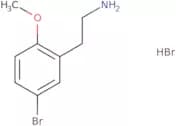
5-Bromo-2-methoxyphenethylamine hydrobromide
CAS:Controlled Product<p>Please enquire for more information about 5-Bromo-2-methoxyphenethylamine hydrobromide including the price, delivery time and more detailed product information at the technical inquiry form on this page</p>Formula:C9H13Br2NOPurity:Min. 95%Molecular weight:311.01 g/mol3-Amino-5-methoxybenzoic acid
CAS:<p>3-Amino-5-methoxybenzoic acid is a macrocyclist, which means that it can switch between two different forms. When the temperature is below 27 degrees Celsius, it exists as a mesomorphic phase and when the temperature increases above 27 degrees Celsius, it exists as an isotropic phase. 3-Amino-5-methoxybenzoic acid also has homologues that are also mesomorphic or isotropic depending on their temperatures. The chemoenzymatic parameters of the two phases are different and so are their lamellar morphologies. The fluorine atom in 3-amino-5-methoxybenzoic acid makes it act like a Lewis acid, decreasing its melting point and increasing its vapor pressure. There are two isomers of 3-amino-5-methoxybenzoic acid: dodecyl and octadecyl 3--amino--5--methoxyben</p>Formula:C8H9NO3Purity:Min. 95%Color and Shape:White To Yellow To Light Brown SolidMolecular weight:167.16 g/molTrimethylolpropane ethoxylate - average Mn ~170
CAS:<p>Please enquire for more information about Trimethylolpropane ethoxylate - average Mn ~170 including the price, delivery time and more detailed product information at the technical inquiry form on this page</p>Formula:(C2H4O)n•(C2H4O)n•(C2H4O)n•C6H14O3Purity:Min. 95%1-Chloro-2-(chloromethoxy)ethane
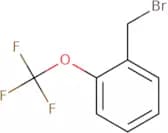
CAS:<p>1-Chloro-2-(chloromethoxy)ethane is an acyclic nucleoside phosphonate that is used as a HIV integrase inhibitor. It binds to the HIV RNA genome and prevents the integration of viral DNA into the host cell's genome, which blocks the replication of HIV. 1-Chloro-2-(chloromethoxy)ethane has been shown to be more potent than other acyclic nucleoside phosphonates in vitro and in vivo. This drug also inhibits herpes simplex virus type 1 (HSV1) thymidine kinase activity, which is essential for viral DNA synthesis. This drug has potential antitumor activities against certain tumor cells due to its ability to inhibit cell proliferation and induce apoptosis through inhibiting rna synthesis.</p>Formula:C3H6Cl2OPurity:Min. 95%Color and Shape:Clear LiquidMolecular weight:128.98 g/mol2-(Trifluoromethoxy)benzyl bromide
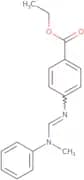
CAS:<p>2-(Trifluoromethoxy)benzyl bromide is a computational study of ionic liquids with substitutions. The viscosity of the liquid was found to be dependent on the size of the substituent and the number of substitutions. The compound was found to be selective for one isomer over another due to its different structural features. Experimental studies have shown that 2-(trifluoromethoxy)benzyl bromide has high permeability in ionic liquids, which is a desired property in ionic liquids. Advances in this field have led to new compounds and more knowledge about the properties of ionic liquids.</p>Purity:Min. 95%N-(Ethoxycarbonylphenyl)-N'-methyl-N'-phenylformamidine
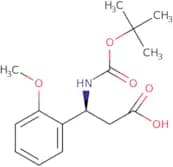
CAS:<p>Please enquire for more information about N-(Ethoxycarbonylphenyl)-N'-methyl-N'-phenylformamidine including the price, delivery time and more detailed product information at the technical inquiry form on this page</p>Formula:C15H14N2O2Purity:Min. 95%Molecular weight:254.28 g/molBoc-(S)-3-amino-3-(2-methoxyphenyl)propionic acid
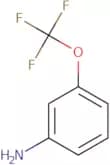
CAS:<p>Please enquire for more information about Boc-(S)-3-amino-3-(2-methoxyphenyl)propionic acid including the price, delivery time and more detailed product information at the technical inquiry form on this page</p>Formula:C15H21NO5Purity:Min. 95%Color and Shape:PowderMolecular weight:295.33 g/mol3-(trifluoromethoxy)aniline
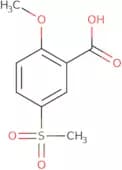
CAS:<p>3-(trifluoromethoxy)aniline is a compound that contains a trifluoromethoxy group. It has been shown to have antiproliferative effects in prostate cancer cells. 3-(trifluoromethoxy)aniline inhibits the activity of pim-1, which is important for cell proliferation and differentiation. The synthesis of 3-(trifluoromethoxy)aniline can be accomplished by one of two methods. In the first method, 3-chloroaniline is reacted with trifluoroacetic acid and bis(trimethylsilyl)acetamide in dichloromethane to form 3-hydroxy-4-chlorobenzenesulfonyl chloride (3HCBSCl). In the second method, the desired product is synthesized from 3-aminophenol and trifluoroacetic acid in acetonitrile. These two methods produce different isomers</p>Formula:C7H6F3NOPurity:Min. 95%Color and Shape:PowderMolecular weight:177.12 g/mol2-Methoxy-5-methylsulfonylbenzoicacid
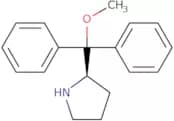
CAS:<p>2-Methoxy-5-methylsulfonylbenzoic acid is an organic compound that can be used as a pharmaceutical intermediate. It has been used to synthesize diagnostic agents and drugs such as isradipine and sarpogrelate hydrochloride. 2-Methoxy-5-methylsulfonylbenzoic acid is also used as an intermediate in the synthesis of bortezomib, a drug that inhibits the proteasome. This product contains impurities that may interfere with its use as a pharmaceutical preparation. The flow rate of this product is sensitive to changes in temperature and pressure.</p>Formula:C9H10O5SPurity:Min. 95%Molecular weight:230.24 g/mol(R)-2-(Methoxydiphenylmethyl)pyrrolidine
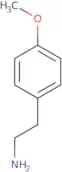
CAS:Controlled Product<p>Please enquire for more information about (R)-2-(Methoxydiphenylmethyl)pyrrolidine including the price, delivery time and more detailed product information at the technical inquiry form on this page</p>Formula:C18H21NOPurity:Min. 95%Molecular weight:267.37 g/mol4-Methoxy phenethylamine
CAS:Controlled Product<p>4-Methoxy phenethylamine (4MPEA) is a natural compound that has been found to have biological properties. It is a precursor of dopamine and norepinephrine, which are neurotransmitters in the brain. 4MPEA is an irreversible enzyme inhibitor with a hydroxyl group. The kinetic data for this compound has been determined by nitrogen atoms. Gamma-aminobutyric acid (GABA) is involved in the regulation of neuronal excitability and plays an important role in preventing seizures. 4MPEA may have potential as a drug for treating epilepsy or other neurological disorders.</p>Formula:C9H13NOPurity:Min. 95%Molecular weight:151.21 g/mol1-(4-Amino-6,7-dimethoxy-2-quinazolinyl)-4-[(tetrahydro-2-furanyl)carbonxyl]piperazine hydrochloride
CAS:<p>Terazosin HCL dehydrate is an inhibitor of alpha-1 adrenergic receptors. This results in vasodilation followed by a reduction in urethral resistance, venous return to the heart and peripheral vascular resistance. In particular Terazosin HCL hydrate’s ability to recover urine flow and alleviate symptoms in patients with benign prostatic hyperplasia is of benefit to the therapeutic and clinical industries.</p>Formula:C19H26ClN5O4Purity:Min. 95%Molecular weight:423.89 g/mol1-[(2,5-Dimethoxyphenyl)methyl]piperazine HCl
CAS:Controlled Product<p>Please enquire for more information about 1-[(2,5-Dimethoxyphenyl)methyl]piperazine HCl including the price, delivery time and more detailed product information at the technical inquiry form on this page</p>Formula:C13H20N2O2HClPurity:Min. 95%Molecular weight:272.77 g/mol5-Bromo-2,3-dimethoxypyrazine
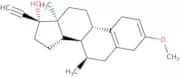
CAS:<p>Please enquire for more information about 5-Bromo-2,3-dimethoxypyrazine including the price, delivery time and more detailed product information at the technical inquiry form on this page</p>Formula:C6H7BrN2O2Purity:Min. 95%Molecular weight:219.04 g/mol2-Dehydro-3-methoxy tibolone
CAS:Controlled Product<p>Please enquire for more information about 2-Dehydro-3-methoxy tibolone including the price, delivery time and more detailed product information at the technical inquiry form on this page</p>Formula:C22H30O2Purity:Min. 95%Molecular weight:326.47 g/molN-Benzyl-4-carboethoxypiperidine
CAS:<p>N-Benzyl-4-carboethoxypiperidine (NBP) is a potential drug for the treatment of Alzheimer's disease. It is an acetylcholinesterase inhibitor that blocks the breakdown of acetylcholine, leading to increased levels of this neurotransmitter in the brain. NBP has been shown to inhibit butyrylcholinesterase, an enzyme responsible for breaking down acetylcholine. This inhibition leads to increased levels of acetylcholine in the brain and prevents the development of Alzheimer's disease. NBP has also been shown to have a low level of toxicity in mice and rats and does not inhibit other enzymes such as carboxypeptidases or aminopeptidases.</p>Formula:C15H21NO2Purity:Min. 95%Color and Shape:Clear LiquidMolecular weight:247.33 g/mol2,3-Dihydro-1-(3-hydroxypropyl)-5-[(2R)-2-[[2-[2-(2,2,2-trifluoroethoxy)phenoxy]ethyl]amino]propyl]-1H-indole-7-carbonitrile
CAS:<p>Please enquire for more information about 2,3-Dihydro-1-(3-hydroxypropyl)-5-[(2R)-2-[[2-[2-(2,2,2-trifluoroethoxy)phenoxy]ethyl]amino]propyl]-1H-indole-7-carbonitrile including the price, delivery time and more detailed product information at the technical inquiry form on this page</p>Formula:C25H30F3N3O3Purity:Min. 95%Molecular weight:477.52 g/mol3-[4-(2-Methoxyethyl)phenoxy]-1,2-epoxypropane
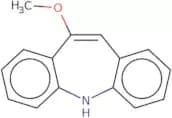
CAS:<p>3-[4-(2-Methoxyethyl)phenoxy]-1,2-epoxypropane is a chemical compound that is used in the industrial process of chloropropane production. It reacts with metoprolol to produce 3-[4-(2-methoxyethyl)phenoxy]-1,2-epoxypropane diol and metoprolol diol. This reaction occurs at lower temperatures than chlorination reactions, and without the use of radiation. 3-[4-(2-Methoxyethyl)phenoxy]-1,2-epoxypropane also reacts with chloropropane to produce 3-[4-(2-methoxyphenyl)phenyl]propene, which can be recycled for additional use.</p>Formula:C12H16O3Purity:Min. 95%Molecular weight:208.25 g/mol10-Methoxy iminostilbene
CAS:<p>10-Methoxy iminostilbene is a photophysical that has been shown to be toxic to mouse erythrocytes and to inhibit the DNA polymerase activity of calf thymus. It has also been shown to inhibit the growth of bacteria in an industrial process. 10-Methoxy iminostilbene is insoluble in water and organic solvents, which makes it difficult to purify. 10-Methoxy iminostilbene also has high levels of impurities and is sensitive to hydrochloric acid, methylbenzene, and amines. The functional groups present on this molecule are carbonyl, nitro, hydroxyls, ethers, amides, esters, ketones.</p>Formula:C15H13NOPurity:95%NmrColor and Shape:SolidMolecular weight:223.27 g/mol2,5-Dimethoxy-4-methylamphetamine hydrochloride
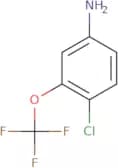
CAS:Controlled Product<p>2,5-Dimethoxy-4-methylamphetamine hydrochloride is a molecule that belongs to the class of phenethylamines. It has a serotonergic activity and can be used in the treatment of depression. This drug also affects the dopaminergic system and 5-HT2 receptors. 2,5-Dimethoxy-4-methylamphetamine hydrochloride is an agonist for 5HT1A receptors and an antagonist for 5HT2A and 5HT2C receptors. It has been shown to have a significant effect on locomotor activity in humans. The effects of this drug are dose dependent, with high doses leading to hallucinogenic effects.</p>Formula:C12H20ClNO2Purity:Min. 95%Molecular weight:245.75 g/mol4-Chloro-3-(trifluoromethoxy)aniline
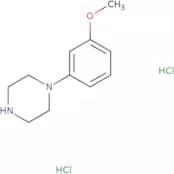
CAS:<p>Please enquire for more information about 4-Chloro-3-(trifluoromethoxy)aniline including the price, delivery time and more detailed product information at the technical inquiry form on this page</p>Formula:C7H5ClF3NOPurity:Min. 95%Color and Shape:Clear LiquidMolecular weight:211.57 g/mol1-(3-Methoxyphenyl)piperazine dihydrochloride
CAS:Controlled Product<p>Please enquire for more information about 1-(3-Methoxyphenyl)piperazine dihydrochloride including the price, delivery time and more detailed product information at the technical inquiry form on this page</p>Formula:C11H18Cl2N2OPurity:Min. 95%Color and Shape:PowderMolecular weight:265.18 g/mol4-Formyl-3-methoxy-phenyloxymethyl polystyrene resin (200-400 mesh)
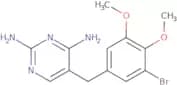
<p>Please enquire for more information about 4-Formyl-3-methoxy-phenyloxymethyl polystyrene resin (200-400 mesh) including the price, delivery time and more detailed product information at the technical inquiry form on this page</p>Purity:Min. 95%3-Desmethoxy-3-bromo Trimethoprim
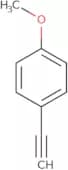
CAS:<p>Please enquire for more information about 3-Desmethoxy-3-bromo Trimethoprim including the price, delivery time and more detailed product information at the technical inquiry form on this page</p>Formula:C13H15BrN4O2Purity:Min. 95%Molecular weight:339.19 g/mol4-Methoxyphenylacetylene
CAS:<p>4-Methoxyphenylacetylene is a phosphane that has been extensively studied for its reactivity in cross-coupling reactions with electron-deficient olefins. 4-Methoxyphenylacetylene has been shown to react with chlorides and form an intermediate chloride, which reacts with an olefin to form an ether. X-ray crystal structures of the reaction mechanism have been determined. The transfer mechanism involves nucleophilic attack of chloride on the phosphorus atom followed by elimination of hydrogen chloride from the phosphorus. The reaction product is an ether.</p>Formula:C9H8OPurity:Min. 95%Color and Shape:White Clear LiquidMolecular weight:132.16 g/molN-(tert-Butoxycarbonyl)glycine N'-methoxy-N'-methylamide
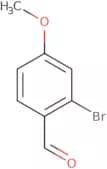
CAS:<p>Please enquire for more information about N-(tert-Butoxycarbonyl)glycine N'-methoxy-N'-methylamide including the price, delivery time and more detailed product information at the technical inquiry form on this page</p>Formula:C9H18N2O4Purity:Min. 95%Molecular weight:218.25 g/mol2-Bromo-4-methoxybenzaldehyde
CAS:<p>2-Bromo-4-methoxybenzaldehyde is a cyclic, stereoselectively eliminable, acrylate that can be used in the asymmetric synthesis of sulfamidate and lactam. It can also be used to synthesize quinoline derivatives with aluminium chloride. This product has been shown to yield good yields when reacted with functional groups such as halides and nature. 2-Bromo-4-methoxybenzaldehyde is found in biomolecular reactions.</p>Formula:C8H7BrO2Color and Shape:PowderMolecular weight:215.04 g/mol2-Chloro-1-(5-methoxy-1,2-dimethyl-1H-indol-3-yl)ethanone
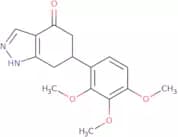
CAS:Controlled Product<p>Please enquire for more information about 2-Chloro-1-(5-methoxy-1,2-dimethyl-1H-indol-3-yl)ethanone including the price, delivery time and more detailed product information at the technical inquiry form on this page</p>Formula:C13H14ClNO2Purity:Min. 95%Molecular weight:251.71 g/mol6-(2,3,4-Trimethoxyphenyl)-1,5,6,7-tetrahydro-4H-indazol-4-one
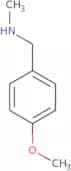
CAS:Controlled Product<p>Please enquire for more information about 6-(2,3,4-Trimethoxyphenyl)-1,5,6,7-tetrahydro-4H-indazol-4-one including the price, delivery time and more detailed product information at the technical inquiry form on this page</p>Formula:C16H18N2O4Purity:Min. 95%Molecular weight:302.33 g/mol4-Methoxy-N-methylbenzylamine
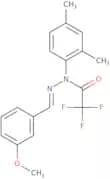
CAS:<p>4-Methoxy-N-methylbenzylamine is a synthesized compound that is structurally similar to piperazine. It has been synthesized using the Chloramine T method and has been shown to be active as an amine receptor ligand. This molecule binds to the amine receptor site of the GABAA receptor with high affinity, inhibiting chloride ion flow. The functional groups on this molecule are likely responsible for its binding activity. 4-Methoxy-N-methylbenzylamine may be useful in the treatment of scopolamine-induced amnesia, due to its ability to bind to specific receptors in the brain.</p>Formula:C9H13NOPurity:Min. 95%Color and Shape:Clear LiquidMolecular weight:151.21 g/molJ147
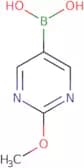
CAS:<p>2,2,2-Trifluoroacetic acid 1-(2,4-dimethylphenyl)-2-[(3-methoxyphenyl)methylene]hydrazide is a neuroprotective drug that belongs to the class of hydrazides. It has been shown to have neurotrophic activity in vitro and in vivo and can be used for the treatment of conditions such as diabetic neuropathy or cancer tissues. 2,2,2-Trifluoroacetic acid 1-(2,4-dimethylphenyl)-2-[(3-methoxyphenyl)methylene]hydrazide also has anti-inflammatory properties and can be used for the treatment of autoimmune diseases. The drug's mechanism of action is not fully understood but is thought to involve monoamine neurotransmitters.</p>Formula:C18H17F3N2O2Purity:Min. 95%Molecular weight:350.34 g/mol2-Methoxypyrimidine-5-boronic acid
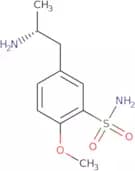
CAS:<p>Please enquire for more information about 2-Methoxypyrimidine-5-boronic acid including the price, delivery time and more detailed product information at the technical inquiry form on this page</p>Formula:C5H7BN2O3Purity:Min. 95%Molecular weight:153.93 g/mol(R)-5-(2-Aminopropyl)-2-methoxybenzenesulfonamide
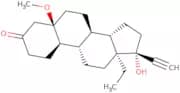
CAS:Controlled Product<p>(R)-5-(2-Aminopropyl)-2-methoxybenzenesulfonamide is an amide. It is a hydrochloric acid salt that can regulate the reaction system and introduce filtration, which can be used to separate the components of the reaction system. The kinetic and chiral properties of this compound are derived from Friedel-Crafts reactions with phosphites and Friedel-Crafts reactions with d-alanine. (R)-5-(2-Aminopropyl)-2-methoxybenzenesulfonamide can also catalyze ammonolysis and catalysis with phenoxy.</p>Formula:C10H16N2O3SPurity:Min. 95%Color and Shape:PowderMolecular weight:244.31 g/mol4,5-Dihydro-5a-methoxy D-(-)-norgestrel
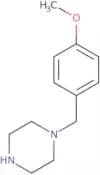
CAS:<p>Please enquire for more information about 4,5-Dihydro-5a-methoxy D-(-)-norgestrel including the price, delivery time and more detailed product information at the technical inquiry form on this page</p>Formula:C22H32O3Purity:Min. 95%Molecular weight:344.49 g/mol1-(4-Methoxybenzyl)piperazine
CAS:Controlled Product<p>1-(4-Methoxybenzyl)piperazine is a chemical compound that has been shown to have inhibitory activities against cancer cells. It also shows potential for the treatment of type 2 diabetes and Alzheimer's disease. The mechanism of action is not well understood, but it may be due to its ability to induce mitochondrial biogenesis and insulin sensitivity. 1-(4-Methoxybenzyl)piperazine has also been shown to improve memory in rats with spontaneous dementia, similar to the effects of donepezil (a drug used for Alzheimer's disease). 1-(4-Methoxybenzyl)piperazine can be taken orally or administered via injection.</p>Formula:C12H18N2OPurity:Min. 95%Molecular weight:206.28 g/mol[4-[2-(Diethylamino)ethoxy]-3-iodophenyl][2-(1-hydroxybutyl)-3-benzofuranyl]-methanone
CAS:Controlled Product<p>Please enquire for more information about [4-[2-(Diethylamino)ethoxy]-3-iodophenyl][2-(1-hydroxybutyl)-3-benzofuranyl]-methanone including the price, delivery time and more detailed product information at the technical inquiry form on this page</p>Formula:C25H30INO4Purity:Min. 95%Molecular weight:535.41 g/mol2,3,3-Trimethyl 5-methoxy indolenine
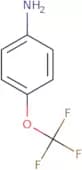
CAS:<p>2,3,3-Trimethyl 5-methoxy indolenine (TMMI) is a fluorescent probe that has been used in photodynamic therapy. TMMI is chemically stable and has an unsymmetrical heterocycle with optical properties that allow it to be excited by green light at wavelengths of 540 nm. TMMI can be used to image hypoxic regions of the brain. This molecule has also been used as an enhancement agent for neovascularization and angiography. TMMI can be synthesized using mesoporous silica nanoparticles and halogens such as chlorine or bromine.</p>Formula:C12H15NOPurity:Min. 95%Molecular weight:189.25 g/mol4-(Trifluoromethoxy)aniline
CAS:<p>4-(Trifluoromethoxy)aniline is a reactive intermediate used in the synthesis of pharmaceuticals, dyes, and pesticides. It is prepared by reacting hydrogen fluoride with aniline in the presence of an acid catalyst. 4-(Trifluoromethoxy)aniline can be used to synthesize epoxyeicosatrienoic acids, which are potent anti-inflammatory agents. 4-(Trifluoromethoxy)aniline has been shown to have a pharmacokinetic profile that is similar to those of other fluoroquinolones, but has not been studied for clinical development.</p>Formula:C7H6F3NOPurity:Min. 95%Color and Shape:Clear LiquidMolecular weight:177.12 g/mol4-[Bis(4-ethoxyphenyl)methyl]piperidine
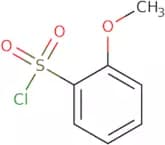
CAS:Controlled Product<p>Please enquire for more information about 4-[Bis(4-ethoxyphenyl)methyl]piperidine including the price, delivery time and more detailed product information at the technical inquiry form on this page</p>Formula:C22H29NO2Purity:Min. 95%Molecular weight:339.47 g/mol2-Methoxybenzenesulphonyl chloride
CAS:<p>2-Methoxybenzenesulphonyl chloride is an enzyme inhibitor that has been shown to have anti-cancer and anti-HIV activity. It inhibits the growth of cancer cells by interfering with protein synthesis and preventing RNA transcription. 2-Methoxybenzenesulphonyl chloride has also been shown to be effective in treating chronic hepatitis, degenerative diseases, and autoimmune diseases. This drug is metabolized through a number of metabolic transformations, including oxidation by cytochrome P450 enzymes or conjugation with glucuronic acid. The pro-apoptotic protein Bax is induced by 2-methoxybenzenesulphonyl chloride in human HL60 cells, which may be due to its ability to induce transcriptional regulation.</p>Formula:C7H7ClO3SPurity:Min. 97%Color and Shape:PowderMolecular weight:206.65 g/molMethyl 4,5-dimethoxy-1-methyl-1H-indole-2-carboxylate
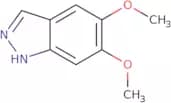
CAS:Controlled Product<p>Please enquire for more information about Methyl 4,5-dimethoxy-1-methyl-1H-indole-2-carboxylate including the price, delivery time and more detailed product information at the technical inquiry form on this page</p>Formula:C13H15NO4Purity:Min. 95%Molecular weight:249.26 g/mol5,6-Dimethoxy-1H-indazole
CAS:<p>5,6-Dimethoxy-1H-indazole is a phosphite that has been used as an intermediate in the synthesis of some pharmaceuticals. It has been shown to have hypotensive effects in rats and depressant effects in mice. The nitro group on 5,6-dimethoxy-1H-indazole can be reduced to an aminopropyl group by reaction with chloride and methyl alcohol or piperazine. This reaction produces two products: 1) a chloro compound that is not pharmacologically active and 2) a methylated product that retains all the original activity of 5,6-dimethoxy-1H-indazole. 5,6-Dimethoxy-1H-indazole also interacts with DNA by binding to nitrous oxide (N2O), which is present at high levels in clinical settings such as dentists' offices. Nitrous oxide reacts with 5,6-dimethoxy-1H</p>Formula:C9H10N2O2Purity:Min. 95%Color and Shape:PowderMolecular weight:178.19 g/mol4-[1-(2-Methoxyethyl)-1H-indol-3-yl]butanoic acid
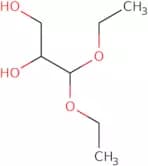
CAS:Controlled Product<p>Please enquire for more information about 4-[1-(2-Methoxyethyl)-1H-indol-3-yl]butanoic acid including the price, delivery time and more detailed product information at the technical inquiry form on this page</p>Formula:C15H19NO3Purity:Min. 95%Molecular weight:261.32 g/mol3,3-Diethoxy-1,2-propanediol
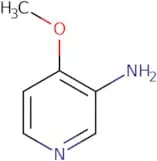
CAS:<p>3,3-Diethoxy-1,2-propanediol is a chemical compound that has been found to have an acidic character and to be an allylation agent. This ingredient also has the ability to form flavonoids and act as a ring-opening polymerization catalyst. It can be used in leaf extract as an astringent or antibacterial. 3,3-Diethoxy-1,2-propanediol is used in the production of this product. The medicinal properties of this compound are scientifically analysed and tested for efficacy. It has been shown to act as a laxative when taken in excessive amounts. 3,3-Diethoxy-1,2-propanediol is not known to have any negative side effects on the human body such as skin irritation or sensitization.</p>Formula:C7H16O4Purity:Min. 95%Molecular weight:164.2 g/mol3-Amino-4-methoxypyridine
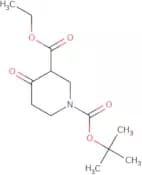
CAS:<p>3-Amino-4-methoxypyridine is a molecule that has been shown to have anesthetic activity. It has been shown to inhibit the uptake of glycogen by glioblastoma cells and decrease the rate of glycogen synthesis in these cells. 3-Amino-4-methoxypyridine also inhibits the production of ATP in cardiac muscle cells, which may be due to its ability to inhibit glycogen synthase kinase-3 (GSK3) and glycogen synthase. This drug also inhibits cancer cell growth by inhibiting protein synthesis, as well as inflammatory disease progression by inhibiting NFκB activation and cytokine production. 3-Amino-4-methoxypyridine can be synthesized from aminopyridines such as isonicotinic acid or nicotinic acid, which are oxidized with hydrogen peroxide and sodium nitrite in the presence of a base catalyst.</p>Formula:C6H8N2OPurity:Min. 95%Molecular weight:124.14 g/molN-Boc-3-carboethoxy-4-piperidone
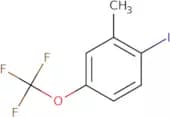
CAS:<p>Please enquire for more information about N-Boc-3-carboethoxy-4-piperidone including the price, delivery time and more detailed product information at the technical inquiry form on this page</p>Formula:C13H21NO5Purity:Min. 95%Molecular weight:271.31 g/mol2-Methyl-4-(trifluoromethoxy)iodobenzene
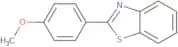
CAS:<p>Please enquire for more information about 2-Methyl-4-(trifluoromethoxy)iodobenzene including the price, delivery time and more detailed product information at the technical inquiry form on this page</p>Formula:C8H6F3IOPurity:Min. 95%Molecular weight:302.03 g/mol2-(4-Methoxyphenyl)benzothiazole
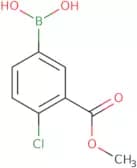
CAS:<p>2-(4-Methoxyphenyl)benzothiazole is a hydrogen-bond acceptor that is activated in the presence of an electron-withdrawing group. It has been shown to have anti-fungal properties and inhibitory properties against bacteria. 2-(4-Methoxyphenyl)benzothiazole also inhibits the activity of topoisomerase, which is an enzyme that controls DNA supercoiling and uncoiling, as well as DNA replication. The mechanism of this inhibition is not known, but it is thought to be due to the ability of 2-(4-methoxyphenyl)benzothiazole to form hydrogen bonds with the active site cysteine residues on topoisomerase I. 2-(4-Methoxyphenyl)benzothiazole also has been shown to be photophysical in nature, absorbing light at wavelengths of 350 nm and 480 nm and emitting light</p>Formula:C14H11NOSPurity:Min. 95%Color and Shape:PowderMolecular weight:241.31 g/mol(4-Chloro-3-(methoxycarbonyl)phenyl)boronic acid
CAS:<p>Please enquire for more information about (4-Chloro-3-(methoxycarbonyl)phenyl)boronic acid including the price, delivery time and more detailed product information at the technical inquiry form on this page</p>Formula:C8H8BClO4Purity:Min. 95%Molecular weight:214.41 g/molEthyl 3-{[(1E)-(dimethylamino)methylene]amino}-5-methoxy-1-methyl-1H-indole-2-carboxylate
CAS:Controlled Product<p>Please enquire for more information about Ethyl 3-{[(1E)-(dimethylamino)methylene]amino}-5-methoxy-1-methyl-1H-indole-2-carboxylate including the price, delivery time and more detailed product information at the technical inquiry form on this page</p>Formula:C16H21N3O3Purity:Min. 95%Molecular weight:303.36 g/mol


![1-(4-Amino-6,7-dimethoxy-2-quinazolinyl)-4-[(tetrahydro-2-furanyl)carbonxyl]piperazine hydrochlori…](/_next/image/?url=https%3A%2Fstatic.cymitquimica.com%2Fproducts%2F3D%2Fthumb-webp%2FFA28036.webp&w=3840&q=75)
![1-[(2,5-Dimethoxyphenyl)methyl]piperazine HCl](/_next/image/?url=https%3A%2Fstatic.cymitquimica.com%2Fproducts%2F3D%2Fthumb-webp%2FFD112280.webp&w=3840&q=75)


![2,3-Dihydro-1-(3-hydroxypropyl)-5-[(2R)-2-[[2-[2-(2,2,2-trifluoroethoxy)phenoxy]ethyl]amino]propyl…](/_next/image/?url=https%3A%2Fstatic.cymitquimica.com%2Fproducts%2F3D%2Fthumb-webp%2FFD103483.webp&w=3840&q=75)
![3-[4-(2-Methoxyethyl)phenoxy]-1,2-epoxypropane](/_next/image/?url=https%3A%2Fstatic.cymitquimica.com%2Fproducts%2F3D%2Fthumb-webp%2FFM25303.webp&w=3840&q=75)



![[4-[2-(Diethylamino)ethoxy]-3-iodophenyl][2-(1-hydroxybutyl)-3-benzofuranyl]-methanone](/_next/image/?url=https%3A%2Fstatic.cymitquimica.com%2Fproducts%2F3D%2Fthumb-webp%2FFD150040.webp&w=3840&q=75)

![4-[Bis(4-ethoxyphenyl)methyl]piperidine](/_next/image/?url=https%3A%2Fstatic.cymitquimica.com%2Fproducts%2F3D%2Fthumb-webp%2FFB116975.webp&w=3840&q=75)

![4-[1-(2-Methoxyethyl)-1H-indol-3-yl]butanoic acid](/_next/image/?url=https%3A%2Fstatic.cymitquimica.com%2Fproducts%2F3D%2Fthumb-webp%2FFM135737.webp&w=3840&q=75)
![Ethyl 3-{[(1E)-(dimethylamino)methylene]amino}-5-methoxy-1-methyl-1H-indole-2-carboxylate](/_next/image/?url=https%3A%2Fstatic.cymitquimica.com%2Fproducts%2F3D%2Fthumb-webp%2FFE123273.webp&w=3840&q=75)