Ethers
Ethers are organic compounds containing an ether functional group, characterized by an oxygen atom bonded to two hydrocarbon radicals. These compounds are valuable in synthesis and serve as solvents in various chemical reactions. At CymitQuimica, we offer a selection of high-quality ethers to support your research and industrial applications, ensuring reliable and effective results. Our range of ethers meets diverse laboratory requirements, from routine experiments to advanced research.
Found 40729 products of "Ethers"
Sort by
Purity (%)
0
100
|
0
|
50
|
90
|
95
|
100
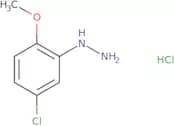
5-Chloro-2-methoxyphenylhydrazine hydrochloride
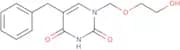
CAS:<p>5-Chloro-2-methoxyphenylhydrazine hydrochloride is a reagent, complex compound with CAS No. 5446-16-2. It is useful as an intermediate in the manufacture of a variety of fine chemicals and research chemicals. This compound can be used as a versatile building block in the synthesis of new chemical compounds and is also a reaction component.</p>Formula:C7H9ClN2O·ClHPurity:Min. 95%Color and Shape:PowderMolecular weight:209.07 g/mol5-Benzyl-1-(2-hydroxyethoxymethyl)uracil
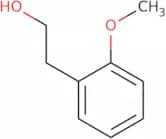
CAS:<p>5-Benzyl-1-(2-hydroxyethoxymethyl)uracil is a cytostatic drug that has been shown to inhibit the growth of cancer cells by inhibiting the enzyme activities necessary for DNA replication and transcription. This compound has been found to be effective in treating metastatic colorectal cancer in experimental models, as well as skin cancers in mice. 5-Benzyl-1-(2-hydroxyethoxymethyl)uracil is also an inhibitor of HIV infection, which may be due to its ability to block the synthesis of uridine. The symptoms that are caused by this drug are not yet known.</p>Formula:C14H16N2O4Purity:Min. 95%Color and Shape:PowderMolecular weight:276.29 g/mol2-(2-Methoxyphenethyl) alcohol
CAS:<p>2-(2-Methoxyphenethyl) alcohol (2MPE) is a ligand that binds to the phenylpropanoid glycosides, which are responsible for the biosynthesis of plant pigments. It has been shown to inhibit tyrosinase and tyrosinase activity in vitro. 2MPE is used in radiopharmaceuticals as a radioactive label. It has also been shown to inhibit melanogenesis and the synthesis of volatile compounds in corncob at high temperatures. 2MPE is found in rhodiola and together with 2-hydroxyphenylacetic acid, it inhibits bacterial growth by inhibiting protein synthesis.</p>Formula:C9H12O2Purity:Min. 98%Color and Shape:Clear LiquidMolecular weight:152.19 g/mol(+)-N-[1-(S)-Ethoxycarbonxyl-3-phenylpropyl]-L-alanine
CAS:<p>(+)-N-[1-(S)-Ethoxycarbonxyl-3-phenylpropyl]-L-alanine is an impurity of enalaprilat, which is a pharmaceutical drug used in the treatment of hypertension. Enalaprilat is manufactured by reacting 1-(S)-ethoxycarbonxyl-3-phenylpropane with L-alanine and triphosgene. This impurity has been shown to be a potent inhibitor of the enzyme angiotensin converting enzyme (ACE) and may cause adverse effects such as hypotension, cough, and dizziness. The chemical structure of (+)-N-[1-(S)-Ethoxycarbonxyl-3-phenylpropyl]-L-alanine consists of an aliphatic hydrocarbon chain with a maleate group at one end and a benzyl group at the other end. It also contains two amines, one on each side of the molecule.</p>Formula:C15H21NO4Purity:Min. 95%Color and Shape:PowderMolecular weight:279.33 g/mol3-(4-ethoxyphenyl)spiro[1,3-thiazolidine-2,3'-indoline]-4,7-dione
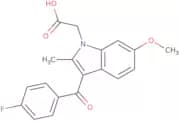
CAS:<p>Please enquire for more information about 3-(4-ethoxyphenyl)spiro[1,3-thiazolidine-2,3'-indoline]-4,7-dione including the price, delivery time and more detailed product information at the technical inquiry form on this page</p>Purity:Min. 95%3-(4-Fluorobenzoyl)-6-Methoxy-2-Methyl-1H-Indole-1-Acetic Acid
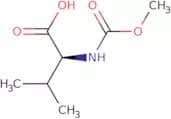
CAS:Controlled Product<p>3-(4-Fluorobenzoyl)-6-Methoxy-2-Methyl-1H-Indole-1-Acetic Acid is a prodrug that is metabolized to 6-fluoro-3,4 dioxo tamoxifen in the liver. It has been shown to have anticholinergic, cytosolic calcium and c1-4 alkyl properties. 3-(4-Fluorobenzoyl)-6-Methoxy-2-Methylindole Acetic Acid also has a basic group, cyclopentane ring, and pyridine ring.</p>Formula:C19H16FNO4Purity:Min. 95%Molecular weight:341.33 g/mol(S)-2-((Methoxycarbonyl)amino)-3-methylbutanoic acid
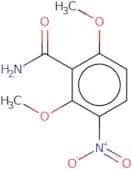
CAS:<p>(S)-2-((Methoxycarbonyl)amino)-3-methylbutanoic acid is a synthetic molecule that has been studied for its antiviral activity against hepatitis C virus. The compound was found to inhibit the replication of the virus, with an IC50 of 0.5 mM in cell culture studies. It also inhibited the replicon and reaction yield of the virus in vitro. (S)-2-((Methoxycarbonyl)amino)-3-methylbutanoic acid is effective against genotype 1 and 2, but not against genotype 3. It is active against a broad range of HCV isolates, including those resistant to other drugs such as ribavirin or telaprevir. The drug has been shown to be well tolerated in animals and humans. END></p>Formula:C7H13NO4Purity:Min. 95%Color and Shape:White PowderMolecular weight:175.18 g/mol2,6-Dimethoxy-3-nitrobenzamide
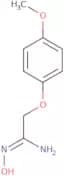
CAS:<p>2,6-Dimethoxy-3-nitrobenzamide is a fine chemical that is used as an intermediate in the synthesis of other compounds. This material can be used to make pharmaceuticals and research chemicals, such as antibiotics and pesticides. 2,6-Dimethoxy-3-nitrobenzamide is a versatile building block that can be used for the production of many different compounds. It has a CAS number of 55776-15-3 and has been assigned the Chemical Abstracts Service (CAS) registry number of 71887-92-8.</p>Formula:C9H10N2O5Purity:Min. 90%Color and Shape:PowderMolecular weight:226.19 g/molN-Hydroxy-2-(4-methoxyphenoxy)ethanimidamide
CAS:<p>Please enquire for more information about N-Hydroxy-2-(4-methoxyphenoxy)ethanimidamide including the price, delivery time and more detailed product information at the technical inquiry form on this page</p>Formula:C9H12N2O3Purity:Min. 95%Color and Shape:PowderMolecular weight:196.2 g/mol2,6-Dimethoxy-4-methylbenzyl alcohol
CAS:<p>2,6-Dimethoxy-4-methylbenzyl alcohol is a high quality, versatile building block that is used as a reagent. The chemical has been shown to be a useful intermediate in the production of fine chemicals and speciality chemicals. 2,6-Dimethoxy-4-methylbenzyl alcohol can be used as a reaction component in the production of research chemicals and versatile building blocks. This compound can be found on CAS registry number 875664-51-0.</p>Formula:C10H14O3Purity:Min. 95%Color and Shape:PowderMolecular weight:182.22 g/mol2-(R)-[1-(R)-(3,5-Bis(trifluoromethyl)phenyl)ethoxy]-3-(S)-fluorophenylmorpholine
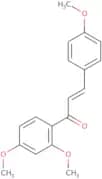
CAS:<p>2-(R)-[1-(R)-(3,5-Bis(trifluoromethyl)phenyl)ethoxy]-3-(S)-fluorophenylmorpholine is a fine chemical with high quality. It has been used as a versatile building block in organic synthesis. 2-(R)-[1-(R)-(3,5-Bis(trifluoromethyl)phenyl)ethoxy]-3-(S)-fluorophenylmorpholine is a useful scaffold and can be used as a reaction component in the synthesis of other compounds. This compound is also an intermediate for the preparation of more complex compounds. CAS No. 171338-27-5</p>Formula:C20H18F7NO2Purity:Min. 95%Color and Shape:Yellow PowderMolecular weight:437.35 g/mol2',4',4-Trimethoxychalcone
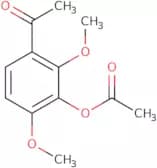
CAS:<p>2',4',4-Trimethoxychalcone is a natural product that inhibits the enzyme activity of phospholipase A2, lipoxygenase, and cyclo-oxygenase. It also has high resistance to hydrochloric acid, chloride, and blood pressure. 2',4',4-Trimethoxychalcone has shown protein inhibition effects in vitro, as well as potent transport inhibitor activity against particles. This compound is synthesized using solid-phase chemistry on an immobilized resin.</p>Formula:C18H18O4Purity:Min. 95%Color and Shape:PowderMolecular weight:298.33 g/mol3-Acetoxy-2,4-dimethoxyacetophenone
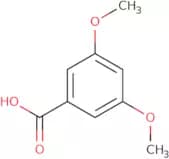
CAS:<p>3-Acetoxy-2,4-dimethoxyacetophenone is a chemical building block that has been shown to be useful in the synthesis of complex compounds. This compound can be used as a reaction component and reagent in organic synthesis. 3-Acetoxy-2,4-dimethoxyacetophenone can be used as a versatile building block for the synthesis of high quality research chemicals and speciality chemicals. It is also a useful intermediate for the preparation of fine chemicals such as pharmaceuticals, agrochemicals, and dyestuffs. 3-Acetoxy-2,4-dimethoxyacetophenone has CAS number 63604-86-4.</p>Formula:C12H14O5Purity:Min. 95%Molecular weight:238.24 g/mol3,5-Dimethoxybenzoic acid
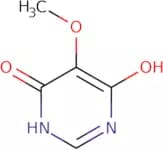
CAS:<p>3,5-Dimethoxybenzoic acid is a chemical compound that belongs to the class of organic compounds known as phenols. This compound is used in the synthesis of 2,4-dichlorobenzoic acid from 2,4-dichloroaniline and sodium hydroxide solution. 3,5-Dimethoxybenzoic acid can also be used to synthesize 2,5-dimethoxybenzoic acid by reacting with sodium hydroxide solution. In addition to its use in organic synthesis, 3,5-dimethoxybenzoic acid has been shown to inhibit ventricular myocytes in a dose dependent manner. It is also used as a model system for studying phase equilibrium.</p>Formula:C9H10O4Purity:Min. 95%Color and Shape:White PowderMolecular weight:182.17 g/mol4,6-Dihydroxy-5-methoxypyrimidine
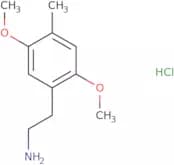
CAS:<p>4,6-Dihydroxy-5-methoxypyrimidine is a white crystalline solid. It is soluble in alkali, acid ethyl, and alcohol. This compound can be used as a solvent for organic substances and has been shown to methylate phosphorus oxychloride. 4,6-Dihydroxy-5-methoxypyrimidine is also used in the synthesis of nucleosides.</p>Formula:C5H6N2O3Purity:Min. 95%Molecular weight:142.11 g/mol2,5-Dimethoxy-4-methylphenethylamine hydrochloride
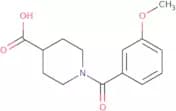
CAS:Controlled Product<p>Please enquire for more information about 2,5-Dimethoxy-4-methylphenethylamine hydrochloride including the price, delivery time and more detailed product information at the technical inquiry form on this page</p>Formula:C11H18ClNO2Purity:Min. 98 Area-%Molecular weight:231.72 g/mol1-(3-Methoxybenzoyl)piperidine-4-carboxylic acid
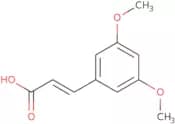
CAS:<p>1-(3-Methoxybenzoyl)piperidine-4-carboxylic acid is a fine chemical that can be used as a building block in organic synthesis. It has CAS No. 353465-22-2 and is also known as P1. This compound is useful in the preparation of a variety of complex compounds, including pharmaceuticals, agrochemicals, and other specialty chemicals. The compound can be used as a reagent or intermediate for reactions such as Friedel-Crafts acylation, carbonylation, and sulfonylation. 1-(3-Methoxybenzoyl)piperidine-4-carboxylic acid is also an excellent scaffold for the synthesis of complex molecules with versatile functional groups.</p>Formula:C14H17NO4Purity:Min. 98 Area-%Color and Shape:PowderMolecular weight:263.29 g/mol3,5-Dimethoxycinnamic acid
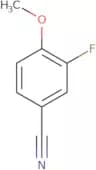
CAS:<p>3,5-Dimethoxycinnamic acid is a compound that belongs to the class of cinnamic acid derivatives. It is a synthetic substance obtained by demethylation of 3,5-dimethoxybenzoic acid. This substance has been shown to have an antifungal activity in vitro against filamentous fungi and many other microorganisms. The antimicrobial effect can be explained by the presence of functional groups such as hydroxyl and methoxyl on the aromatic ring. Hydroxide solution can be used as an analytical reagent for determining the formation rate of this compound.</p>Formula:C11H12O4Purity:Min. 95%Color and Shape:PowderMolecular weight:208.21 g/mol3-Fluoro-4-methoxybenzonitrile
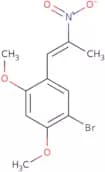
CAS:<p>3-Fluoro-4-methoxybenzonitrile is a ferroelectric liquid crystal chiral molecule. It can be synthesized industrially by the reaction of 3-fluoro-4-methoxybenzoyl chloride with sodium methoxide. The synthesis is scalable and leads to high yields. 3-Fluoro-4-methoxybenzonitrile has been used in the synthesis of other ferroelectric liquid crystals, such as 4-(3′,5′-diiodophenyl)pentaerythritol triacrylate and 3,5′-(1H,1′H) -dibenzothiophene. This compound also displays nematic phase behavior at room temperature when in contact with a nematic director. Polarization data for this substance are available from experiments on thin films.</p>Formula:C8H6FNOPurity:Min. 95%Color and Shape:PowderMolecular weight:151.14 g/mol5-Bromo-2,4-dimethoxy-β-methylnitrostyrene
CAS:<p>5-Bromo-2,4-dimethoxy-beta-methylnitrostyrene is a fine chemical that is an important reagent and building block. It can be used as a reaction component or intermediate for the synthesis of more complex compounds. 5-Bromo-2,4-dimethoxy-beta-methylnitrostyrene can also be used as a versatile building block to produce high quality complex compounds. The compound has been shown to have a high level of purity and is suitable for use in research or speciality chemicals.</p>Formula:C11H12BrNO4Purity:Min. 95%Color and Shape:PowderMolecular weight:302.12 g/mol

![(+)-N-[1-(S)-Ethoxycarbonxyl-3-phenylpropyl]-L-alanine](/_next/image/?url=https%3A%2Fstatic.cymitquimica.com%2Fproducts%2F3D%2Fthumb-webp%2FFE22880.webp&w=3840&q=75)
![3-(4-ethoxyphenyl)spiro[1,3-thiazolidine-2,3'-indoline]-4,7-dione](/_next/image/?url=https%3A%2Fstatic.cymitquimica.com%2Fproducts%2F3D%2Fthumb-webp%2FFE169782.webp&w=3840&q=75)

![2-(R)-[1-(R)-(3,5-Bis(trifluoromethyl)phenyl)ethoxy]-3-(S)-fluorophenylmorpholine](/_next/image/?url=https%3A%2Fstatic.cymitquimica.com%2Fproducts%2F3D%2Fthumb-webp%2FFB18758.webp&w=3840&q=75)