Organoboranes
Found 6125 products of "Organoboranes"
1,2-Bis(hydroxymethyl)-O-carborane
CAS:Controlled Product1,2-Bis(hydroxymethyl)-O-carborane is a cyclic molecule that can be used in the synthesis of organic compounds. It can be prepared by reacting anhydrous sodium chloride with propiolic acid. It has been shown to produce decaborane and anion when reacted with chlorine. The chlorides are catalytic for the formation of methyl alcohol and methacrylates. 1,2-Bis(hydroxymethyl)-O-carborane has been used as a starting material for the synthesis of triflates and methyl alcohols. This compound has also been found to produce diffraction patterns that can be used for structural analysis.
Formula:C4H16B10O2Purity:Min. 95%Molecular weight:204.28 g/molVinyloxytrimethylsilane
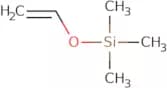
CAS:Controlled ProductVinyloxytrimethylsilane is an organosilicon compound that is used as a polymerization initiator. It reacts with cyclobutanone to form a ruthenium complex, which can be used to coat surfaces and produce polymers. The use of this compound has been shown to increase the reaction yield and decrease the amount of by-products in the polymerization process. Vinyloxytrimethylsilane is biodegradable, making it an environmentally friendly alternative for coating surfaces or producing polymers.
Formula:C5H12OSiPurity:Min. 95%Molecular weight:116.23 g/molRef: 3D-FV153134
Discontinued product(5-Chloropyridin-3-yl)boronic acid
CAS:Please enquire for more information about (5-Chloropyridin-3-yl)boronic acid including the price, delivery time and more detailed product information at the technical inquiry form on this page
Formula:C5H5BClNO2Purity:Min. 95%Molecular weight:157.36 g/molRef: 3D-FC160837
Discontinued productTrichlorooctadecylsilane
CAS:Trichlorooctadecylsilane is a model system that consists of a monolayer of octadecyltrichlorosilane particles. The dispersive solid-phase extraction technique can be used to extract analytes from the surface of this particle. This technique involves removing the solvent from a sample by passing it through an adsorbent. The hydrophobic effect, which is the phenomenon that a nonpolar substance is dissolved in a nonpolar solvent, will cause analytes to bind to the hydrophobic surface of octadecyltrichlorosilane particles because they are hydrophobic.
Purity:Min. 95%Nonafluorohexyltrichlorosilane
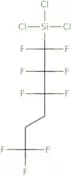
CAS:Nonafluorohexyltrichlorosilane is a silicon-based surfactant that can be used as a surface treatment agent. It is hydrophilic and has excellent wetting properties. Nonafluorohexyltrichlorosilane is also an effective coagulant, which makes it useful for the treatment of wastewater containing suspended solids. This agent can be used to coat surfaces with silicon to make them more hydrophobic, making it useful in the production of photoreceptors, emulsions, and immobilized cell culture. The chemical structure of Nonafluorohexyltrichlorosilane allows it to be easily synthesized by the reaction between chlorosilanes and alcohols.
Formula:C6H4Cl3F9SiPurity:Min. 95%Color and Shape:Clear LiquidMolecular weight:381.53 g/molRef: 3D-FN79644
Discontinued productTriisopropanolamine Borate
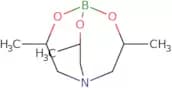
CAS:Triisopropanolamine borate is an organic compound with the formula (CH3)3N(CH2)3OH. It is a colorless liquid with a sweet, amine-like odor. Triisopropanolamine borate is widely used as a cross-linking agent in coatings, and as a reactive functional group in polycarboxylic acid synthesis and cationic polymerization. It also has been used as a blood pressure lowering agent and to treat high calcium levels in the blood. The chemical structure of triisopropanolamine borate can be seen below: Triisopropanolamine Borate, Chemical Structure The chemical formula for triisopropanolamine borate is CH3N(CH2)3OH. Triisopropanolamine borate has many applications due to its reactive functional groups, including cross-linking agents for coatings and polycarboxylic acid synthesis
Formula:C9H18BNO3Purity:Min. 95%Molecular weight:199.06 g/molRef: 3D-FT159810
Discontinued product1-(4-Fluorophenyl)pyrazole-4-boronic acid
CAS:Please enquire for more information about 1-(4-Fluorophenyl)pyrazole-4-boronic acid including the price, delivery time and more detailed product information at the technical inquiry form on this page
Formula:C9H8BFN2O2Purity:Min. 95%Molecular weight:205.98 g/molRef: 3D-FF86764
Discontinued productPotassium dihydrogen arsenate
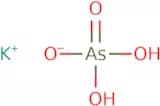
CAS:Potassium dihydrogen arsenate is an inorganic chemical that is used as a pesticide. It prevents the synthesis of proteins by inhibiting soybean trypsin. The optimum concentration for chrysoperla is 1.6 mg/L, which has been shown to be sublethal at levels below 5 mg/L. This chemical has also been shown to have effects on light exposure and thermal expansion. Potassium dihydrogen arsenate belongs to the ferroelectric class of compounds and has a hydrogen bond with water, which may explain its uptake into plants.
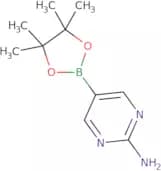
Formula:H2AsKO4Purity:Min. 95%Molecular weight:180.04 g/mol2-Aminopyrimidine-5-boronic acid pinacol ester
CAS:2-Aminopyrimidine-5-boronic acid pinacol ester is a boronic acid derivative that has been shown to inhibit the activity of protein kinase C. This compound is also an effective linker for cross-coupling reactions and has a low reactivity with nucleophiles, which makes it safer than other boronic acids. 2-Aminopyrimidine-5-boronic acid pinacol ester has been shown to be potent against cancer cells in vitro and in vivo and synthetic cells. 2-Aminopyrimidine-5-boronic acid pinacol ester inhibits the growth of cancer cells by binding to the ATP site on protein kinase C, thereby inhibiting its function.
Formula:C10H16BN3O2Purity:Min. 95 Area-%Color and Shape:PowderMolecular weight:221.06 g/molRef: 3D-FA33574
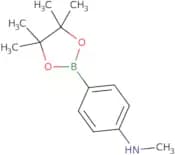
Discontinued product4-(N-Methylamino)phenylboronic acid pinacol ester
CAS:Please enquire for more information about 4-(N-Methylamino)phenylboronic acid pinacol ester including the price, delivery time and more detailed product information at the technical inquiry form on this page
Formula:C13H20BNO2Purity:Min. 95%Molecular weight:233.11 g/molRef: 3D-FM32978
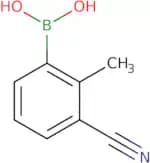
Discontinued product3-Cyano-2-methylphenylboronic acid
CAS:3-Cyano-2-methylphenylboronic acid is a high quality compound that can be used as a reagent, intermediate, or building block in the synthesis of complex compounds. This chemical is also useful as a speciality chemical and research chemical. 3-Cyano-2-methylphenylboronic acid has versatile uses in organic synthesis due to its versatility in reactions and building blocks.
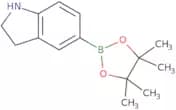
Formula:C8H8BNO2Purity:Min. 95%Color and Shape:PowderMolecular weight:160.97 g/mol5-(4,4,5,5-Tetramethyl-1,3,2-dioxaborolan-2-yl)indoline
CAS:Please enquire for more information about 5-(4,4,5,5-Tetramethyl-1,3,2-dioxaborolan-2-yl)indoline including the price, delivery time and more detailed product information at the technical inquiry form on this page
Purity:Min. 95%Ref: 3D-FT141979
Discontinued productTetraethylammonium tetrafluoroborate
CAS:Tetraethylammonium tetrafluoroborate is a diamagnetic chemical species that reacts with water, forming the hydrated salt tetraethylammonium hydroxide. Tetraethylammonium tetrafluoroborate has a high resistance to oxidation and reduction reactions. It can be used as an electrolyte in electrochemistry and as a thermal expansion agent in plastics. The potentials of this substance are around +1 V, which makes it useful for electrochemical impedance spectroscopy. Tetraethylammonium tetrafluoroborate is activated by organic solvents, but not by water vapor.
Formula:C8H20N·BF4Color and Shape:White Off-White PowderMolecular weight:217.06 g/molDihydro-5-furylboronic acid pinacol ester
CAS:Please enquire for more information about Dihydro-5-furylboronic acid pinacol ester including the price, delivery time and more detailed product information at the technical inquiry form on this page
Formula:C10H17BO3Purity:Min. 95%Molecular weight:196.05 g/molRef: 3D-FD159854
Discontinued productLatanoprost tris(triethylsilyl) ether
CAS:Please enquire for more information about Latanoprost tris(triethylsilyl) ether including the price, delivery time and more detailed product information at the technical inquiry form on this page
Formula:C44H82O5Si3Purity:Min. 95%Molecular weight:775.38 g/molRef: 3D-FL24855
Discontinued product4-(Trimethylsilyl)pheNylboroNic acid
CAS:4-(Trimethylsilyl)phenylboronic acid is a molecule that can be used as an acceptor in fluorescence. It has been shown to have acceptor properties, which means it is able to absorb light energy and transfer it to other molecules. This chemical can be used in microscopy and cross-coupling reactions. 4-(Trimethylsilyl)phenylboronic acid has been shown to undergo thermally activated transport properties and to be isomeric. The molecule also has cross-coupling reactions with anilines, which are important for the production of pharmaceuticals and other organic compounds. 4-(Trimethylsilyl)phenylboronic acid has a high affinity for chloride ions, making it a good candidate for use in solar cells.
Formula:C9H15BO2SiPurity:Min. 95%Molecular weight:194.11 g/molPeptide epsilon
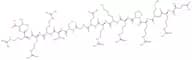
CAS:Peptide epsilon is a diacylglycerol that inhibits protein synthesis. It binds to the cytosolic protein and inhibits the activity of the cytosolic protein, which is required for cell proliferation. Activated cells are then killed by apoptosis. Peptide epsilon has been shown to inhibit tubule cells by binding with the basic protein in the tubule cells and inhibiting cell proliferation. Peptide epsilon also binds with cytosolic protein and inhibits its activity, leading to inhibition of cell proliferation. This drug has been shown to be a potent inhibitor of cell proliferation in fetal bovine kidney cells and human lung cancer cells.
Formula:C83H155N39O21SPurity:Min. 95%Molecular weight:2,067.44 g/molRef: 3D-FP108937
Discontinued product1-Pyreneboronic Acid (contains varying amounts of Anhydride)
CAS:1-Pyreneboronic acid is a fluorescent derivative of boronic acid. It has been shown to have synergistic effects with other compounds, such as glucose monitoring. 1-Pyreneboronic acid is used in the preparation of a fluorescent probe for use in dna duplex assays. The fluorescence properties of this compound are affected by the presence of hydroxy groups and benzyl groups, making it useful for protein detection and identification. This compound can be prepared using the suzuki coupling reaction and it has been shown that it has an effect on cell line raw264.7 cells.
Formula:C16H11BO2Purity:Min. 95%Molecular weight:246.07 g/molRef: 3D-FP62348
Discontinued productIron(II) tetrafluoroborate - 40-45% aqueous solution
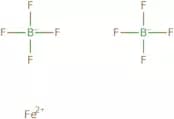
CAS:Iron(II) tetrafluoroborate is a green-yellow crystalline solid that is soluble in water. It has been shown to have structural and optical properties that are similar to those of ferric chloride, but with the advantage of being less toxic. Iron(II) tetrafluoroborate is used as a homogeneous catalyst for organic reactions such as the hydrogenation of nitroarenes and the reduction of ketones. The catalytic activity of Iron(II) tetrafluoroborate arises from its ability to form hydrogen bonding interactions with other molecules and ions in solution.
Iron(II) tetrafluoroborate undergoes a number of reactions with other compounds, including cleavage products such as hydrogen sulfate and nitrogen atoms, which may be due to its chelate ligand. In coordination chemistry, Iron(II) tetrafluoroborate can form coordination complexes by reacting with potassium dichromate or calcium carbonate. These complexes areFormula:B2F8FePurity:About 45%Color and Shape:Slightly Green Clear LiquidMolecular weight:229.45 g/molRef: 3D-FI105721
Discontinued productVinylboronic acid MIDA ester
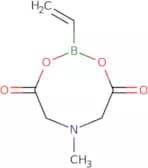
CAS:Vinylboronic acid MIDA ester is a boronic ester that can be used as an additive to control weeds. It is a mixture of two diastereomers, with the vinyl group on one end of the molecule and the boron atom on the other. Vinylboronic acid MIDA ester has been shown to be more effective than methoxy for weed control, with yields of up to 100%. The addition of this compound to herbicides increases their activity against weeds, which may be due to its ability to increase the solubility of active ingredients.
Formula:C7H10BNO4Purity:Min. 95%Molecular weight:182.97 g/mol3-Acetylphenylboronic acid, pinacol ester
CAS:Please enquire for more information about 3-Acetylphenylboronic acid, pinacol ester including the price, delivery time and more detailed product information at the technical inquiry form on this page
Formula:C14H19BO3Purity:Min. 95%Molecular weight:246.11 g/molDiisopropylsilyl Bis(Trifluoromethanesulfonate)
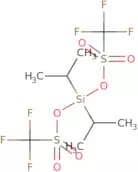
CAS:Diisopropylsilyl bis(trifluoromethanesulfonate) is a bifunctional reagent that can be used to prepare the trifluoromethanesulfonic acid. It reacts with an alcohol in the presence of base to generate an ester, and then hydrolyzes the ester in the presence of water to generate the desired acid. Diisopropylsilyl bis(trifluoromethanesulfonate) is pale yellow and soluble in argon, nitrogen, and solvents such as ethyl acetate.
Formula:C8H14F6O6S2SiPurity:Min. 95%Molecular weight:412.4 g/molRef: 3D-FD90402
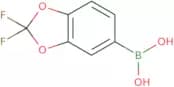
Discontinued product2,2-Difluoro-1,3-Benzodioxol-5-Ylboronic Acid
CAS:Please enquire for more information about 2,2-Difluoro-1,3-Benzodioxol-5-Ylboronic Acid including the price, delivery time and more detailed product information at the technical inquiry form on this pageFormula:C7H5BF2O4Purity:Min. 95%Molecular weight:201.92 g/molRef: 3D-FD89242
Discontinued product3-Fluorophenyl boronic acid
CAS:Please enquire for more information about 3-Fluorophenyl boronic acid including the price, delivery time and more detailed product information at the technical inquiry form on this page
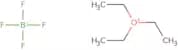
Formula:C6H6BFO2Purity:Min. 95%Color and Shape:PowderMolecular weight:139.92 g/molTriethyloxonium tetrafluoroborate
CAS:Triethyloxonium tetrafluoroborate is an antimicrobial agent that inhibits the transfer of electrons from one molecule to another. It has been shown to be effective against methicillin-resistant Staphylococcus aureus and Mycobacterium tuberculosis. Triethyloxonium tetrafluoroborate binds to the bacterial enzyme, Jak1, which is involved in the formation of cytokines and interleukins. This binding inhibits the production of these molecules, leading to cell death by apoptosis. The use of triethyloxonium tetrafluoroborate as a research tool has facilitated its discovery as a potential anti-inflammatory drug for autoimmune diseases such as type 1 diabetes mellitus and rheumatoid arthritis. Triethyloxonium tetrafluoroborate can be used to inhibit amide synthesis, which may have applications in the study of carbohydrate chemistry and nitrogen atoms in biological systems. This compound has also been used
Formula:C6H15BF4OPurity:Min. 95%Color and Shape:PowderMolecular weight:189.99 g/mol