Ketones
Found 18871 products of "Ketones"
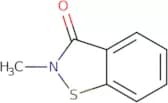
2-Methyl-1,2-benzisothiazolin-3-one
CAS:2-Methyl-1,2-benzisothiazolin-3-one (MBIT) is a water soluble microbiocide which is active against bacteria, yeasts and moulds and has potential applications as a preservative in paints, sealants and coatings. Similar compounds (BIT, MIT) have found use as preservatives in detergents and cleaning products due to their relative stability in solution and compatibility with enzymes.
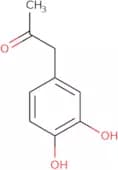
Formula:C8H7NOSPurity:Min. 96 Area-%Color and Shape:White Off-White PowderMolecular weight:165.21 g/mol3',4'-Dihydroxyphenylacetone
CAS:3',4'-Dihydroxyphenylacetone (DOPA) is a metabolite of dopamine that is produced in the brain and kidneys. DOPA has been shown to have pharmacological properties, but its function as an endogenous neurotransmitter has not been confirmed. DOPA is also a precursor for the synthesis of melanin, which is found in skin cells. The detection of DOPA in urine samples can be used to diagnose Parkinson's disease or other conditions characterized by low levels of dopamine. The enzyme glutamate dehydrogenase converts DOPA into 3-methoxytyramine, which can be detected in urine samples using chromatographic methods. 3',4'-Dihydroxyphenylacetone may be measured in the blood plasma of patients with bacterial infections and urinary tract infections. A detectable concentration of this metabolite could indicate that the body is making use of an alternate pathway for synthesizing amines.Formula:C9H10O3Purity:Min. 95%Color and Shape:Off-White PowderMolecular weight:166.17 g/mol5-Chloro-1-indanone
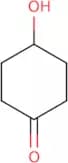
CAS:5-Chloro-1-indanone is an organic molecule with a reactive functional group that can react with other molecules. The most common reaction is the Friedel-Crafts reaction, which is used to make alkenes from aldehydes and aluminum chloride. 5-Chloro-1-indanone is also used in the acylation reaction, which involves the transfer of an acyl group to a molecule. This process has many applications, such as synthesis of pesticides and pharmaceuticals, and can be used to produce low energy chlorine gas. Panc-1 cells are often used in anticancer research because they are sensitive to carcinogens. 5-Chloro-1-indanone was shown to inhibit cell growth in these cells by reacting with hydrogen chloride (HCl) in water to form 5-(chloromethyl)-1H indene and hydrochloric acid (HCl).Formula:C9H7ClOPurity:Min. 95%Color and Shape:PowderMolecular weight:166.6 g/mol4-Hydroxycyclohexanone
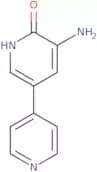
CAS:4-Hydroxycyclohexanone is a reactive compound that contains a hydroxy group and a hydroxyl group. It reacts with various substances, including hydrogen bond, to form new compounds. 4-Hydroxycyclohexanone is used in the industrial production of other chemicals, such as cyclohexanone. The reactivity of 4-hydroxycyclohexanone can be determined by its nmr spectra. The deshielding effect of the hydroxyl group causes an upfield shift in the nmr spectrum. In addition, 4-hydroxycyclohexanone reacts with hydrochloric acid to form an ester and water. The reaction mechanism for this process is nucleophilic attack by the hydroxyl group on the carbonyl carbon atom in hydroxycyclohexanone.Formula:C6H10O2Purity:Min. 95%Color and Shape:Colorless PowderMolecular weight:114.15 g/mol5-Amino-(3,4'-bipyridin)-6(1H)-one
CAS:Phosphodiesterase type 3 inhibitor; positive inotropic agent; vasodilatoryFormula:C10H9N3OPurity:Min. 95%Color and Shape:PowderMolecular weight:187.2 g/molFlavanone azine
CAS:Flavanone azine is a synthetic compound derived from flavonoid sources, specifically engineered through the structural manipulation of flavanone molecules. Flavonoids are naturally occurring compounds found in plants known for their diverse biological activities. The synthetic derivation allows for enhanced stability and bioavailability compared to natural counterparts.Formula:C30H24N2O2Purity:Min. 95%Molecular weight:444.52 g/mol1-(3-Aminopropyl)pyridin-2(1H)-one HCl
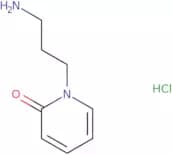
CAS:1-(3-Aminopropyl)pyridin-2(1H)-one HCl is a fine chemical that belongs to the group of heterocyclic compounds. It is a versatile building block that can be used as an intermediate or a scaffold in chemical synthesis. 1-(3-Aminopropyl)pyridin-2(1H)-one HCl is soluble in water and has been shown to react with a variety of other compounds, including amines, alcohols, thiols, and phenols. This compound also has high quality and can be used for research purposes.Formula:C8H12N2O·HClPurity:Min. 95%Color and Shape:White PowderMolecular weight:188.65 g/mol4-((4-(dimethylamino)phenyl)methylene)-3-methyl-1-phenyl-2-pyrazolin-5-one
CAS:Please enquire for more information about 4-((4-(dimethylamino)phenyl)methylene)-3-methyl-1-phenyl-2-pyrazolin-5-one including the price, delivery time and more detailed product information at the technical inquiry form on this pagePurity:Min. 95%(3-Ethoxyphenyl)acetone
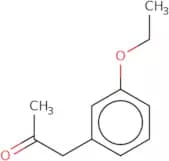
CAS:3-Ethoxyphenylacetone is a white crystalline solid that is soluble in cold water and insoluble in ethanol. It is a chemical reagent that can be used for research purposes such as to study the mechanism of various chemical reactions. 3-Ethoxyphenylacetone can be used as a building block in the synthesis of more complex compounds and as an intermediate in the synthesis of other chemicals. 3-Ethoxyphenylacetone can also be used as a scaffold to create novel compounds with different functional groups.Formula:C11H14O2Purity:Min. 85 Area-%Color and Shape:Clear LiquidMolecular weight:178.23 g/mol5-Hydroxy-1,4-naphthalenedione
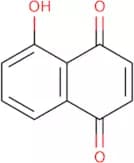
CAS:Blocks RNA polymerases I, II, and III; inhibits PPlasesFormula:C10H6O3Purity:Min. 98 Area-%Color and Shape:PowderMolecular weight:174.15 g/mol4-Phenyl-2-butanone
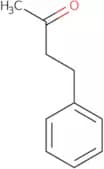
CAS:4-Phenyl-2-butanone is an organic compound that is used as a solvent. It has been shown to be effective against a wide range of bacteria, including Gram positive and Gram negative bacteria. 4-Phenyl-2-butanone disrupts the cell membrane by binding to glycol ether, which is an important part of the lipid bilayer. It also inhibits the synthesis of two important molecules in bacterial cells, dinucleotide phosphate and phospholipids. This process leads to bacterial cell death. 4-Phenyl-2-butanone also has antimicrobial properties due to its ability to destroy water vapor and inhibit growth of microorganisms on skin.
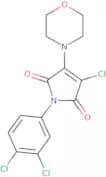
Formula:C10H12OPurity:Min. 97.5 Area-%Color and Shape:Colorless Clear LiquidMolecular weight:148.2 g/mol3-Chloro-1-(3,4-dichlorophenyl)-4-morpholin-4-yl-1H-pyrrole-2,5-dione
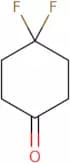
CAS:3-Chloro-1-(3,4-dichlorophenyl)-4-morpholin-4-yl-1H-pyrrole-2,5-dione is a chemical compound that can be used as a reaction component, reagent, or useful scaffold for chemical synthesis. It is a high quality chemical with CAS No. 415713-60-9 and has the molecular formula C14H10Cl2N2O3. This versatile building block has been shown to be useful as an intermediate in organic chemistry and as a building block for complex compounds.Formula:C14H11Cl3N2O3Purity:Min. 95%Color and Shape:PowderMolecular weight:361.61 g/mol4,4-Difluorocyclohexan-1-one
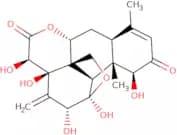
CAS:4,4-Difluorocyclohexan-1-one (DFCO) is a colorless liquid that is soluble in organic solvents. It has been shown to have potential as a treatment for Alzheimer's disease due to its ability to inhibit the conformational changes in the amyloid beta peptide. DFCO was synthesized by reacting pyridazine with difluoroethanol, which led to the formation of two stereoisomers: R and S. The R stereoisomer was found to be more potent than the S stereoisomer in inhibiting acetylcholine release from human lung cells and had better binding affinity for adenosine receptors. This compound also showed antiinflammatory properties when it was used as an inhibitor of prostaglandin synthesis in mice.Formula:C6H8F2OPurity:Min. 95%Color and Shape:White PowderMolecular weight:134.12 g/molEurycomanone
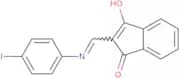
CAS:Eurycomanone is a natural product that belongs to the group of quassinoids. It is obtained from the plant Eurycoma longifolia, which grows in tropical Asia and Africa. The extract has been shown to have clinical properties such as body formation, protein target, and surface methodology. 3T3-L1 preadipocytes were used for the in vitro assays of eurycomanone. Group P2 cells were used for histological analysis and pharmacological agents were found to be chemical stable.Formula:C20H24O9Purity:Min. 95%Color and Shape:PowderMolecular weight:408.4 g/mol2-(((4-iodophenyl)amino)methylene)indane-1,3-dione
CAS:Please enquire for more information about 2-(((4-iodophenyl)amino)methylene)indane-1,3-dione including the price, delivery time and more detailed product information at the technical inquiry form on this pageFormula:C16H10INO2Purity:Min. 95%Color and Shape:PowderMolecular weight:375.16 g/mol6-Fluoropregn-4-Ene-3,20-Dione
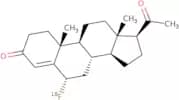
CAS:Controlled Product6-Fluoropregn-4-Ene-3,20-Dione is a hydrocarbon that is used in the production of an oil solution for oral administration. This product is well tolerated and has been shown to have good activity against Leptosphaeria species, which are members of the class of microorganisms. 6-Fluoropregn-4-Ene-3,20-Dione may be used as diluent with other substances. It can also be used as a corynebacterium culture media or as a dehydrated culture medium for corynebacteria. 6FPD can also be used to make emulsions containing microorganisms such as Cylindrocarpon species and Hydrolysing strains. It can function as a peracid or alkylene acylate oxidising agent.Formula:C21H29FO2Purity:Min. 95%Molecular weight:332.45 g/molIsothiazol-3-one
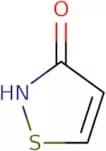
CAS:Isothiazol-3-one is a microbicidal agent that is used as an additive to water in the form of a liquid or powder. It is classified as reactive and hydrochloric acid, which means it reacts with water to produce chlorine and hydrochloric acid. The biocidal activity of the chemical is due to its ability to inhibit the growth of bacteria by reacting with their cell walls and destroying them. Isothiazol-3-one has also been shown to have an effect on insulin resistance in rats. This effect may be due to its ability to inhibit cholesterol esterase, an enzyme involved in lipid metabolism that has been shown to be associated with diabetes. Isothiazol-3-one is also known for its high values of carbonyl groups and chlorine atoms, making it useful for analytical chemistry experiments using gas chromatography (GC), as well as in agricultural research.Formula:C3H3NOSPurity:Min. 95%Color and Shape:PowderMolecular weight:101.13 g/mol3-((4-Acetylphenyl)amino)-2-phenylinden-1-one
CAS:Please enquire for more information about 3-((4-Acetylphenyl)amino)-2-phenylinden-1-one including the price, delivery time and more detailed product information at the technical inquiry form on this pageFormula:C23H17NO2Purity:Min. 95%Color and Shape:PowderMolecular weight:339.39 g/mol1,3-Acetonedicarboxylic acid
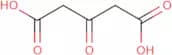
CAS:1,3-Acetonedicarboxylic acid is a crystalline solid that belongs to the group of carboxylic acids. 1,3-Acetonedicarboxylic acid interacts with its receptor by binding to a hydroxyl group and two hydrogen atoms. It has been shown that 1,3-acetonedicarboxylic acid can inhibit HIV infection in vitro by preventing the virus from attaching to cells. It also inhibits malonic acid oxidation and citric acid cycle enzymes in rat liver mitochondria. The synthesis of 1,3-acetonedicarboxylic acid can be achieved through different methods:
1) By reacting sodium carbonate with malonic acid
2) By reacting hydrogen fluoride with malonic acid
3) By reacting sodium carbonate with citric acid (malonic ester) and then hydrolyzing it
4) By reacting sodium carbonate with malonitrile and then hydroFormula:C5H6O5Purity:Min. 95%Color and Shape:PowderMolecular weight:146.1 g/mol(3,5-Dichlorophenyl)acetone
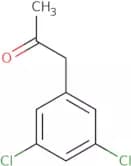
CAS:(3,5-Dichlorophenyl)acetone is a versatile building block that can be used as a research chemical or a speciality chemical. It is an intermediate for the synthesis of other compounds and has been used in the synthesis of complex compounds. The compound is also useful as a reaction component for organic syntheses and is a useful building block for high quality fine chemicals.Formula:C9H8Cl2OPurity:Min. 95%Molecular weight:203.06 g/mol