Ketones
Found 18869 products of "Ketones"
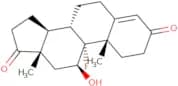
(8S,9R,10S,11S,13S)-9-Fluoro-11-Hydroxy-10,13-Dimethyl-1,2,6,7,8,11,12,14,15,16-Decahydrocyclopenta[a]Phenanthrene-3,17-Dione
CAS:Controlled Product(8S,9R,10S,11S,13S)-9-Fluoro-11-Hydroxy-10,13-Dimethyl-1,2,6,7,8,11,12,14,15,16-Decahydrocyclopenta[a]Phenanthrene-3,17-Dione is a corticosteroid that is used in the treatment of inflammatory diseases. It has been shown to have immunosuppressive and antiinflammatory effects in animals. The drug is metabolized by cytochrome P450 enzymes to produce the active form prednisolone. Prednisolone binds to glucocorticoid receptors and blocks the production of inflammatory leukotrienes. The drug also inhibits neovascularization and ophthalmic disorders.Formula:C19H25FO3Purity:Min. 95%Molecular weight:320.4 g/mol(2,4-Difluorophenyl)acetone
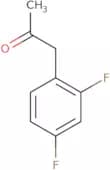
CAS:(2,4-Difluorophenyl)acetone is a high quality chemical that can be used as a reagent, intermediate or building block for the synthesis of complex compounds. It is also a versatile building block for the synthesis of speciality chemicals, research chemicals and reaction components. (2,4-Difluorophenyl)acetone is an important intermediate in the synthesis of fluoroquinolones and it has been shown to be useful in the preparation of dyes such as indigo and phthalocyanine. This compound is also used to synthesize other pharmaceuticals such as aspirin and acetaminophen.
Formula:C9H8F2OPurity:Min. 95%Color and Shape:PowderMolecular weight:170.16 g/mol1,4-Dibromo-2,3-butanedione
CAS:1,4-Dibromo-2,3-butanedione is an organic compound that is used as a model organism in organic chemistry. It is reactive with light and can emit light when it reacts with oxygen. 1,4-Dibromo-2,3-butanedione has been studied for its use in the synthesis of adenine nucleotides and amino acids. This chemical also has reactive functional groups that can be used to synthesize other molecules. The chlorine atom present in the molecule makes it reactive with many other compounds. 1,4-Dibromo-2,3-butanedione is not found naturally but can be synthesized from dehydroabietic acid through a series of steps involving oxidation and reduction reactions.Formula:C4H4Br2O2Purity:Min. 95%Color and Shape:PowderMolecular weight:243.88 g/mol5-Chloro-1-indanone
CAS:5-Chloro-1-indanone is an organic molecule with a reactive functional group that can react with other molecules. The most common reaction is the Friedel-Crafts reaction, which is used to make alkenes from aldehydes and aluminum chloride. 5-Chloro-1-indanone is also used in the acylation reaction, which involves the transfer of an acyl group to a molecule. This process has many applications, such as synthesis of pesticides and pharmaceuticals, and can be used to produce low energy chlorine gas. Panc-1 cells are often used in anticancer research because they are sensitive to carcinogens. 5-Chloro-1-indanone was shown to inhibit cell growth in these cells by reacting with hydrogen chloride (HCl) in water to form 5-(chloromethyl)-1H indene and hydrochloric acid (HCl).Formula:C9H7ClOPurity:Min. 95%Color and Shape:PowderMolecular weight:166.6 g/mol1.8-Diazacyclotetradecane-2,7-dione
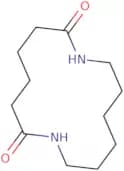
CAS:1.8-Diazacyclotetradecane-2,7-dione is a solid formed as an unwanted side-product in the conventional process to form Nylon 66 from adipic acid and hexamethylene diamine. The 1.8-diazacyclotetradecane-2,7-dione thus produced can be washed out of the final Nylon polymer. However, an alternative process allows for 1.8-diazacyclotetradecane-2,7-dione to be used as part of the feedstock for Nylon 66 and other lower molecular weight polymers.Formula:C12H22N2O2Purity:Min. 95%Color and Shape:White PowderMolecular weight:226.32 g/mol4-((4-(dimethylamino)phenyl)methylene)-3-methyl-1-phenyl-2-pyrazolin-5-one
CAS:Please enquire for more information about 4-((4-(dimethylamino)phenyl)methylene)-3-methyl-1-phenyl-2-pyrazolin-5-one including the price, delivery time and more detailed product information at the technical inquiry form on this pagePurity:Min. 95%7-Amino-2-(4-methoxyphenyl)[1,2,4]triazolo[1,5-a]pyrimidin-5(4H)-one
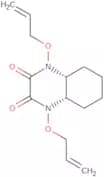
CAS:7-Amino-2-(4-methoxyphenyl)[1,2,4]triazolo[1,5-a]pyrimidin-5(4H)-one is a fine chemical that belongs to the category of versatile building blocks. It can be used as a reagent for research purposes and as a speciality chemical for the production of complex compounds. This compound is also an important building block for the synthesis of compounds with high quality and useful scaffolds.Formula:C12H11N5O2Purity:Min. 95%Color and Shape:PowderMolecular weight:257.25 g/molcis-5,6-Tetramethylen-1,4-diallyloxypiperazine-2,3-dione
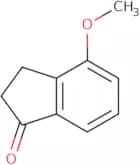
CAS:cis-5,6-Tetramethylen-1,4-diallyloxypiperazine-2,3-dione is a versatile building block and useful scaffold for the synthesis of pharmaceuticals. It has been shown to be an excellent reaction component in organic synthesis and as a speciality chemical. cis-5,6-Tetramethylen-1,4-diallyloxypiperazine-2,3-dione is a high quality reagent that can be used in research work.Formula:C14H20N2O4Purity:Min. 95%Molecular weight:280.32 g/mol4-Methoxy-1-indanone
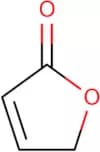
CAS:4-Methoxy-1-indanone is a quinoline derivative that is used as an intermediate for the synthesis of a number of bioactive molecules, such as gephyrotoxin (a potent neurotoxin) and oxime derivatives. 4-Methoxy-1-indanone has been shown to be activated by metal ions and oximes to form iminium cations. These cations are then converted into chloride or carbonic anions by dehydrogenase enzymes, which are important in the metabolism of carbohydrates in living organisms.Formula:C10H10O2Purity:Min. 95%Color and Shape:PowderMolecular weight:162.19 g/mol2(5H)-Furanone
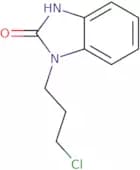
CAS:2(5H)-Furanone is a naturally occurring compound that has been found to have hypoglycemic effects. Studies have shown that 2(5H)-furanone inhibits the activity of cox-2, an enzyme involved in the synthesis of prostaglandins, which are inflammatory compounds. This chemical may be useful as an anti-inflammatory agent and for the treatment of bowel diseases. 2(5H)-Furanone also has antimicrobial properties and has been shown to inhibit the growth of animal cells that are resistant to anticancer drugs. It binds to cell nuclei and disrupts DNA synthesis by competing with basic proteins for binding sites on DNA strands. The chemical structure of 2(5H)-furanone is very similar to butenolide, a natural plant compound used in traditional Chinese medicine; both compounds have been shown to inhibit COX-2 activity.Formula:C4H4O2Purity:Min. 95%Color and Shape:Clear LiquidMolecular weight:84.07 g/mol1-(3-Chloropropyl)-1,3-dihydro-2H-benzimidazole-2-one
CAS:Phenylmethyl (PM) is a drug that belongs to the class of phenylmethanesulfonamides. It is used in the treatment of diarrhea, specifically in cases where there are no other suitable anti-diarrheal drugs available. The active form of PM is 1-(3-chloropropyl)-1,3-dihydro-2H-benzimidazole-2-one (PCP). This drug inhibits bacterial growth by binding to the 50S ribosomal subunit and inhibiting protein synthesis. PCP has been shown to have a narrow spectrum of activity against most enteric bacteria and some protozoa. The drug is poorly absorbed from the gastrointestinal tract and does not cross the blood–brain barrier, which limits its use for systemic infections.
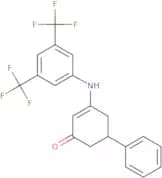
Formula:C10H11ClN2OPurity:Min. 95%Color and Shape:PowderMolecular weight:210.66 g/mol3-((3,5-bis(trifluoromethyl)phenyl)amino)-5-phenylcyclohex-2-en-1-one
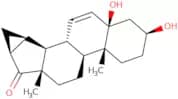
CAS:Please enquire for more information about 3-((3,5-bis(trifluoromethyl)phenyl)amino)-5-phenylcyclohex-2-en-1-one including the price, delivery time and more detailed product information at the technical inquiry form on this pagePurity:Min. 95%3β,5-Dihydroxy-15β,16β-methylene-5β-androst-6-en-17-one
CAS:Controlled Product3b,5-Dihydroxy-15b,16b-methylene-5b-androst-6-en-17-one is a steroid hormone that has been shown to have antihypertensive properties. It has been shown to reduce the production of angiotensin II by inhibiting the enzyme angiotensin converting enzyme (ACE). 3b,5-Dihydroxy-15b,16b-methylene-5b-androst-6-en 17 one has also been shown to be a potent inhibitor of the enzyme 3beta hydroxysteroid dehydrogenase type 1 (3betaHSD1) and 5alpha reductase type 2 (5alphaRD2), which are enzymes that convert cortisone to cortisol and dihydrotestosterone to testosterone respectively. These effects on steroidogenesis may account for its observed antihypertensive activity.
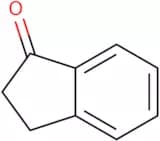
Formula:C20H28O3Purity:Min. 95%Color and Shape:PowderMolecular weight:316.43 g/mol1-Indanone
CAS:1-Indanone is a low potency, irreversible inhibitor of NADH-dependent IDO1 that may be useful as an anti-cancer agent. 1-Indanone inhibits the enzyme IDO1 by steric interactions and pyrazinoic acid. This inhibitor has been shown to have cox-2 inhibitory activity in an experimental model system. In addition, 1-indanone also inhibits mitochondrial membrane potential and can be used as a natriuretic agent. The protein target of 1-indanone is unknown at this time, but it has been shown to inhibit sugar transport in animal models.Formula:C9H8OColor and Shape:PowderMolecular weight:132.16 g/mol3-(tert-butyl)-2-methyl-6-nitroindeno[3,2-c]pyrazol-4-one
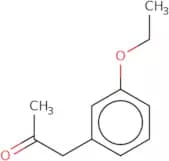
CAS:Please enquire for more information about 3-(tert-butyl)-2-methyl-6-nitroindeno[3,2-c]pyrazol-4-one including the price, delivery time and more detailed product information at the technical inquiry form on this pagePurity:Min. 95%(3-Ethoxyphenyl)acetone
CAS:3-Ethoxyphenylacetone is a white crystalline solid that is soluble in cold water and insoluble in ethanol. It is a chemical reagent that can be used for research purposes such as to study the mechanism of various chemical reactions. 3-Ethoxyphenylacetone can be used as a building block in the synthesis of more complex compounds and as an intermediate in the synthesis of other chemicals. 3-Ethoxyphenylacetone can also be used as a scaffold to create novel compounds with different functional groups.Formula:C11H14O2Purity:Min. 85 Area-%Color and Shape:Clear LiquidMolecular weight:178.23 g/mol4-(4-(Prop-2-yn-1-yloxy)phenyl)-1,2,4-triazolidine-3,5-dione
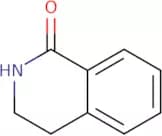
CAS:Selective reagent for bioconjugation of tyrosine residuesFormula:C11H9N3O3Purity:Min. 96.5 Area-%Color and Shape:White To Yellow To Beige To Brown SolidMolecular weight:231.21 g/mol3,4-Dihydroisoquinolin-1(2H)-one
CAS:3,4-Dihydroisoquinolin-1(2H)-one is a potent antagonist of the histamine H1 receptor and has been shown to be safe in animal studies. 3,4-Dihydroisoquinolin-1(2H)-one has also shown efficacy in treating inflammatory diseases, such as asthma and arthritis. This compound was recently tested for its potential to diagnose cancer by targeting the tumor microenvironment. The compound was found to bind to trifluoromethanesulfonic acid (TFMS) with high affinity and selectivity. TFMS is an emerging therapeutic target for cancer therapy because it is highly expressed in the tumor microenvironment and can act as a proton donor for drug delivery systems. 3,4-Dihydroisoquinolin-1(2H)-one has also been observed to have low toxicity profiles in preclinical models, but more research is needed before it can be used clinically.
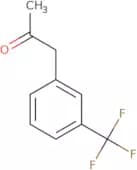
Formula:C9H9NOPurity:Min. 95%Color and Shape:PowderMolecular weight:147.17 g/mol3-(Trifluoromethyl)phenylacetone
CAS:3-(Trifluoromethyl)phenylacetone is a chiral iminium-type organocatalyst that is used in asymmetric organic reactions. This compound has been shown to be effective for the synthesis of chiral amines and hydroxyl groups, as well as biotransformations. 3-(Trifluoromethyl)phenylacetone binds to substrates through hydrogen bonding, steric interactions, and electrostatic interactions. It also has a high affinity for hydroxides and isosteres. 3-(Trifluoromethyl)phenylacetone can be used as an alternative to L-proline in certain biotransformations because it binds more tightly to the enzyme than L-proline does.
Formula:C10H9F3OPurity:Min. 95%Color and Shape:Clear LiquidMolecular weight:202.17 g/mol1-Phenyl-piperazin-2-one
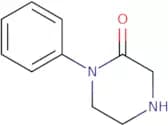
CAS:1-Phenyl-piperazin-2-one is a versatile chemical that can be used as a building block in the synthesis of complex compounds. This compound is also used as a reagent and speciality chemical. It is an important intermediate in organic synthesis and has been used in the preparation of pharmaceuticals, pesticides, and herbicides. 1-Phenyl-piperazin-2-one can be prepared by reacting phenylacetonitrile with nitrous acid to form the nitrile followed by hydrolysis to produce the corresponding carboxylic acid.Formula:C10H12N2OPurity:Min. 95%Color and Shape:PowderMolecular weight:176.22 g/mol




![7-Amino-2-(4-methoxyphenyl)[1,2,4]triazolo[1,5-a]pyrimidin-5(4H)-one](/_next/image/?url=https%3A%2Fstatic.cymitquimica.com%2Fproducts%2F3D%2Fthumb-webp%2FFA134729.webp&w=3840&q=75)
![3-(tert-butyl)-2-methyl-6-nitroindeno[3,2-c]pyrazol-4-one](/_next/image/?url=https%3A%2Fstatic.cymitquimica.com%2Fproducts%2F3D%2Fthumb-webp%2FFB169678.webp&w=3840&q=75)