Ketones
Ketones are organic compounds characterized by the presence of a carbonyl group (C=O) bonded to two carbon atoms. These compounds are highly versatile and play a crucial role in various chemical reactions, including oxidation, reduction, and condensation. Ketones are essential intermediates in the synthesis of pharmaceuticals, fragrances, and polymers. At CymitQuimica, we provide a wide range of high-quality ketones to support your research and industrial applications.
Found 18867 products of "Ketones"
Sort by
Purity (%)
0
100
|
0
|
50
|
90
|
95
|
100
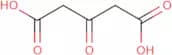
1,3-Acetonedicarboxylic acid
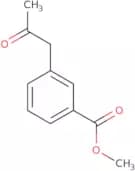
CAS:<p>1,3-Acetonedicarboxylic acid is a crystalline solid that belongs to the group of carboxylic acids. 1,3-Acetonedicarboxylic acid interacts with its receptor by binding to a hydroxyl group and two hydrogen atoms. It has been shown that 1,3-acetonedicarboxylic acid can inhibit HIV infection in vitro by preventing the virus from attaching to cells. It also inhibits malonic acid oxidation and citric acid cycle enzymes in rat liver mitochondria. The synthesis of 1,3-acetonedicarboxylic acid can be achieved through different methods:<br><br>1) By reacting sodium carbonate with malonic acid <br>2) By reacting hydrogen fluoride with malonic acid <br>3) By reacting sodium carbonate with citric acid (malonic ester) and then hydrolyzing it <br>4) By reacting sodium carbonate with malonitrile and then hydro</p>Formula:C5H6O5Purity:Min. 95%Color and Shape:PowderMolecular weight:146.1 g/mol3-Methoxycarbonylphenylacetone
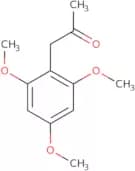
CAS:<p>3-Methoxycarbonylphenylacetone is a high quality, reagent, complex compound. It is a useful intermediate for the production of fine chemicals and speciality chemicals. 3-Methoxycarbonylphenylacetone can be used as a useful scaffold for the synthesis of new compounds and as a reaction component for chemical reactions. This compound has been shown to react with anhydrous hydrazine in the presence of catalysts to yield 2-aminothiazole derivatives. 3-Methoxycarbonylphenylacetone has CAS number 74998-19-9 and is listed on ChemSpider, PubChem, and Chemical Abstracts Service (CAS) databases.</p>Formula:C11H12O3Purity:Min. 95%Color and Shape:Clear LiquidMolecular weight:192.21 g/mol(2,4,6-Trimethoxyphenyl)acetone
CAS:<p>(2,4,6-Trimethoxyphenyl)acetone is a chemical compound that has been detected in human breath. It is a metabolite of tetracycline and chloramphenicol. It is also seen in the urine of patients receiving these antibiotics. The drug can be detected in the blood or urine of individuals who have not taken any antibiotic drugs. (2,4,6-Trimethoxyphenyl)acetone has been used as an indicator for antibiotic use by researchers. This chemical compound may have low toxicity and is only found at low levels in humans.</p>Formula:C12H16O4Purity:Min. 95%Color and Shape:PowderMolecular weight:224.25 g/mol4-Chloro-1-(3-Fluorophenyl)-1-Butanone
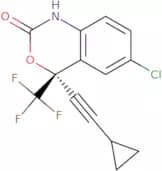
CAS:<p>4-Chloro-1-(3-fluorophenyl)-1-butanone is a reagent that is used in the synthesis of complex compounds. It has been used as an intermediate in the synthesis of a variety of useful compounds and as a building block for more complex molecules. This chemical is one of the most versatile building blocks available, and can be used for reactions involving deprotection, coupling, and polymerization. The CAS number for this compound is 3110-52-9.</p>Formula:C10H10ClFOPurity:Min. 95%Color and Shape:Clear LiquidMolecular weight:200.64 g/molEfavirenz
CAS:Efavirenz is a non-nucleoside-based reverse transcriptase inhibitor (NNRTI) of the reverse transcriptase of HIV-1. It inhibits the viral enzyme reverse transcriptase by binding to its active site. In certain cell culture assays, efavirenz showed great efficiency when inhibiting wild-type HIV-1 replication with values of inhibition constant Ki between 2.97 to 17.60 mM in single mutation enzymes and 26.05 to 56.50 nM in double mutation. In the treatment of HIV, efavirenz has been studied in combination with emtricitabine and tenofovir disoproxil fumarate for ease of administration in some clinical studies. Recent in vitro cell studies indicated efavirenz is a potential treatment for pancreatic, prostate and triple-negative breast cancers due to its cytotoxicity against cancer cells, with an EC50 of 31.5 μM.Formula:C14H9ClF3NO2Purity:Min. 95%Color and Shape:PowderMolecular weight:315.68 g/mol1,1,1-Trifluoro-5-hydroxy-2-pentanone
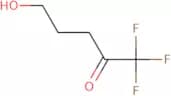
CAS:<p>1,1,1-Trifluoro-5-hydroxy-2-pentanone is a versatile building block that has been used extensively in the synthesis of complex compounds. It is an important reagent for the preparation of speciality chemicals and reactive intermediates. 1,1,1-Trifluoro-5-hydroxy-2-pentanone is also a useful intermediate for the synthesis of other compounds. This compound can be reacted with various groups to produce valuable scaffolds for drug discovery research.</p>Formula:C5H7F3O2Purity:Min. 95%Color and Shape:PowderMolecular weight:156.1 g/mol(5a)-Androst-2-en-17-one
CAS:Controlled Product<p>(5a)-Androst-2-en-17-one is a synthetic substance that has been used as a supplement. It is an androgenic steroid, which means it stimulates the development of male sex organs and secondary sex characteristics in boys. The use of (5a)-androst-2-en-17-one has been associated with the development of liver tumors in laboratory animals. There are no studies to date on the effects of (5a)-androst-2-en-17-one on human liver function. Androgens may also affect the kidneys, bladder, prostate gland, or brain. In addition, these substances can have pharmacological effects such as increasing blood pressure or heart rate or suppressing the production of certain hormones by the pituitary gland. Androgens can also cause other adverse side effects including acne, hair loss or hair growth in unwanted places, shrinking of the testicles in men, enlargement of breasts in men and women, fluid retention and high</p>Formula:C19H28OPurity:Min. 95%Color and Shape:White PowderMolecular weight:272.43 g/mol(2,5-Dimethylphenyl)acetone
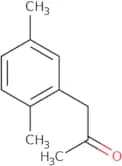
CAS:<p>2,5-Dimethylphenyl)acetone is an analogue of amphetamine that has been shown to have similar binding and uptake properties in the brain. This drug was synthesized for use in positron emission tomography (PET) studies on the distribution of amphetamine analogues in the human brain. It is also used as a radioligand for studies on cerebral uptake of amphetamines.<br>2,5-Dimethylphenyl)acetone itself has no significant central nervous system activity. However, it can be used to determine whether other drugs are able to cross the blood-brain barrier and enter the brain. Radiofluorination with iodine-123, which emits positrons during decay, yields a compound that binds to amines such as dopamine and norepinephrine receptors in the brain. The presence of these amines can then be detected using PET imaging techniques.END></p>Formula:C11H14OPurity:Min. 96 Area-%Color and Shape:Clear LiquidMolecular weight:162.23 g/mol1,4-Dioxan-2-one
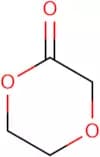
CAS:<p>1,4-Dioxan-2-one is a chemical compound that belongs to the class of inorganic compounds. It is an acid with a molecular weight of 116.07 g/mol and a melting point of -104°C. 1,4-Dioxan-2-one can be used as diagnostic agents for the detection of lanthanum and polymerization catalysts for the synthesis copolymers. It has been shown that 1,4-dioxan-2-one reacts with ethylene oxide to give polyoxymethylene ethers, which are thermoplastic polymers. The reaction is promoted by metathesis reactions and polymerization catalysis.</p>Formula:C4H6O3Purity:Min. 95%Color and Shape:Clear Liquid PowderMolecular weight:102.09 g/mol6-Methoxy-1,4-dihydroquinoxaline-2,3-dione
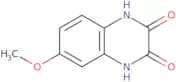
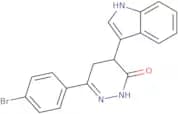
CAS:<p>6-Methoxy-1,4-dihydroquinoxaline-2,3-dione is a nitrile that is generated by the catalytic oxidation of quinoxaline. It is a colorless to yellow solid with a melting point of about 155°C. 6-Methoxy-1,4-dihydroquinoxaline-2,3-dione has been shown to be an effective nitrile for the synthesis of diketene. 6-Methoxy-1,4-dihydroquinoxaline-2,3-dione can be converted into hydrochloric acid and ethanol through hydrolysis with hydrochloric acid or ethanol in the presence of heat. This reaction will proceed more quickly at higher temperatures. The filtration method can be used to remove any unwanted solids from the reaction mixture.</p>Formula:C9H8N2O3Purity:Min. 95%Color and Shape:PowderMolecular weight:192.17 g/mol3-(4-bromophenyl)-5-indol-3-yl-1H,4H,5H-1,2-diazin-6-one
CAS:Please enquire for more information about 3-(4-bromophenyl)-5-indol-3-yl-1H,4H,5H-1,2-diazin-6-one including the price, delivery time and more detailed product information at the technical inquiry form on this pagePurity:Min. 95%3-Thioxo-1,2,4-triazin-5-one
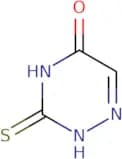
CAS:<p>3-Thioxo-1,2,4-triazin-5-one is a chemical compound that has been shown to inhibit the growth rate of various bacteria. It inhibits the enzyme hydroxyproline hydroxylase in plants and fungi. The tautomeric form of 3-thioxo-1,2,4-triazin-5-one is found in triticum aestivum (wheat) and glyoxylate. In the presence of thiosemicarbazide or carbazone this compound undergoes a base catalyzed cyclization reaction that leads to the formation of orotic acid. 3-Thioxo-1,2,4-triazin-5-one also inhibits viral replication by blocking the synthesis of nucleobases and can be used as an antiviral agent against herpes virus.</p>Formula:C3H3N3OSPurity:Min. 95%Color and Shape:Brown SolidMolecular weight:129.14 g/mol4-((4-(dimethylamino)phenyl)methylene)-3-methyl-1-phenyl-2-pyrazolin-5-one
CAS:Please enquire for more information about 4-((4-(dimethylamino)phenyl)methylene)-3-methyl-1-phenyl-2-pyrazolin-5-one including the price, delivery time and more detailed product information at the technical inquiry form on this pagePurity:Min. 95%2-(2-Butyl)-4-{4-[4-(4-methyloxy-phenyl)-piperazin-1-yl]-phenyl}-2,4-dihydro-[1,2,4]-triazol-3-one
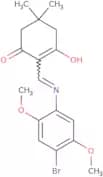
CAS:<p>2-(2-Butyl)-4-{4-[4-(4-methyloxy-phenyl)-piperazin-1-yl]-phenyl}-2,4-dihydro-[1,2,4]-triazol-3-one (ITZ) is an antifungal drug that inhibits the synthesis of ergosterol. It is used in the treatment of systemic fungal infections such as candidiasis and cryptococcosis. ITZ is a metabolite of itraconazole and fluconazole. The presence of impurities in ITZ can be detected by liquid chromatography with a diode array detector or a fluorescence detector. An antiinfective drug product should be bioequivalent to the reference product and have comparable levels of impurities. Chromatograms are used to identify peaks on a graph and measure their height (area under the curve) to determine how much of each substance is present in the sample.</p>Formula:C23H29N5O2Purity:Min. 95%Color and Shape:White To Yellow SolidMolecular weight:407.51 g/mol2-(((4-Bromo-2,5-dimethoxyphenyl)amino)methylene)-5,5-dimethylcyclohexane-1,3-dione
CAS:<p>Please enquire for more information about 2-(((4-Bromo-2,5-dimethoxyphenyl)amino)methylene)-5,5-dimethylcyclohexane-1,3-dione including the price, delivery time and more detailed product information at the technical inquiry form on this page</p>Formula:C17H20BrNO4Purity:Min. 95%Molecular weight:382.25 g/mol(+)-(1R,2R,5R)-2-Hydroxy-3-pinanone
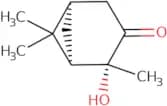
CAS:(+)-(1R,2R,5R)-2-Hydroxy-3-pinanone is an organic compound that can be prepared by a kinetic resolution of the racemic mixture of (+)-(1S,2S,5S)-2-hydroxy-3-pinanone. This reaction is performed in two steps: first the racemic mixture is converted to the corresponding chiral acetylacetonate by reaction with acetic anhydride followed by hydrolysis with sodium hydroxide. The pentane reacts with the ring opening of the acetylacetonate to give (+)-(1R,2R,5R)-2-hydroxypinanone and its enantiomer. The nature of this preparative method means that it is not possible to recover (+)-(1R,2R,5R)-2-hydroxypinanone from the reaction products.Formula:C10H16O2Purity:Min. 95%Color and Shape:PowderMolecular weight:168.23 g/mol1.8-Diazacyclotetradecane-2,7-dione
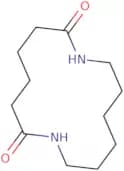
CAS:<p>1.8-Diazacyclotetradecane-2,7-dione is a solid formed as an unwanted side-product in the conventional process to form Nylon 66 from adipic acid and hexamethylene diamine. The 1.8-diazacyclotetradecane-2,7-dione thus produced can be washed out of the final Nylon polymer. However, an alternative process allows for 1.8-diazacyclotetradecane-2,7-dione to be used as part of the feedstock for Nylon 66 and other lower molecular weight polymers.</p>Formula:C12H22N2O2Purity:Min. 95%Color and Shape:White PowderMolecular weight:226.32 g/mol4-Hydroxycyclohexanone
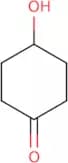
CAS:<p>4-Hydroxycyclohexanone is a reactive compound that contains a hydroxy group and a hydroxyl group. It reacts with various substances, including hydrogen bond, to form new compounds. 4-Hydroxycyclohexanone is used in the industrial production of other chemicals, such as cyclohexanone. The reactivity of 4-hydroxycyclohexanone can be determined by its nmr spectra. The deshielding effect of the hydroxyl group causes an upfield shift in the nmr spectrum. In addition, 4-hydroxycyclohexanone reacts with hydrochloric acid to form an ester and water. The reaction mechanism for this process is nucleophilic attack by the hydroxyl group on the carbonyl carbon atom in hydroxycyclohexanone.</p>Formula:C6H10O2Purity:Min. 95%Color and Shape:Colorless PowderMolecular weight:114.15 g/mol5-(((2-(3,4-dimethoxyphenyl)ethyl)amino)methylene)-2,2-dimethyl-1,3-dioxane-4,6-dione
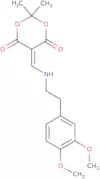
CAS:Please enquire for more information about 5-(((2-(3,4-dimethoxyphenyl)ethyl)amino)methylene)-2,2-dimethyl-1,3-dioxane-4,6-dione including the price, delivery time and more detailed product information at the technical inquiry form on this pagePurity:Min. 95%(S)-(+)-5,6,7,8-Tetrahydro-8-methylindan-1,5-dione
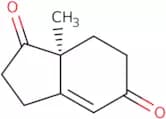
CAS:<p>(S)-(+)-5,6,7,8-Tetrahydro-8-methylindan-1,5-dione is a chemical compound with a molecular formula of C9H14O2 that has the chemical name of methyl 8-(hydroxymethyl)indane-1,5-dione. This compound is an enantiopure substance that exists as a single stereoisomer and can be synthesized from two different starting materials. It is not commercially available but can be prepared from boronic acid and methanol or from methylamine and hydroxyacetone. The reaction time for this synthesis varies depending on the starting material used and the desired purity level. (S)-(+)-5,6,7,8-Tetrahydro-8-methylindan-1,5-dione is used in organic synthesis as an alternative to other chiral diols.</p>Formula:C10H12O2Purity:Min. 95%Color and Shape:White PowderMolecular weight:164.2 g/mol2-Norbornanone
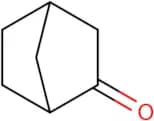
CAS:<p>2-Norbornanone is a chemical compound that has been shown to be toxic to animals. It is used as a solvent and an intermediate in the manufacture of other chemicals. 2-Norbornanone is soluble in water and its toxicity depends on the pH of the solution. The toxicity of this compound increases with increasing acidity. The sodium salt of 2-norbornanone has no effect on the proton concentration at any pH level, while the acetate extract has a slight effect at low pH levels. This suggests that hydrogen bonding interactions are important for 2-norbornanone's toxicity.</p>Formula:C7H10OPurity:Min. 95%Color and Shape:PowderMolecular weight:110.15 g/mol1-(4-Morpholin-4-ylphenyl)ethanone
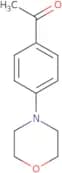
CAS:<p>1-(4-Morpholin-4-ylphenyl)ethanone is a compound that has been shown to interact with the cox-1 enzyme. This interaction can be seen in the functional theory, which states that the rate of intramolecular hydrogen transfer is dependent on the temperature and cox-1 concentration. This inhibition of cox-1 by 1-(4-morpholin-4-ylphenyl)ethanone leads to an antibacterial effect and may be due to its ability to inhibit bacterial growth by disrupting DNA replication. The molecular modeling technique was used to determine the relationship between 1-(4-morpholin-4-ylphenyl)ethanone and cox-1. The dipole moment of this molecule was determined using various alkyl substituents, which have been found to have an inhibitory effect on cox-1. These results are consistent with those obtained from an experiment using carrageenan, which also showed</p>Formula:C12H15NO2Purity:Min. 95%Color and Shape:Slightly Yellow PowderMolecular weight:205.25 g/mol(5α)-17-(3-Pyridinyl)androst-16-en-3-one
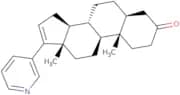
CAS:Controlled Product(5α)-17-(3-Pyridinyl)androst-16-en-3-one is a natural metabolite of testosterone that is produced in the liver. It has been identified as an impurity in API, which can be found in drugs used for the treatment of high blood pressure and prostate cancer. (5α)-17-(3-Pyridinyl)androst-16-en-3-one is not active as a drug itself, but it can be used as a standard to study the metabolism of testosterone and other steroids.Formula:C24H31NOPurity:Min. 98 Area-%Color and Shape:White PowderMolecular weight:349.51 g/mol2-Acetyl-4-nitroindane-1,3-dione
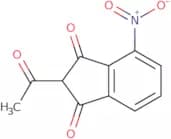
CAS:2-Acetyl-4-nitroindane-1,3-dione is a synthetic compound that is assembled in two steps from commercially available starting materials. The first step involves the assembly of the nitro group and acetyl group on the indane ring. The second step involves the oxidative cyclization of the nitro group to form the final product. The compound was monitored by UV absorption and HPLC analysis with a spermidine standard. It has been shown to selectively inhibit trypanothione reductase, an enzyme involved in trypanosome metabolism. 2-Acetyl-4-nitroindane-1,3-dione is also an analogue of disulphide, which has been shown to be effective against trypanosomes. 2-Acetyl-4-nitroindane-1,3-dione is synthesized on solid phase using strategies developed for peptides and amines. This compound has alsoFormula:C11H7NO5Purity:Min. 95%Color and Shape:PowderMolecular weight:233.18 g/mol5-a-Cholestan-3-one
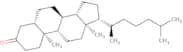
CAS:Controlled Product5-a-Cholestan-3-one is a sterol that has been shown to have antiinflammatory activity and inhibit skin tumor formation. The sterols are the primary lipids in the human body, with 5-a-cholestan-3-one being one of the most abundant, making up about 50% of total sterols. The 5-a-cholestan-3-one is found in cholesterol, which is an important component of cell membranes. It also plays a role in the synthesis of bile acids and coprostanol. This compound can be found in fecal samples as well as wastewater treatment plants, where it is used for sample preparation. There are two different forms of 5-a-cholestan 3 one; protocatechuic acid, which is an acidic form found mainly in plants, and neutral cholic acid which can be found in humans or animals.Formula:C27H46OPurity:Min. 95%Color and Shape:PowderMolecular weight:386.65 g/mol1-Bromo-(1,3-thiazole-2-yl)ethane-2-one
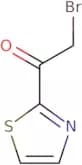
CAS:<p>Please enquire for more information about 1-Bromo-(1,3-thiazole-2-yl)ethane-2-one including the price, delivery time and more detailed product information at the technical inquiry form on this page</p>Formula:C5H4BrNOSPurity:Min. 95%Molecular weight:206.06 g/molClobetasol Propionate - Impurity B
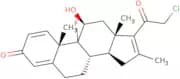
CAS:Controlled Product(11β)-21-Chloro-9-fluoro-11-hydroxy-16-methylpregna-1,4,16-triene-3,20-dione is a chemical compound that can be used as a building block in the synthesis of other chemicals. It is structurally related to progesterone and has been found to have antiandrogenic properties. This product can also be used as a reagent or speciality chemical in research. It is high quality and versatile. (11β)-21-Chloro-9-fluoro-11-hydroxy-16-methylpregna 1,4,16 triene 3,20 dione has been shown to have an effect on the body's reproductive system by binding to the androgen receptor.Formula:C22H26ClFO3Purity:Min. 95%Color and Shape:PowderMolecular weight:392.89 g/mol5-Fluorodihydropyrimidine-2,4-dione
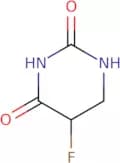
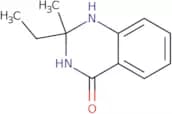
CAS:<p>5-Fluorodihydropyrimidine-2,4-dione is a drug that inhibits the activity of certain enzymes. It has been shown to inhibit the activity of dehydrogenase in human serum and liver cells. This drug has also been shown to be successful in treating autoimmune diseases. 5-Fluorodihydropyrimidine-2,4-dione is an oral prodrug which is converted into its active form by esterases in the gastrointestinal tract. The enzyme inhibitors are used to increase the bioavailability of the drug. This conversion process can be monitored using urine samples or blood sampling.</p>Formula:C4H5FN2O2Purity:Min. 95%Color and Shape:PowderMolecular weight:132.09 g/mol2-Ethyl-2-methyl-1,2,3-trihydroquinazolin-4-one
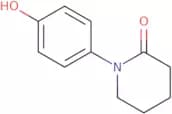
CAS:<p>Please enquire for more information about 2-Ethyl-2-methyl-1,2,3-trihydroquinazolin-4-one including the price, delivery time and more detailed product information at the technical inquiry form on this page</p>Purity:Min. 95%1-(4-Hydroxyphenyl)piperidin-2-one
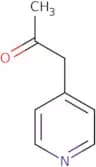
CAS:<p>1-(4-Hydroxyphenyl)piperidin-2-one is a versatile building block that has been used as a research chemical, reagent and reaction component. It can be found in the CAS registry under number 79557-03-2. This compound is used as an intermediate to synthesize other pharmaceutical compounds with a variety of effects including analgesic, antipyretic, antihistaminic, and antidepressant activities. 1-(4-Hydroxyphenyl)piperidin-2-one is also known for its use in the production of high quality reagents for use in laboratory settings.</p>Formula:C11H13NO2Purity:Min. 95%Color and Shape:Off-White PowderMolecular weight:191.23 g/mol(4-Pyridyl)acetone
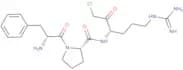
CAS:<p>4-Pyridylacetone (4PA) is a chloride channel blocker that blocks the ion channels in muscle cells, leading to decreased levels of chloride ions. This leads to the inhibition of the release of pro-inflammatory cytokines and therefore has potential as a treatment for inflammatory diseases such as congestive heart failure, chronic obstructive pulmonary disease, and atherosclerosis. 4PA also inhibits the activation of macrophages by LPS, which may be beneficial in treating autoimmune disorders. Molecular docking analysis has shown that 4PA can bind to aminomalonamide, a drug used to treat myeloma cancer, suggesting that it could be used as an alternative treatment.</p>Formula:C8H9NOPurity:Min. 98 Area-%Color and Shape:Colorless Yellow Clear LiquidMolecular weight:135.16 g/molD-Phenylalanyl-prolyl-arginyl chloromethyl ketone
CAS:<p>D-Phenylalanyl-prolyl-arginyl chloromethyl ketone is a chemical compound that inhibits the proteolytic activity of serine proteases. It binds to the thrombin receptor on the surface of cells and prevents activation of fibrinogen by thrombin, which is an enzyme that promotes clotting. D-Phenylalanyl-prolyl-arginyl chloromethyl ketone also blocks platelet aggregation and has shown an ability to induce muscle cell proliferation. This drug has been used in pharmacological experiments as an inhibitor binding agent.</p>Formula:C21H31ClN6O3Purity:Min. 90 Area-%Color and Shape:PowderMolecular weight:450.96 g/mol(2S)-1,2-Dihydroxy-3,4-octanedione - aqueous solution
CAS:<p>(2S)-1,2-Dihydroxy-3,4-octanedione is a versatile building block that can be used for the synthesis of complex compounds. This compound is a reagent and useful building block in organic chemistry. (2S)-1,2-Dihydroxy-3,4-octanedione can be used as a high quality research chemical that is available at CAS No. 1173172-85-4. This compound also has a wide range of applications as a reaction component or scaffold in organic synthesis.</p>Formula:C8H14O4Purity:Min. 95%Color and Shape:Colourless LiquidMolecular weight:174.19 g/mol5-Amino-1,3-dimethyl-1,3-dihydro-2H-benzimidazol-2-one dihydrochloride
CAS:<p>5-Amino-1,3-dimethyl-1,3-dihydro-2H-benzimidazol-2-one dihydrochloride (5ADMB) is a high quality reagent that is used as a complex compound. It has been shown to be useful in the synthesis of various compounds and is a fine chemical that can be used as a building block. 5ADMB has also been shown to be an excellent scaffold for the synthesis of benzo[b]thiophenes. This compound is also useful as a research chemical or specialty chemical. 5ADMB can be used in organic syntheses as a versatile building block and it reacts with nucleophiles such as alcohols and amines to form substituted derivatives. It has an appearance of white solid powder and its CAS number is 1986846-08-5.</p>Formula:C9H11N3O·2HClPurity:Min. 95%Color and Shape:PowderMolecular weight:250.12 g/mol1,1,1,3,3,3-Hexabromoacetone
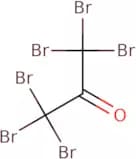
CAS:<p>Hexabromoacetone is a synthetic chemical that belongs to the class of organometallics. It is an efficient method for preparing amines and primary alcohols from halogenated acetones, as well as a polymerization inhibitor. Hexabromoacetone is also used in analytical methods for detecting amines and primary alcohols. The compound has antiviral properties, with its action being primarily due to UV irradiation. This chemical can be prepared using hydrogen chloride and hydroxyl groups, or by using uv irradiation on 2-bromoethanol.</p>Formula:C3Br6OPurity:Min. 97 Area-%Color and Shape:PowderMolecular weight:531.46 g/mol1-(4-Hydroxyphenyl)-2-phenyl-1-butanone
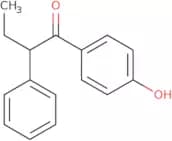
CAS:<p>1-(4-Hydroxyphenyl)-2-phenyl-1-butanone is a versatile building block that is used in the synthesis of many complex compounds. It has been used as a reagent or speciality chemical and can be used to synthesize a wide range of organic compounds. The compound also exhibits high quality and can be used as an intermediate in the synthesis of pharmaceuticals, herbicides, pesticides, and other research chemicals. 1-(4-Hydroxyphenyl)-2-phenyl-1-butanone is also a useful scaffold for the synthesis of natural products such as alkaloids, terpenes, and other research chemicals.</p>Formula:C16H16O2Purity:Min. 95%Color and Shape:Off-White PowderMolecular weight:240.3 g/mol(4-Acetamidophenyl)acetone
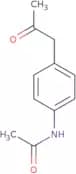
CAS:<p>(4-Acetamidophenyl)acetone is a chemical compound that belongs to the class of complex compounds. It is an intermediate in the synthesis of other chemicals and can be used as a building block for more complicated molecules. (4-Acetamidophenyl)acetone has been used as a reagent in organic synthesis, and it has shown high reactivity. This chemical is also used in research, such as the development of new pharmaceutical drugs, and it can be used to synthesize speciality chemicals. The versatility of this chemical makes it useful in many different reactions.</p>Formula:C11H13NO2Purity:Min. 95%Color and Shape:Brown Beige PowderMolecular weight:191.23 g/mol3',4'-Dihydroxyphenylacetone
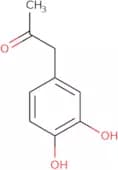
CAS:3',4'-Dihydroxyphenylacetone (DOPA) is a metabolite of dopamine that is produced in the brain and kidneys. DOPA has been shown to have pharmacological properties, but its function as an endogenous neurotransmitter has not been confirmed. DOPA is also a precursor for the synthesis of melanin, which is found in skin cells. The detection of DOPA in urine samples can be used to diagnose Parkinson's disease or other conditions characterized by low levels of dopamine. The enzyme glutamate dehydrogenase converts DOPA into 3-methoxytyramine, which can be detected in urine samples using chromatographic methods. 3',4'-Dihydroxyphenylacetone may be measured in the blood plasma of patients with bacterial infections and urinary tract infections. A detectable concentration of this metabolite could indicate that the body is making use of an alternate pathway for synthesizing amines.Formula:C9H10O3Purity:Min. 95%Color and Shape:Off-White PowderMolecular weight:166.17 g/mol5,5-dimethyl-2-(((3-nitrophenyl)amino)methylene)cyclohexane-1,3-dione
CAS:Please enquire for more information about 5,5-dimethyl-2-(((3-nitrophenyl)amino)methylene)cyclohexane-1,3-dione including the price, delivery time and more detailed product information at the technical inquiry form on this pagePurity:Min. 95%3-(tert-butyl)indeno[3,2-c]isoxazol-4-one
CAS:<p>Please enquire for more information about 3-(tert-butyl)indeno[3,2-c]isoxazol-4-one including the price, delivery time and more detailed product information at the technical inquiry form on this page</p>Formula:C14H13NO2Purity:Min. 95%Color and Shape:PowderMolecular weight:227.26 g/molPhenyl N-tridecyl ketone
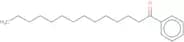
CAS:<p>Phenyl N-tridecyl ketone is a high quality, research chemical that is used as a reagent and reaction component. The compound has been shown to be an effective building block for the production of complex compounds with a variety of applications including pharmaceuticals and agrochemicals. Phenyl N-tridecyl ketone is also useful in the synthesis of speciality chemicals and fine chemicals. It has been shown to have versatile scaffolding properties which can be used as an intermediate or starting point for the production of other compounds with different functional groups.</p>Formula:C20H32OPurity:Min. 95%Color and Shape:PowderMolecular weight:288.47 g/mol(6α,17β)-6-Fluoro-17-Hydroxyandrost-4-En-3-One
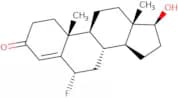
CAS:Controlled Product<p>(6alpha,17beta)-6-Fluoro-17-Hydroxyandrost-4-En-3-One is an androgen that has both agonistic and antagonistic effects on nuclear receptors. It activates the androgen receptor and is equipotent with testosterone. This drug also inhibits the estrogen receptor, but does not bind to the progesterone receptor. This synthetic agent is used for treating hypogonadism in males due to castration or aging and prostate cancer.</p>Formula:C19H27FO2Purity:Min. 95%Molecular weight:306.41 g/mol4-Methyl-2(5H)-furanone
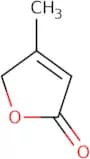
CAS:<p>4-Methyl-2(5H)-furanone is an isomeric compound that can be isolated from various plant sources including isoprene, chalcones, and other plant extracts. It has been shown to inhibit the formation of dental plaque and the growth of oral bacteria in a functional group study. 4-Methyl-2(5H)-furanone is also known as a chalcone and has been shown to have antibacterial properties. This chemical reaction can be used as an alternative to chlorhexidine for the treatment of dental plaque.</p>Formula:C5H6O2Purity:Min. 95%Color and Shape:Clear LiquidMolecular weight:98.1 g/mol2-(((2-Indol-3-ylethyl)amino)ethylidene)indane-1,3-dione
CAS:<p>Please enquire for more information about 2-(((2-Indol-3-ylethyl)amino)ethylidene)indane-1,3-dione including the price, delivery time and more detailed product information at the technical inquiry form on this page</p>Formula:C21H18N2O2Purity:Min. 95%Color and Shape:PowderMolecular weight:330.38 g/mol(2-Chloro-4-fluorophenyl)acetone
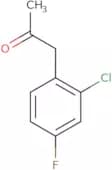
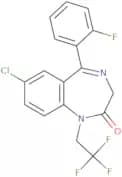
CAS:<p>2-Chloro-4-fluorophenyl)acetone (CAS No. 845781-18-2) is a fine chemical that is useful as a scaffold for the synthesis of various compounds, including pharmaceuticals, pesticides and dyes. The compound is used as an intermediate in the synthesis of other chemicals such as pharmaceuticals, research chemicals and speciality chemicals. The compound has versatile uses, making it a useful building block in organic chemistry. It can be used to make a wide range of compounds that have different properties and functions. 2-Chloro-4-fluorophenyl)acetone also has high quality and purity.</p>Formula:C9H8ClFOPurity:Min. 95%Color and Shape:PowderMolecular weight:186.61 g/mol7-Chloro-5-(2-fluorophenyl)-1,3-Dihydro-1-(2,2,2-trifluoroethyl)-2H-1,4-benzodiazepin-2-one
CAS:Controlled Product<p>Quazepam is a benzodiazepine drug that binds to the benzodiazepine binding site of the GABAA receptor. It has clinical properties as an anxiolytic and anticonvulsant. Quazepam has been determined to have a high affinity for the benzodiazepine binding site in human liver, plasma, and brain tissue. The kinetic data for quazepam show that it is metabolized by oxidation and hydrolysis, which result in two metabolites: N-desmethyldiazepam and oxazepam. Quazepam is also shown to induce sleep, even at doses of 25 mg or less per day. The clinical properties of quazepam are similar to those of other benzodiazepines with a short half-life such as triazolam. However, it does not have significant drug interactions with other drugs like triazolam does.</p>Formula:C17H11ClF4N2OPurity:Min. 98 Area-%Color and Shape:SolidMolecular weight:370.73 g/mol3-(tert-butyl)-4-((2-hydroxy-3-methoxyphenyl)methylene)-1-phenyl-2-pyrazolin-5-one
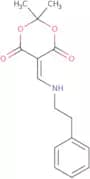
CAS:<p>Please enquire for more information about 3-(tert-butyl)-4-((2-hydroxy-3-methoxyphenyl)methylene)-1-phenyl-2-pyrazolin-5-one including the price, delivery time and more detailed product information at the technical inquiry form on this page</p>Purity:Min. 95%2,2-dimethyl-5-(((2-phenylethyl)amino)methylene)-1,3-dioxane-4,6-dione
CAS:<p>Please enquire for more information about 2,2-dimethyl-5-(((2-phenylethyl)amino)methylene)-1,3-dioxane-4,6-dione including the price, delivery time and more detailed product information at the technical inquiry form on this page</p>Purity:Min. 95%5β-Pregnan-3α,21-diol-11,20-dione
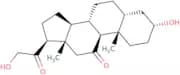
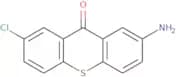
CAS:Controlled Product5beta-Pregnan-3alpha,21-diol-11,20-dione (5beta-pregnan) is a fine chemical used in research and development as a building block or intermediate. It has many uses, including as a useful scaffold for complex compounds. This chemical is also an excellent reagent for the synthesis of new organic compounds. It is a versatile building block that can be used in the production of high quality speciality chemicals. 5beta-pregnan may be used to synthesize many different types of building blocks and intermediates that are useful for the synthesis of other compounds.Formula:C21H32O4Purity:(Tlc) Min. 95.0%Color and Shape:PowderMolecular weight:348.48 g/mol2-Amino-7-chloro-9H-thioxanthen-9-one
CAS:Please enquire for more information about 2-Amino-7-chloro-9H-thioxanthen-9-one including the price, delivery time and more detailed product information at the technical inquiry form on this pageFormula:C13H8ClNOSPurity:Min. 95%Molecular weight:261.73 g/mol




![2-(2-Butyl)-4-{4-[4-(4-methyloxy-phenyl)-piperazin-1-yl]-phenyl}-2,4-dihydro-[1,2,4]-triazol-3-one](/_next/image/?url=https%3A%2Fstatic.cymitquimica.com%2Fproducts%2F3D%2Fthumb-webp%2FFB19470.webp&w=3840&q=75)

![3-(tert-butyl)indeno[3,2-c]isoxazol-4-one](/_next/image/?url=https%3A%2Fstatic.cymitquimica.com%2Fproducts%2F3D%2Fthumb-webp%2FFB169751.webp&w=3840&q=75)