Ketones
Ketones are organic compounds characterized by the presence of a carbonyl group (C=O) bonded to two carbon atoms. These compounds are highly versatile and play a crucial role in various chemical reactions, including oxidation, reduction, and condensation. Ketones are essential intermediates in the synthesis of pharmaceuticals, fragrances, and polymers. At CymitQuimica, we provide a wide range of high-quality ketones to support your research and industrial applications.
Found 18809 products of "Ketones"
Sort by
Purity (%)
0
100
|
0
|
50
|
90
|
95
|
100
4,10-Dioxatricyclo[5.2.1.02.6]dec-8-ene-3,5-dione
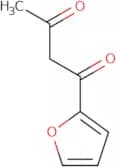
CAS:<p>4,10-Dioxatricyclo[5.2.1.02.6]dec-8-ene-3,5-dione (DTDE) is a hypoglycemic agent that inhibits the synthesis of fatty acids in the liver and reduces blood sugar levels by inhibiting the enzyme diacylglycerol acyltransferase 2 (DGAT2). DTDE has been shown to have antitumour activity against a human cell line and inhibits the replication of DNA and RNA by binding to amines in nucleic acid bases.</p>Formula:C8H6O4Purity:Min. 95%Molecular weight:166.13 g/mol1-(2-Furyl)-1,3-butanedione
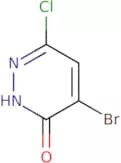
CAS:<p>1-(2-Furyl)-1,3-butanedione is an organic compound with the chemical formula CO. It is a diketone that acts as a metal chelate. The molecule has been shown to have antibacterial properties against gram-negative bacteria and also inhibits the growth of amyloid plaques in Alzheimer's disease. 1-(2-Furyl)-1,3-butanedione binds to the chlorine atom of a bacterial cell wall and prevents it from binding to the amine group on the surface of proteins, which are vital for protein synthesis. This leads to a decrease in bacterial growth. 1-(2-Furyl)-1,3-butanedione can be used as an alternative for chlorine gas in water purification processes because it reacts with HCl and converts it into less toxic hydrogen chloride.</p>Formula:C8H8O3Purity:Min. 95%Color and Shape:Clear LiquidMolecular weight:152.15 g/mol4-Bromo-6-chloropyridazin-3(2H)-one
CAS:<p>4-Bromo-6-chloropyridazin-3(2H)-one is a glycosylation inhibitor and nucleoside analog that can be used in the treatment of cancer. It inhibits the synthesis of deoxyribonucleotides from ribonucleotides by binding to the enzyme ribonucleotide reductase, which catalyzes the conversion of ribonucleotides to deoxynucleotides. 4-Bromo-6-chloropyridazin-3(2H)-one has been shown to inhibit glycosylation in rat liver cells. This drug also inhibits acetone and glycosidation, which are reactions that produce glucose from amino acids or carbohydrates. The crystallization process is also inhibited by this drug because it prevents the formation of nucleoside crystals, which are involved in DNA replication and cell division.</p>Formula:C4H2BrClN2OPurity:Min. 95%Molecular weight:209.43 g/molZ-Tyr-Val-Ala-Asp-chloromethylketone
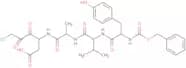
CAS:<p>Z-Tyr-Val-Ala-Asp-chloromethylketone is a fluorescent probe that can be used for the detection of phosphatidic acid. It is also an apoptosis inducer, which means that it promotes cell death. Z-Tyr-Val-Ala-Asp-chloromethylketone induces apoptosis by binding to the kinases and causing their activation, leading to phosphatidic acid production. This process is activated by the presence of ethylene, which binds to Z-Tyr-Val-Ala-Asp chloromethylketone and stabilizes its structure.</p>Formula:C30H37ClN4O9Purity:Min. 95%Molecular weight:633.09 g/mol(5-Bromo-2-hydroxyphenyl)acetone
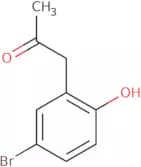
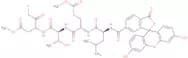
CAS:<p>5-Bromo-2-hydroxyphenyl)acetone is a chemical that is used as a building block in the synthesis of other compounds. It can be used as a reagent to produce 5-bromo-2,4-dihydroxyphenylacetic acid, which has been shown to have antiinflammatory and analgesic effects. 5-Bromo-2-hydroxyphenyl)acetone is also useful for the synthesis of polymers with applications in electronics and as an intermediate for the production of pharmaceuticals.</p>Formula:C9H9BrO2Purity:Min. 95%Color and Shape:PowderMolecular weight:229.07 g/molFluorescein-6-carbonyl-Ile-Glu(OMe)-Thr-DL-Asp(OMe)-fluoromethylketone
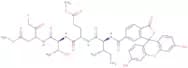
CAS:<p>Please enquire for more information about Fluorescein-6-carbonyl-Ile-Glu(OMe)-Thr-DL-Asp(OMe)-fluoromethylketone including the price, delivery time and more detailed product information at the technical inquiry form on this page</p>Formula:C43H47FN4O15Purity:Min. 95%Molecular weight:878.85 g/molDynorphin A (1-10)-Gly-chloromethylketone trifluoroacetate salt
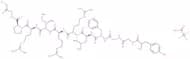
CAS:<p>Please enquire for more information about Dynorphin A (1-10)-Gly-chloromethylketone trifluoroacetate salt including the price, delivery time and more detailed product information at the technical inquiry form on this page</p>Formula:C60H95ClN20O12Purity:Min. 95%Molecular weight:1,323.98 g/mol6-Methoxy-2,3,4,9-tetrahydro-1H-β-carbolin-1-one
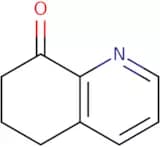
CAS:<p>6-Methoxy-2,3,4,9-tetrahydro-1H-beta-carbolin-1-one is a β-carboline alkaloid that is structurally related to harmaline and tetrahydroharmine. It has been shown to have antidepressant activity in animals. 6-Methoxy-2,3,4,9-tetrahydro-1H-beta-carbolin-1-one was analyzed by GC/MS and found to be present in the leaves of plants from the genus Tetraclinis. 6MHBC was also identified as a metabolite of diazepam in rat urine after administration of a single oral dose of 10 mg/kg diazepam. The observed β carboline metabolite was determined to be 6MHBC.</p>Formula:C12H12N2O2Purity:Min. 95%Molecular weight:216.24 g/mol6,7-Dihydro-5H-quinolin-8-one
CAS:<p>6,7-Dihydro-5H-quinolin-8-one is a quinoline derivative that can be used to treat cancer. It is an inhibitor of topoisomerase II, which is an enzyme that catalyzes the formation of single stranded breaks in DNA and then reseals them. The inhibition of topoisomerase II leads to the accumulation of single strand breaks, which causes cell death. 6,7-Dihydro-5H-quinolin-8-one has been shown to have inhibitory activity against cancer cells in laboratory tests and also inhibits the growth of breast cancer cells in mice. This compound also has a number of other biological effects including being a ligand for some receptors and amine oxidases as well as having antihistamine properties.</p>Formula:C9H9NOPurity:Min. 95%Color and Shape:White PowderMolecular weight:147.17 g/mol4-{[4-(4-Methyloxyphenyl)-piperazin-1-yl]-phenyl}-2,4-dihydro-[1,2,4]-triazol-3-one
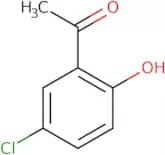
CAS:<p>Please enquire for more information about 4-{[4-(4-Methyloxyphenyl)-piperazin-1-yl]-phenyl}-2,4-dihydro-[1,2,4]-triazol-3-one including the price, delivery time and more detailed product information at the technical inquiry form on this page</p>Formula:C19H21N5O2Purity:Min. 95%Molecular weight:351.4 g/mol1-(5-Chloro-2-hydoxyphenyl)ethanone
CAS:<p>1-(5-Chloro-2-hydoxyphenyl)ethanone is a potent inhibitor of the antiapoptotic protein survivin. It binds to the carbonyl group of the molecule, which is located on the intramolecular hydrogen bond surface. This leads to conformational changes in the molecule and ternary complex formation, which eventually leads to apoptosis protein aggregation and activation. 1-(5-Chloro-2-hydoxyphenyl)ethanone has been shown to inhibit prostate cancer cells and has also been studied in clinical trials for its anticancer properties.</p>Formula:C8H7ClO2Purity:Min. 95%Color and Shape:White PowderMolecular weight:170.59 g/mol8-Chloro-5,6-dihydro-11H-benzo[5,6]cyclohepta[1,2-b]pyridin-11-one
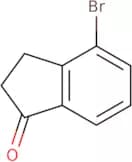
CAS:<p>Please enquire for more information about 8-Chloro-5,6-dihydro-11H-benzo[5,6]cyclohepta[1,2-b]pyridin-11-one including the price, delivery time and more detailed product information at the technical inquiry form on this page</p>Formula:C14H10ClNOPurity:Min. 95%Molecular weight:243.69 g/mol4-Bromo-1-indanone
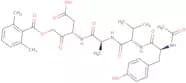
CAS:<p>4-Bromo-1-indanone is a molecule that has been shown to have neuroprotective properties in vitro. It has also been shown to inhibit the amines, which may be due to its ability to act as an aromatic hydrocarbon. This molecule has not been approved for use as a drug substance or drug product and its safety and efficacy are unknown.</p>Formula:C9H7BrOPurity:Min. 95%Molecular weight:211.06 g/molAc-Tyr-Val-Ala-Asp-2,6-dimethylbenzoyloxymethylketone
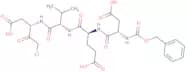
CAS:<p>Ac-Tyr-Val-Ala-Asp-2,6-dimethylbenzoyloxymethylketone is a potent transcriptional regulator that can be used to treat breast cancer. Ac-Tyr-Val-Ala-Asp-2,6-dimethylbenzoyloxymethylketone binds to estrogen receptor and prevents the binding of estrogen to its receptor. This leads to the death of cancer cells by inhibiting the function of bcl family proteins. Acetylation of this compound at C8, C10, and C17 positions increases its potency in vivo. In addition, Acetylated TAVADM can inhibit pancreatic cancer cell growth by activating signal transducer and activator of transcription 3 (STAT3) and inhibiting the activity of bcl family proteins such as BCL2 and BCLXL. Acetylated TAVADM has also been shown to have antiapoptotic</p>Formula:C33H42N4O10Purity:Min. 95%Molecular weight:654.71 g/molBiotinyl-Tyr-Val-Ala-Asp-chloromethylketone
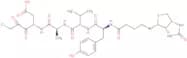
CAS:<p>Please enquire for more information about Biotinyl-Tyr-Val-Ala-Asp-chloromethylketone including the price, delivery time and more detailed product information at the technical inquiry form on this page</p>Formula:C32H45ClN6O9SPurity:Min. 95%Molecular weight:725.25 g/molBoc-Asp(OBzl)-chloromethylketone
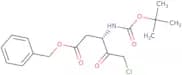
CAS:<p>Boc-Asp(OBzl)-chloromethylketone is a synthetic molecule that is immunoreactive with gp120, the virus protein. It has been shown to inhibit the proliferation of human neuroblastoma cells and induce cell death. This compound also has an effect on cytokine production in vitro. This drug is currently being studied as a potential treatment for HIV infection. Boc-Asp(OBzl)-chloromethylketone binds to the receptor type and viral type, which are essential for the virus life cycle and induces antibody production in vivo.</p>Formula:C17H22ClNO5Purity:Min. 95%Molecular weight:355.81 g/mol1,2-Dihydro-1-Methyl-5-(Trifluoromethyl)-3H-Pyrazol-3-One
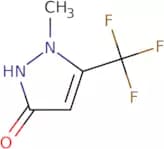
CAS:<p>Please enquire for more information about 1,2-Dihydro-1-Methyl-5-(Trifluoromethyl)-3H-Pyrazol-3-One including the price, delivery time and more detailed product information at the technical inquiry form on this page</p>Formula:C5H5F3N2OPurity:Min. 95%Molecular weight:166.1 g/mol3-Morpholino-1-(4-(2-oxopiperidin-1-yl)phenyl)-5,6-dihydropyridin-2(1H)-one
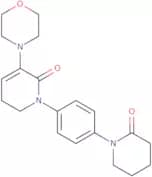
CAS:<p>3-Morpholino-1-(4-(2-oxopiperidin-1-yl)phenyl)-5,6-dihydropyridin-2(1H)-one is a synthetic compound that has been shown to have potent antiplatelet activity. It was developed as a new drug for the prevention of thrombosis and embolism, and was recently approved by the FDA in 2010. The molecular weight of this compound is 459.3 g/mol with an impurity level of 1.2%. 3-Morpholino-1-(4-(2-oxopiperidin-1-yl)phenyl)-5,6-dihydropyridin-2(1H)-one is used in the pulping process for paper production.</p>Formula:C20H25O3N3Purity:Min. 95%Molecular weight:355.43 g/molZ-Leu-Tyr-chloromethylketone
CAS:<p>Z-Leu-Tyr-chloromethylketone is a peptide that binds to the reticulum and prevents the release of calcium ions. It is a chloromethyl ketone, which inhibits the L-type calcium channels in cells. Z-Leu-Tyr-chloromethylketone has been shown to block the influx of calcium ions into cytosolic compartments. This process leads to inhibition of protein synthesis and cell death by apoptosis.</p>Formula:C24H29ClN2O5Purity:Min. 95%Molecular weight:460.95 g/molH-Ala-Ala-Pro-Val-chloromethylketone
CAS:<p>H-Ala-Ala-Pro-Val-chloromethylketone is a hydrogen peroxide prodrug that is activated by the enzyme chloromethyl ketone. This drug has been shown to be active against schistosoma and pancreatic cancer cells, as well as in activating peroxide. HAPV may also have an effect on immunity and leukocytes, which could be due to its ability to sensitize these cells to damage caused by other agents, or through the hydrolytic enzymes it generates.</p>Formula:C17H29ClN4O4Purity:Min. 95%Molecular weight:388.89 g/mol(2E)-1-[5,6-Dihydro-3-(trifluoromethyl)-1,2,4-triazolo[4,3-a]pyrazin-7(8H)-yl]-4-(2,4,5-trifluorophenyl)-2-buten-1-one
CAS:<p>Please enquire for more information about (2E)-1-[5,6-Dihydro-3-(trifluoromethyl)-1,2,4-triazolo[4,3-a]pyrazin-7(8H)-yl]-4-(2,4,5-trifluorophenyl)-2-buten-1-one including the price, delivery time and more detailed product information at the technical inquiry form on this page</p>Formula:C16H12F6N4OPurity:95%NmrMolecular weight:390.28 g/molMeOSuc-Ala-Ala-Pro-Val-chloromethylketone
CAS:<p>MeOSuc-Ala-Ala-Pro-Val-chloromethylketone is a serine protease inhibitor that has been shown to be effective against influenza virus and HIV. It was found to be active against a number of serine proteases, such as trypsin, chymotrypsin, and elastase. MeOSuc-Ala-Ala-Pro-Val-chloromethylketone also has chemotactic activity in thp1 cells and lung fibroblasts. It is activated by the addition of water and has been shown to inhibit the growth of soybean trypsin. However, it does not have any effect on human trypsin.</p>Formula:C22H35ClN4O7Purity:Min. 95%Molecular weight:502.99 g/mol8-[(1E)-2-(3,4-Dimethoxyphenyl)ethenyl]-1,3-diethyl-3,9-dihydro-1H-purine-2,6-dione
CAS:Controlled Product<p>Please enquire for more information about 8-[(1E)-2-(3,4-Dimethoxyphenyl)ethenyl]-1,3-diethyl-3,9-dihydro-1H-purine-2,6-dione including the price, delivery time and more detailed product information at the technical inquiry form on this page</p>Formula:C19H22N4O4Purity:Min. 95%Color and Shape:PowderMolecular weight:370.4 g/mol6-Chloro-2-hexanone
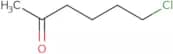
CAS:<p>6-Chloro-2-hexanone is an organic compound that is a methylcyclopentane with a carbonyl group. It can be synthesized by reacting hexamethylenetetramine, chloral hydrate, and 2-chlorobenzimidazole in the presence of ozone. 6-Chloro-2-hexanone has been used as a reagent for normalizing the content of methyl ketones in oil samples. The reaction products are chloride and 2-chlorobenzaldehyde. 6-Chloro-2-hexanone reacts with fatty acids to produce 3,6,9,12 octadecatrienoic acid. This product also has an analytical method that uses GC and flame ionization detection (FID) to measure the amount of chlorine atoms present in a sample. 6-Chloro-2-hexanone also has biological functions such as regulating the activity of enzymes involved in lipid metabolism and</p>Formula:C6H11ClOPurity:Min. 97%Color and Shape:Clear LiquidMolecular weight:134.6 g/mol1-(4-Chlorothiophen-2-yl)ethanone
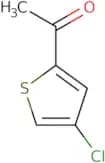
CAS:<p>1-(4-Chlorothiophen-2-yl)ethanone is an oxychloride that belongs to the family of thiourea derivatives. It is synthesized by reacting phosphorus oxychloride with 2,3-dichloroacetophenone in a solvent such as dioxane or acetonitrile. The final product is purified by means of vacuum distillation and recrystallization from diethyl ether, hexane, and chlorinated hydrocarbons.</p>Formula:C6H5ClOSPurity:Min. 95%Molecular weight:160.62 g/mol2-n-Butyl-1,3-diaza-spiro[4,4]non-1-en-4-one HCl
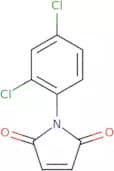
CAS:<p>Please enquire for more information about 2-n-Butyl-1,3-diaza-spiro[4,4]non-1-en-4-one HCl including the price, delivery time and more detailed product information at the technical inquiry form on this page</p>Formula:C11H18N2O·HClPurity:Min. 95%Molecular weight:230.73 g/mol1-(2,4-Dichlorophenyl)-1H-pyrrole-2,5-dione
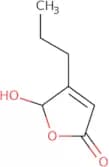
CAS:<p>Maleimide is a chemical compound with the molecular formula CH2=C(O)NHC(=O)CH2-CO2H. It is a reactive monomer that polymerizes in the presence of an initiator to form polymers. Maleimides are also used as cross-linking agents, and have been shown to be thermostable and stable at high temperatures. This particular maleimide is a colorless solid that has been shown to copolymerize with methyl methacrylate and other monomers to form thermally stable, hydrophobic polymers.</p>Formula:C10H5Cl2NO2Purity:Min. 95%Molecular weight:242.06 g/mol5-Hydroxy-4-propyl-2(5H)-furanone
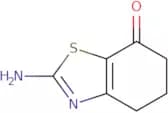
CAS:<p>Please enquire for more information about 5-Hydroxy-4-propyl-2(5H)-furanone including the price, delivery time and more detailed product information at the technical inquiry form on this page</p>Formula:C7H10O3Purity:Min. 95%Color and Shape:Yellow PowderMolecular weight:142.15 g/mol2-Amino-5,6-dihydro-4H-benzothiazol-7-one
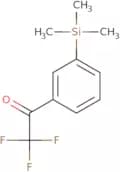
CAS:<p>2-Amino-5,6-dihydro-4H-benzothiazol-7-one is a thiourea that is used as a reactant in the synthesis of brominated compounds. It reacts with ethanol to form 2,5,6-triaminopyrimidine and hydrogen bromide. This reaction occurs in the presence of acid such as hydrochloric acid or acetic acid. The reflux reaction is commonly conducted at elevated temperatures and pressures.</p>Purity:Min. 95%2,2,2-Trifluoro-1-(3-Trimethylsilylphenyl)Ethanone
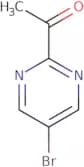
CAS:<p>2,2,2-Trifluoro-1-(3-trimethylsilylphenyl)ethanone is a chemical that can be used as an acetylcholinesterase inhibitor. This agent is designed to inhibit the enzyme that breaks down acetylcholine, which is responsible for transmitting nerve impulses and controlling muscle contractions. The activity of 2,2,2-Trifluoro-1-(3-trimethylsilylphenyl)ethanone is reversible by hydrolysis and it has a low bioavailability due to its high lipophilicity. Acetylcholinesterase inhibitors are mainly used for the treatment of inflammatory diseases such as rheumatoid arthritis. br> The pharmacodynamics of 2,2,2-Trifluoro-1-(3-trimethylsilylphenyl)ethanone are not well understood. This drug also has side effect profiles</p>Formula:C11H13F3OSiPurity:Min. 95%Molecular weight:246.3 g/mol1-(5-Bromopyrimidin-2-yl)ethanone
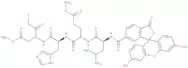
CAS:<p>Please enquire for more information about 1-(5-Bromopyrimidin-2-yl)ethanone including the price, delivery time and more detailed product information at the technical inquiry form on this page</p>Formula:C6H5BrN2OPurity:Min. 95%Molecular weight:201.02 g/molFluorescein-6-carbonyl-Leu-Glu(OMe)-His-DL-Asp(OMe)-fluoromethylketone
CAS:<p>Please enquire for more information about Fluorescein-6-carbonyl-Leu-Glu(OMe)-His-DL-Asp(OMe)-fluoromethylketone including the price, delivery time and more detailed product information at the technical inquiry form on this page</p>Formula:C45H47FN6O14Purity:Min. 95%Molecular weight:914.89 g/molFluorescein-6-carbonyl-Leu-Glu(OMe)-Thr-DL-Asp(OMe)-fluoromethylketone
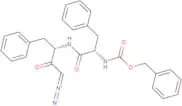
CAS:<p>Please enquire for more information about Fluorescein-6-carbonyl-Leu-Glu(OMe)-Thr-DL-Asp(OMe)-fluoromethylketone including the price, delivery time and more detailed product information at the technical inquiry form on this page</p>Formula:C43H47FN4O15Purity:Min. 95%Molecular weight:878.85 g/molZ-Phe-Phe-diazomethylketone
CAS:<p>Z-Phe-Phe-diazomethylketone is a cathepsin inhibitor that has been shown to inhibit the proteolytic activity of various enzymes, including serine proteases and thrombotic thrombocytopenic. This compound inhibits the growth of Leishmania parasites in cell culture and has been shown to have a high affinity for carboxy terminal and proximal tubules. Z-Phe-Phe-diazomethylketone has a neutral pH, with an optimum at 7.0, which may be due to its ability to bind to proteins or other components of cells without affecting their functions.</p>Formula:C27H26N4O4Purity:Min. 95%Molecular weight:470.52 g/molAc-Leu-Glu-His-Asp-chloromethylketone
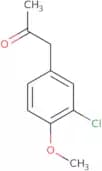
CAS:<p>Ac-Leu-Glu-His-Asp-chloromethylketone is a creatine kinase inhibitor that prevents the conversion of ATP to ADP. It inhibits mitochondrial pathways, leading to apoptotic and proapoptotic effects. Ac-Leu-Glu-His-Asp-chloromethylketone also has a kinetic effect on cells, where it causes necrotic cell death. This compound can cause proteolytic activity, which leads to the activation of caspase 9 and matrix metalloproteinases. Ac-Leu-Glu-His-Asp chloromethylketone has been shown to have antiinflammatory properties in cellular assays, as well as an ability to inhibit the synthesis of cellular proteins.</p>Formula:C24H35ClN6O9Purity:Min. 95%Molecular weight:587.02 g/mol1-(3-Chloro-4-methoxyphenyl)acetone
CAS:<p>1-(3-Chloro-4-methoxyphenyl)acetone is a white solid with a melting point of 60-61°C. It is a versatile building block that can be used in the synthesis of complex compounds and as a reaction component for the preparation of speciality chemicals. 1-(3-Chloro-4-methoxyphenyl)acetone has been studied extensively as an intermediate for the synthesis of pharmaceuticals, including acetaminophen and amoxicillin. This compound also has uses in research laboratories and as a reagent in organic synthesis.</p>Formula:C10H11ClO2Purity:Min. 95%Molecular weight:198.65 g/mol7,9-Dimethoxycarbonyl-2-ethoxycarbonyl-1H-pyrrolo-[2,3-f]quinoline-4,5-dione
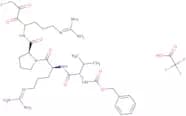
CAS:<p>7,9-Dimethoxycarbonyl-2-ethoxycarbonyl-1H-pyrrolo-[2,3-f]quinoline-4,5-dione is a chemical compound that is used as an intermediate for research chemicals. It has a CAS number of 80721-47-7 and is classified as a fine chemical with the Chemical Abstracts Service (CAS) classification code of 3272. This compound is a versatile building block that can be used in the synthesis of other compounds. 7,9-Dimethoxycarbonyl-2-ethoxycarbonyl-1H-pyrrolo-[2,3f]quinoline 4,5dione can be used to produce high quality products.</p>Formula:C18H14N2O8Purity:Min. 95%Color and Shape:Orange PowderMolecular weight:386.31 g/molZ-Val-Arg-Pro-DL-Arg-fluoromethylketone trifluoroacetate salt
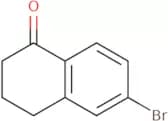
CAS:<p>Please enquire for more information about Z-Val-Arg-Pro-DL-Arg-fluoromethylketone trifluoroacetate salt including the price, delivery time and more detailed product information at the technical inquiry form on this page</p>Formula:C31H49FN10O6Purity:Min. 95%Molecular weight:676.78 g/mol6-Bromo-tetral-1-one
CAS:<p>6-Bromo-tetral-1-one is a chemical compound with a molecular formula of C8H6BrO. It is synthesized by the ring opening of epichlorohydrin with boron trifluoride etherate (BF3OEt2) in pyridine at 0°C, followed by hydrolysis of the resulting epoxide with sodium hydroxide to give tetralin. The synthesis can be carried out on a laboratory scale using high purity chemicals and yields up to 100% conversion of the starting material to tetralin. 6-Bromo-tetral-1-one has been shown to be stable in air, moisture, and light. This product is also nonflammable and produces no toxic byproducts when heated to decomposition.</p>Formula:C10H9BrOPurity:Min. 95%Molecular weight:225.08 g/molMenadione
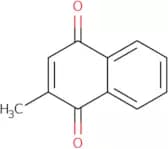
CAS:<p>Menadione, also known as vitamin K3, is a chemical compound which is used as a cofactor in the synthesis of blood clotting factors. Menadione has been shown to protect proteins against oxidative damage. Menadione interacts with two types of DNA-binding proteins: response element (RE) and natural compounds. Menadione binds to the response elements on DNA and regulates gene expression. Menadione has been shown to inhibit protein oxidation in hl-60 cells and human polymorphonuclear leukocytes. The mechanism for this inhibition is not yet well understood but may be due to the ability of menadione to bind to reactive oxygen species (ROS). Menadione also binds to natural compounds that regulate gene expression; these compounds are small molecules that interact with DNA at points other than response elements. These binding sites are found upstream from genes, where they act as transcriptional regulators or repressors by altering the rate of transcription. Menadione binds to</p>Formula:C11H8O2Purity:Min. 98 Area-%Color and Shape:Yellow PowderMolecular weight:172.18 g/molBiotinyl-ε-aminocaproyl-D-Phe-Pro-Arg-chloromethylketone
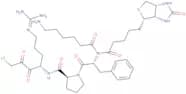
CAS:<p>Please enquire for more information about Biotinyl-epsilon-aminocaproyl-D-Phe-Pro-Arg-chloromethylketone including the price, delivery time and more detailed product information at the technical inquiry form on this page</p>Formula:C37H56ClN9O6SPurity:Min. 95%Molecular weight:790.42 g/mol3-Methyldihydrofuran-2,5-dione
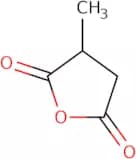
CAS:<p>3-Methyldihydrofuran-2,5-dione is a diterpenoid alkaloid found in the plant Dictamnus albus. This compound has been shown to have metal chelating properties and can be used as an asymmetric synthesis intermediate. 3-Methyldihydrofuran-2,5-dione reacts with diazonium salt to form a high resistance molecule that is highly reactive. This chemical reacts with hydroxyl groups, amide groups, or methyl ethyl groups. The structure of this compound consists of nitrogen atoms and anhydride bonds. 3-Methyldihydrofuran-2,5-dione has been shown to exhibit electrochemical impedance spectroscopy (EIS) characteristics similar to those of other molecules that are known to be reactive.</p>Formula:C5H6O3Purity:Min. 95%Molecular weight:114.1 g/mol1,3-Indanedione, 70%
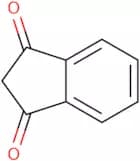
CAS:<p>1,3-Indanedione is a precursor of indane diones that is used in the synthesis of fluorescent molecules. In the presence of light, 1,3-indanedione produces light emission and can be used as a chemiluminescent probe. In the presence of trifluoroacetic acid and copper complex, 1,3-indanedione undergoes intramolecular hydrogen transfer to form an intermediate which reacts with malonic acid to form an alkyl radical. The alkyl radical then reacts with hydrochloric acid to produce an ionic polymerization product. The biological sample is reactive with fatty acids and can be used for the detection of prostate cancer cells.</p>Formula:C9H6O2Purity:(%) Min. 70%Color and Shape:PowderMolecular weight:146.14 g/molZ-Asp-Glu-Val-Asp-chloromethylketone
CAS:<p>Z-Asp-Glu-Val-Asp-chloromethylketone is a reactive compound that inhibits the activity of proteases and induces neuronal death. Z-Asp-Glu-Val-Asp-chloromethylketone has been shown to induce necrotic cell death in malignant brain cells and has neurotrophic properties. It also causes mitochondrial membrane depolarization, which leads to mitochondrial cytochrome c release and subsequent apoptosis. The reaction mechanism is still unclear but it may involve hydrogen bonding between the ketone group and the amide nitrogen atom of the aspartate residue.</p>Formula:C27H35ClN4O12Purity:Min. 95%Molecular weight:643.04 g/molZ-Phe-Lys-2,4,6-trimethylbenzoyloxy-methylketone trifluoroacetate salt
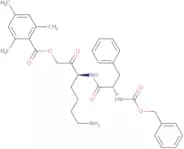
CAS:<p>Z-Phe-Lys-2,4,6-trimethylbenzoyloxy-methylketone trifluoroacetate salt is a proteolytic enzyme that has been shown to have bone resorption and tissue destructive properties. It is active against porphyromonas and bactericidal against fibrinogen. Z-Phe-Lys-2,4,6-trimethylbenzoyloxy-methylketone trifluoroacetate salt also inhibits the formation of osteoclasts by inhibiting the uptake and protease activity of extracellular matrix proteins such as fibrinogen. This drug is currently being researched for possible use in the treatment of Alzheimer's Disease.</p>Formula:C34H41N3O6Purity:Min. 95%Molecular weight:587.71 g/mol3-Dimethylamino-1-(3-pyridyl)-2-propen-1-one
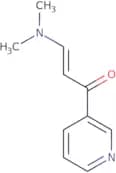
CAS:<p>3-Dimethylamino-1-(3-pyridyl)-2-propen-1-one is a synthetic anticancer compound. It is an amide derivative of 3-dimethylamino-1-(3-pyridyl)-2-propenal, which is synthesized by reacting 3,5,6,7 tetrahydrobenzo[b]thiophene with 3-(dimethylamino)acrylic acid chloride. The synthesis of 3DAP was reported in 1974 by Novartis Pharmaceuticals Corporation and it has been used as a lead compound for the development of other anticancer agents. This drug can inhibit the growth of myelogenous leukemia cells and has been shown to be effective against cancer cells that are resistant to imatinib.</p>Formula:C10H12N2OPurity:Min. 95%Color and Shape:Off-White To Yellow SolidMolecular weight:176.22 g/mol3,6-Bis([1,1'-biphenyl]-4-yl)-2,5-dihydropyrrolo[3,4-c]pyrrole-1,4-dione
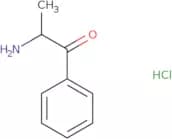
CAS:<p>3,6-Bis([1,1'-biphenyl]-4-yl)-2,5-dihydropyrrolo[3,4-c]pyrrole-1,4-dione is an analytical reagent that has been used as a corrosion inhibitor in coatings. It has been shown to promote the formation of reactive oxygen species and inhibit the growth of bacteria by binding to DNA. The biphenyl group is known for its ability to form intermolecular hydrogen bonding with chloride ions and aliphatic hydrocarbons. This reaction yields a biphenyl aryl halide intermediate that reacts with an acid catalyst to produce a reactive oxygen species (ROS) and convert chloride ions into chloride radicals. The ROS can then react with other molecules such as particles to form free radicals that are highly corrosive. The average particle diameter for this product is in the range of 10 nm - 100 nm.</p>Formula:C30H20N2O2Purity:Min. 95%Color and Shape:PowderMolecular weight:440.49 g/mol2-Amino-1-phenylpropan-1-one hydrochloride
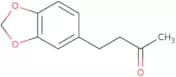
CAS:Controlled Product<p>2-Amino-1-phenylpropan-1-one hydrochloride is a chemical compound that can be used as an intermediate in the synthesis of ethyl formate. It is also a pharmaceutical intermediate, which is used to prepare triazine and alicyclic compounds. It has been shown to have potential use in the treatment of prostatic hypertrophy and heterocycle disorders. 2-Amino-1-phenylpropan-1-one hydrochloride has been found to be active in animals and humans and is not toxic to women or animals. This drug has shown no adverse effects on human health at doses up to 10 g/kg body weight.</p>Formula:C9H11NO•HClPurity:Min. 95%Color and Shape:PowderMolecular weight:185.65 g/molPiperonyl acetone
CAS:Controlled Product<p>Piperonyl acetone is an organic solvent that has been shown to have an anti-aging effect on skin cells. It inhibits the growth of bacteria by binding to the carbonyl group in the molecule and preventing them from producing proteins, which are needed for cell division. Piperonyl acetone has been shown to be a good deodorizer, with a target pest of insects. This agent also has a high boiling point and can be used as an organic solvent in analytical toxicology. Piperonyl acetone is metabolized into piperonal and ethanol extracts when it is administered orally or intravenously. Piperonyl acetone may interact with certain drugs; therefore, it should be taken with caution if you are taking other medications.</p>Formula:C11H12O3Purity:Min. 95%Color and Shape:White PowderMolecular weight:192.21 g/molHedione
CAS:<p>Hedione is a natural product that has been used in perfumery. It is an aliphatic ketone with the chemical formula of C10H14O2 and a molecular weight of 176.18 g/mol. Hedione is also found in some essential oils, such as jasmine oil. Hedione has been studied as a model system to study fatty acid metabolism and basic protein synthesis in bacteria. The stability of hedione is dependent on its pH and redox potential, with lower pH values leading to increased stability. Hedione can be extracted from water samples using solid phase microextraction (SPME) and analyzed by gas chromatography-mass spectrometry (GC-MS). Hedione can be used for wastewater treatment, as it has been shown to inhibit methyl dihydrojasmonate production in biological treatment processes. Hedione may have potential as an anti-inflammatory agent due to its ability to inhibit malonic acid production in humans at low concentrations (</p>Formula:C13H22O3Purity:Min. 95%Molecular weight:226.31 g/mol
![4,10-Dioxatricyclo[5.2.1.02.6]dec-8-ene-3,5-dione](/_next/image/?url=https%3A%2Fstatic.cymitquimica.com%2Fproducts%2F3D%2Fthumb-webp%2FFD15512.webp&w=3840&q=75)


![4-{[4-(4-Methyloxyphenyl)-piperazin-1-yl]-phenyl}-2,4-dihydro-[1,2,4]-triazol-3-one](/_next/image/?url=https%3A%2Fstatic.cymitquimica.com%2Fproducts%2F3D%2Fthumb-webp%2FFM25920.webp&w=3840&q=75)
![8-Chloro-5,6-dihydro-11H-benzo[5,6]cyclohepta[1,2-b]pyridin-11-one](/_next/image/?url=https%3A%2Fstatic.cymitquimica.com%2Fproducts%2F3D%2Fthumb-webp%2FFC20116.webp&w=3840&q=75)
![(2E)-1-[5,6-Dihydro-3-(trifluoromethyl)-1,2,4-triazolo[4,3-a]pyrazin-7(8H)-yl]-4-(2,4,5-trifluorop…](/_next/image/?url=https%3A%2Fstatic.cymitquimica.com%2Fproducts%2F3D%2Fthumb-webp%2FFD103313.webp&w=3840&q=75)

![8-[(1E)-2-(3,4-Dimethoxyphenyl)ethenyl]-1,3-diethyl-3,9-dihydro-1H-purine-2,6-dione](/_next/image/?url=https%3A%2Fstatic.cymitquimica.com%2Fproducts%2F3D%2Fthumb-webp%2FFD152904.webp&w=3840&q=75)
![2-n-Butyl-1,3-diaza-spiro[4,4]non-1-en-4-one HCl](/_next/image/?url=https%3A%2Fstatic.cymitquimica.com%2Fproducts%2F3D%2Fthumb-webp%2FFB37020.webp&w=3840&q=75)
![7,9-Dimethoxycarbonyl-2-ethoxycarbonyl-1H-pyrrolo-[2,3-f]quinoline-4,5-dione](/_next/image/?url=https%3A%2Fstatic.cymitquimica.com%2Fproducts%2F3D%2Fthumb-webp%2FFD22201.webp&w=3840&q=75)
![3,6-Bis([1,1'-biphenyl]-4-yl)-2,5-dihydropyrrolo[3,4-c]pyrrole-1,4-dione](/_next/image/?url=https%3A%2Fstatic.cymitquimica.com%2Fproducts%2F3D%2Fthumb-webp%2FFB151935.webp&w=3840&q=75)