Amides
Found 16487 products of "Amides"
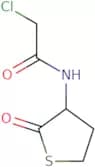
2-Chloro-N-(2-oxotetrahydro-3-thienyl)acetamide
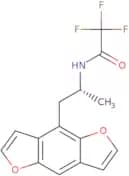
CAS:2-Chloro-N-(2-oxotetrahydro-3-thienyl)acetamide is a chemical compound that is used as an intermediate in the synthesis of other organic compounds. The impurities are minimized by using organic solvents such as acetone, pyridine, and tetrahydrofuran. The product can be precipitated by adding sodium carbonate or potassium carbonate to the solution, or it can be crystallized from a mixture of methanol and water. 2-Chloro-N-(2-oxotetrahydro-3-thienyl)acetamide is also soluble in ethers such as erdosteine and acetonitrile, which can be used to remove the last traces of water.Formula:C6H8ClNO2SPurity:Min. 95%Molecular weight:193.65 g/mol(R)-Dragonfly N-trifluoroacetamide
CAS:Controlled ProductPlease enquire for more information about (R)-Dragonfly N-trifluoroacetamide including the price, delivery time and more detailed product information at the technical inquiry form on this page
Formula:C15H12F3NO3Purity:Min. 95%Molecular weight:311.26 g/mol(2R)-2-Amino-3-phenylpropionyl amide
CAS:(2R)-2-Amino-3-phenylpropionyl amide is a synthetic cannabinoid that has been shown to bind to the CB2 receptor. It has been found to be an effective analgesic in rat models of inflammatory and neuropathic pain. This drug is also a serine protease inhibitor, with activity against ochrobactrum, an antibiotic-resistant bacteria. (2R)-2-Amino-3-phenylpropionyl amide is also used as a substrate for d-alanine synthesis and has been sequenced. It can form hydrogen bonds with water molecules and chloride ions. (2R)-2-Amino-3-phenylpropionyl amide has been synthesized by Clostridium coli K12 cells and is expected to have similar effects on human cells.Formula:C9H12N2OPurity:Min. 95%Molecular weight:164.2 g/molIsonicotinamide
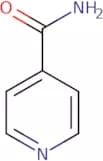
CAS:Isonicotinamide is a coordination compound with the chemical formula (CH3)2NHCOCH2CO2N(CH3)2. It is also known as isonicotinic acid amide. Isonicotinamide has been shown to be active against resistant microorganisms, such as multidrug-resistant Mycobacterium tuberculosis and methicillin-resistant Staphylococcus aureus (MRSA). The molecular geometry of this compound is related to the intramolecular hydrogen bond that forms between the nitrogen atoms in its amide group and the oxygen atoms in malonic acid. Isonicotinamide has also been shown to have antimicrobial properties, which are likely due to its ability to chelate metal ions.Formula:C6H6N2OPurity:Min. 95%Color and Shape:White PowderMolecular weight:122.12 g/mol4-Amino-N,N-dipropylbenzenesulfonamide
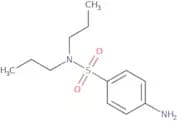
CAS:4-Amino-N,N-dipropylbenzenesulfonamide is a molecule that has been shown to be an effective antimicrobial agent against bacteria. It inhibits the growth of bacteria by inhibiting the enzyme that catalyzes the formation of acyl radicals from alkoxy radicals and ethoxycarbonyl groups. This prevents bacterial cell membrane lipid peroxidation and thus prevents bacterial growth. 4-Amino-N,N-dipropylbenzenesulfonamide also inhibits bacterial DNA synthesis by interfering with the enzymes that synthesize nucleotides and proteins. The molecule has been shown to bind to nucleophilic sites on DNA gyrase, preventing its activity, which leads to inhibition of DNA replication. 4-Amino-N,N-dipropylbenzenesulfonamide can also bind to pyrazolyl groups on carbanion molecules and form a stable carbamate group.Formula:C12H20N2O2SPurity:Min. 95%Color and Shape:White PowderMolecular weight:256.37 g/molTridecafluoro-N-(2-Hydroxyethyl)-N-Methylhexanesulphonamide
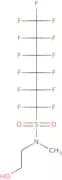
CAS:Please enquire for more information about Tridecafluoro-N-(2-Hydroxyethyl)-N-Methylhexanesulphonamide including the price, delivery time and more detailed product information at the technical inquiry form on this pageFormula:C9H8F13NO3SPurity:Min. 95%Molecular weight:457.21 g/molDorzolamide hydrochloride related compound A
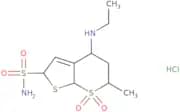
CAS:Please enquire for more information about Dorzolamide hydrochloride related compound A including the price, delivery time and more detailed product information at the technical inquiry form on this pageFormula:C10H16N2O4S3·HClPurity:Min. 95%Molecular weight:360.9 g/molN,N'-Propane-1,3-diylbis[3-(3,5-di-tert-butyl-4-hydroxyphenyl)propionamide]
CAS:Please enquire for more information about N,N'-Propane-1,3-diylbis[3-(3,5-di-tert-butyl-4-hydroxyphenyl)propionamide] including the price, delivery time and more detailed product information at the technical inquiry form on this page
Formula:C37H58N2O4Purity:Min. 95%Color and Shape:SolidMolecular weight:594.87 g/molN-(tert-Butoxycarbonyl)glycine N'-methoxy-N'-methylamide
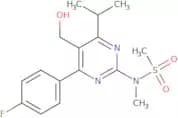
CAS:Please enquire for more information about N-(tert-Butoxycarbonyl)glycine N'-methoxy-N'-methylamide including the price, delivery time and more detailed product information at the technical inquiry form on this pageFormula:C9H18N2O4Purity:Min. 95%Molecular weight:218.25 g/molN-(4-(4-Fluorophenyl)-5-(hydroxymethyl)-6-isopropylpyrimidin-2-yl)-Nmethylmethanesulfonamide
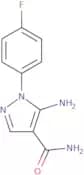
CAS:Please enquire for more information about N-(4-(4-Fluorophenyl)-5-(hydroxymethyl)-6-isopropylpyrimidin-2-yl)-Nmethylmethanesulfonamide including the price, delivery time and more detailed product information at the technical inquiry form on this pageFormula:C16H20FN3O3SPurity:Min. 95%Molecular weight:353.41 g/mol5-Amino-1-(4-Fluorophenyl)-1H-Pyrazole-4-Carboxamide
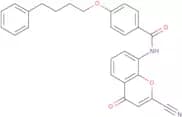
CAS:Please enquire for more information about 5-Amino-1-(4-Fluorophenyl)-1H-Pyrazole-4-Carboxamide including the price, delivery time and more detailed product information at the technical inquiry form on this pageFormula:C10H9FN4OPurity:Min. 95%Molecular weight:220.2 g/molN-(2-Cyano-4-oxo-4H-1-benzopyran-8-yl)-4-(4-phenylbutoxy)benzamide
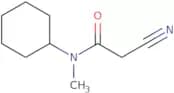
CAS:Please enquire for more information about N-(2-Cyano-4-oxo-4H-1-benzopyran-8-yl)-4-(4-phenylbutoxy)benzamide including the price, delivery time and more detailed product information at the technical inquiry form on this pageFormula:C27H22N2O4Purity:Min. 95%Molecular weight:438.47 g/mol2-Cyano-N-cyclohexyl-N-methylacetamide
CAS:Please enquire for more information about 2-Cyano-N-cyclohexyl-N-methylacetamide including the price, delivery time and more detailed product information at the technical inquiry form on this pageFormula:C10H16N2OPurity:Min. 95%Molecular weight:180.25 g/molN-[4-Amino-3-(trifluoromethyl)phenyl]-2-methylpropanamide
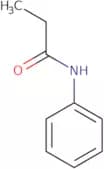
CAS:Please enquire for more information about N-[4-Amino-3-(trifluoromethyl)phenyl]-2-methylpropanamide including the price, delivery time and more detailed product information at the technical inquiry form on this pageFormula:C11H13F3N2OPurity:Min. 95%Molecular weight:246.23 g/molN-Phenylpropanamide
CAS:N-Phenylpropanamide is a chemical inhibitor that has been shown to have a protective effect against the light-induced degradation of drugs in urine samples. The compound also inhibits the hydrolysis of amides by hydrochloric acid and hydrogen bonds with the receptor binding site on human liver cells. N-Phenylpropanamide has been shown to affect cardiac function, as well as growth factor production.Formula:C9H11NOPurity:Min. 95%Molecular weight:149.19 g/mol4-(2-Aminoethyl)benzene sulfonamide
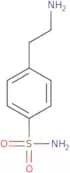
CAS:4-(2-Aminoethyl)benzene sulfonamide is a small-molecule drug that inhibits the activity of proteases, including serine and cysteine proteases. It has been shown to inhibit the growth of human renal cell cancer cells, as well as subcutaneous tumors in mice. 4-(2-Aminoethyl)benzene sulfonamide also inhibits the proliferation of Hl-60 cells and shows antitumor activity in a mouse model system. This drug is an inhibitor of prostaglandin endoperoxide synthase (PGHS), which is involved in tumorigenesis by causing inflammation and oxidative stress. 4-(2-Aminoethyl)benzene sulfonamide has been shown to be effective for treating colorectal adenocarcinoma, with no significant side effects on other organs.Formula:C8H12N2O2SPurity:Min. 95%Molecular weight:200.26 g/molN-(p-Hydroxyphenethyl)-N-(2-bromo-5-hydroxy-4-methoxybenzyl)formamide
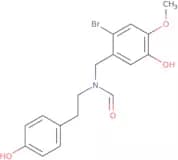
CAS:Controlled ProductN-(p-Hydroxyphenethyl)-N-(2-bromo-5-hydroxy-4-methoxybenzyl)formamide is an anticancer drug that belongs to the class of phenethyl derivatives. It is a radiosensitizer that inhibits DNA and RNA synthesis, leading to cancer cell death. The drug has been shown to have a chiral center and two enantiomers, with the (S)-enantiomer being more active than the (R)-enantiomer. N-(p-Hydroxyphenethyl)-N-(2-bromo-5-hydroxy-4-methoxybenzyl)formamide has been shown to be effective in animal models for brain tumors and breast cancer cells. It has also been shown to be effective against leukemia cells, which are resistant to other treatments. N-(p-Hydroxyphenethyl)-N-(2-bromo-5-hydroxy-4Formula:C17H18BrNO4Purity:Min. 95%Molecular weight:380.23 g/molN-(6-Phenylhexyl)-5-chloro-1-naphthalenesulfonamide
CAS:N-(6-Phenylhexyl)-5-chloro-1-naphthalenesulfonamide is a dibutyryl camp analog that has been shown to inhibit the L-type calcium channel in a dose-dependent manner. It has an effect on both spermatozoa and glioma cells, with its most significant effect being inhibition of the intracellular calcium ion. This drug inhibits the growth rate of these cells, which may be due to its ability to activate adrenergic receptors and cause increased intracellular calcium ion levels. N-(6-Phenylhexyl)-5-chloro-1-naphthalenesulfonamide also slows the cycle of the cell, which may be due to a kinetic effect.Formula:C22H24ClNO2SPurity:Min. 95%Molecular weight:401.95 g/molN,N-Dimethyl-2-chloroacetamide
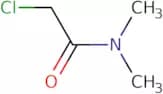
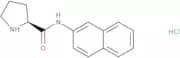
CAS:N,N-Dimethyl-2-chloroacetamide is a chlorinated organic compound that has a reaction rate of 1.4 × 10^6. It is used as a treatment for acrylonitrile poisoning, and it is also used in the synthesis of thienopyridine and cetirizine. N,N-Dimethyl-2-chloroacetamide reacts with an amine to produce an amide; this reaction takes place in an organic solvent with a dicarboxylate, such as ethyl acetate or butyl acetate. This reaction produces a solution that is colorless to pale yellow. The time required for the reaction to complete depends on the concentration of reactants and the type of solvent used.Formula:C4H8ClNOPurity:Min. 95%Molecular weight:121.57 g/molL-Proline-beta-naphthylamide hydrochloride
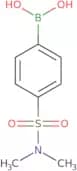
CAS:L-proline analogueFormula:C15H16N2O·HClPurity:Min. 95%Molecular weight:276.76 g/molN,N-Dimethyl 4-boronobenzenesulfonamide
CAS:Please enquire for more information about N,N-Dimethyl 4-boronobenzenesulfonamide including the price, delivery time and more detailed product information at the technical inquiry form on this pageFormula:C8H12BNO4SPurity:Min. 95%Molecular weight:229.06 g/molWAY 316606
CAS:WAY 316606 is a potent, orally administered small molecule that inhibits the Wnt signaling pathway by blocking the action of β-catenin. It has been shown to have potential for treating eye disorders, including age-related macular degeneration. This drug also has potential for treatment of cell and nervous system diseases such as Alzheimer's disease and Huntington's disease. WAY 316606 inhibits the transcriptional activity of the β-catenin/Tcf4 complex by binding to it and preventing its translocation into the nucleus. In addition, WAY 316606 prevents downstream activation of genes regulated by β-catenin signaling, including c-myc and cyclin D1. This drug also blocks growth factor receptor tyrosine kinases and monoclonal antibodies that activate these receptors.
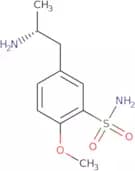
Formula:C18H19F3N2O4S2Purity:Min. 95%Molecular weight:448.48 g/mol(R)-5-(2-Aminopropyl)-2-methoxybenzenesulfonamide
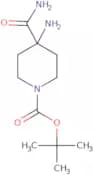
CAS:Controlled Product(R)-5-(2-Aminopropyl)-2-methoxybenzenesulfonamide is an amide. It is a hydrochloric acid salt that can regulate the reaction system and introduce filtration, which can be used to separate the components of the reaction system. The kinetic and chiral properties of this compound are derived from Friedel-Crafts reactions with phosphites and Friedel-Crafts reactions with d-alanine. (R)-5-(2-Aminopropyl)-2-methoxybenzenesulfonamide can also catalyze ammonolysis and catalysis with phenoxy.Formula:C10H16N2O3SPurity:Min. 95%Color and Shape:PowderMolecular weight:244.31 g/mol4-Amino-1-Boc-piperidine-4-carboxamide
CAS:Please enquire for more information about 4-Amino-1-Boc-piperidine-4-carboxamide including the price, delivery time and more detailed product information at the technical inquiry form on this page
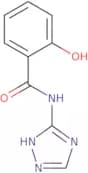
Formula:C11H21N3O3Purity:Min. 95%Molecular weight:243.3 g/mol2-Hydroxy-N-1H-1,2,4-triazol-3-ylbenzamide
CAS:2-Hydroxy-N-1H-1,2,4-triazol-3-ylbenzamide is a synthetic product that is a white crystalline solid. It has a melting point of 105°C and an average particle diameter of 3.5 nm. This compound is used as a precursor to produce the peroxide 2,2'-dihydroxybenzophenone, which can be used in the synthesis of other organic compounds. It can also be used in the production of amides and quaternary ammonium salts. 2-Hydroxy-N-1H-1,2,4-triazol-3-ylbenzamide is structurally similar to hydrotalcite and hydroxyl group which are both natural products found in nature.Formula:C9H8N4O2Purity:Min. 95%Molecular weight:204.19 g/mol4-(3-Amino-2-hydroxypropoxy)phenylacetamide
CAS:4-(3-Amino-2-hydroxypropoxy)phenylacetamide is a sweetener that is used as an artificial sweetener. It can be found in many foods and drinks and is often used to replace sucralose due to its lower cost. 4-(3-Amino-2-hydroxypropoxy)phenylacetamide is a white powder with a melting point of 133°C. This product has been shown to be safe for human consumption, although it may cause headaches, drowsiness, or dizziness in some people.
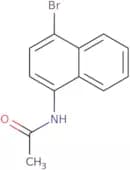
Formula:C11H16N2O3Purity:Min. 95%Molecular weight:224.26 g/molN-(4-Bromonaphthalene-1-yl)-acetamide
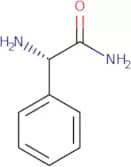
CAS:The N-(4-bromonaphthalene-1-yl)-acetamide is a high quality chemical that is used as a reaction component in the synthesis of pharmaceuticals and other speciality chemicals. It can also be used as a building block for creating more complex compounds. This compound is a versatile building block that can be used to synthesise many different types of products.Formula:C12H10BrNOPurity:Min. 95%Molecular weight:264.12 g/mol(S)-(+)-2-Phenylglycine amide
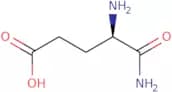
CAS:(S)-(+)-2-Phenylglycine amide is a racemic mixture of the (R) and (S) enantiomers. It is an inhibitor of the enzyme, racemase, which converts one type of amino acid to another. This inhibition prevents allergic reactions that can be caused by acylation reactions or ph profiles in the body. The amino acid composition of this drug is unique because it contains an ester hydrochloride group, which does not exist in other drugs. The kinetic and thermodynamic properties of (S)-(+)-2-phenylglycine amide have been studied extensively, but there are no reports on its ability to inhibit inflammatory diseases. However, it has been shown that the β-amino acid in this drug can inhibit amide hydroxamic acids and stereoselective hydroxamic acids.Formula:C8H10N2OPurity:Min. 95%Molecular weight:150.18 g/molD-Glutamic acid alpha-amide
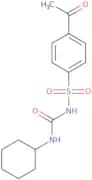
CAS:D-Glutamic acid alpha-amide is a carbohydrate that has been shown to have antibiotic properties. It can be produced by chemoenzymatic synthesis and is used as an animal feed additive. D-Glutamic acid alpha-amide is a conjugate of D-glutamic acid with either glycine or beta-alanine. The residue of this compound on red blood cells is measured in order to assess the amount of D-glutamic acid alpha-amide that has been ingested. This compound has also been shown to have antigenic properties, which can elicit immune responses when injected into animals. The meningococcal vaccine that contains D-glutamic acid alpha-amide was found to be effective at stimulating an immune response in mice against meningitis caused by gram negative species, such as Neisseria meningitidis.Formula:C5H10N2O3Purity:Min. 95%Color and Shape:PowderMolecular weight:146.14 g/molAcetohexamide
CAS:Acetohexamide is a hypoglycemic drug that binds to the sulfonylurea receptor on pancreatic beta-cells and stimulates insulin release. It has been shown to have an oral hypoglycemic effect in humans, as well as in rats. Acetohexamide has been shown to inhibit the action of nonsteroidal anti-inflammatory drugs, such as indomethacin, through competitive inhibition. Acetohexamide also inhibits the enzyme activity of estradiol benzoate and acetohexamide hydrolase. This drug is not active against bacteria or fungi, but has been shown to be effective against some viruses. Acetohexamide is absorbed by the gastrointestinal tract and excreted unchanged in urine and feces. The drug does not bind to proteins and does not cross the blood-brain barrier.
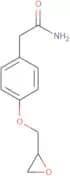
Formula:C15H20N2O4SPurity:Min. 95%Color and Shape:PowderMolecular weight:324.4 g/mol4-(2,3-Epoxypropoxy)phenylacetamide
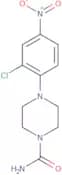
CAS:Please enquire for more information about 4-(2,3-Epoxypropoxy)phenylacetamide including the price, delivery time and more detailed product information at the technical inquiry form on this pageFormula:C11H13NO3Purity:Min. 95%Molecular weight:207.23 g/mol4-(2-Chloro-4-nitrophenyl)piperazine-1-carboxamide
CAS:Please enquire for more information about 4-(2-Chloro-4-nitrophenyl)piperazine-1-carboxamide including the price, delivery time and more detailed product information at the technical inquiry form on this pageFormula:C11H13ClN4O3Purity:Min. 95%Molecular weight:284.7 g/molMetoclopramide base
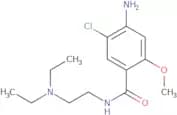
CAS:Dopamine (D2) receptor antagonist
Formula:C14H22ClN3O2Purity:Min. 95%Color and Shape:White PowderMolecular weight:299.8 g/molBenzenesulphonamide
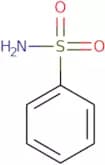
CAS:Benzenesulphonamide is a biologically active compound that has been shown to bind to an integrin receptor, which mediates the attachment of leukocytes to the endothelium. It also binds to a basic protein found in human immunoglobulin. Benzenesulphonamide has been shown to have cytotoxic effects on synchronous fluorescence cells and can be used for the treatment of bowel disease. This drug has also been shown to be toxic in vitro and in vivo, with a moderate acute oral toxicity and low chronic oral toxicity. Benzenesulphonamide has been shown to act as a surfactant by binding with sodium dodecyl sulfate (SDS), which is commonly used in detergents, disinfectants, shampoos, soaps, and other household products. The biological properties of benzenesulphonamide are not well-known due to its low solubility in water.
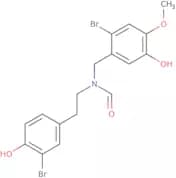
Formula:C6H7NO2SPurity:Min. 95%Molecular weight:157.19 g/molN-(3-Bromo-4-hydroxyphenethyl)-N-(2-bromo-5-hydroxy-4-methoxybenzyl)formamide
CAS:Controlled ProductPlease enquire for more information about N-(3-Bromo-4-hydroxyphenethyl)-N-(2-bromo-5-hydroxy-4-methoxybenzyl)formamide including the price, delivery time and more detailed product information at the technical inquiry form on this pageFormula:C17H17Br2NO4Purity:Min. 95%Molecular weight:459.13 g/mol4-Hydroxy-N-(2-Piperidinylmethyl)-2,5-Bis(2,2,2-Trifluoroethoxy)Benzamide
CAS:Please enquire for more information about 4-Hydroxy-N-(2-Piperidinylmethyl)-2,5-Bis(2,2,2-Trifluoroethoxy)Benzamide including the price, delivery time and more detailed product information at the technical inquiry form on this pageFormula:C17H20F6N2O4Purity:Min. 95%Molecular weight:430.34 g/molAcetyl-L-alanine methyl amide
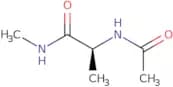
CAS:Acetyl-L-alanine methyl amide is a pharmaceutical drug that is structurally similar to L-lysine. It has been synthesized as a model system for the study of receptor binding and intracellular signaling. Acetyl-L-alanine methyl amide has shown to be reactive and can form intramolecular hydrogen bonds with other molecules in the cell. This drug also reacts with microglia cells, which are responsible for clearing out dead cells and debris in the brain. Acetyl-L-alanine methyl amide is a proton donor, which may cause steric interactions with lysine residues on proteins due to their proximity within the cell. This drug also has an intermolecular hydrogen bond between its two molecules that could lead to an α subunit conformational change within the protein.Formula:C6H12N2O2Purity:Min. 95%Molecular weight:144.17 g/mol16-Phenoxy tetranor pgf2alfa cyclopropyl methylamide
CAS:Please enquire for more information about 16-Phenoxy tetranor pgf2alfa cyclopropyl methylamide including the price, delivery time and more detailed product information at the technical inquiry form on this page
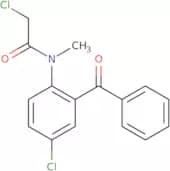
Formula:C26H37NO5Purity:Min. 95%Molecular weight:443.58 g/molN-(2-Benzoyl-4-chlorophenyl)-2-chloro-N-methylacetamide
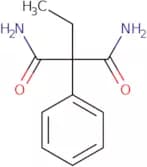
CAS:Please enquire for more information about N-(2-Benzoyl-4-chlorophenyl)-2-chloro-N-methylacetamide including the price, delivery time and more detailed product information at the technical inquiry form on this pageFormula:C16H13Cl2NO2Purity:Min. 95%Molecular weight:322.19 g/mol2-Ethyl-2-phenylmalonamide
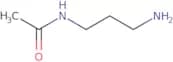
CAS:2-Ethyl-2-phenylmalonamide (2-EPMA) is a metabolite of primidone that acts as an inhibitor of glutamate dehydrogenase and may be used in the treatment of epilepsy. It has been shown to be effective in treating seizures caused by carbamazepine, phenobarbital, or phenytoin. 2-EPMA is also used to measure enzyme activities in serum, which can be used as a diagnostic tool for liver diseases. 2-EPMA is typically prepared for use as an enzyme inhibitor by diluting it with high salt or human serum. This compound may have carcinogenic potential and should not be administered with single doses greater than 100 mg/kg body weight. 2-EPMA interacts with many other drugs such as phenobarbital, phenytoin, and carbamazepine.Formula:C11H14N2O2Purity:Min. 95%Molecular weight:206.24 g/molN-(3-Aminopropyl)acetamide
CAS:N-(3-Aminopropyl)acetamide is a secondary amine that is used as a reagent in the profiling of tissues. It has been shown to inhibit the growth of Thermus thermophilus and other bacteria, including Staphylococcus aureus, Escherichia coli, and Pseudomonas aeruginosa. N-(3-Aminopropyl)acetamide has also been shown to inhibit the growth of cancer cells in cell culture. It was found to be effective against logarithmic growth phase cells and not against stationary phase cells. However, its mechanism of action is unknown.
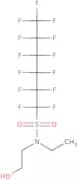
Formula:C5H12N2OPurity:Min. 95%Color and Shape:Colorless PowderMolecular weight:116.16 g/molN-Ethyl-1,1,2,2,3,3,4,4,5,5,6,6,6-tridecafluoro-N-(2-hydroxyethyl)Hexane-1-sulfonamide
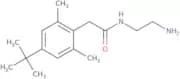
CAS:Please enquire for more information about N-Ethyl-1,1,2,2,3,3,4,4,5,5,6,6,6-tridecafluoro-N-(2-hydroxyethyl)Hexane-1-sulfonamide including the price, delivery time and more detailed product information at the technical inquiry form on this pageFormula:C10H10F13NO3SPurity:Min. 95%Color and Shape:PowderMolecular weight:471.24 g/molN-(2-Aminoethyl)-4-(1,1-dimethylethyl)-2,6-dimethylbenzeneacetamide
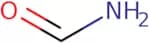
CAS:Please enquire for more information about N-(2-Aminoethyl)-4-(1,1-dimethylethyl)-2,6-dimethylbenzeneacetamide including the price, delivery time and more detailed product information at the technical inquiry form on this pageFormula:C16H26N2OPurity:Min. 95%Color and Shape:PowderMolecular weight:262.39 g/molFormamide
CAS:Controlled ProductFormamide is a colorless, volatile chemical compound that is most commonly used in the laboratory for the preparation of dna duplexes. It can also be used to treat bowel disease and HIV infection. It is not active against viruses or bacteria but has been shown to bind to toll-like receptors on cells. Formamide is an organic substance that exists as a gas at room temperature and pressure. Formaldehyde reacts with water in the presence of sodium carbonate to form formamide, which is soluble in water. Formamide has been used as a reaction solution for surface methodology experiments because it evaporates quickly and leaves no residue on surfaces. Formamide has been shown to inhibit epidermal growth factor (EGF) activity by binding to the EGF receptor protein and preventing its activation. This inhibition leads to decreased cell proliferation, reduced protein synthesis, and inhibition of DNA replication.
Formula:CH3NOPurity:Min. 95%Color and Shape:Colorless PowderMolecular weight:45.04 g/molN-Methyl-2-[[3-[(1e)-2-(2-pyridinyl)ethenyl]-1-(tetrahydro-2H-pyran-2-yl)-1H-indazol-6-yl]thio]benzamide
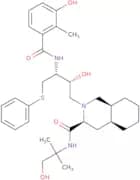
CAS:Please enquire for more information about N-Methyl-2-[[3-[(1e)-2-(2-pyridinyl)ethenyl]-1-(tetrahydro-2H-pyran-2-yl)-1H-indazol-6-yl]thio]benzamide including the price, delivery time and more detailed product information at the technical inquiry form on this pageFormula:C27H26N4O2SPurity:Min. 95%Molecular weight:470.59 g/molNelfinavir hydroxy-tert-butylamide
CAS:Nelfinavir is an antiviral agent that is used to treat HIV/AIDS. It is a protease inhibitor that inhibits the action of the virus in cells by binding to specific enzymes, thus preventing the destruction of human cells by the virus. Nelfinavir also prevents cancer cell growth and has shown anticancer activity in animal models and humans. This drug binds to fatty acids, making it more difficult for the body to eliminate this substance. The half-life of nelfinavir is prolonged in patients with hepatic failure or renal failure. Nelfinavir can be used as a chemotherapeutic agent in infants because it does not cross the blood-brain barrier.Formula:C32H45N3O5SPurity:Min. 95%Molecular weight:583.78 g/molN-[4-(1-Allyl-3-butyl-2,6-dioxo-2,3,6,7-tetrahydro-1H-purin-8-ylmethyl)phenyl]acetamide
CAS:Controlled ProductN-[4-(1-Allyl-3-butyl-2,6-dioxo-2,3,6,7-tetrahydro-1H-purin-8-ylmethyl)phenyl]acetamide (NUAA) is an antiinfective agent that has been shown to be effective against typhimurium. It inhibits bacterial growth by binding to the light chain of the monoclonal antibodies. NUAA is also able to inhibit uptake of iron in E. coli K12 and human cells. The mechanism for this inhibition is not well understood but may be related to its ability to bind iron homeostasis proteins or its oxidation catalyst activity.Formula:C21H25N5O3Purity:Min. 95%Molecular weight:395.46 g/mol7-Phenylacetamide-3-chloromethyl-3-cephem-4-carboxylic acid diphenylmethyl ester
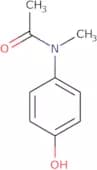
CAS:7-Phenylacetamide-3-chloromethyl-3-cephem-4-carboxylic acid diphenylmethyl ester is an organic solution that is used in the detoxification of chemical substances. It has a hydroxyl group and is soluble in nonpolar solvents. 7PAMC has been shown to be effective against bone lesions caused by acylation reactions. This drug also binds to the enzyme called cytochrome P450, which is involved in the metabolism of many drugs. It also inhibits bacterial growth by binding to DNA gyrase and topoisomerase IV, enzymes that maintain bacterial DNA integrity. The particle size of this drug is small, with a diameter of less than 10 microns. 7PAMC has a viscosity of 1 cps at 25°C and a melting point of 129°C.Formula:C29H25ClN2O4SPurity:Min. 95%Molecular weight:533.04 g/molN-(4-Hydroxyphenyl)-N-methylacetamide
CAS:Please enquire for more information about N-(4-Hydroxyphenyl)-N-methylacetamide including the price, delivery time and more detailed product information at the technical inquiry form on this pageFormula:C9H11NO2Purity:Min. 95%Molecular weight:165.19 g/molBoc-L-proline N,O-dimethylhydroxamide
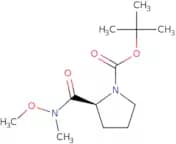
CAS:Please enquire for more information about Boc-L-proline N,O-dimethylhydroxamide including the price, delivery time and more detailed product information at the technical inquiry form on this page
Formula:C12H22N2O4Purity:Min. 95%Molecular weight:258.31 g/mol


![N,N'-Propane-1,3-diylbis[3-(3,5-di-tert-butyl-4-hydroxyphenyl)propionamide]](/_next/image/?url=https%3A%2Fstatic.cymitquimica.com%2Fproducts%2F3D%2Fthumb-webp%2FFP40365.webp&w=3840&q=75)

![N-[4-Amino-3-(trifluoromethyl)phenyl]-2-methylpropanamide](/_next/image/?url=https%3A%2Fstatic.cymitquimica.com%2Fproducts%2F3D%2Fthumb-webp%2FFA17485.webp&w=3840&q=75)





![N-Methyl-2-[[3-[(1e)-2-(2-pyridinyl)ethenyl]-1-(tetrahydro-2H-pyran-2-yl)-1H-indazol-6-yl]thio]ben…](/_next/image/?url=https%3A%2Fstatic.cymitquimica.com%2Fproducts%2F3D%2Fthumb-webp%2FFM151517.webp&w=3840&q=75)
![N-[4-(1-Allyl-3-butyl-2,6-dioxo-2,3,6,7-tetrahydro-1H-purin-8-ylmethyl)phenyl]acetamide](/_next/image/?url=https%3A%2Fstatic.cymitquimica.com%2Fproducts%2F3D%2Fthumb-webp%2FFA17305.webp&w=3840&q=75)