Amides
Amides are a wide range of chemical compounds that contain at least one heterocyclic ring, which has atoms of at least two different elements in the ring structure, and at least one amide group (-CONH2). These compounds are crucial in the synthesis of pharmaceuticals, polymers, and agrochemicals. Amides exhibit unique properties and reactivity, making them valuable intermediates in organic synthesis. At CymitQuimica, we offer a comprehensive selection of high-quality amides to support your research and industrial needs.
Found 16399 products of "Amides"
Sort by
Purity (%)
0
100
|
0
|
50
|
90
|
95
|
100
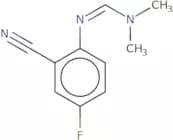
N'-(2-Cyano-4-fluorophenyl)-N,N-dimethylimidoformamide
CAS:<p>N'-(2-Cyano-4-fluorophenyl)-N,N-dimethylimidoformamide is a high quality, reagent that is useful for the synthesis of complex compounds. It can be used as a fine chemical and speciality chemical in research and development. The CAS number for this compound is 1017082-62-0. N'-(2-Cyano-4-fluorophenyl)-N,N-dimethylimidoformamide has shown to be a versatile building block for the synthesis of novel compounds that are not commercially available. This product is suitable for use in reaction components as well as being an intermediate for the synthesis of other compounds.</p>Formula:C10H10FN3Purity:Min. 95%Color and Shape:PowderMolecular weight:191.21 g/mol5-Methyl-2-nitrobenzamide
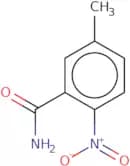
CAS:<p>5-Methyl-2-nitrobenzamide is a compound that has antiproliferative activity and is used as an anticancer drug. This drug inhibits the polymerization of the protein tubulin in cancer cells, thereby inhibiting cell division. It also inhibits the growth of certain tumor cell lines in vitro. 5-Methyl-2-nitrobenzamide was found to inhibit the proliferation of human ovarian carcinoma cells by binding to DNA, preventing transcription and replication of genetic information. In addition, this agent binds to tubulin and prevents its polymerization, leading to inhibition of cell division.</p>Formula:C8H8N2O3Purity:Min. 95%Color and Shape:PowderMolecular weight:180.16 g/mol2-Amino-3-benzoylbenzeneacetamide
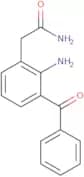
CAS:<p>2-Amino-3-benzoylbenzeneacetamide is an ophthalmic drug that has significant cytotoxicity. It is used to treat inflammation of the retina and macula, as well as other diseases of the eye such as uveitis. 2-Amino-3-benzoylbenzeneacetamide is a nonsteroidal anti-inflammatory drug (NSAID) that inhibits prostaglandin synthesis by blocking cyclooxygenase. This agent has been shown to be effective in reducing pain and inflammation in animal models, but there are no studies on its side effects or analytical methods for detection. There are also no studies on the effectiveness of this drug for treating uveitis.</p>Formula:C15H14N2O2Purity:Min. 95%Color and Shape:PowderMolecular weight:254.28 g/molN-[(8-Fluoro-2,3-Dihydro-1-Methyl-5-Phenyl-1H-1,4-Benzodiazepin-2-Yl)Methyl]-3-Furancarboxamide
CAS:Controlled Product<p>N-[(8-Fluoro-2,3-Dihydro-1-Methyl-5-Phenyl-1H-1,4-Benzodiazepin-2-Yl)Methyl]-3-Furancarboxamide is a hydrophobic, implanting drug with an iontophoresis device. It has been shown to have therapeutic effects in cancer. The drug is a targetable molecule that can be used for diagnostic purposes and the treatment of various cancers. N-[(8-Fluoro-2,3-Dihydro-1,5 -Phenyl 1H -1,4 Benzodiazepin 2 Yl) Methyl] 3 Furancarboxamide has been shown to inhibit cell proliferation by blocking the synthesis of proteins required for DNA replication and also inhibits the activity of protein kinase C.</p>Purity:Min. 95%Indapamide
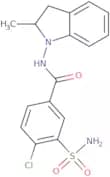
CAS:Controlled Product<p>Indapamide is an antihypertensive drug that inhibits the activity of the enzyme carbonic anhydrase, which is involved in the conversion of carbon dioxide to bicarbonate. It is used to treat high blood pressure and congestive heart failure. Indapamide has been shown to be effective in reducing oxidative injury to red blood cells and preventing cardiovascular events such as stroke and heart attack. Indapamide also has a long-term efficacy with no withdrawal symptoms or rebound hypertension when it is discontinued.</p>Formula:C16H16ClN3O3SPurity:Min. 95%Color and Shape:White PowderMolecular weight:365.84 g/mol(2-Aminophenyl)-N-((((4-methoxyphenyl)amino)thioxomethyl)amino)formamide
CAS:<p>Please enquire for more information about (2-Aminophenyl)-N-((((4-methoxyphenyl)amino)thioxomethyl)amino)formamide including the price, delivery time and more detailed product information at the technical inquiry form on this page</p>Formula:C15H16N4O2SPurity:Min. 95%Color and Shape:PowderMolecular weight:316.38 g/molN,N'-Dimethyl benzamide
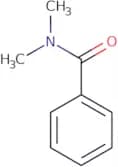
CAS:<p>N,N'-Dimethyl benzamide (DMAB) is an aryl halide that reacts with hydrogen to form the corresponding carbonyl group. The reaction solution of DMAB and hydrogen gas produces a chemical structure that resembles a hydrogen bond. DMAB has been shown to have anti-inflammatory effects in animals with inflammatory diseases. It has also been studied for its ability to inhibit the formation of amyloid plaque, which is associated with Alzheimer's disease. In addition, DMAB has been shown to have therapeutic effects against boron nitride and amides.<br>The crystal structure of DMAB can be found in both crystalline polymorphs: monoclinic and triclinic. The triclinic form is stable at room temperature and pressure, while the monoclinic form is only stable at higher temperatures. The monoclinic form is more soluble than the triclinic form, as it contains fewer hydrogen bonds between</p>Formula:C9H11NOPurity:Min. 95%Color and Shape:White PowderMolecular weight:149.19 g/mol4-Iodobenzenesulphonamide
CAS:<p>4-Iodobenzenesulphonamide is a drug with antifungal and anticancer activity. The compound has been shown to inhibit the growth of cancer cells in vitro. It also has an antifungal effect in vitro, which is most likely due to its ability to inhibit the synthesis of ergosterol, a component of the cell membrane. 4-Iodobenzenesulphonamide may be used for the treatment of cervical cancer and vulvovaginal candidiasis. This drug does not show any serious side effects, but it has been shown to have some adverse effects on liver function tests and red blood cells.</p>Formula:C6H6INO2SPurity:Min. 95%Color and Shape:PowderMolecular weight:283.09 g/molPigment YellOw 5;2-[(2-NitrOphenyl)azO]-3-OxO-N-phenylbutanamide
CAS:<p>Please enquire for more information about Pigment YellOw 5;2-[(2-NitrOphenyl)azO]-3-OxO-N-phenylbutanamide including the price, delivery time and more detailed product information at the technical inquiry form on this page</p>Purity:Min. 95%3-[(Aminocarbonyl)amino]-5-[4-(morpholin-4-ylmethyl)phenyl]thiophene-2-carboxamide
CAS:<p>3-[(Aminocarbonyl)amino]-5-[4-(morpholin-4-ylmethyl)phenyl]thiophene-2-carboxamide is a chemical inhibitor that inhibits the activity of kinases. It has been shown to be cytotoxic against cancer cells and to induce apoptosis through a number of different mechanisms. 3-[(Aminocarbonyl)amino]-5-[4-(morpholin-4-ylmethyl)phenyl]thiophene-2-carboxamide binds to DNA and induces DNA repair, which can lead to cell death. This drug also has an anti-inflammatory effect, which may be due to its ability to inhibit pro-inflammatory cytokines such as TNFα and IL1β.</p>Formula:C17H20N4O3SPurity:Min. 95%Color and Shape:PowderMolecular weight:360.43 g/mol4-Aminothiobenzamide
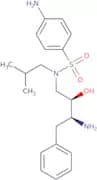
CAS:<p>4-Aminothiobenzamide (4ATB) is a chemical compound that is used as an anticancer agent and an antimicrobial agent. It has been shown to have antitumor activity against human liver cancer cells and anticancer activity against human adrenergic receptor-positive lung cancer cells. 4ATB binds to the chloride ion present in the cell membrane, which prevents the influx of chloride ions into the cell. This leads to an increase in intracellular pH and disruption of cellular functions. 4ATB has also been shown to inhibit methicillin-resistant Staphylococcus aureus (MRSA) infections by inhibiting bacterial growth and reducing the production of proteins vital for cell division.</p>Formula:C7H8N2SPurity:Min. 95%Color and Shape:PowderMolecular weight:152.22 g/mol4-Amino-N-((2R,3S)-3-amino-2-hydroxy-4-phenylbutyl)-N-ispobutylbenzenesulfonamide
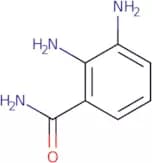
CAS:<p>4-Amino-N-((2R,3S)-3-amino-2-hydroxy-4-phenylbutyl)-N-isobutylbenzenesulfonamide is an amide that is used to treat HIV infections. It has been shown to have potent anti-viral activity against HIV infected cells in the laboratory and can inhibit the replication of HIV by interfering with the virus's ability to use the reverse transcriptase enzyme. 4ABAB has been shown to bind to the enzyme ribonuclease H (crth2), which is responsible for breaking down viral RNA. This binding prevents crth2 from cleaving viral RNA, thus inhibiting DNA synthesis and preventing cell death. 4ABAB also interferes with a hydrogen bond between ethyl group and the hydroxyl group on crth2, leading to a decrease in activity.</p>Formula:C20H29N3O3SPurity:Min. 95%Color and Shape:White PowderMolecular weight:391.53 g/mol2,3-Diaminobenzamide
CAS:<p>2,3-Diaminobenzamide is a synthetic aromatic compound that is used as a radiation stabilizer. It is also an effective antimicrobial agent with reactive properties against bacteria and fungi. 2,3-Diaminobenzamide has been shown to have anti-cancer properties and can be used to treat inflammatory diseases such as rheumatoid arthritis or ulcerative colitis. The intramolecular hydrogen bond between the amide group and the benzene ring in 2,3-diaminobenzamide contributes to its stability and biological activity.</p>Formula:C7H9N3OPurity:Min. 95%Color and Shape:PowderMolecular weight:151.17 g/molCoconut diethanolamide
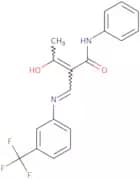
CAS:Controlled Product<p>Coconut diethanolamide is a chemical substance that is used as a test compound in carcinogenesis studies. It is a fatty acid and a fatty alcohol, and it has been shown to promote the growth of cancer cells. Coconut diethanolamide has not been found to be an allergen, but it has shown carcinogenic potential. The bioassay for long-term exposure to coconut diethanolamide showed epidermal hyperplasia in mice.</p>Color and Shape:Brown Yellow Clear Viscous Liquid2-acetyl-N-phenyl-3-((3-(trifluoromethyl)phenyl)amino)prop-2-enamide
CAS:<p>Please enquire for more information about 2-acetyl-N-phenyl-3-((3-(trifluoromethyl)phenyl)amino)prop-2-enamide including the price, delivery time and more detailed product information at the technical inquiry form on this page</p>Formula:C18H15F3N2O2Purity:Min. 95%Color and Shape:PowderMolecular weight:348.32 g/molEthionamide sulfoxide
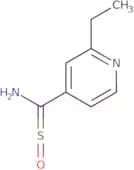
CAS:<p>Ethionamide is a drug that is used for the treatment of tuberculosis. It binds to the enzyme preparations in the bacterial cell wall by competitive inhibition, which prevents formation of an antibiotic-inhibitor complex with the enzyme cell wall synthesis that is required for cell wall biosynthesis, inhibiting protein synthesis and cell division. The sulfoxide form of ethionamide is converted to the sulfone form when it enters the body. This conversion takes place primarily in the liver with assistance from alcohol dehydrogenase, cytochrome P450, and glutathione reductase. The sulfone form has higher potency than its precursor (sulfoxide) because it has lower protein binding affinity and more rapid elimination from plasma.</p>Formula:C8H10N2OSPurity:Min. 95 Area-%Color and Shape:PowderMolecular weight:182.24 g/mol3-Bromobenzamide
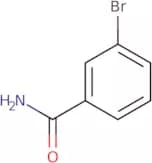
CAS:<p>3-Bromobenzamide is an amide compound, which is a functional group. It has a molecular weight of 273.3 g/mol and three amine groups. The 3-methoxybenzamide moiety in the molecule can be protonated, which provides the hydration of the molecule and increases its solubility in water. This molecule also has a dipole moment due to the presence of two amide groups.<br>The synthesis of 3-bromobenzamide starts with the reaction between 3-aminobenzoic acid and benzoyl chloride to form 3-benzoyloxybenzoic acid. This is then reacted with ammonia to form 3-aminobenzamide. Finally this is converted into 3-bromobenzamide by reacting it with bromine in the presence of potassium carbonate as a catalyst. <br>This molecule is used as an inhibitory compound for mammalian cell proliferation, specifically for cancer cells</p>Formula:C7H6BrNOPurity:Min. 95%Color and Shape:PowderMolecular weight:200.03 g/mol(2,6-dioxo-4-phenylcyclohexyl)-N-(3-(trifluoromethyl)phenyl)formamide
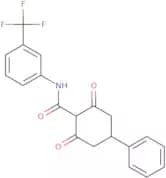
CAS:<p>Please enquire for more information about (2,6-dioxo-4-phenylcyclohexyl)-N-(3-(trifluoromethyl)phenyl)formamide including the price, delivery time and more detailed product information at the technical inquiry form on this page</p>Purity:Min. 95%2,2'-(Diazene-1,2-diyl)bis(2-methylpropanimidamide) dihydrochloride
CAS:<p>2,2'-(Diazene-1,2-diyl)bis(2-methylpropanimidamide) dihydrochloride (BPDC) is a synthetic compound that is used as an analytical reagent and a model system for oxidative injury. It has significant cytotoxicity on human cells in cell culture. BPDC induces oxidative damage to proteins and DNA by increasing the production of reactive oxygen species such as hydrogen peroxide, superoxide, and hydroxyl radicals. The mechanism of action is not well understood but may be due to Toll-like receptor signalling pathways. This compound has been shown to inhibit the activity of antioxidant enzymes such as glutathione peroxidase and catalase. It also inhibits the activity of proinflammatory cytokines such as IL-6 and IL-8. BPDC is being investigated for its potential use in bowel disease treatment.</p>Formula:C8H20Cl2N6Purity:Min. 95%Color and Shape:PowderMolecular weight:271.19 g/mol(3-(2,6-dichlorophenyl)-5-methylisoxazol-4-yl)-N-(2,5-dimethoxyphenyl)formamide
CAS:<p>Please enquire for more information about (3-(2,6-dichlorophenyl)-5-methylisoxazol-4-yl)-N-(2,5-dimethoxyphenyl)formamide including the price, delivery time and more detailed product information at the technical inquiry form on this page</p>Purity:Min. 95%(2E)-N,N-Dimethyl-3-phenylprop-2-enamide
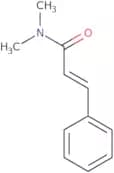
CAS:<p>2,2-diphenyl-N,N-dimethylpropeneamide (DPPA) is a disulfide compound that has photolytic, thermolytic and modelling properties. DPPA can be used to produce alkylcobalt complexes with various substituents at the α position of the phenyl ring. The lactam structure of DPPA has been shown to undergo thermolysis at temperatures of 250°C in a vacuum. Cinnamic acids have been shown to form lactams with DPPA as well as cinnamic acid derivatives. Molecular modelling studies have been conducted on 2,2-diphenyl-N,N-dimethylpropeneamide and its molecular interactions with styrene and amido groups.</p>Formula:C11H13NOPurity:Min. 95%Color and Shape:PowderMolecular weight:175.23 g/mol2,4,6-Trimethoxybenzamide
CAS:<p>2,4,6-Trimethoxybenzamide is a triggered compound that reacts with lithium to form an efficient regiospecific lithium 2,4,6-trimethoxybenzamide complex. This reaction occurs at low temperatures and has been shown to be more efficient than other methods for the synthesis of acridones. The reaction has not been shown to be reversible and requires the use of a strong base such as lithium.</p>Formula:C10H13NO4Purity:Min. 95%Color and Shape:PowderMolecular weight:211.21 g/molMetoclopramide hydrochloride hydrate
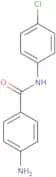
CAS:<p>Dopamine (D2) receptor antagonist; 5-HT4 serotonin receptor agonist</p>Formula:C14H22ClN3O2·HCl·H2OColor and Shape:White Off-White PowderMolecular weight:354.27 g/mol(4-Aminophenyl)-N-(4-chlorophenyl)formamide
CAS:<p>Please enquire for more information about (4-Aminophenyl)-N-(4-chlorophenyl)formamide including the price, delivery time and more detailed product information at the technical inquiry form on this page</p>Formula:C13H11ClN2OPurity:Min. 95%Color and Shape:PowderMolecular weight:246.69 g/molProthionamide
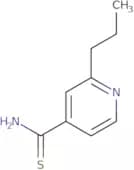
CAS:<p>Prothionamide is a drug that belongs to the group of drugs called sulfonamides. It is used to treat bowel disease by inhibiting the growth of bacteria and fungi. Prothionamide inhibits bacterial growth by binding to bacterial DNA and preventing it from synthesizing new proteins. This drug also has a matrix effect, which means that it binds to the inside of the bacterial cell wall and prevents the production of new cells, leading to cell death. Prothionamide has been shown to be effective against tuberculosis in mice, although there are few data on its use in humans. The most common side effects associated with prothionamide are nausea and vomiting.</p>Formula:C9H12N2SPurity:Min. 99 Area-%Color and Shape:Yellow PowderMolecular weight:180.27 g/molCyclotheonamide A
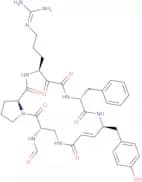
CAS:<p>Cyclotheonamide A is a cyclopeptide, which is a type of secondary metabolite composed of non-standard amino acids arranged in a cyclic structure. It is naturally sourced from marine sponges, particularly Theonella sp., which are known for their rich and diverse repertoire of bioactive compounds. Cyclotheonamide A functions through the inhibition of serine proteases, a class of enzymes that play a significant role in numerous biological processes, including digestion, immune response, and blood coagulation.</p>Formula:C36H45N9O8Purity:Min. 95%Molecular weight:731.8 g/mol4-Methoxybenzenecarbothioamide
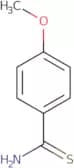
CAS:<p>4-Methoxybenzenecarbothioamide is a urea nitrogen analogue that inhibits the synthesis of urea and other nitrogenous compounds. It is an inhibitor of the enzyme pyruvic transaminase, which converts pyruvate to alanine. The drug is also an inhibitor of the enzyme lactam synthetase, which catalyzes the formation of lactams from amino acids. This activity results in decreased production of cancer cells and renal toxicity. 4-Methoxybenzenecarbothioamide has been shown to have anticancer activity in vitro against a number of human cancer cell lines, including A549 lung carcinoma cells and MCF-7 breast cancer cells.</p>Formula:C8H9NOSPurity:Min. 98 Area-%Color and Shape:Off-White Yellow PowderMolecular weight:167.23 g/mol(E)-N-(3-Methylaminopropyl)-2-thiopheneacrylamide hydrochloride
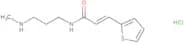
CAS:<p>(E)-N-(3-Methylaminopropyl)-2-thiopheneacrylamide hydrochloride is a high quality, reagent, complex compound, useful intermediate, fine chemical. It has CAS No. 1449108-90-0 and is used as a research chemical and building block in the synthesis of other compounds. (E)-N-(3-Methylaminopropyl)-2-thiopheneacrylamide hydrochloride can be used as a versatile building block in organic synthesis reactions and is an important reaction component for the preparation of speciality chemicals.</p>Formula:C11H17N2OSClPurity:Min. 95%Color and Shape:White PowderMolecular weight:260.78 g/mol2-Cyanoacetamide
CAS:<p>2-Cyanoacetamide is an organic compound that is used in pharmaceutical preparations. It reacts with malonic acid to form a dioxime, which is a precursor of various drugs. The optimum concentration for the reaction to occur is at 10% (w/v). The reaction mechanism has not been fully elucidated and it involves the transfer of nitrogen from an amide group to a carbonyl group. 2-Cyanoacetamide has shown anti-angiogenic effects in mice by inhibiting the expression of Mcl-1 protein, which is involved in the regulation of apoptosis and inflammation. This drug also has biological functions as a precursor for dopamine, which helps regulate motor and cognitive functions.</p>Formula:C3H4N2OPurity:Min. 98%Color and Shape:White Off-White PowderMolecular weight:84.08 g/molN-(2-Indol-3-ylethyl)(2-nitrophenyl)formamide
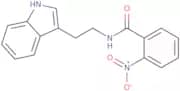
CAS:<p>Please enquire for more information about N-(2-Indol-3-ylethyl)(2-nitrophenyl)formamide including the price, delivery time and more detailed product information at the technical inquiry form on this page</p>Formula:C17H15N3O3Purity:Min. 95%Color and Shape:PowderMolecular weight:309.32 g/molLL-37 amide trifluoroacetate
CAS:<p>Please enquire for more information about LL-37 amide trifluoroacetate including the price, delivery time and more detailed product information at the technical inquiry form on this page</p>Formula:C205H341N61O52•(C2HF3O2)xPurity:Min. 95%Color and Shape:PowderMolecular weight:4,492.28 g/molN,N'-Dimethyl-3,3'-dithiodipropionamide
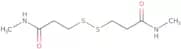
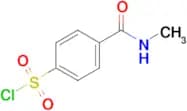
CAS:<p>N,N'-Dimethyl-3,3'-dithiodipropionamide (DTDPA) is a strong oxidizing agent that is used as a catalyst in organic synthesis. It can be used to convert xylene and benzene into products that are less toxic and more easily removed from the environment. DTDPA can also be used to remove 2-methyl-4-isothiazolin-3-one, chloroform, and other pollutants from water. DTDPA has been shown to react with hydrogen peroxide or hydrochloric acid to produce oxygen gas and chlorine, which is an effective disinfectant against bacteria such as Staphylococcus aureus or Pseudomonas aeruginosa. This chemical also reacts with toluene or chloroform to produce peroxides which have been shown to have an anti-inflammatory effect on cells.</p>Formula:C8H16N2O2S2Purity:(Q-1H Nmr) Min 95%Color and Shape:White/Off-White SolidMolecular weight:236.36 g/mol4-(Methylcarbamoyl)benzene-1-sulfonyl chloride
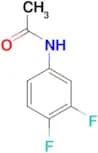
CAS:Formula:C8H8ClNO3SPurity:98%Color and Shape:SolidMolecular weight:233.673′,4′-Difluoroacetanilide
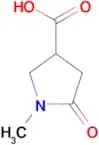
CAS:Formula:C8H7F2NOPurity:97%Color and Shape:SolidMolecular weight:171.1471-Methyl-5-oxo-pyrrolidine-3-carboxylic acid
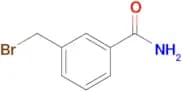
CAS:Formula:C6H9NO3Purity:97%Color and Shape:SolidMolecular weight:143.1423-(Bromomethyl)benzamide
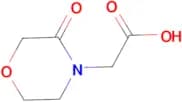
CAS:Formula:C8H8BrNOPurity:95+%Color and Shape:SolidMolecular weight:214.062(3-Oxo-morpholin-4-yl)-acetic acid
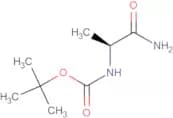
CAS:Formula:C6H9NO4Purity:98%Color and Shape:Solid, White powderMolecular weight:159.141Boc-Ala-NH2
CAS:<p>M06164 - Boc-Ala-NH2</p>Formula:C8H16N2O3Purity:95%Color and Shape:SolidMolecular weight:188.227N-Acetyl-L-tyrosine
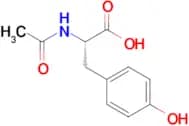
CAS:Formula:C11H13NO4Purity:98%Color and Shape:Solid, White to very pale yellow powderMolecular weight:223.228

![N-[(8-Fluoro-2,3-Dihydro-1-Methyl-5-Phenyl-1H-1,4-Benzodiazepin-2-Yl)Methyl]-3-Furancarboxamide](/_next/image/?url=https%3A%2Fstatic.cymitquimica.com%2Fproducts%2F3D%2Fthumb-webp%2FFF102093.webp&w=3840&q=75)


![Pigment YellOw 5;2-[(2-NitrOphenyl)azO]-3-OxO-N-phenylbutanamide](/_next/image/?url=https%3A%2Fstatic.cymitquimica.com%2Fproducts%2F3D%2Fthumb-webp%2FFP40385.webp&w=3840&q=75)
![3-[(Aminocarbonyl)amino]-5-[4-(morpholin-4-ylmethyl)phenyl]thiophene-2-carboxamide](/_next/image/?url=https%3A%2Fstatic.cymitquimica.com%2Fproducts%2F3D%2Fthumb-webp%2FFA18119.webp&w=3840&q=75)