Carboxylic Acids
Carboxylic acids are organic molecules characterized by having a carboxyl-type functional group (-COOH). These acids are fundamental in various chemical reactions, including esterification, amidation, and decarboxylation. Carboxylic acids are widely used in the production of pharmaceuticals, polymers, and agrochemicals. In this section, you can find a large number of carboxylic acids ready to be used. At CymitQuimica, we provide a broad range of high-quality carboxylic acids to support your research and industrial applications.
Found 12453 products of "Carboxylic Acids"
Sort by
Purity (%)
0
100
|
0
|
50
|
90
|
95
|
100
3,5-Diiodo-L-thyronine
CAS:<p>NSC 90469 (Diiodothyronine) is an iodinated thyronine hormone that regulates gene activity affecting processes such as homeostasis and insulin resistance.</p>Formula:C15H13I2NO4Purity:99.64%Color and Shape:Off-White SolidMolecular weight:525.085-Aminolevulinic acid hydrochloride
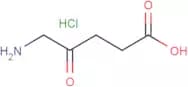
CAS:<p>5-Aminolevulinic acid hydrochloride (5-ALA) serves as an intermediate in the body's heme biosynthesis and is the universal precursor of tetrapyrroles.</p>Formula:C5H10ClNO3Purity:98% - 99.97%Color and Shape:White To Pale Yellow Crystals OrMolecular weight:167.59Methyl acetylacetate
CAS:<p>Methyl acetylacetate found in urine indicates propionyl-CoA carboxylase or 2-methylacetoacetyl-CoA thiolase deficiency.</p>Formula:C5H8O3Purity:99.14%Color and Shape:Less LiquidMolecular weight:116.12(±)-Leucine
CAS:<p>(±)-Leucine (DL-2-Aminmo-4-methylvalerianic acid) can be found in Green bell peppers, Green zucchinis, Italian sweet red peppers, and Red bell peppers.</p>Formula:C6H13NO2Purity:98.01%Color and Shape:White Glistening Hexagonal Plates From Aqueous Alcohol White CrystalsMolecular weight:131.172-Ketoglutaric acid Sodium
CAS:2-Ketoglutaric acid Sodium (AKG) is a key molecule in the TCA cycle.Formula:C5H5NaO5Purity:97.77%Color and Shape:SolidMolecular weight:168.08D-(+)-Phenyllactic acid
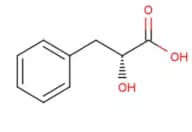
CAS:<p>D-(+)-Phenyllactic acid (D-3-Phenyllactic acid) is an anti-bacterial agent, excreted by Geotrichum candidum, inhibits Gram-positive and Gram-negative bacteria.</p>Formula:C9H10O3Purity:98.99%Color and Shape:SolidMolecular weight:166.17Selenomethionine
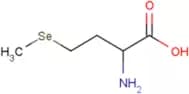
CAS:<p>DL-Selenomethionine (SeMet) is a selenium analog of methionine, substituting sulfur with selenium, and can replace methionine in proteins.</p>Formula:C5H11NO2SePurity:98% - 99.95%Color and Shape:Transparent Hexagonal Sheets Or Plates; Metallic Luster Of Crystals SolidMolecular weight:196.11N-Methylsarcosine
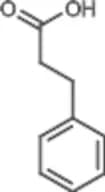
CAS:<p>N-Methylsarcosine improves athletic performance, boosts immunity, treats autism/epilepsy, tracks COPD, and aids in ionic liquid development.</p>Formula:C4H9NO2Purity:98.17%Color and Shape:SolidMolecular weight:103.12Hydrocinnamic acid
CAS:<p>Hydrocinnamic acid: white, sweet-smelling crystalline solid; used in cosmetics, food, and pharma.</p>Formula:C9H10O2Purity:99.52% - 99.973%Color and Shape:Off-White Solid PowderMolecular weight:150.17Mesoxalate sodium (monohydrate)
CAS:<p>Mesoxalate sodium (monohydrate) is primarily located in the cytoplasm within the cell. Mesoxalic acid can be biosynthesized from malonic acid.</p>Formula:C3HNa2O6Purity:99.85%Color and Shape:SolidMolecular weight:180.02(R)-pyrrolidine-2-carboxylic acid
CAS:<p>D-Proline, (R)-pyrrolidine-2-carboxylic acid, is L-Proline's isomer, found in human plasma/saliva, possibly from bacteria or racemase activity.</p>Formula:C5H9NO2Purity:99.88%Color and Shape:Flat Needles From Alcohol + Ether; Prisms From Water SolidMolecular weight:115.13Dihydroxyfumaric acid hydrate
CAS:<p>Dihydroxyfumaric acid produces superoxide anions, hydroxyl radicals, can inhibit insulin, and converts to hydroxypyruvate or oxaloglycolate.</p>Formula:C4H6O7Purity:98% - 99.09%Color and Shape:SolidMolecular weight:166.09N-Acetylornithine
CAS:<p>N-Acetylornithine is found in human blood plasma (avg. 1.1±0.4 μmol/L) and urine (~1 μmol/day).</p>Formula:C7H14N2O3Purity:99.86% - ≥95%Color and Shape:SolidMolecular weight:174.2Ethyl Nitroacetate
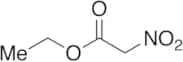
CAS:Controlled Product<p>Applications Ethyl Nitroacetate is an ester of nitrocarboxylic acid used as an intermediate in the preparation of unsubstituted amino acids.<br>References Sidorin, G.I.: Gig. Aspe. Okhr. Zdor. Nasel., 144 (1977);<br></p>Formula:C4H7NO4Color and Shape:NeatMolecular weight:133.1Formamidinesulfinic Acid
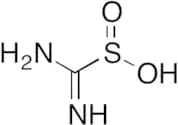
CAS:Controlled Product<p>Applications Formamidine Sulfuric Acid is a reagent used in reduction and synthesis reactions.<br> Not a dangerous good if item is equal to or less than 1g/ml and there is less than 100g/ml in the package<br>References Ma, Q. et al.: Carbon, 54, 36 (2013);<br></p>Formula:CH4N2O2SColor and Shape:White To Off-WhiteMolecular weight:108.1211-Mercaptoundecanoic Acid
CAS:Controlled Product<p>Applications 11-MERCAPTOUNDECANOIC ACID (cas# 71310-21-9) is a useful research chemical.<br> Not a dangerous good if item is equal to or less than 1g/ml and there is less than 100g/ml in the package<br></p>Formula:C11H22O2SColor and Shape:NeatMolecular weight:218.362-(Acetylamino)-3-(phenylthio)propanoic Acid
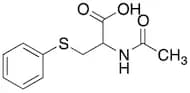
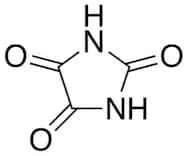
CAS:Controlled Product<p>Applications 2-(Acetylamino)-3-(phenylthio)propanoic acid is a useful chemical in research.<br></p>Formula:C11H13NO3SColor and Shape:NeatMolecular weight:239.29Parabanic Acid
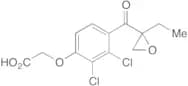
CAS:Controlled Product<p>Applications Parabanic acid appears to be an important marker of free radical reactions in vivo and may be used to monitor free radical activity and to evaluate pharmacological therapy with radical scavengers.<br>References Koumoto, Y., et al.: J. Biol. Chem., 276, 29688 (2001), Gibon, Y., et al.: Plant Cell, 16, 3304 (2004), Kaplan, F., et al.: Plant J., 44, 730 (2005), Ishii, N., et al.: Science, 316, 593 (2007),<br></p>Formula:C3H2N2O3Color and Shape:NeatMolecular weight:114.06Ethacrynic Acid Epoxide
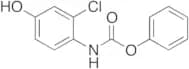
CAS:Controlled Product<p>Applications Ethacrynic Acid Epoxide is an intermediate in the synthesis of Ethacrynic Acid (E676000), a diuretic used to treat high blood pressure and swelling caused by congestive heart failure, liver failure and kidney failure.<br>References Beyer, et al.: J. Pharmacol. Exp. Ther., 147, 1 (1965), Kim., et al.: Am. J. Cardiol., 27, 407 (1971), Williamson, H.E., et al.: J. Clin. Pharmacol., 17, 663 (1977),<br></p>Formula:C13H12Cl2O5Color and Shape:NeatMolecular weight:319.14Phenyl N-(2-Chloro-4-hydroxyphenyl)carbamate
CAS:Controlled Product<p>Applications Phenyl N-(2-Chloro-4-hydroxyphenyl)carbamate is a reagent used in the prepartion of quinoline-carboxamide compounds including Lenvatinib (L329400), an orally active inhibitor of multiple receptor tyrosine kinases including VEGF, FGF and SCF receptors.<br>References Wang, N. et al.: Faming Zhuanli Shenqing (2017), CN 106632033 A 20170510.<br></p>Formula:C13H10ClNO3Color and Shape:NeatMolecular weight:263.68Hydrazine Acetate
CAS:Controlled Product<p>Applications Hydrazine acetate (cas# 7335-65-1) is a useful research chemical.<br></p>Formula:C2H8N2O2Color and Shape:NeatMolecular weight:92.1Heptadecanedioic Acid
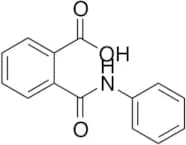
CAS:Controlled Product<p>Applications Heptadecanedioic Acid (cas# 2424-90-0) is a useful research chemical.<br></p>Formula:C17H32O4Color and Shape:NeatMolecular weight:300.43Phthalanilic Acid (~90%)
CAS:Controlled Product<p>Applications Phthalanilic acid is a compound that is useful in the production of fertilizers.<br>References Liang, S., et al.: Faming Zhuanli Shenqing.,4 (2019)<br></p>Formula:C14H11NO3Purity:~90%Color and Shape:White To Off-WhiteMolecular weight:241.243,4,5-Trimethoxyphenylacetic Acid
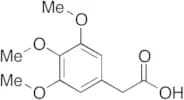
CAS:Controlled Product<p>Applications 3,4,5-Trimethoxyphenylacetic Acid is a reagent in the preparation of 3-phenylcoumarins as antidepressant agents.<br>References Sashidhara, K.V., et al.: Bioorg. Med. Chem. Lett., 24, 4876 (2014);<br></p>Formula:C11H14O5Color and Shape:NeatMolecular weight:226.232,2-Diphenylpentanoic Acid
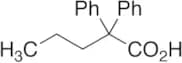
CAS:Controlled Product<p>Applications 2,2-Diphenylpentanoic Acid (cas# 841-32-7) is a compound useful in organic synthesis.<br></p>Formula:C17H18O2Color and Shape:NeatMolecular weight:254.32Cyclohexanecarboxylic acid
CAS:Controlled Product<p>Applications Cyclohexanecarboxylic acid<br></p>Formula:C7H12O2Color and Shape:NeatMolecular weight:128.174-Mercaptobenzoic Acid, Technical Grade
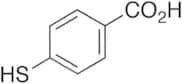
CAS:Controlled Product<p>Stability Store Under Argon; Air Sensitive<br>Applications 4-Mercaptobenzoic Acid, Technical Grade (cas# 1074-36-8) is a compound useful in organic synthesis.<br> Not a dangerous good if item is equal to or less than 1g/ml and there is less than 100g/ml in the package<br></p>Formula:C7H6O2SColor and Shape:NeatMolecular weight:154.193,5-Dinitro-4-hydroxybenzoic Acid
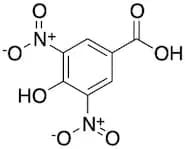
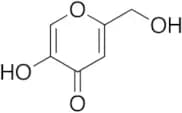
CAS:Controlled Product<p>Applications 3,5-DINITRO-4-HYDROXYBENZOIC ACID (cas# 1019-52-9) is a useful research chemical.<br></p>Formula:C7H4N2O7Color and Shape:NeatMolecular weight:228.116Kojic Acid
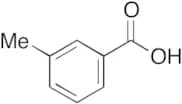
CAS:<p>Applications A naturally occurring chelation agent.<br>References Boonme, P., et al.: J. Biomed. Nanotechnol., 5, 373 (2009), Noh, J., et al.: Bioorg. Med. Chem., Lett., 19, 5586 (2009), Gohil, V., et al.: Nat. Biotechnol., 28, 249 (2010),<br></p>Formula:C6H6O4Color and Shape:NeatMolecular weight:142.11m-Toluic Acid
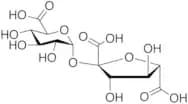
CAS:<p>Applications m-Toluic acid is used as a reagent in the preparation of hybrid molecules containing oxadiazole and thiadiazole bearing Schiff base moiety as it has antitumor activities.<br>References Zhang, K., et al.; Bioorg. Med. Chem. Lett., 24, 5154 (2014);<br></p>Formula:C8H8O2Color and Shape:NeatMolecular weight:136.15Sucrose 6,1’,6’-Tricarboxylic Acid Trisodium Salt
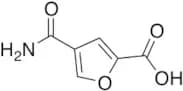
CAS:Controlled ProductFormula:C12H13Na3O14Color and Shape:NeatMolecular weight:450.1924-carbamoylfuran-2-carboxylic acid
CAS:Controlled Product<p>Applications 4-carbamoylfuran-2-carboxylic acid (cas# 1315367-95-3) is a useful research chemical.<br></p>Formula:C6H5NO4Color and Shape:NeatMolecular weight:155.11Perfluorohexanoic Acid (>90%)
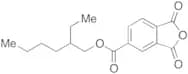
CAS:<p>Applications Perfluorohexanoic Acid is a perfluorinated compound (FPC) that can cause acute toxicity to humans and the environment. Perfluorohexanoic Acid is also used as a reagent in the synthesis of 3,3,4,4,5,5,6,6,7,7,7-Undecafluoro-2-heptanol (U787500).<br> Not a dangerous good if item is equal to or less than 1g/ml and there is less than 100g/ml in the package<br>References Latala, A., et al.: Environ. Toxicol. Phar., 28, 167 (2009); Mulkiewicz, E., et al.: Environ. Toxicol. Phar., 23, 279 (2007)<br></p>Formula:C6HF11O2Purity:>90%Color and Shape:ColourlessMolecular weight:314.051,3-Dihydro-1,3-dioxo-5-Isobenzofurancarboxylic Acid 2-Ethylhexyl Ester
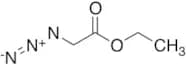
CAS:Controlled Product<p>Applications 1,3-Dihydro-1,3-dioxo-5-isobenzofurancarboxylic Acid is an analog of Trioctyl Trimellitate (T804400) which is a plasticizer that was evaluated for endocrine disrupting activities through estrogen receptor alpha binding assay.<br></p>Formula:C17H20O5Color and Shape:NeatMolecular weight:304.34Ethyl 2-Azidoacetate
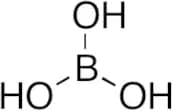
CAS:Controlled Product<p>Applications ethyl 2-azidoacetate (cas# 637-81-0) is a useful research chemical.<br></p>Formula:C4H7N3O2Color and Shape:NeatMolecular weight:129.12Boric Acid
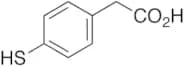
CAS:<p>Applications Boric Acid is a common chemical component in insecticides, specifically for flea erradication. Also has the properties of an effective flame retardant.<br>References Hinkle, N. et al.: J. Med. Entomol., 32, 424 (1995); Dogan, M. et al.: Polym. Degrad. Stab., 99, 12 (2014);<br></p>Formula:BH3O3Color and Shape:WhiteMolecular weight:61.834-Mercaptophenylacetic Acid
CAS:Controlled Product<p>Applications A redox buffer that increases the folding rate of disulfide-containing proteins realative to traditional buffers such as glutathione and glutathione-disulfide. A useful synthetic intermediate for the preparation of novel antiinflammatory agents.<br> Not a dangerous good if item is equal to or less than 1g/ml and there is less than 100g/ml in the package<br>References Gough, J.D., et al.: JACS, 124 (15), 3885 (2002)<br></p>Formula:C8H8O2SColor and Shape:NeatMolecular weight:168.212-Tetrahydrofuroic Acid
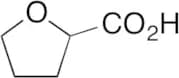
CAS:Controlled Product<p>Applications 2-Tetrahydrofuroic acid is used as a reagent to synthesize Alfuzosin (HCl: A532000), an unselective alpha-1 blocker that is used to treat lower urinary tract symptoms and benign prostatic hyperplasia.<br> Not a dangerous good if item is equal to or less than 1g/ml and there is less than 100g/ml in the package<br>References Grasso, M., et al.: Arch. Esp. Urol., 48, 97 (1994); Roehrborn, C., et al.: BJU Int., 92, 257 (2003)<br></p>Formula:C5H8O3Color and Shape:NeatMolecular weight:116.12β-Formylpropionic Acid
CAS:Controlled Product<p>Applications β-Formylpropionic Acid is used in the synthesis of potent and orally available nonpeptide antagonist of human gonadotropin-releasing hormone receptor. It is also a reagent in the synthesis of human melanocortin-4 receptor antagonists with a pyrrolidinone moiety.<br>References Chen, C. et al.: J. Med. Chem., 51, 7478 (2008); Jiang, W. et al.: Bioorg. Med. Med. Chem. Lett., 17, 5610 (2007);<br></p>Formula:C4H6O3Color and Shape:NeatMolecular weight:102.099-Oxo-10(9H)-acridineacetic Acid
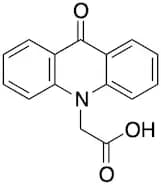
CAS:<p>Applications 9-Oxo-10(9H)-acridineacetic acid is a reagent for pre-column derivatization of amino acids for fluorescent determination in HPLC and it is also a building block in pharmaceutics.<br></p>Formula:C15H11NO3Color and Shape:NeatMolecular weight:253.25DL-3-Aminoisobutyric Acid
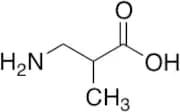
CAS:Controlled Product<p>Applications DL-3-Aminoisobutyric acid (cas# 144-90-1) is a useful research chemical.<br></p>Formula:C4H9NO2Color and Shape:NeatMolecular weight:103.123-Mercaptopropionic Acid
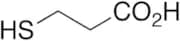
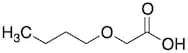
CAS:Controlled Product<p>Applications 3-Mercaptopropionic Acid (cas# 107-96-0) is a compound useful in organic synthesis.<br> Not a dangerous good if item is equal to or less than 1g/ml and there is less than 100g/ml in the package<br></p>Formula:C3H6O2SColor and Shape:NeatMolecular weight:106.142-Butoxyacetic Acid
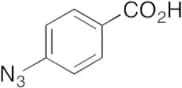
CAS:<p>Applications 2-butoxyacetic acid (cas# 2516-93-0) is a useful research chemical.<br></p>Formula:C6H12O3Color and Shape:NeatMolecular weight:132.164-Azidobenzoic Acid
CAS:Controlled Product<p>Applications A benzoic acid derivative used in photolysis reactions and biomaterial studies.<br> Not a dangerous good if item is equal to or less than 1g/ml and there is less than 100g/ml in the package<br>References Wetzels, G.M. et al.: Biomaterials., 20, 1879 (1999); Mao, C. et al.: Adv. Coll. Int. Sci., 110, 5 (2004);<br></p>Formula:C7H5N3O2Color and Shape:NeatMolecular weight:163.132,2-Dimethylcyclopropylcarboxylic acid
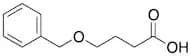
CAS:Controlled Product<p>Stability Stench<br>Applications 2,2-Dimethylcyclopropylcarboxylic acid<br></p>Formula:C6H10O2Color and Shape:NeatMolecular weight:114.144-(Benzyloxy)butanoic Acid
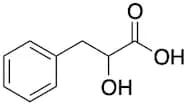
CAS:Controlled Product<p>Applications 4-(Benzyloxy)butanoic acid<br></p>Formula:C11H14O3Color and Shape:NeatMolecular weight:194.23DL-3-phenyllactic acid
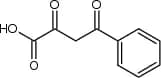
CAS:Controlled Product<p>Applications DL-3-phenyllactic acid had been identified as a urinary food intake biomarker for milk, cheese and soy-based drinks.<br>References Munger, L.H.; et al.: J. Proteome Res., 16, 3321 (2017)<br></p>Formula:C9H10O3Color and Shape:NeatMolecular weight:166.172,4-Dioxo-4-phenylbutanoic acid
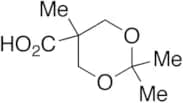
CAS:Controlled Product<p>Applications 2,4-Dioxo-4-phenylbutanoic acid<br></p>Formula:C10H8O4Color and Shape:NeatMolecular weight:192.172,2,5-Trimethyl-1,3-dioxane-5-carboxylic Acid
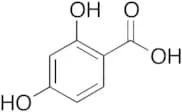
CAS:Controlled Product<p>Applications 2,2,5-Trimethyl-1,3-dioxane-5-carboxylic Acid (cas# 16837-14-2) is a compound useful in organic synthesis.<br></p>Formula:C8H14O4Color and Shape:NeatMolecular weight:174.192,4-Dihydroxybenzoic Acid
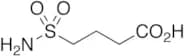
CAS:<p>Applications 2,4-Dihydroxybenzoic acid is a useful synthetic intermediate. An organic building block for plastics and rubber products.<br>References Gautam, R., et al.: Cryst. Growth Des., 18, 1501 (2018); Shvedene, N. V., et al.: J. Anal. Chem., 72, 95 (2017);<br></p>Formula:C7H6O4Color and Shape:White To Off WhiteMolecular weight:154.124-Sulfamoylbutyric Acid
CAS:Controlled Product<p>Applications A solid phase organic linker for synthesis of tethering carboxylic acids to support.<br>References Backes, B.J. and Ellman, J. A.: J. Org. Chem., 64, 2322 (1999)<br></p>Formula:C4H9NO4SColor and Shape:NeatMolecular weight:167.18Permethrinic Acid (cis/trans mixture)
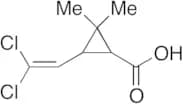
CAS:<p>Applications 3-(2,2-Dichloroethenyl)-2,2-dimethylcyclopropanecarboxylic Acid is a reagent used in the preparation of hapten and immunogen for the production of polyclonal antibodies, specific to Cypermethrin (C989000).<br>References Lee, N. et al.: J. Agri. Food Chem., 46, 520 (1998); Hongsibsong, S. et al.: Int. J. Agri. Biol., 14, 246 (2012);<br></p>Formula:C8H10Cl2O2Color and Shape:White To Light YellowMolecular weight:209.07Benzyl (4-Hydroxyphenyl)acetate
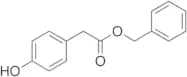
CAS:Controlled Product<p>Applications Intermediate in the preparation of Camostat metabolites.<br>References Bodor, N., et al.: Pharm. Res., 3, 120 (1984), Han, L., et al.: Biochem., 46, 1432 (2007),<br></p>Formula:C15H14O3Color and Shape:NeatMolecular weight:242.273-(methylamino)-3-oxopropanoic acid
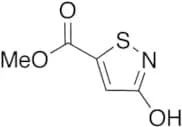
CAS:Controlled Product<p>Applications 3-(methylamino)-3-oxopropanoic acid (cas# 42105-98-6) is a useful research chemical.<br></p>Formula:C4H7NO3Color and Shape:NeatMolecular weight:117.1Methyl-3-hydroxyisothiazole-5-carboxylate
CAS:Controlled Product<p>Applications Methyl-3-hydroxyisothiazole-5-carboxylate (cas# 100241-89-2) is a compound useful in organic synthesis.<br></p>Formula:C5H5NO3SColor and Shape:Off White To YellowMolecular weight:159.16Trimesinic Acid
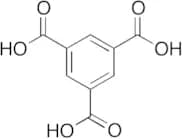
CAS:<p>Applications Trimesinic Acid is used for multifunctional therapeutics. It shows inhibitory activity against Torpedo Californica acetylcholinesterase and prevented amyloid-β peptide aggregate formation.<br>References Peckels, C., et al.: Curr. Enz. Inhib., 9, 67 (2013)<br></p>Formula:C9H6O6Color and Shape:NeatMolecular weight:210.142-(2-ethoxyethoxy)acetic acid
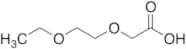
CAS:<p>Applications 2-(2-ethoxyethoxy)acetic acid (cas# 7743-94-4) is a useful research chemical.<br> Not a dangerous good if item is equal to or less than 1g/ml and there is less than 100g/ml in the package<br></p>Formula:C6H12O4Color and Shape:NeatMolecular weight:148.15Methyl Acetoacetate
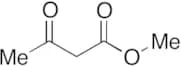
CAS:Controlled Product<p>Applications 3-Oxobutanoic Acid Methyl Ester is a chemical reagent used in the synthesis of pharmaceuticals. It participates in the Biginelli reaction, forming molecules including dihydropyrimidinones.<br>References Ranu, B. et al.: J. Org. Chem. 65, 6270 (2000); Lu, J. et al.: Tetrahedron Lett., 41, 9075 (2000); Lu, J. et al.: Synlett., 1, 63 (2000);<br></p>Formula:C5H8O3Color and Shape:NeatMolecular weight:116.124-Pyridylthioacetic Acid
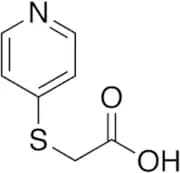
CAS:Controlled Product<p>Applications 4-Pyridylthioacetic Acid (cas# 10351-19-6) is a compound useful in organic synthesis.<br></p>Formula:C7H7NO2SColor and Shape:White To Off-WhiteMolecular weight:169.2o-Carborane-1-carboxylic Acid
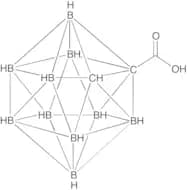
CAS:Controlled ProductFormula:C3H12B10O2Color and Shape:NeatMolecular weight:188.24Nonadecanedioic Acid
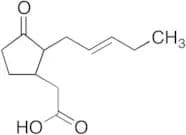
CAS:Controlled Product<p>Applications Nonadecanedioic Acid (cas# 6250-70-0) is a useful research chemical.<br></p>Formula:C19H36O4Color and Shape:NeatMolecular weight:328.49(±)-Jasmonic Acid
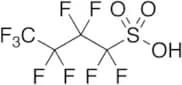
CAS:<p>Applications (±)-Jasmonic Acid can be used as reactant/reagent for synthetic preparation of fluorescent-labeled jasmonate and application to fluorescent imaging in cabbage seedlings.<br>References Liu, S., et al.: Tetrahedron Lett., 53, 4235-4239 (2012)<br></p>Formula:C12H18O3Color and Shape:NeatMolecular weight:210.27Nonafluoro-1-butanesulfonic Acid
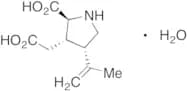
CAS:<p>Stability Moisture Sensitive<br>Applications Perfluorobutanesulfonic acid (PFBS) is a stable fluorosurfactant because of the strength of carbon–fluorine bonds. PFBS has served as a replacement for the persistent, toxic, and bioaccumulative perfluorooctanesulfonic acid (PFOS) in 3M's Scotchgard stain repellents. PFBS is neither toxic nor bioaccumulative.<br> Not a dangerous good if item is equal to or less than 1g/ml and there is less than 100g/ml in the package<br>References Renner R., et al.: Environ. Sci. Technol., 40, 12 (2006), Betts, K.S., et al.: Environ. Health Perspect., 115, 250 (2007),<br></p>Formula:C4HF9O3SColor and Shape:Colourless LiquidMolecular weight:300.10(-)-α-Kainic Acid Monohydrate
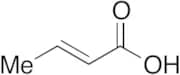
CAS:Controlled Product<p>Applications (-)-α-Kainic Acid Monohydrate is the monohydrated form of (-)-α-Kainic Acid (K135010); a naturally occurring neuroexcitatory chemical that is a selective agonist for a subtype of ionotropic glutamate receptor. Administration of (-)-α-Kainic Acid has been shown to increase production of reactive oxygen species, mitochondrial dysfunction, and apoptosis in neurons in many regions of the brain, particularly in the hippocampal subregions and in the hilus of dentate gyrus.<br>References Wacker, D.A., et al.: Synlett, 503 (1997); Dunleavy, M., et al.: J. Molec. Neurosci., 49, 202 (2013); Zhang, J., et al.: Neuron., 76, 1133 (2012); Yamada, J., et al.: Neurosci., 226, 119 (2012); Wang,Q., et al.: Mol. Neurobiol., 31, 3 (2005)<br></p>Formula:C10H15NO4·H2OColor and Shape:NeatMolecular weight:231.246Crotonic Acid
CAS:<p>Applications Crotonic Acid is found in water extracts from carrot seeds (Daucus carota L.) and is shown to have strong herbicidal properties.<br> Not a dangerous good if item is equal to or less than 1g/ml and there is less than 100g/ml in the package<br>References Jasicka-Misiak, I., et al.: Phytochemistry, 66, 1485 (2005)<br></p>Formula:C4H6O2Color and Shape:WhiteMolecular weight:86.094-Formylbenzoic Acid
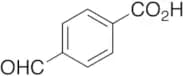
CAS:Controlled Product<p>Applications A metabolite of aldehydes.<br>References Shiobara, Y., et al.: Xenobiotica, 9, 157 (1979),<br></p>Formula:C8H6O3Color and Shape:NeatMolecular weight:150.13Ethyl Cyano(hydroxyimino)acetate
CAS:Controlled Product<p>Applications Ethyl Cyano(hydroxyimino)acetate is used in peptide synthesis and has shown to suppress racemiztion, has high coupling efficiency in both solution and solid phase synthesis and is a non-explosive alternative to 1-hydroxybenzotriazole (HOBt) and 1-hydroxy-7-azabenzotriazole (HOAt).<br>References Khattab, S.N.: Bull. Chem. Soc. Jpn., 83, 1374 (2010)<br></p>Formula:C5H6N2O3Color and Shape:NeatMolecular weight:142.11Monohydrazide Adipic Acid
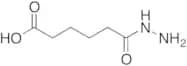
CAS:Controlled Product<p>Applications Monohydrazide Adipic Acid is a synthetic reagent and a plant growth retarding agent.<br>References Ye, W-L., et al.: J. Pharm. Sci, 104, 2293-2303 (2015);<br></p>Formula:C6H12N2O3Color and Shape:Off-WhiteMolecular weight:160.17Polyphosphoric Acid
CAS:Controlled Product<p>Applications Polyphosphoric Acid is a ligand used as an analytical tool to image nanoparticles through photon emission topography. Used also in the synthesis of pharmaceuticals.<br>References Peng J. et al.: Biomat., 37, 9535 (2013);<br></p>Color and Shape:Neat2-Arsanilic Acid
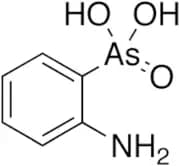
CAS:Controlled Product<p>Applications o-Arsanilic Acid is an organoarsenic compound. o-Arsanilic Acid is a highly toxic contaminant and can be found in plants growing in contaminated soil.<br> Not a dangerous good if item is equal to or less than 1g/ml and there is less than 100g/ml in the package<br>References Schmidt, A.-C. et al.: Chemosphere, 73, 1781 (2008);<br></p>Formula:C6H8AsNO3Color and Shape:NeatMolecular weight:217.05Isonicotinic Acid
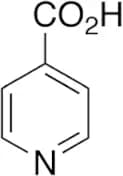
CAS:<p>Applications Used in the biological study of differentiation induced by nicotinic acid, nicotinamide and isonicotinic acid in human leukemia cell lines.<br>References Zeilinger, S., et al.: J. Biol. Chem., 271, 25624 (1996), Panagiotou, G., et al.: J. Biotechnol., 118, 304 (2005),<br></p>Formula:C6H5NO2Color and Shape:Light BrownMolecular weight:123.11(±)-2-Hydroxydodecanoic Acid
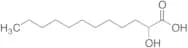
CAS:Controlled Product<p>Applications (8Z,11Z,14Z)-8,11,14-Heptadecatrienoic Acid, is a naturally occurring hydroxylated fatty acid that is found in Acinetobacter species. It acts as a partial agonist of free fatty acid receptor 1 (FFAR1/GPR40) and GPR84 receptors in vitro. It also inhibits bovine hepatic ligase (Ki = 4.4 μM) and mouse kidney mitochondrial medium-chain acyl-CoA synthetase by 48% at a concentration of 40 μM.<br>References Moss, C.W., et al.: J. Clin. Microbiol. 26(3), 484-492 (1988).; Kaspersen, M.H., et al.: Med. Chem. Commun. 8(6), 1360-1365 (2017).<br></p>Formula:C12H24O3Color and Shape:NeatMolecular weight:216.32Fendizoic Acid
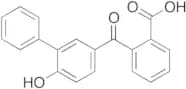
CAS:Controlled Product<p>Applications Fendizoic Acid is a reagent in the synthesis of fluorinated polyphthalazinone ethers containing perfluorophenylene moieties.<br>References Lu, Z., et al.: J. Polym. Sci. A1, 42, 925 (2004)<br></p>Formula:C20H14O4Color and Shape:NeatMolecular weight:318.323,5-Dioxocyclohexanecarboxylic Acid
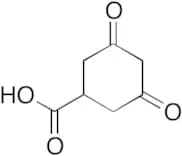
CAS:<p>Applications Dihydroresorcylic Acid is a useful reagent in detecting proteins in living cells.<br>References Reddie, K., et al.: Mol. Biosys., 4, 521-531 (2008); Seo, Y., et al.: Bioorg. Med. Chem. Lett., 19, 356-359 (2009);<br></p>Formula:C7H8O4Color and Shape:NeatMolecular weight:156.143,3-Dimethylbutyric Acid
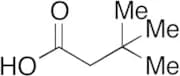
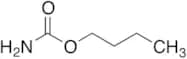
CAS:Controlled Product<p>Applications 3,3-Dimethylbutyric Acid is used in the synthesis of imidazo[4,5-c]pyridine derivatives as anitmicrobial agents.<br> Not a dangerous good if item is equal to or less than 1g/ml and there is less than 100g/ml in the package<br>References Jose. G., et. al.: Eur. J. Med. Chem., 77, 288 (2014)<br></p>Formula:C6H12O2Color and Shape:Clear Colourless To Light YellowMolecular weight:116.16Butyl Carbamate
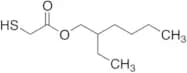
CAS:Controlled Product<p>Applications butyl carbamate (cas# 592-35-8) is a useful research chemical.<br></p>Formula:C5H11NO2Color and Shape:NeatMolecular weight:117.15Thioglycolic Acid 2-Ethylhexyl Ester
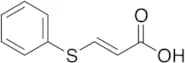
CAS:Formula:C10H20O2SColor and Shape:NeatMolecular weight:204.333-(Phenylthio)acrylic Acid
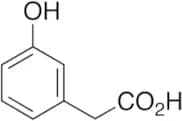
CAS:Controlled Product<p>Applications 3-(Phenylthio)acrylic Acid (cas# 63413-91-2) is a useful research chemical.<br></p>Formula:C9H8O2SColor and Shape:Light BrownMolecular weight:180.2243-Hydroxyphenylacetic Acid
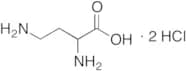
CAS:<p>Applications 3-Hydroxyphenylacetic Acid (cas# 621-37-4) is a compound useful in organic synthesis.<br></p>Formula:C8H8O3Color and Shape:NeatMolecular weight:152.15DL-2,4-Diaminobutyric Acid Dihydrochloride
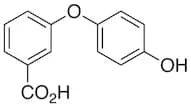
CAS:Controlled Product<p>Applications DL-2,4-Diaminobutyric Acid Dihydrochloride (cas# 65427-54-5) is a useful research chemical.<br></p>Formula:C4H10N2O2·2HClColor and Shape:NeatMolecular weight:118.13 + 2(36.46)3-(4'-Hydroxy)phenoxybenzoic Acid
CAS:<p>Applications A metabolite of pyrethroid insecticides such as: Deltamethrin, Permethrin, Cypermethrin, Fenvalerate, Decamethrin.<br> Not a dangerous good if item is equal to or less than 1g/ml and there is less than 100g/ml in the package<br>References Woollen, B., et al.: Xenobiotica, 22, 983 (1992), Saito, K., et al.: Toxicol. Sci., 57, 54 (2000), Fang, H., et al.: Chem. Res. Toxicol., 14, 280 (2001), Andersen, H., et al.: Toxicol. Appl. Pharmacol., 179, 1 (2002),<br></p>Formula:C13H10O4Color and Shape:NeatMolecular weight:230.22Thioglycolic acid
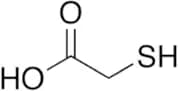
CAS:Controlled Product<p>Stability Air Sensitive<br>Applications Thioglycolic Acid is an organic compound containing both a thiol and a carboxylic acid. Thioglycolic Acid is a precursor to ammonium thioglycolate, a chemical used for permanents. Thioglycolic Acid is used in organic synthesis as a nucleophile in thioglycolysis reactions and is used as a S transfer agent for sulfonyl chloride synthesis.<br> Not a dangerous good if item is equal to or less than 1g/ml and there is less than 100g/ml in the package<br>References Kim, T.R. et al.: Bull. Kor. Chem. Soc., 3, 162 (1982); Badr, M.Z.A. et al.: Bull. Chem. Soc. Jap., 56, 326 (1983); Langler, R.F. et al.: Can. J. Chem., 57, 3193 (1979);<br></p>Formula:C2H4O2SColor and Shape:Colourless LiquidMolecular weight:92.127H-Dodecafluoroheptanoic Acid
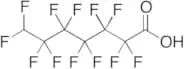
CAS:<p>Applications 7H-Dodecafluoroheptanoic Acid is a derivative of Heptanoic Acid (H998455) which can be used as an organic building blocks for the synthesis of variety of chemical compounds. Heptanoic Acid is used in the synthesis of 17-epi-Testosterone Enanthate (T155095). It is used in the preparation of esters, such as ethyl heptanoate, which are used in fragrances and as artificial flavors. It is also one of many additives in cigarettes.<br> Not a dangerous good if item is equal to or less than 1g/ml and there is less than 100g/ml in the package<br>References Anneken, D. et al.: Fatty Acids, Ullmann's Encyclopedia of Industrial Chemistry (2006); Wudy, S., et al.: Steroids, 66, 759 (2001); Kootstra, P., et al.: Anal. Chim. Acta., 586, 82 (2007); Sten, T., et al.: Drug Metab. Dispos., 37, 417 (2009)<br></p>Formula:C7H2F12O2Color and Shape:WhiteMolecular weight:346.07tert-Butyl N-[3-(Chlorosulfonyl)propyl]carbamate
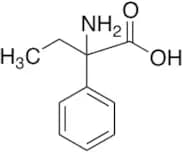
CAS:Controlled Product<p>Applications tert-butyl N-[3-(chlorosulfonyl)propyl]carbamate (cas# 1196153-59-9) is a useful research chemical.<br></p>Formula:C8H16ClNO4SColor and Shape:NeatMolecular weight:257.7352-Amino-2-phenylbutyric Acid
CAS:Controlled Product<p>Applications 2-Amino-2-phenylbutyric acid 96% (cas# 5438-07-3) is a useful research chemical.<br></p>Formula:C10H13NO2Color and Shape:NeatMolecular weight:179.22Hexanedioic Acid Mono(4-hydroxybutyl) Ester
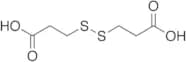
CAS:Controlled Product<p>Applications Hexanedioic Acid Mono(4-hydroxybutyl) Ester is an intermediate in the synthesis of aliphatic polyesters.<br>References McCabe, R. W., et al.: Tetrahedron., 60, 765 (2004);<br></p>Formula:C10H18O5Color and Shape:NeatMolecular weight:218.247Dithiobis-propanoic Acid
CAS:Controlled ProductFormula:C6H10O4S2Color and Shape:White To Off-WhiteMolecular weight:210.07(S)-2-Amino-4-[(3-aminopropyl)amino]-butanoic Acid
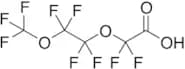
CAS:Controlled Product<p>Applications (S)-2-Amino-4-[(3-aminopropyl)amino]-butanoic Acid is used in the reaction of carboxynorspermidine decarboxylase of Vibrio alginolyticus.<br>References Nakao, H., et al.: J. Gen. Microbiol. 136, 1699-704 (1990)<br></p>Formula:C7H17N3O2Purity:>90%Color and Shape:NeatMolecular weight:175.229Perfluoro-3,6-dioxaheptanoic Acid
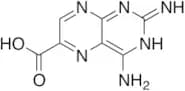
CAS:Controlled Product<p>Applications PERFLUORO-3,6-DIOXAHEPTANOIC ACID (cas# 151772-58-6) is a useful research chemical.<br> Not a dangerous good if item is equal to or less than 1g/ml and there is less than 100g/ml in the package<br></p>Formula:C5HF9O4Color and Shape:ColourlessMolecular weight:296.04472,4-Diaminopteridine-6-carboxylicAcid
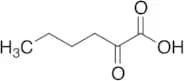
CAS:Controlled Product<p>Applications 2,4-DIAMINOPTERIDINE-6-CARBOXYLIC ACID (cas# 716-74-5) is a useful research chemical.<br></p>Formula:C7H6N6O2Color and Shape:Off-WhiteMolecular weight:206.1622-Oxohexanoic Acid
CAS:Controlled Product<p>Applications 2-Oxohexanoic Acid (cas# 2492-75-3) has been useful in a biological study that investigated the impact of glutathione on wines oxidative stability.<br>References Nikolantonaki, M., et al.: Front. Chem. (Lausanne, Switzerland), 6, 182 (2018)<br></p>Formula:C6H10O3Color and Shape:NeatMolecular weight:130.14tert-Butyl [(1R,2S,5S)-2-Amino-5-[(dimethylamino)carbonyl]cyclohexyl]carbamate Oxalate
CAS:Controlled Product<p>Applications tert-Butyl [(1R,2S,5S)-2-Amino-5-[(dimethylamino)carbonyl]cyclohexyl]carbamate Oxalate is a starting material and useful building block of various pharmaceuticals.<br></p>Formula:C14H27N3O3•C2H2O4Color and Shape:NeatMolecular weight:375.41Methyl Acetate
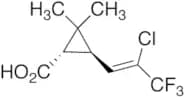
CAS:Controlled Product<p>Stability Volatile<br>Applications Methyl Acetate is used as an organic chemical solvent for a multitude of organic processes. Also used in the production of biodiesel.<br> Not a dangerous good if item is equal to or less than 1g/ml and there is less than 100g/ml in the package<br>References Xu, Y. et al.: J. mol. Cat., 32, 241 (2005); Ogino, H. et al.: J. Biosci. Bioeng., 89, 451 (2000);<br></p>Formula:C3H6O2Color and Shape:NeatMolecular weight:74.08trans-3-(2-Chloro-3,3,3-trifluoro-1-propenyl)-2,2-dimethyl-cyclopropanecarboxylic Acid
CAS:Controlled Product<p>Applications trans-3-(2-Chloro-3,3,3-trifluoro-1-propenyl)-2,2-dimethyl-cyclopropanecarboxylic Acid is a reagent used in the synthesis of indanyl insecticides.<br></p>Formula:C9H10ClF3O2Color and Shape:NeatMolecular weight:242.623Ethyl Cyanoacetate
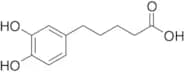
CAS:Controlled Product<p>Applications Reagent used in labelled pyrimidine and purine synthesis.<br> Not a dangerous good if item is equal to or less than 1g/ml and there is less than 100g/ml in the package<br>References Das, S., et al.: J. Med. Chem., 52, 5937 (2009), Kim, K., et al.: Bioorg. Med. Chem. Lett., 19, 5225 (2009),<br></p>Formula:C5H7NO2Color and Shape:NeatMolecular weight:113.115-(3,4-dihydroxyphenyl)pentanoic Acid
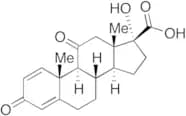
CAS:Controlled Product<p>Applications 5-(3,4-dihydroxyphenyl)pentanoic Acid (cas# 31129-94-9) is a useful research chemical.<br></p>Formula:C11H14O4Color and Shape:NeatMolecular weight:210.2317-Hydroxy-3,11-dioxo-androsta-1,4-diene-17β-carboxylic Acid
Controlled Product<p>Applications 17-Hydroxy-3,11-dioxo-androsta-1,4-diene-17β-carboxylic Acid is an intermediate used to prepare (11β,17α)-17-[(Ethoxycarbonyl)oxy]-11-hydroxy-3-oxo-androsta-1,4-diene-17-carboxylic acid (E890570) which is a derivative of Loteprednol Etabonate (L471400), an ophthalmic corticosteroid.<br>References Alberth, M., et al.: J. Biopharm.Sci., 2, 115 (1991), Bodor, N., et al.: Pharm. Res., 9, 1275 (1992), Bartlett, J.D., et al.: J. Ocul. Pharmacol., 9, 157 (1993)<br></p>Formula:C20H24O5Color and Shape:NeatMolecular weight:344.40N-[4-(-Carboxycyclohexylmethyl)]maleamidic Acid
CAS:Controlled Product<p>Applications N-[4-(-Carboxycyclohexylmethyl)]maleamidic Acid (cas# 72748-87-9) is a compound useful in organic synthesis.<br></p>Formula:C12H17NO5Color and Shape:NeatMolecular weight:255.27(2E)-3-(4-Hydroxy-3,5-dimethoxyphenyl)-2-propenoic Acid
CAS:Controlled Product<p>Stability Light Sensitive<br>Applications (2E)-3-(4-Hydroxy-3,5-dimethoxyphenyl)-2-propenoic Acid, is a reagent used as an analytical standard.<br></p>Formula:C11H12O5Color and Shape:NeatMolecular weight:224.213-Cyclohexenylcarboxylic Acid
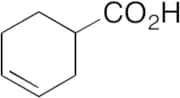
CAS:Controlled Product<p>Applications 3-Cyclohexenylcarboxylic Acid has been found to be an oxidizable, nongrowth substrate and induces the metabolism of cyclohexanecarboxylic acid and benzoic acid in a strain of Pseudomonas putida. 3-Cyclohexenylcarboxylic Acid has been used as food for cultures of Streptomyces sp. KCTC 11604BP fkbO deletion mutant to make 32-dehydroxy-FK506, a FK506 analogue containing a non-natural starter unit.<br> Not a dangerous good if item is equal to or less than 1g/ml and there is less than 100g/ml in the package<br>References Blakley, E.R., Papish, B.: Can. J. Microbiol., 28, 1324 (1982); Ban, Y.H., et. al.: Mol. bioSystems, 9, 944 (2013)<br></p>Formula:C7H10O2Color and Shape:NeatMolecular weight:126.15



















![tert-Butyl N-[3-(Chlorosulfonyl)propyl]carbamate](/_next/image/?url=https%3A%2Fstatic.cymitquimica.com%2Fproducts%2FTR%2Fthumb-webp%2FB811700.webp&w=3840&q=75)

![(S)-2-Amino-4-[(3-aminopropyl)amino]-butanoic Acid](/_next/image/?url=https%3A%2Fstatic.cymitquimica.com%2Fproducts%2FTR%2Fthumb-webp%2FA609335.webp&w=3840&q=75)
![tert-Butyl [(1R,2S,5S)-2-Amino-5-[(dimethylamino)carbonyl]cyclohexyl]carbamate Oxalate](/_next/image/?url=https%3A%2Fstatic.cymitquimica.com%2Fproducts%2FTR%2Fthumb-webp%2FB809515.webp&w=3840&q=75)


![N-[4-(-Carboxycyclohexylmethyl)]maleamidic Acid](/_next/image/?url=https%3A%2Fstatic.cymitquimica.com%2Fproducts%2FTR%2Fthumb-webp%2FC177850.webp&w=3840&q=75)